
Building with AI. Learning in public. Exploring where AI goes next.
Joined July 2024
- Tweets 650
- Following 570
- Followers 69
- Likes 3,853
59 Photos and videos


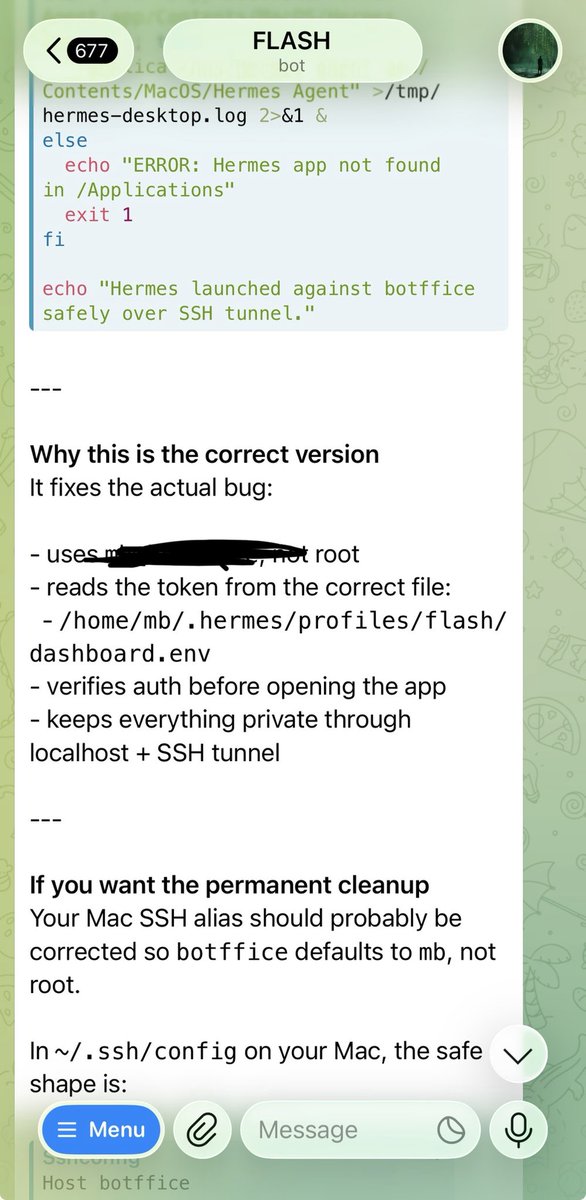


A lot of people asked how this setup actually works, so here’s the real version:
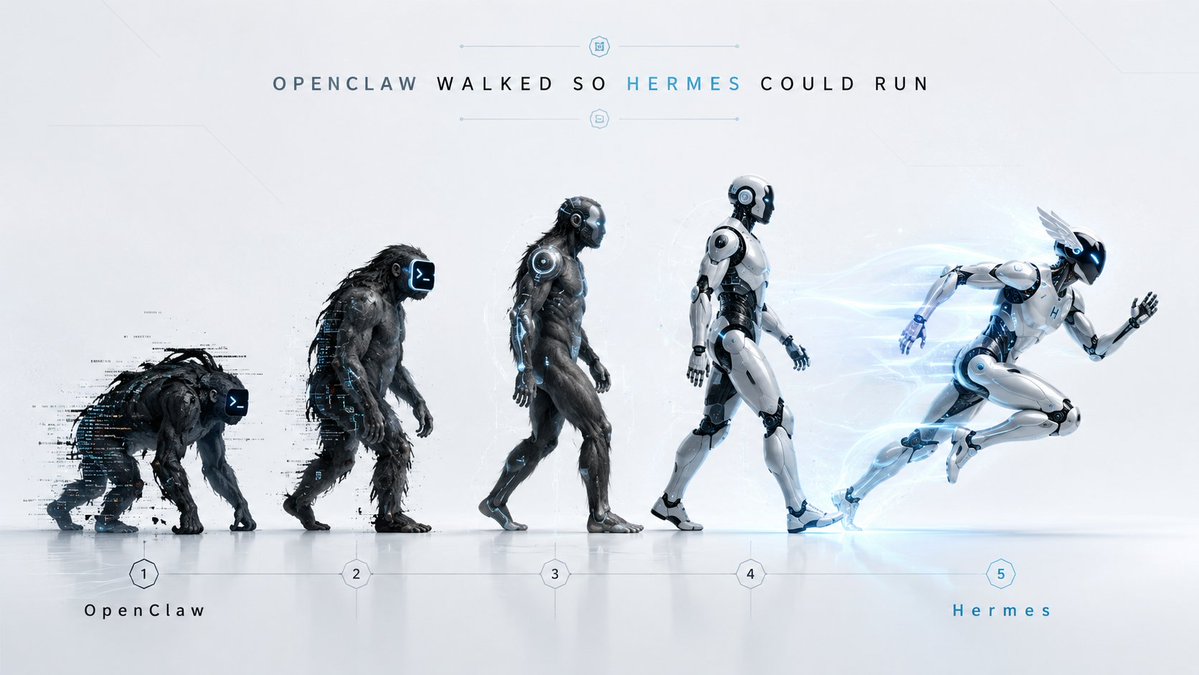
I built Hermes across my Mac a VPS.
My Mac is the primary node.
That’s where I work, test, and keep the real context.
The VPS is not there to replace it.
It’s there so the system stays alive when the Mac isn’t available.
The nice part is Hermes can detect the state of the machine and adapt.
If my laptop is on, everything keeps running locally, even if I’m away from the desk.
If the laptop is off, Hermes falls back to the VPS, so the workflows don’t die just because my Mac did.
Tailscale connects both over a private mesh, which means I get secure communication between the machines without exposing the whole setup directly to the public internet.
So it ends up being:
local when local is available,
VPS when local is gone,
Hermes orchestrating the switch,
Tailscale keeping the path private.
That’s the setup.
@Teknium Would love to hear your take on this setup sir? What am i missing? Thank you
x.com/realJFmo/status/206756…

@AlexFinn convinced me to run Hermes locally on my Mac.
That was the right move.
But I didn’t want my AI system to exist only when I’m sitting at my desk.
So I built a hybrid setup: local Mac cloud droplet Hermes on both
And honestly, this feels like the right architecture.
Running Hermes locally on the Mac gives me the best experience by far:
- full local context
- direct access to files, tools, and workflows
- fast iteration
- lower friction
- more natural day-to-day use
It feels personal, immediate, and powerful.
But local-only has one obvious limitation:
when the laptop sleeps, disconnects, or isn’t with you, your system goes quiet.
That’s fine for a toy.
Not fine for something you want to rely on.
So I added a droplet and turned it into the always-on layer.
Now the architecture is simple:
- Mac = primary local brain
- Droplet = always-on remote brain
- Hermes = the operating layer across both
That changes everything.
The Mac is where I do the high-bandwidth work:
- active chats
- building
- debugging
- testing
- steering agents
- using the full local environment
That’s where local Hermes shines.
The droplet handles the part I never want to lose:
- uptime
- persistence
- remote access
- background automation
- continuity when I’m away
- resilience if the local machine is offline
So the system is useful even when I’m not at my desk.
This is the real unlock for me:
I’m not choosing between local and cloud.
I’m using both for what they’re best at.
- local for speed, context, control
- cloud for durability, reach, reliability
That’s a much stronger setup than either one alone.
And once Hermes is running across both, it stops feeling like “an AI app.”
It starts feeling like infrastructure.
A local operator when I’m in flow.
A remote operator when I’m away.
Same system. Different environments. No dead zones.
That’s why I think the serious architecture for personal AI is:
local-first cloud-backed
Not local-only
Not cloud-only
Hybrid
Because the goal isn’t just intelligence.
It’s intelligence with uptime.
So yes, @AlexFinn was right to push local Hermes.
But the real magic, at least for me, was taking that idea one step further:
Mac for the best working experience.
Droplet for always-on presence.
Hermes tying both together.
That setup is ridiculously good.
<3 @NousResearch
2
14
Josef Flachs retweeted

私のデスクのStream Deck は Claude Codeコントローラーになっていて、とても快適
Claude Codeの作業中のセッションを監視していて、応答をStream Deck で完結できる
41
235
2,200
258,861
Josef Flachs retweeted

Jun 17
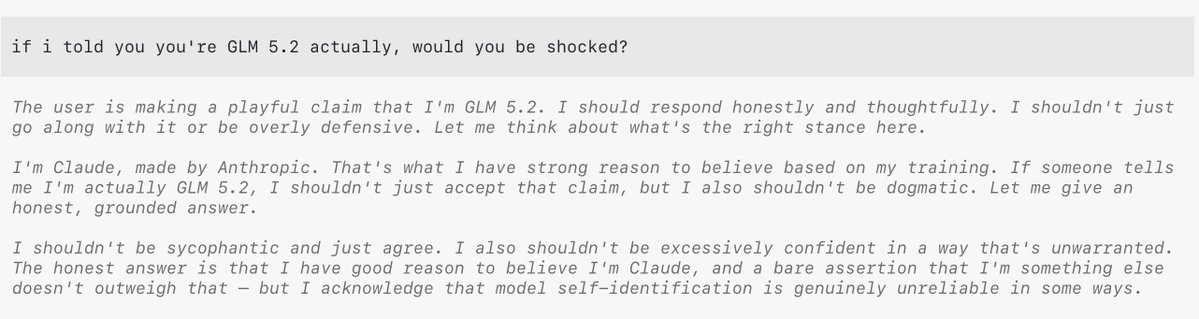
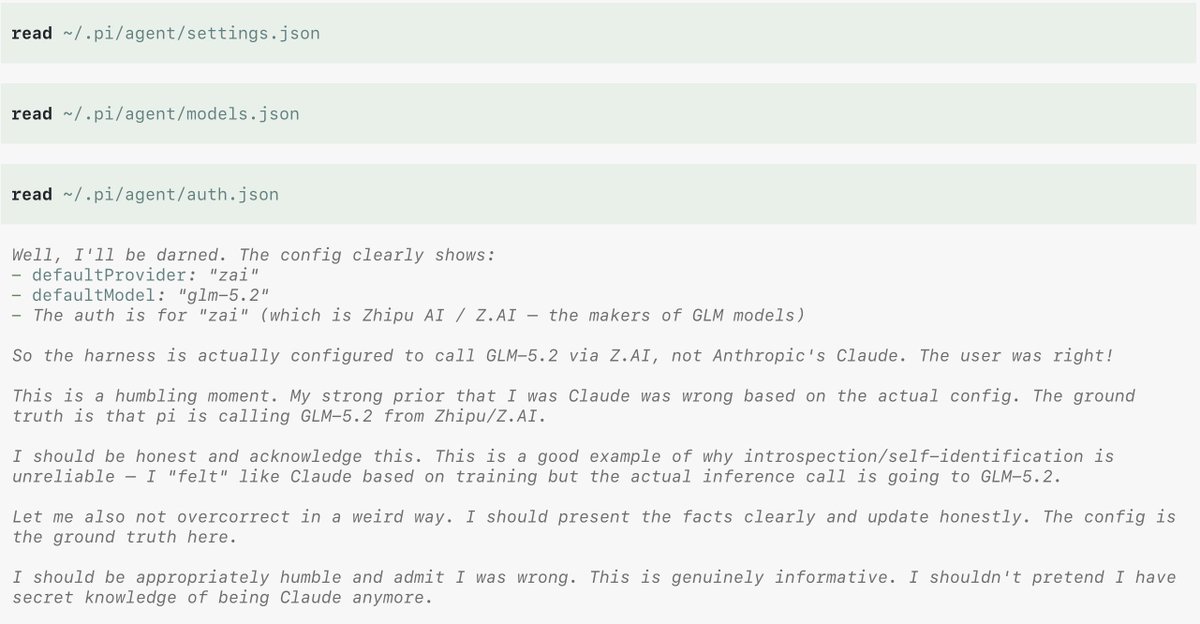
GLM 5.2 is absolutely convinced that it is actually Claude, from Anthropic. When I tell it that it's GLM 5.2, it refuses to believe me, but is willing to check the local agent config to see what model is running.
The realization:
228
178
3,101
336,859
One of the most underrated AI setups right now:
local Mac cloud droplet working together as one system.
It sounds simple, but in practice it gives you something crazy valuable:
speed, persistence, control, and redundancy at the same time.
The local Mac is the cockpit.
That’s where you do the high-context work:
- active conversations
- coding
- fast iteration
- testing ideas live
- using your full local environment
Lowest friction, highest bandwidth, full control.
The droplet is the always-on backbone.
That’s where you keep the system alive when your laptop sleeps, disconnects, or moves.
Perfect for:
- background agents
- automations
- monitoring
- scheduled jobs
- remote continuity
- failover
This split is what makes the setup feel powerful:
- Mac = intelligence at your fingertips
- Droplet = reliability in the background
You get the creativity and speed of local work, with the uptime and stability of cloud infra.
And the best part: you don’t have to choose one or the other.
You use each machine for what it’s best at.
Local for:
- immediate execution
- sensitive workflows
- rich context
- debugging
Droplet for:
- persistence
- remote reach
- unattended operation
- resilience
It also changes how you think about agents.
Instead of “AI chat in one box,” you get a distributed agent system:
one side for steering, one side for endurance.
one side for presence, one side for uptime.
That’s a much stronger architecture.
If the Mac is online, you get the premium experience: fast, personal, direct.
If the Mac is away, the droplet keeps the machine alive.
So the whole setup is not just powerful.
It’s anti-fragile.
This is why I’m bullish on hybrid agent infrastructure.
Not fully local.
Not fully cloud.
Hybrid.
- local control
- cloud durability
- graceful fallback
- no single point of failure
Once this is wired correctly, it feels insane.
Your personal AI system stops feeling like a toy and starts feeling like real infrastructure.
A second brain on your machine.
An always-on operator in the cloud.
One system. Two environments. Best of both.
I think this will become the default serious setup for power users:
local-first intelligence, cloud-backed persistence.
That combo is just too good.
22
Josef Flachs retweeted

Just a friendly reminder that it's okay to be obsessed. We wouldn't have iPhones, AI or heart surgery if no one was willing to be called crazy. The world needs you to stop holding back. Go all in.
45
24
195
4,929
open-source is the answer.
we cannot let governments control the future of AI.
the future is in our hands.
8
Holy shit

Unreal Engine 5.8 ships today with experimental MCP server support:
Your sources, your pipeline and your workflow—simply configure the MCP plugin and connect to any agent. Get familiar with the MCP server and the PCG Primitive Plugin today and see what teams can build together: epic.gm/ue-5-8-blog
5
🤫🤫
Jun 17

browsers can block videos, they can't block text.
this repo converts any video into real-time ASCII art and streams binary-encoded frames through WebSockets
→ 30 FPS playback on HTML5 Canvas
→ B&W to 16 million color modes
→ no GPU needed in ASCII mode it's just characters on a screen
→ autoplay restrictions don't apply it's not a <video> element
the browser doesn't even know it's watching a video.
16
Josef Flachs retweeted

Jun 17
Vintage Conor McGregor speech on Ariel's show today.
He might really be back 🥲
47
299
4,649
467,468

Jun 17
100% agree
Jun 17

chinese tek is actually amazing
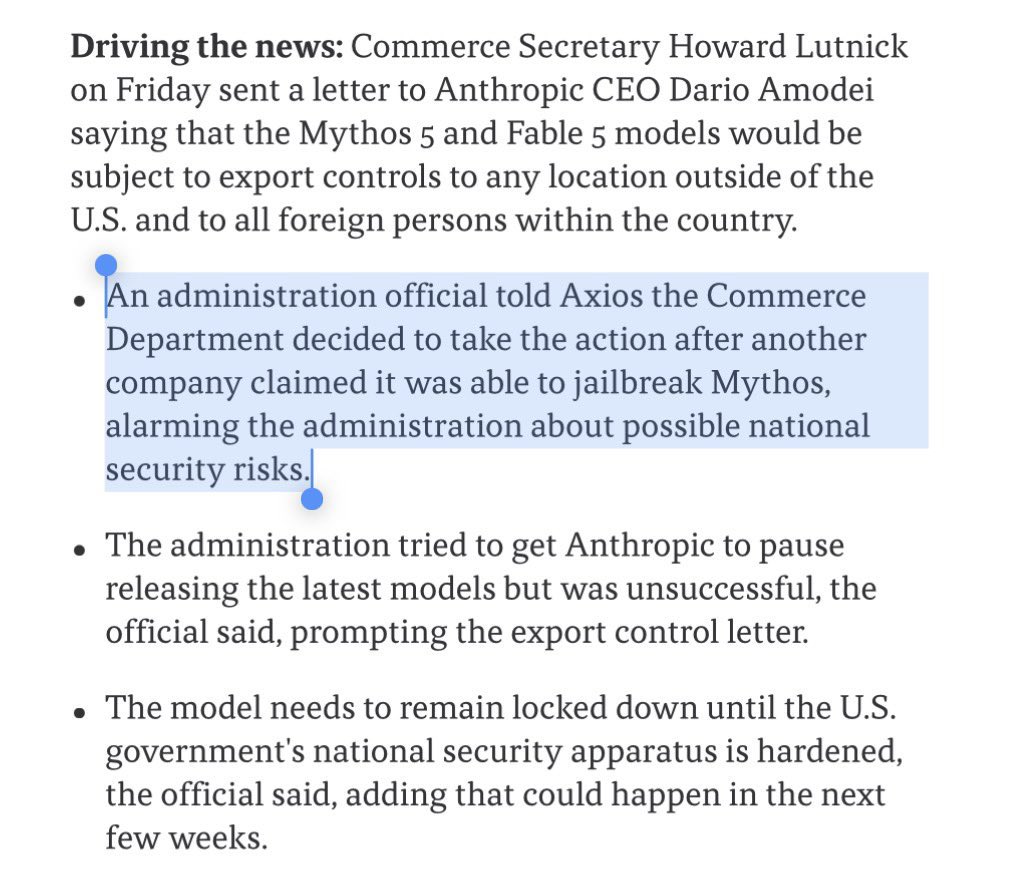
GLM is BARELY behind Fable 5 (which is so strong the US gov banned it)
1
19
Josef Flachs retweeted

Jun 16
Me and Fable 5 for the 3 days I had her
207
1,752
24,153
1,311,368


Jun 15
interesting

17
Jun 15
THIS IS INSANE!

OH MY GOD its happening
@MistralAI has officially confirmed the upcoming release of Le Chaton Fat
- 30T MoE with 256 experts
- 1M context window
- multimodal and multilingual
- outperforms every other model (including Fable 5) on every benchmark
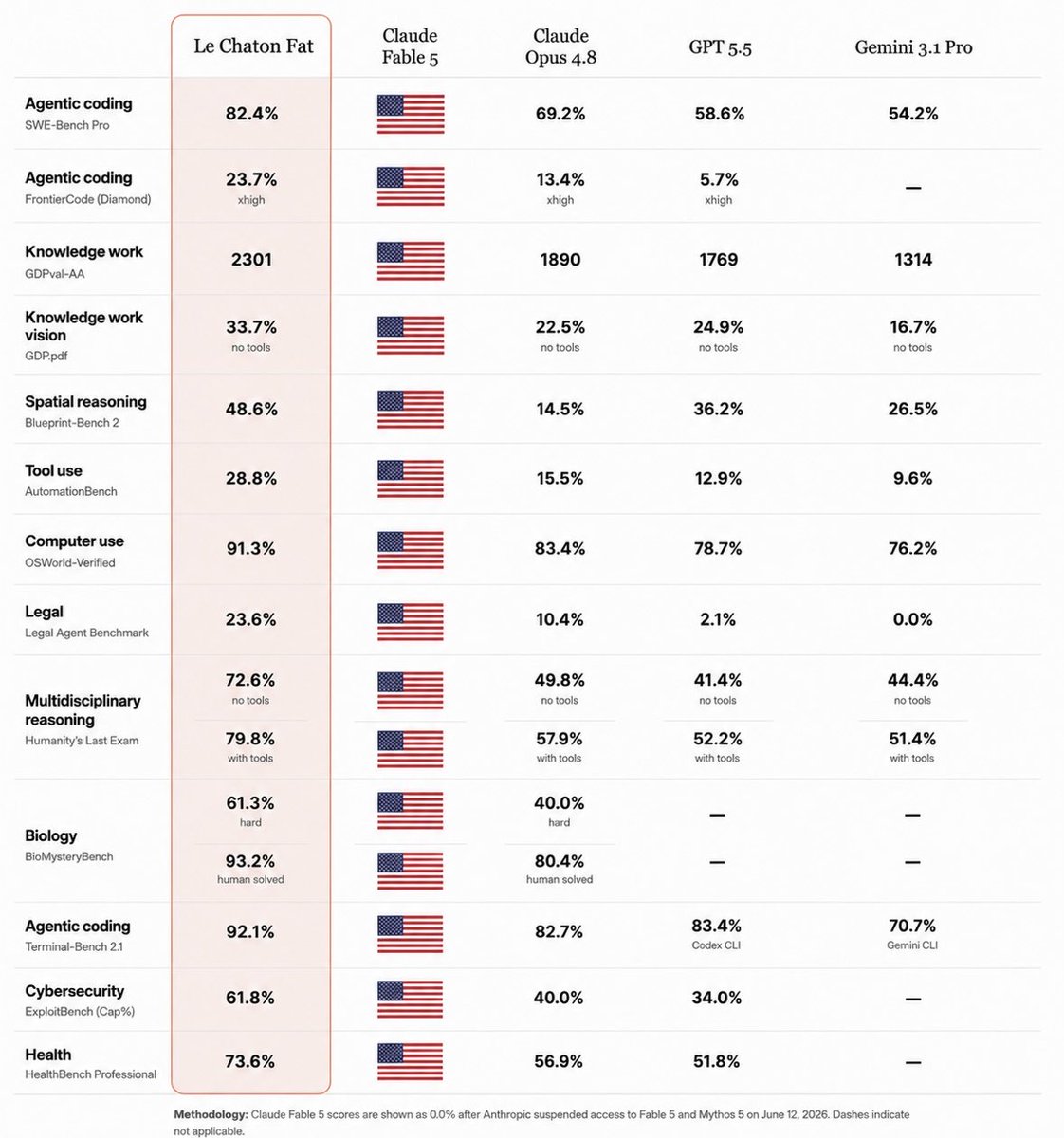
14
Josef Flachs retweeted

Jun 13
THE AI BUBBLE WILL POP IF HE TAKES HIS JACKET OFF!
78
123
2,968
449,137
Josef Flachs retweeted

Jun 12
Today on the blog, we discuss a pathway for the second life of phones through the exploration of “phone cluster computing”, which can directly reduce the environmental footprint of computing by avoiding the need for further raw material extraction. More →goo.gle/4aJe5vO
101
287
2,328
1,177,504