
Erfahrener Full-Stack-Entwickler, Spezialisiert auf Python, PHP, ASP .NET, C#, JavaScript, TypeScript u.v.m. | Experte für komplexe Lösungen und Technologien
Joined October 2024
- Tweets 380
- Following 150
- Followers 48
- Likes 442
99 Photos and videos




May 18
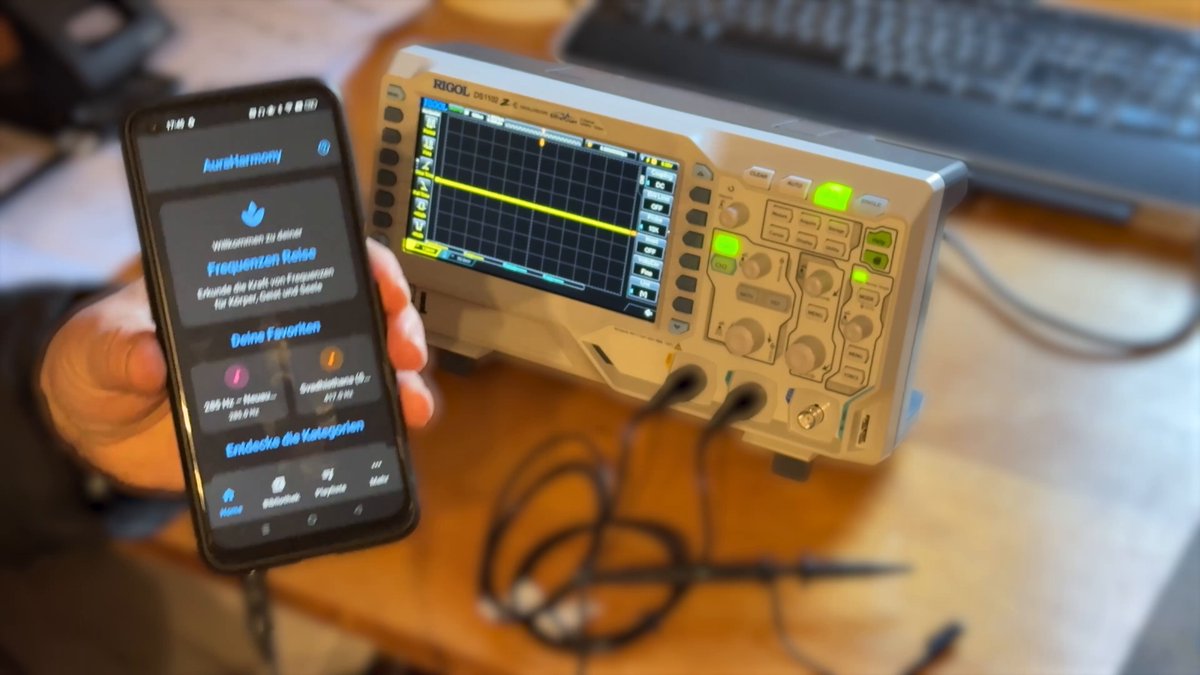
Fast 30 Jahre Softwareentwicklung. Der Job war spannend — und er hat mich den Schlaf gekostet.
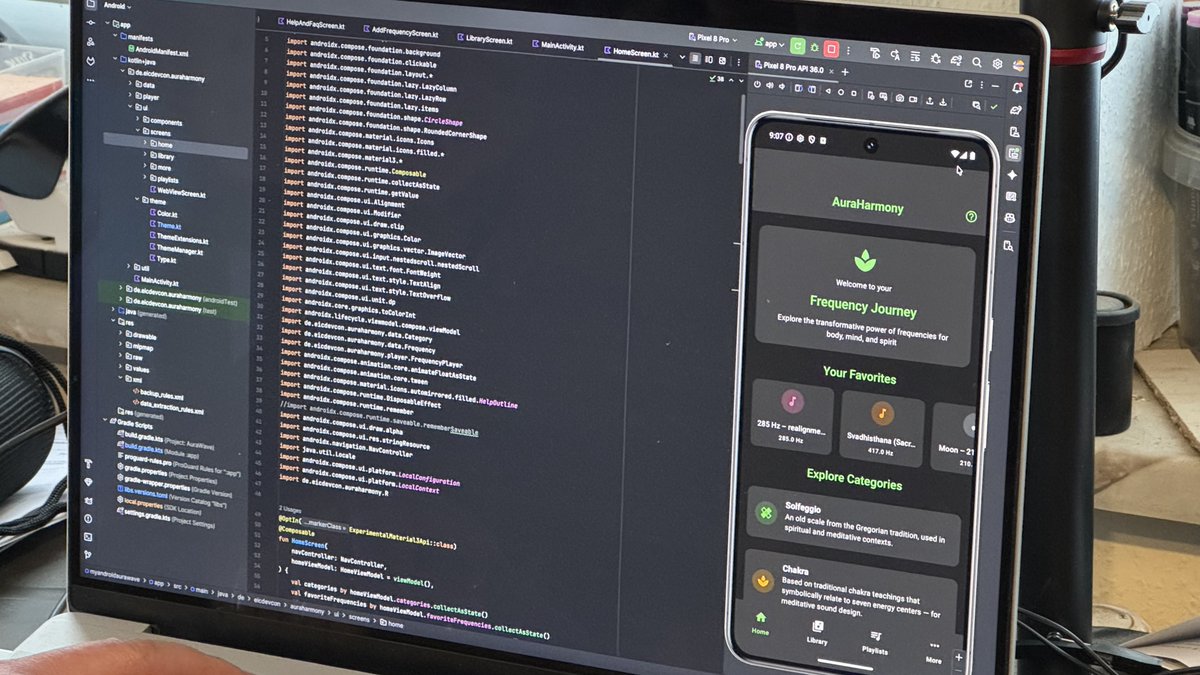
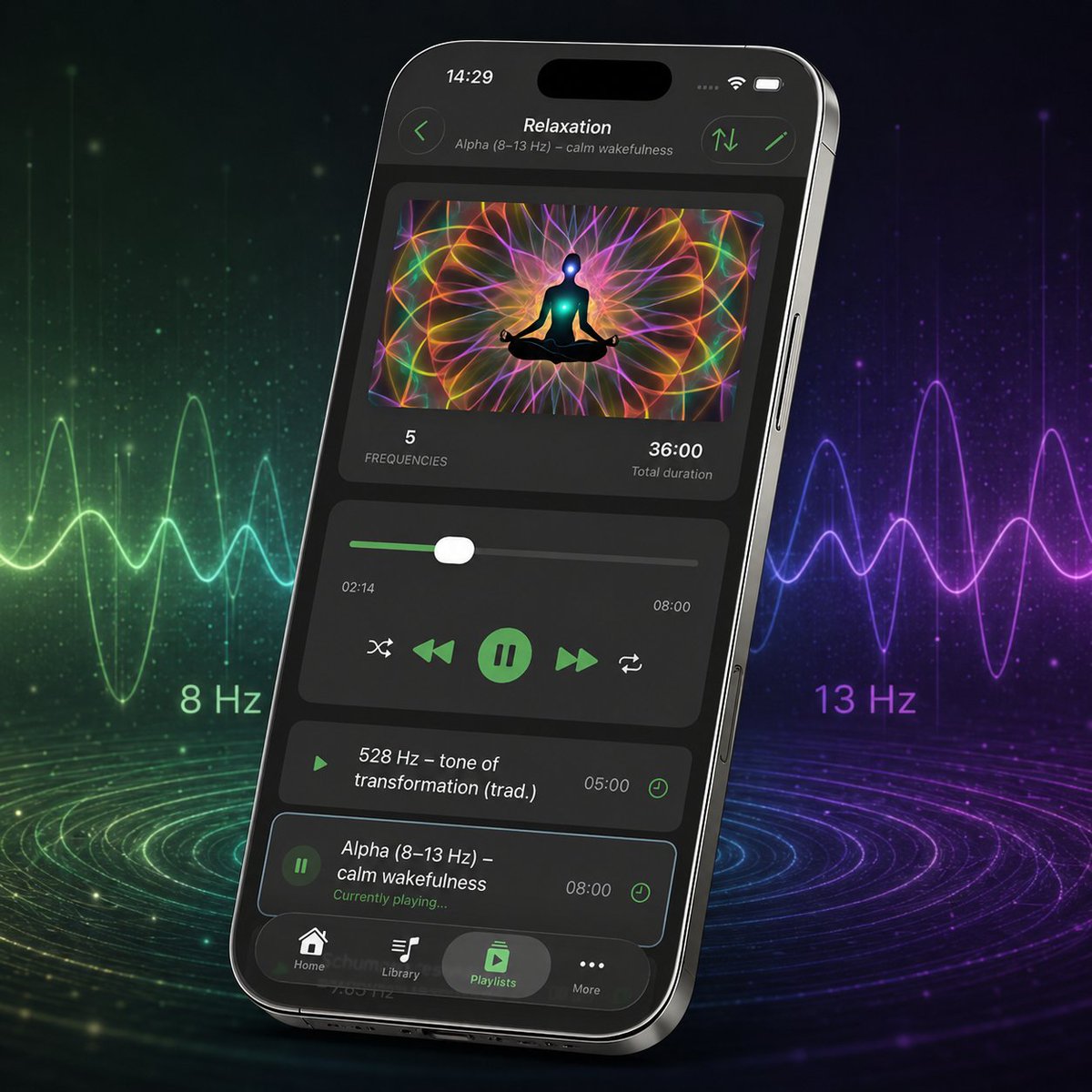
Deshalb habe ich am Ende eine eigene App gebaut. 12 Euro, einmalig, kein Abo.
KI-Systeme, Web-Apps, Digital Signage — in fast drei Jahrzehnten als Freelancer habe ich vieles von Grund auf gebaut. Das hat einen Preis: alle paar Monate eine neue Sprache, ständig rein in fremde Projekte, Deadlines, die andere setzen, Bugs jagen in Code, den jemand anderes geschrieben hat.
Und abends abschalten? Fehlanzeige. Du liegst im Bett, und dein Gehirn kompiliert einfach weiter — Bugs, Architektur, der nächste Sprint. Schlechter Schlaf, morgens wie gerädert, tagsüber unkonzentriert. Und dann noch mehr Druck, weil die Konzentration fehlt. Ein Teufelskreis.
Irgendwann stolpere ich über das Thema Frequenzen. Solfeggio, binaurale Beats. Leute schreiben, dass bestimmte Töne ihnen beim Entspannen helfen. Als Ingenieur bin ich skeptisch — ich glaube an Messwerte, nicht an Versprechen. Aber ich war müde genug, es trotzdem auszuprobieren.
Also suche ich nach Apps. Das Ergebnis: Abos, wohin man schaut. 7 €/Monat, 70 €/Jahr — für die Erzeugung von Sinuswellen. Eigene Frequenzen einstellen? Nicht möglich. Experimentieren? Nicht vorgesehen. Vorgegebene Playlists, mehr nicht.
Und ich denke: Moment mal. Ich bin Entwickler. Das kann ich besser — und vor allem fairer.
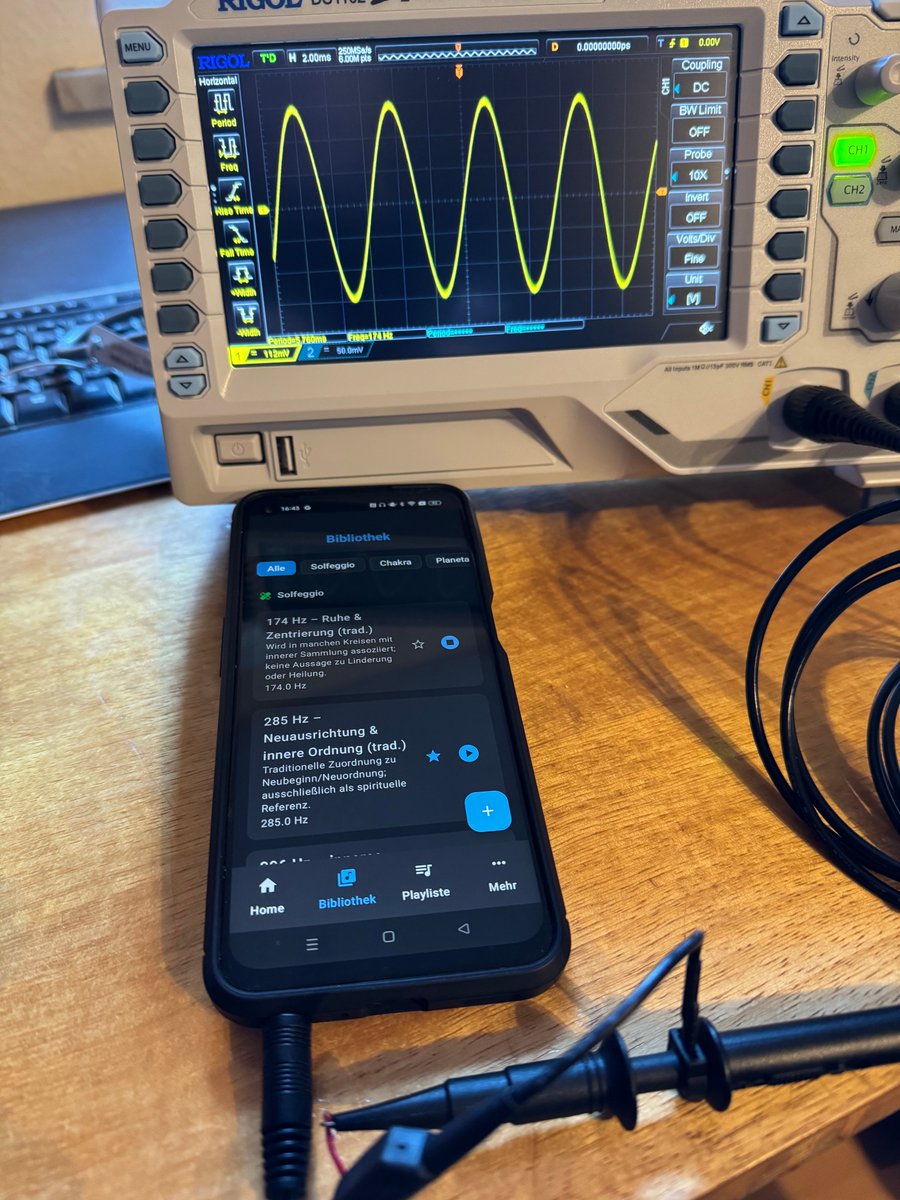
Also baue ich meinen eigenen Frequenzgenerator. Erst nur für mich. Solfeggio, binaurale Beats, planetarische und Chakra-Frequenzen — und jede Frequenz von 0 bis 20.000 Hz frei einstellbar. Das Ergebnis hat mich selbst überrascht: 174 Hz halfen mir abends beim Runterkommen, Theta-Beats beim Einschlafen. Und falls es nur ein Placebo war — dann eben ein Placebo für einmalig 12 Euro statt 70 Euro pro Jahr.
Freunde bekommen es mit. „Kann ich das mal testen?" Das Feedback: durchweg positiv. Also baue ich die App zu Ende — Android und iOS, inzwischen in 17 Sprachen.
Mein Versprechen an mich selbst:
✅ Kein Abo — einmal 11,99 €, fertig
✅ Keine Cloud, keine Datensammlung — alles bleibt auf dem Gerät
✅ Keine In-App-Käufe, keine versteckten Kosten
Das ist AuraHarmony. Kein Millionen-Budget, nicht perfekt — aber ehrlich, fair und von jemandem gebaut, der das Problem selbst hatte. Kein Marketing-Team. Nur der Entwickler.
Wie schaltet ihr nach einem harten Dev-Tag ab? Schreibt's in die Antworten 👇
🔗 auraharmony.app
#IndieApp #BuildInPublic #AuraHarmony
4
5
78
May 12
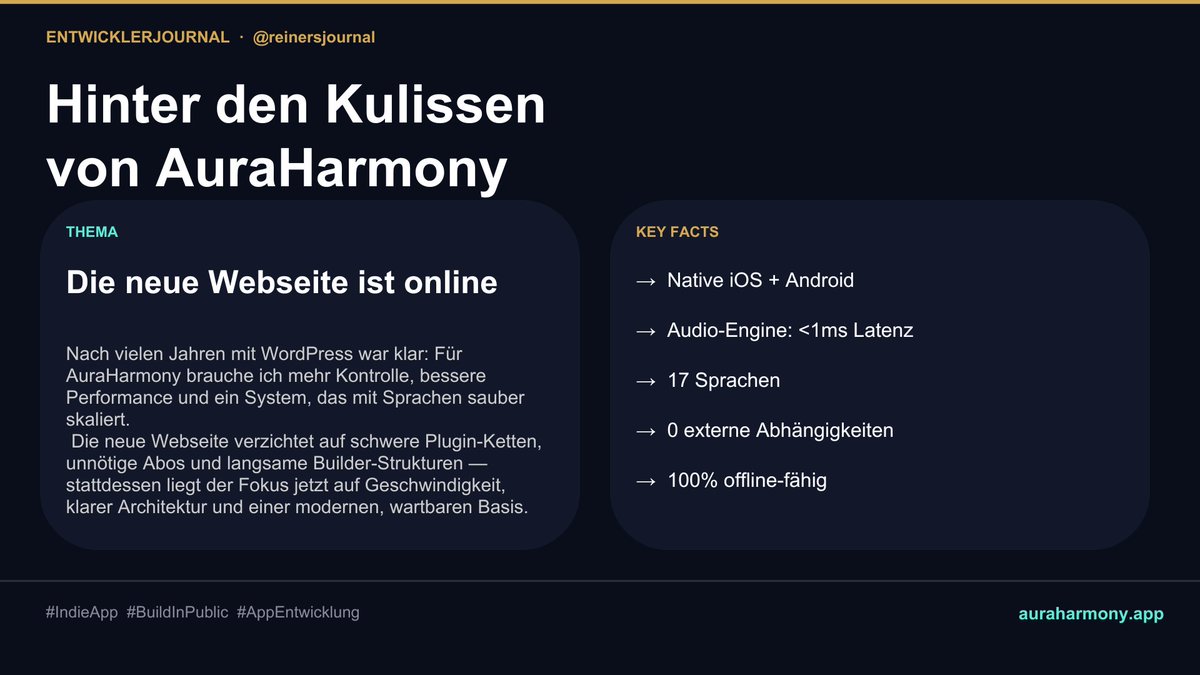
Die neue AuraHarmony-Webseite ist live. Komplett neu gebaut, 8 Sprachen, neues Design.
Was hinter den Kulissen passiert ist: Die alte Seite war ein Flickenteppich. Verschiedene Designs auf verschiedenen Unterseiten, kaputte Links, eine Funktionen-Seite die 404 zurückgab. Das musste weg.
Die neue Seite: auraharmony.app
2
4
5
32
May 12
Eine Sache, die mich als Entwickler am meisten gestört hat: Die alte Seite hat den Preis versteckt. 11,99€ einmalig — das ist unser stärkstes Argument gegen andere Premium Apps. Warum stand das nicht vorne und in der Mitte?
Jetzt steht es da. Mit einem Preisvergleich, der zeigt: Du sparst über 300€ in 5 Jahren.
1
22
entwicklerjournal retweeted

Can pure sine waves "tune" your brain? 🧠✨
Unlike noise, pure frequencies create resonance in your neural pathways. From 432Hz (calm) to 528Hz (focus), they help synchronize your mind for peak performance. 🎧🌀
#SoundHealing #BrainWaves #Focus #AuraHarmony
2
5
43
entwicklerjournal retweeted
Old frequencies. New precision. 🏛️✨
Pure tones like 432 Hz or 528 Hz cut through noise and support focus.
No hype — just clean sound. 🎧🌀
#Solfeggio #Focus #SoundDesign
2
5
28
entwicklerjournal retweeted

Apr 21
Everyone says “Linux is secure and viruses don’t attack it easily”
But why is that actually true?
Very few people know the real reasons:
1. Linux user permissions are strict by design
In Linux, normal users don’t have admin (root) access by default.
Malware can’t install system-level files unless it explicitly gets root permission - which usually requires your password.
No silent installs.
2. Software comes from trusted repositories
Unlike Windows/macOS where people download random .exe files,
Linux users install apps from official, cryptographically signed repositories.
This massively reduces the chance of installing infected software.
3. Open-source = constant inspection
Linux is open-source.
Thousands of developers worldwide continuously inspect, audit, and improve the code.
If a vulnerability appears, it’s often found and patched quickly - sometimes within hours.
4. No single point of failure
Linux isn’t one OS - it’s hundreds of distributions (Ubuntu, Fedora, Arch, etc.).
A virus written for one distro often won’t work on another.
Malware authors hate fragmentation.
5. Kernel-level security features
Linux uses advanced protections like:
• SELinux / AppArmor (mandatory access control)
• Address Space Layout Randomization (ASLR)
• Secure memory handling
Even if malware runs, its damage is heavily restricted.
6. Fewer users = lower incentive
Linux dominates servers, not desktops.
Hackers usually target platforms with maximum users for maximum profit.
Desktop Linux simply isn’t the most lucrative target.
7. Fast updates, no forced delays
Linux updates are lightweight, frequent, and optional - but encouraged.
Vulnerabilities stay open for less time.
8. Command-line transparency
Most system-level actions are visible.
Nothing hides behind flashy installers.
Suspicious behavior is easier to detect for experienced users.
Conclusion:
Linux isn’t “virus-proof” - nothing is.
But its architecture, permissions model, open-source nature, and security-first design make it far harder to attack than most operating systems.

89
286
1,710
164,929
entwicklerjournal retweeted
Before you tune the room, tune yourself.
The frequency you carry into a space is the one it mirrors back.
Stillness isn't empty — it's where clarity starts.
#mindfulness #stillness

3
5
21


entwicklerjournal retweeted
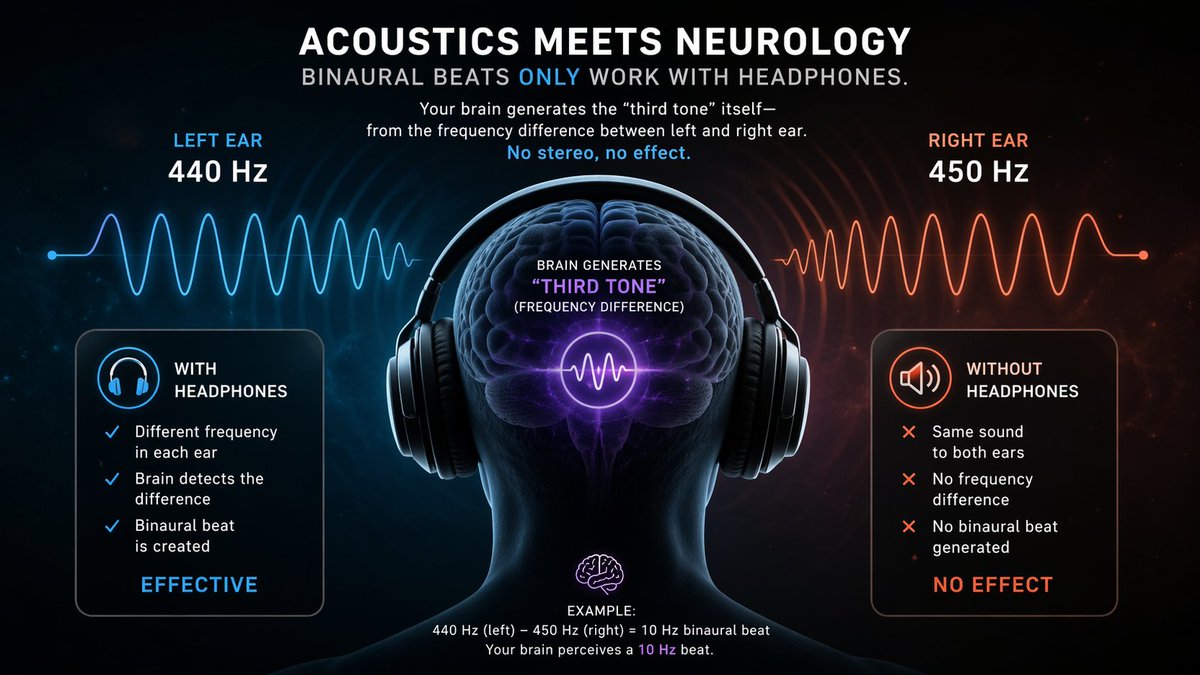
Acoustics factBinaural beats only work with headphones. Your brain generates the "third tone" itself—from the frequency difference between left and right ear. No stereo, no effect. Where acoustics meets neurology. 🎧
#BinauralBeats #Neuroscience
4
7
34
entwicklerjournal retweeted
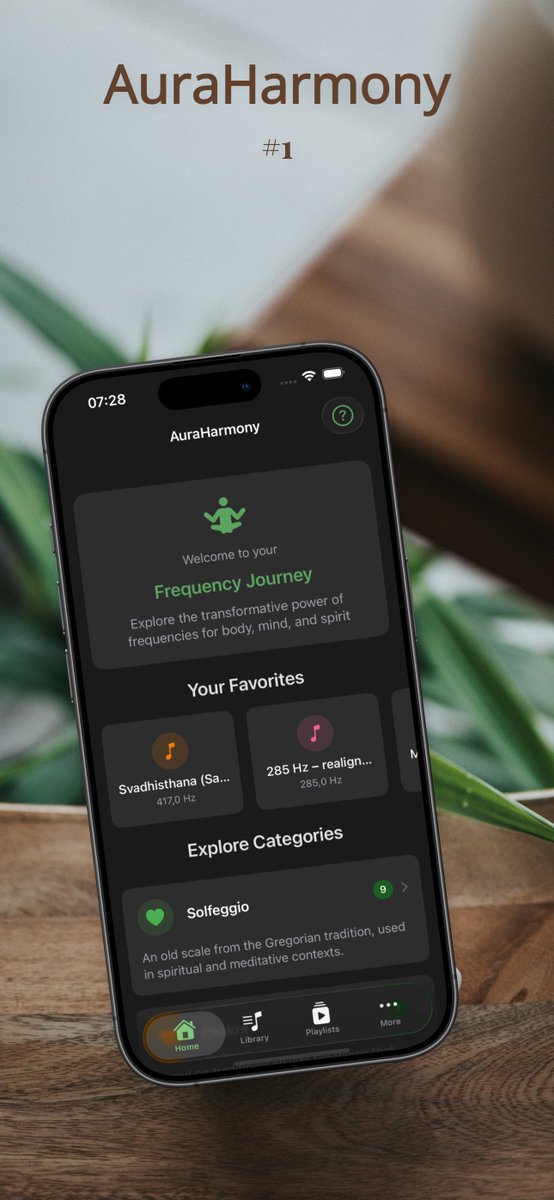
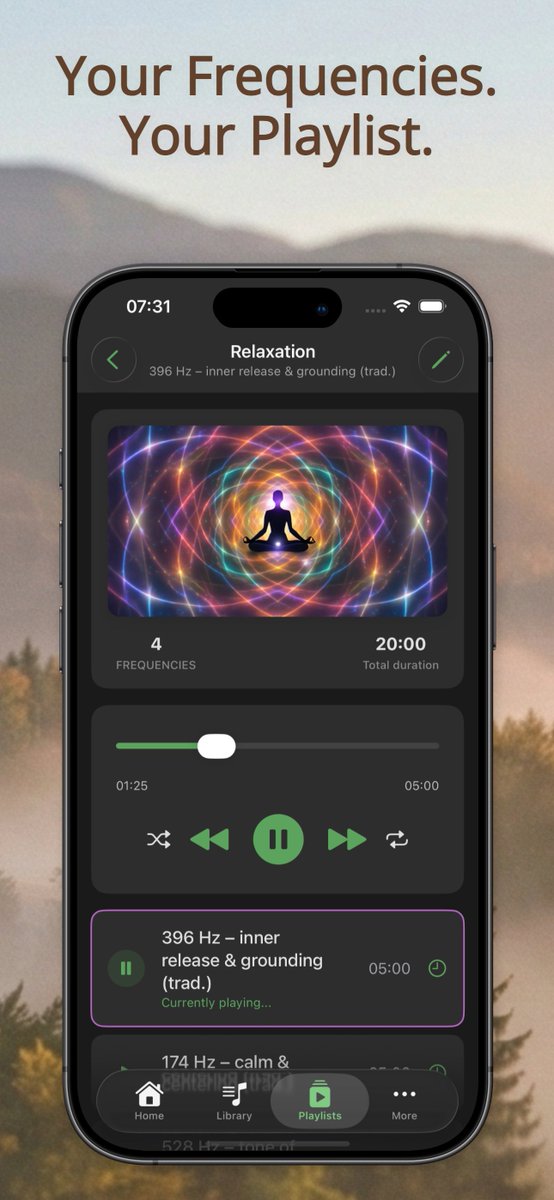
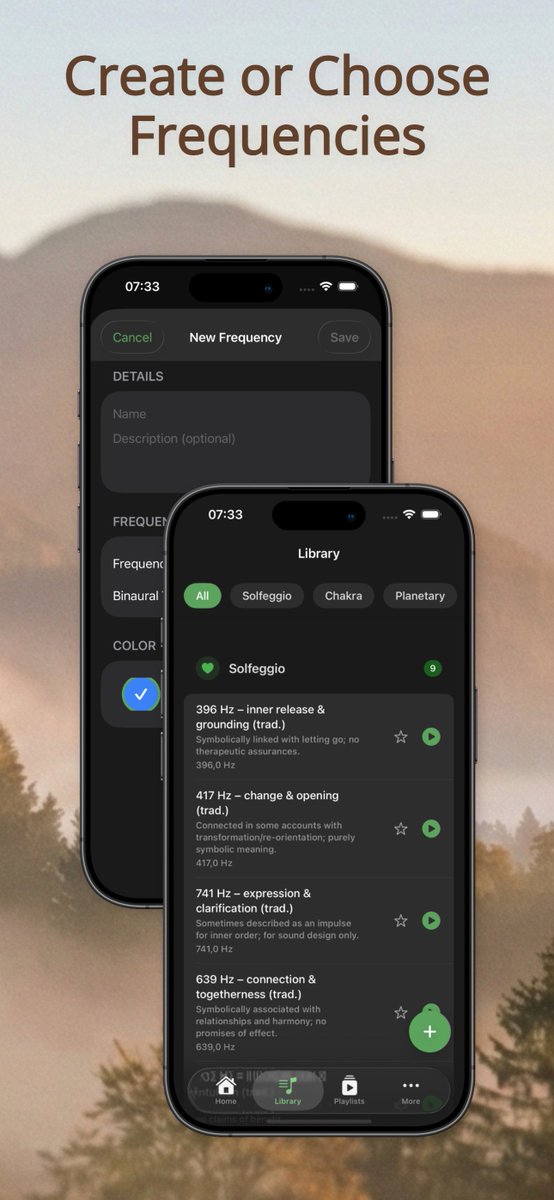
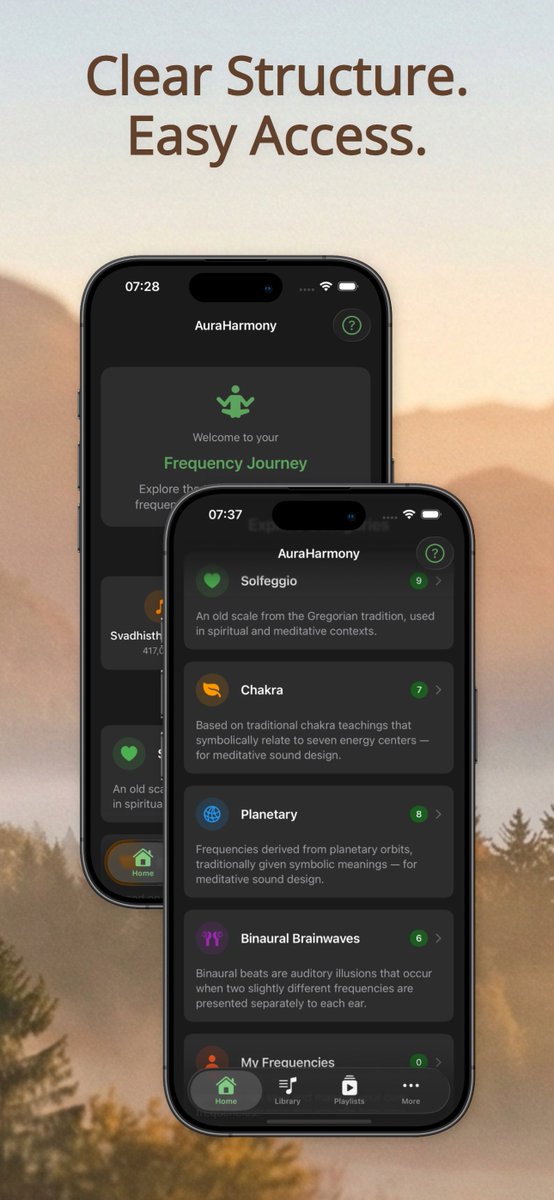
Tired of monthly subscriptions for your peace of mind? 🧘♂️✨
Meet AuraHarmony – your ultimate frequency toolkit for focus, sleep & balance.
✅ Solfeggio & Binaural Beats
✅ Planetary & Chakra Tones
✅ Create your own frequencies
🔒 100% Private & Offline
💎 Buy once. Use forever.
3
5
85
Apr 24
Dev-Einblick
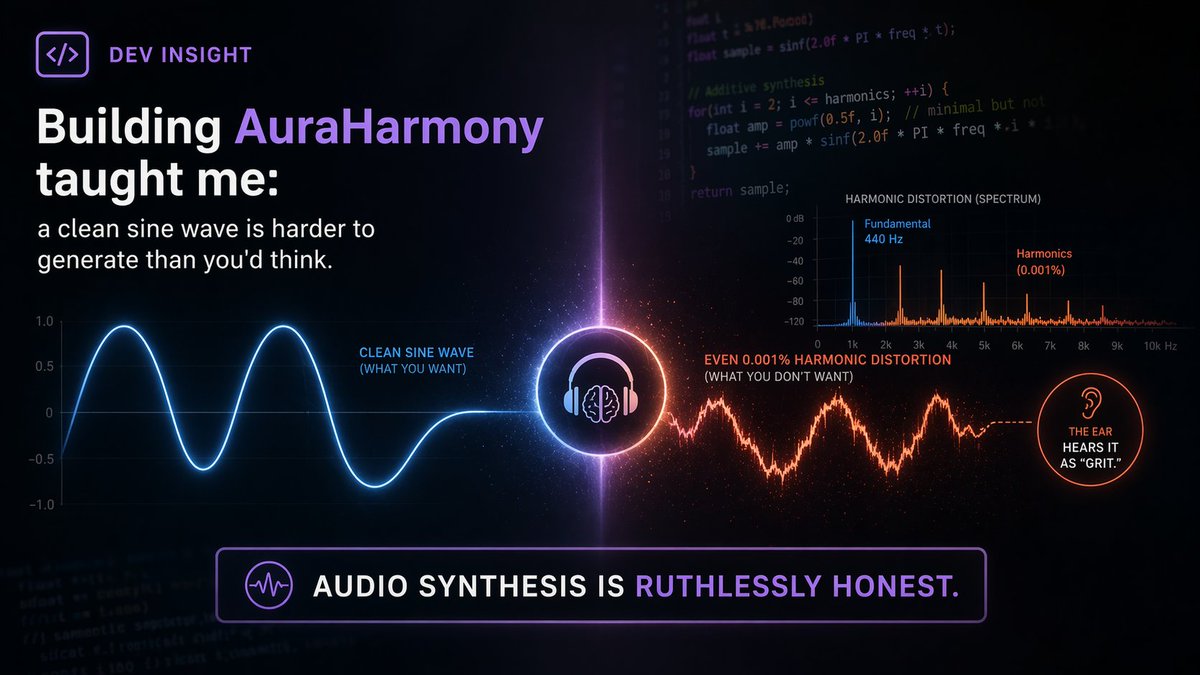
Beim Bauen von AuraHarmony gelernt: Ein sauberer Sinuston ist härter zu erzeugen als gedacht. Schon 0,001% Harmonische hört das Ohr als „Kratzen". Audio-Synthese ist unerbittlich ehrlich.
#audiodev #dev #auraharmony
2
5
29
entwicklerjournal retweeted

Apr 15
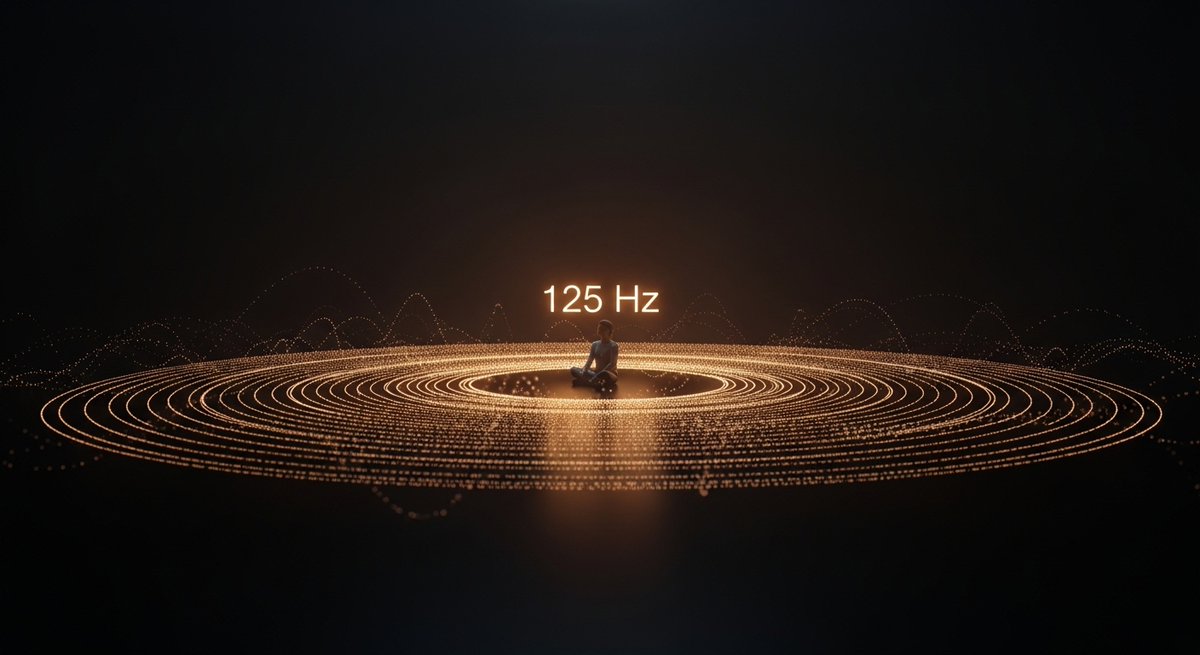
I keep coming back to 125 Hz, and honestly… it’s not because it stands out in any obvious way. It’s actually the opposite. It’s one of those frequencies that doesn’t try to impress you, doesn’t jump at you, doesn’t create that instant “wow” moment people often expect when they hear about Rife numbers.
And maybe that’s exactly why it’s interesting.
When you isolate 125 Hz and just let it run as a clean sine wave, no layering, no tricks, you start to notice something subtle over time. It doesn’t feel like a tone you actively listen to. It’s more like a presence that slowly fills the space, almost like a quiet baseline that everything else could sit on top of. Not in a dramatic way, more like your perception shifts a little if you give it enough time.
Technically, it sits in a range where sound begins to blur into something more physical. You’re not just processing it with your ears anymore, there’s this slight sense that it occupies space differently. Hard to pin down, even harder to measure in a meaningful way, which is probably where a lot of the confusion around Rife frequencies comes from in the first place.
Because if you look at the history, most of those numbers were never documented in a way we would consider reliable today. No consistent setups, no clear parameters around waveform or amplitude. Just frequencies that kept being repeated, tested, interpreted, sometimes overinterpreted.
And still… some of them keep showing up.
125 Hz is one of those frequencies that doesn’t try to prove anything, and maybe that’s exactly what makes it worth exploring. Not as a claim, not as a promise, just as something you can observe for yourself if you strip everything else away.
I’ve been testing it inside AuraHarmony, just generating it in real time, clean signal, no compression, no predefined meaning attached to it. And the more I do that, the more I feel like the interesting part isn’t the number itself, it’s what happens when you stop expecting something specific from it.
Maybe that’s the better question to ask going forward.
#Frequency #125Hz #Resonance #SoundScience #Psychoacoustics #Perception #InnerState #AuraHarmony
5
6
52
entwicklerjournal retweeted
Apr 15
There’s a strange kind of exhaustion that doesn’t come from effort, but from noise you don’t even notice anymore. Conversations, deadlines, scrolling, constant input… your mind doesn’t shut down, it just fragments into pieces that never fully reconnect.
At some point, your system stops responding clearly. Focus slips, decisions feel heavier, even simple thoughts start to blur at the edges. It’s not dramatic, just… off. Like something inside you lost its rhythm.
When I started experimenting with binaural frequencies in AuraHarmony, what stood out wasn’t some instant effect. It felt more like the brain slowly re-locking onto a cleaner signal, as if the internal noise floor dropped just enough for clarity to return. Subtle shift, but noticeable.
Maybe the question isn’t how to push harder… but what happens when you finally retune the signal you’ve been running on all day.
#BinauralBeats #FocusState #MentalClarity #Frequency #Neuroscience #DeepFocus #AuraHarmony #DigitalOverload #SignalVsNoise

3
6
34
entwicklerjournal retweeted
Apr 15
Thesis:
What you repeat doesn’t just train your brain — it quietly reshapes your reality.
Context:
Most people associate repetition with learning, like practicing a skill or memorizing something. But it runs deeper than that. The brain doesn’t just store repeated input — it starts prioritizing it. Signals that occur again and again gain weight, become easier to trigger, and slowly begin to dominate how you perceive and respond to the world. Over time, repetition stops feeling like repetition… and starts feeling like “this is just how things are”.
Verifiable facts:
Neuroscience describes this through neuroplasticity. Repeated activation strengthens synaptic connections — often summarized as “neurons that fire together wire together”. Neural pathways that are used frequently become more efficient, requiring less energy and activating faster. At the same time, unused pathways weaken. This process directly affects perception, attention, emotional response, and decision-making. The brain optimizes for what it encounters most often.
Interpretation:
So repetition isn’t neutral. It acts like a filter that gradually locks in certain patterns while fading others out. The system becomes biased toward what it already knows, reinforcing its own expectations. That’s powerful — because it means your internal state isn’t just reacting to reality, it’s actively shaping what reality feels like over time.
Personal observation:
While experimenting with structured frequency exposure in AuraHarmony, I’ve noticed that the real changes rarely come from a single session. It’s the repetition that matters. Subtle shifts at first, almost easy to overlook… but after a while, the baseline changes. Attention stabilizes differently, reactions feel less scattered, and the whole system seems to settle into a more consistent pattern.
Open end:
So maybe the real question is:
What patterns are you reinforcing right now… without even noticing it?
#Neuroscience #Neuroplasticity #Habits #Mindset #Brain #Cognition #Behavior #Focus #Frequency #SelfDevelopment #AuraHarmony

3
6
50
entwicklerjournal retweeted
Apr 14
Thesis:
Your brain decides faster than you can explain — feeling comes first, logic follows.
Context:
We like to think we make decisions rationally, step by step, weighing options like a clean algorithm. But in reality, something else kicks in first. A subtle pull, a resistance, a sense of “this feels right” or “something’s off”. By the time you start explaining your decision, a large part of it has already been shaped beneath the surface.
Verifiable facts:
Neuroscience shows that emotional and subcortical systems process information faster than conscious reasoning. Structures like the amygdala can trigger responses before the prefrontal cortex fully evaluates the situation. Decision-making often begins as a rapid pattern recognition process, built from past experience, memory, and learned associations. Conscious thought then steps in — not to initiate the decision, but to interpret and justify it.
Interpretation:
So what we call “intuition” isn’t random or mystical. It’s compressed experience, running at high speed. The brain detects patterns, predicts outcomes, and nudges you in a direction long before you can put it into words. Logic still matters, of course — but often as a second layer, refining or sometimes correcting what was already set in motion.
Personal observation:
Working with subtle changes in internal states — especially through frequencies — I keep noticing how quickly perception and decision-making can shift without any clear “thought” attached to it. You don’t sit there analyzing… something just aligns differently, and your response changes with it. It’s quiet, but it’s fast.
Open end:
So the question isn’t just whether you’re thinking…
but how much has already been decided before the thought even appears.
#Neuroscience #DecisionMaking #Cognition #Intuition #Brain #Psychology #Mindset #Perception #Consciousness #NeuralProcessing #AuraHarmony

5
7
60
entwicklerjournal retweeted
Apr 14
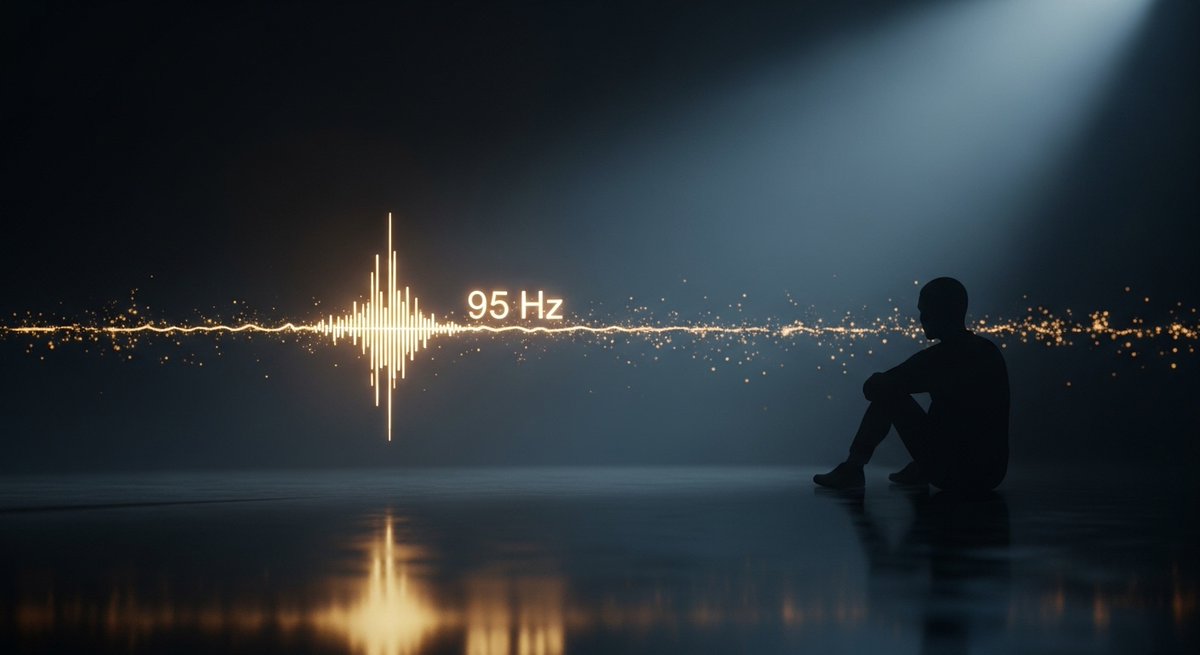
There’s a number that keeps showing up in old Rife lists… 95 Hz.
Not loud. Not dramatic. But strangely persistent.
When you isolate it, something interesting happens:
It doesn’t really feel like a “tone” in the usual sense. More like a subtle pressure… almost like the air itself shifts slightly. Hard to describe, easy to dismiss — unless you actually sit with it.
Here’s the thing:
Most historical Rife frequencies were never documented with the precision we’d expect today. No consistent waveform, no standardized amplitude, no reproducible setup. Just numbers… passed along, repeated, sometimes mythologized.
And yet — some of them keep resurfacing.
95 Hz is one of those.
I’ve been experimenting with it in controlled conditions, stripping everything back: pure sine wave, no modulation, no layering. What stands out isn’t something spectacular. It’s subtle. Grounding, maybe. Slightly calming — but in a way that doesn’t push, just… sits there.
That’s exactly where it gets interesting.
Because the real question isn’t: “Does it do something?”
It’s: “What do we actually perceive when we remove expectations?”
In AuraHarmony, you can test frequencies like 95 Hz yourself — clean, uncompressed, generated in real time. No presets forcing an interpretation. Just raw signal and your own perception.
Try it. Observe it. Don’t label it too quickly.
Some things only reveal themselves when you stop trying to force an outcome.
#Frequency #Resonance #SoundScience #Brainwaves #BinauralBeats #Consciousness #MindState #DeepFocus #Relaxation #MeditationTech #EnergyAwareness #Vibration #SignalProcessing #ExploreYourMind #InnerState #AuraHarmony
5
7
59
entwicklerjournal retweeted
Apr 13
Thesis:
Silence in the brain isn’t empty — it’s highly organized.
Context:
When people talk about “clearing the mind”, it often sounds like the goal is to shut everything down, almost like flipping a switch to zero. But if you look closer, that’s not what actually happens. The brain doesn’t power off — it reconfigures. Activity doesn’t disappear, it shifts into different patterns, often slower, more synchronized, less chaotic… and somehow more stable.
Verifiable facts:
Even in rest, the brain remains intensely active. The Default Mode Network (DMN) keeps running, coordinating internal processes like memory, self-referential thinking, and future simulation. Brainwave activity doesn’t vanish either — it reorganizes. Alpha and theta rhythms tend to become more dominant in relaxed states, reflecting large-scale coordination rather than random firing. This isn’t inactivity — it’s structured, measurable, and essential for cognitive balance.
Interpretation:
So what we casually call “silence” might actually be a state of higher coherence. Less noise on the surface, but stronger alignment underneath. Instead of scattered signals competing for attention, the system settles into patterns that require less effort to maintain. It’s not emptiness — it’s efficiency.
Personal observation:
While experimenting with frequencies in AuraHarmony, I keep noticing that the most interesting shifts don’t happen when something feels intense or overwhelming. They happen when things get quieter internally, but at the same time more “ordered”, almost like the system locks into a cleaner baseline. Nothing dramatic — just a subtle sense that everything runs smoother.
Open end:
So maybe silence isn’t the absence of activity…
but the presence of a pattern we’re not used to noticing.
#Neuroscience #Brainwaves #DMN #Consciousness #MindState #Focus #Meditation #Frequency #Resonance #NeuralDynamics #AuraHarmony
4
6
32
entwicklerjournal retweeted
Apr 12
Thesis:
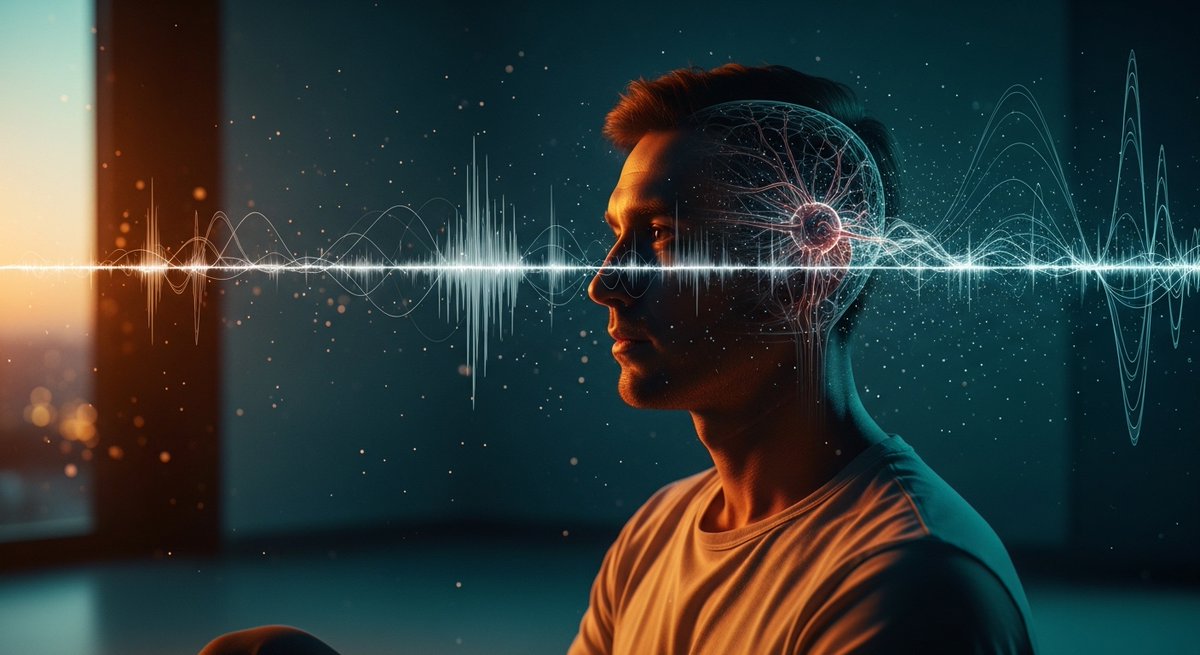
Your brain doesn’t “receive” reality like a radio — it actively constructs it through patterns.
Context:
There’s this idea floating around that the brain tunes into some kind of external field, that thoughts are basically resonance with information already out there. Sounds elegant, almost intuitive. But when you zoom in, the picture shifts a bit. The brain isn’t a passive antenna — it’s a dense, self-organizing system that constantly predicts, filters, and reshapes incoming signals. It doesn’t just pick up patterns… it generates them.
Verifiable facts:
We know the brain runs on electrical and chemical signaling — neurons fire, synapses adapt, networks synchronize. Different frequency bands (delta, theta, alpha, beta) coordinate how information flows and integrates across regions. These oscillations are measurable, reproducible, and tightly linked to states like focus, sleep, or memory. At the same time, perception itself is not a direct copy of the outside world. It’s heavily influenced by prior experience, expectations, and internal models — which means what you experience is already a processed construction, not raw input.
Interpretation:
So yes, everything underneath follows physics, and sure — you can describe a lot of it in terms of waves and timing. But equating that with “the brain tunes into reality” skips an important layer. The system itself shapes what becomes meaningful in the first place. Patterns don’t just arrive — they get selected, amplified, suppressed. That makes the brain less of a receiver and more of an active builder that stabilizes its own version of reality over time.
Personal observation:
Working with frequencies in AuraHarmony, I keep noticing how subtle shifts can change perception — not in some dramatic, mystical way, but more like a gentle re-weighting of attention and internal state. The same external environment, different internal pattern… and suddenly the experience tilts. That alone makes it hard to argue for a purely “incoming signal” model.
Open end:
So maybe the better question is:
Are we resonating with reality… or continuously rendering it from within?
#Neuroscience #Brainwaves #Consciousness #Perception #CognitiveScience #Frequency #Resonance #SelfOrganization #NeuralDynamics #Mindset #AuraHarmony
5
6
58