
crypto since 2015 | building where attention lags power
Joined November 2010
- Tweets 9,780
- Following 2,603
- Followers 55,579
- Likes 13,427
1,127 Photos and videos





"$60B for a VS Code fork" is the wrong read with SpaceX <> Cursor deal.
SpaceX $SPCX bought Cursor for $60B far less for the editor, and not for the users, it bought it for the dataset.
Cursor wasn’t collecting code, it was instrumenting how engineers actually work:
- what they accept and reject in every suggestion
- how they edit files through iterations
- how they run debugging loops
- what long agentic trajectories they push through Composer
That is priceless high-signal preference data from real workflows, and it is exactly the kind of thing you cannot scrape from the web or synthesize.
Perplexity built a moat around retrieval, while Cursor built a moat around creation and correction. The latter is both harder and more valuable... especially for models that are supposed to participate in engineering, not just answer questions about it.
We all thought (and correctly so) that the race was very much about compute, but SpaceX already HAS compute, and at a pace ahead of almost everyone else: Colossus, with close to a million GPUs.
What they bought for $60B is the thing compute cannot buy: real human signal from real engineering. Cursor was constrained by compute... xAI was constrained by this.
This is infrastructure logic: one side brings the horsepower, the other brings the scarce signal that makes that horsepower worth something. Specifically, post-training and agent alignment on real developer traces, not proxies.
I wrote before, when SpaceX was assembling a vertical AI stack, that most people still think the race is about models and compute. Here is the next layer: the application that spins the data flywheel.
I live inside these tools every day myself. The editor is replaceable, but the feedback loop from millions of real sessions is not.
Product and distribution are real assets, but what compounds at the next level is the dataset.
Most commentary is valuing the wrapper and missing the flywheel... the part that actually moves the frontier.

146
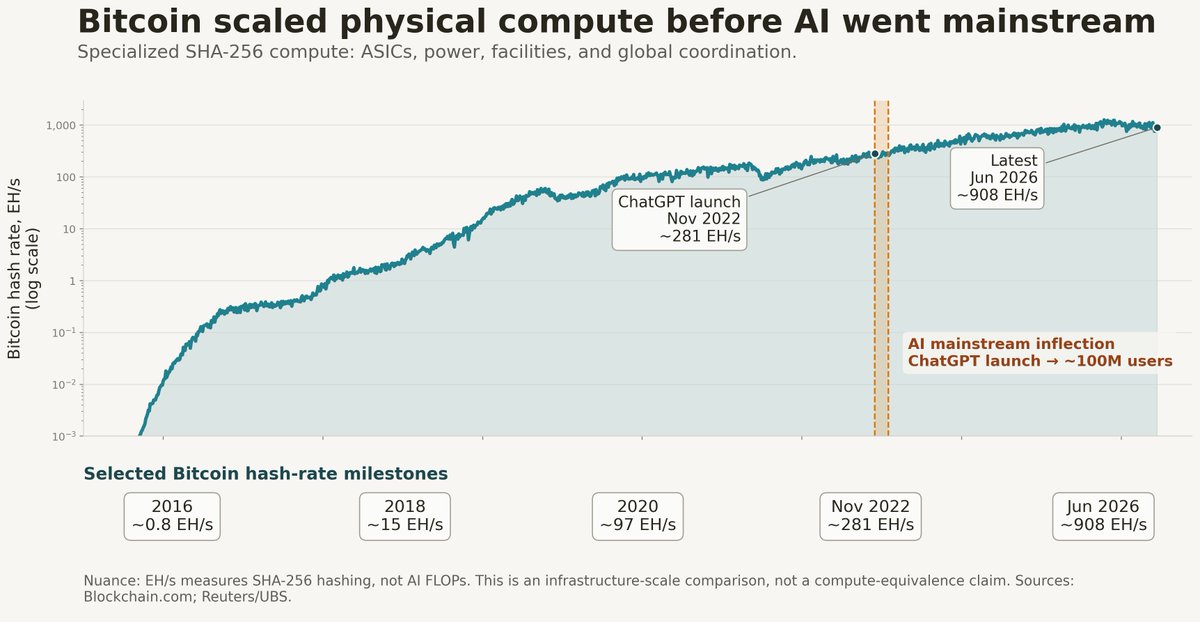
With Bitcoin, proof-of-work created one of the largest specialized compute networks humanity had ever built, long before AI went mainstream.
Not FLOPs-to-hashes equivalent, but physically real compute: ASICs, power, facilities, and coordination at global scale.
Now we’re seeing the largest infrastructural investments since World War II happening in parallel (data centers, compute, energy).
Crypto infra is blockchains securing value and enabling smart contracts. AI infrastructure is computation, inference, and eventually decentralized networks.
Both are physical and digital. Both need each other. One doesn’t cancel out the other.
2
10
3,512
Bitmine vs Strategy isn't two firms buying crypto, but two different bets.
@saylor takes BTC as the asset = pure digital property, hardest money, zero yield... the whole point of the bet.
Monetary supremacy, no yield games.
Tom Lee's @BitMNR takes ethereum:native as productive infrastructure = already 5.62M ETH, closing in on 5% of the entire supply, about 4.72M of it staked... that's ~$226M a year.
The asset itself pays you to help hold the layer everything else settles on.
Both wrappers are the same: a public company plus a preferred-stock layer... but who pays the preferred coupon is decided by the asset.
@fundstrat's Bitmine's staked ETH funds the dividend out of the asset itself, while Saylor's Bitcoin yields nothing, so he funds STRC out of the reserve and the raises. Same wrapper. Opposite engine.
Both bets are deep underwater on paper right now, with Bitmine by over $9.5B, Strategy's stack red too... but staking keeps Bitmine cash-flow positive through the drawdown. Saylor's bet is pure price plus balance-sheet discipline.
I've written this: you can't keep pricing ETH like it's 2021 aka more txs = more burn = price up. x.com/rezosh/status/20596551…
It's productive participation capital now: you hold it, stake it, get paid to secure the network.
Bitcoin doesn't need to be the rails, it IS the asset. ETH is both the asset and the collateral layer under a much bigger economy.
These are two stories, and it's not about which is better or worse... it's different bets on what crypto becomes.

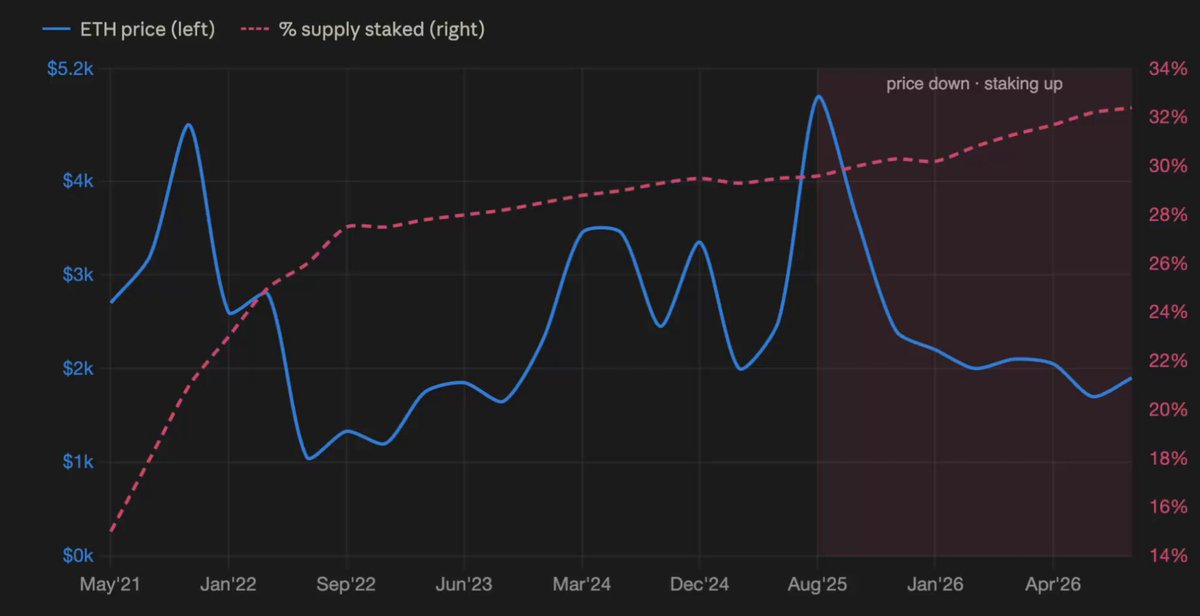
ETH underperformed, that's easy to admit and quite obvious... the harder part is not confusing underperformance with thesis failure.
Hoffman @TrustlessState sold his ETH and wrote an honest piece, but it matters to read what he actually said.
He didn’t say “Ethereum lost,” even remained extremely bullish on the network, yet still sold the token. His thesis was the network wins, but ethereum:native does not capture that success.
That’s what you have to argue with. Not the network, but the token... and here is where I diverge.
Hoffman values ETH as a fee-token: usage -> fees -> burn -> price.
On that metric, he is largely right cos L2s took part of the margin, apps took part of the economy, and the old formula got much less clean, but ETH looks less and less like only a fee-token.
It is increasingly becoming an economic security/collateral asset around a neutral settlement layer. Stablecoins, RWAs, DeFi, L2S, and institutional flows don’t just “use Ethereum," they increase the value of the base trust layer that has to be secured by ETH.
32% of supply already in staking = a different capture mechanism... Not delayed old fee-capture, but a different function of the asset.
The trap (and I’m in it too) is still valuing ETH like it's 2021: more transactions, more burn, price up.
That model got weaker, but weaker does not mean dead.
A lot of people are giving up now (in crypto in general as well), not cos the @ethereum or crypto thesis died, but cos the thesis changed, and holding it became more painful than just admitting a mistake.
Conviction sometimes needs to be adjusted, but throwing it out right before infrastructure becomes real... that's the most expensive trade.
9
1,530
Whatever I or other people have to say about Saylor, right now, he's a net positive for Bitcoin. Only because he buys, and he buys consistently.
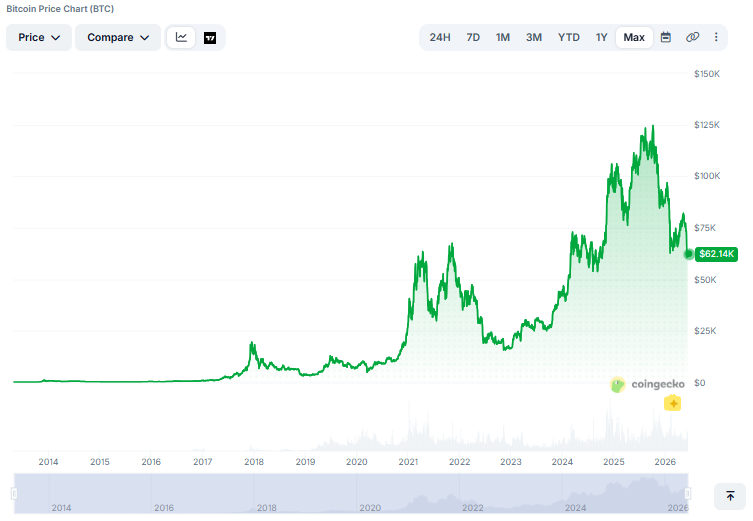
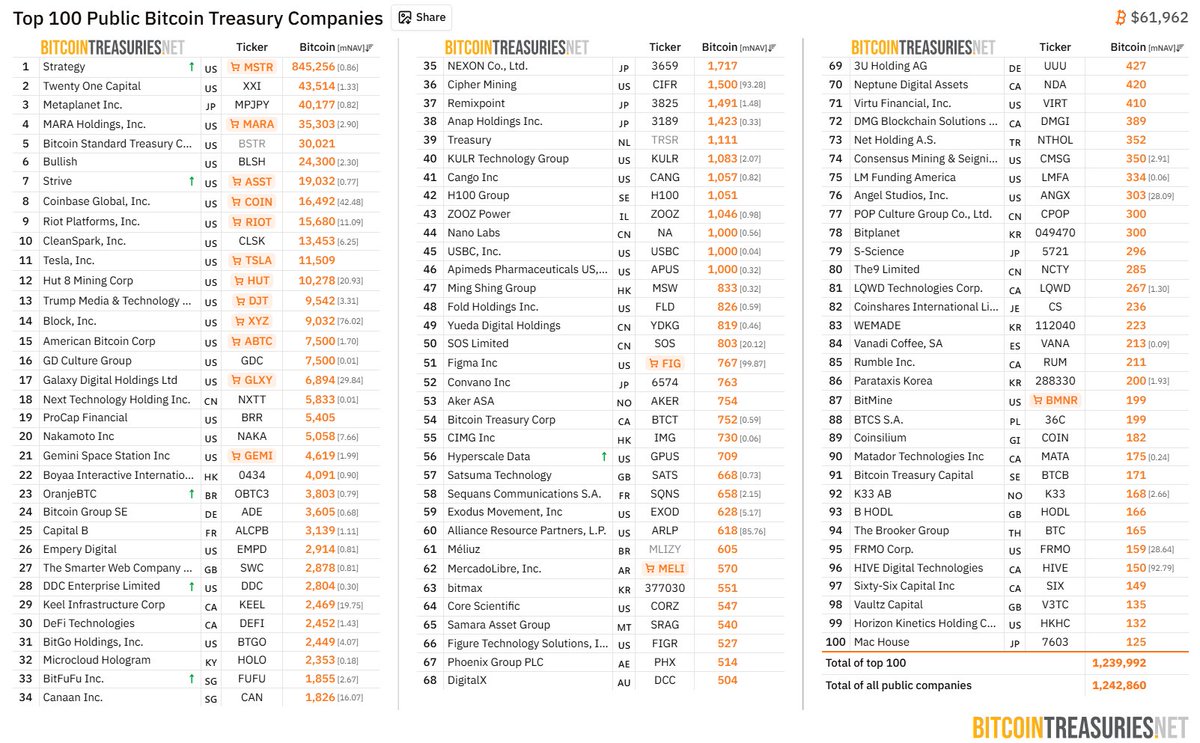
1,587 BTC for $100M, now 846,842... about 4% of the entire supply, and here's the detail people swallow while screaming "dilution": he bought at ~$63k against a stack cost basis of $75.6k.
Second week in a row, below his own price, and that same capital round also topped up the reserve by $100M, to $1.1B. One raise, both engines. The dilution complaint counts only BTC per share and forgets the cash that got added.
Count both, and it's not the dilution they're screaming about.
Does it move the market? Hardly... but as a signal, yes: in the down leg of the cycle, the stack is held by people who don't sell into weakness, not flippers.
Saylor's one of them. So am I.
Should a single player hold this much Bitcoin? Honestly, I don't know... but while he's buying what everyone else is dumping, I'll hold that question.
Jun 15

Strategy has acquired 1,587 BTC for $100 million to increase our $BTC Reserve to ₿846,842. We have also increased our USD Reserve by $100 million to $1.1 billion. $MSTR $STRC strategy.com/press/strategy-…
7
1,364
SpaceX $SPCX IPO was nearly 5x oversubscribed.
Over $350B in orders came in for a deal that was only offering ~$75B worth of shares.
When demand is this far above supply, brokers scale back allocations across the board, most people only got a fraction of what they requested. Standard in hot IPOs, just at a much larger scale here.
Standard in hot IPOs, just at a much larger scale here.
4
2
10
2,346
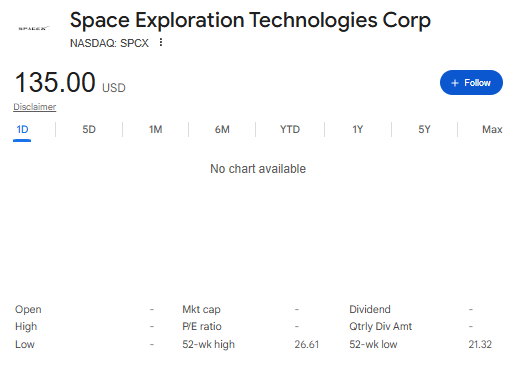
SpaceX $SPCX didn’t open at $171.
$135 was the actual IPO price, and the $170–175 range was just pre-opening indications... what the order book suggested before Nasdaq’s auction sorted it out.
Basically, Nasdaq runs an opening auction to balance buy and sell orders and set the real starting price... standard for big IPOs with heavy demand.
Demand was clearly strong though.
1
11
3,174
There couldn't have been a worse time to list a crypto SPAC on NASDAQ. The SpaceX IPO is draining capital, Strategy is selling, ETFs are bleeding outflows, and we're in the down leg of the four-year cycle.
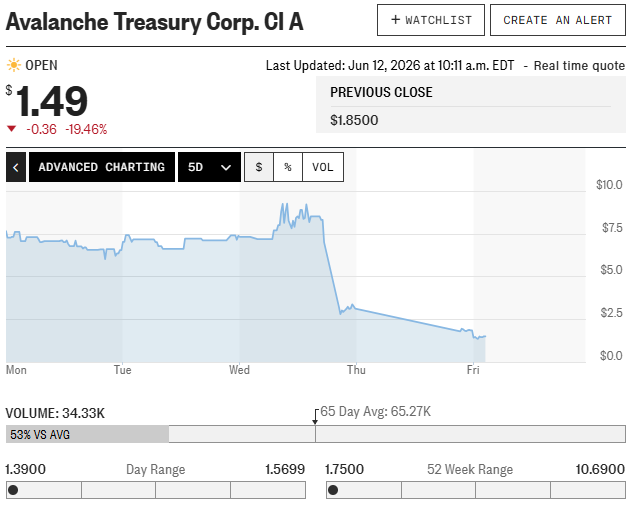
$AVAT went public and crashed 38% on day one.
- Opened around $3, closed near $1.85.
- AVAX itself sits at five-year lows, -95% from the 2021 peak.
The company still plans to buy over $1B more AVAX, and the CEO calls it "a repositioning of finance."
I've written this before: the down cycle is when the mask comes off... a SPAC structure is built for dilution and PIPE exits, not durable capital.
What gets sold as "traditional market access" often turns out to be a clean on-ramp and off-ramp for sophisticated money, at the expense of whoever bought the "future of finance" line.
Listing on a traditional market is never the win... it's just a stage.
The win is the investors who stay in the asset through the cycle, when the exit door is wide open.
7
1,536
SpaceX is targeting ~$1.8T valuation (some say ~$2T) with this IPO, which puts it in the same league as the entire crypto market cap (~$2.25T)... but these two numbers aren’t really comparable.
SpaceX’s valuation is a bet on future cash flows, growth, and optionality = Starlink, Starship, space infrastructure for AI, all that... it’s not $1.8T in actual capital sitting somewhere waiting to be spent.
Is some money from crypto going to this IPO? Partially, yes... We saw it in the ETF outflows and the pre-IPO secondary markets getting hit last week. Institutions and marginal capital are chasing higher short-term risk/reward.
That said, this isn’t crypto liquidity getting wiped out... There’s still a lot of sticky capital in the system = long-term Bitcoin holders, staked ETH, stablecoins, on-chain activity.
Crypto isn’t one big pile of money that just gets sucked into the next hot IPO. Money moves where the risk-reward looks best in the moment.
It doesn’t mean the capital has permanently left crypto, it just means it’s going where people THINK they can make more money this cycle.
11
4,898
FIRE for everyone in trading and liquid asset management!
A Vitalik proposal I'd advise you NOT to scroll past: index-tracking assets and synthetics built on options, instead of debt and liquidations. Worth stopping for: ethresear.ch/t/building-inde…
The mechanics are simple... nothing new for anyone who's been around options, but the mechanics transform in the crypto world.
- Split 1 ETH into two halves: P = the cash half, holds value up to the strike; N = all the upside above it.
- Together they always equal exactly 1 ETH.
Want stable exposure = hold P and roll into a new strike when price gets close, that's it... and now the chain that makes it all matter.
Liquidation is impossible... and not because risk parameters are carefully tuned, but by construction: the two halves sum to exactly what was deposited at any price.
How do we get around the Oracle? Exactly like this.
Because if there are no liquidations, no real-time oracle is needed.
You need a price once, at expiry, and real-time oracles are the weakest point of the entire on-chain stack: making them safe is nearly impossible, and whole protocols have burned on that attack vector.
I wrote after the Polymarket episode: the best on-chain primitives are still being built. This is exactly that. A primitive that's fine with a slow, verifiable oracle.
Perps took the liquidity and the attention, but they stand on the same fragile stack: debt, liquidation, fast oracle. A liquidation cascade in every stress event isn't a glitch. It is, unfortunately, a property of the foundation.
Implementations are already on testnets, and Vitalik himself says "it's happening" and insists on formal verification before mainnet.
After the Orchard bug in Zcash, that's no longer just caution, it's a lesson learned and a necessity. We ran formal-verification research once, and I really regret that back then, early in my crypto journey, I didn't have the budget, and we paused the research. Anyways...
Either way, this still isn't about "ETH up tomorrow," it's about whether on-chain exposure becomes acceptable to the capital that's been sitting out... cos it didn't want to depend on fragile oracles or catch someone else's cascades.
Options are a huge part of derivatives markets in TradFi. So if, as Vitalik writes, it's finally taking off... that's great for everyone.
Serious money will come as soon as we remove from the foundation the thing that kept breaking.
Jun 11

Looks like the options thing is happening already!
See also: various people thinking through and building different versions of the idea in the thread: ethresear.ch/t/building-inde…
Though I do strongly urge that if any of these get on mainnet quickly, we formally verify it first. I hope @vyperlang and/or github.com/lfglabs-dev/verit… folks ( @Fricoben) can help!
(Also, now is a good time to be thinking about robustness-optimized oracles)
firefly.social/post/x/206494…
1
12
2,231
We are still in the four-year cycle.
People thought institutions, ETFs, corporate treasuries, and debt would break it or make it completely different this time. They said the old cycle is over.
That’s what everyone says every cycle.
The cycle isn’t an external pattern that got layered on later. It comes from Bitcoin’s own rules, the fixed issuance schedule, and the holding incentives built into the protocol itself.
New market structures don’t rewrite those mechanics.
Yes, this cycle has new layers, but the four-year cycle itself is baked into Bitcoin... the issuance schedule and the holding behavior didn’t disappear just because bigger players showed up.
It didn’t go away... we’re still in it.
8
1,672
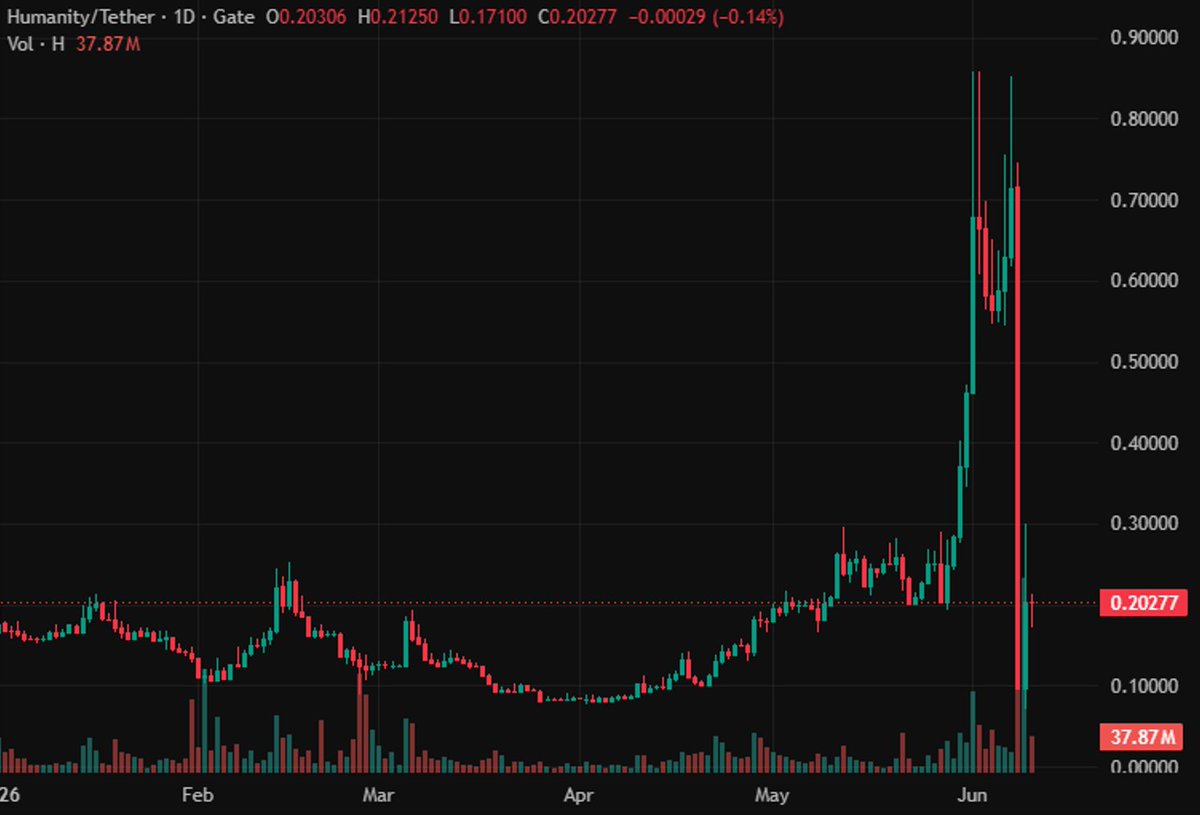
The Humanity Protocol (in two parts) hack wasn't a sophisticated smart contract exploit, it was private keys on a laptop, and by then, the project had already spent weeks building exactly the kind of shady-shitty-dirty exit-liquidity structure that usually ends badly.
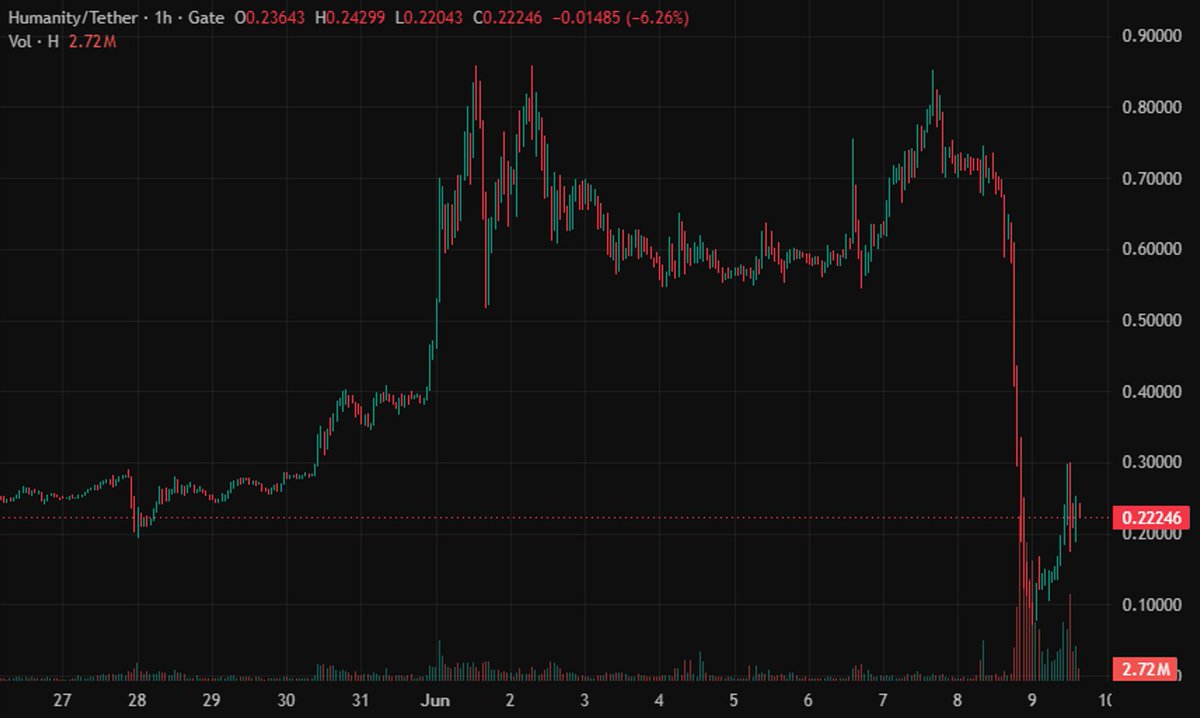
Part One: Apparently unplanned... malware on a foundation member's laptop, and the attacker holds 3 of 6 multisig keys. $31–36M in $H got drained, price ~90% down in hours.
Everything stolen was sold DEX-only, in coordinated swaps, and on top of that, he minted another 100M $H on BSC... for extra pressure. All of it two weeks before the June 25 unlock.
Now the Second, no less dirty Part: In the weeks before the hack, $H pumped hard, with clear marks of shady market-maker activity and concentrated accumulation.
@zachxbt first called it possibly staged: the timing, the DEX-only selling, a convenient exit for whoever had been pumping. Then, after more tracing, he walked it back... the key theft was genuine, external.
The pre-hack accumulation is a separate story.
But here's what's still standing after the walkback: a pump into a known unlock; the structure was built. Whoever was going to distribute into it, the team, their market makers, doesn't matter. An external attacker just moved first.
I've seen this movie before: a token grinds up right before vesting, then reverses hard. Usually, it doesn't even need a thief.
Keys on a laptop, on top of pre-built exit pressure. The oldest combination in crypto.
1
1
9
1,528
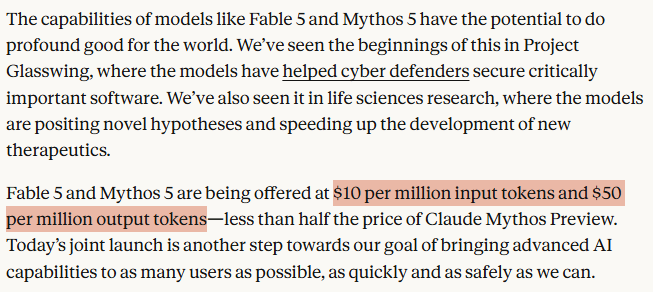
Fable 5's pricing shows the real economics of frontier AI. A short window inside paid plans until June 22, then pure usage at $10/$50 per million tokens.
It's a structural bet is that the marginal intelligence of a Mythos-class model only justifies its marginal cost on a narrow slice of high-stakes workflows. SWE-Bench at 80.3% is strong.
The question isn't whether it's strong, but on which workflows that delta converts into money.
And the answer won't come from Anthropic absorbing losses, it'll come from power users' spend. For the first time, the market gets an honest measurement of how big that slice is.
Also, the "permanent underclass" takes feel premature. The solution isn't cheaper frontier access, it's routing. Open-source and local models already handle most production flows for a fraction of the cost... you call the expensive model only on the steps where it actually moves the result.
That's how we run it, and that's how everyone will.
Now the market reveals it: either the slice of high-ROI workflows is as big as the hype assumes, or most production work was always a job for specialized, cheaper systems.
1
7
3,450
I was never a huge fan of DATs, but I supported the idea. These entities were pure holders, much more stable than people buying and selling ETFs or speculating on exchanges... even closer to the original hodlers, the OGs.
The whole model was buy and hold, raise capital, buy more. Saylor gave that conviction a very loud voice, and I respected that.
$MSTR sold almost nothing... like $2.4 million out of a massive position, but whatever it was, the impact was bad. Very bad.
The signal triggered holders and started cascade liquidations, and we saw what happened to the price. Still… Bitcoin is bigger than Saylor, bigger than MicroStrategy, or any DAT.
Even if Strategy explodes one day, the damage will be temporary.
This move hurt the perception of DATs short term, but the long-term Bitcoin thesis stays the same.
7
2,901
Anthropic launched a "Mythos-class" model with Claude Fable 5. I remember what I felt during the distillation of Opus 4.6 and disappointment with Opus 4.7, but given the security reports around Mythos, I'm curious.
This doesn't mean I'll implement this in my workflow right away. If companies like Notion removed Opus models due to their inconsistency, Fable 5 has to do a lot of work to regain the trust of those companies.
The real test won't be launch day though, it'll be within a week, or two, or three, to see if the model can really hold in actual workflows.
5
1,878
Humanity Protocol is an uncomfortable reminder. When your entire narrative is built on solving hard security problems (palm biometrics zk-proofs for proof-of-humanity, Sybil resistance), a security failure no longer costs only money. It costs the right to tell the story.
$H built one of the loudest identity narratives out there. Then a compromised employee laptop handed attackers the bridge keys, they drained the wallets and minted fresh $H... and it’s down ~90% in hours.
The market didn't reprice the hack, it repriced the credibility of the entire promise... again.
A strong narrative pulls in capital fast, and in exactly the same motion makes the protocol more fragile when the security underneath doesn't hold. The higher the story, the harder the trust falls.
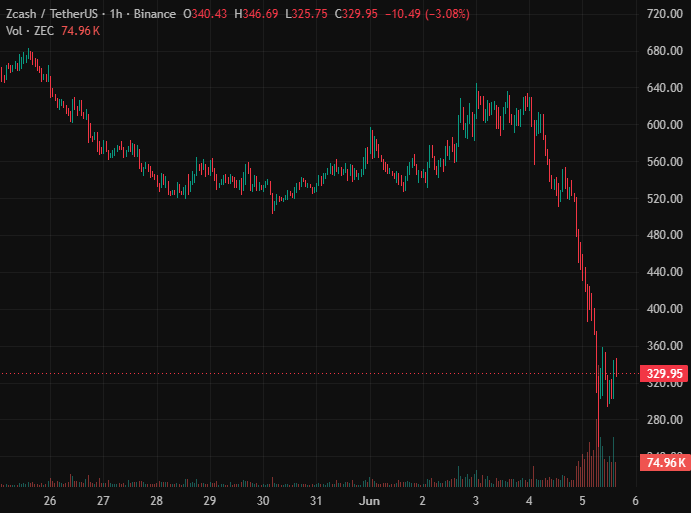
ZEC showed the same shape: a long-hidden bug made the supply unverifiable and forced the Ironwood upgrade to restore verifiability. There, it broke in the code; here, it broke in the keys = same result.
The market is learning to separate narrative from narrative survivability. Humanity showed what happens when the two diverge.
6
1,488
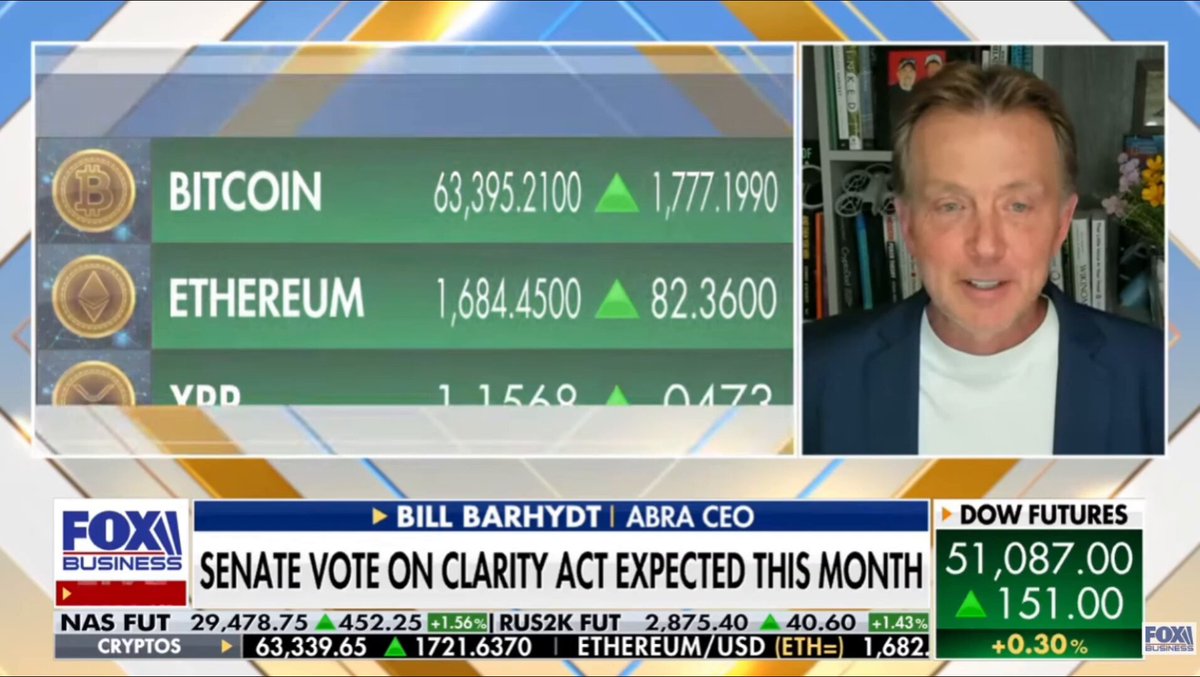
The conversation around the CLARITY Act keeps circling on "give crypto regulatory certainty," but on Fox, pushing back on Dimon, @AbraGlobal 's Bill Barhydt @billbar (he built a Bitcoin bank) shifted the frame: this isn't just good for crypto, IT'S GOOD FOR AI!
The logic is simple... AI agents will be among the biggest (if not THE biggest) users of digital assets. They transact in usage-based, sub-cent amounts at high frequency, machine-to-machine.
The rails for that already exist... I've written about how stablecoins carry the volume while Bitcoin holds verifiable settlement and the trust anchor underneath. The missing piece was never technical... it's legal. x.com/rezosh/status/20629908…
Without certainty, regulated institutions and consumer services can't ship these rails... they stay in the sandbox or move offshore. CLARITY is what enables them and releases them into the world.
The shift is already visible: from subscriptions and fixed access to agents paying precisely, per use, at scale.
CLARITY isn't just de-risking crypto, it's de-risking the payment infrastructure the agent economy will actually run on... many times, orders of magnitude, bigger than today's.
And this is exactly what the Jamie Dimons of today's incumbent system are afraid of... that they're not ready for a shift like this.
But they don't grasp the fundamentals, rooted as they are in the old base: this shift happens whether they want it or not, whether their particular banks are ready for it or not.
AI and stablecoins didn't take Bitcoin's job, they took the jobs Bitcoin was never supposed to keep.
The article is right on almost all the facts... and entirely wrong about what they mean. Hyperliquid, Polymarket, stablecoin volume, these are real businesses, and yes, capital is flowing there right now: the most interesting thing on risk, on hype, on real adoption. No argument.
First of all, my argument is with the framing, "rival," "lost two jobs," it's a false binary. In an immature market, Bitcoin held every role at once (the highest-beta risk trade, the base pair, the money) simply because nothing else existed.
The market matures, and the roles split apart. Risk capital goes to the best story of the day, settlement goes to the dollar (of course it does), and gold was never a payment rail either.
One job doesn't move anywhere: the neutral, hard, non-sovereign reserve... that one wasn't taken. When companies, treasuries (or the very autonomous agents the author writes about) actually want to store value in something that can't be printed or seized, the answer is still Bitcoin.
The dollar is the cash, and Bitcoin is the reserve under the cash = different jobs. A stablecoin took settlement volume... it doesn't take the reserve. Holding a stablecoin is holding a dollar, and if your thesis is that fiat expands forever, you don't keep your reserve in a fiat IOU.
A fragmenting, multi-chain, dollar-settled, agent-inhabited economy needs a neutral hard anchor under the dollar layer more, not less. Shrinking Bitcoin down to the reserve role is specialization, not death.
And the author admits it himself, after five thousand words on "lost two jobs," his Bitcoin ends up "currently out of favor."
Out of favor is a price, not a verdict. The entire death thesis lands on a sentence about a bad quarter.
1
7
1,447
I was talking to my daughter yesterday about the SpaceX IPO, and she was surprised I'm not touching it.
Personally, I like to stay focused on Bitcoin and DeFi because that's where I have an edge, and I know how the game actually works... but as an investor watching flows, I can't ignore what's happening.
These IPOs, SpaceX, OpenAI, xAI, and the rest, are one of the biggest liquidity events pulling capital right now. A lot of the institutional money that came into Bitcoin through ETFs is rotating toward AI names, driven by massive profit multiples and hype.
Even the pre-IPO secondary markets for SpaceX and xAI dropped hard last week. Money flows where the risk-reward looks highest in the short term, and right now that's clearly sitting in these IPOs for a lot of players.
I'm not participating because I don't have the edge there, but the liquidity drain on crypto is real and visible.
Money flows naturally and organically where the risk-reward looks highest. Right now, it looks like it's sitting in these IPOs.

3
3
10
7,366