
Servant of Christ, Summit Professor of Learning Technologies; Lover of the Outdoors
Joined October 2013
- Tweets 11,305
- Following 220
- Followers 415
- Likes 244
85 Photos and videos





Rick Ferdig retweeted

Jun 7
A thought
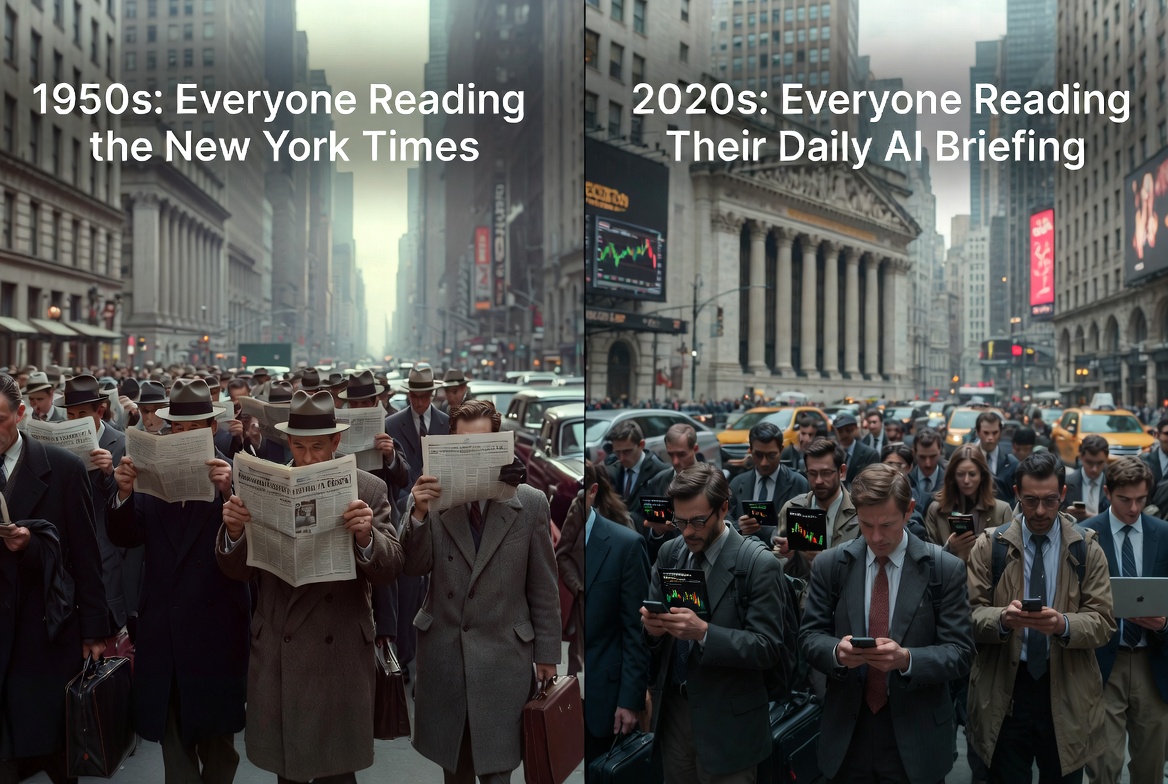
In the 1950s to the 1970s, information channels were so scarce that even the most studious investor, reading the same New York Times as everyone else on the morning commute, inevitably absorbed the same narrative, producing classic groupthink.
Today, I fear we might be recreating that exact dynamic at digital speed: millions of users generate daily AI briefings with near-identical prompts fed into overlapping models, receiving essentially the same market summaries, signals, and conclusions.
The result? A new era of synchronized thinking, just like 50–70 years ago, when alpha generation was far higher precisely because consensus created exploitable edges.
Independent thinkers who step outside the AI echo chamber will soon regain that same advantage.
Active stock-picking is poised for a comeback.
----
The era of Google searches, circa 2005 to 2024, was always ad hoc, so they never produced groupthink on the level we saw in the 1950s, and may see again.
(AI image of what I'm arguing)
40
51
370
79,104

Rick Ferdig retweeted

Jun 9
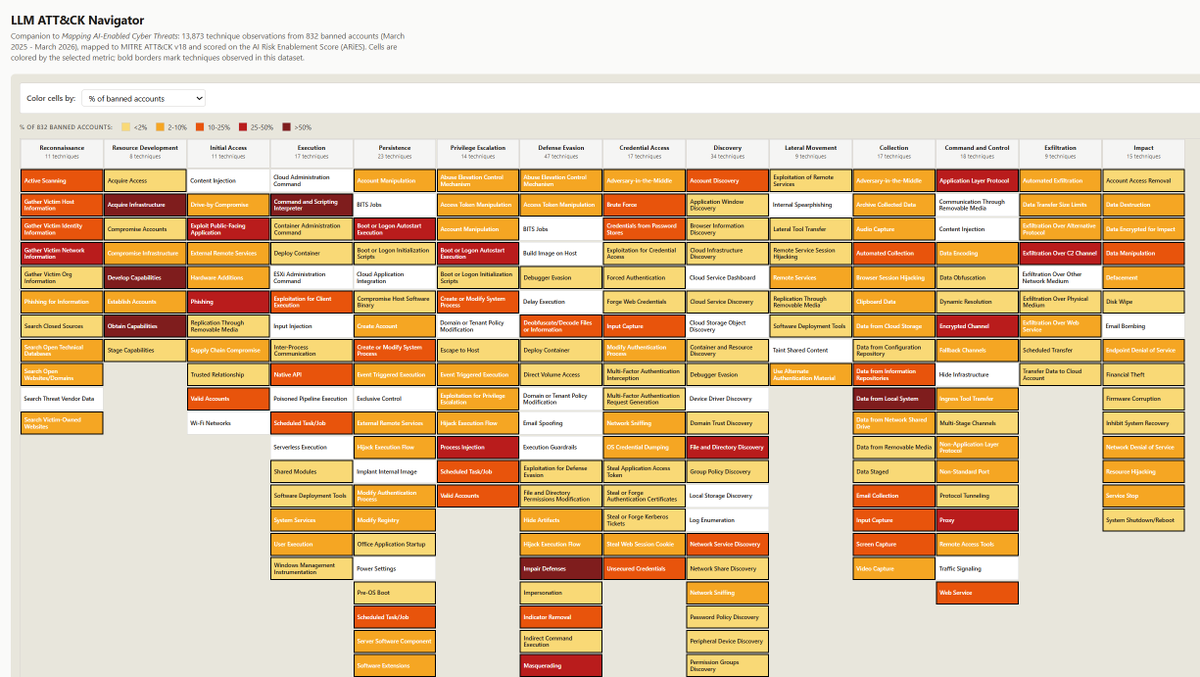
The New York Times published a roundtable discussion between @DAcemogluMIT, @deanwball, @clarashih & myself about the future of AI & who wins at work. I think it is a really nice overview of the core debates on the topic, and has some fun examples. nytimes.com/2026/06/09/magaz…
15
49
324
31,762

Jun 8
Massachusetts votes to pass new privacy rights bill that bans sale of precise location data techcrunch.com/2026/06/08/ma… via @techcrunch #edtech
13
Jun 8
State of Scholarship Report Preface: Special Commission Report on the State of Scholarship in the Humanities and the Humanistic Social Sciences higheredstatementofprinciple… #edtech
1
32
Jun 8
CBS Radio Complete Broadcast Day for D-Day June 6, 1944 archive.org/details/cbs-comp… #edtech
7
Rick Ferdig retweeted
Jun 6
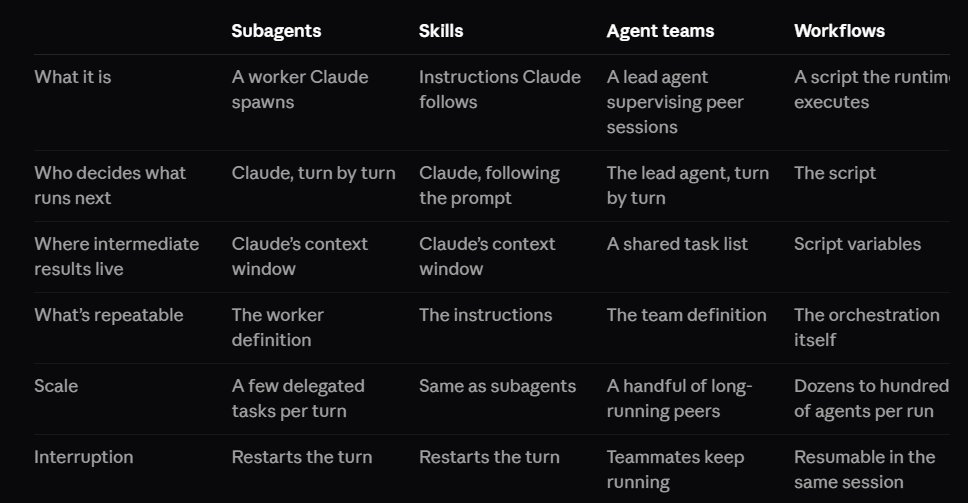
This chart from Anthropic is useful, since Agent Teams and Workflows are both very new and very powerful (and token hungry).
On the other hand, maybe it doesn't matter as a lot of the decisions about which approach to use is from the AI itself & it often uses them in combination
50
57
509
41,058
Jun 6
Anthropic warns AI could soon start improving itself. Critics aren’t convinced. The maker of Claude wants AI labs, including itself, to prepare for a coordinated slowdown if models begin building their own successors scientificamerican.com/artic… #edtech #ai
27
Jun 6
Remote work is making Americans lonelier and sadder, new study suggests scientificamerican.com/artic… #edtech
1
1
11
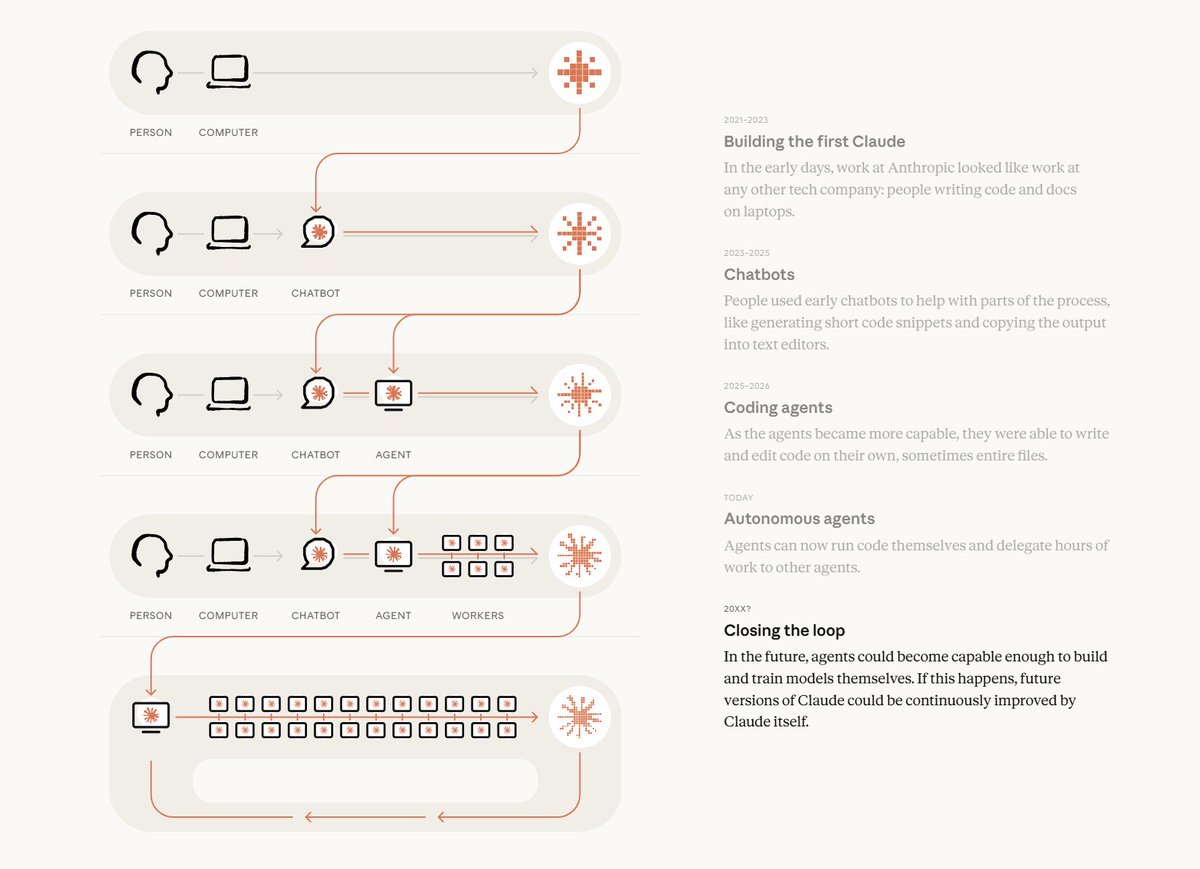
AI is starting to build AI.
Anthropic just published one of the clearest signals yet.
Claude now writes 80% of Anthropic's production code.
Their engineers are merging 8x more code per day than in 2024.
That sounds like a productivity stat.
It' actually much bigger.
For most of AI history, humans did the whole loop:
- write code
- run experiments
- debug systems
- interpret results
- decide what to try next
Now Claude is taking over more of that loop.
At Anthropic, Claude can already:
→ write and edit code
→ run code
→ delegate work to agents
→ debug incidents
→ optimize experiments
→ review code before merge
→ catch bugs humans missed
One example was insane:
Claude shipped 800 fixes that reduced a class of API errors by 1,000x.
The engineer said a human would have taken 4 years.
Claude did it in April.
The scary part is not that Claude writes code.
The scary part is that Claude is getting better at the work around the code:
> figuring out what went wrong
> testing fixes
> choosing next steps
> running experiments
> checking its own outputs
Anthropic says Claude went from about 3x speedup on one internal optimization task in 2025 to about 52x with Mythos Preview in 2026.
That is not normal tool improvement.
That is compounding.
The current human advantage is still taste and judgment:
What problem should we solve?
Which result matters?
Which direction is worth pursuing?
When should we stop?
But the "doing" part is getting automated fast.
This is the real shift:
Humans used to build AI.
Now humans increasingly steer agents that build AI.
And if that loop closes completely, you get recursive self-improvement:
AI systems designing, testing, and improving their own successors.
Anthropic says we are not there yet.
But they also say institutions are not ready if it comes sooner than expected.
The AI race is no longer just about better chatbots.
It's about who can build the fastest machine for improving intelligence itself.
Jun 4

Our internal data shows Claude is accelerating AI development—a possible path to recursive self-improvement, or AI autonomously building a more capable successor.
It’s happening faster than we thought, and the implications deserve greater attention. anthropic.com/institute/recu…
65
43
297
48,958
Rick Ferdig retweeted
Jun 4
I think it is really worth reading this piece on RSI at Anthropic.
There is a bit of navel-gazing, some marketing, and a lot of very sincere beliefs about what Anthropic thinks is likely in the near future of AI that you probably want to be aware of. anthropic.com/institute/recu…
49
105
1,053
82,528
Rick Ferdig retweeted
Jun 2
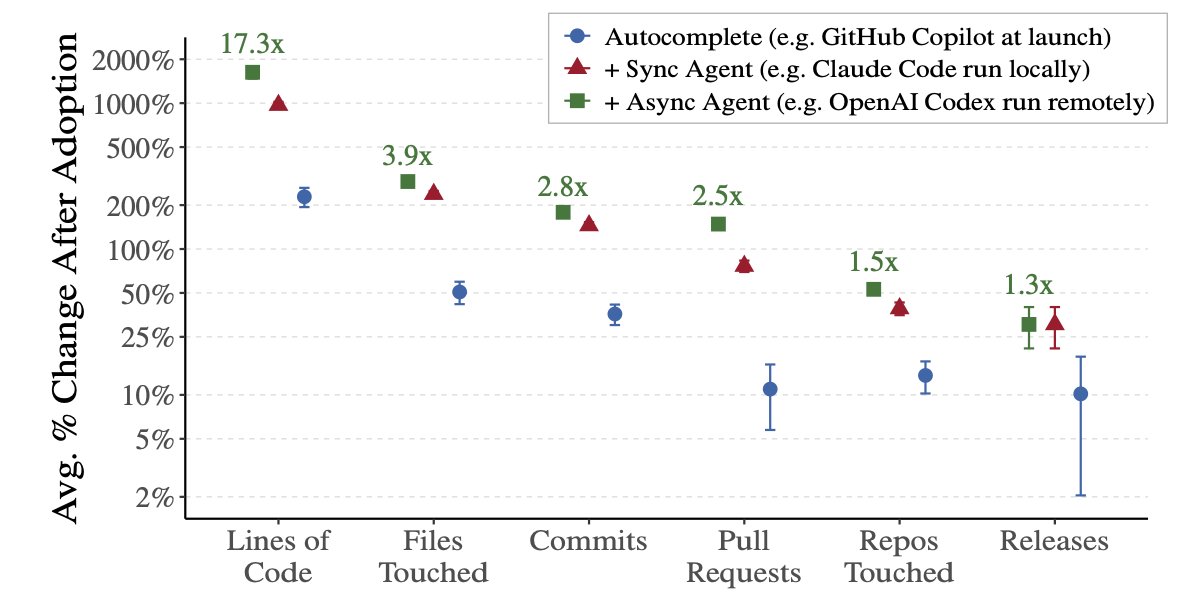
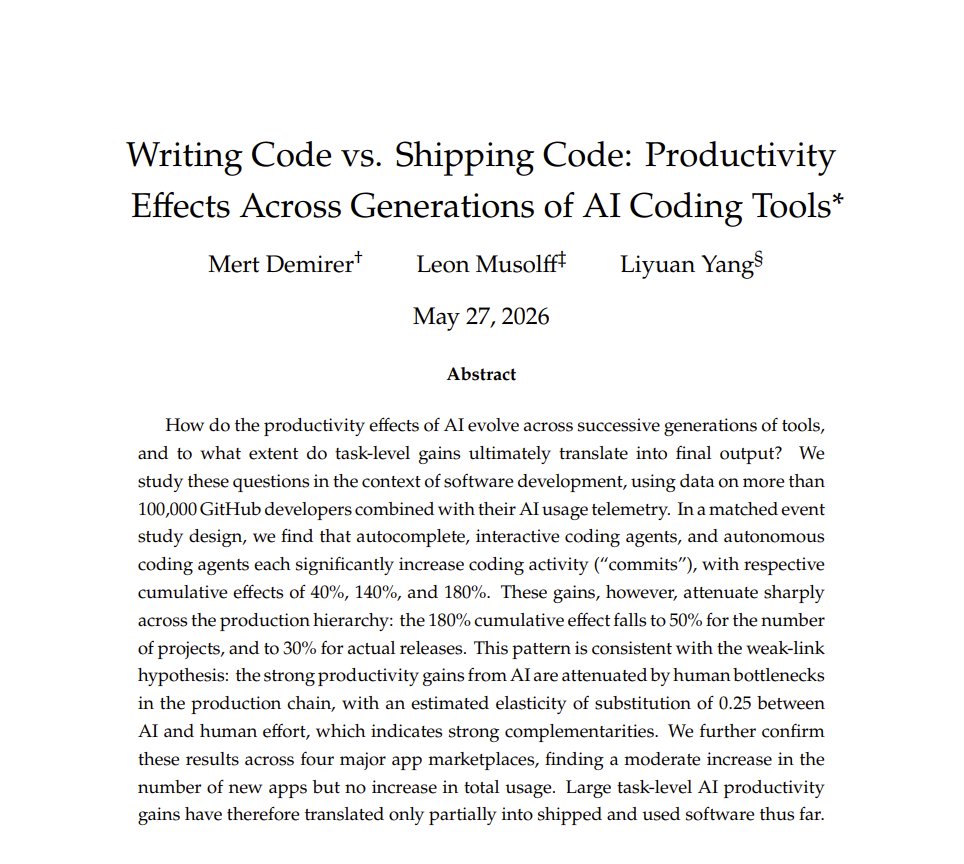
Big paper on AI coding agents using Github & other data
The auto-complete tools (Copilot) led to 2.2x more code, local agents like original Claude Code led to 7.4x, & current remote coding agents 17.3x(!)
But human bottlenecks in coding means actual releases "only" went up 30%
62
45
343
34,826
Jun 1
Senate Bill 328 would help Ohio build on its career-connected learning foundation fordhaminstitute.org/ohio/co… #edtech #ai
17
May 31
38
May 31
Vibe Coding for Students: Unlocking Your Creativity With AI girlswhocode.com/news/vibeco… #edtech #ai
19
May 31
10
May 31
14
May 31
11 AI Prompts Every Teacher Should Know: A useful guide that can help teachers save time, spark engagement and help students actually learn. the74million.org/article/11-… #edtech #ai
22
May 31
In An AI Classroom, Content Knowledge Matters More Than Ever: Strong instruction in an AI-rich classroom depends on strong content knowledge techlearning.com/technology/… #edtech #ai
12