our future is in space
Joined September 2008
- Tweets 47,686
- Following 2,075
- Followers 4,287
- Likes 52,362
14,671 Photos and videos









Jun 15
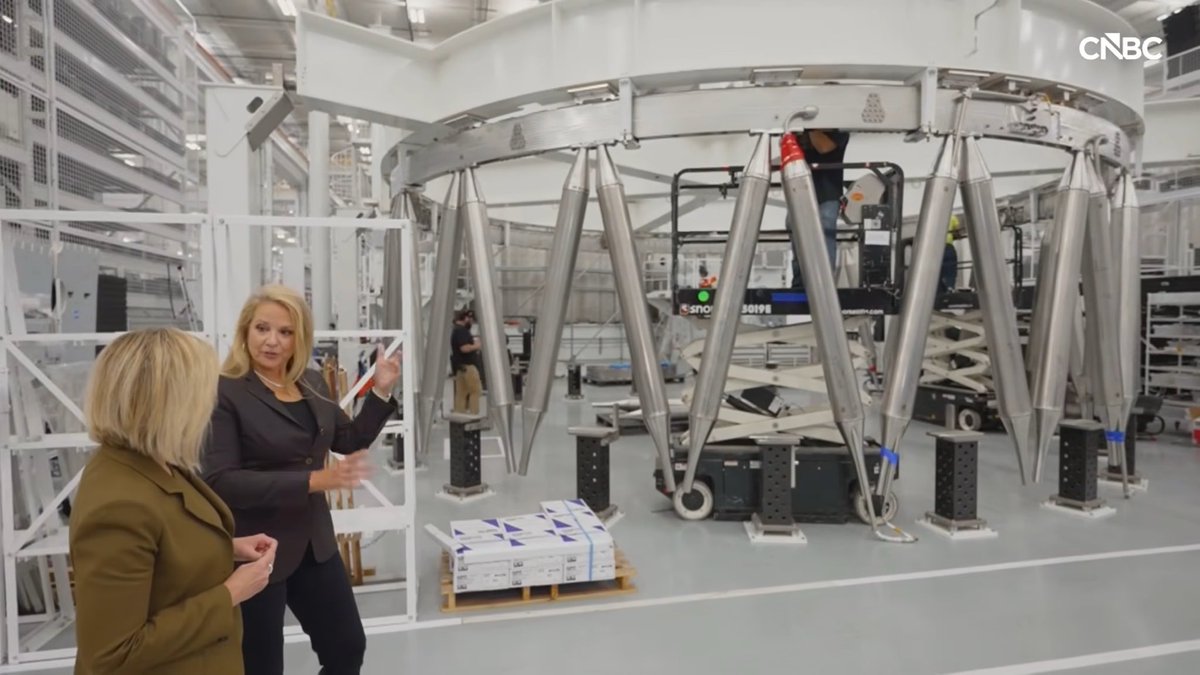
Heh, a similar strut/ring structure to this was on the old structures test when I interviewed back in 2010. The ends were rod eyes instead of welded. this one is way more over constrained, as I think the test one had 5 or 6 total struts.
they finally made it a flight part. lol.

1
19
1,667
Jun 15
He should've made a quick spreadsheet calculator and ran the numbers.
So much aerospace shit talking is vague hand waving. Serious folks do some math before saying the math will never work.
Jun 14

Years ago, early in the Falcon 9 era, I served on a National Academy of sciences board with the CTO Orbital ATK (Tony Elias). I argued that space launch was going to get much cheaper with reuse and he argued that I did not understand the rocket equation and it was impossible (Tony was extremely rude, belligerent and condescending to me.). I asked him what ATK was going to do if SpaceX succeeded, and he said, "get out of the launch business". He was right on one thing at least.
1
5
594

Jun 12
I mostly just designed stuff that flew rockets to space. There was only one of me, no clones.
I dunno what rocket company you joined.
Jun 11

Joining a “rocketship” company usually goes like this:
> you joined one month after they raise a big round
> you think you have finally found your best job ever
> they hire 500 clones of you doing the same job
> you realize things are extremely inefficient here
> you tell yourself you will make the things efficient and become “Head of” the things
> you don’t become “Head of” the things
> they hire “Head of” the things externally
> that guy is the most insufferable jerk you’ve ever seen, fresh out of a divorce, addicted to posting on LinkedIn
> you’ve been here only seven months so it’s too early to go look for a new job
> none of your dreams come true at this company and you tell yourself “ let me finish two years here”
> you throw in the towel at 16 months because you fully hate yourself
10
2,160
Kyle Cothern retweeted

Jun 11
Get paid to wait
The Claude Code spinner might be the most watched line on Earth.
So I turned it into an ad marketplace.
Advertisers bid on it. You keep 50% of the money.
Install the extension → get cash from ads.
Introducing Kickbacks
1,114
503
13,145
7,654,328
Jun 11
Totally doable. The inscribed circle of a starship payload bay is 26 ft in diameter. That's just one fold per wing.
5
240
Jun 10
SpaceX has been aceing amateur hour for decades now.
Next thing you'll tell me you can't land a rocket booster cause it's too hard and it'll blow up.

This is amateur hour thermal analysis. If this proposal landed on my desk I would throw it in the trash can.
It took me 5 minutes to find a smoking gun with this design. With 110 m^2 and assuming only their average load (not the peak), and generously assuming perfect black body radiation, the outer surface of the radiator facing space would be at about 100 C. Uh oh. Dead right there.
Chip reliability goes down significantly when the junction temperature (the hottest temperature in the chip) exceeds 80 C. Every 10 degrees you go above this exponentially reduces chip life. This mostly occurs due to thermomechanical fatigue, where cycling stresses erode connections, cause further hot spots, and failure accelerates catastrophically.
Data centers on land are already having issues keeping $NVDA chips cooler than 80 C, and keeping the HBM next to the GPU under 90 C. $META published a notorious report about failure rates training Llama 3, where half of the chips failures were due to physical operational failure, and the failure rate was roughly 9% of chips PER YEAR.
This high failure rate is almost certainly due to thermal cycling.
Notice that the $SPCX engineer mentions that most of the solar tech is already used on the Starlink satellite, implying this design isn't even really that radical. But they are about to learn the hard way the insidious scaling of surface area to volume ratio.
Having worked on a number of high power cooling applications, scaling a system up almost inevitably makes it harder to cool because the volume grows so much faster than the surface area. Motor designers I know joke that if you make a motor big enough, eventually you just start making really good heaters. This happens because heat is generated in larger volumes with no commensurate increase in surface area to pull that heat out, so everything tends to get hotter internally.
As the power consumption in the volume of the satellite grows, the surface area required to support it grows comically large.
So lets come up with a reasonable estimate for the temperature of the GPU junctions based on their design. Keep in mind, even if the fluid convection had no resistance, and even if there was no conduction resistance through manifolding from the chip to the fluid, and even if there were no contact resistances anywhere in the system, and even if the chips were perfect conductors, the junctions would still be too hot at 100 C.
In reality they will be higher. A great back of the envelope estimate for thermal resistance between a chip package and the fluid in a cold plate heat exchanger is about 0.01 K/W. This is considered pretty good state of the art. Even if I give them the benefit of the doubt and make aggressive assumptions, I would be remiss to say they are getting better than 0.005 K/W with a cold plate. To get better they are going to have to rework the packaging at the chip level.
In this very rosy picture, they are looking at a temperature rise just to the inside of the packaging of around 7 C. Then you have the temperature variation inside the packaging which would make this worse (but we will ignore it).
So even in the rosiest picture I can paint for them, they are getting chip temperatures of 107 C. Again, dead on arrival.
In reality, the chips will get much hotter. Without doing the analysis, it's not unreasonable to think that these chips won't be able to operate at average power under about 150 C.
To get the radiator to emit at an average temperature of 100 C, the fluid actually has to get much hotter. As the fluid moves through the radiator, it will cool down, reducing the total heat dissipated by the radiator. You can get around this somewhat by massively overpowering your pumps so they are pumping an enormous amount of fluid, but the weight required will not be kind on the payload. For example, if you want a 1 degree temperature drop across the radiator, you will need around a 10-20 GPM pump, which generally is around 10-20 HP (7.5-15 kW) and weighs 200-300 lbs each! If they want redundancy, just the pumps will be 15% of the weight of the payload at 70 kW/metric ton!
If we reduce the pumps by 10x, expect a drop in fluid temperature around 10 C. So now the chip is nearly 120 C. Add in imperfect emissivity and contact resistances, and your junction temperatures will easily exceed 150 C in the chip and the chips will fail.
But again, these are all details. Even in a completely perfect system, the chips run at 100 C and will fail.
Now to be clear, do I think that with enough time and money you could get a GB300 rack to run in space? Sure. But this looks a a quagmire of a decade project that will either drastically under-deliver or just get canned because it's extremely impractical and is not competitive with land based systems.
Literally the only positive for putting these in space is the lack of regulations to put them there.
1
22
1,920
Jun 10
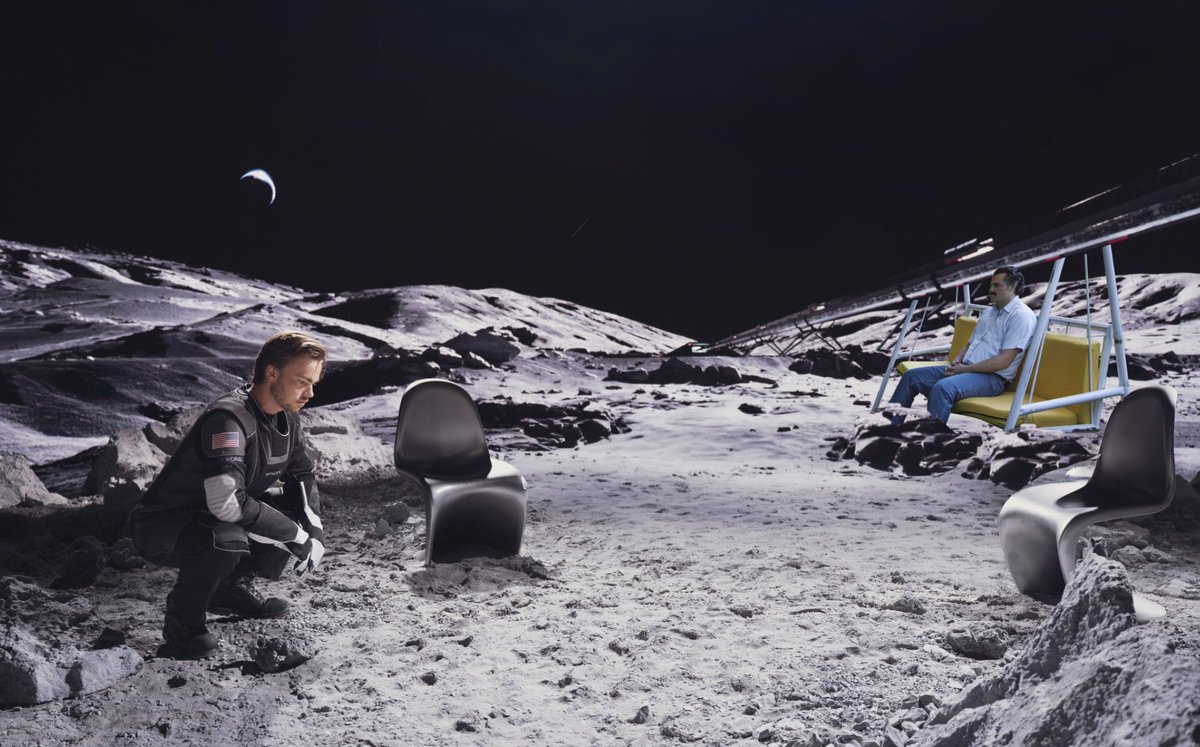
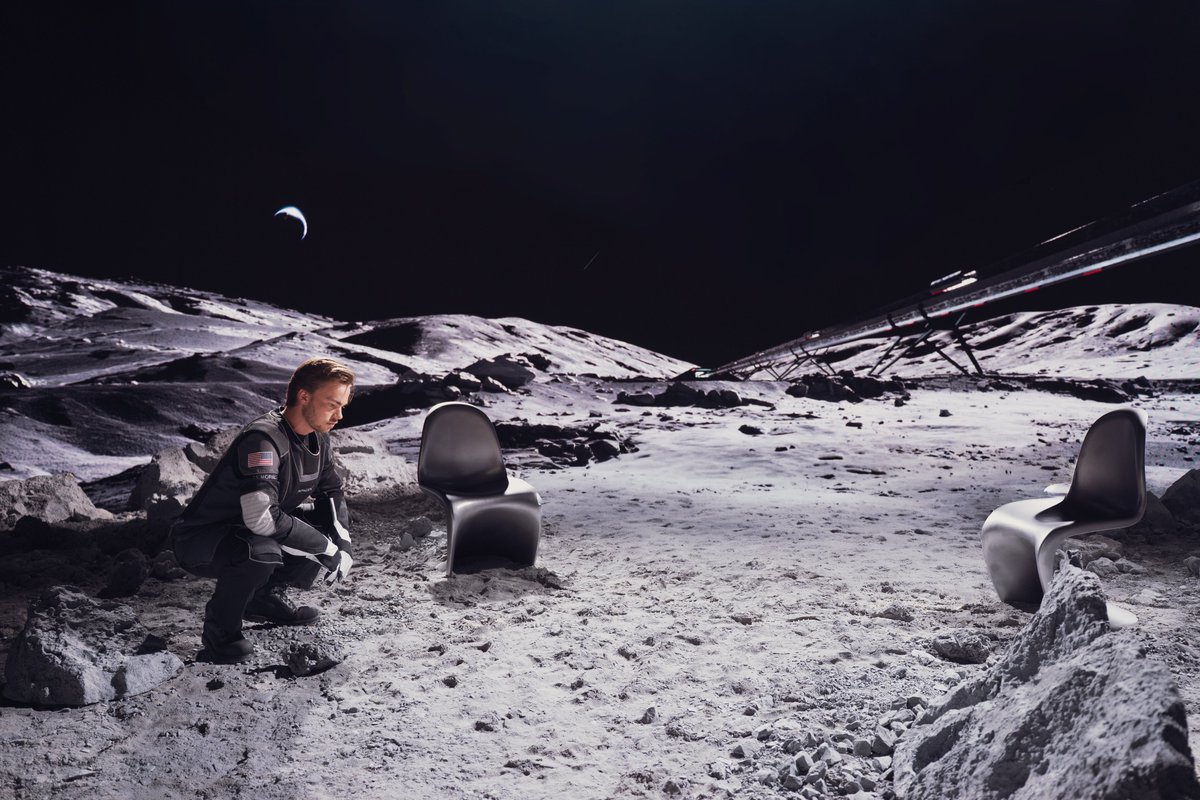
Lunar loneliness epidemic is hitting podcasters the worst.

1
16
1,083
Jun 9
build rocket
send mass to space
repeat
Jun 9

SpaceX’s mass to orbit forecast is insane.
They expect to 1000x their payload capacity by 2032 thanks to Starship.
That means launching more in a *week* than humanity has in its *entire history* up until now.
2
2
9
796
Jun 8
Point to point accomplished.

2
223
Jun 4
Let's face it guys. Sea dragon is still pounding all the competition when it comes to big paper rockets.
Jun 4

Why did this post get people so mad? New Glenn 9x4’s fairing is huge compared to Starship currently.
Sure, V4 of Starship is planned but we have no idea what that would look like, nor how payloads other than Starlink would look and be deployed from it.

2
6
3,861
Jun 4
I think solving gigantic boosters that float themselves out to sea and ballast to point upwards will eventually happen. With any luck.
2
2
483

Jun 3
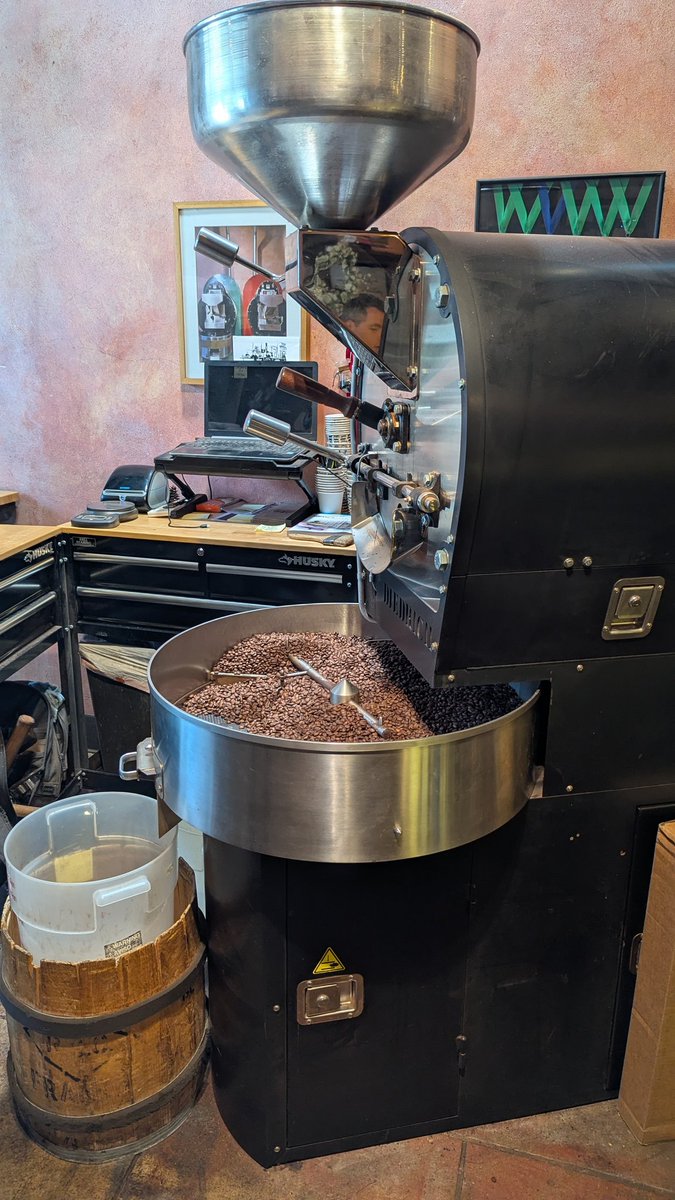
Gotta figure out when the ROI break even is for roasting in house at the aerospace startup.
1
1
330
Jun 3
In hardware analysis paralysis is death.
Build, test, repeat.
Jun 3

“We’ve done the analysis, reusable rockets aren’t economic.”
SpaceX makes reusable rockets economic.
“We’ve done the analysis satellite internet isn’t economic. The antenna alone is tens of thousands of dollars. The cost to manage a constellation that size, the radiation, the space hardened solar cost…”
Satellite internet appears to be a very good business with antennas in the $100 range.
“We’ve done the analysis, orbital data centers aren’t economic. The radiators, launch costs, the radiation, the solar…”
You are here.
1
5
702
Jun 3
Autonomously headed towards the gundo for lunch.
It's come a long way in 15 years. Now I'm inside the car lol.
1
2
467