
Can't we all get along? - Rodney King
Joined October 2023
- Tweets 8,363
- Following 260
- Followers 137
- Likes 13,779
253 Photos and videos










Roberto El Hermoso retweeted

Jun 6
We saw this very clearly with many adherents to the Black Lives Matter movement.when individual incidents were frequently treated as proof of sweeping theories about race and policing. We would do better not to emulate this.
1
7
863

May 31
RT @datadriven_tdoc: @robert83047 I’m happy she’s happy.
She’s happy I’m happy
See how civilized decent people can coexist?
@thepeacep…
1
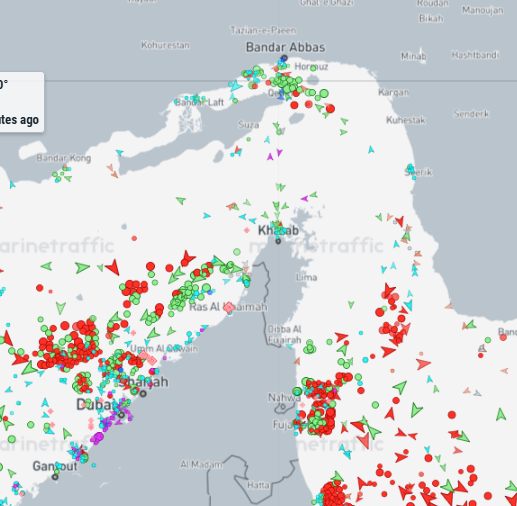
Could Trump get Xi to patrol the Persian Gulf?
Iran wouldn’t want to shoot at Chinese boats.
China is keen to get the oil flowing.
USA could stay in the Gulf of Oman and block only Iranian ships.
294
Apr 22
If a member of my team says something untrue about our common enemy, and I point out it isn’t true, then I am supporting that enemy.
This ratchets up to where people must religiously repeat silly things like “Trump is a Nazi” in order to not be called a “MAGA”, and ejected from their group.
1
262
Feb 16
x.com/i/status/2023197387209…
The first horses introduced to the USA came from *>**Puerto Rico**<* on Juan Ponce de León’s, (Spanish) second trip to Florida.
The first horses introduced to the New World were brought by Columbus (on Spanish ships) to the Mediterranean.
The first horses introduced to the American mainland were brough by Hernán Cortés (Spanish) to Mexico.
Feb 16

Let me educate @AOC
Read your Latino history.
Spain introduced horses to Mexico.
So @marcorubio is right!
1
1,008
“P*dophile” is a person who desires s*x with pre-pubescent children.
“R@pe”. There’s a world of difference between statutory r@pe, and violent, forced r@pe.
“Child”, technically means under 18.
So, a man having ‘consensual” s*x with a 17-year-old becomes P*dos r@ping children!
If one has the temerity to point out the sloppy word usage, people demand that your hard-drive be checked.
3
2
472
Jan 14
"Congress shall make no law... prohibiting the free exercise thereof; ... or the right of the people *peaceably* to assemble..."
First Amendment, part of the Bill of Rights, US Constitution. (** added.)
1
486
Jan 12
ICE violently arrest undocumnented immigrant.
x.com/i/status/2010401317102…
Jan 11

Now: CPB and BORTAC federal POLICE OFFICERS arrest two men at the Minneapolis bus station. @CMDROpAtLargeCA
676
Jan 11
People say: “X is racist”.
A newspaper could be called racist if the editorial slant is frequently racist.
Yes, there’s a bunch of racist content on X, but there's content of almost every type.
Unless the algos can been shown to be promote racism, then X is a reflection of the broad set of people who post.
Maybe among the posters there’s a disproportionate number of racists, compared to the general populace. If so, one could say: “The content on X skews towards racist”.
But X itself is not racist.
259
Jan 10
If you say “Lesbian woman” when referring to the lady shot in Minnesota by ICE, that’s a red flag sign you’re probably bigoted, or deliberately saying that as a dog whistle to persuade bigots to your narrative.
1
228
Jan 10
Protesting.
Iran. On your feet, in the streets, fearful but determined, dreading that law enforcement will arrest, torture and disappear you and hope that your face is never put on social media.
USA. Smugly sitting in your air-conditioned car with a mischievous smirk, taunting and blocking law enforcement while your friend takes videos for more TikTok clicks.
222
31 Dec 2025
Lock Them Up and Throw Away the Key?
Or Follow a Blackstonian Path?
Roughly 5–10% of the general population (often closer to 5–8%) is responsible for about 50–70% of all offenses, with even higher concentrations for serious or violent crime (some longitudinal research finds ~1% accounting for over 60% of violent convictions).
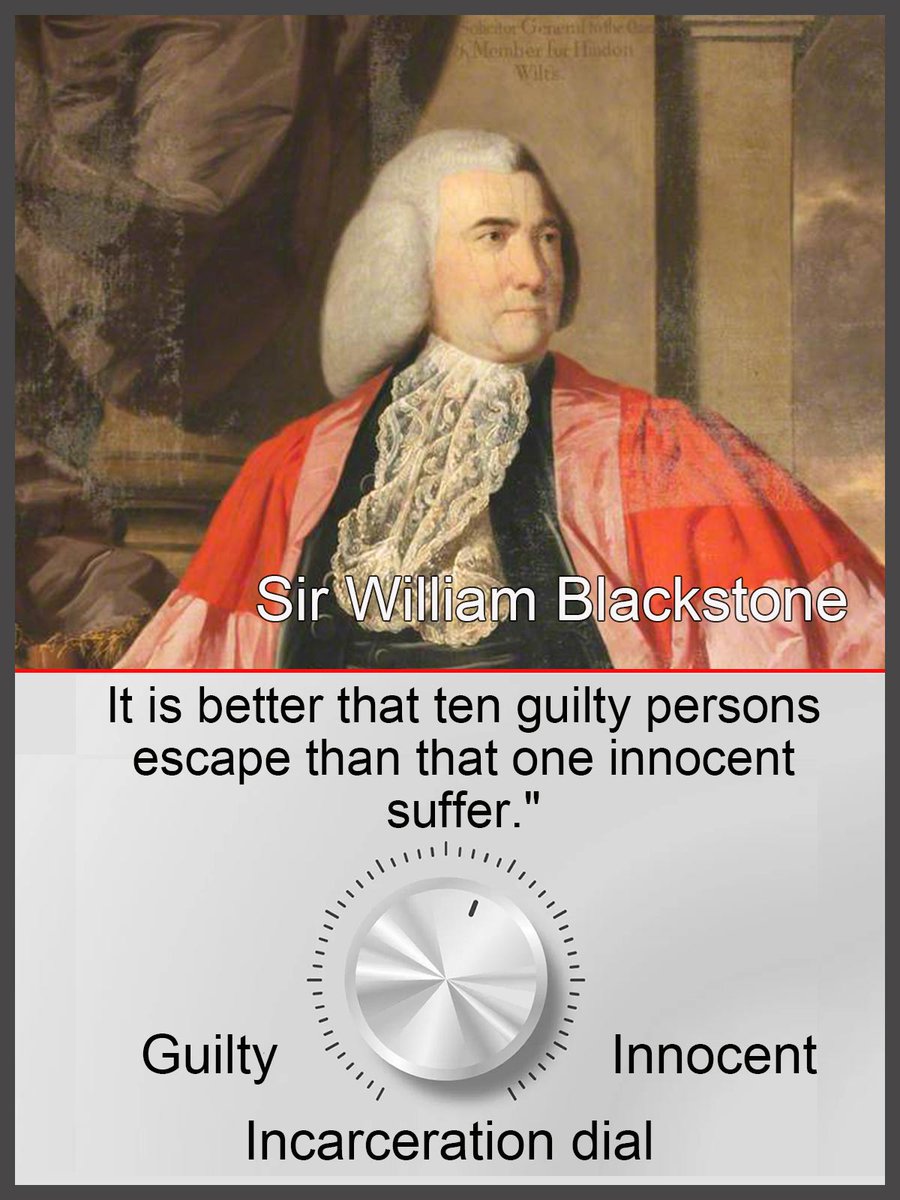
Let’s suppose we have an "incarceration dial" ranging from 1 to 10:
At 1, a draconian police state: virtually everyone arrested is incarcerated, often with little or no evidence.
At 10, extreme tolerance: almost no one is ever incarcerated, even with overwhelming, irrefutable evidence of guilt.
The ideal dial position lies at the point where no innocent people are jailed, while still incarcerating *enough* guilty individuals - especially the chronic, high-rate offenders who drive most crime - to protect society. In practice, this means accepting that some guilty people will initially go free. Releasing one-time or low-rate offenders often causes limited societal harm, as many do not re-offend. Meanwhile, repeat offenders - particularly the small chronic group responsible for the majority of serious crime - will likely be arrested again. Over time, accumulating evidence (or a more serious offense) enables legitimate incarceration.
Let’s say the ideal dial position is around 5: a balanced system with high evidentiary standards to protect the innocent, where a few guilty people (especially lower-rate ones) occasionally escape punishment, but chronic offenders are gradually removed through repeated arrests and eventual conviction.
Now, what happens if we keep turning the dial toward 10 (extreme tolerance) - California-style.
At some point, the system becomes so reluctant to incarcerate that even many repeat and chronic offenders are routinely released with minimal consequences. High-rate offenders remain on the streets longer, leading to increased victimization, eroded public safety, and a potential slide toward disorder.
Here's the crucial insight:
The relationship between leniency (turning the dial toward 10) and the release/ongoing activity of repeat/chronic offenders is *nonlinear*. <---
It features thresholds or tipping points, where small further increases in tolerance can trigger disproportionately larger rises in repeat offending, recidivism rates, or overall crime.
As the dial rises:
From 5 to ~6–7: Mostly low-rate/one-time offenders gain more leniency → modest increases (~5–15%) in repeat offending overall, since chronic offenders are still cycled back in eventually.
Beyond ~7–8: Chronic offenders stay free much longer → their high offending rate compounds → community effects emerge (more disorder, fear, normalization of crime, weakened social controls) → recidivism and crime rates can jump steeply (potentially 30–100% relative increases in affected areas or categories, according to neighborhood-level studies).
This *nonlinear* dynamic explains why rapid or broad shifts toward leniency can backfire if they cross critical thresholds - especially when they reduce the perceived certainty of consequences for high-rate offenders.
The goal must be smart calibration of the dial: tough enough on chronic threats to prevent tipping points, humane enough to avoid injustice.
1
167
18 Dec 2025
Some adults claim to be happy that they underwent "sex change" surgery and have regular hormone treatments.
Many claim they felt they were “the wrong sex” since they were children.
These people would have had better results transitioning if they had started hormone therapy before puberty.
If we want to provide the best care for these people, we need to have proper scientific experiments to evaluate procedures.
How can we get accurate data if we don’t perform experiments on pre-pubescents?
Do we say “tough luck” for those who could have had much better care and outcomes?
2
332
Roberto El Hermoso retweeted

15 Dec 2025
I'm getting this vibe that people think it's extraordinary that a Muslim would save a Jew. In Israel, Muslims are if anything "overrepresented" in the medical sector as physicians, nurses, and pharmacists. Muslim health care workers save Jews all the time, and vice versa. Muslim Bedouin have served in the IDF for decades. Several Muslims were among the heroic rescuers of civilians from the 10/7 massacre.
Radical political Islam, with its embedded antisemitism, is a real problem. "Muslims" are not.
50
267
1,507
38,007
16 Dec 2025
15 Dec 2025

Muslims worldwide are uniting to condemn anti-Jewish attacks in Australia: "Violence against civilians has no justification."
Speakers call out Political Islam and the Muslim Brotherhood: "Zero tolerance for anti-Semitism." WATCH the full, powerful message.
#StandWithJews #MuslimsForPeace #AntiSemitism #AustraliaNews #UnityOverHate
155
16 Dec 2025
A 1% increase in Christian/Muslim antisemites is an increase of three times more bigots than the total number of Jews.
Increased bigotry towards Muslims will come from mostly Christians, and visa versa. Roughly 2.5 billion adherents each side.
Increased bigotry towards Jews will come from mostly Muslims and Christians.
An increase of bigotry in even a small percentage of each group will far overwhelm the world population of Jews, (@ 16 million).
Christians and Muslims combined, compared to Jews is over 300 to 1.
1
72
16 Dec 2025

A Muslim man named Farooq approaches a Jewish rabbi to express his sorrow and apologise for what happened, followed by a heartfelt exchange, is truly powerful. While there is a lot of darkness in the world, gestures like these remind us that compassion, unity, and mutual respect still prevail.
#bondibeach #Australia
1
73
15 Dec 2025
I’m glad the Bondi Beach hero is of Muslim heritage.
In the currently volatile conditions, some people need to calm down and recognize most Muslims try to do the right thing.
190
13 Dec 2025
Palestinians claim they are of Semitic bloodlines, while most of the Jews in Israel are of European ancestry.
Jews counter by showing they have plenty of Semitic DNA, including mtDNA (Maternal lineage).
Irrelevant.
Do the sins of the father fall on his children? No. Would you go to jail if your father committed a crime? No, and if your father performed some great deed, do you get credit? No.
You get neither the benefit, nor the punishment from your ancestor’s actions.
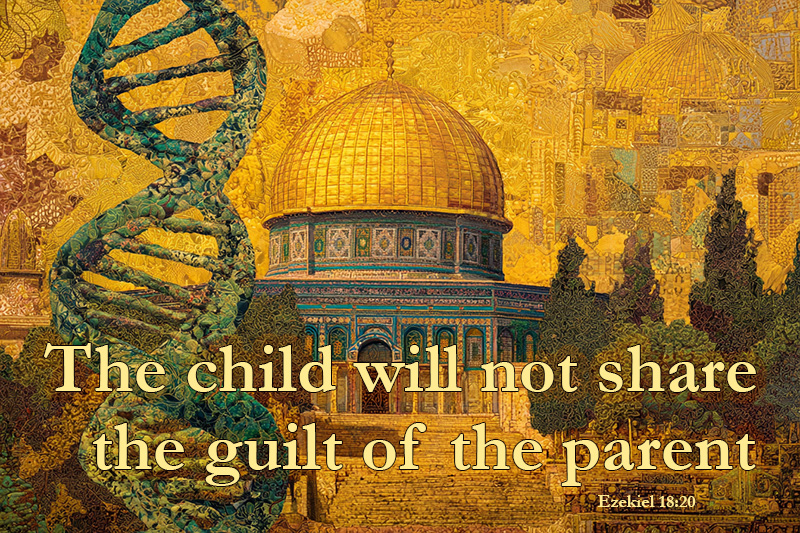
Ezekiel 18:20: "The child will not share the guilt of the parent, nor will the parent share the guilt of the child."
1
82