I guess I make air cleaners now. Visit cleanairkits.com for prebuilt pc-fan corsi-rosenthal boxes and kits. @robwiss bsky.social and threads
- Tweets 2,515
- Following 695
- Followers 2,864
- Likes 21,710








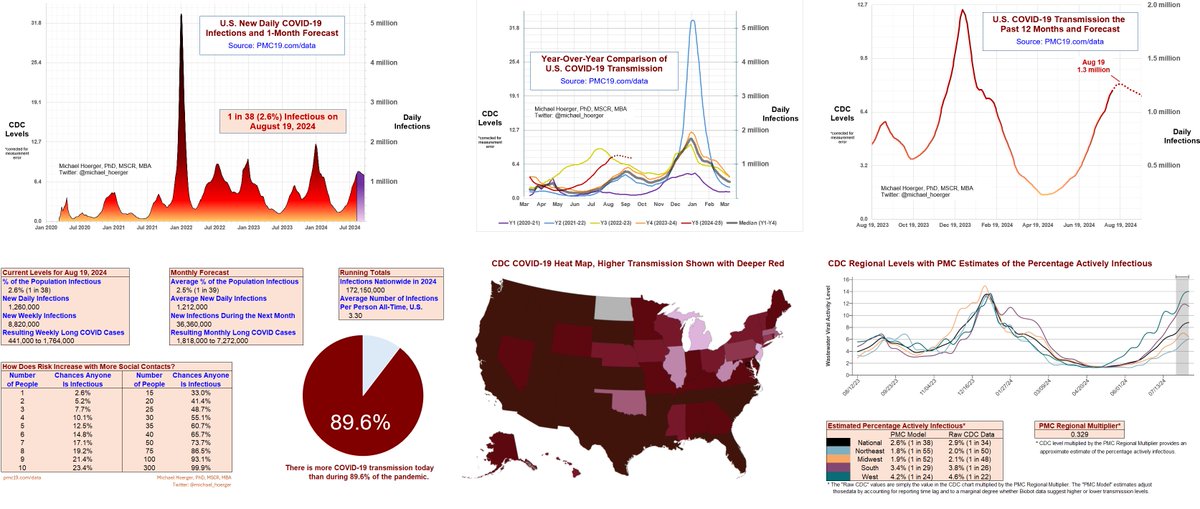
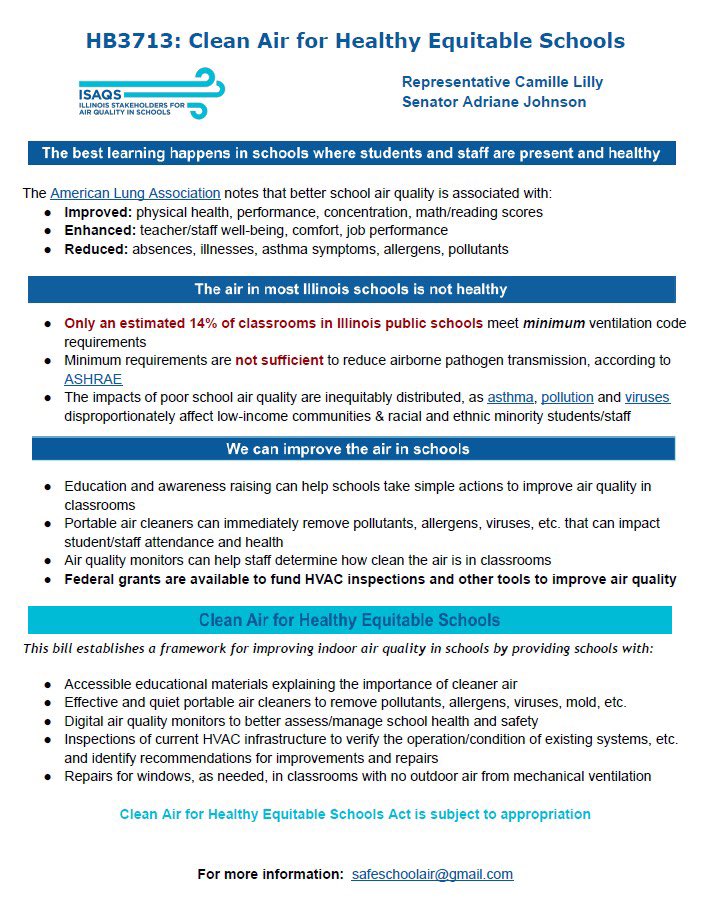
ALT Current Levels for Aug 19, 2024 % of the Population Infectious 2.6% (1 in 38) New Daily Infections 1,260,000 New Weekly Infections 8,820,000 Resulting Weekly Long COVID Cases 441,000 to 1,764,000 Monthly Forecast Average % of the Population Infectious 2.5% (1 in 39) Average New Daily Infections 1,212,000 New Infections During the Next Month 36,360,000 Resulting Monthly Long COVID Cases 1,818,000 to 7,272,000 Running Totals Infections Nationwide in 2024 172,150,000 Average Number of Infections Per Person All-Time, U.S. 3.30 There is more COVID-19 transmission today than during 89.6% of the pandemic. How Does Risk Increase with More Social Contacts? Number of People | Chances Anyone Is Infectious 1 2.6% 2 5.2% 3 7.7% 4 10.1% 5 12.5% 6 14.8% 7 17.1% 8 19.2% 9 21.4% 10 23.4% 15 33.0% 20 41.4% 25 48.7% 30 55.1% 35 60.7% 40 65.7% 50 73.7% 75 86.5% Estimated % Infectious National 2.6% (1 in 38) Northeast 1.8% (1 in 55) Midwest 1.9% (1 in 52) South 3.4% (1 in 29) West 4.2% (1 in 24)

ALT Picture of Kylie Jenner outside with a black respirator
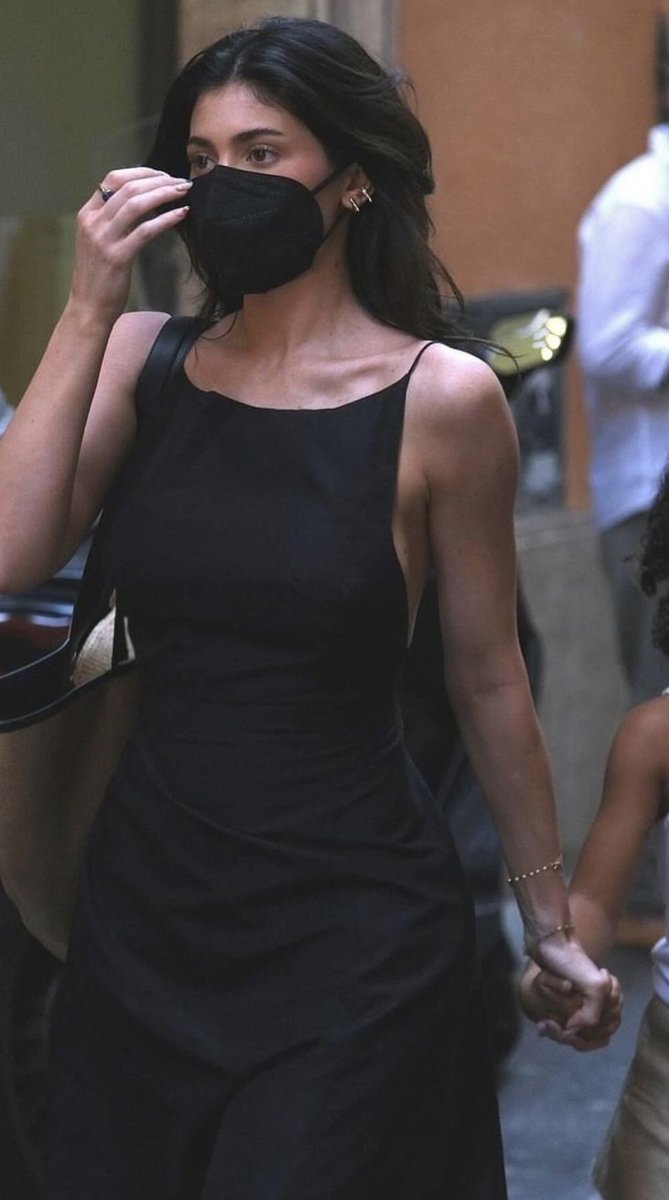
ALT Picture of Kylie Jenner outside with a black respirator

![A screenshot of text that reads in part: "Tim Uyeki, CDC [00:50:50] In terms of respiratory protection, the recommendation is an N95 respirator, not a surgical face mask. Definitely the recommendation is for eye protection. And, as I mentioned, we’ve had two cases of workers with conjunctivitis and so goggles or a face shield. But as Dr Maderas recommended, this may not necessarily be practical given the environmental conditions. So throughout the U.S., every day, it’s only getting warmer and more humid. And Dr Maderas mentioned even for healthcare personnel, the challenges of wearing goggles or face shield and fogging up and so forth. So, what we can say is what the recommendations are. We can post all of the PPE that are recommended. We can post the guidance from CDC and NIOSH in there. But we also realize the reality is that workers may not comply. And so I think that we all have to work closely together, including with farm workers and farm owners and the dairy industry to see what](https://venexa.site/media/GQh_nEtW0AA-wWe.jpg)
ALT A screenshot of text that reads in part: "Tim Uyeki, CDC [00:50:50] In terms of respiratory protection, the recommendation is an N95 respirator, not a surgical face mask. Definitely the recommendation is for eye protection. And, as I mentioned, we’ve had two cases of workers with conjunctivitis and so goggles or a face shield. But as Dr Maderas recommended, this may not necessarily be practical given the environmental conditions. So throughout the U.S., every day, it’s only getting warmer and more humid. And Dr Maderas mentioned even for healthcare personnel, the challenges of wearing goggles or face shield and fogging up and so forth. So, what we can say is what the recommendations are. We can post all of the PPE that are recommended. We can post the guidance from CDC and NIOSH in there. But we also realize the reality is that workers may not comply. And so I think that we all have to work closely together, including with farm workers and farm owners and the dairy industry to see what





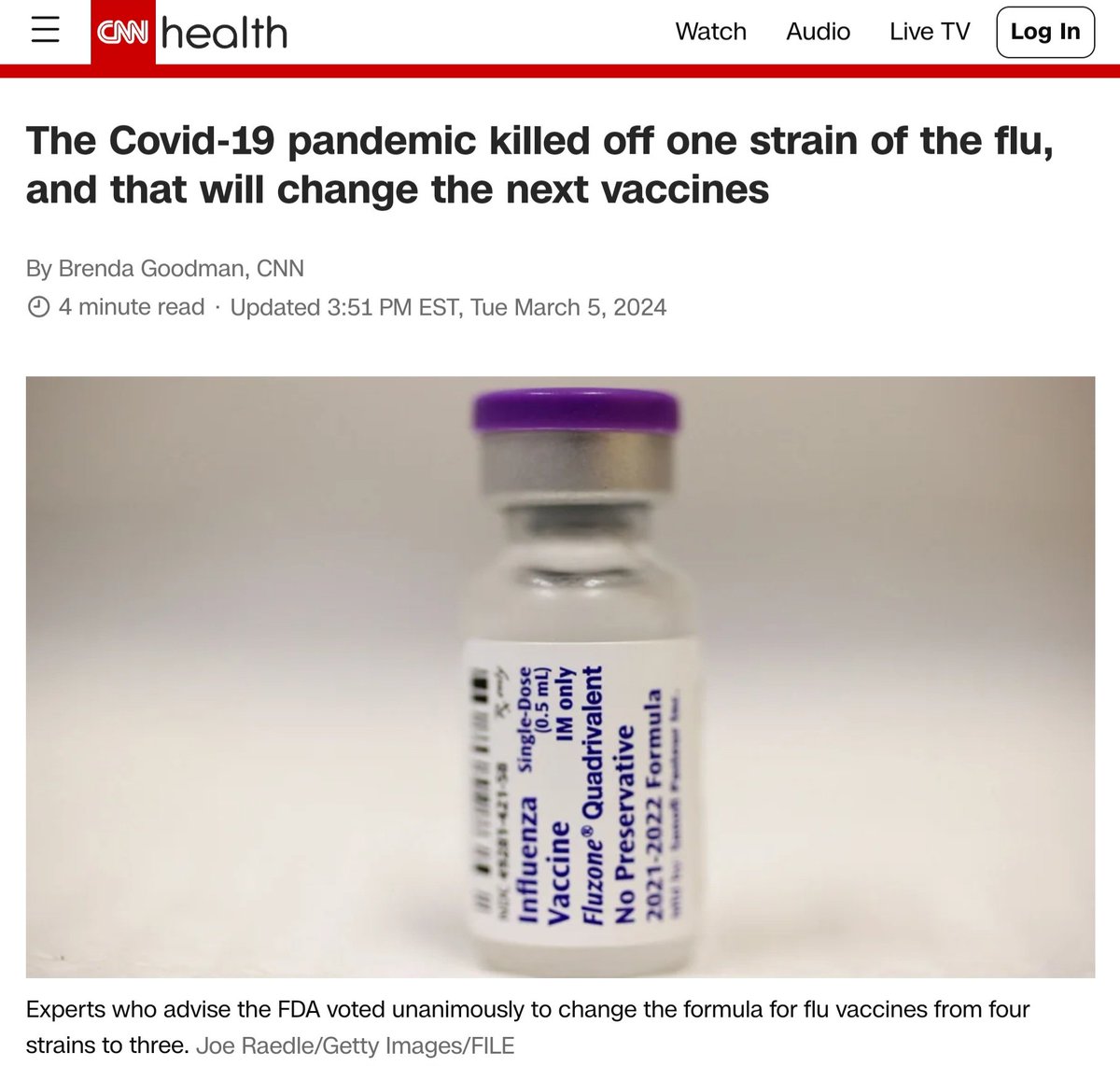
ALT The Covid-19 pandemic killed off one strain of the flu, and that will change the next vaccines By Brenda Goodman, CNN 4 minute read Updated 3:51 PM EST, Tue March 5, 2024 Experts who advise the FDA voted unanimously to change the formula for flu vaccines from four strains to three.