52 Photos and videos













May 19
The AI infrastructure ecosystem continues to evolve at an incredible pace.
OpenAI, in collaboration with AMD, Broadcom, Intel, Microsoft, NVIDIA, and the Open Compute Project, has introduced Multipath Reliable Connection (MRC)—a novel networking protocol designed to improve performance, resiliency, and scalability for large AI supercomputing clusters.
As AI environments scale to tens of thousands of accelerators, the network is becoming just as important as the compute. Innovations in congestion management, fault tolerance, and efficient data movement will be critical to unlocking the next generation of AI infrastructure.
openai.com/index/mrc-superco…
34
May 5
As AI workloads scale, performance is an economic driver. The latest advancements from Google highlight how tightly integrated compute, interconnect, and storage must be at system scale.
hpcwire.com/2026/04/22/googl…
17
Mar 4
I have known Bill McMillan for many years and have always had tremendous respect for his deep expertise in high-performance computing and distributed workload management. Bill has spent decades working at the center of some of the most important innovations in the HPC ecosystem.
In this article, Bill reflects on more than 20 years of GPU support within IBM Spectrum LSF and the evolution of GPU-accelerated computing. Long before the current surge of AI infrastructure, platforms like LSF were already solving complex challenges around scheduling, resource management, and large-scale compute orchestration.
It offers a great perspective on how many of the foundations behind today’s AI and GPU-driven computing environments were built.
Highly recommend the read.
community.ibm.com/community/…
#LSF #HPC #GPU
12
Tripp Purvis retweeted

Feb 12
Noether’s Theorem ✍️
This equation reveals that every continuous symmetry in nature, a change you can make to a system without affecting its physical laws, brings about a conservation law. In simple terms, if the universe does not react to a certain change in perspective, it must keep a related physical quantity constant. For example, since the laws of physics remain unchanged no matter when you are (Time Symmetry), energy is conserved. Since the laws are the same regardless of where you are (Space Symmetry), momentum is conserved. Because they stay the same regardless of which way you face (Rotation Symmetry), angular momentum is conserved. This insight shifted our view of the universe. We no longer see conservation as just a series of lucky observations, but as a necessary outcome of the symmetry of space and time.

987
2,464
13,900
19,865,371

SpaceX is now providing precise positional awareness of objects in Earth orbit to all satellite operators for free.
This will greatly reduce the probability of collisions that create orbital debris (space junk) hazards.

SpaceX has developed a novel Space Situational Awareness (SSA) system, called Stargaze → starlink.com/stargaze
To maximize safety for all satellites in space, @SpaceX will be making Stargaze conjunction data available to all operators, free of charge. By providing this ephemeris sharing and conjunction screening service free of charge, we hope to motivate operators to take similar steps towards ephemeris sharing and safe flight.
3,629
8,218
59,916
6,917,137
Jan 8
The DOE has committed $320M to its new AI-for-Science initiative, the Genesis Mission.
The funding supports the American Science Cloud and the Transformational AI Models Consortium (ModCon), bringing supercomputing, data, and AI models together across 17 DOE National Labs to accelerate discovery in energy, security, and advanced science.
This is a meaningful step toward a national AI-science platform.
Full story via @HPCwire below.
#DOE #HPC #AI #GenesisMission
hpcwire.com/2025/12/11/heres…
2
5
68
Tripp Purvis retweeted

8 Dec 2025
ONE RULEBOOK FOR AI
I wanted to share a few thoughts on AI preemption and address some of the concerns.
First, this is not an “AI amnesty” or “AI moratorium.” It is an attempt to settle a question of jurisdiction.
When an AI model is developed in state A, trained in state B, inferenced in state C, and delivered over the internet through national telecommunications infrastructure, that is clearly interstate commerce, and exactly the type of economic activity that the Framers of the Constitution intended to reserve for the federal government to regulate.
In the absence of preemption, 50 different states will assert their jurisdiction, creating a patchwork of 50 different regulatory regimes, often in contradiction with each other. Indeed this is already happening. Over 1,200 bills have been introduced in state legislatures, and over 100 measures have already passed.
For example, states like Colorado, California and Illinois have made AI developers liable if their models contribute to “algorithmic discrimination,” which is defined as having a “disparate impact” on a protected group. Colorado's list of protected groups even includes English language proficiency, so presumably it’s against the law for an AI model to criticize illegal aliens.
This type of ideological meddling is how we ended up with “black George Washington.” This can’t be allowed. AI models should strive for the truth and be ideologically unbiased.
Only a federal framework can achieve this goal. The attempts of Red States to protect conservatives from bias and discrimination (a worthy goal) will have limited effectiveness when Blue States like California have the most market power and nexus to AI development.
At best, we’ll end up with 50 different AI models for 50 different states – a regulatory morass worse than Europe. This will stymie innovation, especially by small startups who can’t afford the compliance burden. Meanwhile, China will race ahead.
We can’t afford this. As President Trump truthed today, we need One Rulebook for AI.
But what about the 4 C’s? Let me address those concerns:
1. Child safety - Preemption would not apply to generally applicable state laws. So state laws requiring online platforms to protect children from online predators or sexually explicit material (CSAM) would remain in effect.
2. Communities - AI preemption would not apply to local infrastructure. That’s a separate issue. In short, preemption would not force communities to host data centers they don’t want.
3. Creators - Copyright law is already federal, so there is no need for preemption here. Questions about how copyright law should be applied to AI are already playing out in the courts. That’s where this issue will be decided.
4. Censorship - As mentioned, the biggest threat of censorship is coming from certain Blue States. Red States can’t stop this – only President Trump’s leadership at the federal level can.
In summary, we’ve heard the concerns about the 4 C’s, and the 4 C’s are protected.
But there is a 5th C that we all need to care about: competitiveness. If we want America to win the AI race, a confusing patchwork of regulation will not work.
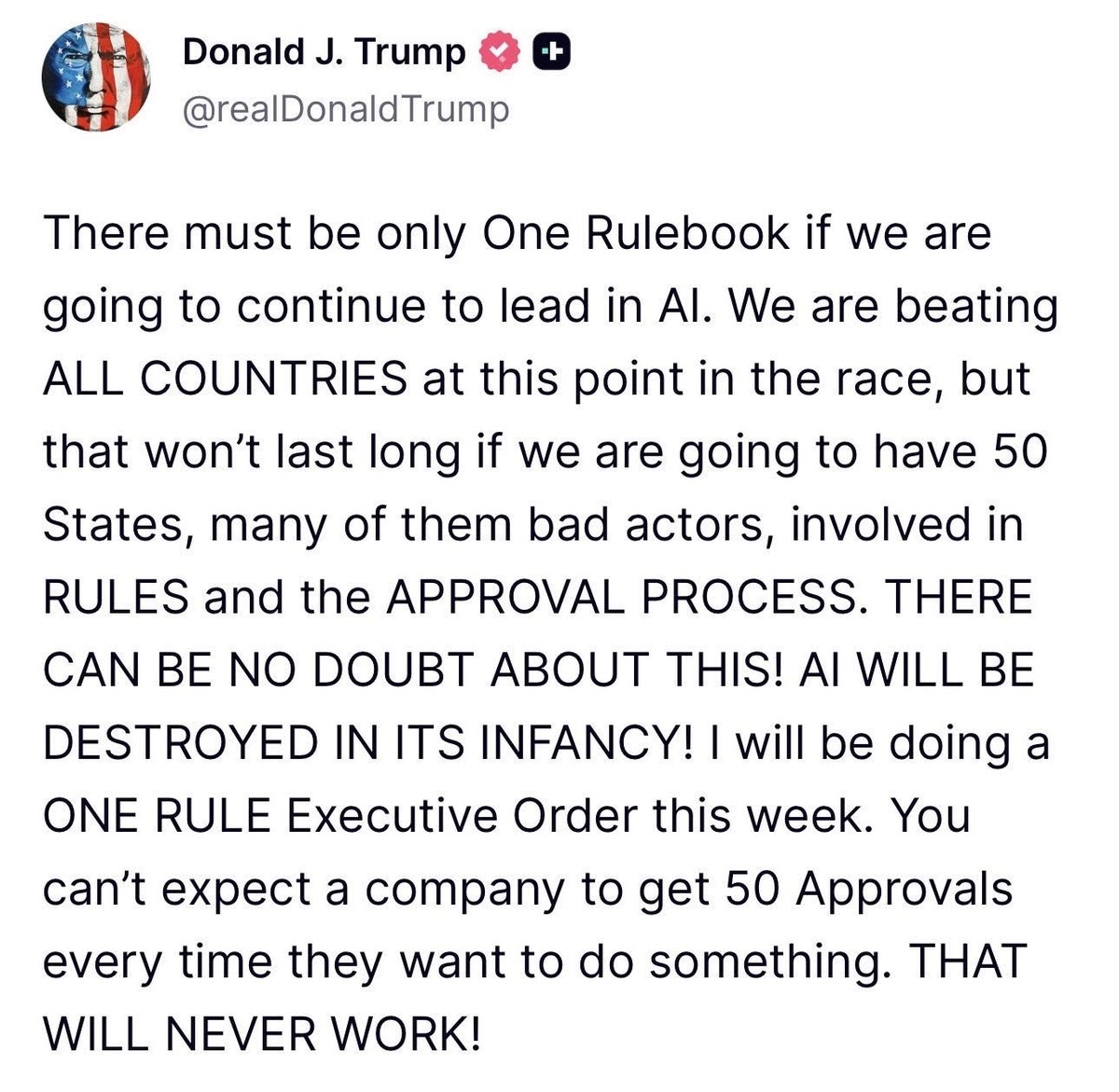
As President Trump wrote today: “There must be only One Rulebook if we are going to continue to lead in Al. We are beating ALL COUNTRIES at this point in the race, but that won't last long if we are going to have 50 States, many of them bad actors, involved in RULES and the APPROVAL PROCESS.”
To this end, President Trump has indicated that he will sign an Executive Order this week. This Order will provide the tools necessary for the federal government to push back against the most onerous and excessive state regulation. At the same time, the Administration will continue to work with Congress to define a federal framework that can be enacted through legislation.
Thank you to President Trump for his extraordinary vision and leadership on AI and for looking out for the interests of the entire country, as the Framers of the Constitution intended and as only the President of the United States can do.
516
726
5,318
716,169
Tripp Purvis retweeted

7 Oct 2025
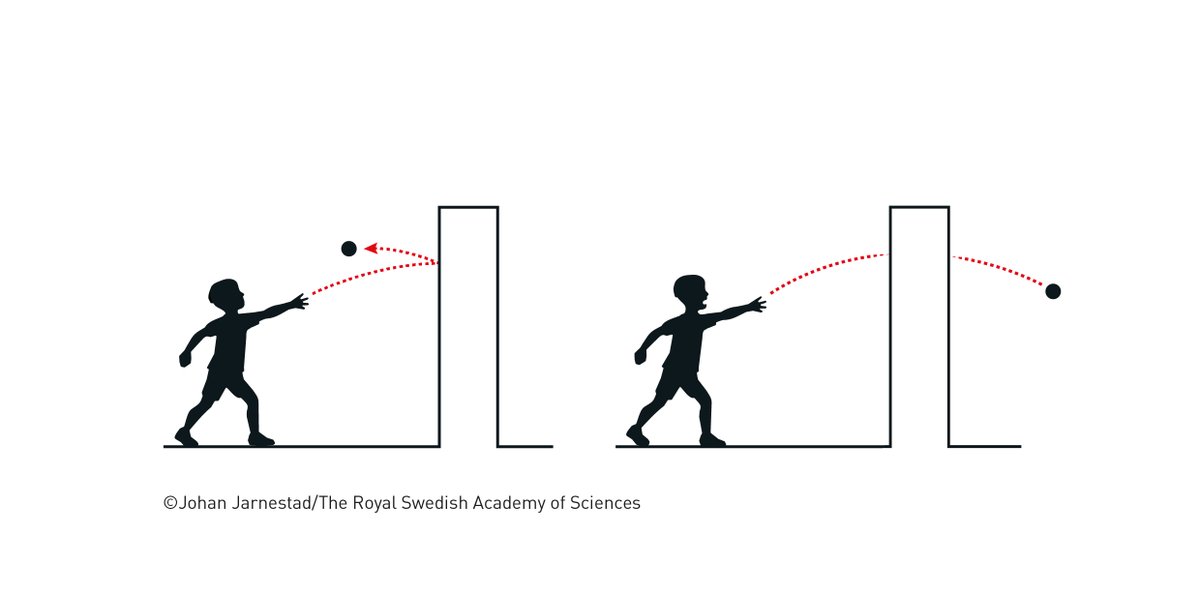
When you throw a ball at a wall, you can be sure it will bounce back at you.
You would be extremely surprised if the ball suddenly appeared on the other side of the wall. In quantum mechanics this type of phenomenon is called tunnelling and is exactly the type of phenomenon that has given it a reputation for being bizarre and unintuitive.
The 2025 #NobelPrize laureates in physics John Clarke, Michel H. Devoret and John M. Martinis, used a series of experiments to demonstrate that the bizarre properties of the quantum world can be made concrete in a system big enough to be held in the hand. Their superconducting electrical system could tunnel from one state to another, as if it were passing straight through a wall. They also showed that the system absorbed and emitted energy in doses of specific sizes, just as predicted by quantum mechanics.
198
2,586
11,765
868,145

While visiting Lawrence Berkeley National Laboratory, U.S. Secretary of Energy Chris Wright revealed a new partnership with Dell Technologies to build NERSC-10, the next-generation supercomputer for the National Energy Research Scientific Computing Center. ow.ly/hW8u50W6KaY

2
5
560

We’re excited to share our plans for IBM Quantum Starling, expected to be the world’s first large-scale, fault-tolerant quantum computer.
This new system, to be delivered to clients by 2029, is expected to perform 20,000x more operations than today’s quantum computers. Read more here: ibm.biz/BdnLUF
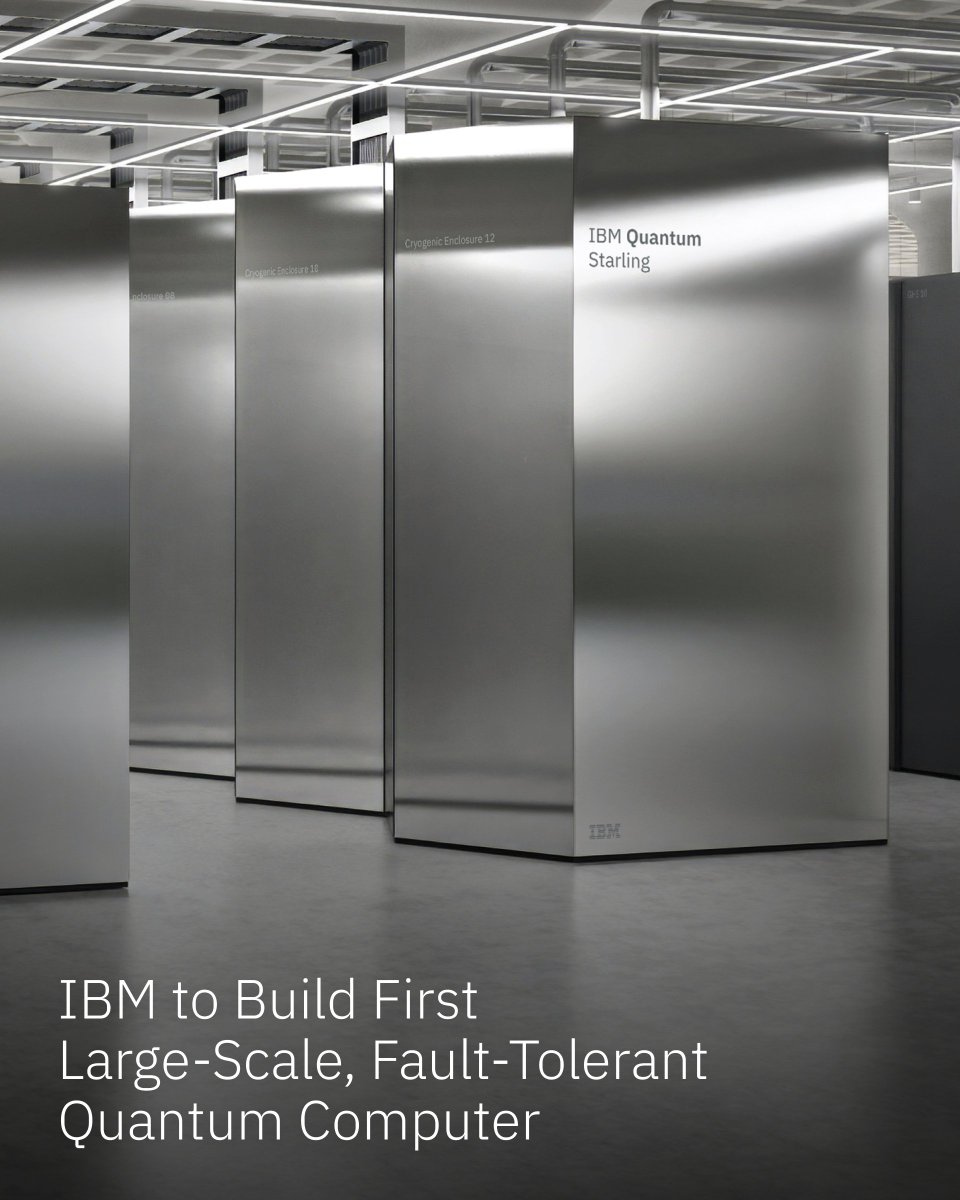
ALT Introducing IBM Quantum Starling
58
280
1,031
161,919

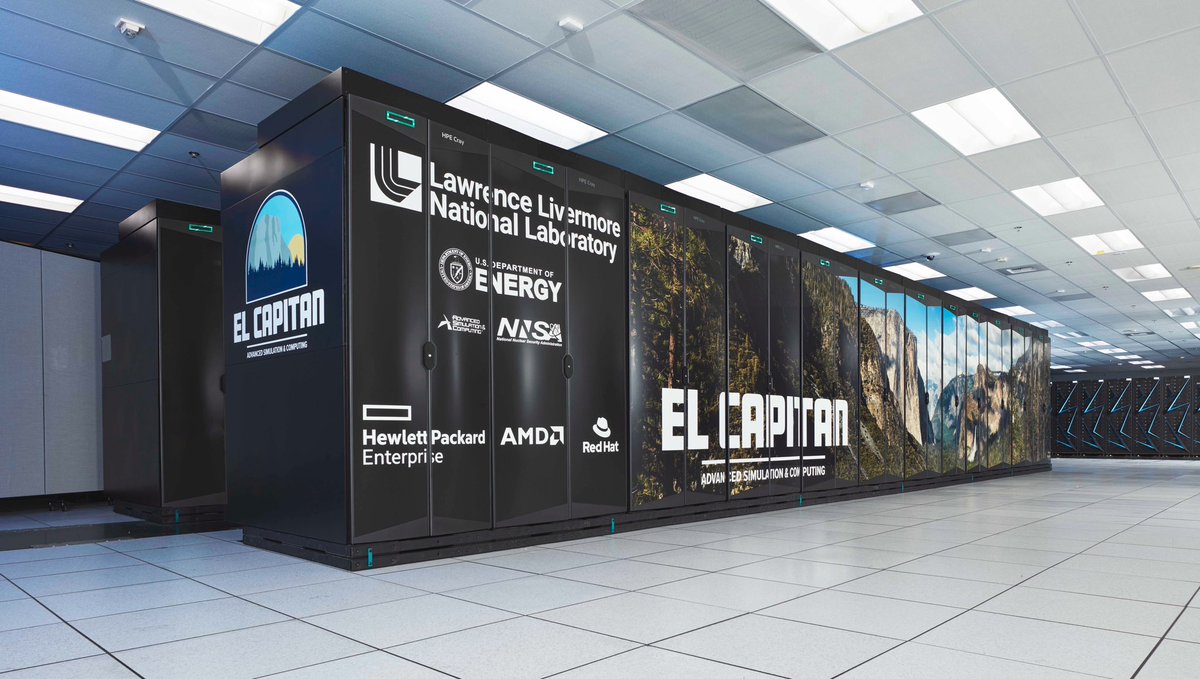
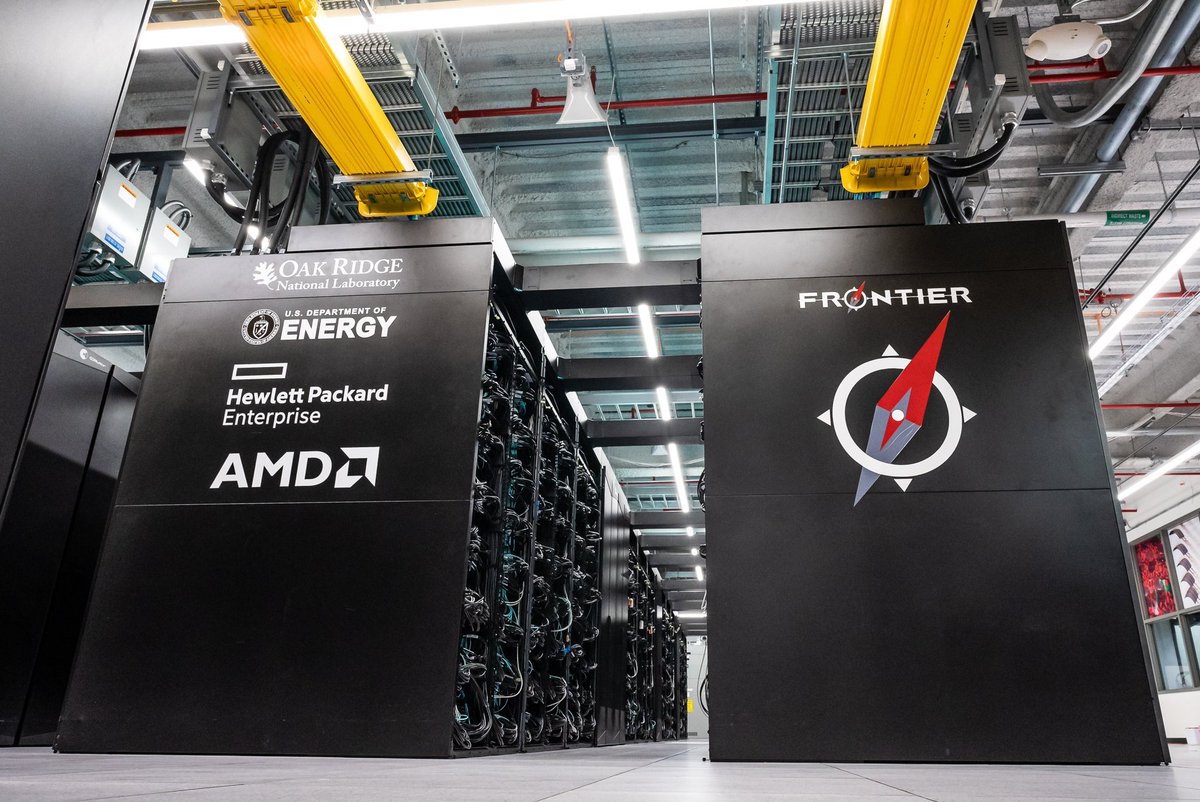
#1 in speed. #1 in AI performance. Leading energy efficiency. El Capitan and Frontier are proof of what’s possible with bold ambition and great partners. Proud to work alongside @Livermore_Lab, @ORNL and @HPE on the world’s fastest supercomputers.
50
131
1,135
71,323
Tripp Purvis retweeted

14 Apr 2025
Within the next 4 years, NVIDIA plans to produce up to half a trillion dollars of AI infrastructure in the U.S. — partnering with TSMC, Foxconn, Wistron, Amkor & SPIL.
We're meeting the demand for AI chips and supercomputers, strengthening supply chains, and boosting resiliency.
ALT The engines of the world’s AI infrastructure are being built in the United States for the first time. — Jensen Huang, NVIDIA Founder & CEO
83
286
1,418
81,755


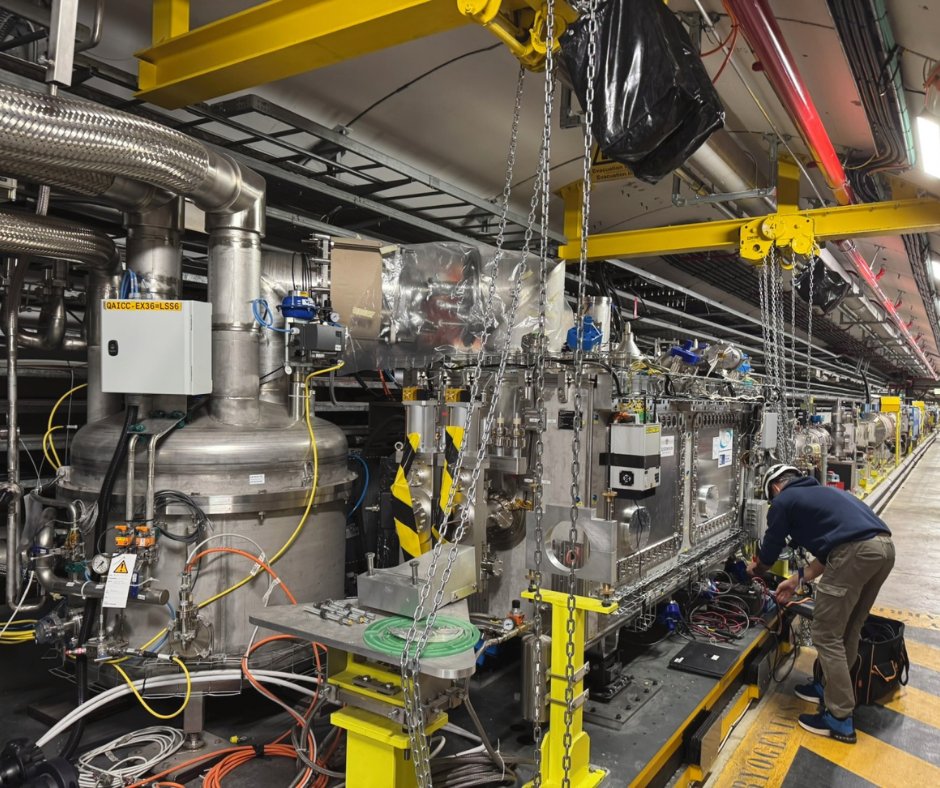
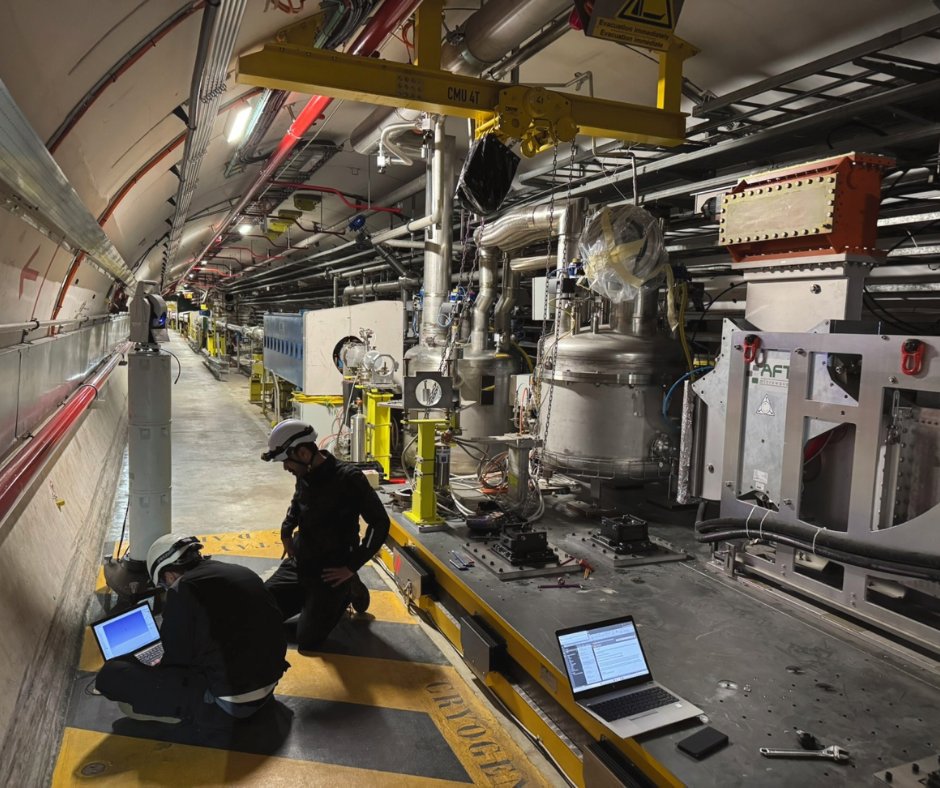
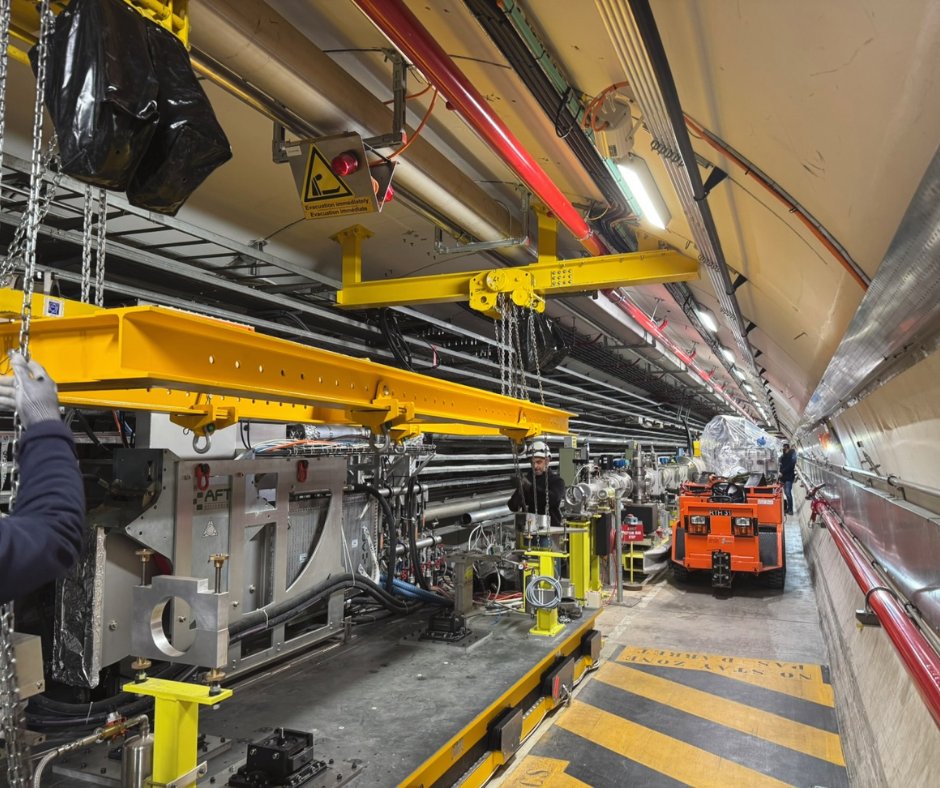
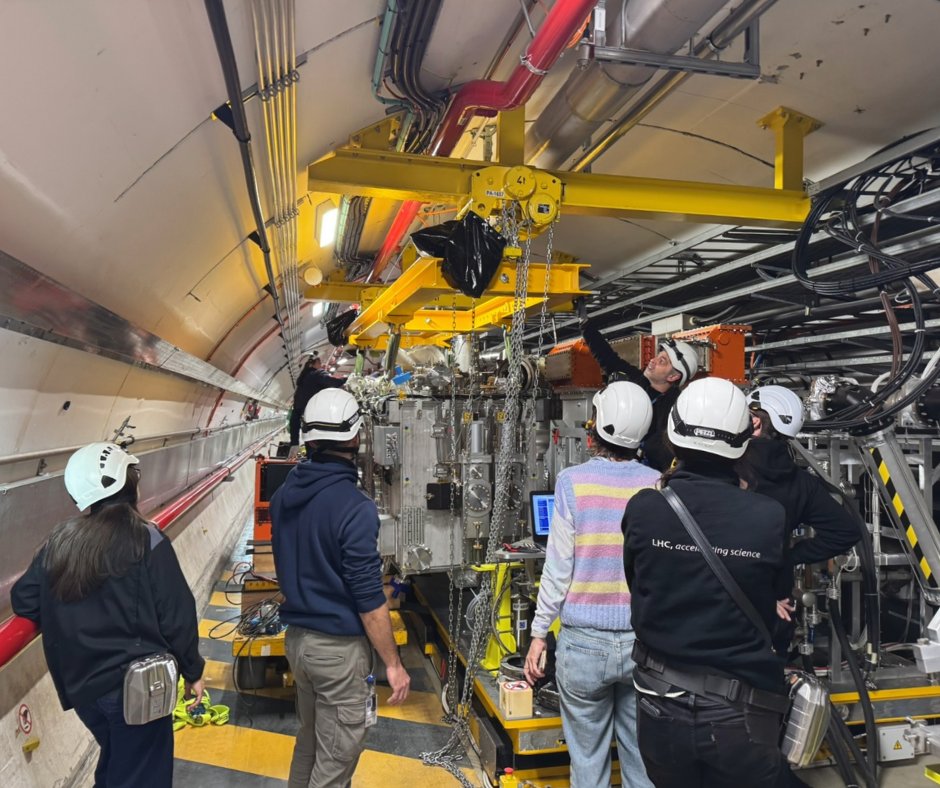
The High-Luminosity Large Hadron Collider (#HiLumiLHC) will rely on several key innovations in accelerator technology. One such technology is this pre-series cryomodule, which will be tested in the Super Proton Synchrotron (SPS) in the coming year.
Such cryomodules provide precise alignment, mechanical support, cryogenic cooling, thermal and magnetic shielding, among many other functions for the two crab cavities installed inside. These crab cavities are an important cornerstone of #HiLumiLHC, allowing to maximize the overlap of the proton beams at the collision points.
These images show the installation of a pre-series crab cavity cryomodule in SPS during this year’s winter technical stop, which ended last week.
Find out more about what’s new for CERN’s accelerator complex: home.cern/news/news/accelera…
23
108
500
26,963
17 Feb 2025
South Korea aims to secure 10,000 GPUs for national AI computing centre reuters.com/technology/artif…
18
Tripp Purvis retweeted

10 Feb 2025
ORNL researchers developed a quantum gate that enhances error resilience in quantum communication. By leveraging hyperentanglement, this approach improves quantum information transfer and stability. #QuantumScience
bit.ly/4gMN7UB
1
23
64
5,057
Tripp Purvis retweeted

Recently, @Livermore_Lab celebrated the acceptance and deployment of El Capitan as the world's most powerful supercomputer at a dedication ceremony, featuring distinguished guests from @NNSANews and our industry partners at @HPE and @AMD. livermorelab.info/4aloFb0
1
20
47
3,334