
Joined May 2021
- Tweets 4,489
- Following 1,799
- Followers 1,122
- Likes 878
1,912 Photos and videos
Pinned Tweet

Cleanup at the Russian Ministry of Defense and the future of Putinism — new op-ed by @IlyaMatveev_
Since spring 2024, a completely unprecedented sweep has targeted high-ranking Russian officials, including several deputies of former Defense Minister Sergei #Shoigu. Nearly one-third of the ministry’s leadership team has been fired or imprisoned. Shoigu himself was moved to the post of Secretary of the Security Council, and his patronage network has been destroyed.
The combination of Shoigu’s prominence in national politics and the thoroughness of his ministry's purge is unique in #Putin’s Russia. Dr. Ilya Matveev from the Public Sociology Laboratory is convinced that a close examination of this process, resembling the repetition of Stalinist terror, may reveal new information about the prospects of the Russian regime.
Read his new opinion piece for REM: russian-election-monitor.org…
#RussianPolitics #Putinism #Authoritarianism
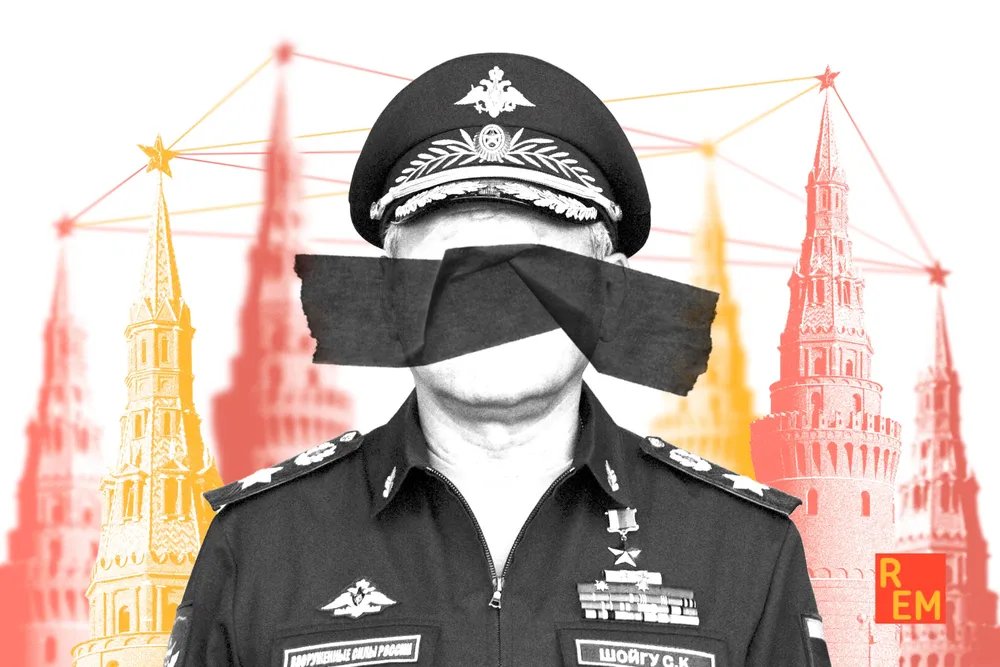

❗️ 98% Chance Shoigu Will Be Arrested Next — Investigative Journalist Ilya Rozhdestvensky (@dossier_center)
Investigative journalist Ilya Rozhdestvensky said there is a “98% probability” that Sergei Shoigu will eventually be arrested following the detention of former Deputy Defense Minister Ruslan Tsalikov.
Speaking on The Breakfast Show, Rozhdestvensky said Tsalikov was the only person Shoigu tried to protect “with all his strength,” because “Tsalikov knows absolutely everything about Shoigu.” According to the journalist, investigators are likely to obtain testimony about Shoigu’s alleged criminal activities from Tsalikov.
The purges within the Russian Defense Ministry began after Shoigu’s dismissal in 2024. Since then, several key figures from his inner circle have been arrested, including:
🔴 Timur Ivanov, described by investigators as the group’s “treasurer”
🔴 Vadim Shamarin, responsible for military communications
🔴 Yuri Kuznetsov, a personnel chief
🔴 Ruslan Tsalikov, described by investigators as the “keeper of secrets.”
According to investigators, the charge of creating an organized criminal community (OCC) against Tsalikov may serve as a legal pathway to higher-level responsibility. In Russian criminal law, such cases normally imply the existence of a top leader, meaning suspicion could extend further up the hierarchy.
#RussianPolitics #Shoigu #DefenseMinistry #Corruption
1
2
2
2,051
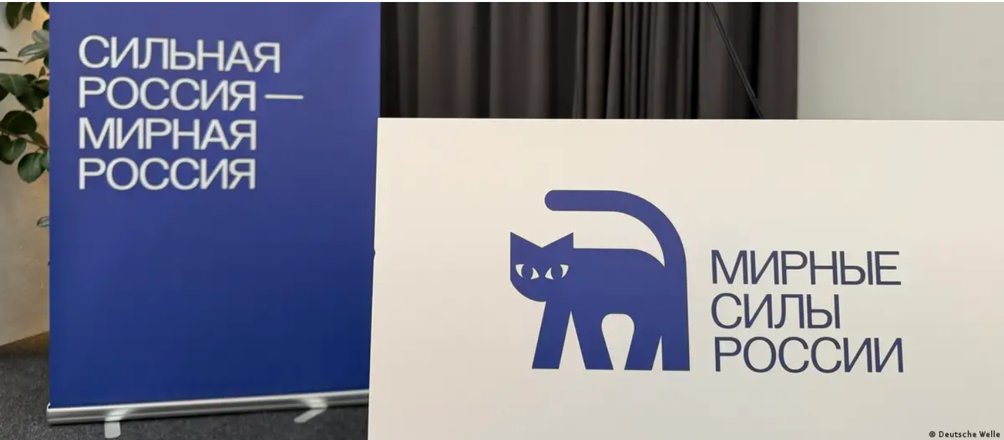
“Peaceful Russia”: A Mirror Cosplay of United Russia or Its Future Alternative?
A new political party, Peaceful Russia (Mirnaya Rossiya), was founded at a congress in Berlin, bringing together more than 100 delegates from Russia’s anti-war opposition abroad.
At first glance, the party’s name, slogan, and symbolism appear to mirror those of the #Kremlin’s ruling party. Instead of #UnitedRussia, there is #PeacefulRussia; instead of “Strong Russia – United Russia,” the slogan reads “Strong Russia – Peaceful Russia”; and instead of a bear, a cat as party symbol.
Yet the founders insist that the goal is not parody, but to create a political alternative, and, in the long term, a replacement, for United Russia.
The initiative was launched by @IlyaYashin, who was elected party chairperson. His deputies include Olga Prokopyeva of the France-based organization Russie-Libertés, former Moscow municipal deputy Elena Kotenochkina, and ex-municipal deputy Konstantin Kosov.
🗣️ “Our task is to take power in Russia. We were created abroad, but we are not an émigré party,” Yashin told delegates.
For now, however, the party’s main focus will be supporting anti-war Russians outside the country. Peaceful Russia does not plan to seek official registration in Russia and will not be able to participate in elections, though it says it intends to continue working with supporters inside the country.
#RussianOpposition #RussianPolitics
Details (in Russian): dw.com/ru/mirnaa-rossia-zace…
Photo: DW

В Берлине создана партия "Мирная Россия" во главе с Ильей Яшиным: цель - помощь антивоенным россиянам и борьба за власть в РФ в будущем. На съезде побывал корреспондент DW
pepurl.com/p/5FLHH?maca=rus-…

47
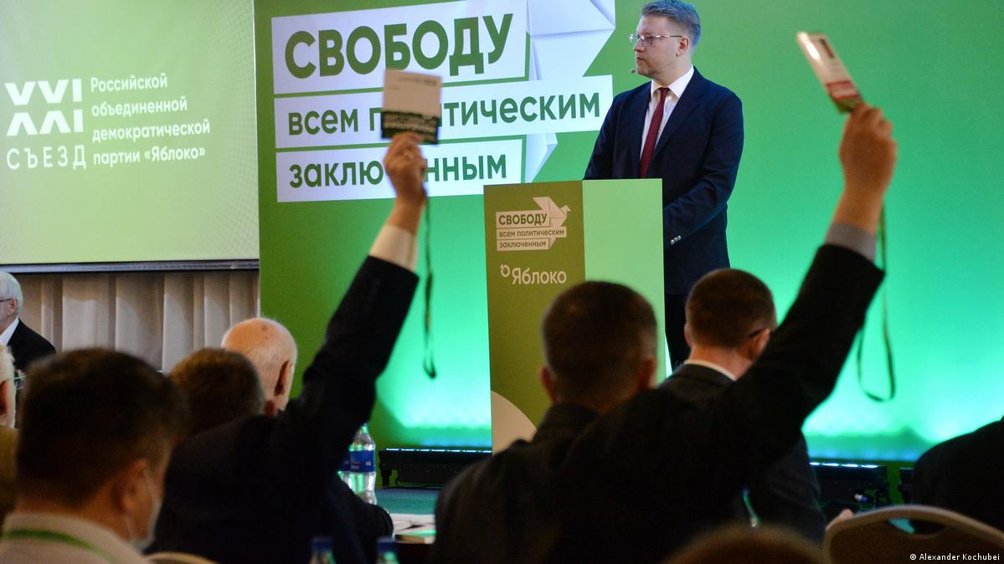
🍏 Yabloko Plans to Nominate 300 Candidates Despite Growing Disqualifications
Despite increasing pressure on its members, @YablokoParty intends to nominate around 300 candidates for the #StateDuma #elections2026.
Party chairman Nikolai Rybakov spoke about this in an interview with @novayagazeta_en. According to Rybakov, #Yabloko expects that some candidates will be removed from the race and is therefore building a large personnel reserve to compensate for disqualifications.
#Kremlin has increasingly used administrative and criminal cases to prevent opposition politicians from running for office. Among those expected to be barred from the ballot are Rybakov and his deputies Lev Shlosberg, Boris Vishnevsky, and Maxim Kruglov, as well as regional party leaders and activists in #Karelia, #StPetersburg, #Pskov, and Veliky #Novgorod.
Many of these disqualifications stem from convictions under administrative articles related to alleged “extremist symbolism”. The fines themselves are often symbolic, but a conviction under such provisions prevents a person from standing for election for one year.
Full text of the interview (in Russian): novayagazeta.eu/articles/202…
#RussianOpposition #PoliticalRepression #RussianPolitics #RussianElections #Duma2026
Yabloko Politicians Continue to Be Barred from Elections Through ‘Extremist Symbolism’ Charges
Svetlana Vasilkova, deputy chair of #Yabloko’s branch in #Pskov region and a municipal deputy in Pustoshka district, was fined 1,000 rubles (about €10) for allegedly displaying extremist symbols.
While such fines are largely symbolic, a conviction under Article 20.3 of Russia’s Administrative Code automatically disqualifies a person from running for office for one year. As a result, Vasilkova will be unable to participate in the September 2026 regional elections.
According to Yabloko, Vasilkova is the tenth party representative removed from electoral competition through this mechanism since late 2025. Similar penalties have previously been imposed on prominent party figures in #StPetersburg, #Pskov, #Novgorod, and #Karelia, including party chairman Nikolai Rybakov.
The party says that a total of 32 Yabloko members have now been excluded from upcoming elections on various legal grounds.
#Elections2026 #PoliticalRepression #RussianPolitics #RussianElections
t.me/yabloko_press/3227
1
3
553
Former Election Chief and Vice Governor of Novosibirsk region Arrested on Drug Charges
A senior official in #Novosibirsk Region who spent more than a decade overseeing elections before becoming one of the region’s most influential political administrators has been arrested on drug-related charges.
Yury Petukhov, until recently the First Deputy Governor of Novosibirsk region, was detained on June 4 and later arrested on charges related to the illegal possession of narcotics. According to reports, he has admitted guilt.
On June 8, Governor Andrey Travnikov dismissed Petukhov from his post.
Before entering the regional executive branch, Petukhov spent years in Russia’s electoral administration system. Between 2002 and 2015, he served as chairman of Novosibirsk city election commission and later headed the regional election commission.
Since 2015, Petukhov had served as First Deputy Governor, overseeing domestic policy and political management. Notably, he retained his position even after a change of governor, a rare occurrence in Russian regional politics, where senior political officials are often replaced alongside new administrations.
#RussianPolitics
36
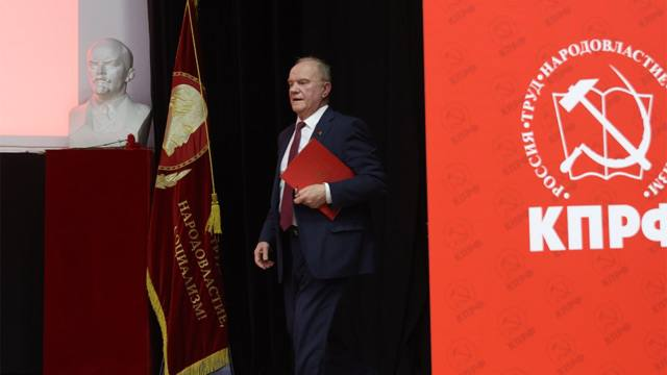
#CPRF primaries: 2.5 million voters, predictable leaders
Around 2.5 million voters took part in the Communist party #StateDuma primaries; of these, approximately 100,000 votes were cast online, whilst over 2 million were cast on paper ballots.
The top three among 230 candidates were: State Duma MP from the #Samara region Mikhail Matveev, State Duma MP from the #Komi Republic Oleg Mikhaylov, State Duma MP from #Moscow Sergei Obukhov. A number of chairs of regional CPRF branches and regional MPs are also leading the vote. Overall, the top twenty are mainly made up of State Duma deputies.
The results will be reviewed by the personnel commission, the presidium, and the plenum of the CPRF Central Committee, with the final list of candidates for the State Duma elections to be approved at the party congress scheduled for June 20.
According to a CPRF spokesperson, around 20% of the party’s State Duma deputies will be replaced.
#RussianElections #Duma2026
CPRF bets on the Kremlin’s most inconvenient candidates
Some of #CPRF’s most outspoken and controversial politicians are leading the party’s internal “People’s Candidate” vote ahead of the 2026 #StateDuma elections.
The top three among 230 candidates are currently:
– Mikhail Matveev, Duma MP, #Samara
– Oleg Mikhaylov, Duma MP, #Komi
– Nikolai Bondarenko, politician and YouTube star (2 mln follovers), #Saratov
All three are known for sharp political statements and criticism on sensitive issues. Matveev and Mikhaylov unexpectedly won single-member districts in 2021 without being part of the Kremlin-approved shortlist for the State Duma. Now, in 2026, #UnitedRussia is fielding much stronger opponents against them, including veterans of the war against Ukraine. Analysts believe the #Kremlin will do everything possible to block their re-election in district races.
That leaves the CPRF with either risking losing them in competitive districts, or placing them high on the federal party list, potentially strengthening the party’s overall campaign.
#RussianElections #RussianPolitics #Duma2026
vedomosti.ru/politics/articl…
1
78
Six Independent Candidates Launch Campaigns for Regional and Municipal Elections Across Russia
A new political initiative linked to political consultant Dmitry Kisiev, former head of Boris Nadezhdin presidential campaign HQ, has begun supporting independent candidates ahead of Russia’s upcoming elections.
The initiative, known as the Candidates’ Headquarters, received eight applications through its Ballot project, which aims to assist independent candidates running in regional and municipal races. Six activists have already publicly announced their candidacies before receiving official candidate registration.
The announced candidates are:
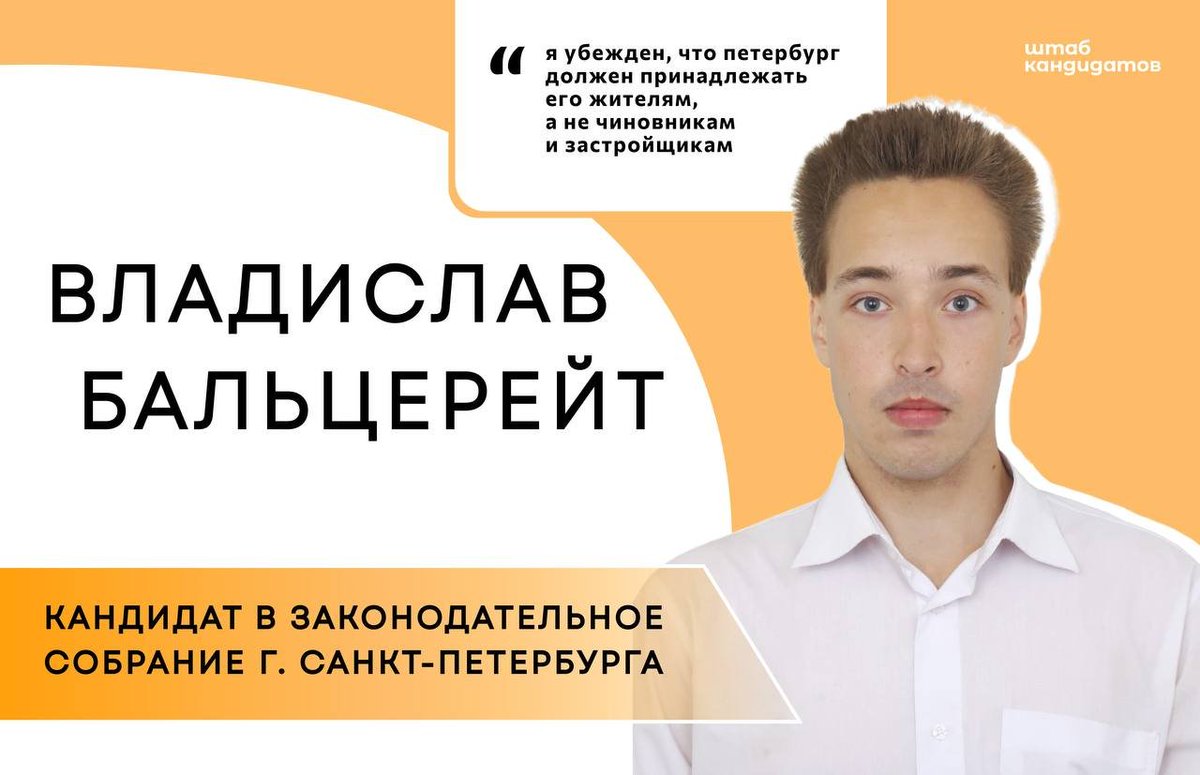
• Vladislav Baltsereit — candidate for the Legislative Assembly of #StPetersburg, known for campaigning against infill development projects.
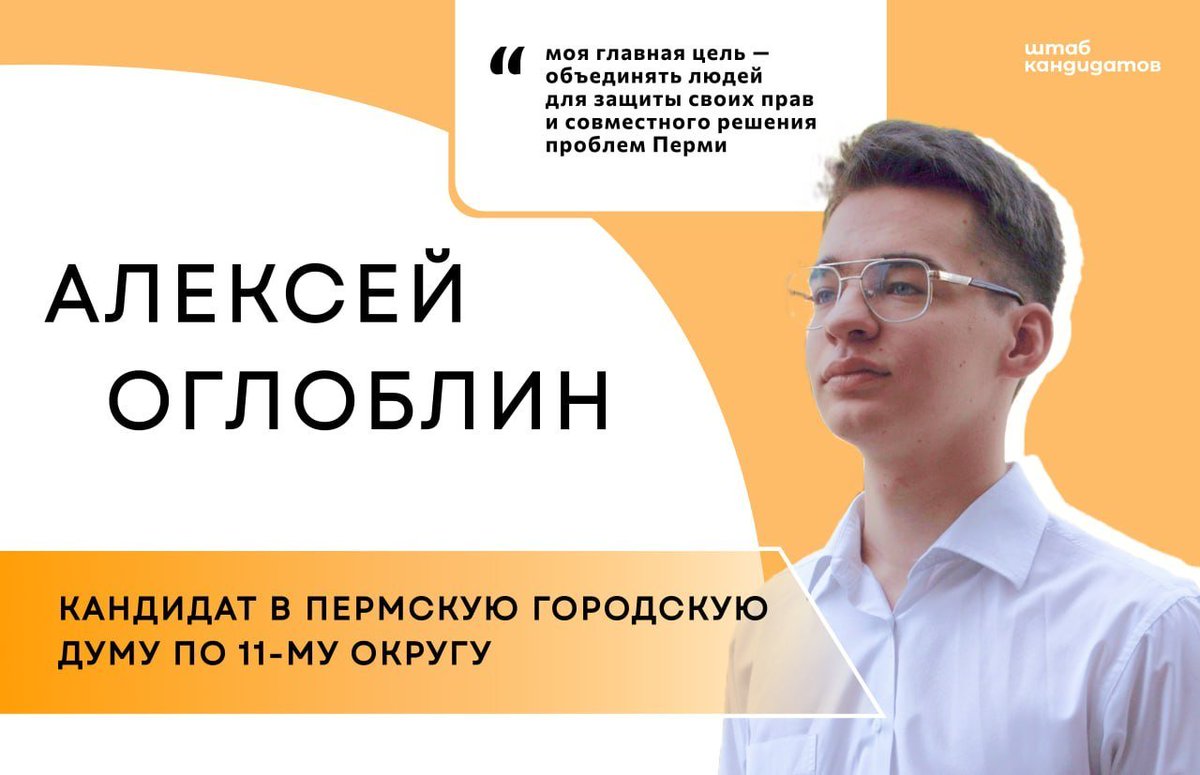
• Alexei Ogloblin — candidate for #Perm City Duma and lawyer involved in political defense cases.
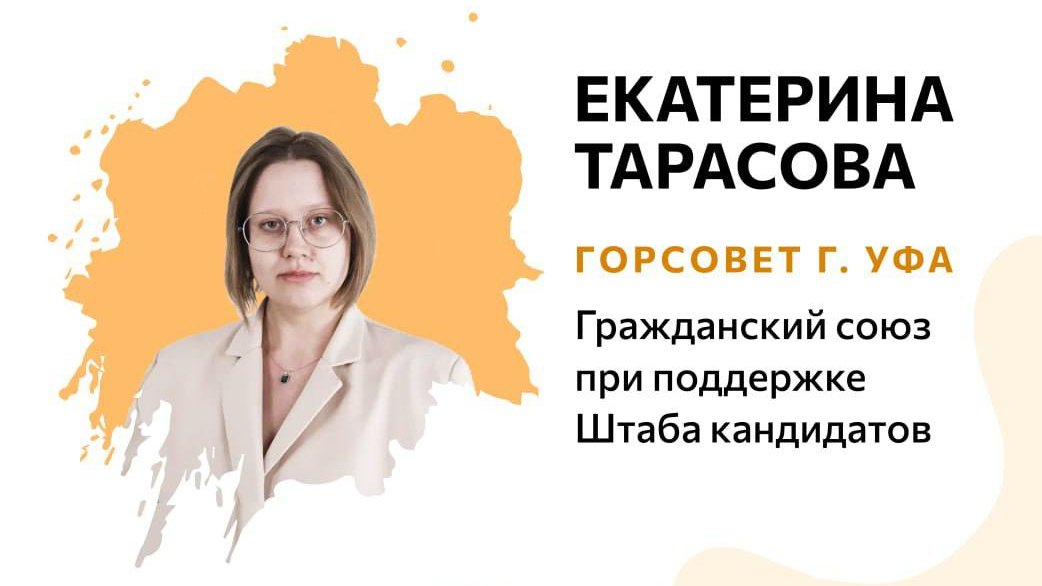
• Ekaterina Tarasova and Sergey Kubatin — civic activists seeking seats on the Ufa City Council, #Bashkiria.
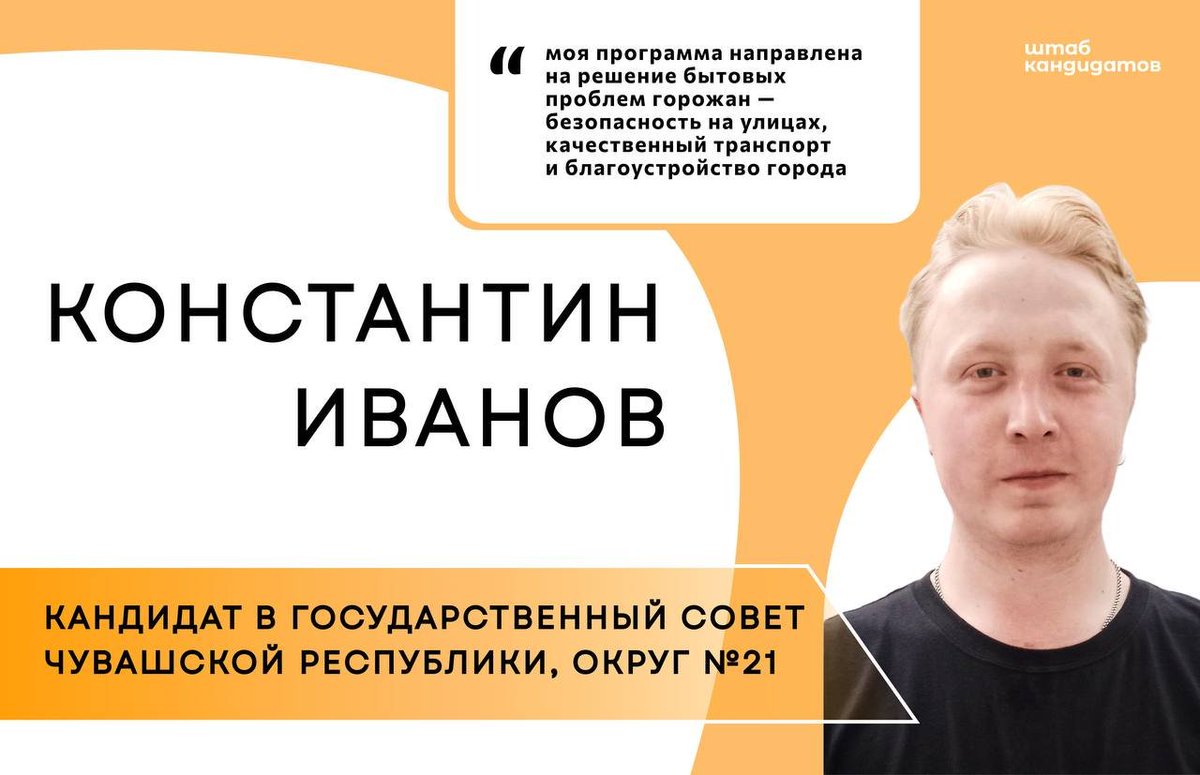
• Konstantin Ivanov — animal rights advocate running for the State Council of #Chuvashia.
• Anton Isakov — organizer of protests against internet restrictions, running for the #Tomsk Regional Duma.
The Candidates’ Headquarters says it intends to build a tactical voting list for the 2026 #StateDuma elections, while also supporting independent regional campaigns and training election observers.
The initiative represents a rare attempt to coordinate independent electoral participation outside Russia’s established party structures ahead of the next federal election cycle.
#Elections2026 #RussianPolitics #RussianElections
t.me/horizontal_russia/55639
37
💰 United Russia Spends More Than All Other Parties Combined
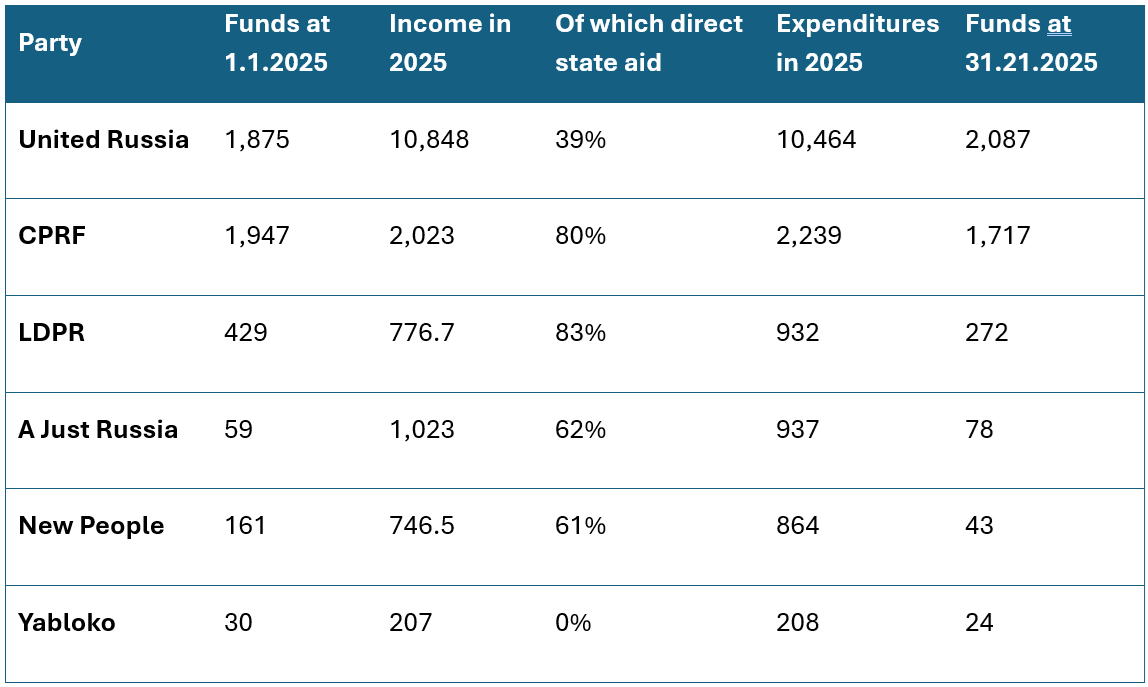
Russia’s Central Election Commission has published political party financial reports for 2025, offering a snapshot of how prepared parties are for the upcoming federal election cycle.
🥇 #UnitedRussia remains the undisputed financial leader. The party reported nearly 10.9 billion rubles (ca. EUR 109 million) in income last year and entered the campaign season with more than 2 billion rubles (ca. EUR 20 million) in reserve.
🥈#CPRF ranked second, with revenues exceeding 2 billion rubles (ca. EUR 20 million) and cash reserves of 1.7 billion rubles (ca. EUR 17 million).
📉Meanwhile, A #JustRussia and #NewPeople entered the election cycle with limited reserves. A Just Russia reported 78 million rubles (ca. EUR 780,000) on hand, while New People had just 43 million (ca. EUR 430,000).
🏛️For most parliamentary parties, state subsidies remain the primary source of funding. This dependence is especially pronounced for the Communist Party and #LDPR, where federal budget transfers account for the majority of revenues.
At the same time, New People was the country’s most election-focused party: more than 60% of its spending in 2025 went directly toward participation in election campaigns.
#Russia #Elections2026 #RussianPolitics
kommersant.ru/doc/8728774
34
Yabloko Politicians Continue to Be Barred from Elections Through ‘Extremist Symbolism’ Charges
Svetlana Vasilkova, deputy chair of #Yabloko’s branch in #Pskov region and a municipal deputy in Pustoshka district, was fined 1,000 rubles (about €10) for allegedly displaying extremist symbols.
While such fines are largely symbolic, a conviction under Article 20.3 of Russia’s Administrative Code automatically disqualifies a person from running for office for one year. As a result, Vasilkova will be unable to participate in the September 2026 regional elections.
According to Yabloko, Vasilkova is the tenth party representative removed from electoral competition through this mechanism since late 2025. Similar penalties have previously been imposed on prominent party figures in #StPetersburg, #Pskov, #Novgorod, and #Karelia, including party chairman Nikolai Rybakov.
The party says that a total of 32 Yabloko members have now been excluded from upcoming elections on various legal grounds.
#Elections2026 #PoliticalRepression #RussianPolitics #RussianElections
t.me/yabloko_press/3227
Yabloko Leader in Yakutia Faces Prosecution Over ‘Undesirable Organization’
The authorities in Russia’s #Sakha #Yakutia Republic have opened another administrative case against Anatoly Nogovitsyn, the regional leader of #Yabloko, for alleged participation in an “undesirable organization.”
According to Nogovitsyn, the new case is “almost identical” to the previous one. In March 2026, a court fined him 10,000 rubles (ca. EUR 100) over reposts linked to an organization designated as undesirable, even though the posts had already been deleted.
This is not the first such case against the opposition politician. In July 2025, he was fined under the same article for failing to remove a four-year-old interview with the TV Rain (Dozhd) from his Telegram channel.
Nogovitsyn is a former coordinator of Alexei #Navalny’s headquarters in Yakutsk and ran for the #StateDuma on Yabloko’s ticket in 2021. In recent years, he has faced multiple forms of pressure, including a 200,000-ruble (ca. EUR 2000) fine for “discrediting the army” and penalties related to his opposition to the abolition of direct mayoral elections in Yakutsk.
#PoliticalRepression #RussianPolitics
t.me/horizontal_russia/55605
2
608
United Russia Set to Renew Nearly 40% of Its Regional Legislators
#UnitedRussia’s factions in regional legislatures are on track for significant renewal after the September elections. According to Kommersant, only 705 of roughly 1,200 incumbent deputies secured winning positions in the party’s primaries across the 39 regions electing legislative assemblies this year. If confirmed by the party congresses, this would mean an average turnover of nearly 40%.
The most substantial reshuffles are expected in regions that have recently seen gubernatorial changes, including #Dagestan, the Jewish Autonomous Region #JAR, and #Tver region.
More than half of incumbent United Russia deputies failed to secure winning primary positions in #Samara region (15 of 36 retained), #Astrakhan region (12 of 28), #Pskov region (8 of 17), and #Chukotka (5 of 11).
Expected turnover also exceeds one-third in several other regions, including #Kamchatka (50%), #Primorsky region (48%), #Mordovia (46%), #MoscowRegion (40%), #Orenburg region (50%), #Oryol region (48%), and the regions of #Vologda, #Kirov, and #Tomsk (44% each).
The most stable United Russia factions are expected in the new convocations of the State Council of #Adygea (15% turnover), the Legislative Assembly of #Amur region (18%), #Lipetsk Regional Council (20%), and the Legislative Assembly of #StPetersburg (21%).
#RussianPolitics #Elections2026 #RussianElections
kommersant.ru/doc/8726047
United Russia City Council Factions Could Be Renewed by Nearly 50% After September Elections
#UnitedRussia’s representation in the city councils of Russia’s regional capitals could undergo significant renewal following the September elections.
According to Kommersant, only 117 of the 210 incumbent United Russia deputies in the ten regional capitals holding elections this year successfully passed the party’s primary elections. This suggests that party factions in these city councils could be renewed by nearly half.
The most dramatic turnover is expected in #Saratov, where only 9 of the current 24 United Russia deputies are projected to retain their seats. Significant rotation is also anticipated in #Kaliningrad, #Kemerovo, #KhantyMansiysk, and #Perm. The most stable situation appears to be in Petrozavodsk, #Karelia, where only about 20% of the faction may change.
Around 1,700 candidates registered for United Russia’s primaries in regional capitals. Every twentieth candidate was a participant in Russian war against Ukraine, meaning veterans accounted for roughly 4.5% of all contenders.
The findings mirror broader trends within the ruling party. Earlier, Kommersant estimated that United Russia factions could see nearly 40% turnover in regional legislatures and more than one-third renewal in the State Duma after upcoming elections.
#RussianElections #RussianPolitics #Elections2026
kommersant.ru/doc/8727831
50
United Russia City Council Factions Could Be Renewed by Nearly 50% After September Elections
#UnitedRussia’s representation in the city councils of Russia’s regional capitals could undergo significant renewal following the September elections.
According to Kommersant, only 117 of the 210 incumbent United Russia deputies in the ten regional capitals holding elections this year successfully passed the party’s primary elections. This suggests that party factions in these city councils could be renewed by nearly half.
The most dramatic turnover is expected in #Saratov, where only 9 of the current 24 United Russia deputies are projected to retain their seats. Significant rotation is also anticipated in #Kaliningrad, #Kemerovo, #KhantyMansiysk, and #Perm. The most stable situation appears to be in Petrozavodsk, #Karelia, where only about 20% of the faction may change.
Around 1,700 candidates registered for United Russia’s primaries in regional capitals. Every twentieth candidate was a participant in Russian war against Ukraine, meaning veterans accounted for roughly 4.5% of all contenders.
The findings mirror broader trends within the ruling party. Earlier, Kommersant estimated that United Russia factions could see nearly 40% turnover in regional legislatures and more than one-third renewal in the State Duma after upcoming elections.
#RussianElections #RussianPolitics #Elections2026
kommersant.ru/doc/8727831
101
Yabloko Leader in Yakutia Faces Prosecution Over ‘Undesirable Organization’
The authorities in Russia’s #Sakha #Yakutia Republic have opened another administrative case against Anatoly Nogovitsyn, the regional leader of #Yabloko, for alleged participation in an “undesirable organization.”
According to Nogovitsyn, the new case is “almost identical” to the previous one. In March 2026, a court fined him 10,000 rubles (ca. EUR 100) over reposts linked to an organization designated as undesirable, even though the posts had already been deleted.
This is not the first such case against the opposition politician. In July 2025, he was fined under the same article for failing to remove a four-year-old interview with the TV Rain (Dozhd) from his Telegram channel.
Nogovitsyn is a former coordinator of Alexei #Navalny’s headquarters in Yakutsk and ran for the #StateDuma on Yabloko’s ticket in 2021. In recent years, he has faced multiple forms of pressure, including a 200,000-ruble (ca. EUR 2000) fine for “discrediting the army” and penalties related to his opposition to the abolition of direct mayoral elections in Yakutsk.
#PoliticalRepression #RussianPolitics
t.me/horizontal_russia/55605
Police officers visited Anatoly Nogovitsyn, head of the @YablokoParty party branch in #Yakutia, and issued him an official warning about the “inadmissibility of unlawful actions” — while reportedly admitting they currently have no evidence to charge him.
According to the document delivered by officers from the Center for Countering Extremism, Nogovitsyn was instructed to comply with federal law, avoid using banned symbols, and not “discredit” the Russian armed forces. The Yabloko politician links the visit to pressure on the party ahead of the upcoming State Duma elections.
Police told him they would not file an administrative case for now due to lack of proof, but warned him against potential future violations and made it clear he remains under law enforcement scrutiny. Violating the warning could result in a fine starting at 30,000 rubles.
t.me/anatolynogovitsyn/1420
#Russia #Yakutia #Yabloko #PoliticalPressure #DumaElections #CivilRights #Election2026 #Opposition
128
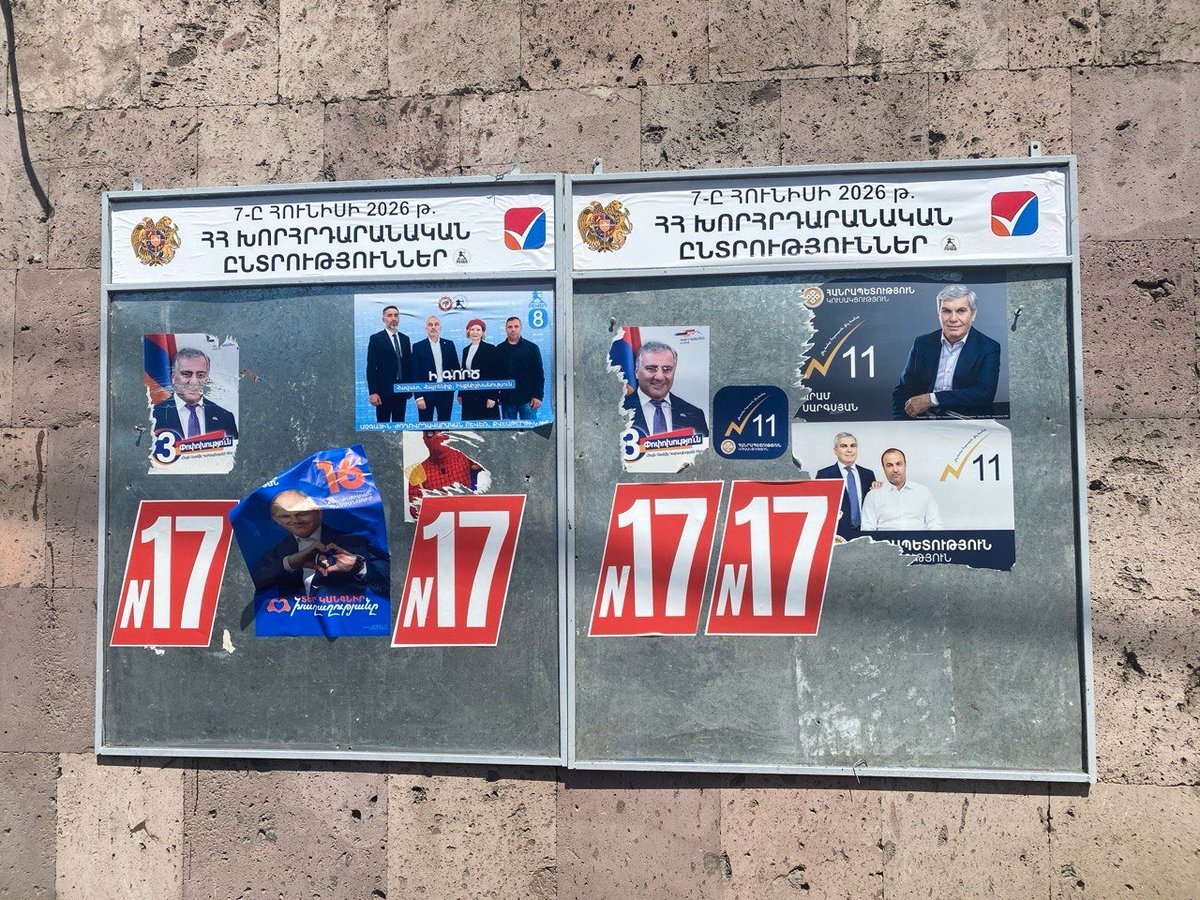
❗️ CIS Observers Declare Armenia’s Elections Free of Serious Violations
The observer mission of the Commonwealth of Independent States says it found no violations during Armenia’s parliamentary elections that could have affected the outcome of the vote.
According to mission head Nurlan Seitimov, observers recorded only minor technical shortcomings, which were promptly corrected by precinct election commissions.
🗣️ “Violations that could have influenced the election results were not identified by the mission,” Seitimov stated.
He also argued that political parties and candidates were provided with broad and equal opportunities to conduct their election campaigns.
The #CIS observer mission reported visiting more than 850 polling stations across all 10 regions of Armenia.
The assessment contrasts with statements made by several senior Russian officials during the campaign and after the vote, who alleged serious problems during the campaign and election process. The divergence highlights the differing narratives emerging from institutions formally associated with the same regional bloc.
#Armenia #Elections #Armenia2026 #CIS #ElectionObservation #ElectionMonitoring
tass.ru/mezhdunarodnaya-pano…
Kremlin Calls Armenian Elections Unfair — Then Signals Readiness to Work with the Winners
Armenia’s parliamentary elections became the top political story in Russia this week.
Throughout election night, senior Russian officials sharply criticized both the campaign and the vote itself. Deputy Chairman of Russia’s Security Council Dmitry #Medvedev and Foreign Ministry spokeswoman Maria #Zakharova accused the Armenian authorities of pressuring the opposition and allowing Western interference.
🗣️ “The entire election campaign and the voting process took place amid harsh repression ... and unprecedented pressure on the opposition, as well as interference from the West, primarily the EU,” Zakharova said.
Medvedev argued that elections in which Prime Minister Nikol Pashinyan allegedly seeks to remove his competitors cannot be considered fully legitimate. The statements were widely presented as reflecting #Kremlin’s official position.
Yet after preliminary results showed a victory for Pashinyan’s camp, Russia softened its tone. Zakharova stated that Moscow intends to shape its policy toward Armenia “based on the real actions of the Armenian leadership”, while describing Armenians as a “brotherly people.”
#Armenia #Russia #Pashinyan #Elections
tass.ru/politika/27694031
85
Kremlin Calls Armenian Elections Unfair — Then Signals Readiness to Work with the Winners
Armenia’s parliamentary elections became the top political story in Russia this week.
Throughout election night, senior Russian officials sharply criticized both the campaign and the vote itself. Deputy Chairman of Russia’s Security Council Dmitry #Medvedev and Foreign Ministry spokeswoman Maria #Zakharova accused the Armenian authorities of pressuring the opposition and allowing Western interference.
🗣️ “The entire election campaign and the voting process took place amid harsh repression ... and unprecedented pressure on the opposition, as well as interference from the West, primarily the EU,” Zakharova said.
Medvedev argued that elections in which Prime Minister Nikol Pashinyan allegedly seeks to remove his competitors cannot be considered fully legitimate. The statements were widely presented as reflecting #Kremlin’s official position.
Yet after preliminary results showed a victory for Pashinyan’s camp, Russia softened its tone. Zakharova stated that Moscow intends to shape its policy toward Armenia “based on the real actions of the Armenian leadership”, while describing Armenians as a “brotherly people.”
#Armenia #Russia #Pashinyan #Elections
tass.ru/politika/27694031
164
📊 War veterans make up just 2.5% of Russia’s regional elite — Report
In his report "Regional Nomenclature in 2026: Evolution and Adaptation under New Conditions" independent political analyst Alexander Kynev (designated a "foreign agent" by Kremlin) breaks down the actual statistics regarding the involvement of Ukraine war veterans in Russia’s regional governance, revealing that the "new elite" is mostly a myth.
Here is his exact data and analysis:
"Among the governors of the 83 'old' Russian regions as of June 1, 2026, those who had previously either worked in the government bodies of the annexed territories of Eastern Ukraine or were publicly designated as the Russia’s war against Ukraine “veteran” (hereafter 'SVO participant') numbered 5, all of whom possess extensive bureaucratic and administrative experience.
Among the heads of regional governments, deputy governors, heads of regional administration apparatuses, and heads of regional finance departments who held office between January 1, 2025, and January 1, 2026, one can note 17 professional officials who, according to open data, are 'SVO participants' or managed to work in the annexed regions of Eastern Ukraine, meaning they constitute 2% of this particular group of the nomenclature (its total number as of January 1, 2025, was 821).
'SVO participants' who are professional military personnel (siloviki) with no prior administrative or managerial experience are extremely poorly represented in the administrations. There are only 4 such individuals among the studied group of the regional nomenclature (deputy governors and heads of regional governments). Thus, combined with professional officials, these two groups of 'SVO participants' accounted for only 2.6% within this part of the regional administrations during the period of January 1, 2025 – January 1, 2026.
Consequently, in the case of regional administrations, promotion and professional training/retraining programs for 'SVO participants' generally target the very same officials who were already part of the managerial elite. Therefore, in this part of the nomenclature, it is not a matter of forming some 'new elite,' but merely the implementation of certain programs to strengthen a kind of corporate solidarity among this nomenclature and to stimulate activities within a certain single ideological paradigm dictated from above."
The full report is available in Russian (NB: on the Russian cloud storage service Yandex.Disk): disk.yandex.ru/i/GoHC13mph-x…
#RussianPolitics #Kynev #RussianElites #SVO #RussiaUkraineWar
📊 War veterans are relegated to secondary roles in Russian regional administrations — Report
Independent political analyst Alexander Kynev (designated a "foreign agent" by Moscow) has published a new study: "Regional Nomenclature in 2026: Evolution and Adaptation under New Conditions."
Here is his analysis of how the war is reshaping Russia's regional elites:
💬 "In 2025, the trend toward the return of a high level of rotation among the top regional administrative nomenclature persists. At the same time, the number of governor replacements in 2025 decreased compared to 2024 (5 instead of 13), but the number of replacements within the administration lineups themselves remained high. In 2024–2025, many governors, having been elected to a new term, significantly reformatted their teams. This applies to the Ivanovo, Irkutsk, Kostroma, Murmansk, Chelyabinsk, and Kamchatka regions, and some others. Such massive replacements within current administrations are atypical for the Russian regions and may indicate both deteriorating working conditions (leading both to a more frequent desire to leave the post and to the leadership’s desire to replace employees) and corresponding instructions from 'above.'
The war affects the composition of regional administrations [appointment of war participants to leadership positions in the regions – REM], but this impact is not significant; rather, it is an adaptation and adjustment of administrations to new requirements. Mainly, the war “veterans” join symbolic political positions and the deputy corps, where work formally does not require the presence of specific professional skills.
It is important to understand that the appointment of key officials in a regional administration requires approval from the relevant federal agencies via a special procedure that presupposes the existence of the necessary competencies, specialized education, work experience, recommendations, etc. As a result, outside of these procedures and quite rigid professional requirements are mostly positions that do not involve their holders issuing regulatory and restrictive legal documents and distributing significant budget resources (deputies overseeing relations with law enforcement agencies; patriotic education; youth policy and sports, etc.). This is precisely where the war participants without corresponding bureaucratic experience in their background mostly end up.
For the most part, 'business trips to the war zone' remain an attribute of career advancement for the traditional nomenclature, which even previously (without the 'SVO participant' attribute) could occupy the respective positions. In fact, obtaining the status of an 'SVO participant' is currently an additional element of a professional resume for them, strengthening career ambitions. At the same time, when analyzing such appointments, it is sometimes publicly difficult to separate real war participants from officials who have worked for some time in the administrative bodies of the annexed regions of Eastern Ukraine."
Full report is available in Russian (NB: at Russian cloud service Yandex.Disk):
🔗 disk.yandex.ru/i/GoHC13mph-x…
#RussianPolitics #Kynev #SVO #RussiaUkraineWar #Kremlin
128
UPD: Russia’s Supreme Court Orders the Dissolution of the Social Protection Party
According to Russian authorities, the party failed to remedy violations identified during an inspection last year. Party representatives, however, insist that all required corrections were made and argue that the ministry subsequently refused to register amendments to the party’s charter.
The Supreme Court proceeded with the liquidation case without waiting for the party’s challenge to the ministry’s refusal to be resolved.
The ruling further reduces the number of registered political parties eligible to participate in Russia’s electoral process ahead of the 2026 State Duma elections.
#RussianElections #Elections2026 #RussianPolitics
Russia’s Party System Shrinks Again
Russia’s Ministry of Justice has asked the Supreme Court to liquidate the Party of Social Protection. The court is expected to issue its decision on June 3.
The Ministry first identified numerous violations in the party’s activities in 2025. According to the authorities, the party failed to remedy them, leading to the suspension of its activities in December 2025.
The Party of Social Protection was registered in 2012 but has not played an active role in Russian politics in recent years. In 2025, it also lost the right to nominate candidates to the 2026 #StateDuma elections without collecting voter signatures after losing its last remaining seats in regional legislatures.
If dissolved, the number of officially registered political parties in Russia will shrink once again, continuing the long-term trend toward a more tightly controlled and consolidated party system ahead of the 2026 parliamentary elections and beyond.
#RussianPolitics #RussianElections #Elections2026
72
🤯 Only 4% of Russia’s ‘Foreign Agents’ Received Foreign Funding, Justice Ministry Admits
Just 4% of individuals and organizations designated as “foreign agents” in 2025 were found to have received foreign funding, according to Russian Deputy Justice Minister Oleg Sviridenko.
Before Russia’s full-scale invasion of Ukraine, foreign funding was the key legal criterion for designation as a foreign agent. Subsequent amendments expanded the law to include the much broader concept of being under “foreign influence” or “other forms of influence.”
Sviridenko praised lawmakers for introducing the changes, arguing that the previous version of the law would have allowed most current foreign agents to avoid designation.
🗣️ “If that single criterion still existed today, only 4% would be foreign agents. Can you imagine? Where would all the others be?” he said.
#ForeignAgents #HumanRights #RussianPolitics
50
📊 War veterans are relegated to secondary roles in Russian regional administrations — Report
Independent political analyst Alexander Kynev (designated a "foreign agent" by Moscow) has published a new study: "Regional Nomenclature in 2026: Evolution and Adaptation under New Conditions."
Here is his analysis of how the war is reshaping Russia's regional elites:
💬 "In 2025, the trend toward the return of a high level of rotation among the top regional administrative nomenclature persists. At the same time, the number of governor replacements in 2025 decreased compared to 2024 (5 instead of 13), but the number of replacements within the administration lineups themselves remained high. In 2024–2025, many governors, having been elected to a new term, significantly reformatted their teams. This applies to the Ivanovo, Irkutsk, Kostroma, Murmansk, Chelyabinsk, and Kamchatka regions, and some others. Such massive replacements within current administrations are atypical for the Russian regions and may indicate both deteriorating working conditions (leading both to a more frequent desire to leave the post and to the leadership’s desire to replace employees) and corresponding instructions from 'above.'
The war affects the composition of regional administrations [appointment of war participants to leadership positions in the regions – REM], but this impact is not significant; rather, it is an adaptation and adjustment of administrations to new requirements. Mainly, the war “veterans” join symbolic political positions and the deputy corps, where work formally does not require the presence of specific professional skills.
It is important to understand that the appointment of key officials in a regional administration requires approval from the relevant federal agencies via a special procedure that presupposes the existence of the necessary competencies, specialized education, work experience, recommendations, etc. As a result, outside of these procedures and quite rigid professional requirements are mostly positions that do not involve their holders issuing regulatory and restrictive legal documents and distributing significant budget resources (deputies overseeing relations with law enforcement agencies; patriotic education; youth policy and sports, etc.). This is precisely where the war participants without corresponding bureaucratic experience in their background mostly end up.
For the most part, 'business trips to the war zone' remain an attribute of career advancement for the traditional nomenclature, which even previously (without the 'SVO participant' attribute) could occupy the respective positions. In fact, obtaining the status of an 'SVO participant' is currently an additional element of a professional resume for them, strengthening career ambitions. At the same time, when analyzing such appointments, it is sometimes publicly difficult to separate real war participants from officials who have worked for some time in the administrative bodies of the annexed regions of Eastern Ukraine."
Full report is available in Russian (NB: at Russian cloud service Yandex.Disk):
🔗 disk.yandex.ru/i/GoHC13mph-x…
#RussianPolitics #Kynev #SVO #RussiaUkraineWar #Kremlin
Election Expert Silenced: Russia Labels Alexander Kynev a “Foreign Agent”
Kynev is one of the country’s leading researchers of elections, a long-time analyst of political processes in Russia and the post-Soviet space, with a particular focus on regional politics and elections at all levels. He has worked as a consultant for #Yabloko and previously headed the analytical department of the now-liquidated election watchdog #Golos. Kynev is the author of multiple books and hundreds of academic and publicist texts on Russian elections and regional governance, including for REM (links are provided below).
Despite making several controversial statements in recent years, including on Ukrainian and European politics, REM considers Kynev’s expertise on Russian elections critically important. He remains based in Russia and is not affiliated with any pro-government institutions.
In November 2025, Kynev proposed a protest strategy for the 2026 State Duma elections he called “Vote Out of Spite.” The idea was simple: citizens should go to polling stations precisely because the authorities insist participation is pointless.
🗣️ “The only motivation that can work is: vote out of spite. Participation itself is protest — acting despite everything. The entire system is built to keep you away and ensure everything is tightly controlled. It doesn’t matter whom you vote for. Vote for anyone. Even the LDPR. Voting while sitting on the couch is not protest,” Kynev said at the time.
After being designated a “foreign agent,” Kynev wrote on his Telegram channel that the decision was an attempt to “silence” him and warned of financial and administrative “strangulation.”
May 2022: To Russian opposition after the disaster of 2022: Enlighten, not repent. russian-election-monitor.org…
August 2023: "The current government is not going anywhere". On political changes in Russia. russian-election-monitor.org…
September 2023: Elections without change? russian-election-monitor.org…
August 2024: Who rules Russian regions. Alexander Kynev on how the system of power has changed over 30 years. russian-election-monitor.org…
August 2024: The main intrigue of September elections — will Communists regain their positions? russian-election-monitor.org…
#RussianPolitics #RussianElections #ForeignAgents #PoliticalRepression #Kynev
280
Alexei Navalny Would Have Turned 50 Today
#Navalny’s parents, relatives, supporters, and other Russians gathered at his grave to pay tribute and honor his memory.
Navalny, the most prominent opposition politician in modern Russia, has been murdered in prison in February 2024 while serving a lengthy sentence on politically motivated charges.
Despite ongoing pressure on opposition movements and public commemorations, people continue to visit his grave on significant dates, including his birthday, to remember his political legacy and express solidarity with his cause.
#AlexeiNavalny #RussianPolitics #RussianOpposition #PoliticalPrisoners

Родители Алексея Навального пришли на Борисовское кладбище почтить его память
Сегодня политику исполнилось бы 50 лет.
1
1
9
140
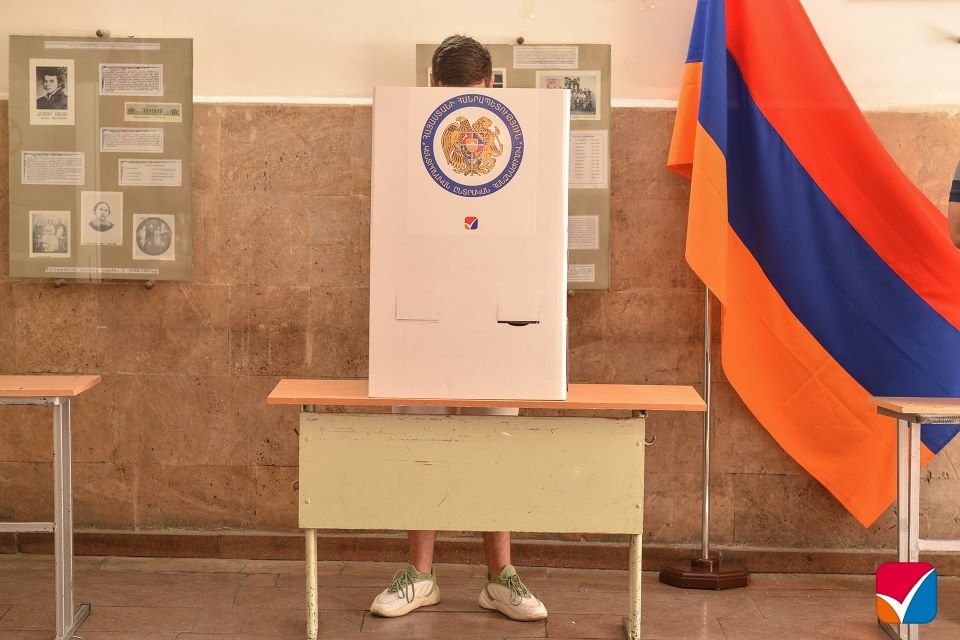
Kremlin's Disinformation Campaign Against Pashinyan Ahead of the Elections in Armenia — now available in English
provereno.media/blog/2026/06…
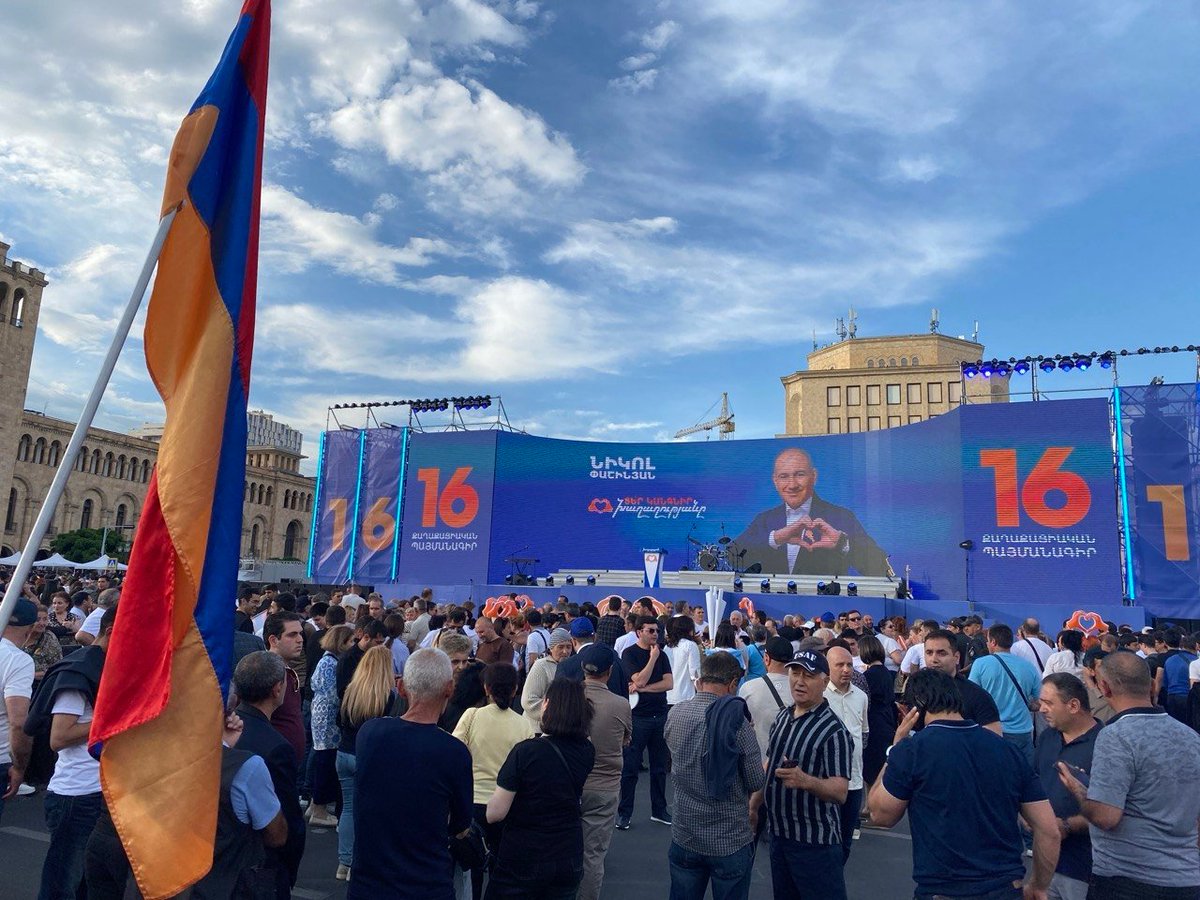
Kremlin-Linked Disinformation Campaign Fails to Gain Traction Ahead of Armenia’s Elections
An investigation by Provereno.media into disinformation narratives targeting Armenian Prime Minister Nikol Pashinyan ahead of the June 2026 parliamentary elections suggests that a year-long campaign involving Kremlin-linked actors has largely failed to influence Armenia’s domestic political debate.
According to the analysis, the false narratives failed to gain significant traction within Armenia itself. Attempts to target Armenian diaspora communities abroad were also of limited electoral value, since Armenian citizens can vote only inside the country.
That does not mean the effort was insignificant. A network of Russian- and English-language outlets participated in spreading anti-Pashinyan narratives, including the so-called Foundation to Battle Injustice (FBI, created by late Wagner Group founder Yevgeny Prigozhin), the U.S.-based website VT Foreign Policy, Azerbaijan’s Haqqin, Turkey’s OdaTV, and hundreds of social media accounts amplifying similar messages.
Provereno.media notes that Russian-linked disinformation campaigns have become a regular feature of elections in many countries. Yet Armenia appears to be an exception. While a handful of false stories circulated widely nearly a year before the vote, dozens of subsequent narratives attracted little attention and failed to achieve comparable reach.
The publication suggests that this may reflect the political realities of the campaign itself. For much of the past year, Pashinyan’s party has maintained a substantial lead in opinion polls, leaving disinformation actors with limited prospects beyond generating background noise in the information space.
Read the full investigation (in Russian): provereno.media/blog/2026/06…
#Armenia #Pashinyan #Disinformation #Russia #Elections
Photo: elections.am
85
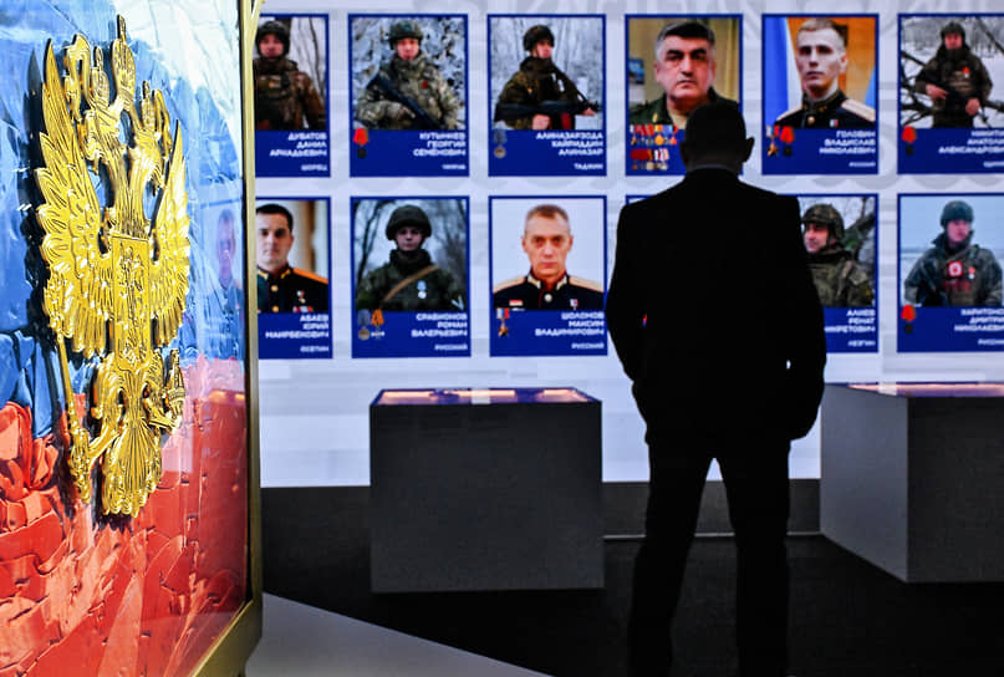
58 out of 400 Participants of Russia's War Against Ukraine Secure United Russia Nominations for the State Duma
Despite the #Kremlin’s emphasis on promoting veterans of the war against Ukraine into politics, only 58 of them secured victories in #UnitedRussia primaries and are likely to receive nominations for the 2026 #StateDuma elections.
According to calculations by the Kommersant, this represents only about 10% of the more than 400 war participants who sought nomination through the party’s primary process.
Of the 58 winners, 32 are expected to run in single-member constituencies, while the remainder will be included on party lists. The largest numbers of successful veteran candidates emerged from #Moscow, the so-called Donetsk People's Republic #DPR, #Novosibirsk Oblast, and #Chechnya.
The final list of candidates will be approved at United Russia’s party congress later this year.
Notably, primaries rules granted candidates with war participant status an additional 25% bonus to their vote totals. At the same time, the designation does not necessarily indicate frontline military service. In many cases, officials and lawmakers obtain veteran status through short-term assignments to occupied territories or combat zones. Russian media and political observers have also reported the existence of special units through which legislators can formally acquire veteran credentials.
#RussianElections #Elections2026 #RussiaUkraineWar #RussianPolitics #Duma2026
kommersant.ru/doc/8710284
Bucha Murder Suspect Heads to Russia’s State Duma
Nursultan Mussagaleev secured his place on #UnitedRussia’s party list for #StateDuma elections in #Orenburg Region.
Ukraine accuses Mussagaleev of involvement in the torture and killing of a civilian in #Bucha during Russia’s occupation of the area in 2022. According to the investigation, he commanded a reconnaissance unit and issued orders during cleansing operations conducted in the region.
Rather than facing scrutiny in Russia, Mussagaleev received state honors for his military service. After returning from the war, he participated in the #Kremlin-backed Time of Heroes program, designed to promote war veterans into public office, and was subsequently appointed head of a municipal district in the Orenburg Region.
#RussianPolitics #RussiaUkraineWar
1
79
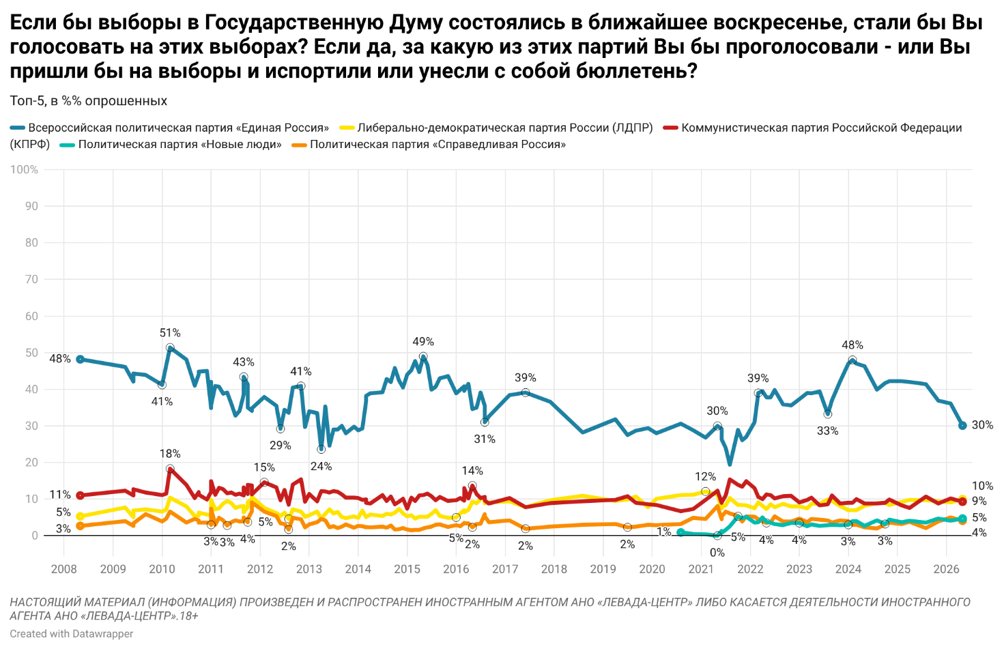
Independent Poll Puts New People in Fourth Place Ahead of Russia’s 2026 Duma Elections. United Russia drops significantly.
According to a May 2026 survey by the independent polling organization @Levada_ru, the #NewPeople party ranks only fourth in voter support ahead of Russia’s #StateDuma elections.
Respondents were asked which party they would support in a State Duma election. Here comes the rating:
30% #UnitedRussia
10% #LDPR
9% #CPRF
5% #NewPeople
4% A #JustRussia
The findings differ significantly from recent surveys published by the state-aligned pollster #VTsIOM. Over the past several months, VTsIOM has consistently measured support for New People at between 9% and 11%, at times placing the party in second place behind United Russia.
The only similarity between the results from different pollsters is that United Russia is seeing a significant drop in its ratings.
Source: levada.ru/2026/06/02/vybory-…
#RussianPolitics #LevadaCenter #Polling #Elections2026 #Duma2026
“Demand for Normalisation” — Russian Analysts Discuss New People Party Rising Ratings
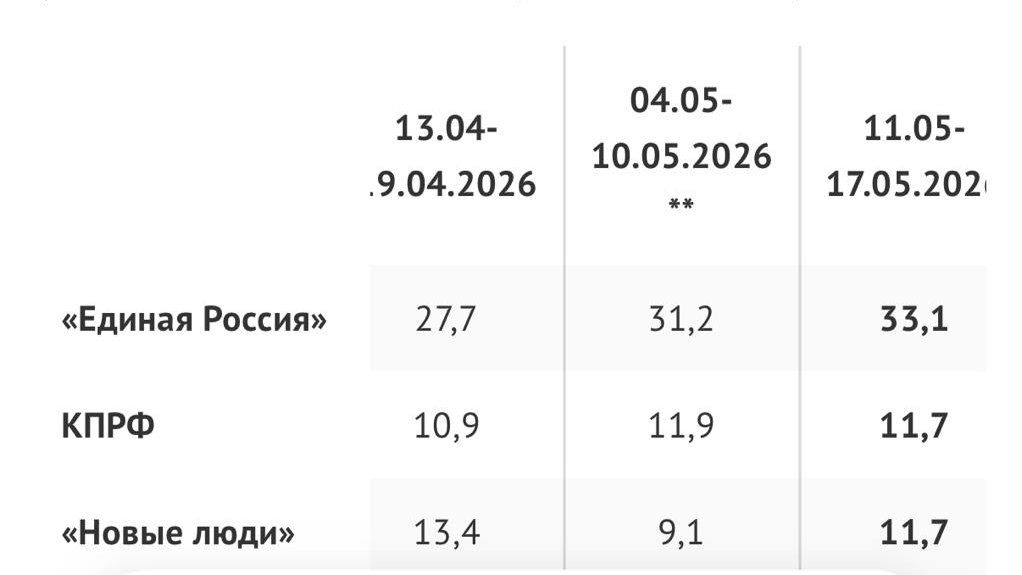
Russia’s state pollster #VTsIOM has released new party ratings amid the ongoing #StateDuma campaign. Despite a recent methodology change, shifting from purely telephone surveys to a mixed phone-and-doorstep model, the "liberal-technocratic" party #NewPeople continues to post strong results.
In the second half of May, New People again moved into second place, tying #CPRF and overtaking the declining #LDPR.
Political consultant Ilya Grashchenkov argues that the party’s popularity reflects a public “demand for reducing pressure.” According to him, voters increasingly want “fewer bans, less interference in everyday life — fewer things you’re not allowed to access, watch, or use, and fewer demands to tolerate yet another restriction”.
Independent political analyst Alexander Kynev describes the trend as a broader “demand for normality.” He says support for New People is no longer limited to its traditional electorate — entrepreneurs, youth, and residents of large cities — but is now spreading to more inert segments of the population.
Latest VTsIOM ratings:
#UnitedRussia — 33.2% ( 1.9)
#CPRF — 11.7% (-0.2)
#NewPeople — 11.7% ( 2.6)
#LDPR — 9.7% (-1.9)
#JustRussia — 4.4% ( 0.2)
#RussianPolitics #RussianElections #Elections2026
1
83