
Human | Software Engineer | Typescript Senpai | chef @myhealthdiaryai
Joined October 2019
- Tweets 1,944
- Following 532
- Followers 3,783
- Likes 2,691
189 Photos and videos









Pinned Tweet

Feb 27
A sneak peek into what we’ve been building. Our goal is to make managing your health journey as seamless and intuitive as possible.
Full release soon!!

Missed appointments. Forgotten meds. Ignored symptoms.
myHealthDiary tracks it all in one place.
Visits. Medications. Vitals. Symptoms.
Be the first to experience it 👇
h30.us/waitlist?utm_source=x…
1
6
20
1,236
At this point, it is evident that the issue of insecurity is beyond the capacity of our leaders.
How do bandits deliver the corpse of their victim to the victim’s family and then leave unharmed, without any resistance or interception whatsoever?

Heavily armed bandits handed over the body of General Rabe yesterday morning in Katsina and left for neighboring forest 🌳 of Matazu , unchallenged !
What a country ???

29
Solahudeen retweeted

Choice is a superpower.
But better decisions come from better options.
And in crypto, that’s exactly what @ramphub unlocks.
Instead of jumping between platforms to compare rates, liquidity, and availability – everything is brought together in one place.
Compare, Choose and Execute in secs!
Built on @solana.
Get started today.
ramphub.io/auth?tab=signup&r…
24
24
160
13,521
19h
I don’t even see stuffs like these as adventures.
Life’s too precious to take unrewarding foolish risks.
Jun 13

JUST IN: 21-year-old dies after workers forget to attach safety rope and push her off 40-meter bridge in São Paulo’s Limeira, Brazil
1
32
19h
A retired Major General was kidnapped and murdered by bandits—the same bandits some are proposing to reintegrate into society.
I weep for this nation. 💔
16
Jun 13
AI slop.
Jun 13

So let me get this straight: Anthropic is worth 65 billion, and is about to post its first profitable quarter with $47 billion in annual revenue... and now the government says its smartest models can't be sold to foreign customers?
Oof. That's like building a rocket, fueling it up, and then being told you can only fly it in your backyard. 🚀
Most of their money probably 85% comes from global enterprise and devs. Cutting that off mid-momentum isn't just annoying; it's a direct hit to the $10.9 billion they were expecting this quarter alone.
So yeah, the IPO hype is real. But so is the regulatory rug pull. Markets are gonna start asking: what's a trillion-dollar AI company actually worth if it can't sell its best stuff abroad?
#Anthropic #AI #ExportControls #TechIPO
1
26
Solahudeen retweeted

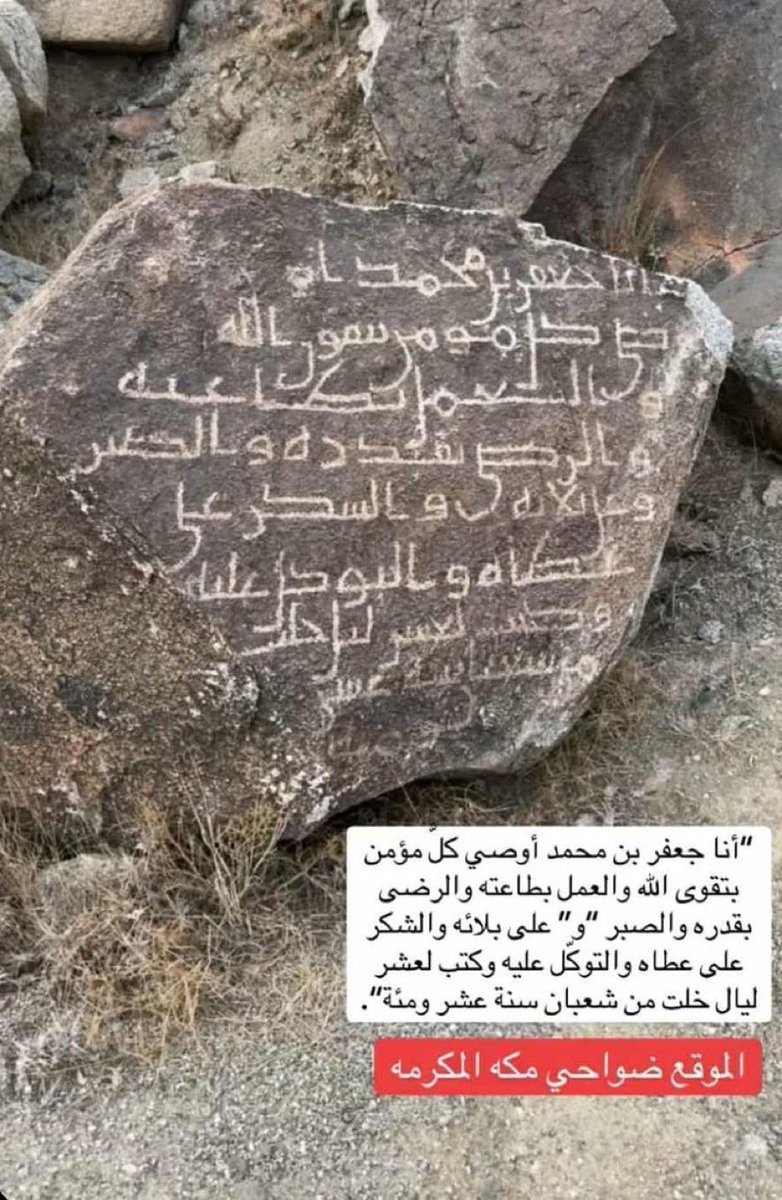
An inscription attributed to Imām Jaʿfar al-Ṣādiq (رحمه الله), dated to 110 AH near Makkah:
“I am Jaʿfar ibn Muḥammad. I counsel every believer to fear Allah, to act in obedience to Him, to be content with His decree, to be patient with His trials, to be grateful for His blessings, and to place his trust in Him. This was written ten nights after the beginning of Shaʿbān in the year 110 AH.”
12
198
1,122
194,175
Jun 13
Maybe take a look at the stats again. “Was” kor “were” ni.
Jun 12

there was a time 800-1m was a dream salary range for family men, tuff.
2
3
302
Solahudeen retweeted

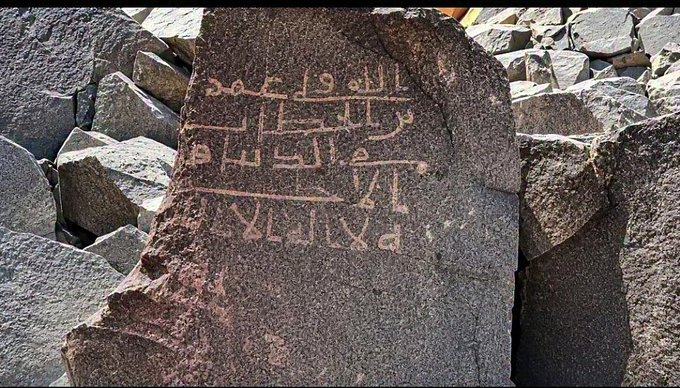
"O Allah, strengthen Islam with the one who is more beloved to You of these two men: Abu Jahl ibn Hisham or Umar ibn al-Khattab."
— Jami' at-Tirmidhi
16
153
1,387
670,883
Jun 13
I think you're reducing religion to a coping mechanism for hardship, and that's where most people get it wrong.
Yes, many people turn to God during afflictions because faith provides hope. But if religion were only about solving problems, then the wealthy, healthy, and successful would have little reason to be religious.
Islam as a religion. It's a framework for understanding purpose, morality, accountability, and our relationship with our Creator.
Science can tell us how things happen. It helps us cure diseases, build technology, and understand the physical world. But science doesn't answer why we exist, who we are before we exist, what’s there for us after we exist no more, whether life has an ultimate purpose, or why objective morality should matter in the first place.
And when you say, “Just do good and follow the right path,” I’d argue that doing good and following the right path are among the most fundamental teachings of religion in the first place.
The real question is: Who determines what is good and what is the right path? Human beings have argued about morality throughout history. What one society celebrates, another condemns. Morality has shifted across cultures and generations, often contradicting itself.
Religion, particularly Islam, doesn’t tell us to do good; it provides a framework for defining what good is and what the right path looks like. It offers a moral standard that exists beyond individual preferences, societal trends, and changing cultural norms.
As for "what will be, will be," only what has been has been. You can’t tell what will be since you don’t even tell what the original plan is.
Jun 13

Most people got closer to God because of afflictions and problems because they see it as a symbol of hope.
Well, most of these problems are resolvable with money and seeking the right path sets by science and some are not resolvable anywhere( science and
1/2
2
1
101
Jun 13
Ah, the classic “I’ve figured it all out” stage.
Don’t worry too much about it. Life has a way of taking people through different stages, and many eventually reach another level of reflection that draws them back to faith, often with a deeper understanding than before.
Time will tell.

once you start questioning religion , lot of things go start dey muzz you. why would thousands of angels gather to be cursing me because i’m not covering my hair ? dem no get anything better to do ni? 😭😭😭
9
2
8
1,409
Jun 13
Another angle, this shows how powerful and supreme the federal government can be.
Jun 13

The US government, citing national security authorities, has issued an export control directive to suspend all access to Fable 5 and Mythos 5 by any foreign national, whether inside or outside the United States, including foreign national Anthropic employees.
The net effect of this order is that we must abruptly disable Fable 5 and Mythos 5 for all our customers to ensure compliance.
Access to all other Claude models is not affected.
We apologize for this disruption to our customers. We believe this is a misunderstanding and are working to restore access as soon as possible.
Read our full statement: anthropic.com/news/fable-myt…
1
49
Jun 13
At this rate, we'll soon be doing KYC just to access the latest AI models.
Looks like more and more restrictions will be placed on non-U.S. nationals as the race for advanced AI heats up. 💔
Jun 13

As a result of a US government directive, we are suspending access to Claude Fable 5 for all users. You can continue to use all other Claude models.
Here’s what this means for you:
Across Claude products, new sessions will run on your selected default model or Opus 4.8, and existing Fable 5 sessions will end with an error.
On the Claude Platform, requests to Fable 5 will also return an error. Please update your integrations to other Claude models.
We know this is a disruption to your workflows; we appreciate your patience and support.
1
22
Jun 13
This might actually be the last time we have an access to models so intelligent as Fable 5.
A lot of regulations would be going into these labs now. SAD!
1
24
Jun 13
Why would the USA gov ban Fable 5, man??!!
I’m crashing out real bad!!
1
65
Jun 13
These are the issues.
The U.S. government seems determined to position itself as the sole custodian of AI advancement.
And what does it even mean to say, “it has very high capabilities”? High capabilities in what sense? The statement is so vague that it’s practically meaningless.
Citing it a threat to national security is very lame. Very very lame!!
Jun 13
The US government, citing national security authorities, has issued an export control directive to suspend all access to Fable 5 and Mythos 5 by any foreign national, whether inside or outside the United States, including foreign national Anthropic employees.
The net effect of this order is that we must abruptly disable Fable 5 and Mythos 5 for all our customers to ensure compliance.
Access to all other Claude models is not affected.
We apologize for this disruption to our customers. We believe this is a misunderstanding and are working to restore access as soon as possible.
Read our full statement: anthropic.com/news/fable-myt…
1
1
3
1,110
Jun 12
Just because your derivative is zero doesn't mean you're at maximum.
1
12