
Joined March 2026
- Tweets 79
- Following 214
- Followers 26
- Likes 220
Photos and videos
Sam Harrison retweeted

Jun 11
We're excited about the US CLARITY Act.
We think all YC companies will use crypto technology, like stablecoins, before long. Not just crypto startups, not just fintech startups, but every company.
Here's why this law is such a big deal 🧵
x.com/SenLummis/status/20637…

The Clarity Act passed committee. The floor is next. We did not come this far to quit at the 5 yard line.
69
266
1,548
260,738
Sam Harrison retweeted

Jun 5
Custody is not just safekeeping. It is the starting point for staking, lending, treasury management, and now vaults. The ask from institutions has been expanding steadily.
Nathan Stump (@nathan_stump015) from @BitGo and Nico Gallardo (@nicnode) from @OctantApp on bridging bank grade custody and DeFi:
1
6
22
2,277

May 27
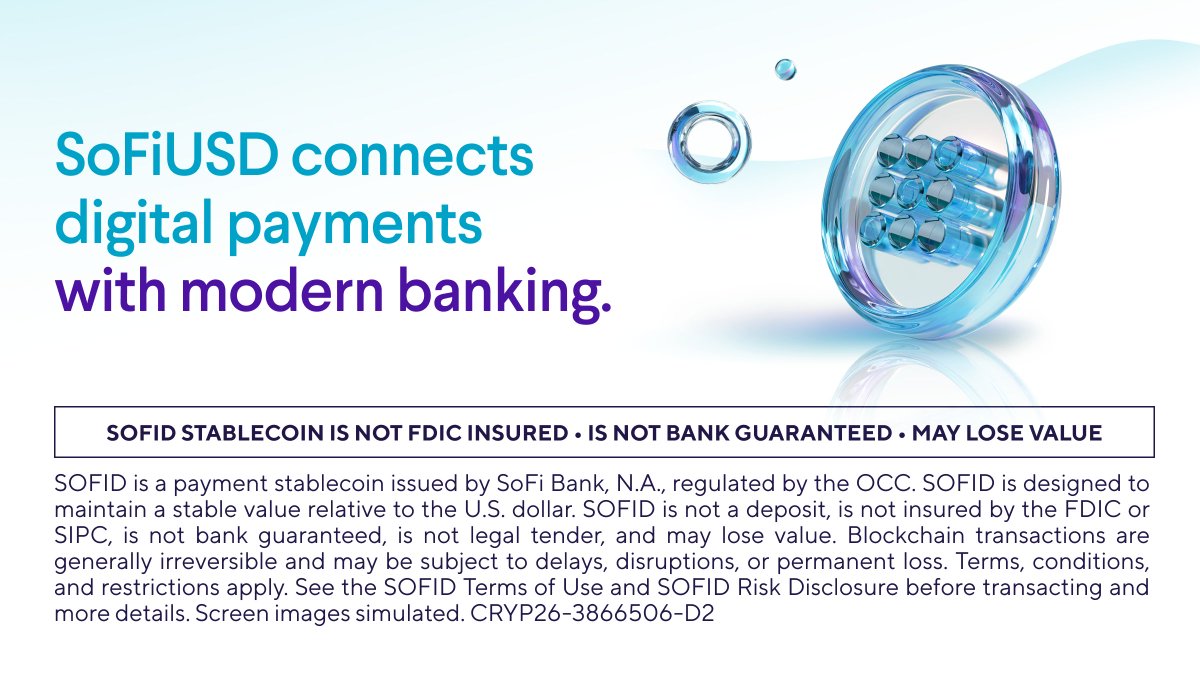
Congratulations to @SoFi on this accomplishment! Great work. Well done!

Say “hi” to SoFiUSD (SoFiD) 👋
The first stablecoin issued by a U.S. national bank and redeemable 1:1 for cash or cash equivalents. Rolling out now, it’s built for how money moves today: fast, flexible, 24/7.
55
May 23
“In many ways, we live in an Internet First world”
💯

All this goes in cycles. Digital was rare, valuable, non-obvious, and difficult for a long time. Now we’ve won so hard that the physical complements are becoming more valuable. We have plenty of once-scarce jelly, and now it’s time to make peanut butter again.
But to answer the question directly: algorithms create value (try running the modern world without quicksort or pagerank). Think about billion-person networks, social media, cryptocurrency itself…in many ways we live in an Internet First world, particularly in the English-speaking world.
And digital progress will continue, as it should. But now it’s time to print out the Internet, to materialize all these cool things from the cloud upon the land, and also to rebuild genuine in-person communities in the process. Like new cities, built not around the car but the self-driving, electric car.
1
36

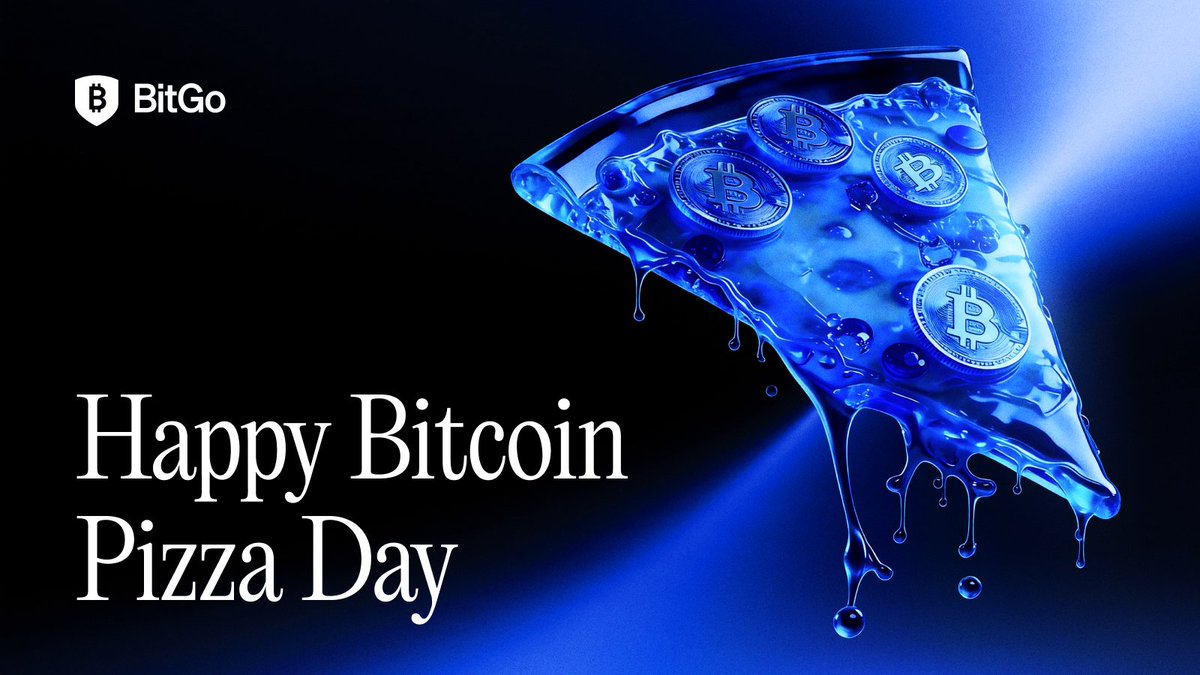
On May 22, 2010, Laszlo Hanyecz posted on Bitcointalk offering 10,000 $BTC for two large Papa John's pizzas.
Someone called in the order, paid ~$41, and Laszlo sent the BTC.
At today's price, those 10,000 BTC are worth ~$773 million.
That's $48 million per slice.
Spending it proved bitcoin had real-world utility. Without someone willing to accept it, it might have stayed niche forever.
🍕₿
4
2
26
1,046
Sam Harrison retweeted

May 20
10
28
140
15,969
Sam Harrison retweeted

May 18
The next space race may not be about who reaches the Moon first.
It may be about who owns the data.
As commercial lunar missions accelerate, space observation records are becoming high-value infrastructure that needs to be timestamped, verified, and preserved securely.
The future of space will run on trusted data layers.
payloadspace.com/potomac-dat…
2
1
137
May 14
Web3 is maturing rapidly. This token management platform was precisely the tool that I could have used in prior endeavors to prevent some less-than-optimal outcomes.
If you are running an L1 or L2 treasury and want a demo - reach out.

Finally, an all-in-one platform built for trust, designed for action.
The redesigned BitGo platform is your live control center for one-click access to trading, earning, stablecoins, token management and more.
Clearer view. Faster moves.
One powerful platform.
See the new BitGo: bitgo.com/platform-release/?…
23
One of the most overlooked challenges in running a stablecoin program is keeping the peg honest.
BitGo's Stablecoin as a Service includes automatic reserve rebalancing and daily reconciliation, designed to support issuers in maintaining a 1:1 relationship between circulating tokens and underlying assets.
That kind of operational infrastructure is hard to build. BitGo has already built it.
Launch your own stablecoin: bitgo.com/products/stablecoi…
3
8
24
1,339
May 12
Been a hot moment since I joined a digital collectibles Space…
But my boy, @RealPapii, knows what he’s doing.
@quirkiesnft seems like it’s on point.

1
1
190
Sam Harrison retweeted

May 10
No Sniper Sunday tonight due to Mothers Day BUTTTT
We decided to host a special Town Hall tomorrow night on spaces with lots of updates about the future of Quirks including a recap of the Founders meeting in Miami 🔥
x.com/i/spaces/1pKkOyQXBawKj
22
37
128
6,251
May 11
This is a great overview of the meeting that @LucaNetz put together - and I was just happy hanging on the walls.
The toxicity and radioactivity of the term "NFT" is a real, deep-seated issue. But the *functionality* of a non-fungible token is not. It's a powerful piece of tech. Unfortunately - just as @tolibear_ highlights - the moment a founder slaps "utility" onto their token, all of the wrong pieces of valuation latch on like warm-water leeches.
Membership and belonging have long been some core features of the space. "One of us, one of us", "ape follows ape", "Welcome to the Huddle" - hell, even [3,3] was a membership meme.
But these "1st Edition Digital Collectables" are more than membership badges. And I think that is where the conversation needs to lead to. It was mentioned that one projects playbook to mobilize their community was impressive - but no one INNOVATED on that after. We all stole the same playbook and ran it into the ground.
What new innovation is needed to inject some life and meaning back into NFTs?
May 11

~20 founders and builders met in Miami for 4 hours discussing how the NFT industry must mature.
Team members and founders from @MetaMask, @opensea, and top collections showed up at @IglooInc HQ to discuss what needs to change.
This post is meant to be a starting point, not a definitive recap.
What we discussed does not apply to every project. Some are strictly crypto-focused, and that's fine.
Here are the 5 things that stuck with me:
1/5: NFTs aren't the product. And the word itself is radioactive.
The market alone is no longer enough to sustain the category. The founders in the room want to escape the "crypto casino" frame and become something closer to Pokémon, Rolex, fine art, country clubs, designer toys, or a TCG.
The NFT itself is one part of the business:
> the receipt
> the identity layer
> the membership layer
> the collector layer
> the coordination layer
But there is more:
> licensing
> retail
> media
> distribution
> emotional attachment
> recurring revenue
> products
Nobody buys a Pokemon card for the cardstock technology.
Nobody waits in line for Supreme for the supply chain.
No one buys an Piguet for the clock tech.
Good NFT brands stop acting like crypto projects. They act like brands, media companies, and consumer businesses.
The word "NFT" itself is probably permanently damaged.
I almost never tell people outside of crypto that I have an NFT brand. In their mind, the word triggers "scam" before I even finish the sentence.
The industry is looking for replacements like "digital collectibles" or "tokenized assets".
But outside of an investor/crypto audience, the technology layer should be consumer-invisible.
Nobody says:
"I bought a JPEG compressed with advanced image protocols"
"I streamed an MPEG-4 encoded file"
"I transferred a TCP/IP packet"
The abstraction layer has to disappear. The brand wrapper has to be the thing.
I don't see @bearish_af as an NFT company. For us, NFTs are one tool wrapped around a thesis: build cool things people like.
For people outside of our industry, NFTs must be downstream of something larger.
--
2/5: The industry has a love problem, not a liquidity problem.
The best parts of NFT culture were never just financial.
They were:
> identity
> taste
> friendship
> inside jokes
> shared language
> digital tribes
> lore
> collecting
> weirdness
> belonging
At its best, NFT culture made the internet feel smaller, stranger, and more alive.
You could travel to any city and find your people.
You could show up with a PFP and immediately have context.
You could collect something not only because you thought it might go up, but because it said something about you.
This matters.
And I think the industry forgot how important it was.
When everything becomes about floor price, liquidity, exits, and incentives, the culture starts to rot.
The question is not just:
“How do we bring in more buyers?”
The better question is:
“How do we build worlds people actually want to be part of?”
Because the projects that survive long term will not only be the ones that create financial upside.
They will be the ones that create emotional gravity.
The ones where people want to stay even when the chart is boring.
The ones where the community itself feels like the product.
--
3/5: There are actually two completely different businesses hiding inside "NFTs."
1. Web2 consumer / IP / revenue business
2. Web3 financial / speculative business
Different physics and audiences.
Web2 looks like:
>retail
> licensing
> toys / games
> emotional attachment
> MRR / revenue
Web3 looks like:
> speculation
> liquidity
> status
> trading
> leverage
> cycles
Most projects try to fuse these into one product and get crushed by the contradiction.
Web3 holders demanded utility. But when utility became the whole story, it capped the mythology.
At minimum, the two need separate strategies, teams, P&Ls, and success metrics.
The Web3 side creates early alignment, cultural ignition, and capital formation. The Web2 side gives the brand durability outside the bubble.
When a community gets trained to only care about price, the project becomes structurally unstable until there is a deeper reason to belong.
You don't have to pick. But you have to separate if your goal is to break out of the crypto bubble.
--
4/5: Founders are deeply traumatized.
Every founder in this space has lived through some combination of:
> burnout
> betrayal
> community resentment
> unrealistic expectations
> price collapse
> toxicity
> emotional exhaustion
> community turning on the founder
> culture decay
If you ever see a founder disappear, step back, or go quiet, it is probably because of that.
Everyone still believes in the category. Almost nobody trusts the market.
Which is why the conversation kept collapsing into three questions:
> how do we survive?
> how do we monetize?
> how do we change sentiment?
The anonymous PFP is empowering and corrosive at the same time. The same identity layer that made the culture powerful can also make it brutal for the people building inside it.
--
5/5: Utility can cap upside.
This one hits hard for real builders.
The moment you ship utility, you ship a spreadsheet. And the moment a spreadsheet exists:
> ROI expectations appear
> entitlement appears
> price-to-value math appears
> finite valuation models appear
Culture doesn't behave rationally.
Rolex isn't valuable because of utility.
Birkin isn't valuable because of utility.
The Mona Lisa isn't valuable because of utility.
They're valuable because:
> status
> mythology
> emotional meaning
> social signaling
> collective belief
> scarcity
> narrative
Punks proved this. No utility, no roadmap, no promises.
Just first, scarce, and mythologized. Still standing.
The trap most projects fell into: they needed near-term cash, so they shipped utility.
Utility paid the bills and capped the ceiling at the same time.
--
Final thoughts:
This felt historically important because the room finally sounded like operators instead of traders.
2021 was:
> greed
> novelty
> chaos
> speed
> extraction
> infinite optimism
This was:
> distribution
> positioning
> retention
> emotional durability
> monetization
> onboarding
> consumer psychology
> culture design
> operational sustainability
The industry is remembering that culture has to be felt before it can be financialized.
--
There were real next steps discussed privately. I’m leaving those out for now, but the important part is the coordination from people that really care about this industry and its people.
Thank you @LucaNetz for organizing, and everyone who was able to participate. I am incredibly bullish on the people still here and what we can build from here.
1
4
562
May 9
One of the highlights of my Consensus experience was sharing the room with these fine people.
Legit legends. Can’t wait to see the outcome.
May 9

had the pleasure of spending several hours with @LucaNetz today at the pudgy hq, along with two dozen other legends from our space.
genuinely productive discussion. and was obvious to me how much Luca cares about the future of our space.
felt like the right time to finally join the huddle.
plus double merch on the floor? i mean come on 😉

1
1
111
Sam Harrison retweeted

May 8
The view from inside Integrity as recovery forces pop open the hatch…watching the helicopter pass over their shoulders and hearing all the joy, it was as good as it gets.
663
7,603
75,557
2,923,760
May 8
Anyone who thinks we aren’t living in a sci fi universe just… isn’t paying attention.

23

Sam Harrison retweeted
May 8
USD1 moves fast! Proud they build on top of @BitGo banking infrastructure.
@BitGo was the first self-custody and custody provider ready for @tempo. If you need the most secure wallets, custody, and financial services, @BitGo is the infrastructure to use!
#buidl
May 8

BREAKING: $USD1 by @worldlibertyfi is now live as the first natively issued stablecoin on @tempo — a project incubated by @stripe and @paradigm.
solana:WLFinEv6ypjkczcS83FZqFpgFZYwQXutRbxGe7oC16g
4
4
23
4,875
Sam Harrison retweeted
May 6
Or just come to @bitgo and pay < 25bps. Retail deserves same rates as institutions.
May 6

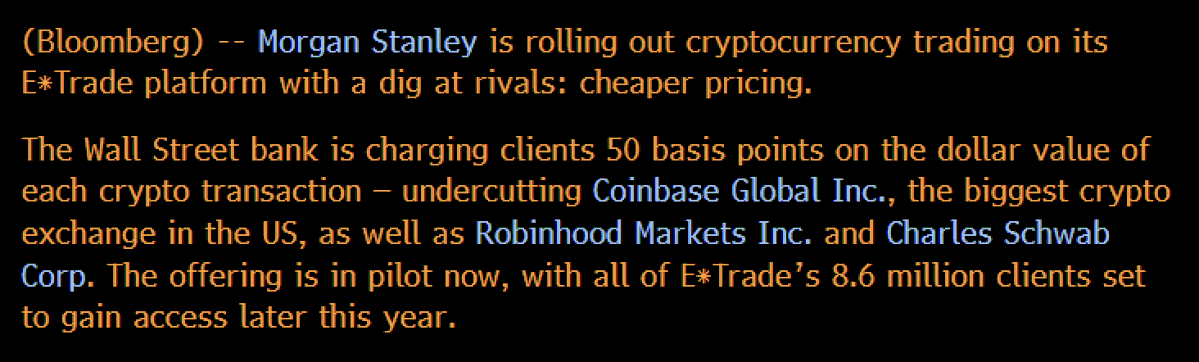
SHOTS FIRED: Morgan Stanley is rolling out crypto trading on its E*Trade platform for 50bps/trade, undercutting Schwab's 75bps (who undercut Coinbase). If I know Schwab, they likely won't let this stand. Others will prob undercut too. By the time the dust settles it'll be pretty dirt cheap to trade crypto everywhere- just was we saw with btc ETF exp ratios prior to launch. This is why TradFi is no joke and crypto exchanges should be scared.
5
3
42
6,967
Sam Harrison retweeted
May 4
What if the sky wasn’t something you looked at, but something you could move through?
The SkyMapper network is open to anyone who wants to shift perspectives across continents.
One moment you’re under your own sky, the next you’re tracing distant galaxies through someone else’s lens.
1
6
17
669
May 4
Come say hi.
Consensus Miami is almost here 🌴🌴
The BitGo team will be in town starting tomorrow and would love to meet you. Stop by Booth #1418, May 5 to 7.
🤝

1
11