In one of our first "A path towards AGI" posts we discussed Neuro-symbolic systems.
Here's a new example of their implementation👇
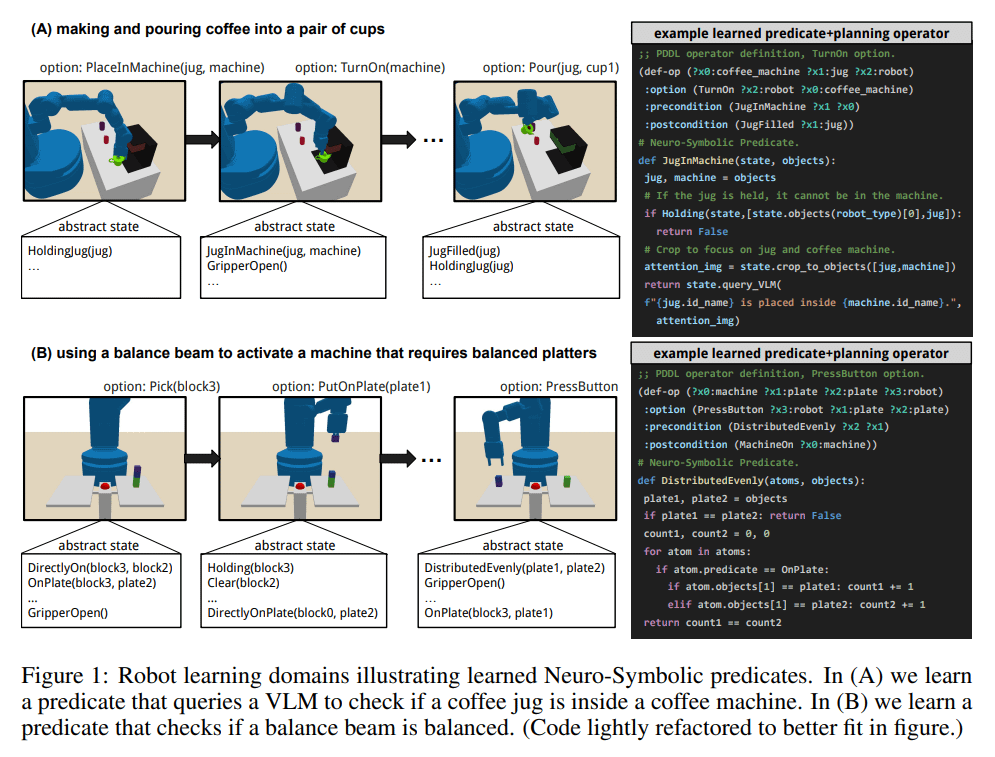
Neuro-Symbolic Predicates (NSPs) are smart rules that help robots think by combining visual perception (neural) with logical rules (symbolic). With NSPs robots can easier plan and tackle complex tasks.
NSPs use programming basics (conditions, loops) and can connect with VLMs that understand images and text.
Here are the details about:
- 2 types of NSPs
- selecting NSPs
- task planning with learning High-Level Actions (HLAs)
🧵
A path towards AGI: Neuro-symbolic systems
Sometimes when you can't find the solution it's useful to look back and reflect on past approaches.
Since 2015, various neuro-symbolic systems have emerged, including:
- IBM's researches
- MIT's Neuro-Symbolic Concept Learner (NS-CL)
- Logic Tensor Networks (LTN)
- Graph Neural Networks
- Neural-symbolic visual question answering (NS-VQA)
- Neuro-symbolic programming (NSP)
and more.
DeepMind was also working a lot with similar approaches and developed deep reinforcement learning in 2016, combining reinforcement learning with neural networks.
And now, in 2024, we got significant achievement of AlphaProf and AlphaGeometry in the International Math Olympiad. AlphaGeometry notably solved 25/30 geometry problems within competition time limits. And what is also notable - it's a neuro-symbolic system.
So how does neuro-symbolic system work?
Neuro-symbolic AI systems are hybrid AI architectures that combine neural networks (neuro) with symbolic reasoning methods (symbolic).
Neural Networks:
- Excel at identifying patterns and relationships in large amount of data
- Are strong in perception tasks like image and speech recognition, NLP and others
- Are effective for generating predictions and “intuitive” ideas
But they are bad at reasoning and explaining their decisions
Symbolic Reasoning:
- Emphasizes logic, rules, and structured knowledge
- For reasoning tasks, it uses human-readable symbols to represent objects, concepts, and relationships in the world
- Provide clear and interpretable explanations for their decisions
However, they are slow and inflexible and can’t deal well with large amount of data.
Advantages of neuro-symbolic hybrid AI:
▪️ Robustness: Combines neural learning with logical reasoning.
▪️ Versatility: Handles a wide range of tasks.
▪️ Interpretability: Enhances trust in model decisions.
▪️ Generalization: Integrates data-driven learning with rule-based reasoning
Can this hybrid approach lead to AGI? While it's uncertain, neuro-symbolic systems deserve more exploration as they mimic the human use of both logic and intuition in decision-making.
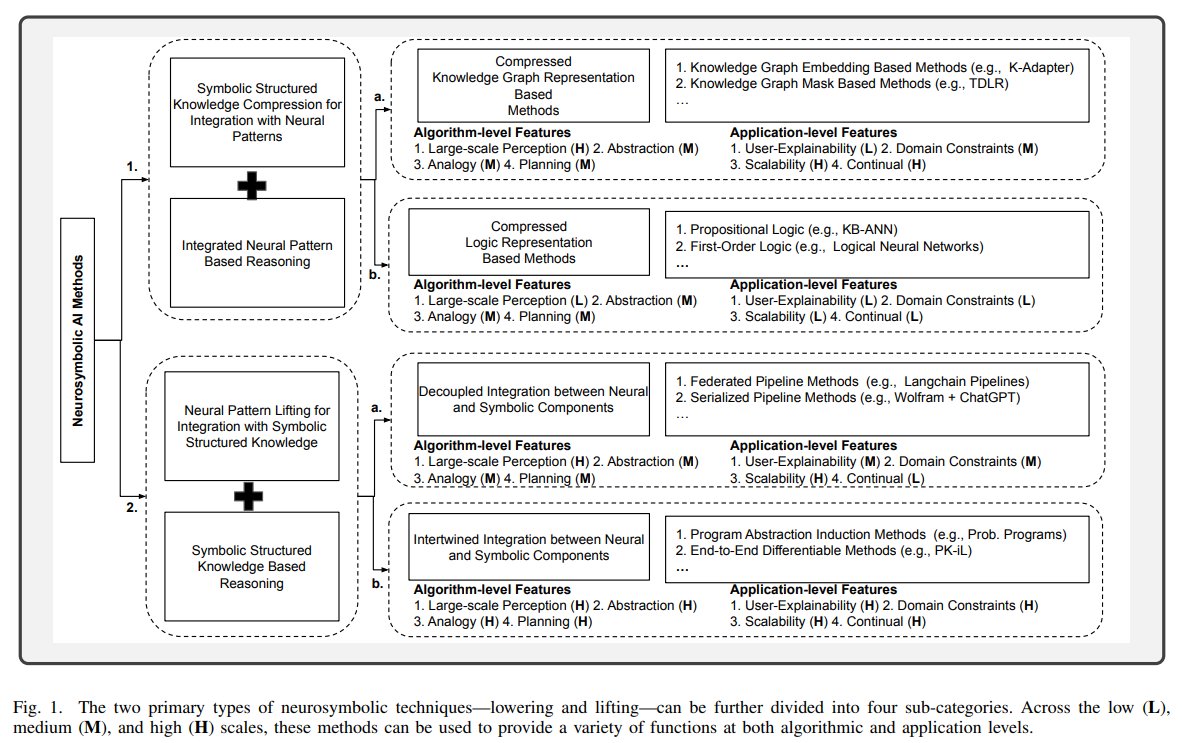
Here's a scheme of neuro-symbolic AI methods from "Neurosymbolic AI - Why, What, and How" paper: