
I watch markets, create content about them, and build top trading & investing tech with @merchantseven
Joined January 2010
- Tweets 36,147
- Following 1,222
- Followers 17,953
- Likes 73,223
4,140 Photos and videos




Scheplick retweeted

Jun 13
JUST A REMINDER.
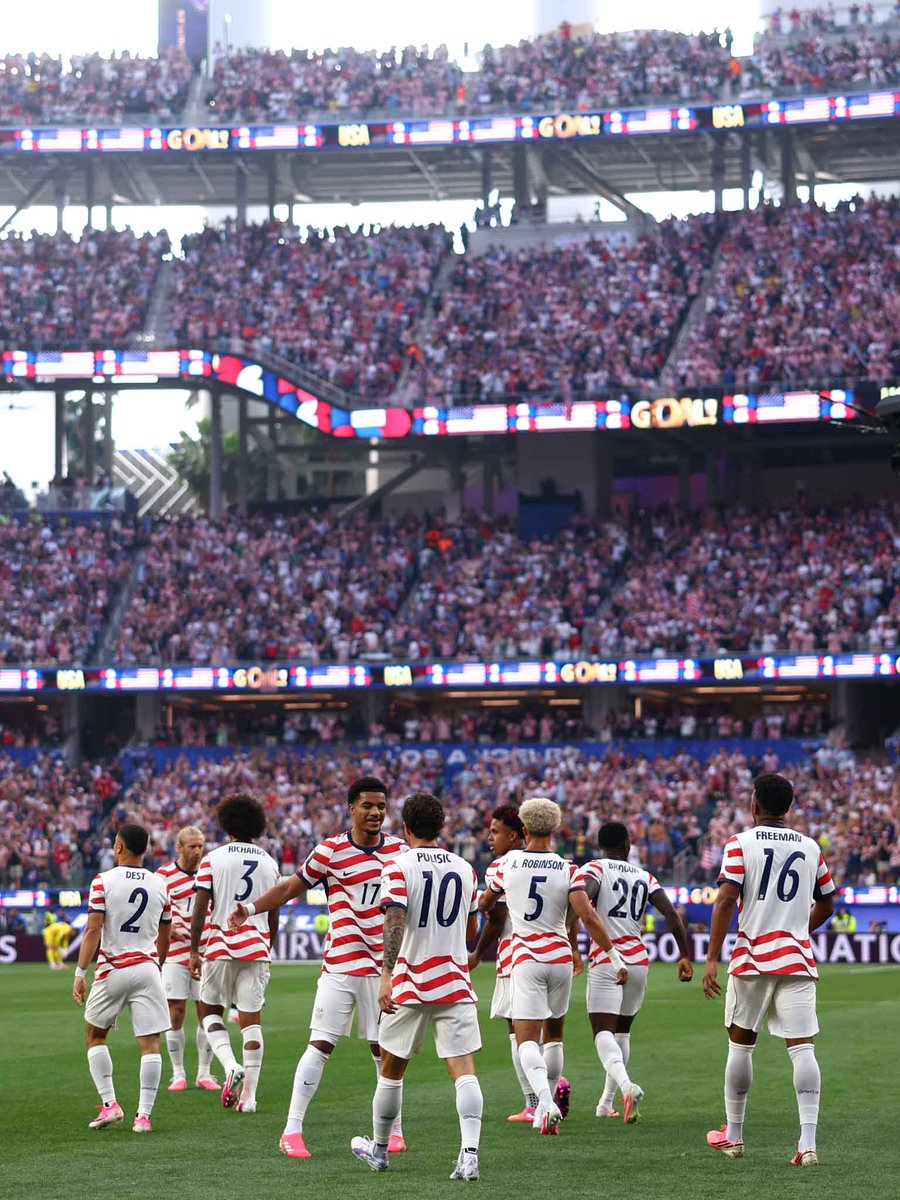
Paraguay beat Brazil and Argentina and had the best defensive record in South American World Cup qualifying.
They just lost 4-1 to the USMNT in their opening match at the 2026 World Cup final.
448
2,039
23,627
1,017,453

Erling Haaland enjoying some hockey at the #StanleyCup Final 🤩
281
1,763
34,686
4,074,994
Scheplick retweeted

Jun 12
Los aficionados de Corea del Sur no podían entrar con el tequila rumbo al estadio, así que se la empezaron a tomar entre todos y después invitaron a los mexicanos a beber también JAJAJAJAJA.
Es el mejor Mundial de la historia.
395
7,785
101,326
6,863,942
Scheplick retweeted

Jun 12
The vibes are insane. Driving through the great state of Louisiana on our way to New Orleans. It’s crazy how diverse this country is, every day the scenery looks different.
2,615
5,035
137,651
4,464,386
Scheplick retweeted

Jun 11
Just Lamine Yamal in a Georgia Walmart 🤯
The World Cup keeps throwing up wild and wonderful crossovers 🇺🇸
33
245
2,935
280,980
Scheplick retweeted

Jun 11
In the dead of night the Scots arrived at the Airbnb across the street. Decked out and playing the pipes at 6:30 am. So it begins…
2,320
8,819
130,472
9,285,170
Scheplick retweeted

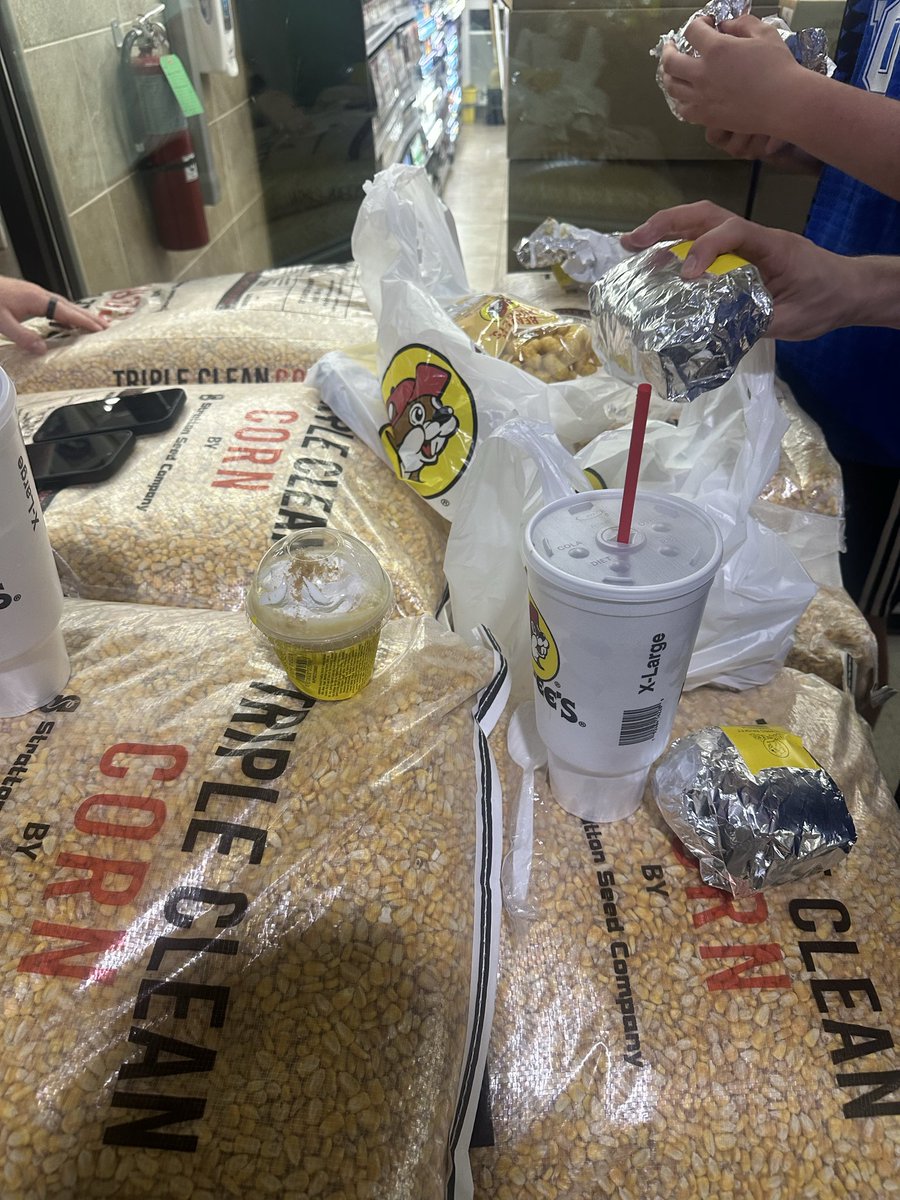
A German visiting Auburn, Alabama, to watch Lionel Messi and Argentina play Iceland stopped at a Buc-ee's and ate brisket sandwiches on a stack of deer feeder corn.
A sentence never before uttered in all of human history.

223
4,458
60,231
1,749,995
Scheplick retweeted

Jun 10
Codexで強化学習
生き物つくってもうた。。
106
441
6,059
813,858
Scheplick retweeted

Jun 10
The cafeteria lady at the SpaceX canteen realizing she became a millionaire after 10 years of selling coffee to Elon Musk
Jun 10

JUST IN: SpaceX IPO reportedly expected to mint 4,000 new millionaires — “from engineers to cafeteria workers”
184
1,393
43,362
4,765,708
Scheplick retweeted
Jun 10
Didier Drogba playing some pickup street soccer in the streets of New York City.
The World Cup is really here, man. 🇺🇸
52
666
9,997
540,769

Jun 10
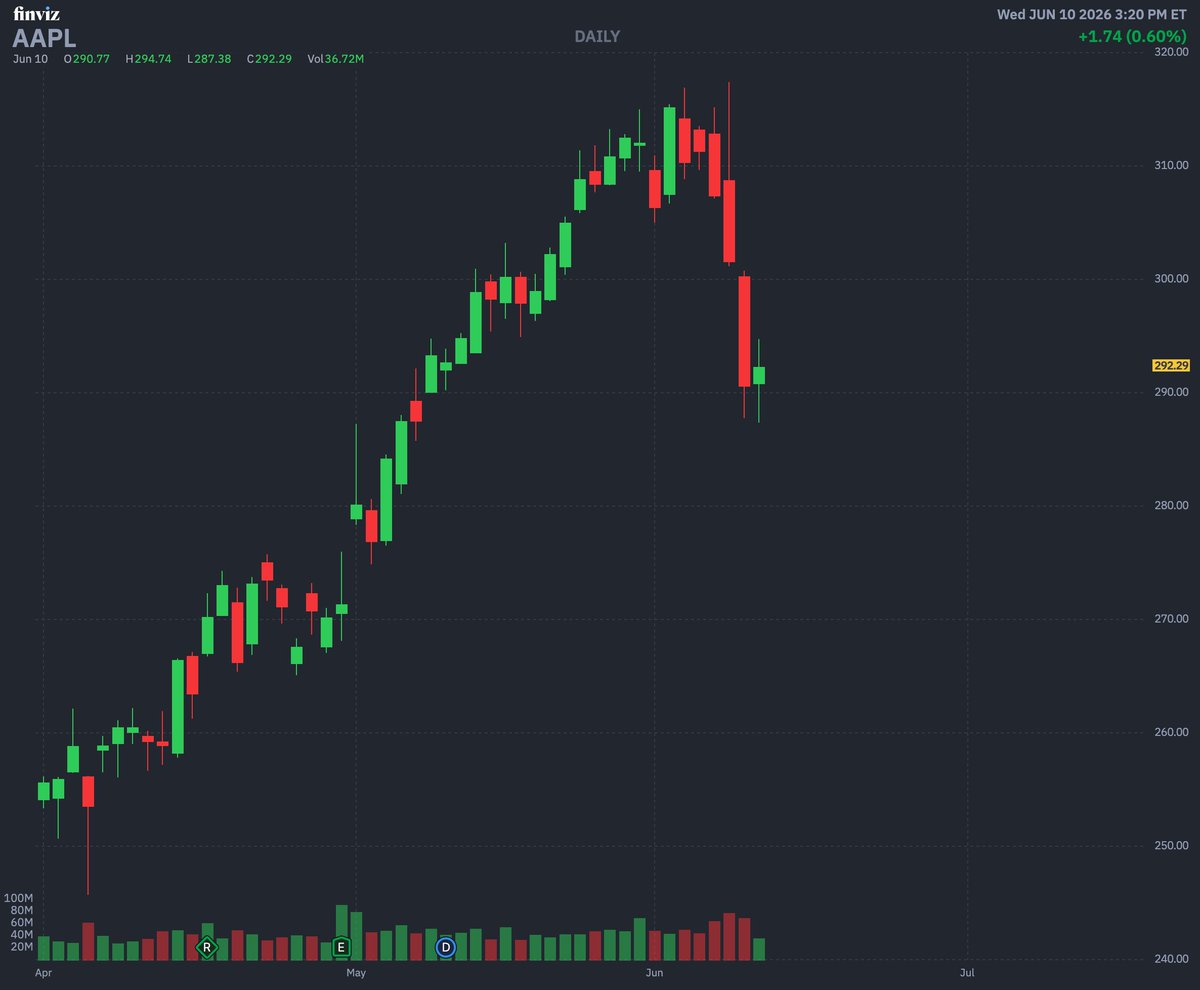
I am actually surprised Apple $AAPL isn't down 5% more considering that, a full decade later, and now in the greatest AI wave of our lifetimes, they released a Siri powered by Google and still only answers "Looks like it'll be warm today" when you ask it for the weather
5
701

Scheplick retweeted

Jun 9
The French Air Force aerobatic team, Patrouille de France, conducted a major flyover in New York City (coming from near West Point) this morning, as part of their “Liberté 250” tour celebrating American independence. 🇫🇷 🇺🇸
62
690
8,807
324,733
Scheplick retweeted

Victor Wembanyama drawing with his sister in a park in NYC 🎨
(🎥: hoopsnation on IG)
#GoSpursGo #PorVida
188
756
17,029
5,614,042
Scheplick retweeted

670
4,564
45,060
10,362,255
Scheplick retweeted

I am so hype for this World Cup bc we’re going to hear sentences like this that have never been uttered before
Jun 5

The Spain national football team has arrived in downtown Chattanooga for the FIFA World Cup
145
6,272
114,922
3,546,497
Scheplick retweeted

Jun 6
(1999) Spurs playing StarCraft together in their hotel room:
“Why don’t you build some more stuff, Tim? You’ve got plenty of money, build some more tanks and goliaths.”
Simpler times. 🤣 (via @hymnduncan)
33
248
5,792
339,952
Scheplick retweeted

On June 6, 1944, the Germans knew one thing for certain: to invade France, the Allies needed a port.
So they fortified every port on the French coast. Cherbourg. Calais. Boulogne. Turned them into fortresses. Poured millions of tons of concrete into the Atlantic Wall.
The Allies simply decided to bring their own port with them.
This is the story of the Mulberry Harbours, and it might be the single most audacious engineering feat in military history.
The problem was simple and brutal. You cannot sustain an invasion army of millions of men on landing craft alone. You need docks. Cranes. Piers. The infrastructure to pour supplies ashore by the thousands of tons every single day. Without a working port, any beachhead would eventually starve and collapse.
The Germans knew this. Their entire coastal defense strategy was built on it.
What they never imagined was that the Allies would build two fully functioning deep-water harbors in Britain, dismantle them into pieces, tow them across the English Channel, and reassemble them off the beaches of Normandy.
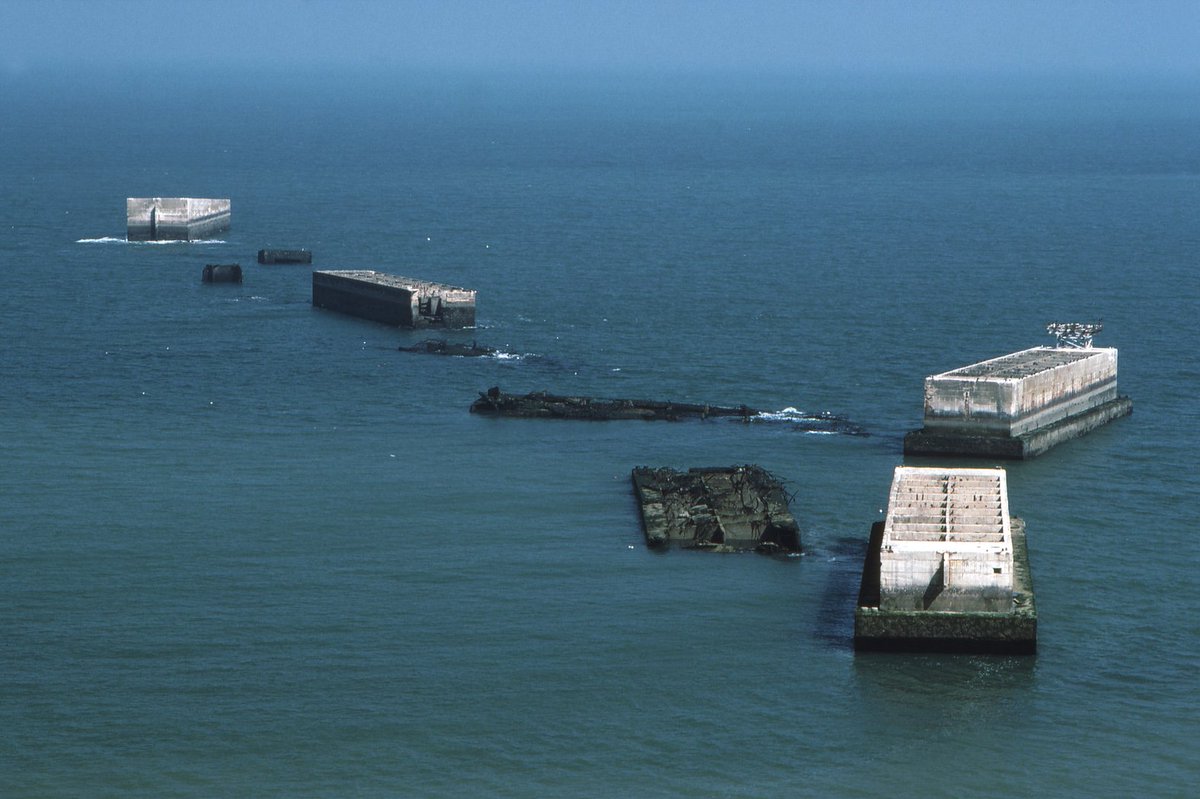
Starting in December 1943, 37,000 workers across Britain began secretly manufacturing the components. The project was so large it strained the entire British economy. 146 massive concrete caissons called Phoenixes, each one 60 metres long and 18 metres tall. Miles of floating steel roadways. Pontoon bridges. Breakwaters. Pier heads. Enough material to build a small city.
They built dry docks in the Thames and Clyde rivers just to construct the caissons. 1.5 million yards of steel shuttering. 31,000 tons of steel. Workers had no idea what they were building or why.
When D-Day came, tugboats began towing the pieces across the Channel at just 8 kilometres per hour. Hundreds of individual components, each one a logistical nightmare to move, crossing open water in the wake of the largest invasion fleet ever assembled.
Within 12 days, two working harbours stood off the Normandy coast. Mulberry A at Omaha Beach for the Americans. Mulberry B at Arromanches for the British and Canadians.
Then, on June 19, the worst storm to hit the Normandy coast in 40 years tore through the Channel.
For three days the storm raged. When it cleared, Mulberry A at Omaha was gone. 21 of 28 caissons completely destroyed. The piers smashed. The roadways scattered. The Americans scrapped it entirely and cannibalized the wreckage to repair the British harbor.
Mulberry B at Arromanches survived, barely, because of its slightly more sheltered position.
That one surviving harbor then proceeded to supply the entire Allied liberation of Western Europe.
2.5 million men. 500,000 vehicles. 4 million tons of supplies. All landed through an artificial harbor that was designed, built, floated, towed across the Channel, and assembled in secret, in less than six months.
After the war, Nazi armaments minister Albert Speer put it plainly.
Germany had spent 13 million cubic tonnes of concrete and 1.5 million tons of steel building the Atlantic Wall to deny the Allies a port.
"A fortnight after the landings," Speer said, "this costly effort was brought to nought by an idea of simple genius."
They built their own port.
And they brought it with them.
39
270
1,651
254,297
Scheplick retweeted

Jun 5
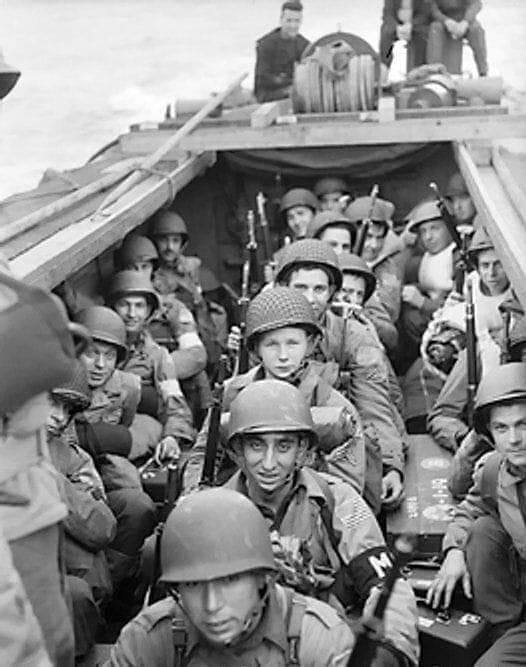
90% of the soldiers on the first boats to hit the beach didn't live to see the end of the day. Look at those faces. Some of them never made it to 18.
Never forget that they paid the ultimate price for our freedom. We live our lives the way we do because of them.
2,165
14,632
62,193
1,661,357