Pen Pusher, Armchair Critic, Heritage, Horology & IT, Technology Servant Not Master, Humility not Weakness, Liberal not Libtard, RT not Endorsement. भारतभक्त।
Joined April 2010
- Tweets 4,792
- Following 22
- Followers 129
- Likes 3,965
146 Photos and videos











Pinned Tweet

13 Jun 2022
IMHO Crypto will never succeed in the long run. Reasons
1. Monetary Policy is the exclusive preserve of Sovereign Govt, much like Defense, Foreign Policy.
2. Crypto mining is finite:pain for deficit financing
3. Cost of mining addnl unit goes on increasing.
4. Sovereign pushback.
7
8
Jun 11
A timeless video reminder that Karma is watching your supidity and arrogance.
7
May 30
West Bengal is changing and a famous fashion designer is forcing the change!

Launch of Swachha App today by Hon’ble Union Minister Shri Manohar Lal Ji - Ministry of Power and MoHUA and Hon’ble Chief Minister of West Bengal Sri Suvendu Adhikari ji
2
65
May 17
I think an effective way to improve governance, delivery and citizen centricity would be to take away voting rights of all who destroy public property and peace.
This is rather complex issue in democracy but would like usher in some semblance of nuanced democracy and tackle appeasement and nuisance politics.
Other is to take away benefits of government schemes and eligibility of government jobs for those who indulge in that.
13
PrideOfMatchingham retweeted

May 4
Why build another video platform?
Because existing ones don’t always work here,
low bandwidth, language gaps, limited control
So we built @DaakiaConnects for how India actually works 🇮🇳
What’s one thing you still tolerate?
daakia.co.in
#bestvideoconferencingplatform

1
2
42
PrideOfMatchingham retweeted

29 Sep 2025
#Swadeshi Apps which can replace WhatsApp, Microsoft, Google Maps, Zoom.
WhatsApp - #Arattai
Microsoft - #Zoho
Google Map - #Mappls
Zoom/Google meet - #Daakia
It's time for #VocalforLocal
@Zoho
@MapmyIndia
@DaakiaConnects




6
12
18
1,554
PrideOfMatchingham retweeted
Apr 21
Most businesses don’t realise their meeting tool is a security risk.
Your meeting data- where is it stored?
Foreign servers. Foreign laws.
With Daakia:
• End-to-end encryption
• No data mining
• India-first compliance
Your data. Your control.
daakia.co.in/
2
2
66
PrideOfMatchingham retweeted
Apr 23
𝗬𝗼𝘂𝗿 𝗺𝗲𝗲𝘁𝗶𝗻𝗴 𝘁𝗼𝗼𝗹 𝗰𝗼𝘂𝗹𝗱 𝗯𝗲 𝗮 𝘀𝗲𝗰𝘂𝗿𝗶𝘁𝘆 𝗿𝗶𝘀𝗸.
𝗪𝗵𝗲𝗿𝗲 𝗱𝗼𝗲𝘀 𝘆𝗼𝘂𝗿 𝗱𝗮𝘁𝗮 𝗹𝗶𝘃𝗲?
• 𝗘𝟮𝗘 𝗲𝗻𝗰𝗿𝘆𝗽𝘁𝗶𝗼𝗻
• 𝗗𝗮𝘁𝗮 𝗶𝗻 𝗜𝗻𝗱𝗶𝗮
• 𝗡𝗼 𝗺𝗶𝗻𝗶𝗻𝗴
𝗜𝘁 𝘀𝗵𝗼𝘂𝗹𝗱 𝗯𝗲 𝘆𝗼𝘂𝗿𝘀.
daakia.co.in/
#DataPrivacy
1
2
64
Apr 19
Worth a dekko.

Why Hindu temples use recursion?
Mathematics of Hindu temple architecture
To the casual observer, the soaring spires of ancient Hindu temples are triumphs of artistry and faith. To the mathematician, however, they are complex algorithms rendered in stone. The architecture of these structures is not based on the sterile lines of Euclidean geometry but on the recursive logic of fractals. This is a system where a single pattern repeats itself at different scales, meaning the smallest detail of the temple is a miniature replica of the entire building. This principle of self similarity is most evident in the Shikhara, the towering spire that serves as the focal point of the temple. The spire is not a simple cone but a collection of smaller spires, which are themselves composed of even smaller iterations, creating a visual echo that suggests an infinite ascent toward the divine.
The mathematical precision of this approach is revealed when we calculate the fractal dimension of these structures. I can only calculate this using pictures what are available on the Internet. Ideally this should be analyzed by the universities using LiDAR. But since they have not bothered I wrote my own code to calculate the fractal dimensions from the picture of the temples.
Kandariya Mahadeva temple, for example has a fractal dimension of 1.957. In the study of complexity, a value so close to 2.0 indicates a shape that almost entirely fills a two-dimensional plane. Similarly, the monuments of Mahabalipuram exhibit a fractal dimension of 1.909. These numbers are not merely statistics. They are evidence of a deliberate architectural strategy to mirror the organic complexity of the natural world. While a jagged coastline typically possesses a fractal dimension between 1.2 and 1.5, these temples push far beyond that level of roughness.
If these structures were measured using three dimensional LiDAR scans rather than two dimensional photographs like I have done to calculate the dimensions, the result would likely be a dimension greater than two. This would place the architecture in the same mathematical category as the most efficient systems in nature.
The human brain uses a fractal surface to pack a massive amount of processing power into the limited volume of the skull, and the human lungs use a recursive branching network to maximize oxygen absorption. By employing a similar geometry, the temple architects created a biological resonance. The building ceases to be an artificial object and instead becomes a mirror of the observer's own internal biology and the external structure of the earth.
This mathematical framework is rooted in the Vastu Purusha Mandala, the metaphysical plan that governs the layout of the temple. The mandala establishes a grid that is projected from the center outward, creating a spatial recursion where the relationship between the inner sanctum and the outer walls mirrors the relationship between the temple and the cosmos. This is the physical manifestation of non-duality, the belief that the individual soul and the universal consciousness are one and the same. When the eye wanders across the recursive surface of the stone, it encounters a mathematical proof of this unification. The observer sees that the part is contained within the whole and the whole is reflected in the part.
The ultimate purpose of this complex geometry is to facilitate a state of synchronization and peace. Most modern environments are designed with rigid, linear logic that creates a psychological friction between the human spirit and its surroundings. The fractal architecture of the Hindu temple resolves this tension by surrounding the seeker with patterns that feel intuitively correct to the human brain.
The high fractal dimension of these spires does not overwhelm the mind but rather lulls it into a state of recognition. It is an invitation to stop fighting the perceived chaos of existence and instead recognize the underlying order that binds all things together.
Through the precise application of recursive mathematics, these temples transform stone into a tuning fork for the soul, aligning the human experience with the infinite rhythm of the universe.
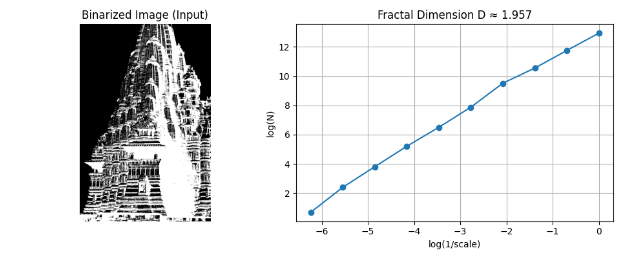
ALT Kandariya Mahadeva temple, we find a fractal dimension of 1.957.
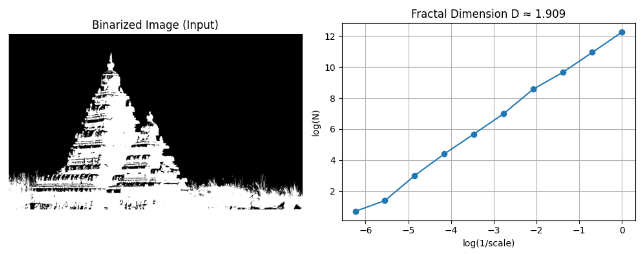
ALT At Mahabalipuram, the fractal dimension is 1.909 as seen from this angle.
9
PrideOfMatchingham retweeted

Apr 18
I have irrefutable proof that @Lenskart_com CEO @peyushbansal is LYING when he says that the grooming code that says NO Bindi is ‘outdated’. I have proof of a video audit with the date 08/04/2026 where an employee was given a low rating for wearing a bindi. Will share in due course. Happy to share everything with a good lawyer. Lenskart is a publicly listed company that has to follow @SEBI_India guidelines, not Bansal’s private enterprise and they are violating article 15 of the Indian constitution. Cc @Vishnu_Jain1 @JethmalaniM ji
740
9,491
30,313
586,160
Apr 12
This is very informative! And worth a dekko.

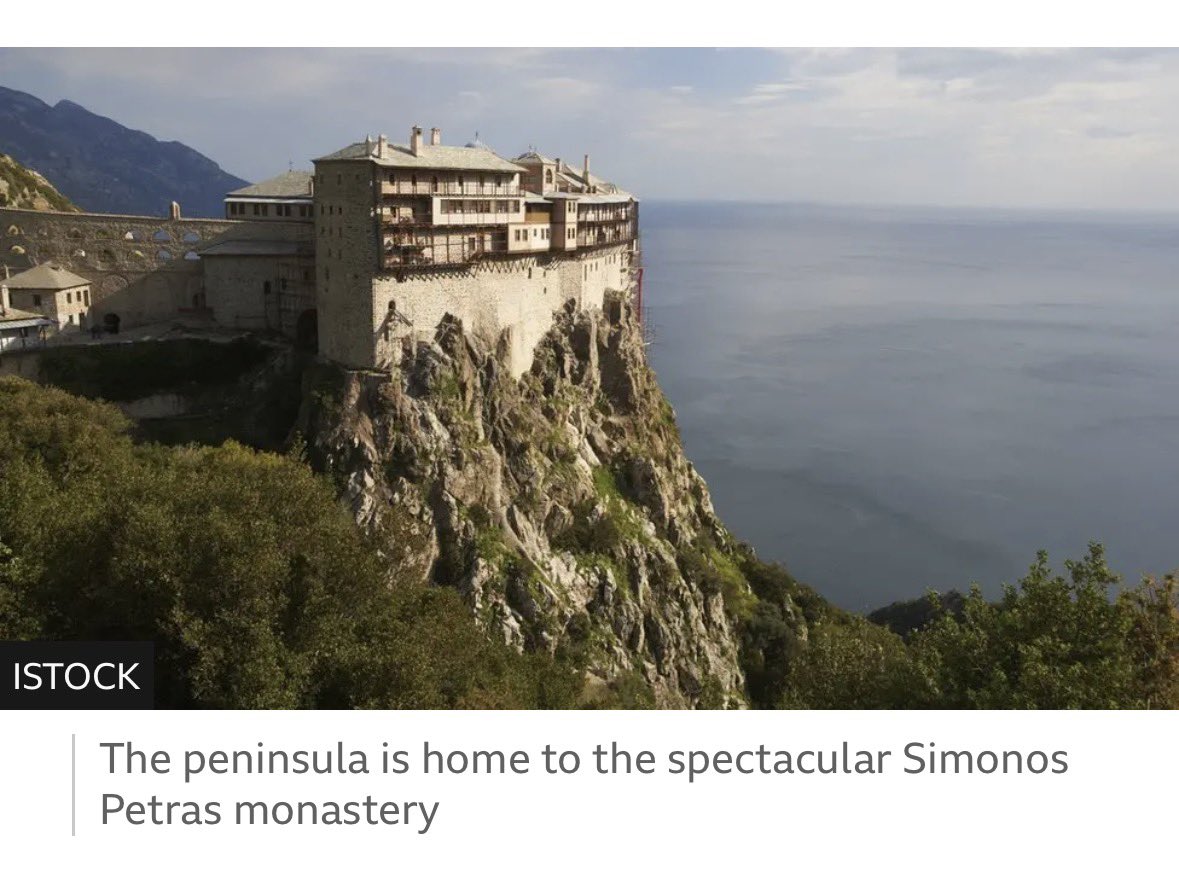
Mount Athos, an autonomous monastic region in Greece, enforces a strict Avaton (prohibition) that bans women and even female animals (except cats to curb mice, lol) from entering the entire peninsula. This rule has been in place for over 1,000 years to maintain monastic celibacy and honor the Virgin Mary. Violating this law can result in legal penalties, including imprisonment. Access is restricted to men with a specific permit.
The prohibition extends 500 meters (approx. 1,640 feet) from the coastline. Even tourist boats are restricted to maintaining this distance.
The ban is upheld by the Greek Parliament and is recognized within the European Union for spiritual and religious reasons. Attempting to enter can lead to a prison sentence of two months to one year.
According to Orthodox tradition, the peninsula is dedicated to the Virgin Mary ("The Garden of the Theotokos"), who is considered the only woman allowed on the mountain.
One of the traditions that has been handed down regarding this is that the Virgin Mary was supposedly blown off course when she was trying to sail to Cyprus and landed on Mount Athos. And she liked it so much that she prayed to her son that she should be given it as her own and he agreed. It is still called 'the garden of the mother of God', dedicated to her glory, and she alone represents her sex on Mount Athos.
Another tradition has it that centuries ago, after several monks reported visions of the Virgin Mary, following whom it was decided that the Athos monks should devote themselves only to her, and that no other woman should be allowed lest they may outshine her.
I am waiting for @AKanisetti (who blocked me recently) to write articles on this too and call the Virgin Mary as controversial because there is a small mountainous peninsula where she won’t allow other women to enter.
Please reshare a lot. We need women to enter Athos mountain too. European Union should intervene in this affair asap and our judiciary should enforce our constitutional morality on the Greek Orthodox Church. @halleyji @infinitchy @jsaideepak @labstamil
Link for an article reg this :
ap.org/news-highlights/spotl…
16
Apr 3
Those who understand the tyranny of Big Techs might want to try it!
Apr 3

Have Slack, Teams, email, dashboards… communication isn’t the problem. So what is?
It’s not communication. It’s execution clarity.
More tools. More noise. Same gaps.
Daakia is built for communication-to-execution clarity
daakia.co.in/
#bestvideoconferencingplatform
15
Mar 29
Inspired by imaginative ads on Dhurandhar theme of "Bachcha hai tu mere...", here is my attempt.
An earnest appeal to all!
@RailMinIndia
1
25
Mar 3
Writes a true cultural ambassador of Bharat.
@MinOfCultureGoI when will such people be recognised?

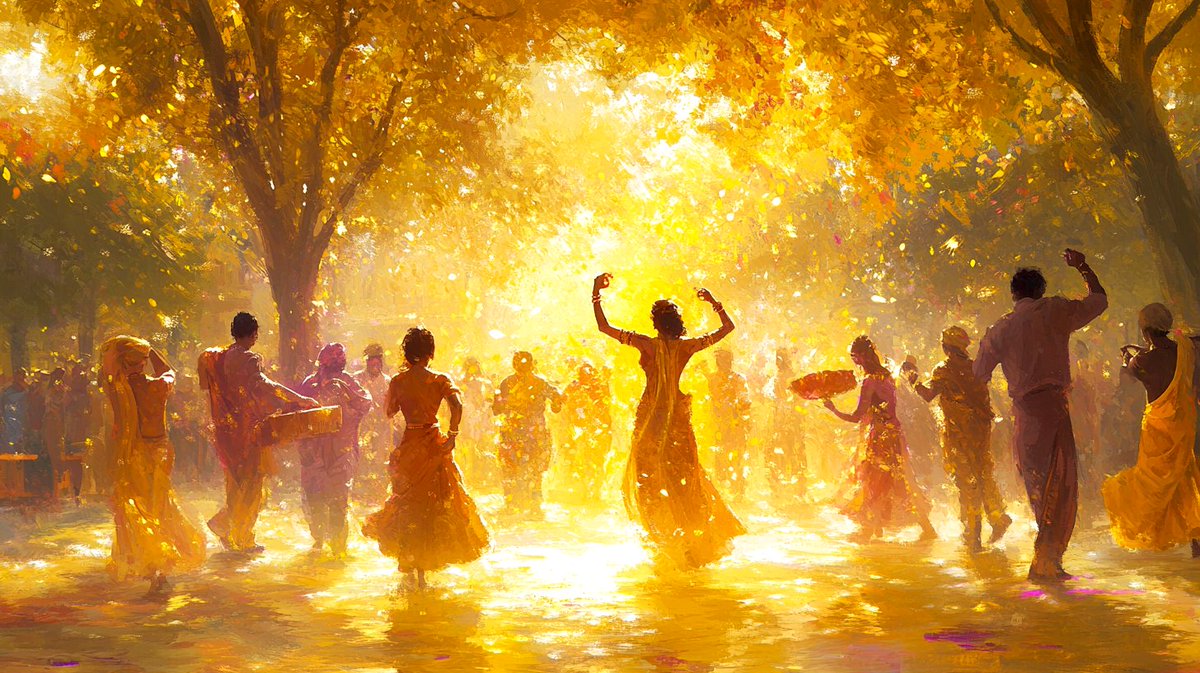
When we celebrate Holi today, we speak of the legend of Prahlāda and Holikā - of devotion winning over arrogance, faith surviving fire. But underneath lies a vast continuity of Hindu civilization. In Vedic symbolism, Holikā/Holaka did not represent a demoness - she personified the old year called the samvatsara - with all its accumulated impurities, imbalances, and decay. So the Holi fire was lit not as a symbol of punishment, but purification followed by renewal. It was the ritual burning away of whatever had become stale and blocked progress, so that renewal could flow again. In the Vedic context the year itself was held sacred and needed to be ritually renewed at seasonal thresholds. Therefore when we light the Holikā-dahana today, we are actually re-enacting a very ancient civilizational memory of saying farewell to the previous cycle and greeting the light of a new one.
The Vedic concept of the Āgrahāyaṇa (आग्रहायण) reinforces this- as “the first movement of the year.” In the Vedic era, Yagnas were held with Āgrahāyaṇa harvest offerings to mark the beginning of the year. Over time, our calendars shifted (Mārgaśīrṣa retaining the name Agrahāyaṇa reminds us of this), but the deeper pattern remained - the year turns, the cycle resets & the purifying sacred fire marks the passage. Holi at the full moon of Phālguna, sits precisely at that late-winter threshold when light overtakes darkness and the agricultural season awakens. The Atharva Veda Parisistas (AVP) which are later ritual appendices in the Atharva Vedic tradition, mention a rite called Holaka to be performed on the full-moon night of Phālguna. The AVP (Verse 18b:12.1) describes Holaka on Phalguna Poornima:
अथ फाल्गुन्यां पौर्णमास्यां रात्रौ होलाका ॥
महानवम्यां उक्त-प्रज्वलनं निराजनं वा ॥
The burning of Holākā thus meant the burning away of the old samvatsara, preserving in symbolic form the profound Vedic act of cosmic renewal. The Naradiya Purana retained this core by describing Holākā as the sister of Samvat (the year).
Holi as celebrated today in Krishna traditions, especially in Braj expresses the same seasonal & astronomical grammar of renewal. Rohiṇī nakshatra (Aldebaran in Taurus) was always associated with abundance and agricultural vitality and Krishna’s birth under Rohiṇī absorbs that symbolism into devotion. As late winter ends at the Phālguna full moon, Holikā-dahana burns the exhausted year, and Krishna’s playful līlā releases the stored energy of spring in an explosion of color, music, and generative joy. Fire purifies; Krishna proliferates life. What was read in the rising of Rohiṇī becomes embodied in Krishna himself as the divine face of seasonal reawakening. In the east, Dol-Yātrā also deepens this theme. Krishna placed gently on a swing mirrors the sun’s oscillation between uttarāyaṇa and dakṣiṇāyana, the great north–south movement that structures the Vedic year. The swing moves just as the sun moves; as the year turns, the divine fire burns away the old.
Similarly if we look at bhagwan Narasiṃha's symbolism beyond legend, Hiraṇyakaśipu represents domination of a frozen, rigid order that believes it has conquered time and nature. In seasonal terms, that is winter: dark, still, unmoving, holding life in suspension. Bhagwan Narasiṃha appears at twilight - neither day nor night - at a threshold. He does not simply defeat Hiraṇyakaśipu, he breaks the delusion of the ego's permanence. He erupts at the seam between two states. And what follows immediately after winter’s tyranny is destroyed by divine illumination? Spring.
This is why Holi feels so explosive. It is not just some colors thrown in the air - it is existence itself choosing renewal once more. Prahlāda’s name holds the key - from pra (intense, overflowing) and hlāda (joy, delight), he is joy that cannot be contained. He is the indestructible seed that survives every winter of the soul. When Bhagavān tears apart the rigid structures that imprison us - the inner Hiraṇyakaśipu of fear, ego, and stagnation - what remains is the Bhakta purified by fire - Prahlāda embodying the indestructible delight that cannot be burned, crushed, or silenced. The Holikā fire purifies, thresholds dissolve what has hardened and joy returns not timidly, but in a burst of color. So Holi is hlāda made visible: life surging after dormancy, warmth breaking the grip of cold, the Vedic vision of perpetual renewal unfolding within the cosmic rhythm of Ṛta
Every element of Holi proclaims a foundational Hindu insight: existence is rhythmic, not linear - and rebirth is woven into its structure. Darkness does not conclude the story - it prepares the next emergence. When we light the Holikā fire, we are not just recalling a legend - we are ritually enacting the law of renewal itself. The sacred fire consumes what has become rigid, exhausted, or imbalanced. The colors that follow announce regeneration. From ashes comes vitality; from stillness arises movement & from restraint, erupts overflowing life. Holi is therefore so much more than a festival - it is a civilizational memory of rebirth. Just as the seasons turn, just as the soul moves through death and return, just as creation itself cycles through dissolution and re-manifestation, so too does joy reappear after darkness.
No winter is final, no stagnation absolute. By divine grace, life rises again recharged with hlāda, radiant with possibility. Holi reminds us that renewal is not an exception in Hindu thought; it is the very law of our being.
69
PrideOfMatchingham retweeted

Feb 22
🚨 THIS IS CRAZY!
Some students present at AI summit got so mad at Congress, they created this game named Bhag Congressi where you get to kick and slap Chamchas 😂
This is how Youth Congress Uncles pissed off Gen Z...
Play it. Share it! #EkLaatDeshKeNaam
bhagcongressi.com/
215
1,585
5,718
258,080
Feb 6
I think this post from 2022 might seem prophetic, even though I am not @aravind !
13 Jun 2022

IMHO Crypto will never succeed in the long run. Reasons
1. Monetary Policy is the exclusive preserve of Sovereign Govt, much like Defense, Foreign Policy.
2. Crypto mining is finite:pain for deficit financing
3. Cost of mining addnl unit goes on increasing.
4. Sovereign pushback.
1
60
Feb 3
This needs to be investigated. And if true that Covid19 was their making, they would be worse than Hitler and responsible for a global genocide.

Oh. My. God.
“Preparing for Pandemics…”
“Let's discuss next steps, for example how to officially involve the WHO and CDC…”
“I hope we can pull this off…”

46