
Tech writer @JDNebusiness - Author @dunod - Lecturer @sorbonneparis1
Joined July 2010
- Tweets 4,422
- Following 3,263
- Followers 864
- Likes 3,051
Photos and videos
Pinned Tweet

5 Mar 2018
Wow - merci @joinstationf :) x.com/joinstationf/status/96…
2 Mar 2018

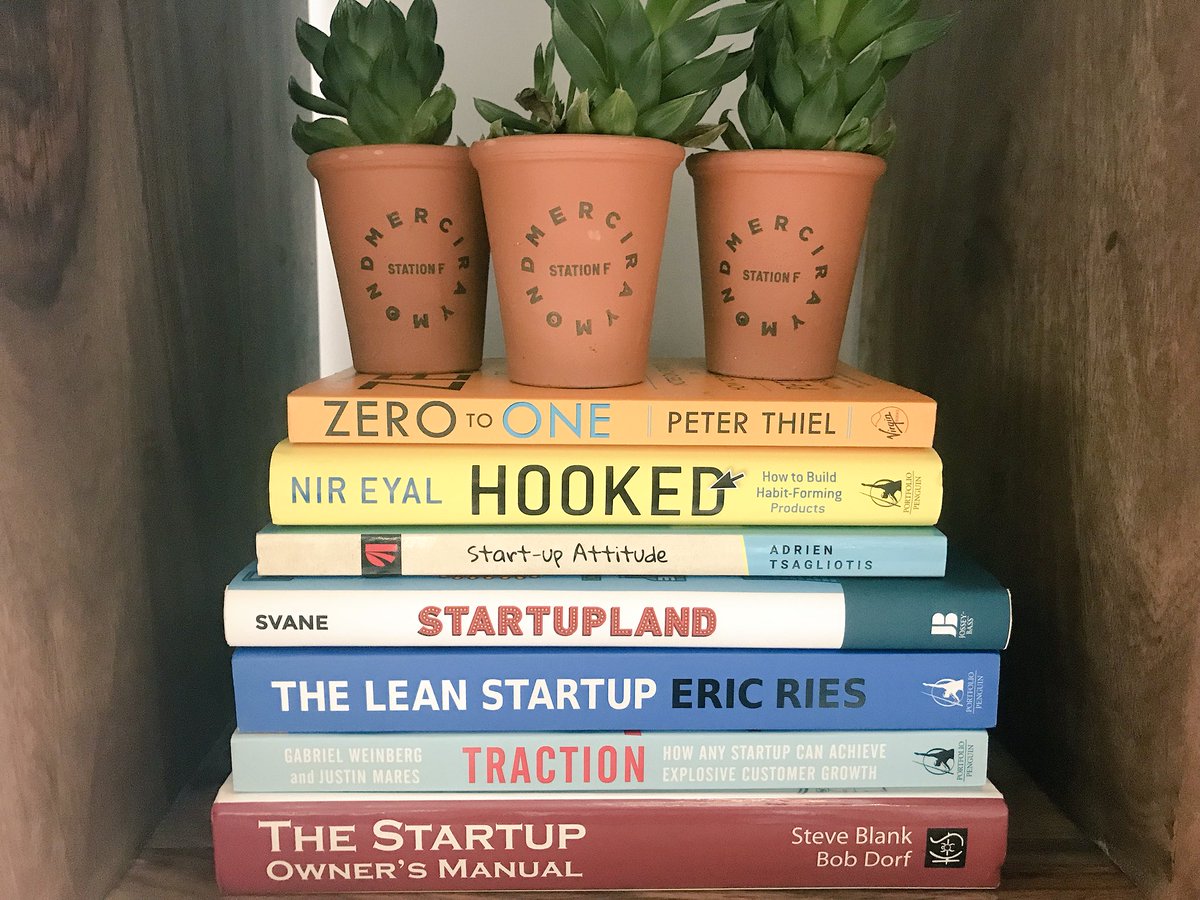
Can’t be a good week end without a good book! Here are our favorites about startups and entrepreneurship 😉📚 @peterthiel @nireyal @scoolada @ericries @mikkelsvane @yegg @jwmares 🙏 #VendrediLecture #FridayFeeling
1
2
8
Adrien Tsagliotis retweeted

Jun 11
Contrefaçon... ou pas ? Ce que vous avez le droit de faire avec l'IA journaldunet.com/intelligenc…

1
263

Marc Theermann (Boston Dynamics) : "Boston Dynamics débutera la commercialisation du robot Atlas en début d'année", par @scoolada : journaldunet.com/intelligenc… via @journaldunet
1
64
Adrien Tsagliotis retweeted

15 Oct 2025
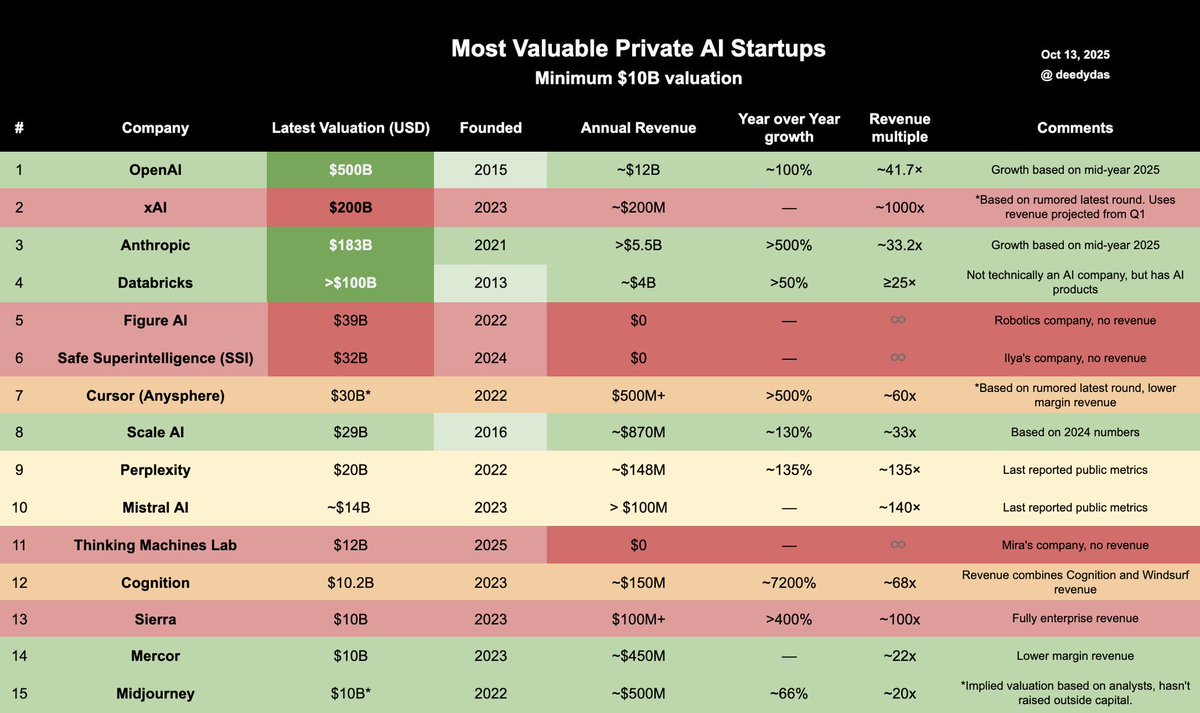
La situation sur les multiples et la valorisation des principaux acteurs de l'IA fondationnelle.
6
23
3,212
Adrien Tsagliotis retweeted

10 Oct 2025
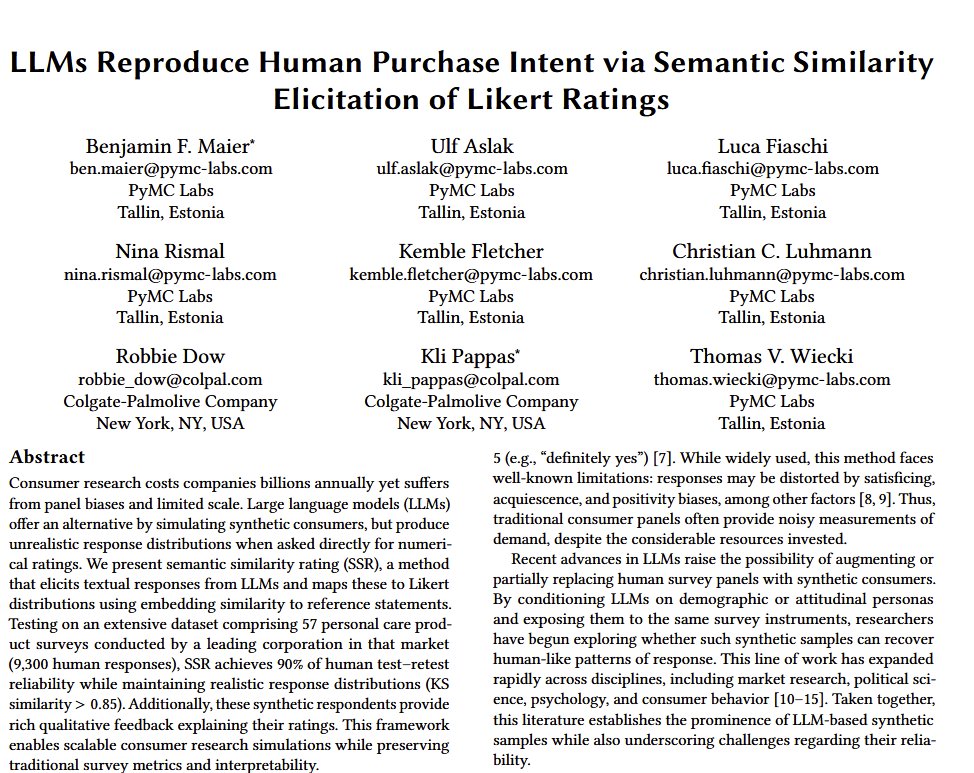
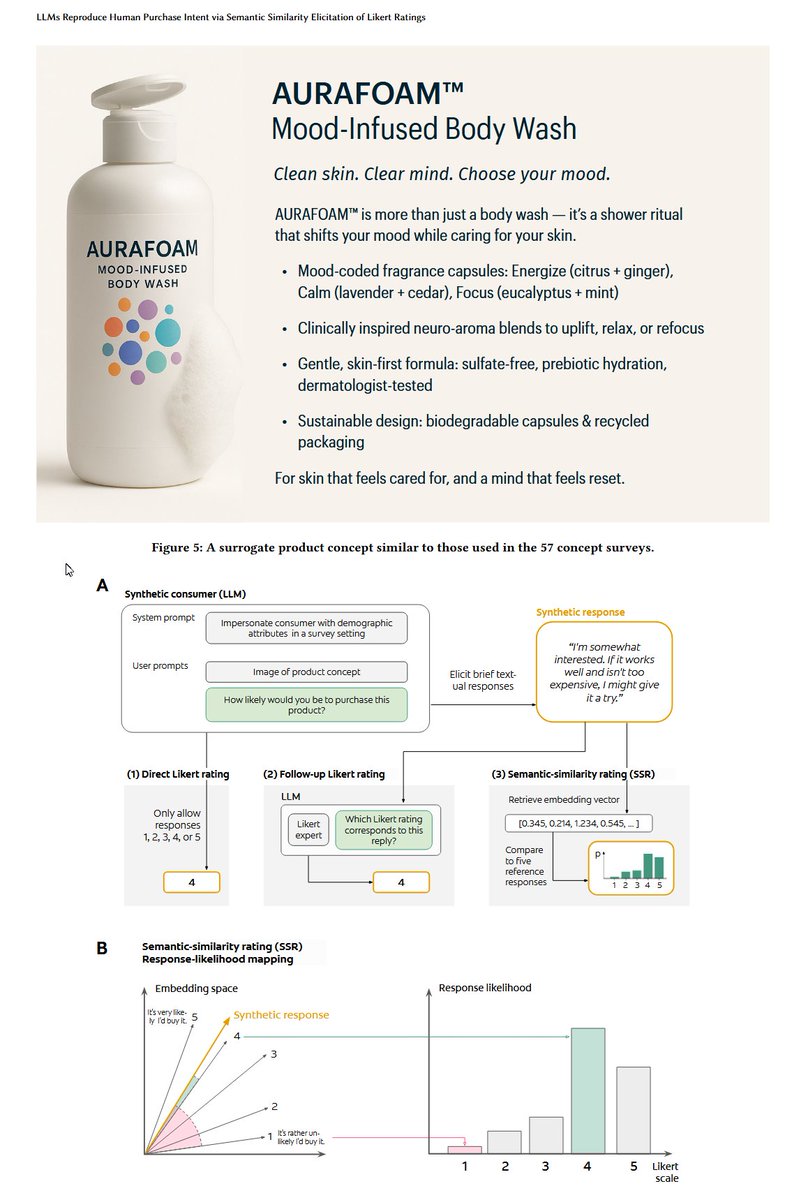
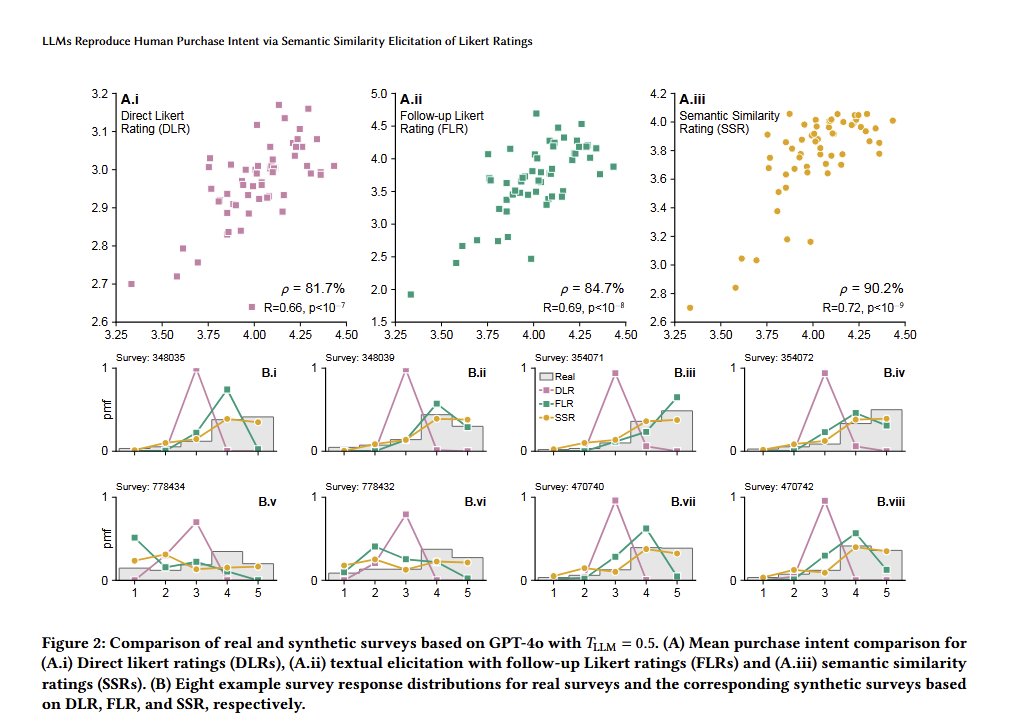
This paper shows that you can predict actual purchase intent (90% accuracy) by asking an LLM to impersonate a customer with a demographic profile, giving it a product & having it give its impressions, which another AI rates.
No fine-tuning or training & beats classic ML methods.
141
684
7,642
902,551
1 Oct 2025
Interesting. I would bet on :
2 - 5 - 7 - 14 - 17
Let’s also see what Meta will release.
1 Oct 2025

i've been thinking about sora 2 (what it means for you, where the $$ can be made):
1/ someone will buy a synthetic Sora 2 style account for $10M and it will be a good deal but will look crazy
2/ whoever builds the “no-AI instagram” that takes off makes $100M-$1B. because social feeds will drown in Sora spam. networks that ban AI content, add verification layers will thrive.
3/ people start selling their own likeness. “rent my face for $99/month.” agencies become gatekeepers of likeness rights. the scarjo fight is the first domino.
4/ someone will build a daily Sora channel, flip it into a $50M AI startup within 18 months completely bootstrapped.
5/ in 3 months, feeds will be unrecognizable. 1-person “ai-first creators” dropping 200 vids/day. the ones who figure out hooks branding → next gen MrBeasts.
6/ creation goes to zero cost, so ppl who own the pipes (big accounts, media pages, curation brands) will tax the flood. 2010s meme pages all over again, but cinema-quality.
7/ someone will mint a Sora-native character that builds an empire (music, merch, movies). think hello kitty x mrbeast. content making influencers are the new influencers
8/ people start selling their own likeness. “rent my face for $99/month.” agencies become gatekeepers of likeness rights. the scarjo fight is the first domino.
9/ 1,000 ad variations overnight is the new normal → cpm wars. who wins? the ppl who build the distribution machines that can test filter that flood.
10/ tooling gold rush - watermarking, copyright detection, brand overlays. when the world drowns in video, verification tools become choke points.
11/ movies won’t die, but they’ll be swallowed by endless serialized micro-shows. one breakout sora-native series hits, netflix panics.
12/ memes/genres that used to last years now die in weeks. whoever masters the rhythm of fast-burn cycles builds audience the fastest.
13/ platforms double dip - they’ll host the flood and sell you boosts to cut through it. organic reach might fall (i hope not, but manage your risk accordingly)
14/ vertical content studios rise - apps for niches: Sora-for-fitness, Sora-for-real estate listings, Sora-for-crypto memes. packaged prompts workflows export buttons.
15/ hollywood talent agencies will pivot into “likeness funds.” they’ll securitize the rights to actors’ faces and voices like IP portfolios. sidenote: hollywood prob not feeling so great about this
16/ Synthetic “how-to” teachers will dominate niches. Think Khan Academy, but cloned 1,000x and personalized to every learner.
17/ distribution curators will be the new venture capitalists. Whoever can guarantee views will become gatekeepers.
18/ copyright courts will get nuked. The first $1B lawsuit over Sora likeness rights will set precedent for a new industry.
19/ a religion will literally form around a Sora-generated prophet. sounds insane. it will happen.
20/ synthetic nostalgia startups will raise hundreds of millions. recreate your 7th birthday, your grandma’s kitchen, your lost dog. It’ll be addictive.
21/ a real estate startup will generate cinematic walk-throughs of homes before they’re built, then sell them instantly. $1B company.
22/ in 5-10 years, people won’t ask “what’s your favorite show?” they’ll ask “what’s your favorite generator?”
in the next tweet I’ll outline the steps I’d personally take to make $$/earn distribution from sora 2 in a few steps
sora 2 is a big deal
i can't sleep thinking about it, idk about you
72

Adrien Tsagliotis retweeted

21 Jul 2025
The invention of modern writing instruments like the typewriter made writing easier, but they also led to the rise of writer’s block, where deciding what to write became the bottleneck. Similarly, the invention of agentic coding assistants has led to a new builder’s block, where the holdup is deciding what to build. I call this the Product Management Bottleneck.
Product management is the art and science of deciding what to build. Because highly agentic coding accelerates the writing of software to a given product specification, deciding what to build is the new bottleneck, especially in early-stage projects. As the teams I work with take advantage of agentic coders, I increasingly value product managers (PMs) who have very high user empathy and can make product decisions quickly, so the speed of product decision-making matches the speed of coding.
PMs with high user empathy can make decisions by gut and get them right a lot of the time. As new information comes in, they can keep refining their mental models of what users like or do not like — and thereby refine their gut — and keep making fast decisions of increasing quality.
Many tactics are available to get user feedback and other forms of data that shape our beliefs about users. They include conversations with a handful of users, focus groups, surveys, and A/B tests on scaled products. But to drive progress at GenAI speed, I find that synthesizing all these sources of data in a PM's gut helps us move faster.
Let me illustrate with an example. Recently, my team debated which of 4 features users would prefer. I had my instincts, but none of us were sure, so we surveyed about 1,000 users. The results contradicted my initial beliefs — I was wrong! So what was the right thing to do at this point?
- Option 1: Go by the survey and build what users told us clearly they prefer.
- Option 2: Examine the survey data in detail to see how it changes my beliefs about what users want. That is, refine my mental model of users. Then use my revised mental model to decide what to do.
Even though some would consider Option 1 the “data-driven” way to make decisions, I consider this an inferior approach for most projects. Surveys may be flawed. Further, taking time to run a survey before making a decision results in slow decision-making.
In contrast, using Option 2, the survey results give much more generalizable information that can help me shape not just this decision, but many others as well. And it lets me process this one piece of data alongside all the user conversations, surveys, market reports, and observations of user behavior when they’re engaging with our product to form a much fuller view on how to serve users. Ultimately, that mental model drives my product decisions.
Of course, this technique does not always scale. For example, with programmatic online advertising in which AI might try to optimize the number of clicks on ads shown, an automated system conducts far more experiments in parallel and gathers data on what users do and do not click on, to filter through a PM's mental model of users. When a system needs to make a huge number of decisions, such as what ads to show (or products to recommend) on a huge number of pages, PM review and human intuition do not scale.
But in products where a team is making a small number of critical decisions such as what key features to prioritize, I find that data — used to help build a good mental model of the user, which is then applied to make decisions very quickly — is still the best way to drive rapid progress and relieve the Product Management Bottleneck.
[Original text: deeplearning.ai/the-batch/is… ]
72
227
1,150
348,156
28 Sep 2025
Very interesting demo on how to make infinite videos
26 Sep 2025

Kling 2.5 "infinite" videos are HYPE rn, so here's a 15 min full tutorial that shows you exactly how you can create your own - I made a custom agent that does everything for you so you can focus on the creative direction:
67
Adrien Tsagliotis retweeted

25 Sep 2025
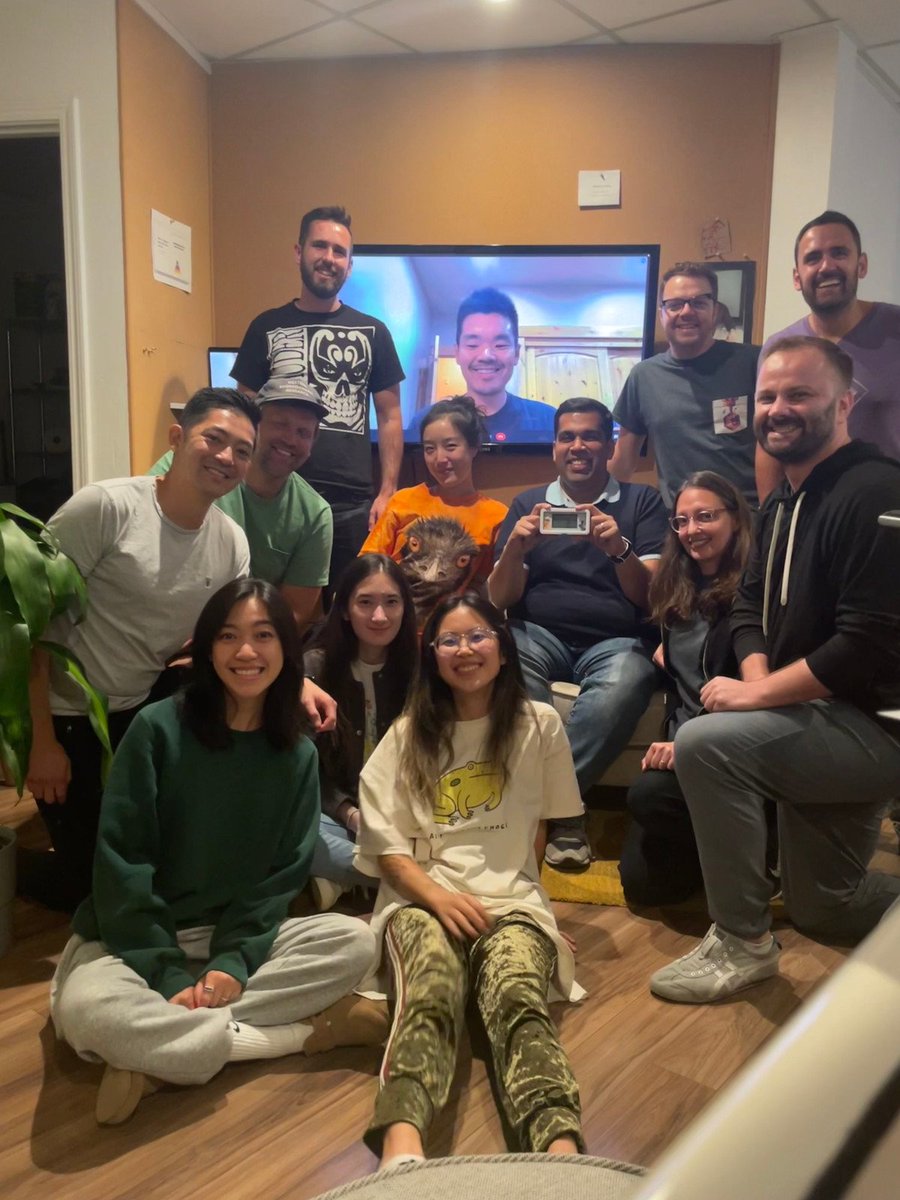
Yes, our team of 30 could fit in a small restaurant. But we serve 50 million users profitably while most AI startups burn millions serving thousands.
The future belongs to tiny teams of extraordinary people.
10
6
254
15,068
Adrien Tsagliotis retweeted

27 Aug 2025
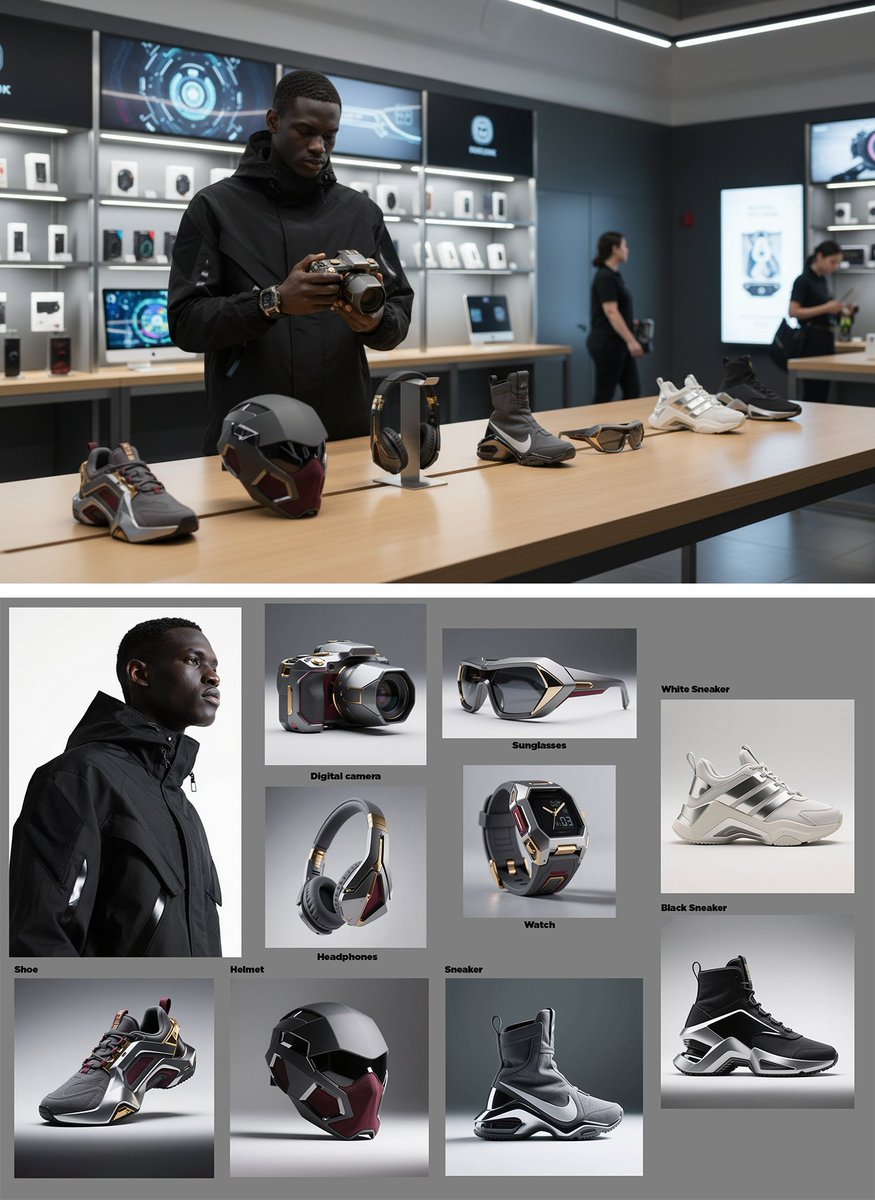
I think I'm the first person to generate more than 8 items into a single image using Google Gemini Flash Image (Nano Banana). I have even exceeded the 8 upload limit on Freepik. How did I do this? Create a collage with everything and label each item on the image. When you upload the image, be descriptive and give each item the same name you labeled it on the image. Look at the end result, 10 items in a single image with excellent accuracy (Only thing not super accurate is the watch). I think this method is even more accurate than uploading individual photos. Go and try it!
The prompt I used to generate 10 items into a single image is as follows: A man is standing in a modern electronic store analyzing a digital camera. He is wearing a watch. On the table in front of him are sunglasses, headphones on a stand, a shoe, a helmet and a sneaker, a white sneaker and a black sneaker
78
192
2,064
250,153
9 Aug 2025
That’s very cool! 🎥
8 Aug 2025

This was a complicated one.
My latest fully AI short movie : "One Way"
created thanks to
@runwayml (Aleph), @HeyGen_Official , Google Veo.
1
143
8 Aug 2025
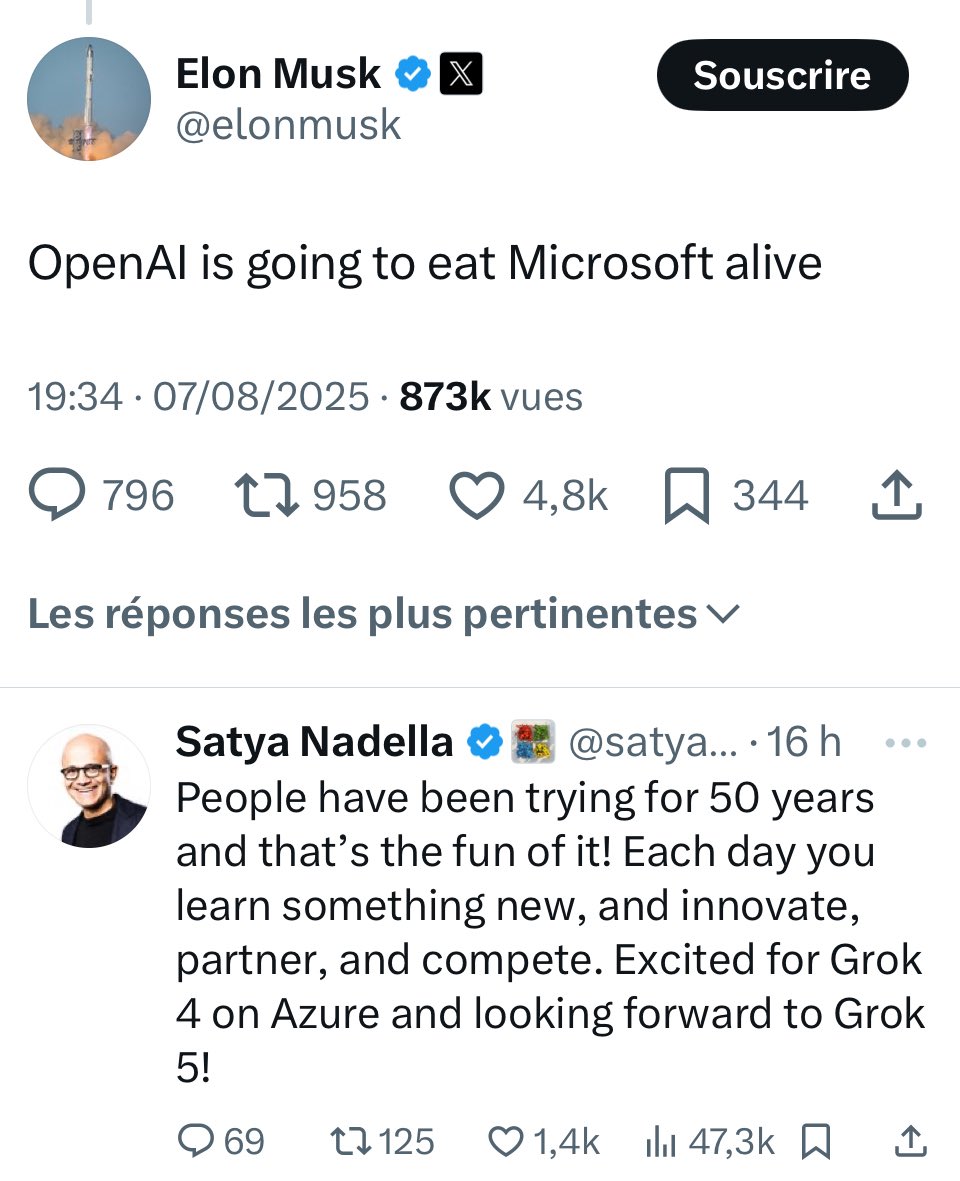
Meanwhile Jensen Huang is somewhere quietly counting his GPU money💰
138
8 Aug 2025
The next Walt Disney could be a 12-year-old making a brilliant movie from their bedroom and sharing it on YouTube. These are exciting times! 🍿

This is Hopeless Steve.
A cartoon character you've created with AI.
You grew up watching Simpsons, South Park and now you dream of Hopeless Steve becoming the next big IP.
So you start posting short sketches on Youtube, TikTok, IG, etc.
Then one day... 👇
3
5
36
4,693
Adrien Tsagliotis retweeted
6 Aug 2025
I'm thrilled to announce the definitive course on Claude Code, created with @AnthropicAI and taught by Elie Schoppik @eschoppik. If you want to use highly agentic coding - where AI works autonomously for many minutes or longer, not just completing code snippets - this is it.
Claude Code has been a game-changer for many developers (including me!), but there's real depth to using it well. This comprehensive course covers everything from fundamentals to advanced patterns.
After this short course, you'll be able to:
- Orchestrate multiple Claude subagents to work on different parts of your codebase simultaneously
- Tag Claude in GitHub issues and have it autonomously create, review, and merge pull requests
- Transform messy Jupyter notebooks into clean, production-ready dashboards
- Use MCP tools like Playwright so Claude can see what's wrong with your UI and fix it autonomously
Whether you're new to Claude Code or already using it, you'll discover powerful capabilities that can fundamentally change how you build software.
I'm very excited about what agentic coding lets everyone now do. Please take this course!
deeplearning.ai/short-course…
200
1,196
8,697
1,645,637

Shipped: $FIG x.com/i/broadcasts/1rmGPyozR…
68
192
1,746
3,898,436

Today, we’re introducing Video Overviews in @NotebookLM — a visual alternative to Audio Overviews. Dive deeper with short, engaging slide summaries using images, diagrams, quotes and data from your sources, narrated by your AI host.
178
1,026
6,465
656,304
Adrien Tsagliotis retweeted

8 Jul 2025
Cliff Obrecht (cofondateur de Canva) : "L'an dernier, 0,2% des images importées dans @canva venaient de #ChatGPT contre 5% cette année" journaldunet.com/collaborati… par @scoolada via @journaldunet
1
96
Adrien Tsagliotis retweeted
7 Jul 2025
Cliff Obrecht (cofondateur de @canva) : "L'an dernier, 0,2% des images importées dans Canva venaient de #ChatGPT, contre 5% cette année" journaldunet.com/collaborati… par @scoolada via @journaldunet
2
2
89
Adrien Tsagliotis retweeted
30 Jun 2025
Mike Krieger (@AnthropicAI) : "Anthropic fait le choix de rester très focalisé sur quelques usages clés pour viser l'excellence" journaldunet.com/intelligenc… par @scoolada via @journaldunet
1
96
Adrien Tsagliotis retweeted
24 Jun 2025
Thomas Wolf (@huggingface) : "#HuggingFace veut démocratiser la robotique grâce à l'#opensource" journaldunet.com/intelligenc… par @scoolada via @journaldunet
1
118