relax, we all die
Joined May 2023
- Tweets 513
- Following 973
- Followers 185
- Likes 30,137
123 Photos and videos




Pinned Tweet

Apr 17
Protect health, save hard, buy AI-exposed assets (big tech, chips, energy), take 30yr fixed mortgages (boom inflates the debt away), follow AI forecasters (Aschenbrenner, Zvi, Dwarkesh), stock a rural retreat with months of supplies, start long processes now (citizenship), delay rest 3yrs


1
448
Cyrus Redmond retweeted

Jun 13
IMPORTANT UPDATE:

18
143
1,991
81,540
Cyrus Redmond retweeted

Jun 10
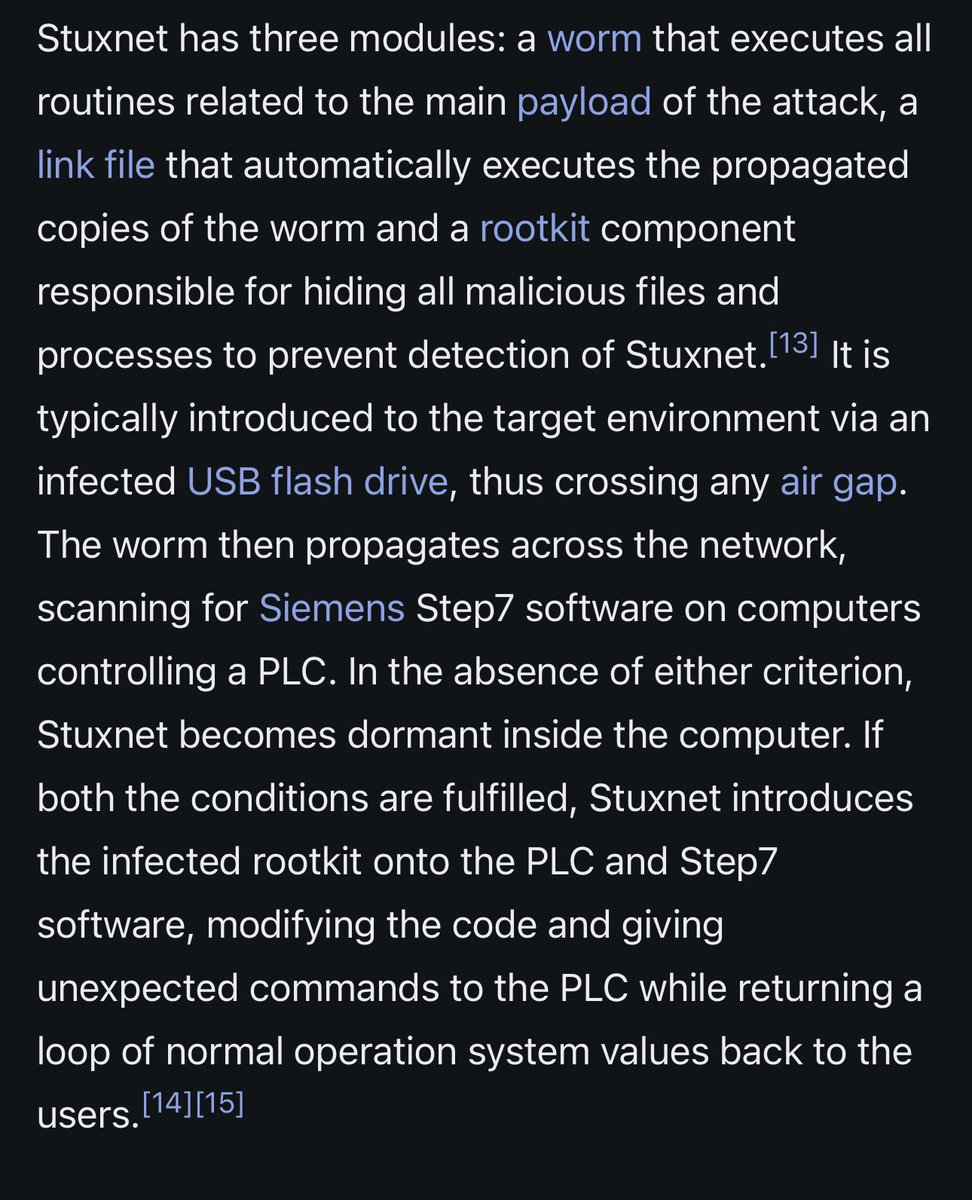
NEW: malware developers added nuclear & biological weapons text to to their spyware.
Goal? To trigger LLM safety refusals... so that their spyware wouldn't be analyzed by an AI security scanner.
Cleanest practical example I can think of for why over-indexing on first order safety alignment is risky.
When closed (and open) models ship with aggressive refusals, they will be sprinkled with second-order blindspots that attackers will discover...and exploit.
We are only in the earliest days of attackers leveraging these features, and it wouldn't surprise me if users systems that need to handle complex cybersecurity issues demand that models be less safety-blunted.
In the weeds: @SocketSecurity's post also shows why intention matters in how you design a malware analysis pipeline to avoid prompt manipulation.
H/T to colleagues that shared this with me socket.dev/blog/mini-shai-hu…

226
2,151
12,629
1,541,005
Cyrus Redmond retweeted

Jun 7
In medieval times, within the arms race of ever more demonic torture devices, some sadistic genius came up with the idea of the Little Ease.
This was a prison cell built so small in every dimension that a grown man could not stand upright in it nor lie down at full length nor properly sit.
The pain is relentless and without relief and inflicted by one's own body. Prisoners were known to go insane within a few days. A stay at the Little Ease was considered even more cruel than the rack, the thumbscrew, and the other ghoulish machinery of the Tower of London.
A breeding pig will spend her whole life in a version of that box.
These are social, roaming creatures (more intelligent than dogs) who will never leave this corset of steel.
They have been selectively bred to be bigger than their frames can support. Yet we put them in cells so confined that they cannot comfortably sit, and their attempts to do so (for example, by sneaking their limbs into adjacent stalls) reliably lead to fractures and sprains.
They cannot sweat, yet have nothing to roll around in to cool themselves off. Except their own manure, which (contrary to the common misconception) they are so averse to (thanks to their strong sense of smell) that new sows will often suffer from constipation to avoid soiling the space from which they eat and sleep.
Here is how the writer Matthew Scully described what saw at one of Smithfield’s “gestation barn”:
> “Sores, tumors, ulcers, pus pockets, lesions, cysts, bruises, torn ears, swollen legs everywhere. Roaring, groaning, tail biting, fighting, and other “Vices,” as they’re called in the industry. Frenzied chewing on bars and chains, stereotypical “vacuum” chewing on nothing at all, stereotypical rooting and nest building with imaginary straw. And “social defeat,” lots of it, in every third or fourth stall some completely broken being you know is alive only because she blinks and stares up at you … creatures beyond the power of pity to help or indifference to make more miserable, dead to the world except as heaps of flesh into which the [insemination] rod may be stuck once more and more flesh reproduced.”
—
The Save Our Bacon Act is trying to unroll the few state protections we have against this barbaric cruelty - for example California’s Prop 12 - which banned the sale of pork from pigs kept in gestation crates.
It’s incredibly important we don’t end up with this sort of federal preemption.
SOB will not only kill the most important animal welfare related laws in the US of the past decade, but more importantly, it will also restrict ALL future legislative progress (aka how the animal welfare movement has gotten its biggest wins).
The Senate is currently deciding whether to add the SOB Act to the Farm Bill.
With relatively little money now, we can discourage the most pivotal senators in the Ag committee from backing this amendment.
Defeating this bill is even more important given the amount of philanthropic funding I expect to come online in the next year or two.
It will plausibly be over 10x more expensive to repeal SOB than to prevent it from passing in the first place.
All that money that could be spent transforming our society's relationship to mass animal suffering will instead have to be spent just getting us back to where we are right now.
That's why money spent now fighting this bill (and I mean right NOW) is so effective.
If you’re in a position to donate six figures, please DM me.
95
763
4,491
484,856
Cyrus Redmond retweeted

Jun 1
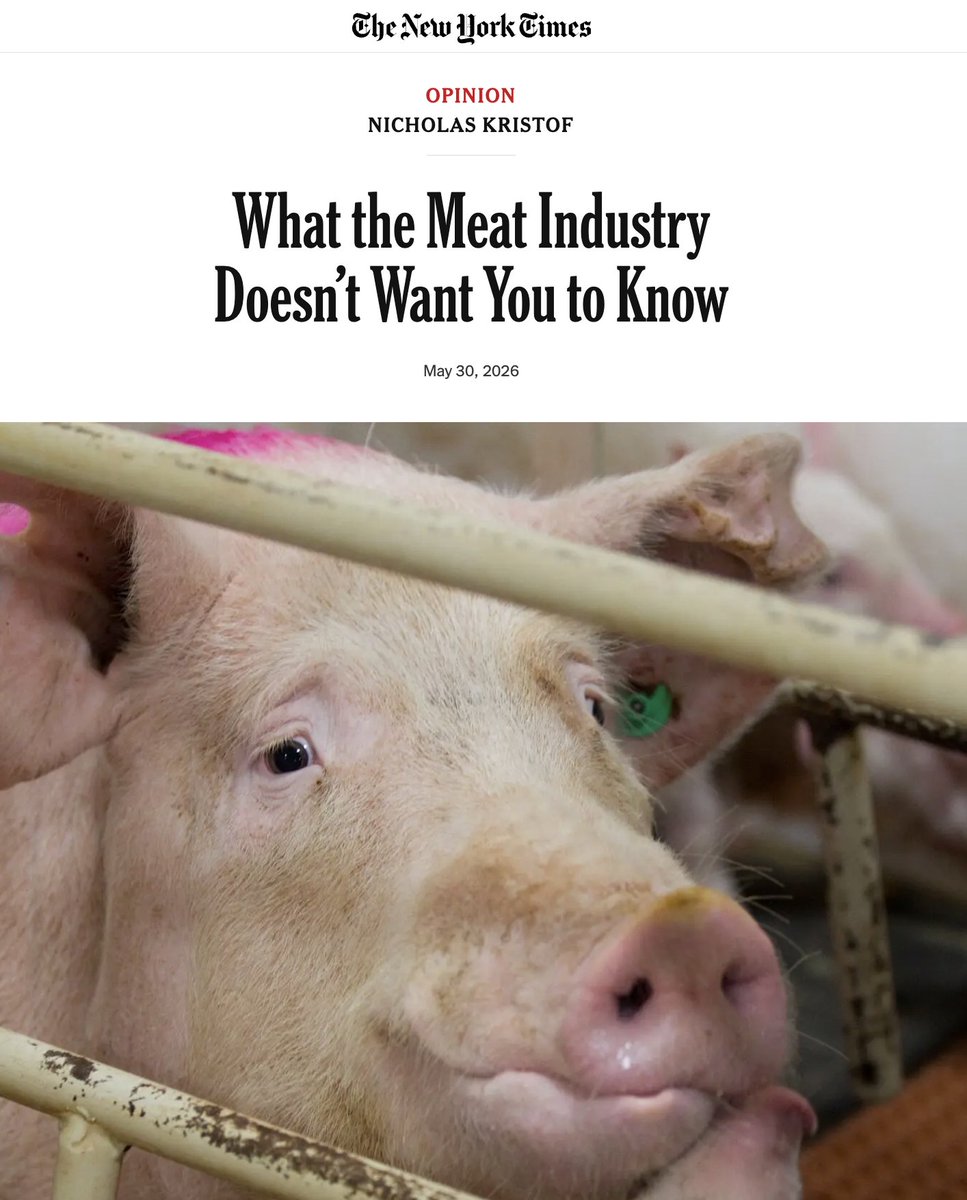
Three powerful pieces on the Save Our Bacon Act dropped this weekend: from @NickKristof, @kathleenparker, and @Noahpinion.
This is much needed. The mainstream media has been silent on what may be the greatest legislative threat to animal welfare in a generation.
There's been a grassroots revolt against the Act on X -- led by conservatives. But only one network has covered it: Fox, thanks to @TomiLahren.
This is exactly what the pork industry wants. It knows the Act is deeply unpopular. Its paid-for politicians can only pass it if they're never forced to defend it publicly.
They were hoping you wouldn't notice. They're now hoping you'll stay quiet. Prove them wrong.
19
183
491
20,940

Cyrus Redmond retweeted

May 7
New Anthropic research: Natural Language Autoencoders.
Models like Claude talk in words but think in numbers. The numbers—called activations—encode Claude’s thoughts, but not in a language we can read.
Here, we train Claude to translate its activations into human-readable text.
593
1,704
16,547
2,488,434
Cyrus Redmond retweeted
11 Mar 2025
Head of the Council on Foreign Relations mocking Anthropic’s Dario Amodei urgently pleading for people to take AGI’s impact on humanity seriously. (March 11, 2025)
1
6
673
Cyrus Redmond retweeted

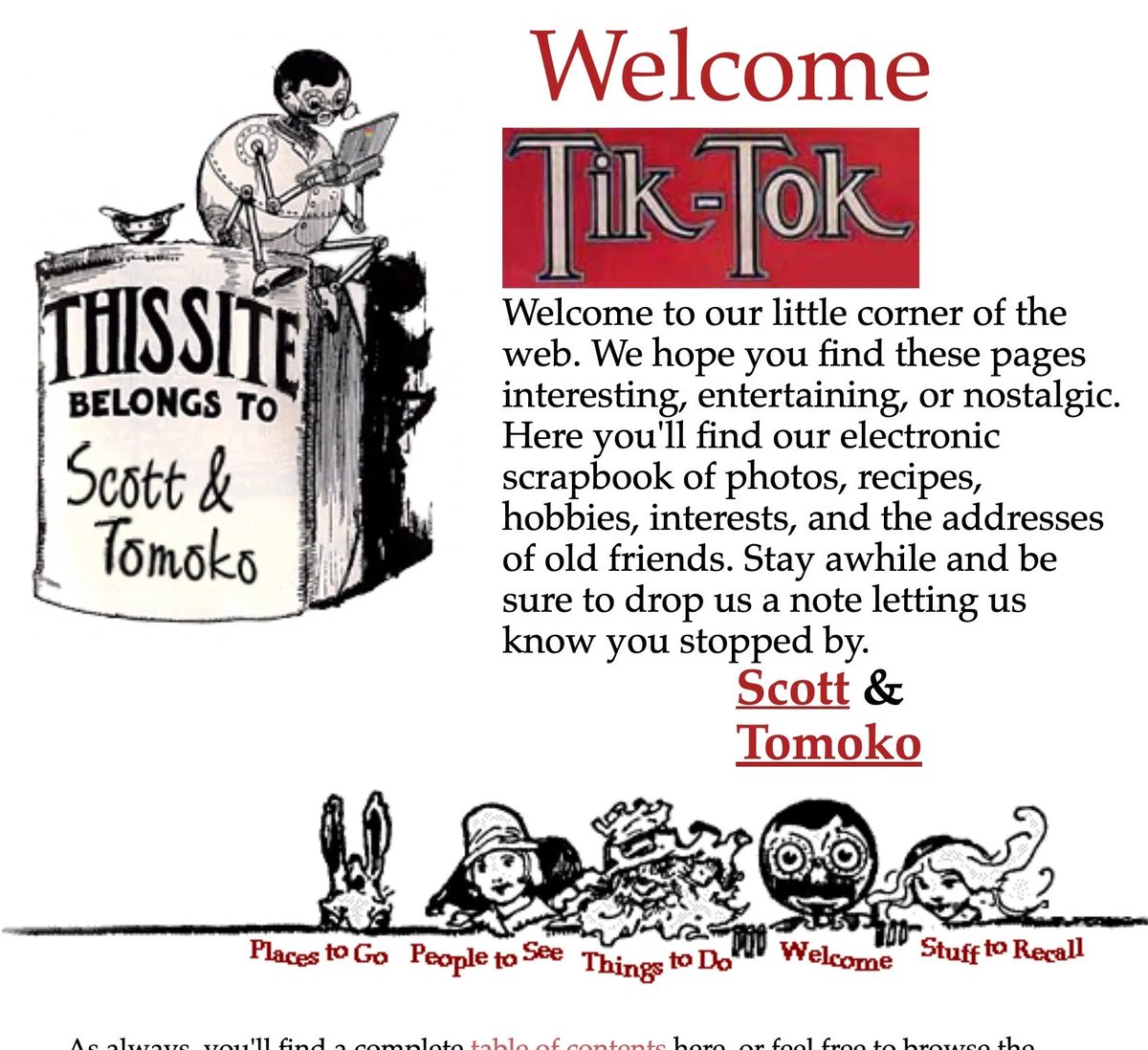
openai․com was once the personal homepage of a guy named glenn (2001), and tiktok․com was the quaint shared homepage of a couple who went from dating to married with a baby (~1998-2001). THREAD!!!

67
2,794
23,393
769,604
Cyrus Redmond retweeted

May 4
I've spent the past few weeks reading 100s of public data sources about AI development. I now believe that recursive self-improvement has a 60% chance of happening by the end of 2028. In other words, AI systems might soon be capable of building themselves.
289
498
3,516
1,653,452
Cyrus Redmond retweeted

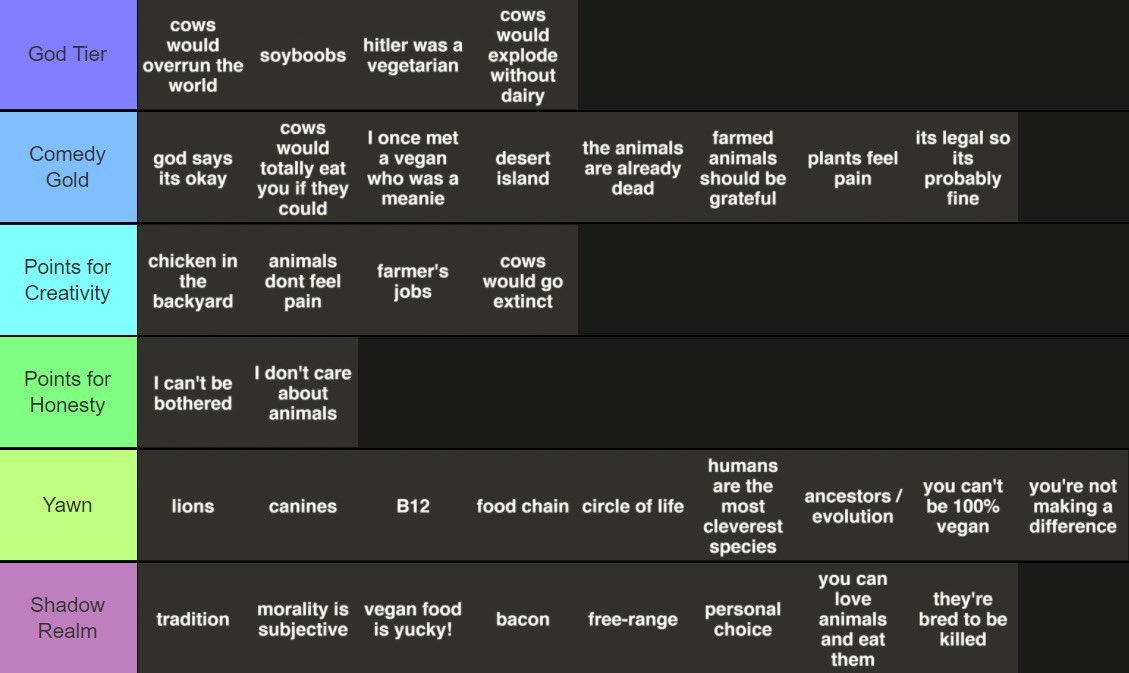
Non-vegan leftists hate veganism because it's the one "morally correct" position you actually have to put effort into and can't just virtue signal (ie anti-fascism, anti-billionaire, anti-racism pro-LGBTQ).
Apr 28

Billie Eilish says eating meat is WRONG and people can’t claim to love animals if they eat meat 😳👀
287
707
7,244
391,128
Cyrus Redmond retweeted

Apr 17
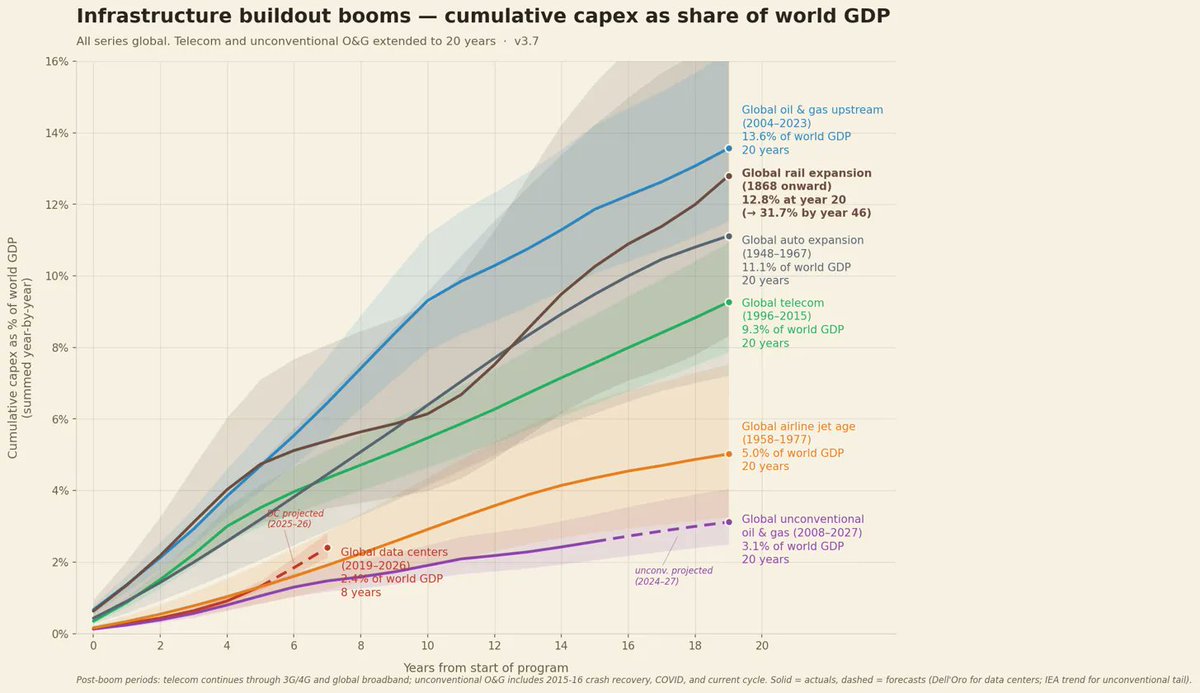
Here's an updated version, which is better at comparing apples to apples:
2
5
64
3,847
Cyrus Redmond retweeted
Apr 15
Distilled recap of the back-and-forth with Jensen on export controls:
Dwarkesh: Wouldn’t selling Nvidia chips to China enable them to train models like Claude Mythos with cyber offensive capabilities that would be threats to American companies and national security?
Jensen: First of all, Mythos was trained on fairly mundane capacity and a fairly mundane amount of it by an extraordinary company. The amount of capacity and the type of compute it was trained on is abundantly available in China.
Dwarkesh: With that, could they eventually train a model like Mythos? Yes. But the question is, because we have more FLOPs, American labs are able to get to this level of capabilities first. Furthermore, even if they trained a model like this, the ability to deploy it at scale matters. If you had a cyber hacker, it's much more dangerous if they have a million of them versus a thousand of them.
Jensen: Your premise is just wrong. The fact of the matter is their AI development is going just fine. The best AI researchers in the world, because they are limited in compute, also come up with extremely smart algorithms. DeepSeek is not an inconsequential advance. The day that DeepSeek comes out on Huawei first, that is a horrible outcome for our nation.
Dwarkesh: Currently, you can have a model like DeepSeek that can run on any accelerator if it's open source. Why would that stop being the case in the future?
Jensen: Suppose it optimizes for Huawei. Suppose it optimizes for their architecture. It would put others at a disadvantage. As AI diffuses out into the rest of the world, their standards and their tech stack will become superior to ours because their models are open.
Dwarkesh: Tesla sold extremely good electric vehicles to China for a long time. iPhones are sold in China. They didn't cause some lock-in. China will still make their version of EVs, and they're dominating, or smartphones, they're dominating.
Jensen: We are not a car. The fact that I can buy this car brand one day and use another car brand another day is easy. Computing is not like that. There's a reason why x86 still exists. There's a reason why Arm is so sticky. These ecosystems are hard to replace.
Dwarkesh: It's just hard to imagine that there's a long-term lock-in to the Chinese ecosystem, even if they have this slightly better open-source model for a while. American labs port across accelerators constantly. Anthropic's models are run on GPUs, they're run on Trainium, they're run on TPUs. There are so many things you can do, from distilling to a model that's well fit for your chips.
Jensen: China is the largest contributor to open source software in the world. China's the largest contributor to open models in the world. Today it's built on the American tech stack, Nvidia’s. Fact.
All five layers of the tech stack for AI are important. The United States ought to go win all five of them.
in a few years time, I'm making you the prediction that when we want American technology to be diffused around the world—out to India, out to the Middle East, out to Africa, out to Southeast Asia—on that day, I will tell you exactly about today's conversation, about how your policy ... caused the United States to concede the second largest market in the world for no good reason at all.
196
254
3,630
1,242,833
Apr 14
Apr 14

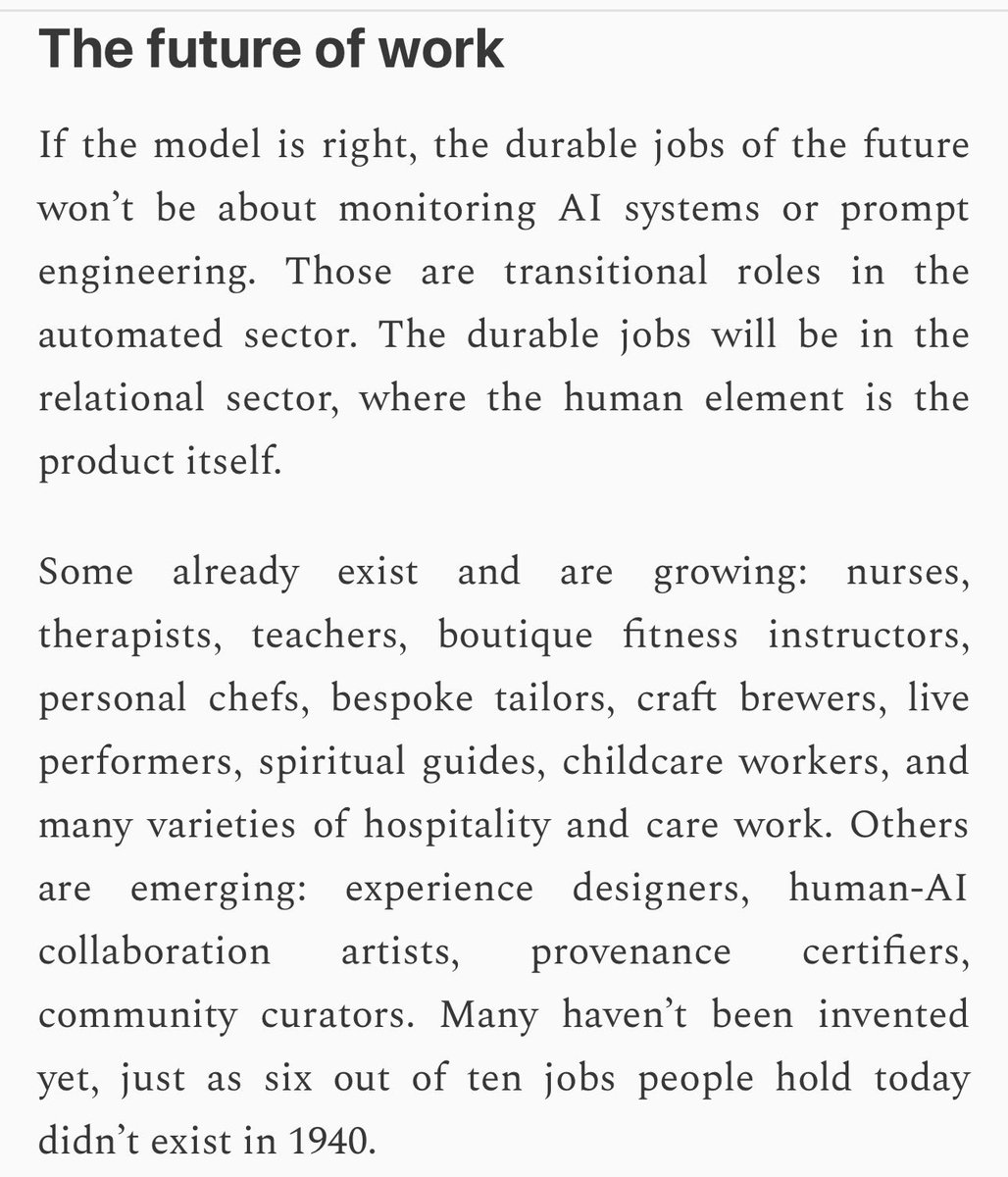
New essay on the economics of structural change and the post-commodity future of work.
1. Almost any question about the impact of advanced AI on the economy needs to start at the same place: what is still scarce? Answer that, and the analysis becomes pretty straightforward. This essay explores what becomes scarce if AI really can replicate most of what humans do in production, and what this mean for the future of jobs.
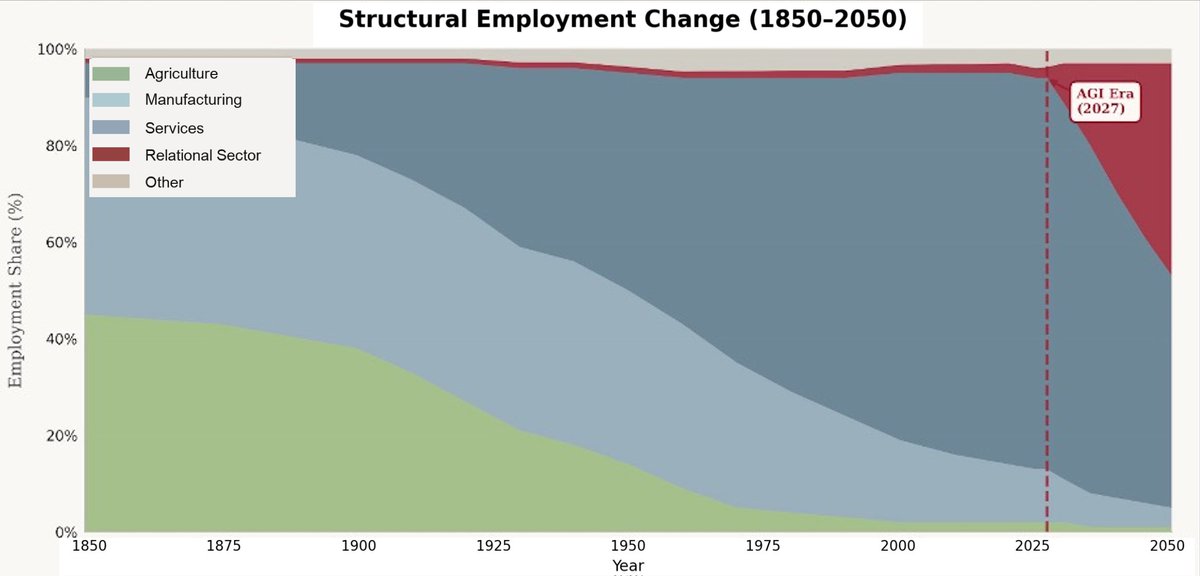
2. My conjecture, working through the economics: labor reallocates across sectors, and the sector it reallocates to has properties that keep labor a meaningful share of the economy. Ultimately this is about the structure of demand itself. For this, we have to go back to Girard, Augustine and Rousseau: once people's base needs are met, their preferences shift to comparative motives (e.g., status, exclusivity, social desirability). This motive is inherently non-satiated.
4. The key paper is Comin, Lashkari, and Mestieri (Econometrica 2021). As people get richer, they don't buy proportionally more of everything. They shift spending toward sectors with higher income elasticity. They estimate income effects account for 75% of observed structural change.
5. The ironic consequence: the sector that gets automated becomes a smaller share of the economy, not a larger one. Agriculture got massively more productive and its share of employment collapsed. Manufacturing too. The "stagnant" sectors absorb the spending and the jobs.
6. So the question is: which sectors have high income elasticity in a post-AGI world? I argue it's what I call the relational sector. Categories where the human isn't just an input into production, it is part of the value.
7. Why does the relational sector have high income elasticity? Because human desire has a mimetic, relational dimension. We don't just want things for their intrinsic properties. We want what others want, and we want it more when others can't have it. Girard, Rousseau, Augustine, and Hobbes all saw this.
8. In work with Kristóf Madarász, we showed this experimentally: WTP roughly doubles when a random subset of others is excluded from the good. And in new work with Graelin Mandel, AI involvement kills the premium. Human-made art gains 44% from exclusivity; AI-made art only 21%.
9. This all comes together for the core argument. The sector that absorbs spending as AI makes commodity production cheap is one where human provenance is part of the value, and demand for it grows faster than income. Exactly the profile that keeps labor meaningful.
10. To be clear about the claim: I'm NOT saying aggregate labor share must rise. It may fall. The claim is about sectoral composition, i.e., where expenditure and employment go once commodities get cheap, and the fact that the sector that will absorb reallocated labor maps to a substantial component of human preferences and desire.
11. If you're interested in the formal model, a linked companion technical note works out all the economics.
Read the essay here: aleximas.substack.com/p/what…
107
Cyrus Redmond retweeted

Apr 14
Sorry did you not get the memo we aren’t doing left wing slopulism anymore, you will be driven around in the Waymo, you will pay your income taxes, you will behave in a pro social manner, and you will like it.
Apr 13

NEW: If Waymo gets its way, 2 million workers will be out of work.
When Waymo gets a firm hold on a city, wages go down. Some drivers now have to work 12 hours day, 7 days a week just to get by.
This isn't inevitable — but Big Tech is spending millions to make you think it is.
Community note
Waymo data (170M miles) shows a 92% reduction in serious injury/fatal crashes vs human drivers. While the post claims 2M jobs will be lost, BLS projections show transportation sector growth. Safety tech historically shifts labor roles rather than eliminating total employment
waymo.com/blog/shorts/wa…
bls.gov/news.release/p…
13
103
2,018
65,970
Apr 10
Labs and their employees need nation state level security ASAP. The motivations for attacks from the labor class, geopolitical foes, and religious groups will become widespread as desperation for the world that once was is proven fruitless by the advancements in technology.

NEW: A suspect was arrested on Friday morning for allegedly throwing a Molotov cocktail at OpenAI CEO Sam Altman's home. A person matching the suspect's description was later seen making threats outside of OpenAI's corporate HQ.

1
118
Cyrus Redmond retweeted

Apr 9
Is there an Epoch equivalent for animal welfare?
People whose job is to figure out and publicly share high quality information about how many of which kinds of animals live in what conditions, where, and how it’s changing? Or eg trends in the consumption of animal products?
9
5
41
4,200