
Investor via @HaystackVC focused on seed-stage investments // Venture Partner w/ @LightspeedVP
Joined June 2008
- Tweets 136,194
- Following 863
- Followers 164,964
- Likes 54,537
2,981 Photos and videos









[brief update]
we have a new set of funds for @haystackvc
announcing haystack 8 plus more, but it's really about my teammates @aashaysanghvi_ & @DivyaDhulipala
thank you to all of our frequent ecosystem co-conspirators, our LPs, our co-investors, our founders. i'm very grateful 🙏 and this is the most fun role in the world!
semilshah.com/2026/04/26/new…
107
21
537
113,663
Semil retweeted

Jun 11
It's time for California's housing boom.
Many recent laws have made building homes easier across the state, but only a few know how to use them.
We're launching @infillworks to make it simple for anyone to figure out how to add new housing to existing lots in the neighborhoods we love.
40
48
341
424,080

Semil retweeted

We just launched @eightsleep's first retail activation, and it has no fixed address.
The House of Sleep is a fully equipped Pod on wheels that drives to your neighborhood, parks outside your door, and gives you up to 30 minutes to feel what your bed has never done before.
Everyone told us to open a store. We made the store come to you. Now live in the Bay Area. eightsleep.com/house-of-slee…


138
51
1,478
1,074,914
Semil retweeted

Jun 9
"The submarine is too small of a place to be hiding anything. People see you 24/7. It's too small to say I disagree with that person but we'll sort it out later. There's no later. You have to be direct." - @CameronLMcCord on what the submarine life taught him about leadership.
Jun 9

"You earn the right to stand the night watch." - @CameronLMcCord
Cameron McCord. Founder and CEO of @Nominal_io.
Submarine officer turned founder building the software stack for the physical AI era.
New episode of @KnuckleUpHQ is live ↓
00:00 Who is Cameron McCord?
01:34 What did 484 days underwater teach him about leadership?
10:36 How do you "earn the right to stand the night watch"?
16:28 What was so special about Anduril’s culture?
28:39 What is the "power of ambiguity"?
31:29 How does Cameron think about recruiting?
37:39 Can you recruit “killers” who are also low ego?
46:50 What was the broken old way of testing hardware?
50:50 How do you actually crack selling to the government?
55:12 How did Nominal land four of the five largest defense primes?
1:01:33 What does "physical AI" actually mean?
1:18:14 What is Cameron still working on in his inner game?
1:23:22 Quickfire: military movies, leadership books, and a favorite office?
1:25:07 What advice would Cameron give to his 25-year-old self?
1
7
75
150,041
Semil retweeted

Jun 9
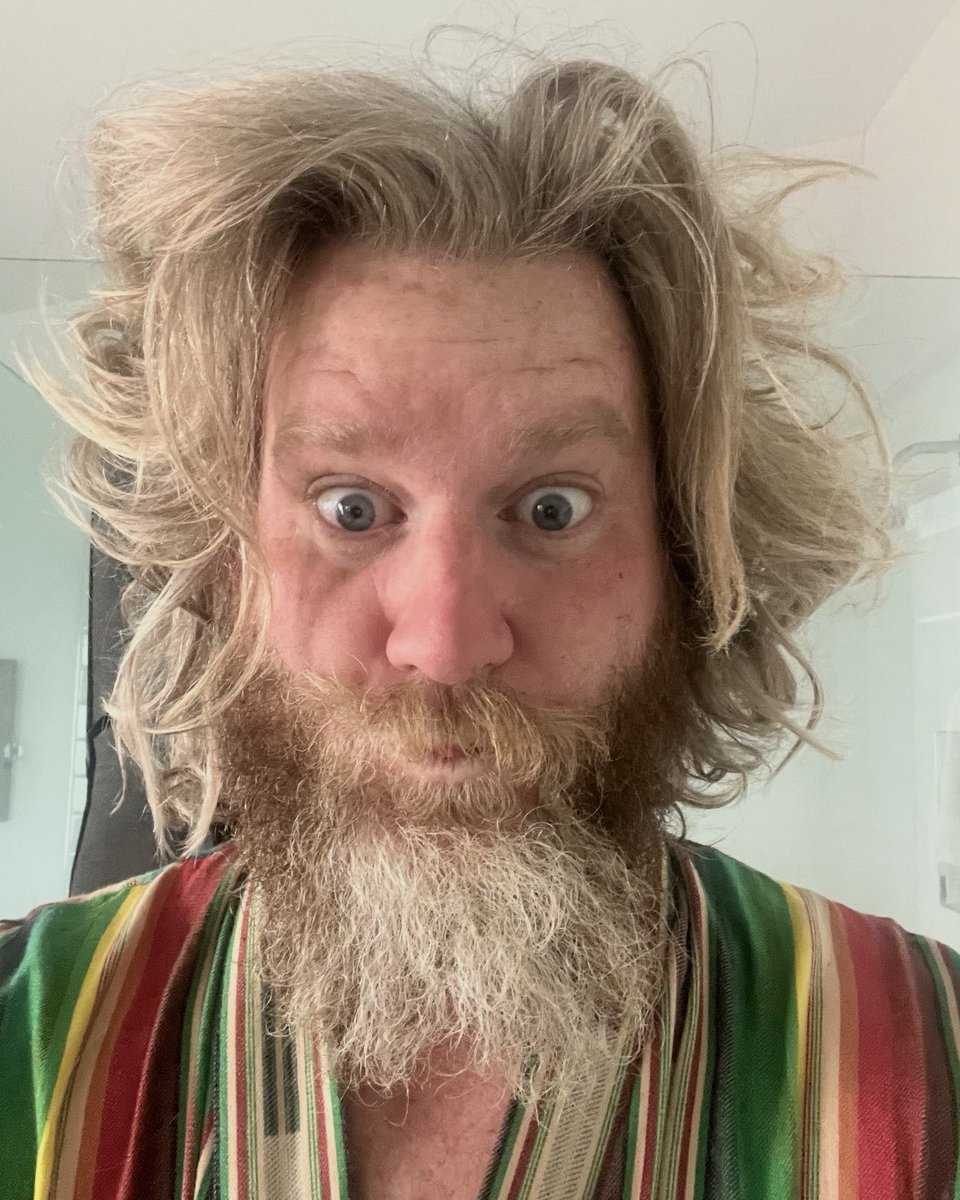
Larry on line at security makes a joke "do you really need to search me, you think I'm gonna be the one who does it?" And ends up in Secret Service custody for the entirety of the game, asking each interrogator as they come into the room for an update on the score of the game

82
3,359
83,875
2,903,737


Semil retweeted

Jun 9
The biggest problem holding back AI right now: cost is exploding, and almost none of it is tied to business outcomes.
We all know SOMETHING great is happening. Nobody's quite sure what.
Today we fix that — introducing Larridin Token Spend & Insights.
larridin.com/blog/token-spen…
22
24
158
1,156,338
Semil retweeted

May 29
The Clay Jar and the Data Center: an essay on the orchestration layer between energy and AI compute, and what will determine the $/token economics in the inference era.
mariohsouto.github.io/essays…
9
46
24,966
Semil retweeted

Jun 6
Now thinking back, maybe the worst casual meetings been where the investor doesn’t really understand us or our values.
We have had this unique way of thinking about the company, focusing on quality and the customer experience. Which also means we hire slower because we think it is necessary to keep that quality. We also have resisted some other “best” practices and done things our way.
But there are investors who are baffled with this and ask “don’t we want to grow” and my answer is that my goal is not to be a cancer cell or viral infection which purpose is to grow.
My goal is not to grow, it is to make something valuable and good, and from where the growth follows. So I have very little interest in the growth for growth sake, or growth in the short term.
And when the investors values or thinking don’t match, you actually don’t want them to invest. Worst thing is that you get investors who are not aligned on the way you want to run the business.
So with every major investor we have, I’ve have discussed this making sure they are aligned with the approach.
This doesn’t mean they won’t push you at times, but we still have the alignment.
6
4
217
18,409
Semil retweeted
Jun 6
I don’t really have many VC horror stories.
The worst ones are just meetings where there isn’t much interest. Everyone is still polite, but you can feel it’s not going anywhere. With my first company, I pitched a lot of VCs and got a lot of polite rejections.
With Linear, I approached fundraising differently. I tried to always be in a position where I didn’t need funding.
I also didn’t do pitch meetings unless there was real mutual interest. I would take casual meetings, but tried to avoid pitch meetings, until I thought the timing was right, I was in the process, and I was interested and I could see the VC interested too.
Early on, we raised a small amount from angels. We didn’t want to commit to a VC at the very beginning, and with three co-founders we knew we could build the first version without much money.
After we announced the company, investor interest started to pick up. I told most VCs no and said I was focused on building the product.
Then Sequoia reached out. I took a coffee meeting with one of the partners because, well, it was Sequoia.
The partner later pushed me to come in and “meet more people.” I assumed this might turn into more of a pitch meeting, so I came prepared with slides and some thinking. I was willing to do it, again because it was Sequoia.
Before committing to the meeting, I told them clearly that I wasn’t raising and didn’t want to waste their time. They still wanted me to come in.
After the pitch, someone asked how much we were raising, since it wasn’t in the deck.
I said what I had already told them: I’m not raising.
They asked, “Well, if you were raising, what would you raise?”
I said I hadn’t really thought about it, and we wrapped the meeting.
They didn’t invest in that moment, but a few weeks later, once we actually decided to raise, they fought against other term sheets and led our seed round.
About a year later, Linear became breakeven/profitable. Every round since has been more focused. I’ve mostly met casually with VCs, usually engaging with 3–5 firms per round, and only doing a pitch if I thought they were good and they really wanted it. I’ve still gotten plenty of passes too.
Each round has taken about 2-3 weeks, because I've built the relationships, then just completed the show, and closed within couple of weeks.
With every round, I’ve also given VCs some homework. I send them a memo and questions about the business, ask them to write answers, and then we discuss them live.
For our Series B, several people from Accel flew to where I live, booked a hotel space, and came with binders of research about our company. It wasn’t a formal pitch meeting. It was a discussion.
I share this because for every VC horror story, there are also stories where investors really go the extra mile.
There are many cases where the VC builds the case, defends and believes in the founder, and does everything they can to make the investment happen, even when the rest of the partnership isn’t fully there yet.
I’ve only raised in 2012 and from 2019 onward, so I do believe there were times when VCs had more power and could abuse it more. YC, in some ways, helped put a stop to that.
But my guess is that VCs more often do something extraordinary than treat someone badly. You just don’t hear about those extraordinary experiences as much.
I’ve seen VCs fly anywhere in the world on a moment’s notice to try to convince a founder. I’ve been called many times to help sell a founder on a firm. VCs will do everything, call in every favor, to impress the founder.
And I don’t envy the job. It seems grueling. You have to pass on a lot of people who are obviously passionate about their business, and people take it personally. At the same time, you have to work incredibly hard to get into the best deals.
Jun 2

I was once pitching in a board room at a top 3 VC firm for a $15M Series A.
12 people in the meeting. One of the GPs fully fell asleep. Out cold for 30 minutes. Nobody acknowledged it. Everyone just kept going.
I kept presenting my Series A slides to an unconscious man in a Herman Miller chair and somehow that was considered normal. That's venture capital.
You might fly across the country to perform for people who may or may not be conscious.
It's a dance.
And sometimes you lead and sometimes you follow and sometimes your partner is unconscious.
If you're raising right now, just know: every founder has a story like this. The process is weird. The power dynamic is weird. You're not crazy for thinking it's weird.
No one talks about it because they want to continue raising. But I'm happy to stick my neck out there.
It is weird.
55
69
1,812
444,716


Semil retweeted

Jun 7
I’m backed by Vinod. Every founder who raises from Vinod knows the deal.
Could he try to fire you from your own company if he thinks that’s what the company needs?
Yes. That’s not a secret. We even joke about it.
But making this entire drama about “firing founders” misses the point.
The point is that Vinod will always make the call he believes is right for the company, no matter how uncomfortable it is.
And there are 2 sides to that coin.
If he thinks you’re in the way, he’ll move you.
If he believes the company should win and you’re the person to make it win, he’ll move mountains for it. He’ll pull strings, take the hard fights, and push harder than almost any investor would.
The ruthlessness that makes him dangerous is the ruthlessness that makes him exceptional.
That’s the deal with him. Vinod is not founder-first, he’s company-first. And if that makes your uncomfortable, you should probably pitch someone else.
150
16
925
439,206
Semil retweeted

Jun 6
Im sorry you were traumatized by Vinod falling asleep in your meeting. But he founded one of the pioneering companies of the modern computer industry (Eric Schmidt worked for him there), has the highest ever multiple and IRR at exit in Kleiner Perkins history ($7B return on $3M invested in only 3 years) and while everyone was investing in SaaS throughout the 2010s, Vinod was funding the first round of companies building battery tech, rocket launch, fusion, genomics, carbon tech and a little AI research lab called OpenAI. And he did this while hitting grand slams and raising multi billion dollar funds. He is one of the truest VCs to ever do it.
108
48
2,130
1,101,159
A needle in a haystack!

Searching email sucks.
Not anymore.
With Avec's new Intelligent Search, you can find even the most obscure information in your inbox, in just seconds.
Available now at avec.ai/download
1
1
16
10,229
Semil retweeted

Jun 1
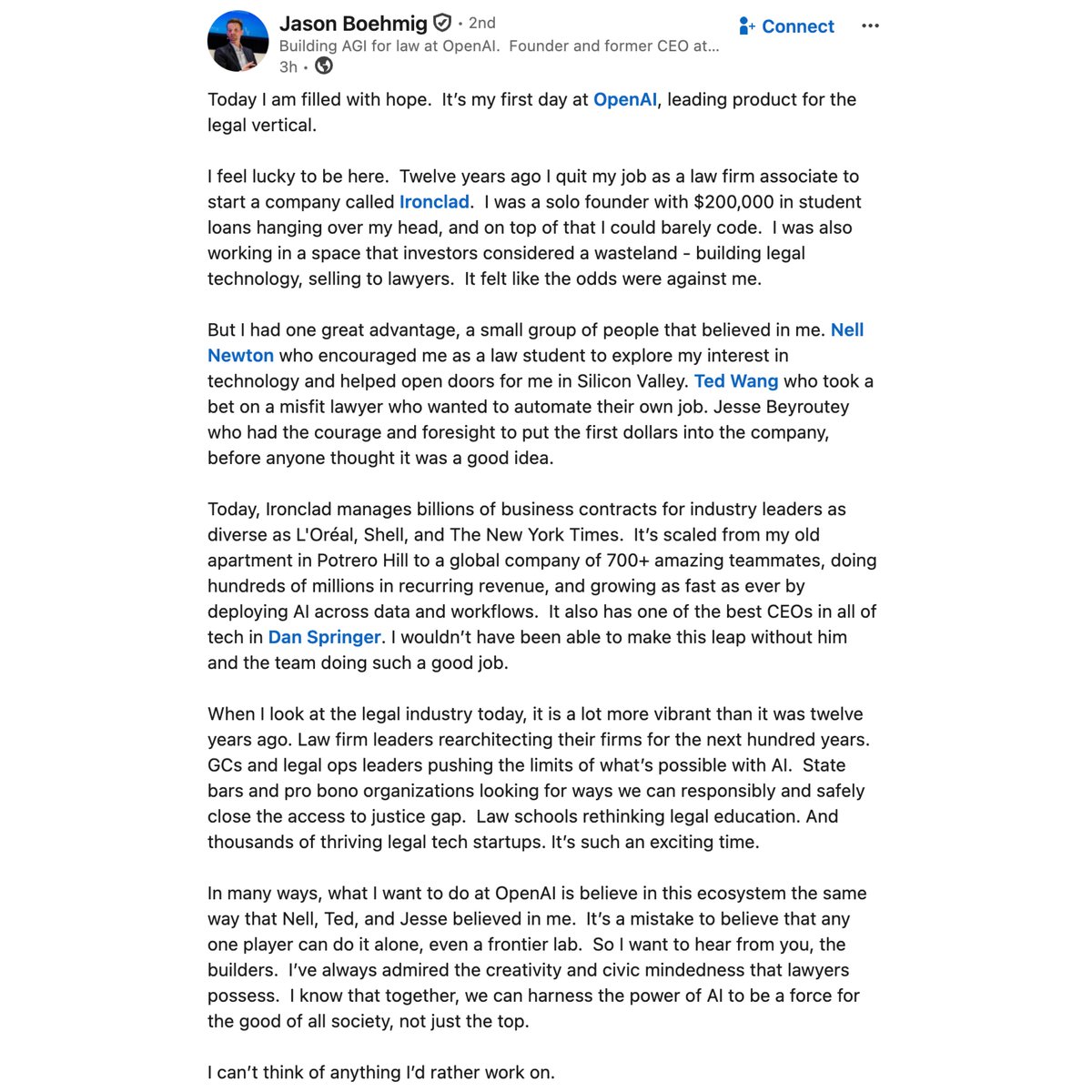
OpenAI just hired Ironclad’s cofounder & former CEO to run legal products.
Frontier labs building at the app layer continues 👀
6
7
156
22,141
Semil retweeted

Jun 2
Today @boardisfun is thrilled to announce our $20M Series A, led by @usv. USV’s newest partner, @mignano, will be joining our board, and we could not be more excited.
Joining USV in this round is an amazing group of new investors: @haystackvc, @biz, @elanlee, @eshp, @JesseDorogusker, @kayvz, @scottbelsky, and @tferriss. In addition to our incredible existing investors; @adjacent, @patronfund, @LererHippeau, @BoxGroup, @svangel, @firstround, @kevintwohy, @nabeel, @jduyan, IRL Ventures, @MetrodoraVC, @coalitionvc, and @twelve_below.
24
13
188
141,449
power of 1st party data in AI ads

I just watched the @HausAnalytics Marketing OS webinar. It was excellent.
First - the aggregate data they provided is useful and specific. See below.
Second - I am convinced now Haus is really well positioned to be that AI learning layer for a lot of ad teams. Their new product Architect reminds me of @jasonlk 's AI CMO, with how it learns and improves over time, but with a really powerful data architecture built around incrementality.
1
3
5
4,226
Semil retweeted

May 21
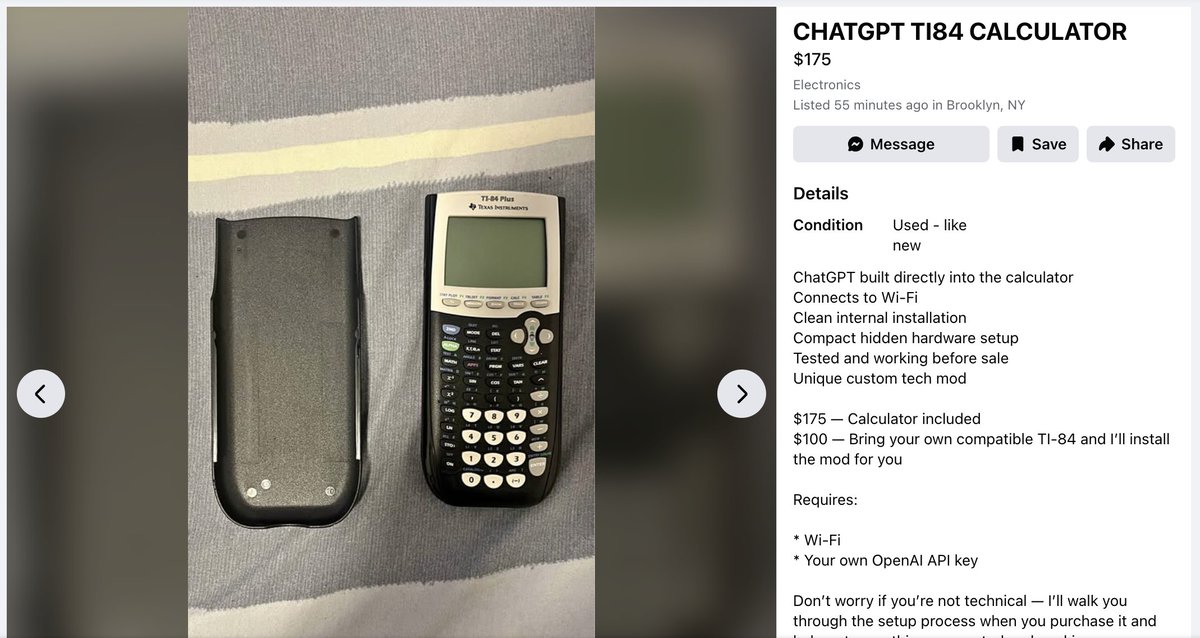
legendary pull on facebook marketplace
151
514
23,662
2,926,294