Arts/ Travel Journalist & your PR man for arts events in East Africa. Curator - African Movie Night Kampala. WhatsApp: 256751094719
Joined March 2009
- Tweets 93,192
- Following 5,152
- Followers 17,887
- Likes 34,471
2,911 Photos and videos
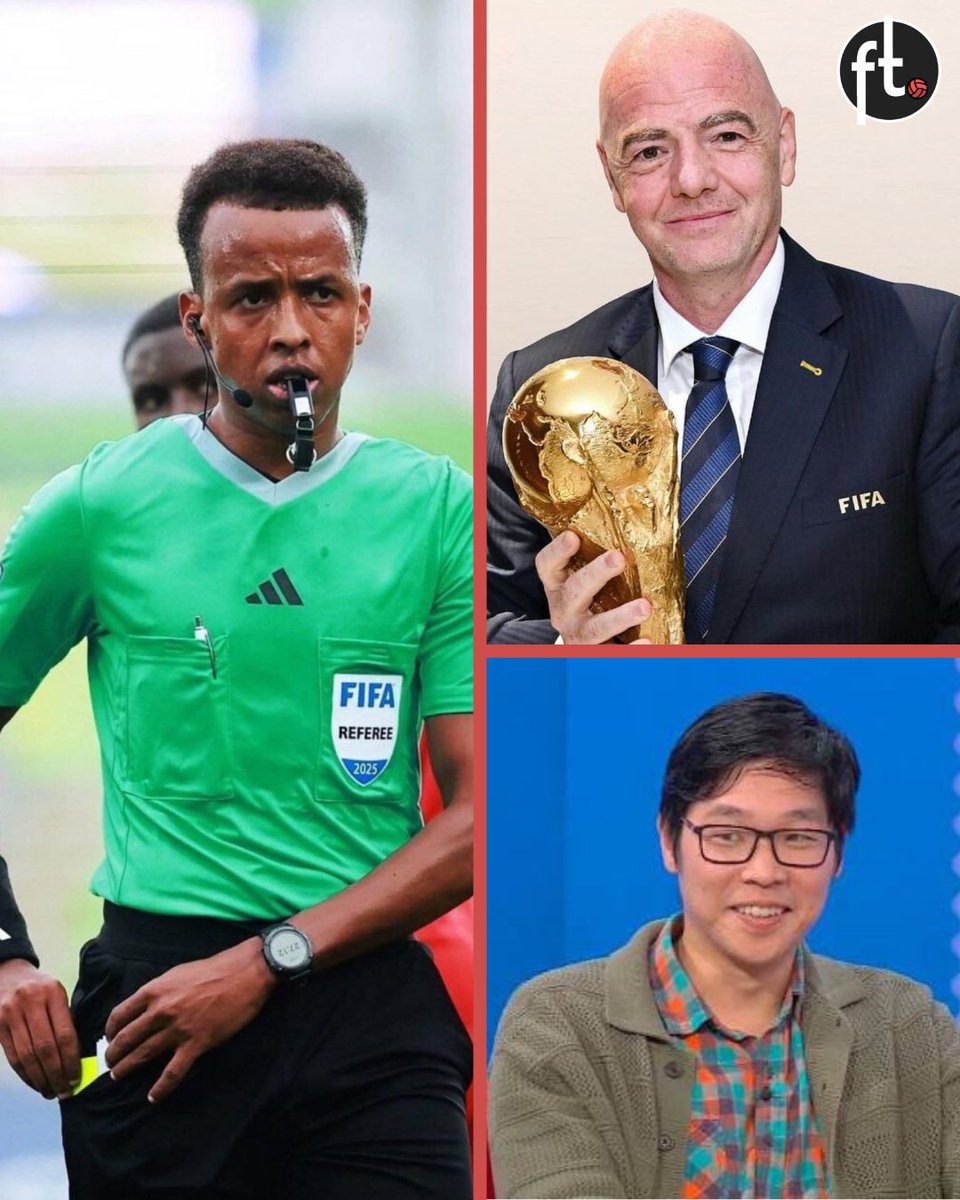
Uncle Sam's Clown Show 🤡⚽️

🚨 The criticism surrounding FIFA, Gianni Infantino and the organisation of this World Cup continues to grow.
Writing for The Guardian, award-winning columnist Jonathan Liew delivered a scathing assessment of FIFA's president following a series of controversies, including the situation involving referee Omar Artan.
🗣️ Liew: "Given his own self-image as a kind of messianic pan-global statesman, there is a certain irony in the fact that this summer will cement his legacy as one of sport’s greatest cowards: a weak and petty man who lost control of his own tournament. A man who quivered in the face of genuine conviction. A man who had the world’s most powerful cultural force in his hands, and ended up giving it away."
41
Moses Serugo retweeted

🚨 The criticism surrounding FIFA, Gianni Infantino and the organisation of this World Cup continues to grow.
Writing for The Guardian, award-winning columnist Jonathan Liew delivered a scathing assessment of FIFA's president following a series of controversies, including the situation involving referee Omar Artan.
🗣️ Liew: "Given his own self-image as a kind of messianic pan-global statesman, there is a certain irony in the fact that this summer will cement his legacy as one of sport’s greatest cowards: a weak and petty man who lost control of his own tournament. A man who quivered in the face of genuine conviction. A man who had the world’s most powerful cultural force in his hands, and ended up giving it away."
74
832
2,559
59,336
He he he he...

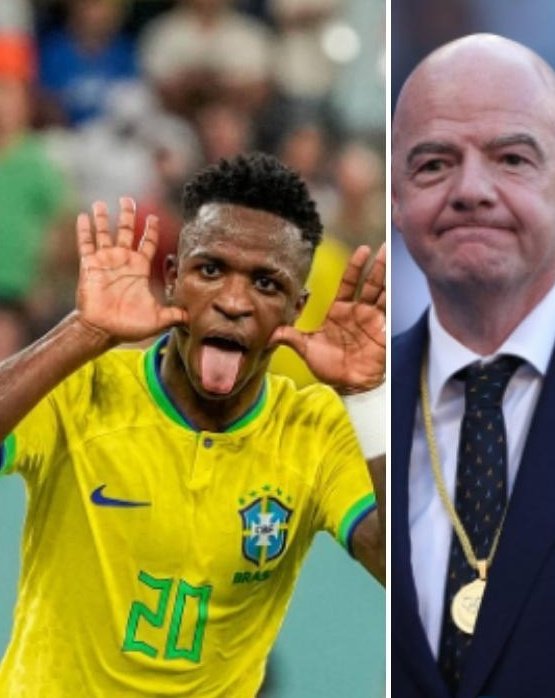
🚨 VINI JR JUST TOLD FIFA: “WE’LL PAY THE FINE — BUT NOBODY FROM US IS DOING HALF-TIME INTERVIEWS.”
During Brazil’s World Cup match, Vinícius refused the mandatory tunnel interview.
Reporter: “You’ll get a huge fine for this.”
Vini: “We’ll pay. But nobody is coming to the mic.”
This isn’t arrogance. It’s players finally saying enough to FIFA’s corporate circus.
Half-time should be for tactics, water, recovery — not feeding the broadcast machine while the game gets sliced up for ads (sound familiar with those forced “welfare” breaks?).
FIFA under Infantino has turned football into a product. Mandatory everything. Player focus as an afterthought. Suits in Zurich cashing in.
Brazil and Vini just pushed back. Raw. Direct. No bowing to the machine.
The beautiful game belongs to the players on the pitch — not boardrooms selling every second.
Who else is done with this?
67
Moses Serugo retweeted

🚨 VINI JR JUST TOLD FIFA: “WE’LL PAY THE FINE — BUT NOBODY FROM US IS DOING HALF-TIME INTERVIEWS.”
During Brazil’s World Cup match, Vinícius refused the mandatory tunnel interview.
Reporter: “You’ll get a huge fine for this.”
Vini: “We’ll pay. But nobody is coming to the mic.”
This isn’t arrogance. It’s players finally saying enough to FIFA’s corporate circus.
Half-time should be for tactics, water, recovery — not feeding the broadcast machine while the game gets sliced up for ads (sound familiar with those forced “welfare” breaks?).
FIFA under Infantino has turned football into a product. Mandatory everything. Player focus as an afterthought. Suits in Zurich cashing in.
Brazil and Vini just pushed back. Raw. Direct. No bowing to the machine.
The beautiful game belongs to the players on the pitch — not boardrooms selling every second.
Who else is done with this?
297
2,598
12,568
693,997
He he he he...

FIFA PAYS THE PRICE FOR BEING EUROCENTRIC
For decades, FIFA has treated western European television audiences as the centre of the football universe, scheduling kick-off times to suit the region’s prime time. But as the 2026 World Cup begins, FIFA is paying the price for its Eurocentric strategy.
With the tournament hosted in North America, matches will have terrible midnight and early morning viewing slots for Asia, ensuring that fans will have to stay up late at night to watch. And the financial fallout for FIFA is quite staggering.
It demanded a $300-million broadcast deal in China, but instead faced a commercial revolt. In the end, it was forced into a last-minute panic agreement with China Media Group for a mere $60 million—an 80% price cut.
In India, the world’s most populous nation, FIFA aimed for a $100-million deal but has been hit with a total stalemate. Knowing ad revenue will plunge for late night games, JioStar offered a mere $20 million, while Sony sat out the bidding process altogether. With only weeks left, tens of millions of Indian fans were facing a total blackout.
FIFA was then forced to swallow its pride and accept a fraction of what it asked for. Football’s governing body struck a last-minute deal with Zee Entertainment worth an estimated $40 million - a figure representing only 40% of their initial asking price.
Thus, FIFA is literally paying a hefty price for its continued Eurocentrism.
15
Moses Serugo retweeted

FIFA PAYS THE PRICE FOR BEING EUROCENTRIC
For decades, FIFA has treated western European television audiences as the centre of the football universe, scheduling kick-off times to suit the region’s prime time. But as the 2026 World Cup begins, FIFA is paying the price for its Eurocentric strategy.
With the tournament hosted in North America, matches will have terrible midnight and early morning viewing slots for Asia, ensuring that fans will have to stay up late at night to watch. And the financial fallout for FIFA is quite staggering.
It demanded a $300-million broadcast deal in China, but instead faced a commercial revolt. In the end, it was forced into a last-minute panic agreement with China Media Group for a mere $60 million—an 80% price cut.
In India, the world’s most populous nation, FIFA aimed for a $100-million deal but has been hit with a total stalemate. Knowing ad revenue will plunge for late night games, JioStar offered a mere $20 million, while Sony sat out the bidding process altogether. With only weeks left, tens of millions of Indian fans were facing a total blackout.
FIFA was then forced to swallow its pride and accept a fraction of what it asked for. Football’s governing body struck a last-minute deal with Zee Entertainment worth an estimated $40 million - a figure representing only 40% of their initial asking price.
Thus, FIFA is literally paying a hefty price for its continued Eurocentrism.
2
34
66
2,162
😇

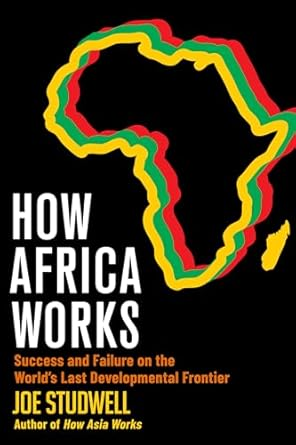
1/2 I don't have time to post properly about it yet, but Studwell's new book should be read by everyone interested in development & politics here in Oceania. His close study of the successes of Botswana, Mauritius, & Ethiopia are full of lessons & warnings for our region.
20
RT @SikotiHamiltonR: 1/2 I don't have time to post properly about it yet, but Studwell's new book should be read by everyone interested in…
3
😇
Jun 13

It’s a Trumpian World Cup for racism — why don’t those who condemned Qatar 2022 say so?
My piece for The Guardian on the blatant hypocrisy and double standards on full display. theguardian.com/commentisfre…
43
Moses Serugo retweeted

Jun 13
It’s a Trumpian World Cup for racism — why don’t those who condemned Qatar 2022 say so?
My piece for The Guardian on the blatant hypocrisy and double standards on full display. theguardian.com/commentisfre…
307
1,779
4,921
161,695

This 108 square metre library in Kochargaon village, India was built on the plinth of a collapsed building by an NGO called Round Table because a survey revealed the village had no reading or learning facilities and it was showing in the literacy rates.
The architects, pk_iNCEPTiON, designed it to serve every age group, with a library, reading area, study rooms and a multipurpose learning space, all sitting one metre below road level and visually connected to the village’s main temple pavilion so the building naturally draws people in from the street.
Studies across South Africa, India and Bangladesh show that children with access to a dedicated reading space demonstrate measurable gains in literacy, reading confidence and voluntary learning habits. The problem is not that children do not want to read. It is that most rural communities have nowhere to do it.
Across rural Africa, the picture is worse. Schools exist in many communities but the surrounding ecosystem of libraries, reading corners and quiet study spaces is almost entirely absent, which means a child who finishes school has nowhere to continue growing intellectually and no environment that signals that learning is worth doing beyond the exam.
A library does not have to be expensive or large. This one is 108 square metres built on salvaged ground. The decision to build it is what matters.
Location: Kochargaon Village, India
Architects: pk_iNCEPTiON, Lead Architect Pooja Khairnar, 2024
Photography: Pranit Bora




3
16
37
1,364

Jun 13
😱
Jun 13

Japan is facing a growing loneliness crisis. From elderly residents living alone to younger generations struggling with social disconnection, loneliness is becoming a major social challenge.
Al Jazeera’s Patrick Fok reports.
53
Moses Serugo retweeted

Jun 13
Japan is facing a growing loneliness crisis. From elderly residents living alone to younger generations struggling with social disconnection, loneliness is becoming a major social challenge.
Al Jazeera’s Patrick Fok reports.
181
1,619
4,658
356,645
Jun 13
😱
Jun 13

Uganda President Museveni talks a lot about how Science is king and the magic that will save Uganda, and Arts and Social Sciences are “useless” and shouldn’t get state funding. Then the kids study Medical Sciences and when they ask for small change to begin putting the science into practice, they are told no money, and those who protest are hammered or jailed. Meanwhile a “useless” arts and social sciences institution like Parliament (we won’t mention State House) get many times more money - in the billions - just to buy second-rate tea, mandanzi, and cakes for MPs. What are we not getting? Did Parliament and State House become vaunted academies of sciences and we missed the memo?
49
Moses Serugo retweeted

Jun 13
Uganda President Museveni talks a lot about how Science is king and the magic that will save Uganda, and Arts and Social Sciences are “useless” and shouldn’t get state funding. Then the kids study Medical Sciences and when they ask for small change to begin putting the science into practice, they are told no money, and those who protest are hammered or jailed. Meanwhile a “useless” arts and social sciences institution like Parliament (we won’t mention State House) get many times more money - in the billions - just to buy second-rate tea, mandanzi, and cakes for MPs. What are we not getting? Did Parliament and State House become vaunted academies of sciences and we missed the memo?

There is no 28billion to pay intern doctors in the budget Museveni is presenting today, no 8billion for UNEB to train teachers on how to mark new syllabus, no 3.5billion to complete new syllabus but there is 211billion for welfare and entertainment for big people, 536 billion for special meals and drinks for big people, 196 billion for big people to donate, 17 billion for firewood, gas and charcoal and 2.6 trillion for classified expenditure!
21
120
306
23,411
Jun 13
😇
Jun 12

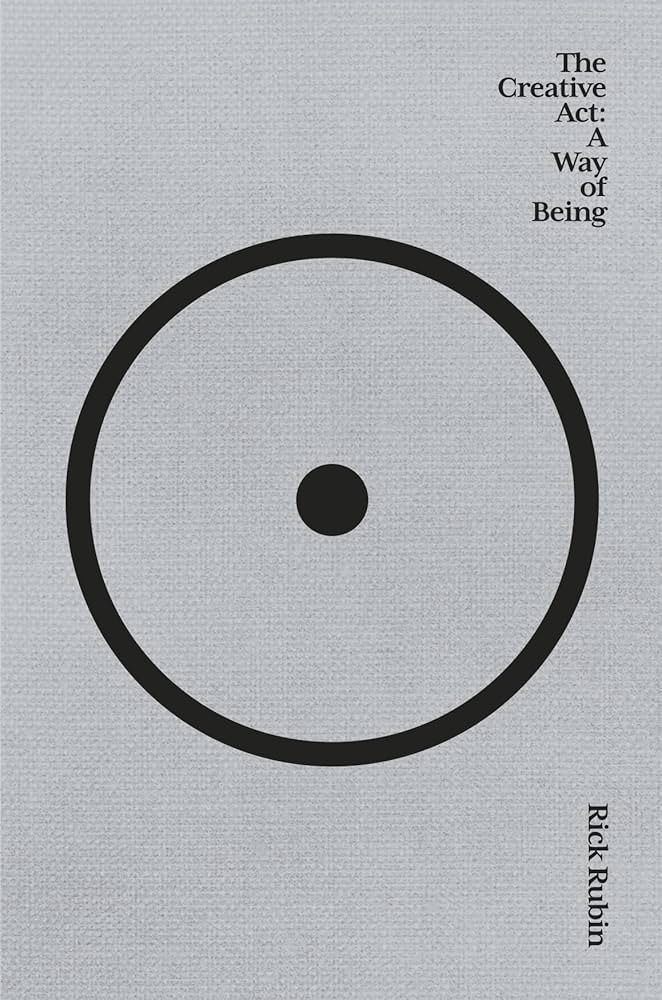
10 books to master 10 skills:
1) Creativity
The Creative Act by Rick Rubin
22
Moses Serugo retweeted

Jun 12
10 books to master 10 skills:
1) Creativity
The Creative Act by Rick Rubin
5
86
469
32,950
Jun 13
😇
Jun 12

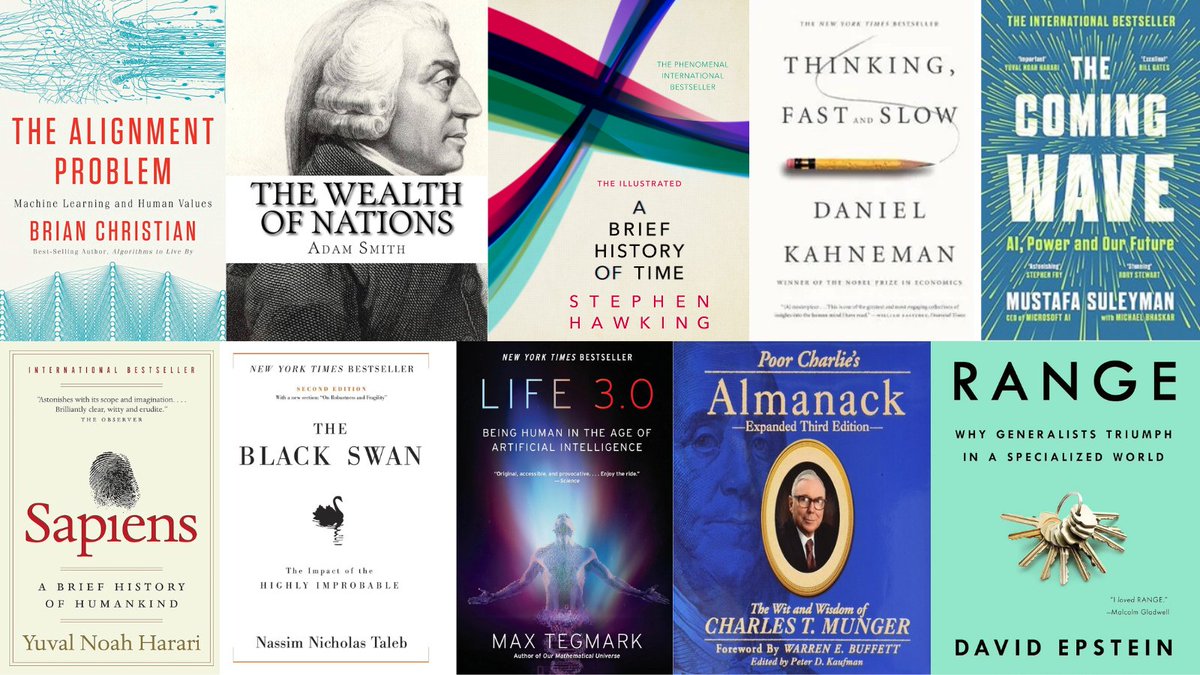
10 books I read in the past 5 months that changed how I think about AI, money, science, and the world.
1. The Alignment Problem - Brian Christian
(recommended by Sam Altman)
The clearest explanation of why building AI that actually does what we want is the hardest problem in computer science. Not sci-fi. Real labs. Real failures. Right now.
2. The Wealth of Nations - Adam Smith
(recommended by Charlie Munger)
Written in 1776. Still the most honest explanation of how economies actually move. Every AI founder building a business needs the mental model in chapter one before anything else.
3. A Brief History of Time - Stephen Hawking
(recommended by Elon Musk)
Most people own it. Almost nobody finishes it. The chapter on the arrow of time broke my brain in the best way. Read it slowly.
4. Thinking, Fast and Slow - Daniel Kahneman
(recommended by Barack Obama)
Your brain runs two systems. One is fast and wrong most of the time. One is slow and almost never used. This book is the manual for the one you keep ignoring.
5. The Coming Wave - Mustafa Suleyman
(recommended by Bill Gates)
The co-founder of DeepMind explains what happens when AI and synthetic biology arrive at the same time. Not a warning. A map. Read it before everyone else does.
6. Sapiens - Yuval Noah Harari
(recommended by Mark Zuckerberg)
One book that explains the entire last 70,000 years of human history in 400 pages. The chapter on money is the one that stays with you.
7. The Black Swan - Nassim Taleb
(recommended by Daniel Kahneman)
The events that shape your life are the ones nobody saw coming. This book teaches you to stop predicting and start preparing for what you cannot predict.
8. Life 3.0 - Max Tegmark
(recommended by Demis Hassabis)
An MIT physicist asks what happens to humanity after AGI. Not emotionally. Rigorously. Every scenario is laid out like a physics problem. Uncomfortable in all the right ways.
9. Poor Charlie's Almanack - Charlie Munger
(recommended by Warren Buffett)
100 mental models from one of the sharpest minds of the 20th century. You will use at least 20 of these every week for the rest of your life.
10. Range - David Epstein
(recommended by Malcolm Gladwell)
Gladwell built his career on the 10,000 hour rule. Then this book changed his mind. The case for being a generalist in a world that keeps telling you to specialize. Read it if you have ever felt behind.
Save this. Read the books I shared here. Your future self will thank you.
15
Moses Serugo retweeted

Jun 12
10 books I read in the past 5 months that changed how I think about AI, money, science, and the world.
1. The Alignment Problem - Brian Christian
(recommended by Sam Altman)
The clearest explanation of why building AI that actually does what we want is the hardest problem in computer science. Not sci-fi. Real labs. Real failures. Right now.
2. The Wealth of Nations - Adam Smith
(recommended by Charlie Munger)
Written in 1776. Still the most honest explanation of how economies actually move. Every AI founder building a business needs the mental model in chapter one before anything else.
3. A Brief History of Time - Stephen Hawking
(recommended by Elon Musk)
Most people own it. Almost nobody finishes it. The chapter on the arrow of time broke my brain in the best way. Read it slowly.
4. Thinking, Fast and Slow - Daniel Kahneman
(recommended by Barack Obama)
Your brain runs two systems. One is fast and wrong most of the time. One is slow and almost never used. This book is the manual for the one you keep ignoring.
5. The Coming Wave - Mustafa Suleyman
(recommended by Bill Gates)
The co-founder of DeepMind explains what happens when AI and synthetic biology arrive at the same time. Not a warning. A map. Read it before everyone else does.
6. Sapiens - Yuval Noah Harari
(recommended by Mark Zuckerberg)
One book that explains the entire last 70,000 years of human history in 400 pages. The chapter on money is the one that stays with you.
7. The Black Swan - Nassim Taleb
(recommended by Daniel Kahneman)
The events that shape your life are the ones nobody saw coming. This book teaches you to stop predicting and start preparing for what you cannot predict.
8. Life 3.0 - Max Tegmark
(recommended by Demis Hassabis)
An MIT physicist asks what happens to humanity after AGI. Not emotionally. Rigorously. Every scenario is laid out like a physics problem. Uncomfortable in all the right ways.
9. Poor Charlie's Almanack - Charlie Munger
(recommended by Warren Buffett)
100 mental models from one of the sharpest minds of the 20th century. You will use at least 20 of these every week for the rest of your life.
10. Range - David Epstein
(recommended by Malcolm Gladwell)
Gladwell built his career on the 10,000 hour rule. Then this book changed his mind. The case for being a generalist in a world that keeps telling you to specialize. Read it if you have ever felt behind.
Save this. Read the books I shared here. Your future self will thank you.
10
67
277
10,777
Jun 13
😇
Jun 12
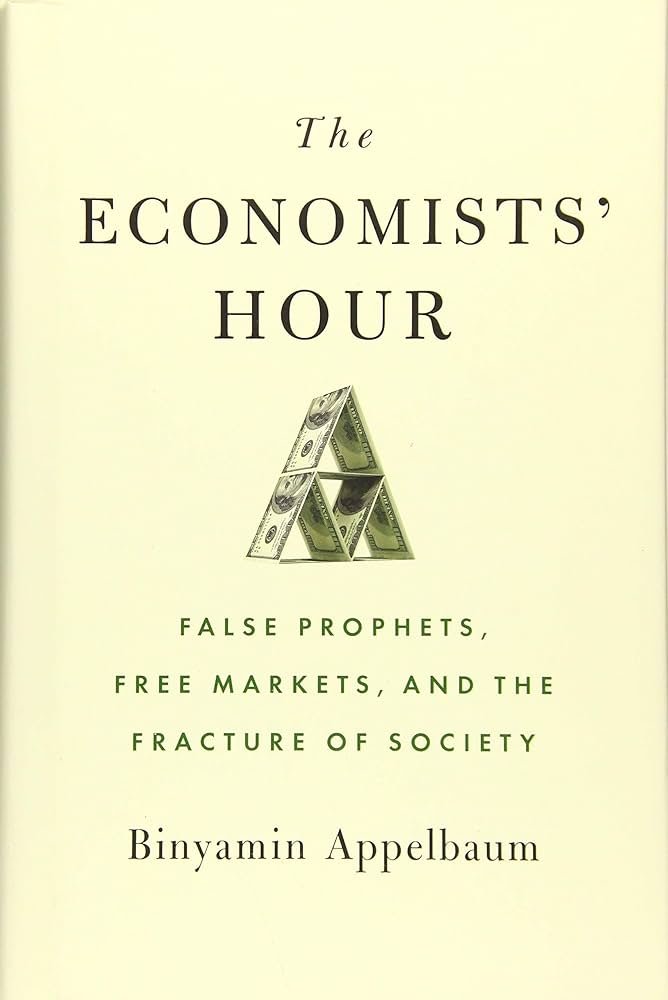
10 books to fall in love with economics:
1) The Economist's Hour by Binyamin Appelbaum
14