
Changing how society cares for older adults @Honor @HomeInstead. 60M hours of care annually. Backed by @a16z @ThriveCapital. Built & sold Meebo to @Google.
Joined March 2007
- Tweets 460
- Following 379
- Followers 6,877
- Likes 2,572
155 Photos and videos











May 28
One of the most interesting ideas from my conversation with @mcuban:
If you want to change a broken industry dominated by monopolies and oligopolies, you usually can’t attack it head on.
You have to build outside the system first.
1
231
May 28
This resonated deeply with me because we’ve thought about @honor in very similar terms.
Healthcare is full of deeply entrenched systems. The hard part is figuring out how to create something better without getting crushed by the existing asteroid field.
1
86
2 May 2025
Back in 2008, Garrett Camp and I were walking on the Washington Mall, and he was telling me about this little startup idea he had: "UberCab"
The problem was simple—getting a taxi in SF was extremely hard at the time.
They called him crazy.
People laughed at Brian (AirBnB) for competing with hotels.
Oops.
The few remaining industries that haven't yet been transformed by technology are about to have their moment. And the legacy players in those industries who like to say "but OUR industry is too human and immune to technology" are about to either adapt, or be replaced.
Why?
Because AI does heterogeneity and personalization better than humans do. And it does it better than any human ever could at scale - it uses that scale to its advantage.
What are some examples?
Well, obviously Honor's industry - home care. But let's talk about a few others...
1. Homeowners Association Management
This market is incredibly fragmented, with thousands of individual associations. Companies like Anyhoa use AI to automatically manage documents and predict maintenance needs before they become problems.
2. Bookkeeping & Local Accounting
Small business accounting remains stuck in manual processes with labor-intensive data entry. AI tools now transfer data from invoices to software, categorize transactions, and generate real-time financial insights.
3. Auto Collision Repair
This industry operates on thin margins with variable quality across thousands of independent shops. Companies like Caliber use AI diagnostics to assess damage, streamline estimates, and provide real-time updates to customers.
4. Parking Lot Operations
Parking facilities represent massive investments that operate with minimal technology. AI systems use real-time data to optimize parking spaces, automate payment, and enhance security.
5. General Contracting
Construction has been notoriously slow to adopt new technologies. However, McKinsey estimates AI could boost construction productivity by up to 20% through better planning and resource management.
Generative AI alone could add 3.5% productivity growth to the US economy by 2032. That's roughly $1 trillion yearly in economic value.
The trillion-dollar question isn't if these industries will transform, but who will lead that transformation.
Embrace AI or risk being absorbed.
If you're operating in one of these industries, how are you becoming AI native?
2
7
37
21,415
28 Apr 2025
We're running out of beds in America.
10,000 people are turning 65 every single day:
Our senior care system is already collapsing under the pressure.
Here's why experts are calling it the “Silver Tsunami”:
There are 56 million Americans over 65 right now…that same demographic is projected to jump to 82 million by 2050.
As a result, 53 million Americans are already serving as unpaid caregivers.
This isn’t a distant threat—it’s happening as we speak.
Seniors are already struggling to find caregivers. Families (especially daughters) are quitting their jobs to provide the care that’s unavailable or unaffordable elsewhere.
Senior living communities are already running at ≈ 95 % occupancy. Even if we added ~3,000 new nursing homes, demand would still outstrip supply. Space in senior-living communities and hospitals simply can’t and won't scale fast enough.
Long-term-care supply tops out at ≈2.8 million beds (1.6 M in nursing homes 1.2M in residential-care/assisted-living)—enough for ~ 4 % of today’s seniors.
And no surprise - today about 4% of the senior population lives in some form of senior living.
That means 96% of older adults are aging at home - 96%!
That percentage won't go down - but the absolute number will skyrocket.
And the problem is just as acute in healthcare... adults 65 and older account for about 40% of all hospital stays even though they're 17% of the population. US hospital beds average 65-70% occupancy right now. You can see where this is going...
Care has to move where people already are: at home.
At Honor, we’re building a tech-enabled approach to help older adults stay in their own homes by:
• Coordinating care schedules in real-time
• Matching seniors and Care Professionals at scale
• Giving families better visibility into day-to-day care
We started using AI back in 2016, long before it was in the headlines, to tackle these exact challenges.
When millions of Americans need help simultaneously, we need solutions that can scale just as fast.
How are you preparing for the “Silver Tsunami” and the future of aging in America?
5
12
40
25,706
25 Apr 2025
Founders and VCs fall into the same growth trap year after year:
A startup launches in a niche market.
Early traction looks great, everyone’s cheering, and capital chases the curve.
Then the curve flattens—because the total addressable market (TAM) is already tapped out. Growth stalls, morale tanks, and the company fades.
"The walking dead".
However, the truth is, the growth treadmill never stops.
If you raise venture money, you’re stepping on a treadmill that can’t slow down:
• $10M in revenue this year? Next year has to be $20M.
• $100M this year? Next year needs to be $150M.
• Hit $1B? Now shoot for $1.2B—minimum.
That pace only works when your market is huge and continues to expand. Otherwise, momentum dies the moment you hit the ceiling.
Take a certain company that raised $15M to build a...precision tea infuser. The early signs were great:
• Design awards
• Media buzz
• 500K servings brewed across 20 countries
But most casual tea drinkers didn’t want a $999 machine, and true tea lovers preferred hand-brewing. The TAM was tiny. Growth flat-lined, and the company shut down in 2017, not because the product was bad, but because the ceiling was low.
Whether you’re building the company or investing in it, the growth trap looks the same: early numbers sparkle, emotions spike, and rational TAM math goes quiet. Here’s how to keep your footing on either side of the table:
Founders:
• Decide upfront: is it a lifestyle business (great!) or venture-scale machine?
• If it's venture-scale, remember revenue must compound aggressively every single year.
• Validate the ceiling, not just initial demand.
VCs:
• Don’t get hypnotised by the first uptick.
• Pressure-test the TAM and the speed at which it caps out.
In other words - if you concentrate on building a company that can truly have world impact - you'll escape the gravity of the growth trap. But incremental ideas simply will not. It's what people call "a feature not a product".
Early traction is proof you’ve built something people want. It is NOT proof there’s enough headroom to keep doubling.
If the honest answer to “Can this keep compounding?” is no, then change the plan—or the funding model—before the treadmill throws you off.
9
9
32
21,424
22 Apr 2025
The fast food industry is facing its biggest transformation in over 20 years.
First, they scaled through kitchen management systems.
But now Papa Johns just joined the $1B AI revolution through a major Google Cloud partnership.
Their goal?
To read your mind—and know what pizza you want before you do.
The last time we saw a shift this big was in 2001, when Papa Johns pioneered online ordering for all U.S. customers.
But since then, they’ve fallen behind technologically—something their own CEO has acknowledged.
Now they’re aiming to leapfrog the competition by making every interaction smarter and more personalized.
Imagine this:
• Getting pizza recommendations based on your past orders
• A chatbot that actually understands your cravings
• Notifications that hit exactly when you’re hungry
This isn’t sci-fi—it’s already happening.
They’ve even formed “PJX,” an innovation team blending Papa Johns and Google Cloud talent.
And it’s not just in the customer-facing tech:
• Automated inventory management
• AI-optimized delivery routes
• Faster, smarter workflows
And Papa Johns aren't alone:
• Taco Bell has invested $1B in digital tech
• McDonald’s also partnered with Google Cloud
• Chipotle launched a $100M venture fund for automation
For years, many service-based organizations have struggled to keep pace with new tech—whether it’s a big restaurant brand or a home care provider.
But in 2025, AI is flipping the script in every corner of the service industry, creating:
✅ Better customer experiences
✅ New roles and responsibilities for workers
✅ Huge efficiency gains for businesses
✅ Pressure on competitors to catch up
At Honor / Home Instead, we too are using AI in older adult care to:
• Improve scheduling so Care Pros and clients line up seamlessly.
• Give care teams the right context to serve seniors better and faster.
• Predict care needs for clients based on real-time data, not guesswork.
AI is a wave you can’t ignore. Innovation isn’t optional anymore.
It’s the difference between thriving and surviving.
How are you preparing for the AI wave in your industry?
5
12
35
30,589
18 Apr 2025
The caregiving shortage will be solved.
By using AI to make humans into superhumans…
It’s being solved with AI, eliminating the administrative nightmare that steals caregivers' time. Because the math on caregiving is brutal right now:
• 53 million Americans provide unpaid care
• That labor is valued at $873.5B annually
• But they lose $522B in income from reduced hours or leaving jobs altogether
All the while, professional caregivers spend too much time on paperwork and other administrative tasks.
This is why I care so deeply about fixing this system. It’s broken. And millions of families are paying the price. Here’s what most people don’t realize:
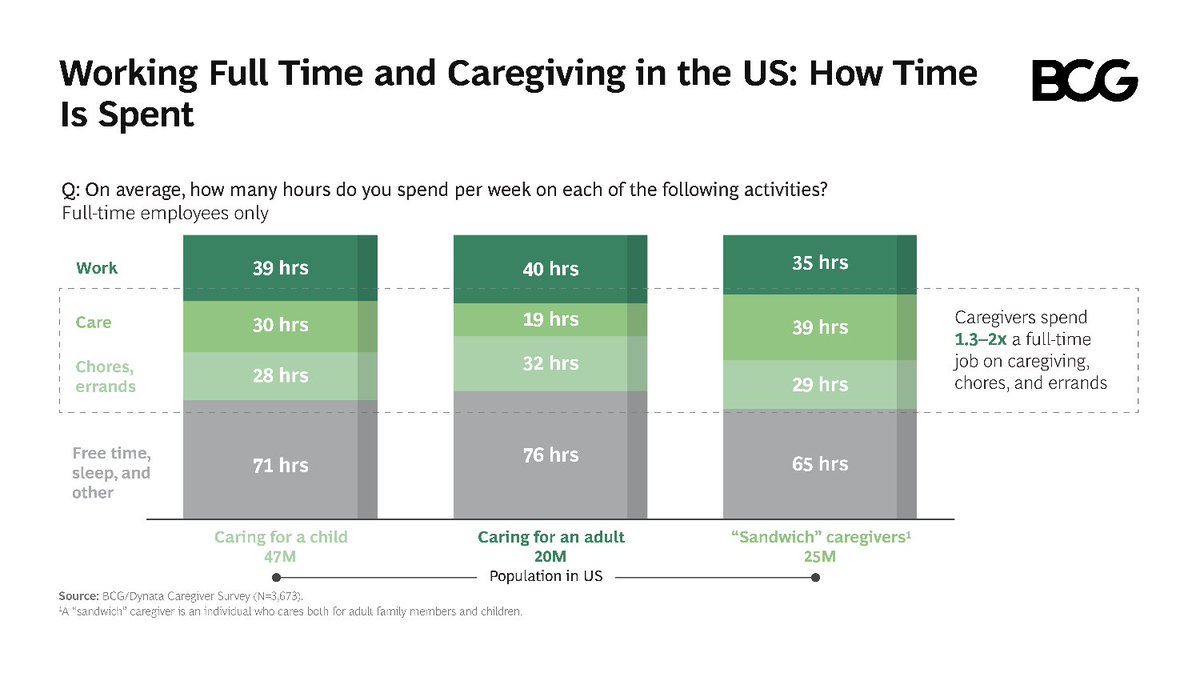
🕒 Family caregivers spend 24.4 hours/week on caregiving
🕒 Nearly 1 in 4 spend 41 hours/week
🕒 And a lot of that time is spent on admin work, not care
That includes:
• 13 hours/month just coordinating appointments
• Endless documentation, scheduling, medication management...
👉 That’s where AI changes the game.
At Honor/Home Instead, we're using AI to solve these exact problems because we've seen firsthand where the system breaks down.
Here’s what we’ve built:
✅ Billing automation to reduce errors and improve speed
✅ AI documentation tools saving caregivers precious time
✅ Smart scheduling to build schedules instantly
This isn’t just about efficiency. It’s about dignity.
Every hour we give back to a caregiver is an hour they can spend connecting with someone who needs them. So no, the crisis isn’t just a worker shortage.
The future is using AI to make caregivers superhuman—by letting them be fully human and eliminating the written, tedious, time-consuming tasks.
What would caregiving look like if we designed the system around people, not paperwork?
4
10
31
25,961
14 Apr 2025
Most hourly workers would take a 20% pay cut for one thing:
A predictable schedule.
Studies from Princeton and Harvard show that workers value stable scheduling so much that they’re willing to trade a fifth of their pay to avoid last-minute shift changes.
This is the scheduling crisis no one’s talking about.
Nearly 1 in 5 U.S. workers face unstable hours—especially in retail, food service, and healthcare. This is a big deal in Honor's neck of the woods—home care.
One of the earliest problems we identified that needs to be fixed is how to create stable schedules.
And the massive fragmentation of our industry, and many other hourly work industries, is a big part of the problem. It hits part-time workers, women, and people of color the hardest.
The cost?
• Income swings up to 33% week to week
• Mental health strain (1 in 3 workers)
• Kids missing 6 more days of supervision a year
It’s bad for workers and bad for business.
When Gap Inc. tried predictable scheduling:
→ Productivity rose 5.1%
→ Absenteeism dropped
→ Retention improved
The myth: workers just want higher pay.
The reality: they want stable pay—which comes from stable hours.
Stable pay brings higher TAKE-HOME pay.
You see, that's the thing. It's about take-home pay, not hourly rate. And it's about knowing that it'll be there next week, too, and that you'll still be able to afford that lunch or toy for your daughter.
So how do you scale that? AI.
At Honor, we’ve used machine learning since 2016 to drive predictable schedules and consistent hours for each Care Pro that wants them.
The impact:
✅ Higher retention
✅ Better care
✅ Happier families
This isn’t just a tech fix. It’s a lifestyle fix. It's a better job.
Predictable schedules = better lives.
And better lives = better care.
I'm curious—have you seen this in your industry, too? How did you address this critical challenge?
2
10
43
35,965
5 Apr 2025
Tariffs don’t just affect imports—they affect people.
For older adults, even small cost increases can have a big impact. Many are on fixed incomes, and the value of their assets just declined. Look at the stock market.
14
5
17
9,344
5 Apr 2025
And they’re often managing health conditions, and stretching every dollar. When prices rise on necessities like groceries, medications, or medical equipment, there’s no alternative. This population can’t wait for a self-inflicted wound to heal.
2
1
1
250
5 Apr 2025
Let’s not leave older adults out of the conversation. They matter. They have unique needs. They’re uniquely vulnerable to tariffs, and they VOTE.
Speak up. Share this.
1
1
1
233
4 Apr 2025
In-home care is the key to independent aging.
But we’re not ready.
The US is already short millions of caregivers, and demand is skyrocketing.
If we don’t rethink how we attract, train, and support caregivers, the system will collapse.
2
248
3 Apr 2025
People are living longer, but are they living better?
Our lifespan has increased, but healthspan hasn’t kept up.
We need more, better, years.
That means better care, stronger communities, and more innovation.
1
229
2 Apr 2025
Loneliness is more than just a bad feeling—it’s a public health crisis.
It makes cancer deadlier, weakens the immune system, and speeds up Alzheimer’s.
Chronic loneliness is as deadly as smoking a pack of cigarettes a day.
We must stop ignoring it.
2
256
2 Apr 2025
Modern society has got aging completely backwards.
While we fear getting old, ancient cultures celebrated it.
What they knew about human potential will revolutionize how you see aging.
Here's the full breakdown: 🧵
6
8
29
22,367
2 Apr 2025
For the past 10 years, we've been building the largest in-home senior care network in the Western Hemisphere.
60 million hours of care delivered annually.
Because we believe aging shouldn't mean losing independence.
Here's what we've learned:
1
81
2 Apr 2025
We're revolutionizing how society cares for older adults.
Not just through care delivery, but through technology that makes aging easier, safer, and more dignified.
Because everyone deserves to age with grace.
Ready to learn more?
74