
Co-founder @Offchain contributing to @arbitrum. Postdoc @cornell_tech/@initc3org. PhD @PrincetonCS.
Joined October 2012
- Tweets 5,250
- Following 951
- Followers 37,288
- Likes 8,545
201 Photos and videos





Steven Goldfeder retweeted

Jun 11
I used to work quite a bit with one of these super degen ad markets platforms when they were hot in the 2010s...I always thought it would be better onchain. Looks like LG/arbitrum will be tackling this, very cool.

LG Electronics is building with Arbitrum.
LG's blockchain team, part of the company's R&D division, is piloting an onchain advertising network on Arbitrum.
The full story, including @sgoldfed's conversation with
@FortuneMagazine:
fortune.com/2026/06/11/lg-el…

4
6
49
6,251
Steven Goldfeder retweeted

Jun 12
11
3
57
4,158
Steven Goldfeder retweeted

Jun 11
ANOTHER ONE: LG is the latest publicly listed enterprise to launch their blockchain with @arbitrum.

1
5
37
1,450

LG Electronics is building with Arbitrum.
LG's blockchain team, part of the company's R&D division, is piloting an onchain advertising network on Arbitrum.
The full story, including @sgoldfed's conversation with
@FortuneMagazine:
fortune.com/2026/06/11/lg-el…
79
95
627
402,675

Jun 11
JUST IN: LG is looking to revolutionize the advertising industry, and they’re building it on Arbitrum 👀
fortune.com/2026/06/11/lg-el…
13
22
137
11,093
Jun 11
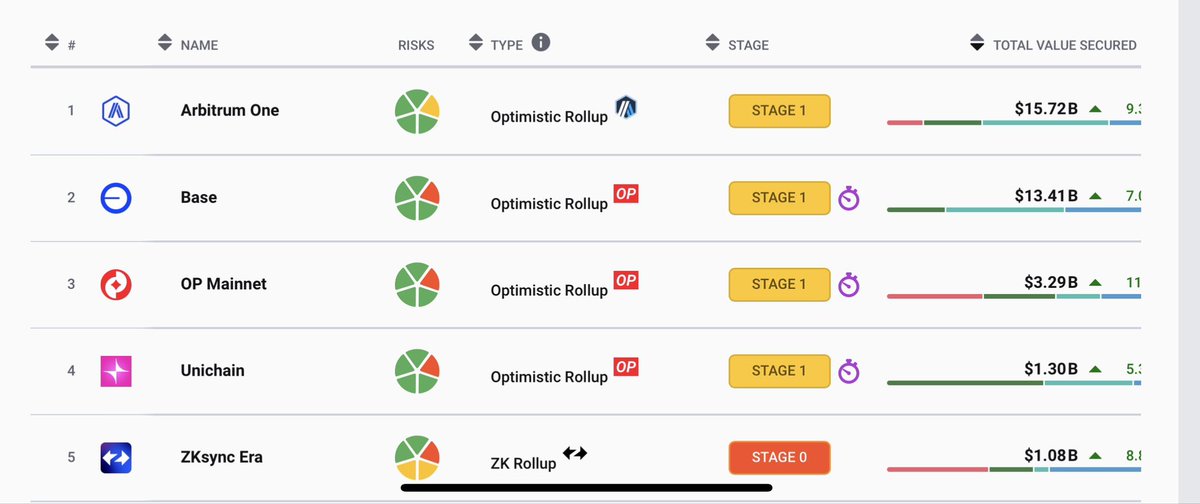
Arbitrum was recognized as one of the Top 10 Blockchains and Protocols as part of @FortuneMagazine’s Crypto 100.
What began as a research project at Princeton has grown into one of crypto’s largest and most advanced financial ecosystems.
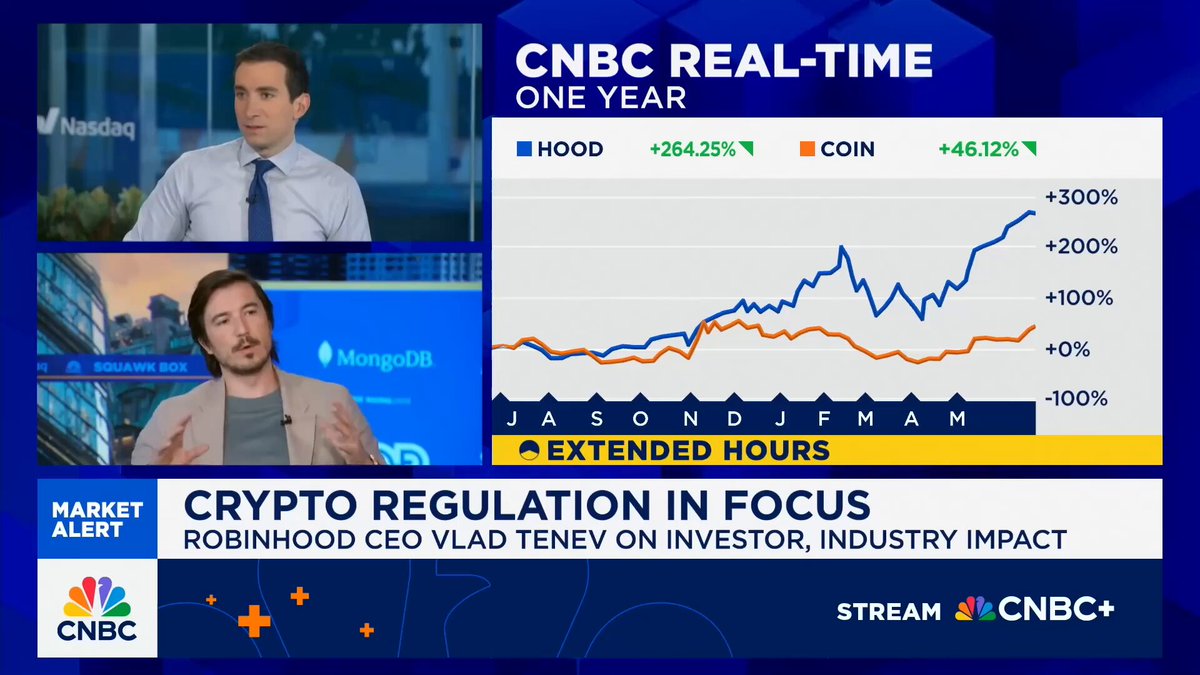
Today, leading enterprises like Robinhood are building on the Arbitrum Platform, tapping into its deep liquidity, customizable infrastructure, and Ethereum’s security.
As financial markets become programmable, we're committed to making Arbitrum the platform of choice for the next generation of financial innovation.
Arbitrum has been named to the inaugural @FortuneMagazine Crypto 100.
Together with our ecosystem, we're building the finance-native platform powering the programmable economy for builders, enterprises and institutions.
Thank you to everyone building alongside us.

5
11
92
4,265
Steven Goldfeder retweeted

Jun 9
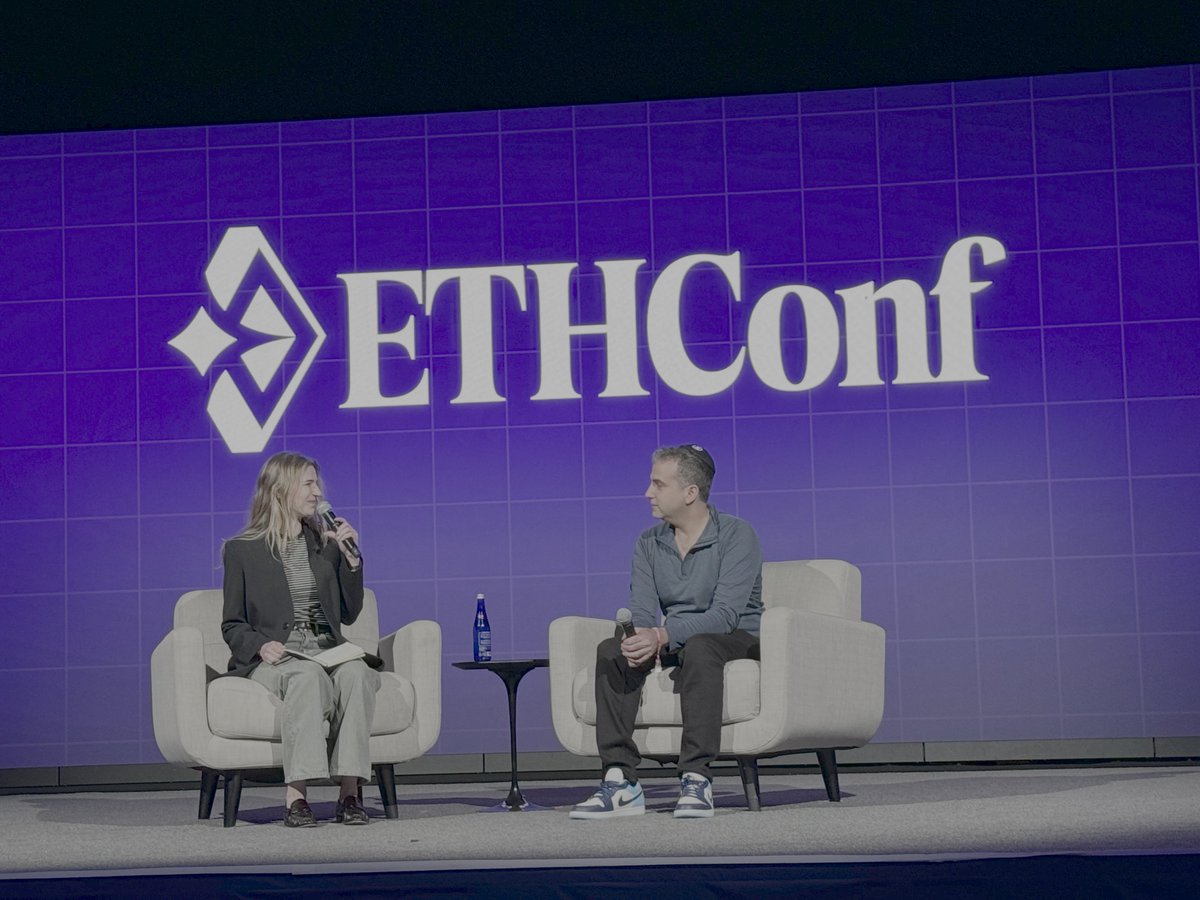
The secret to being a good interviewer is 1) asking what you're genuinely curious about, and 2) assuming you're the mean: what interests you will interest others.
Thanks @sgoldfed for always making it easy for me!
4
1
26
1,370
ICYMI: @Mastercard taps Arbitrum for global stablecoin settlement.
Always-on payments, built for the programmable economy.

55
60
479
29,510

So impressed by the range of apps emerging on @arbitrum.
Having witnessed, and even competed with @peterhaymond & @ajwarner90 in the early L2 days, I have always seen them go at bat for builders with the boldest convictions, & now all those swings are paying off.
Jun 2

Very excited to see this go live! Welcome to @arbitrum!
7
4
57
5,043
Steven Goldfeder retweeted

May 20
We’ve raised $50M led by @dragonfly_xyz to go all in on RWAs and bring TradFi liquidity on-chain.
Today, we're launching Phase 1 of our RWA rollout to stress-test our infrastructure before bringing 100 TradFi markets on-chain this summer.
467
291
2,219
1,001,313
Steven Goldfeder retweeted

May 20
Thrilled to work with @hosseeb and the entire @dragonfly_xyz team, alongside @BainCapCrypto @cbventures and other strategics, to bring tradfi liquidity on-chain.
This raise gives @variational_io the resources we need to land key institutional partnerships, expand our team, and list 100 RWA perps.
May 20

We’ve raised $50M led by @dragonfly_xyz to go all in on RWAs and bring TradFi liquidity on-chain.
Today, we're launching Phase 1 of our RWA rollout to stress-test our infrastructure before bringing 100 TradFi markets on-chain this summer.
47
30
282
24,873
May 7
Today we’re sharing the next chapter for @Offchain.
Offchain Labs -> Offchain may seem like a small move, but it’s highly consequential and represents the evolution of our company and our brand.
What began as deep R&D into Ethereum scaling has expanded into a much larger mission:
building best-in-class infrastructure for enterprises operating in the programmable economy.
Over the years, we’ve brought together some of the best teams in crypto across the stack:
- The finance-native blockchain platform: @arbitrum
- Advancing L1 consensus: @prylabs
- Powering over 5M smart accounts: @zerodev_app
We believe the next generation of financial infrastructure will be programmable by default, and Offchain is the strategic infrastructure partner for the world's most ambitious companies.
While the rebrand signals an evolution and expansion from our early beginning in the research lab, our Princeton roots, our academic rigor and culture, and our unique R&D capabilities are still a central part of our identity and aren't disappearing with this rebrand. We’ll still use Offchain Labs when referring to our industry-leading research arm, and we have a dedicated home on the new website for the Labs part of Offchain. offchain.io/offchainlabs
By bringing our research excellence and enterprise product suite together under the unified Offchain brand, we’re building the infrastructure for the programmable economy.

We're now Offchain.
A new chapter focused on powering institutions as they move onchain.
What we’ve built across @arbitrum, @prylabs and @zerodev_app is coming together into something bigger.
This is just the first step. Stay tuned.
offchain.io/
41
23
189
35,730
Apr 30
Novel approach by variational to bring RWAs on chain with deep liquidity.
Incredible vision for 2026 and it’s happening now!
10
34
4,160
Steven Goldfeder retweeted

Apr 20
come cook with me 😇👩🍳

Hiring: Head of Social @Offchain
Looking for someone with extensive crypto experience to own our strategy across platforms (including @arbitrum, @prylabs, and @zerodev_app)
Must be a "player-coach" who can translate technical developments into credible narratives across X, LinkedIn, and YouTube
📍Remote (US / EDT preferred)
Interested? Drop a comment or DM, or tag someone who fits
22
4
136
14,055
Apr 21
Surely one of the most complex decisions ever made in Arbitrum governance history but a few things worth noting:
1. To all those screaming for the past few days “Arbitrum has a centralized sequencer so they can move funds”, take a few minutes to learn how Arbitrum works. The sequencer has absolutely no power to move funds and was not the one who acted here.
2. The decision to act was made entirely by the Arbitrum Security Council, a group of 12 individuals elected by the Arbitrum DAO (the annual election is currently underway — vote now!), which required 9/12 of them to agree.
The council is independent from the Arbitrum Foundation and Offchain Labs (1/12 of the elected members is an OCL engineer), and came to this decision by themselves after much deliberation.
You may not like the existence of security councils and you can form your own opinion on whether you agree with their actions, but this process was extremely distributed and coordinated by independent actors, and ina world where security councils exist, Arbitrum’s is a masterclass on how a truly independent security council should operate.
3. For many, the ultimate goal is to get rid of the security council entirely, but this is complicated.
Technically it’s easy — the security council is elected by the DAO and operates at its pleasure, and the DAO can turn it off at any time.
But the harder question is _should_ the DAO do that? L1s have the ability to hard fork. Security councils control the analogous power for the L2. If you get rid of it, you lose the ability to hard fork. You can still update the chain via DAO vote but that’s a slow process and you can no longer do fast emergency actions (which includes both actions like the security council took today as well as the ability to quickly upgrade the code in case an exploitable vulnerability in the software stack is discovered).
As I’ve said many times, the best path that I see to getting rid of security councils is for the L1 itself to take on this burden for its most important L2s (as defined by objective criteria). In that case, in the case of a vulnerability or an exploit the conversation for L1 and L2 will be identical — does this warrant an L1 hard fork. I’m hopeful that we can reopen this conversation in the coming weeks.
The Arbitrum Security Council has taken emergency action to freeze the 30,766 ETH being held in the address on Arbitrum One that is connected to the KelpDAO exploit. The Security Council acted with input from law enforcement as to the exploiter’s identity, and, at all times, weighed its commitment to the security and integrity of the Arbitrum community without impacting any Arbitrum users or applications.
After significant technical diligence and deliberation, the Security Council identified and executed a technical approach to move funds to safety without affecting any other chain state or Arbitrum users.
As of April 20 11:26pm ET the funds have been successfully transferred to an intermediary frozen wallet. They are no longer accessible to the address that originally held the funds, and can only be moved by further action by Arbitrum governance, which will be coordinated with relevant parties.
90
111
732
111,261
Apr 20
Blaming bridge hacks on the rollup centric roadmap is ironic and naive at best.
Here’s a fact. There is and will continue to be demand for many chains. The rollup centric roadmap didn’t create that demand, as evidenced by the constant flow of new L1s (Tempo, Arc, Zero etc.).
And any time there are multiple chains, users will need to bridge.
What the rollup centric roadmap actually gave you is a better way to secure the chain and a better way to bridge — by using the native bridge which is secured by the chain.
Of course users for a variety of reasons may elect to use other bridging solutions which rely on other security assumptions, but then you’re in the same place as you’d be if you’re bridging between two L1s.
The rollup centric roadmap didn’t create the demand for many chains, and even in a world of just L1s, bridge security would still be critical.
7
13
124
7,915
Apr 14
I’m so saddened to hear of the passing of Michael Rabin this morning.
Michael was a father of modern cryptography, a true legend. And I was fortunate to be able to call him my teacher.
If you’re reading this post or did anything else on the internet today, you’ve most definitely used technology that he pioneered.
When I had the privilege to study under Michael, he was already over 80 years old. But I’ve never had a more energetic teacher, someone who was so passionate not only about understanding the universe, but about sharing that knowledge with the next generation.
The world lost a giant today.
May his memory be a blessing.
8
27
211
13,781