
Joined June 2025
- Tweets 38
- Following 6
- Followers 7
- Likes 1
28 Photos and videos
Pinned Tweet

1 Jul 2025
🚀 Welcome to TheShiftAI
We help enterprises & startups unlock the power of AI through:
🔹 AIFirst Strategy & Roadmaps
🔹 Custom AI Products
🔹 Fine-Tuning LLMs
💡 Let’s build AI that works for your business.
📞 Talk to us → theshiftai.in
3
142
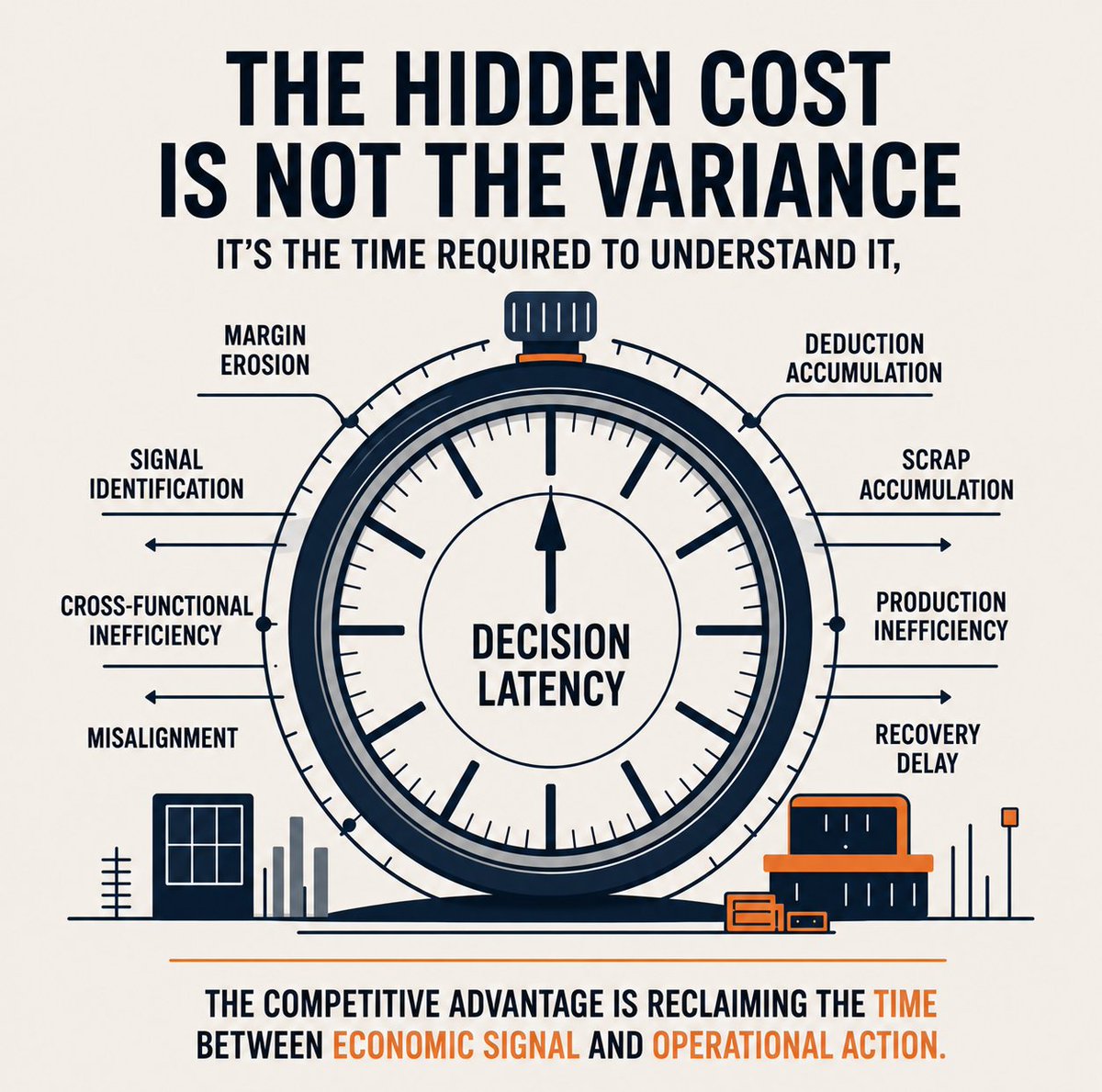
Most manufacturing finance problems are not caused by missing data.
They are caused by slow operational understanding.
Finance sees the variance.
Operations sees the disruption.
Engineering sees the process issue.
But connecting those signals still takes days.
So organizations spend more time reconstructing causality than acting on it.
Operational AI changes that.
Not by generating more reports.
By connecting financial outcomes directly to operational context.
So a margin decline stops being just a number.
It becomes traceable instantly:
• Which asset changed
• Which shift was affected
• Which process drift occurred
• Which material issue created the impact
The next generation of manufacturing finance advantage may not come from better reporting.
It may come from reducing the time between economic signal and operational action.
#Manufacturing #ManufacturingFinance #OperationalAI #IndustrialAI #SmartManufacturing #Industry40 #OperationalExcellence #FinanceTransformation #DigitalTransformation #FactoryOperations #ManufacturingLeadership #DecisionIntelligence
6
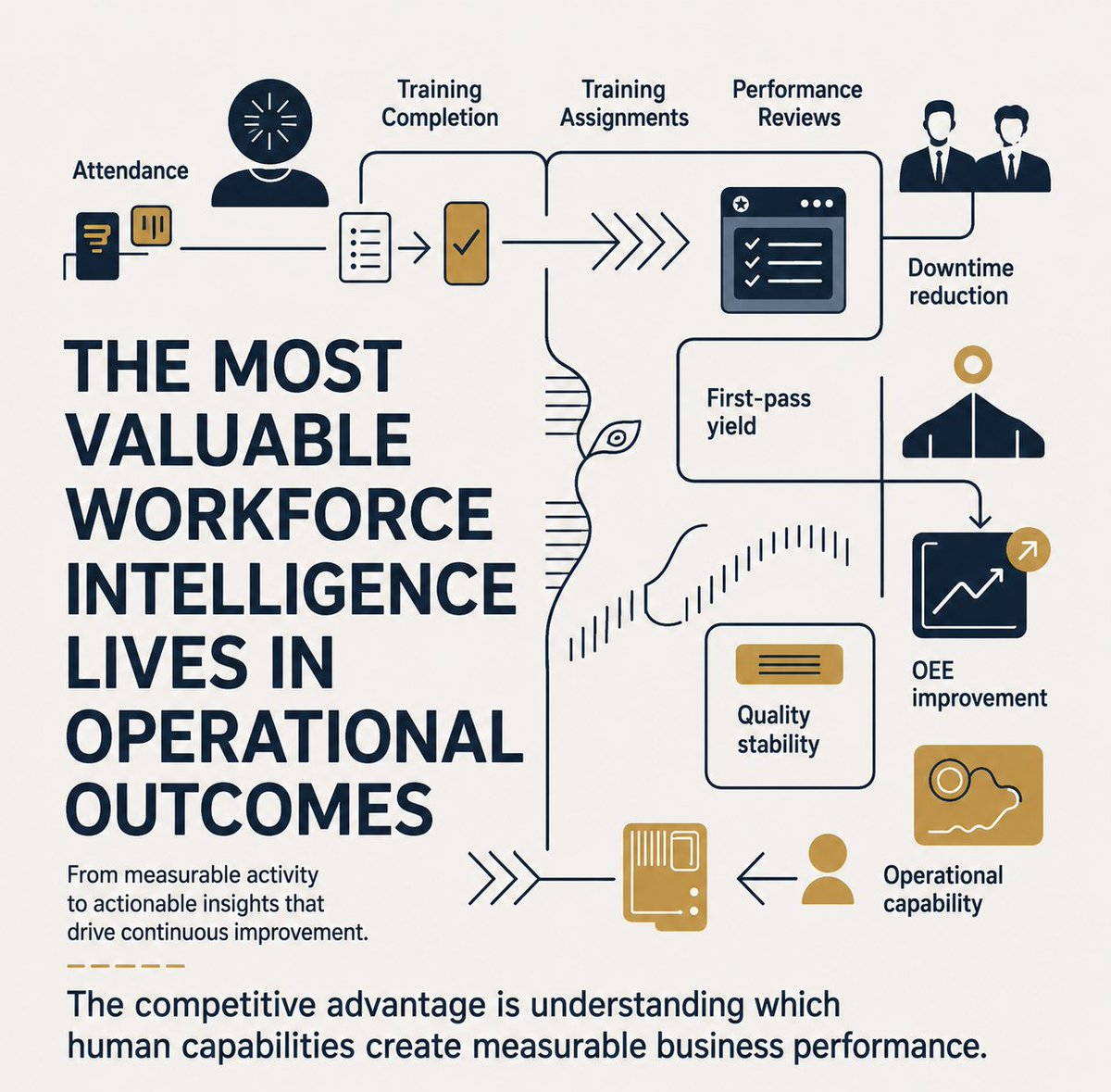
Most workforce systems track activity.
Very few explain operational impact.
HR systems can tell you:
• Who worked
• Who completed training
• Who reports to whom
• Who has the certification
But they rarely explain:
• Which operators improve yield
• Which expertise reduces downtime
• Which training changes production outcomes
• Which workforce gaps create operational risk
So manufacturers still rely on proxies like tenure, titles, and supervisor observations.
Not because they lack workforce data.
Because workforce systems were never designed to connect people with operational performance.
Operational AI changes that.
Not by monitoring employees more aggressively.
By identifying which human capabilities consistently influence operational outcomes.
The next workforce advantage in manufacturing may not come from hiring more people.
It may come from understanding which expertise actually drives plant performance — and scaling it systematically.
#Manufacturing #IndustrialAI #OperationalAI #SmartManufacturing #Industry40 #DigitalTransformation #ManufacturingLeadership #FactoryOperations #FutureOfWork #OperationalExcellence #IndustrialTransformation
4
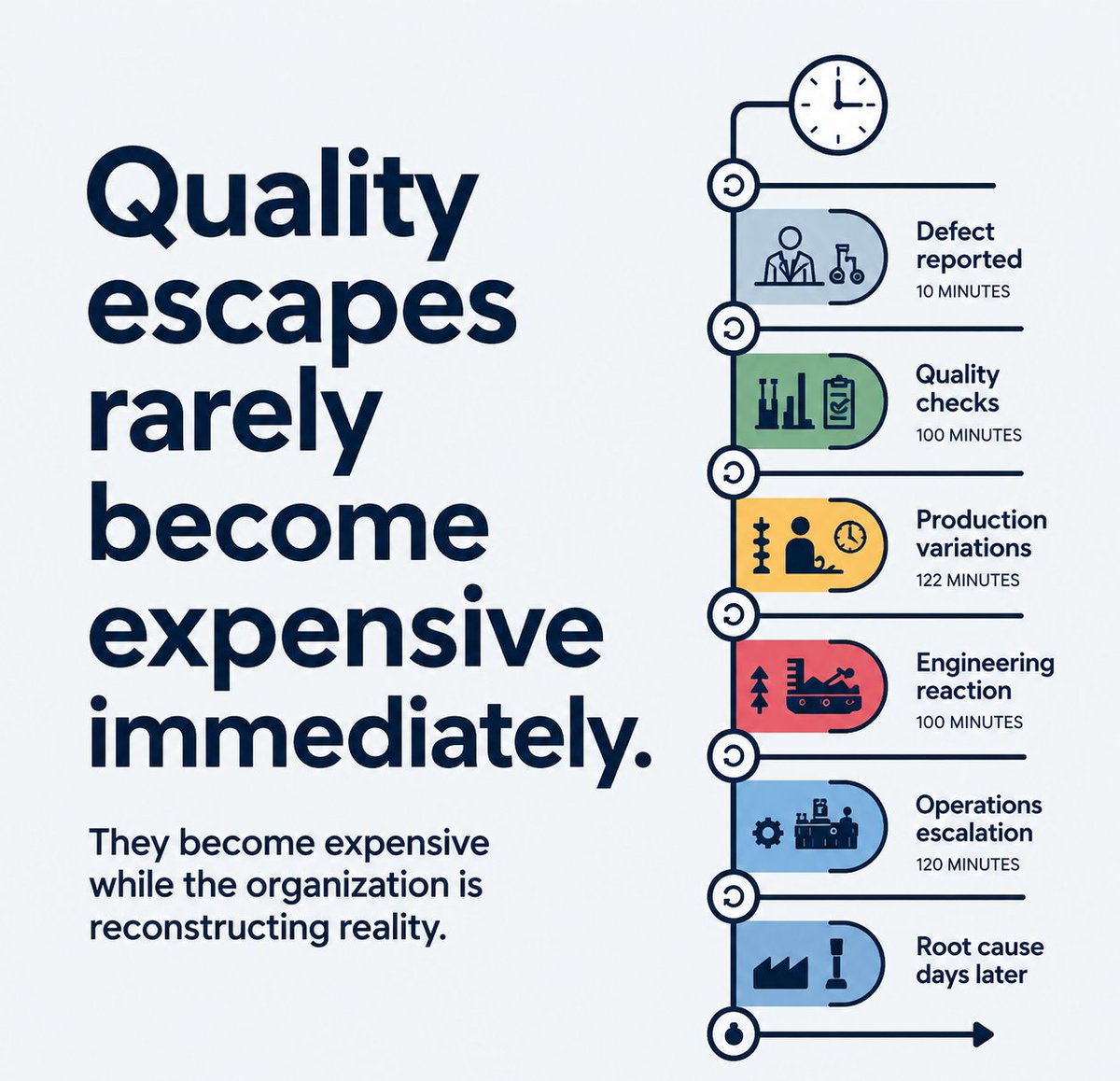
Most quality investigations do not suffer from missing data.
They suffer from disconnected systems.
Quality records exist.
Production history exists.
Machine telemetry exists.
But they rarely connect fast enough to explain causality in real time.
So when a defect appears, organizations manually reconstruct the operational chain:
• Inspection records
• Production activity
• Machine conditions
• Material usage
• Shift behavior
Hours turn into days.
Not because the information is unavailable.
Because operational context is fragmented.
Operational AI changes that.
Not by replacing quality systems.
By connecting production, process conditions, equipment state, materials, and inspection outcomes into one operational graph.
So a defect becomes traceable instantly:
Batch → Machine → Shift → Operator → Material lot → Process conditions
The next generation of manufacturing quality may not depend on more inspection points.
It may depend on reducing the time between defect detection and operational understanding.
6
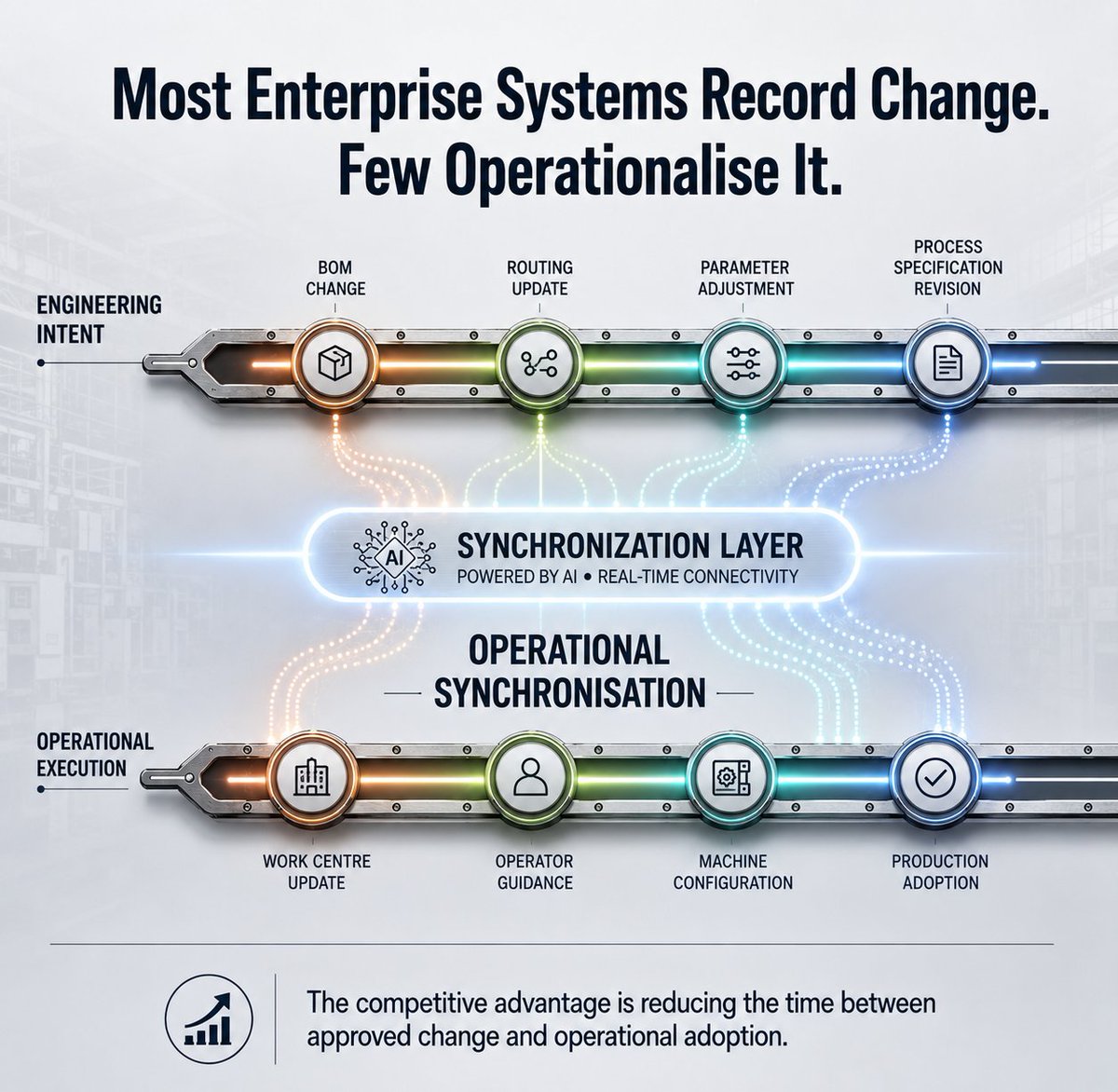
Most manufacturing execution problems are not caused by poor decisions.
They are caused by slow operational adoption of decisions already approved.
Engineering updates the process.
SAP reflects the new BOM.
Leadership assumes execution has changed.
But the plant may still be running yesterday’s conditions.
Because operational change still depends on:
• Emails
• Meetings
• Shift handoffs
• Manual coordination
• Updated instructions
That delay creates hidden operational risk.
Yield drift.
Quality escapes.
Rework.
Inconsistent execution across plants.
Operational AI changes this.
Not by replacing engineering workflows.
By connecting engineering intent directly to live plant execution.
So process changes become operationally visible immediately:
• Which work centres are affected
• Which operators need guidance
• Which production orders are impacted
• Which machine settings require adjustment
The next manufacturing advantage may not come from making changes faster.
It may come from synchronising operational execution faster than competitors.
6
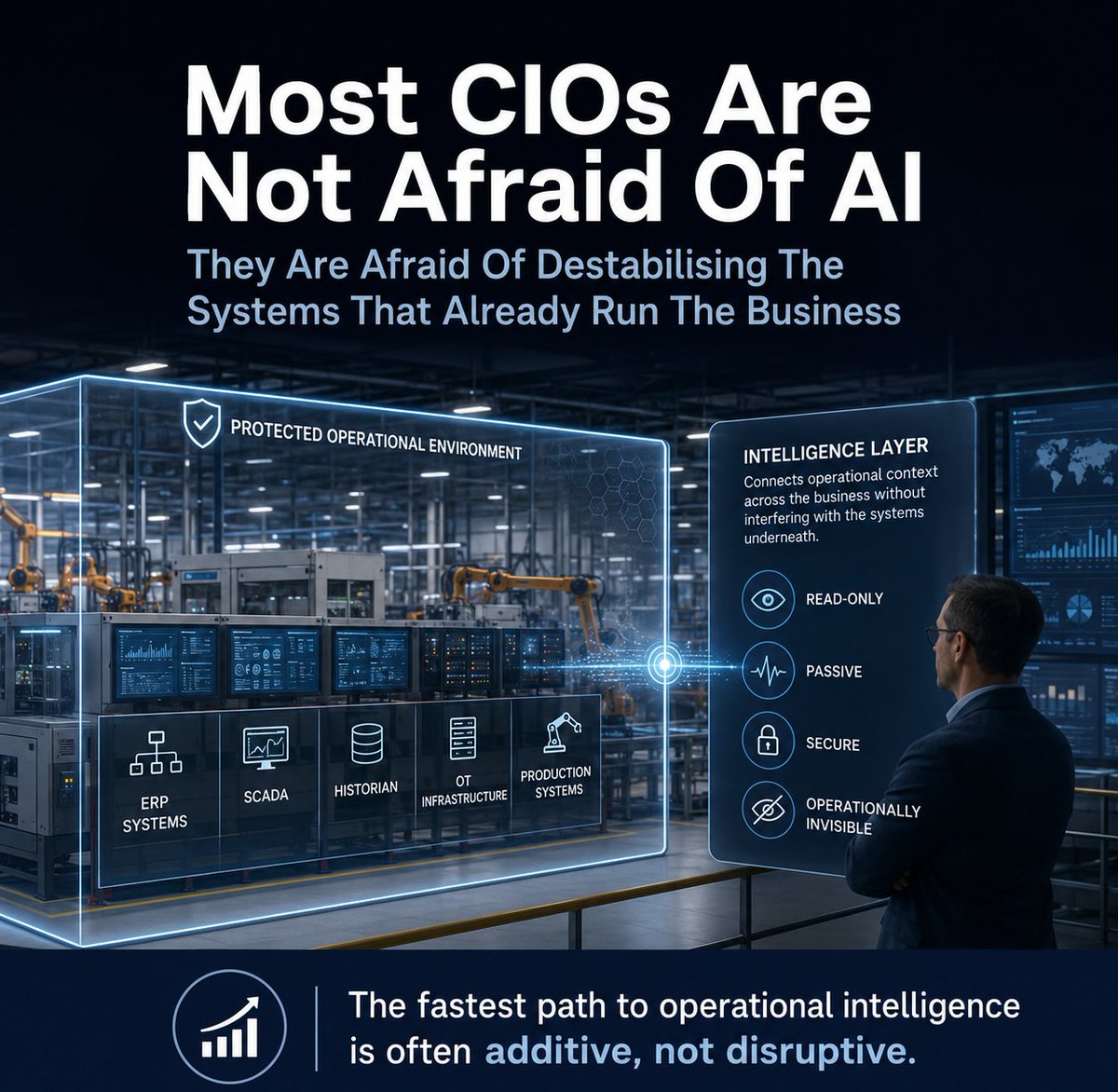
Most manufacturing AI projects do not fail because the models are weak.
They fail because the implementation path introduces operational risk.
Plants are not software sandboxes.
Downtime impacts revenue.
Cybersecurity impacts physical operations.
Architecture decisions affect production continuity.
So when organisations hear:
• Replace the ERP
• Rebuild the architecture
• Centralise everything first
…the business hesitates.
Not because it doubts AI.
Because the deployment model feels disruptive.
That is why architecture matters more than models in industrial AI.
The fastest path to operational intelligence is often not rip-and-replace transformation.
It is a read-only intelligence layer above existing systems.
Secure.
Passive.
Operationally invisible.
The ERP stays intact.
The historian remains the system of record.
OT environments stay protected.
But operational context becomes connected across the enterprise.
The next generation of manufacturing AI adoption may not be won by the most aggressive transformation programmes.
It may be won by the architectures that create the least operational friction.
11
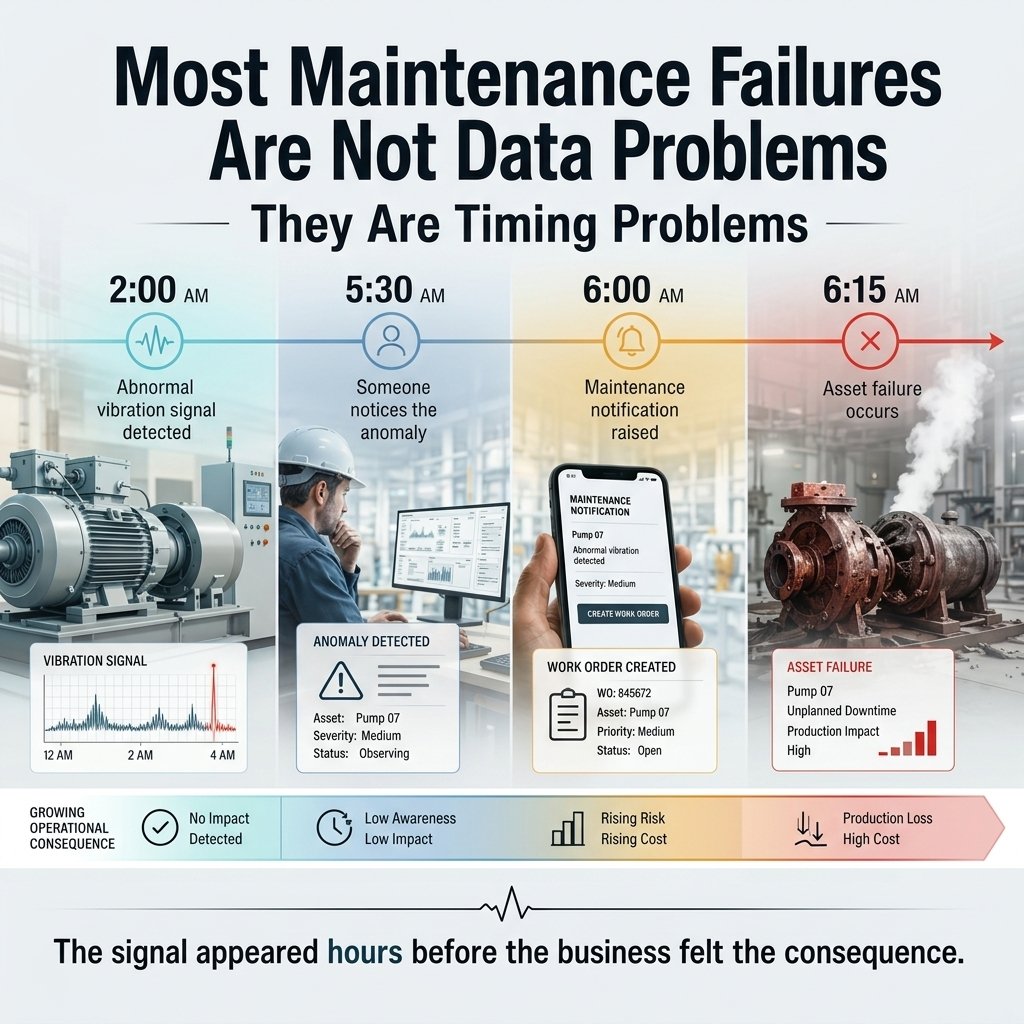
Most plants already have the data required for predictive maintenance.
The issue is not visibility.
It is response latency.
SAP PM contains years of maintenance history.
The historian contains live operational telemetry.
But most organizations still operate with delays between:
Signal → Context → Decision → Action
A vibration anomaly appears.
Hours pass before anyone investigates.
The asset fails before intervention occurs.
That is not just reactive maintenance.
It is fragmented operational awareness.
Operational AI changes that.
Not by replacing maintenance teams.
By connecting live telemetry with:
• Failure history
• Operating conditions
• Production schedules
• Asset criticality
• Maintenance patterns
So the system can identify probable failure behavior before disruption occurs.
The next generation of maintenance advantage may not come from adding more sensors.
It may come from reducing the time between operational signal and operational decision.
7
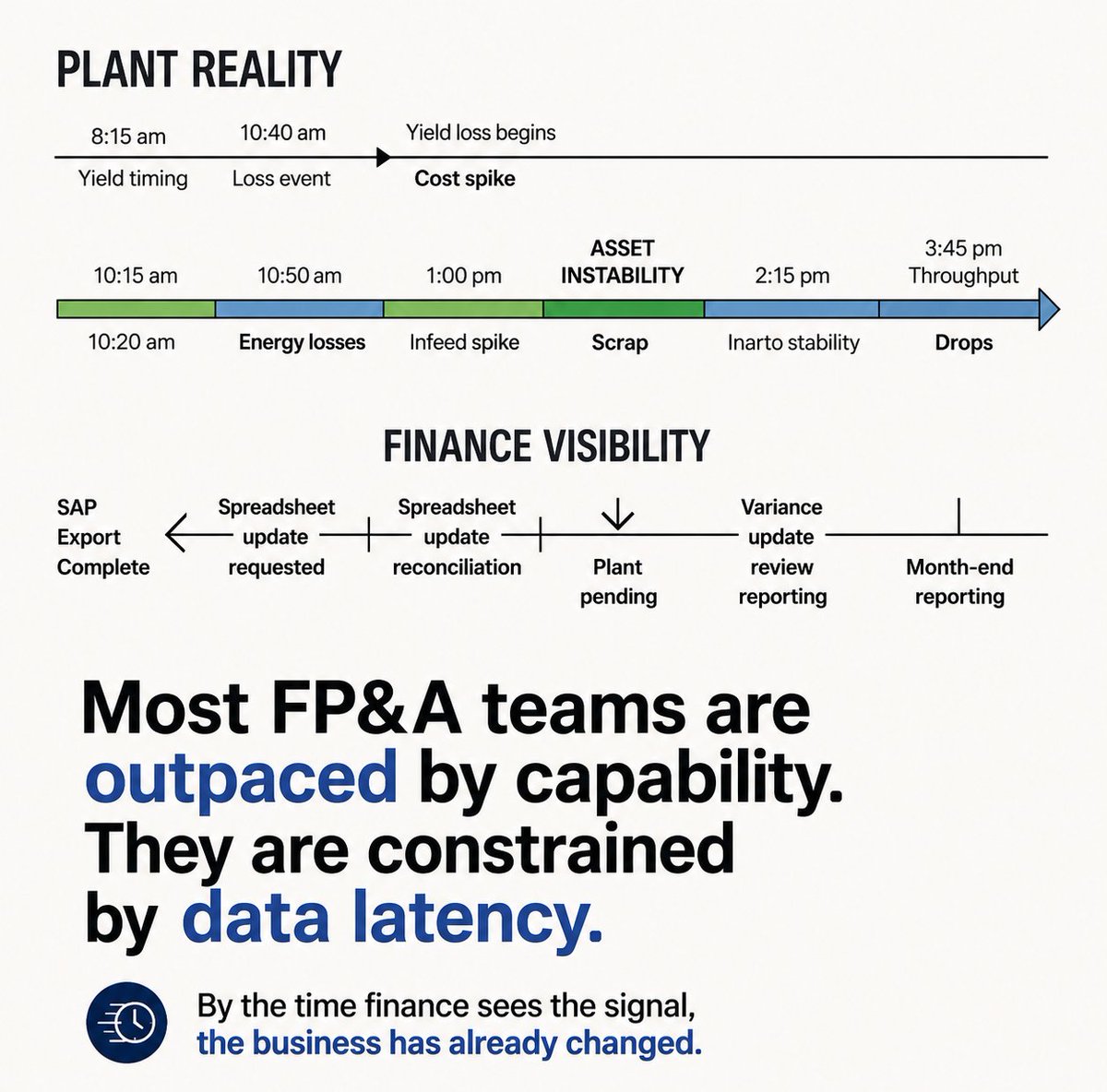
Most FP&A teams do not have a modelling problem.
They have a visibility problem.
Finance still spends enormous amounts of time:
• Pulling SAP exports
• Reconciling spreadsheets
• Waiting for plant updates
• Matching operational metrics to financial results
Meanwhile, manufacturing conditions are changing in real time.
Yield shifts daily.
Energy costs fluctuate hourly.
Equipment instability impacts margins before finance sees the signal.
By the time FP&A receives the data, the business has already moved on.
Operational AI changes that.
Not by replacing finance teams.
By connecting operational events directly to financial context in real time.
So finance stops reconstructing the past and starts interpreting the present.
The next generation of FP&A may not be defined by better reporting.
It may be defined by how quickly finance understands operational change while it is still happening.
6
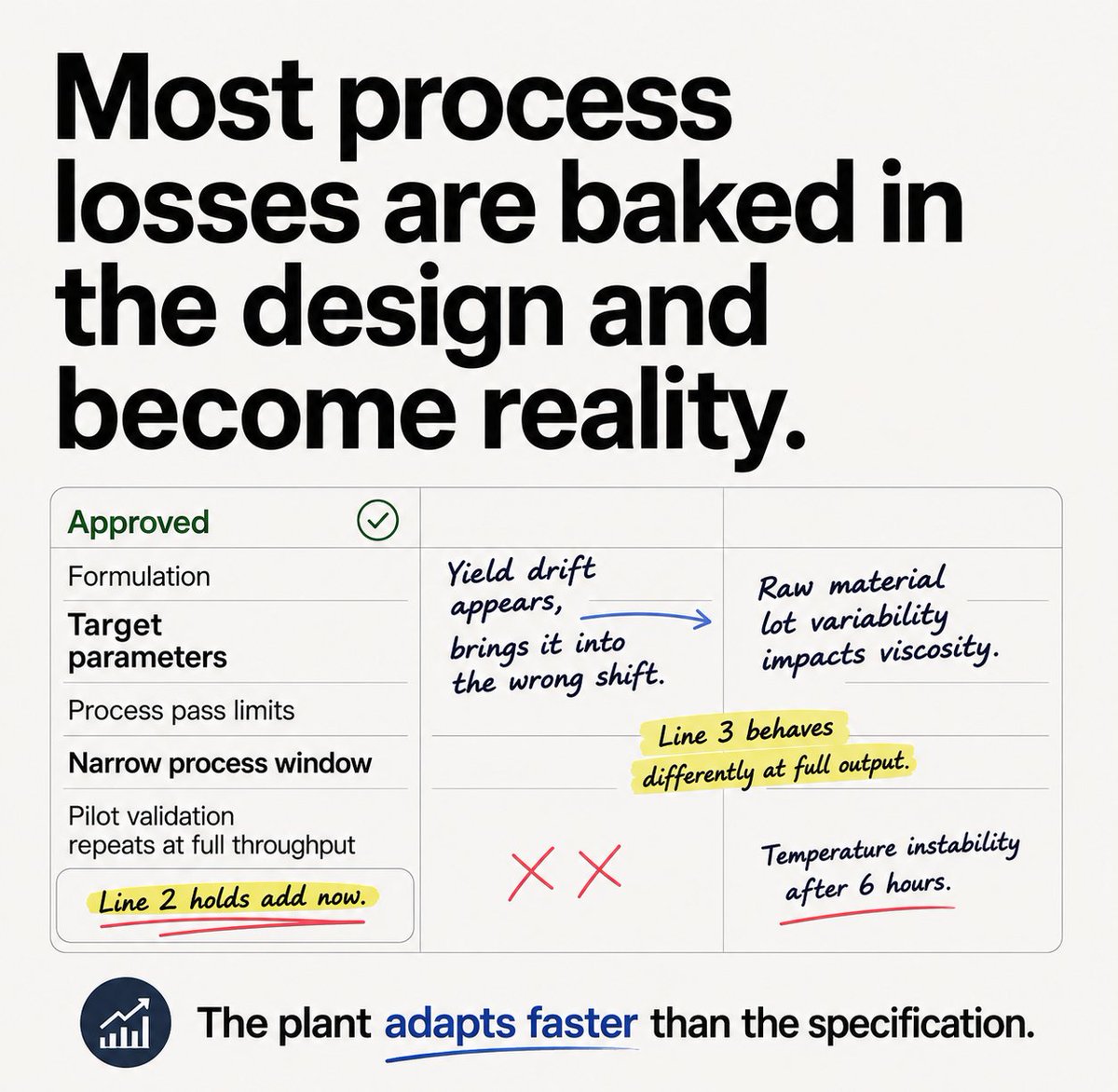
Most manufacturing losses do not begin on the production line.
They begin in the gap between lab assumptions and plant reality.
Pilot runs succeed.
Parameters look stable.
The formulation is approved.
Then production scales.
Different operators.
Different equipment conditions.
Different raw material variability.
Different environmental constraints.
And suddenly:
• Yield drops
• Throughput drifts
• Quality variability increases
Most companies discover the root cause too late.
Because R&D, engineering, quality, and operations still operate through delayed feedback loops.
The plant learns.
But the enterprise system does not.
Operational AI changes that.
Not by replacing process expertise.
By continuously connecting:
Formulation ↔ Production ↔ Equipment ↔ Quality ↔ Financial outcomes
So the system learns from execution in real time.
The next manufacturing advantage may not come from better process design alone.
It may come from shortening the learning cycle between the lab and the plant floor faster than competitors.
4
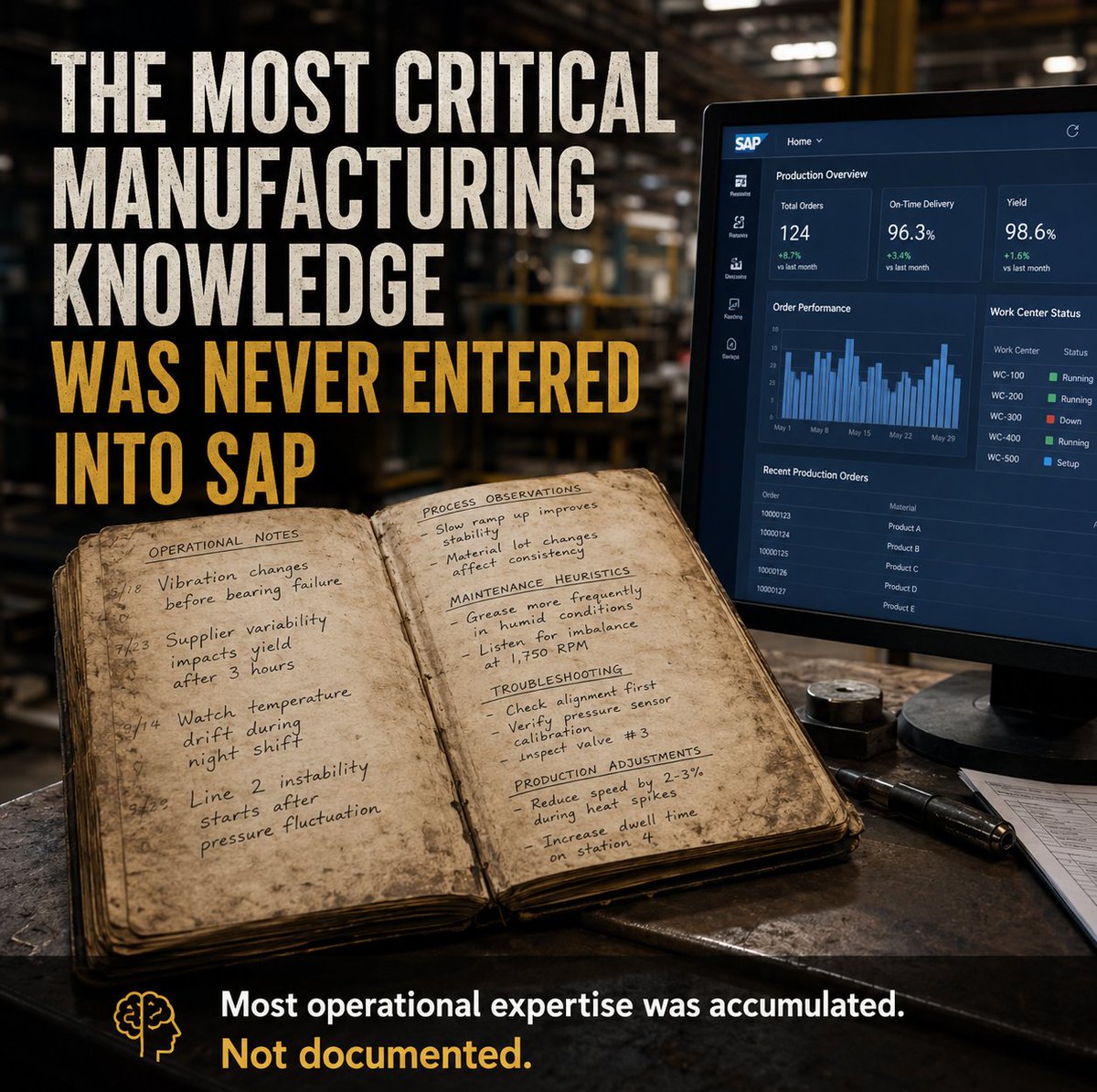
Most manufacturers are about to lose one of their most valuable operational assets:
Experienced operators.
Not because the business failed.
Because the workforce is retiring faster than operational knowledge is being preserved.
ERP and HR systems can track:
• Certifications
• Reporting structures
• Training completion
• Workforce planning
But they cannot capture operational intuition.
The technician who detects failure patterns before alarms trigger.
The operator who understands how humidity impacts yield.
The supervisor who knows which process drift creates downstream quality loss hours later.
That knowledge lives inside people.
And most manufacturers still have no architecture for retaining it.
AI changes that.
Not by replacing workforce expertise.
But by identifying and preserving the patterns behind it.
When workforce behaviour is connected with production outcomes, maintenance history, process variability, and shift performance, AI can surface which human decisions consistently drive operational success.
Patterns become transferable.
Operational judgment becomes institutional.
The next competitive advantage in manufacturing may not be automation alone.
It may be how effectively organisations preserve tribal knowledge before it disappears.
4
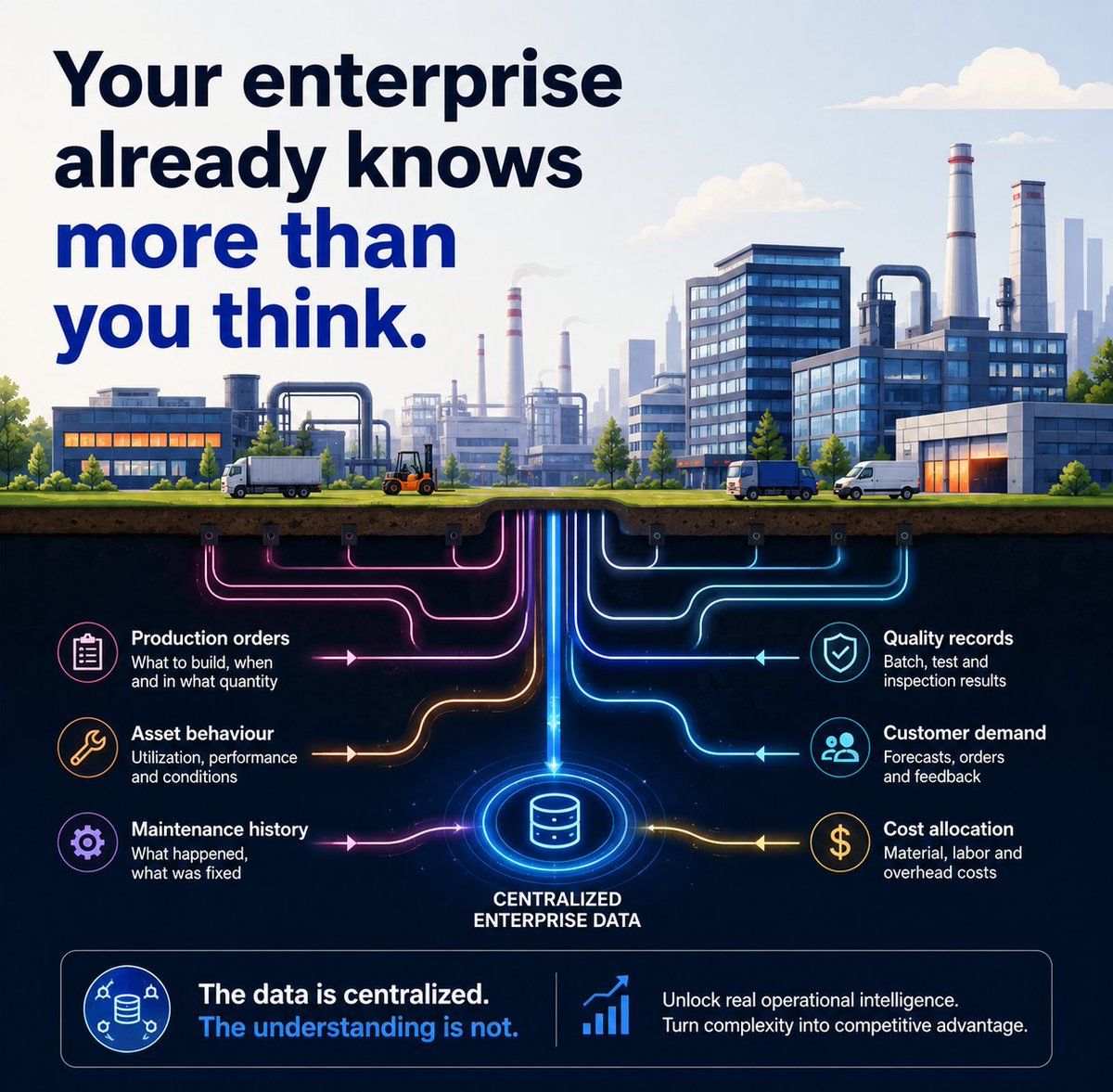
Most manufacturers already have the data required for operational intelligence.
It is sitting inside SAP.
• Production orders.
• Quality history.
• Maintenance records.
• Material movement.
• Cost allocation.
• Demand signals.
The problem is not missing data.
The problem is that enterprise systems store events, not relationships.
A production delay connected to supplier variability.
A margin decline linked to maintenance behaviour.
A quality issue tied to upstream process drift.
Humans cannot manually correlate thousands of operational interactions in real time.
AI changes that.
Not by replacing ERP systems.
By creating an intelligence layer above them.
An operational graph connecting:
• Production
• Quality
• Maintenance
• Finance
• Supply chain
So executives stop asking:
“Can someone build a report?”
And start asking:
“What action reduces risk fastest?”
The next generation of manufacturing advantage will not come from collecting more data.
It will come from activating the enterprise knowledge manufacturers already spent 15 years building.
5
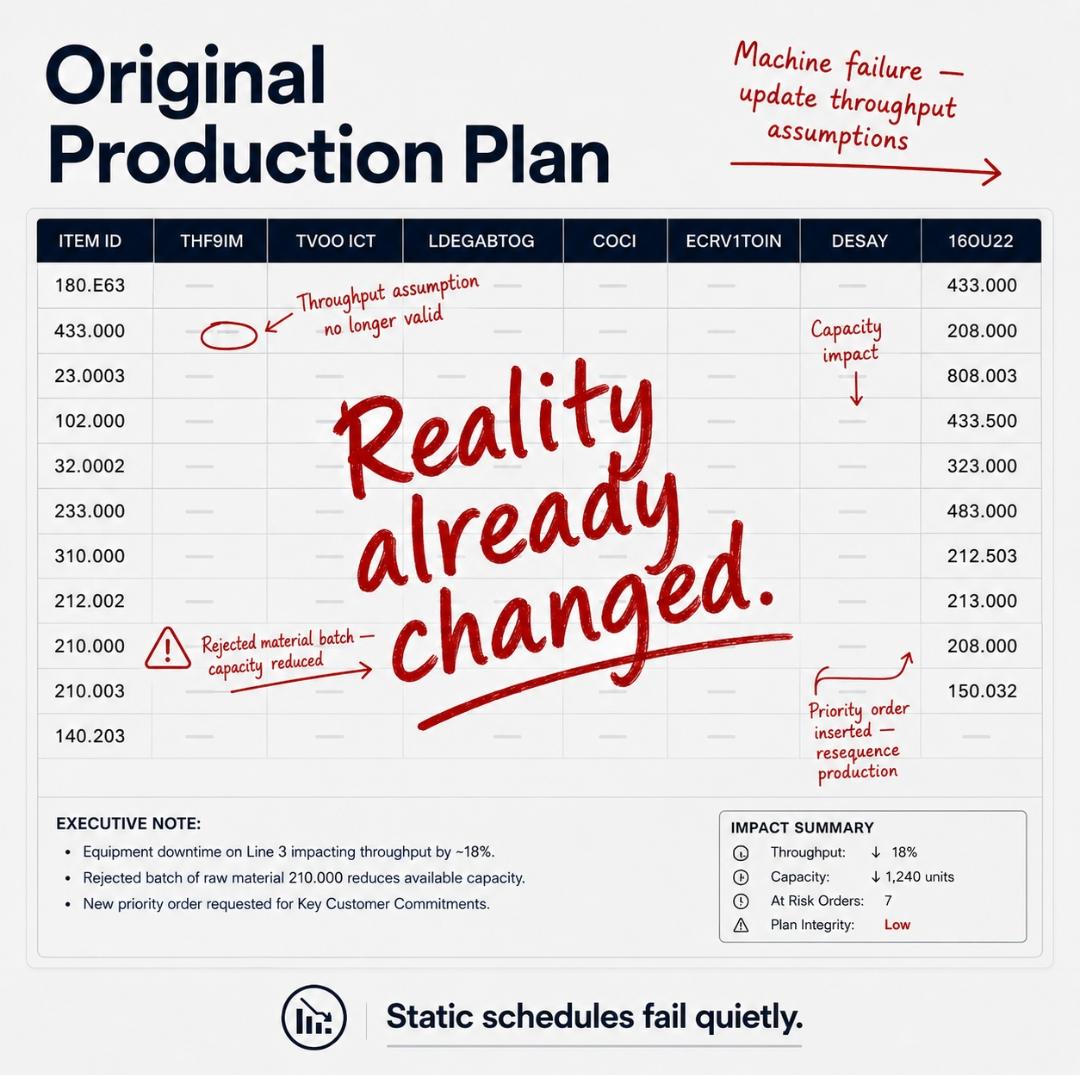
The production schedule was correct on Monday.
By Wednesday, the plant is executing against assumptions that no longer exist.
Most production plans fail slowly before they fail visibly.
The ERP still shows:
• The original sequence
• Valid-looking work orders
• Allocated capacity
But the plant has already moved on.
What changed?
A machine failure reduced throughput Tuesday night.
A rejected material batch constrained output Wednesday morning.
Sales inserted a priority order by the afternoon.
Individually, each event looks manageable.
But together, the production schedule is now disconnected from operational reality.
And that disconnect compounds every hour.
This is one of the biggest blind spots in manufacturing operations.
Most scheduling systems were designed for:
• Coordination
• Stability
• Sequential updates
Not live adaptation.
They assume:
Enterprise systems update first
The plant responds second
Modern manufacturing works in reverse.
The plant changes first.
Planning and financial systems discover it later.
That is where operational AI changes the equation.
Not by creating another dashboard.
But by creating live operational awareness across planning, production, quality, maintenance, and supply constraints.
AI can:
• Detect downstream impact early
• Model resequencing instantly
• Calculate throughput risk
• Surface margin tradeoffs
• Predict delivery exposure before escalation begins
This is the shift:
From static scheduling
To adaptive operations.
From production planning as a document
To production planning as a living system.
The manufacturers that gain advantage over the next decade will not necessarily plan better upfront.
They will respond faster when reality diverges from the plan.
Because in manufacturing, responsiveness is becoming a competitive moat.
#Manufacturing #AI #Operations #SupplyChain #ManufacturingAI #OperationalIntelligence
1
10
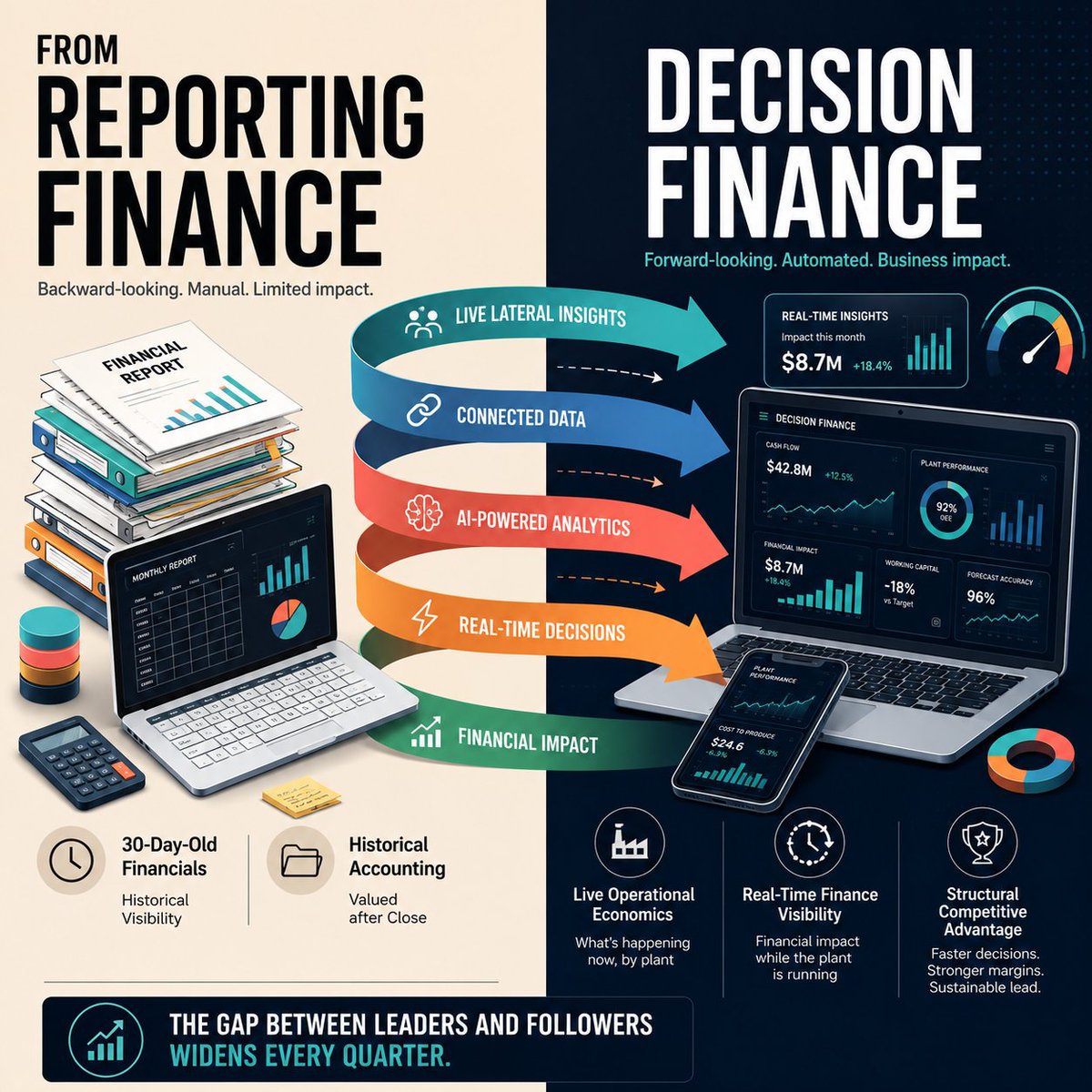
Finance closes the month.
Operations shape the quarter.
Most manufacturing CFOs still make margin decisions using financial data that is already 30 days old.
The books are accurate.
The reporting is clean.
ERP did its job.
But financial erosion starts long before month-end:
• Scrap patterns rising on one line
• Energy cost drifting during a specific shift
• Maintenance behavior increasing cost per unit
Those are financial events.
They just reach finance too late.
Industrial AI changes the timing of enterprise awareness.
It connects operational behavior to financial impact while the plant is still running.
Yield loss → Margin compression
Asset instability → Working capital exposure
Energy drift → Profitability erosion
This is the shift from reporting finance to decision finance.
The manufacturers that move first here may not produce more.
They will simply detect economic change faster than everyone else.
And in manufacturing, detection speed becomes decision advantage.
See how ShiftAI delivers real-time finance visibility and CXO-ready answers in under a month — without replacing existing systems.
calendly.com/suresh-theshift…
#ManufacturingAI #IndustrialAI #CFO #OperationalIntelligence #SmartManufacturing #Industry40
1
8
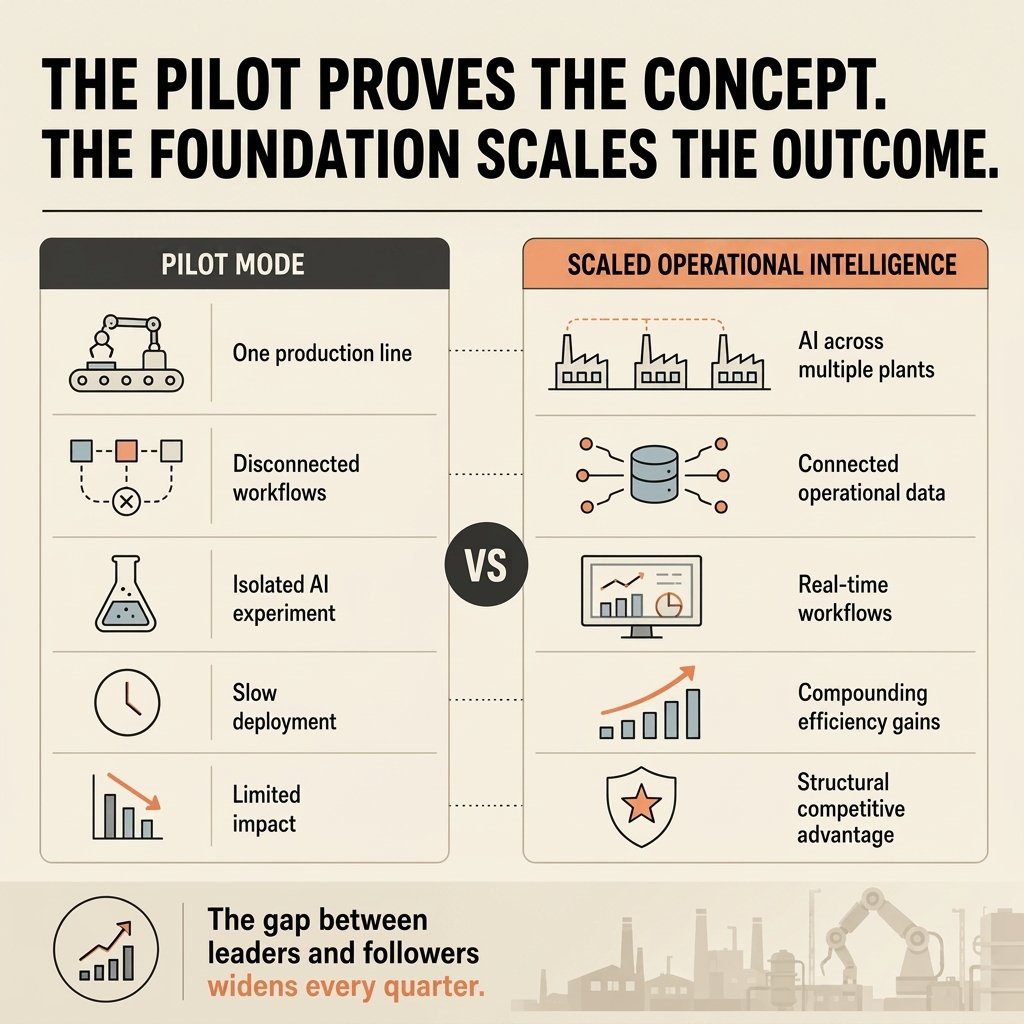
𝐘𝐨𝐮𝐫 𝐜𝐨𝐦𝐩𝐞𝐭𝐢𝐭𝐨𝐫 𝐣𝐮𝐬𝐭 𝐝𝐞𝐩𝐥𝐨𝐲𝐞𝐝 𝐀𝐈 𝐚𝐜𝐫𝐨𝐬𝐬 6 𝐩𝐥𝐚𝐧𝐭𝐬 𝐢𝐧 9 𝐦𝐨𝐧𝐭𝐡𝐬.
𝐘𝐨𝐮'𝐫𝐞 𝐬𝐭𝐢𝐥𝐥 𝐚 𝐩𝐢𝐥𝐨𝐭 𝐨𝐧 𝐨𝐧𝐞 𝐥𝐢𝐧𝐞.
𝐓𝐡𝐞 𝐜𝐨𝐦𝐩𝐨𝐮𝐧𝐝𝐢𝐧𝐠 𝐠𝐚𝐩 𝐬𝐭𝐚𝐫𝐭𝐬 𝐧𝐨𝐰.
BCG's analysis is direct: the manufacturers who scale operational intelligence first build a structural advantage that compounds every quarter.
• In yield.
• In energy efficiency.
• In speed-to-market.
• In talent retention.
• In compliance readiness.
The gap between the manufacturers who have scaled and the ones still running pilots is not closing.
It's widening.
Every quarter of delay is a quarter where the leaders extend their advantage and the followers compound their disadvantage.
The answer is not to move recklessly.
It's to stop treating the pilot as the destination.
The pilot proves the concept.
The foundation scales the outcome.
The manufacturers who understand that difference are the ones building the moat.
Where are your competitors on this curve — and where are you?
Talk to us at ShiftAI to see how your organization can have real-time finance visibility and CXO-ready answers in under a month, without replacing your existing systems
calendly.com/suresh-theshift…
13
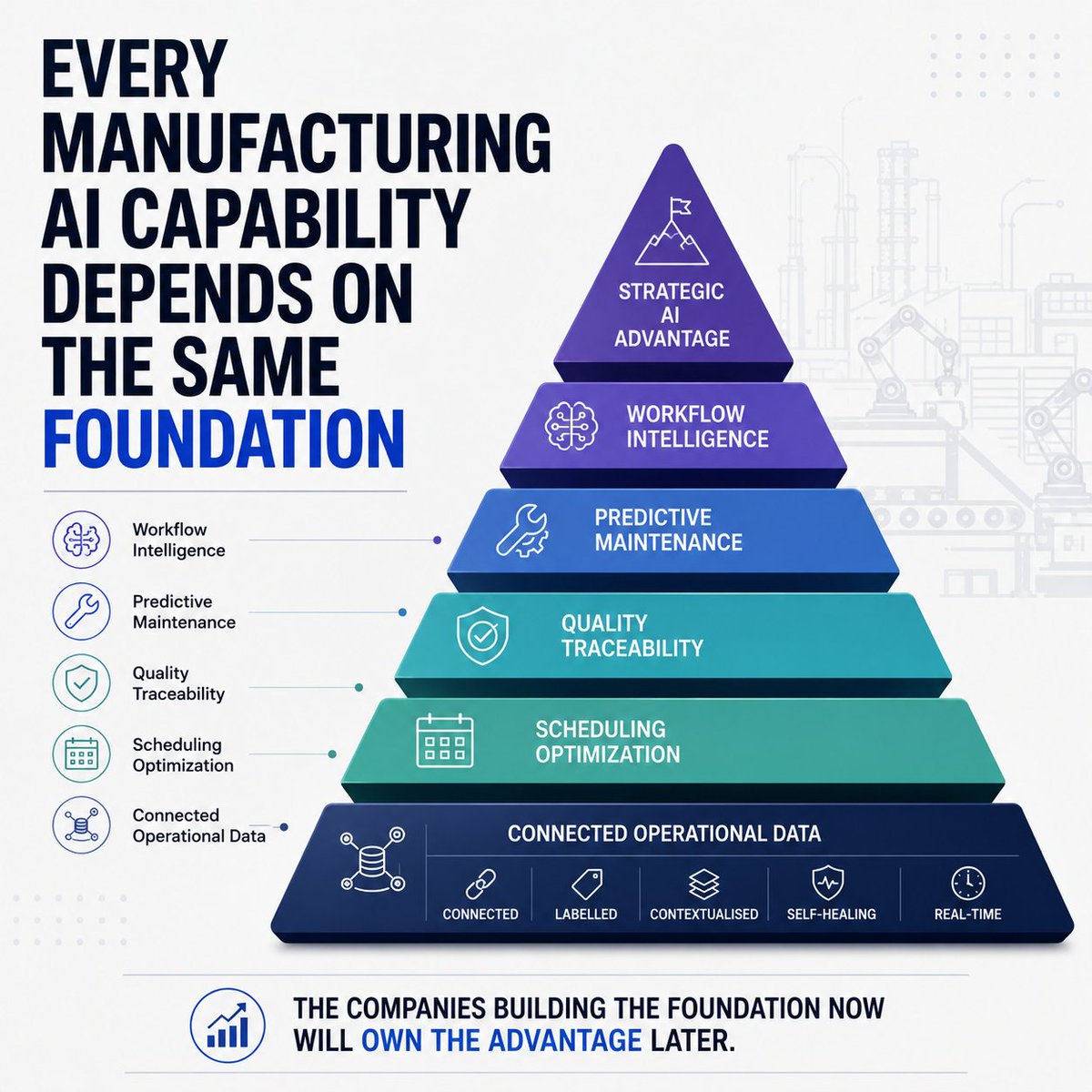
𝐓𝐡𝐞 𝐦𝐚𝐧𝐮𝐟𝐚𝐜𝐭𝐮𝐫𝐞𝐫𝐬 𝐰𝐡𝐨 𝐥𝐞𝐚𝐝 𝐢𝐧 2030 𝐰𝐨𝐧’𝐭 𝐛𝐞 𝐭𝐡𝐞 𝐨𝐧𝐞𝐬 𝐛𝐮𝐲𝐢𝐧𝐠 𝐭𝐡𝐞 “𝐛𝐞𝐬𝐭 𝐀𝐈” 𝐭𝐨𝐝𝐚𝐲.
𝐓𝐡𝐞𝐲’𝐥𝐥 𝐛𝐞 𝐭𝐡𝐞 𝐨𝐧𝐞𝐬 𝐬𝐨𝐥𝐯𝐢𝐧𝐠 𝐭𝐡𝐞 𝐫𝐢𝐠𝐡𝐭 𝐩𝐫𝐨𝐛𝐥𝐞𝐦 𝐟𝐢𝐫𝐬𝐭.
• Not the flashiest model.
• Not the biggest platform.
• Not the most impressive demo.
The boring, foundational work of making operational data actually usable.
• Connected.
• Labelled.
• Contextualized.
• Self-healing.
• Flowing in real time.
Because every AI capability in manufacturing depends on the same foundation:
• Predictive maintenance.
• Agentic scheduling.
• Real-time margin intelligence.
• Quality traceability.
• Energy optimization.
𝐀𝐥𝐥 𝐨𝐟 𝐢𝐭 𝐝𝐞𝐩𝐞𝐧𝐝𝐬 𝐨𝐧 𝐭𝐡𝐞 𝐬𝐚𝐦𝐞 𝐭𝐡𝐢𝐧𝐠: 𝐚 𝐬𝐢𝐧𝐠𝐥𝐞, 𝐫𝐞𝐥𝐢𝐚𝐛𝐥𝐞 𝐬𝐨𝐮𝐫𝐜𝐞 𝐨𝐟 𝐨𝐩𝐞𝐫𝐚𝐭𝐢𝐨𝐧𝐚𝐥 𝐭𝐫𝐮𝐭𝐡.
The companies laying that foundation now are not just deploying AI.
They're building a moat that compounds every quarter — and that will be nearly impossible to close in three years.
The window to be a builder rather than a follower is not permanent.
𝐖𝐡𝐚𝐭 𝐩𝐫𝐨𝐛𝐥𝐞𝐦 𝐚𝐫𝐞 𝐲𝐨𝐮 𝐬𝐨𝐥𝐯𝐢𝐧𝐠 𝐟𝐢𝐫𝐬𝐭?
Talk to us at ShiftAI to see how your organization can have real-time finance visibility and CXO-ready answers in under a month, without replacing your existing systems
calendly.com/suresh-theshift…
10
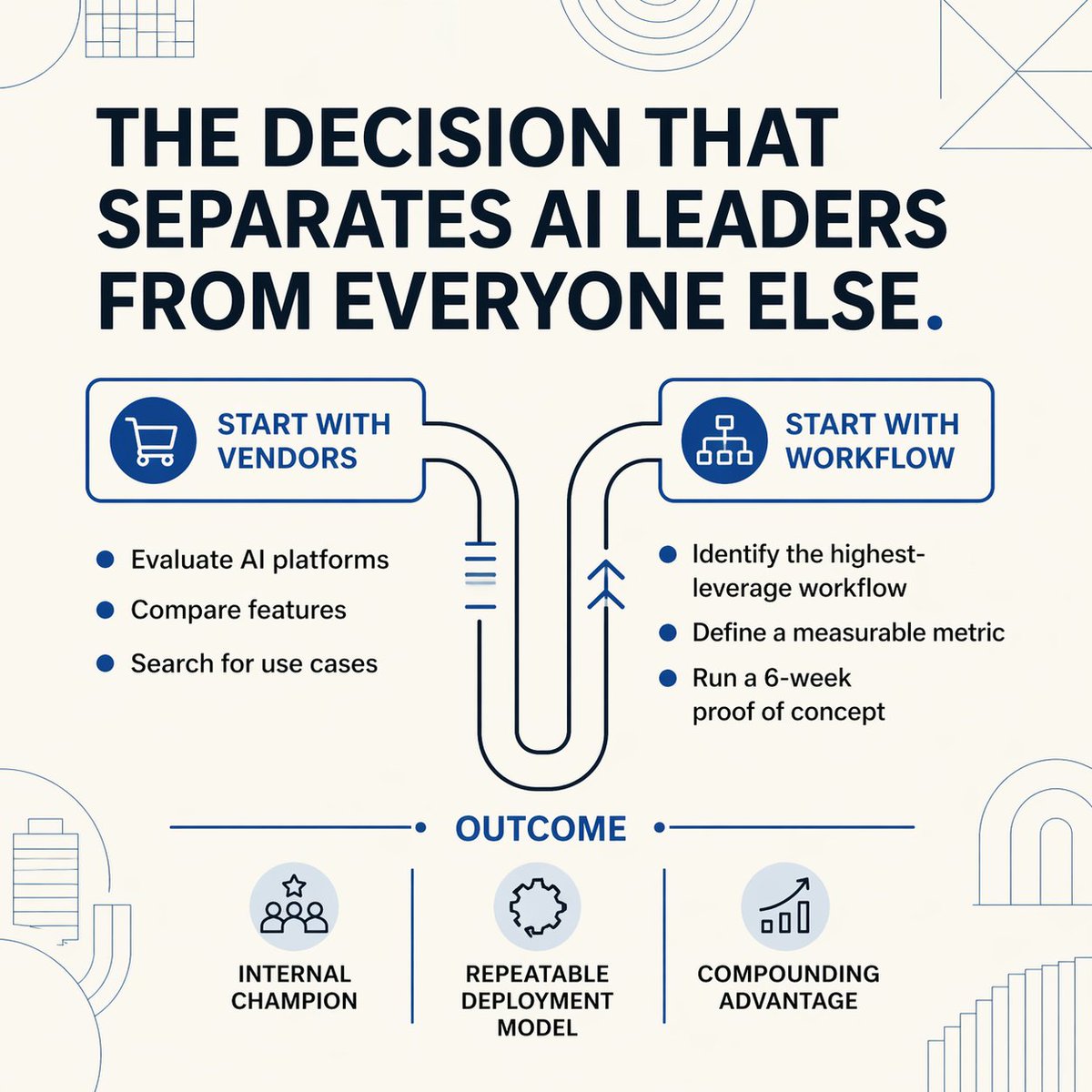
𝗧𝗵𝗲 𝗺𝗮𝗻𝘂𝗳𝗮𝗰𝘁𝘂𝗿𝗶𝗻𝗴 𝗰𝗼𝗺𝗽𝗮𝗻𝗶𝗲𝘀 𝘁𝗵𝗮𝘁 𝘄𝗶𝗹𝗹 𝗹𝗲𝗮𝗱 𝘁𝗵𝗲𝗶𝗿 𝘀𝗲𝗰𝘁𝗼𝗿𝘀 𝗶𝗻 𝟮𝟬𝟮𝟴 𝗮𝗿𝗲 𝗺𝗮𝗸𝗶𝗻𝗴 𝗼𝗻𝗲 𝗱𝗲𝗰𝗶𝘀𝗶𝗼𝗻 𝗱𝗶𝗳𝗳𝗲𝗿𝗲𝗻𝘁𝗹𝘆 𝗿𝗶𝗴𝗵𝘁 𝗻𝗼𝘄. 🧵
They're choosing a workflow before they choose a vendor.
Not: "Let's evaluate AI platforms."
But: "Which single workflow, if AI-augmented, creates the most measurable business value this quarter?"
That question produces something no vendor evaluation can:
→ A specific number
→ A defined owner
→ A 6-week proof point
And that proof point produces something even more valuable than its own ROI.
An internal champion.
A repeatable deployment model.
A board narrative.
Every subsequent deployment gets faster and cheaper.
The capability compounds. The competitive gap widens.
The companies building that capability now won't just be ahead in 2028.
They'll have a structural advantage their competitors can't close quickly.
The starting point is simpler than most people think.
One workflow. One metric. One win.
Curious what that looks like for your team? 👇
Talk to us at ShiftAI to see how your organization can have real-time finance visibility and CXO-ready answers in under a month, without replacing your existing systems
calendly.com/suresh-theshift…
10
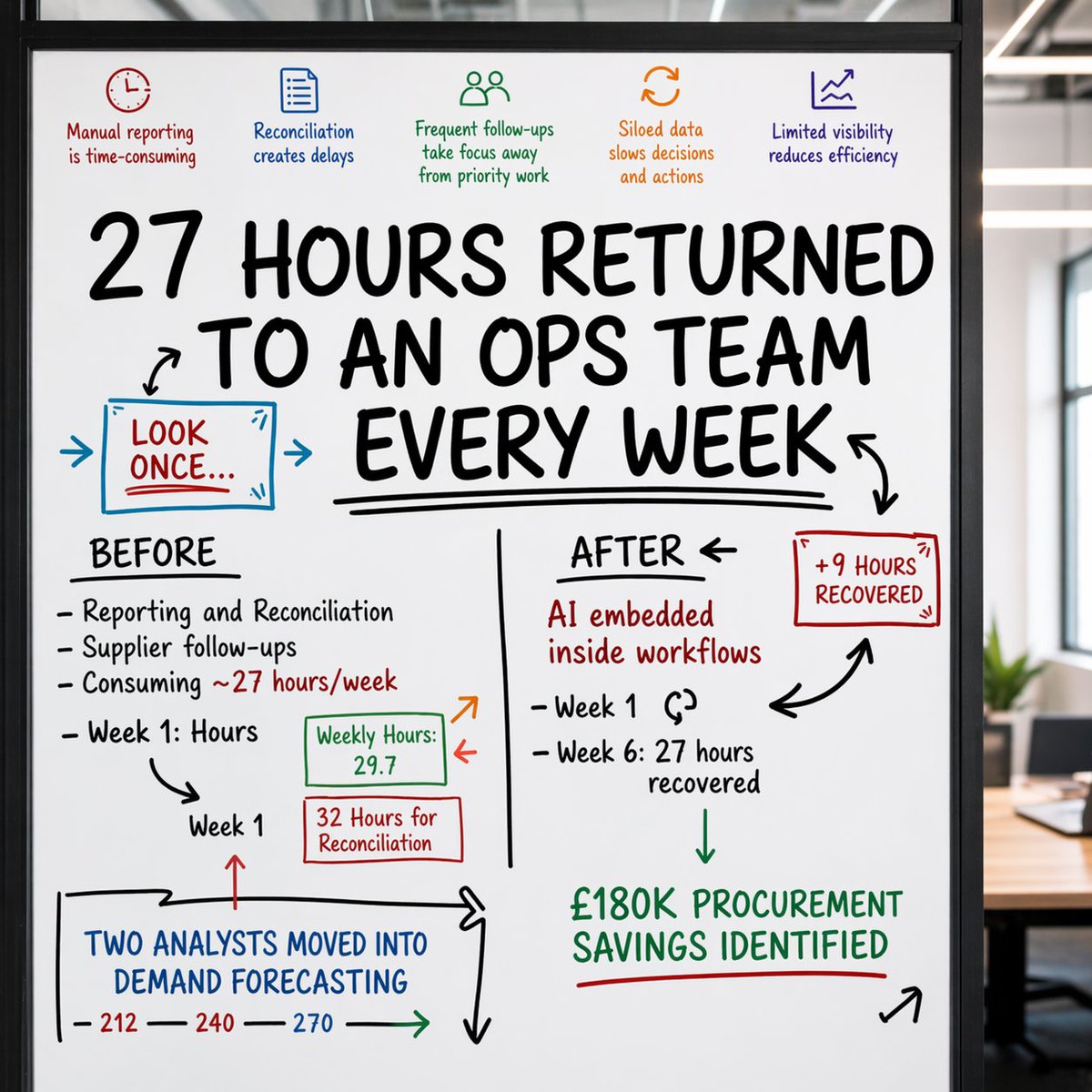
A COO gave her ops team back 27 hours a week. Here's what they did with the time.
Before: 4 people. 27 hours per week on reporting, reconciliation, and supplier follow-ups.
High-frequency. Low-value. Soul-crushing for people hired to solve hard problems.
The change: ShiftAI embedded AI into the three workflows consuming most of that time.
Not a new tool alongside the old process. Inside it.
Week 1 of live deployment: 9 hours recovered.
Week 6: 27 hours recovered. Every week.
But the outcome that mattered most wasn't the hours.
It was what the team did next.
Two analysts moved into demand forecasting — an area the business had never had capacity for.
Within a month, they'd identified £180K in procurement savings that were previously invisible.
The AI didn't replace anyone.
It freed the best people to do the work only they could do.
What would your team do with 27 hours back? 👇
14
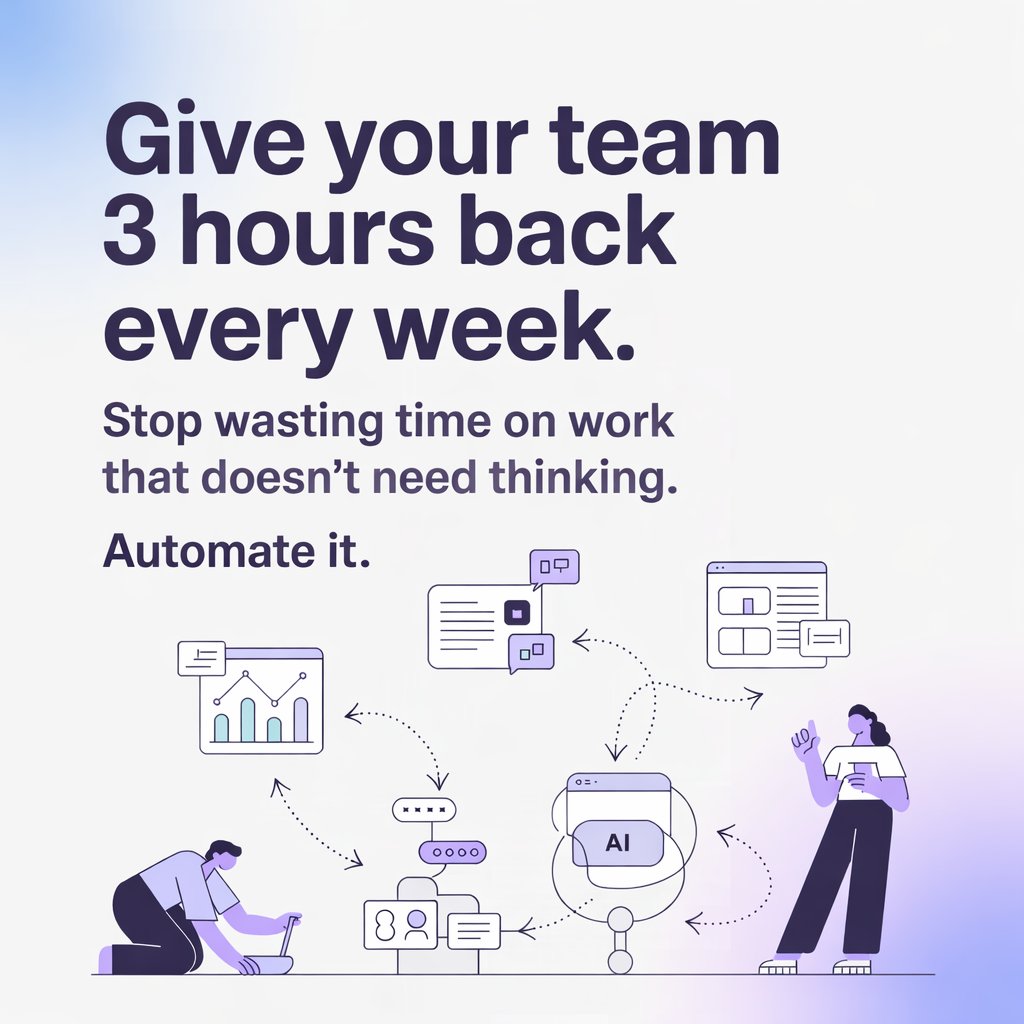
The best AI deployments are the ones your team doesn't have to think about.
They just work. 🧵
Here's what that actually looks like:
→ The weekly report that took 3 hours is ready in 15 minutes. Nobody noticed the change.
→ Supplier follow-up emails go out automatically. The team only touches exceptions.
→ The data reconciliation blocking every Monday morning disappears from the calendar entirely.
Invisible adoption. Visible outcomes.
That's the only bar worth building to.
Most AI implementations sit beside how your team works.
The best ones are engineered inside it — into the exact workflows your team already runs every day.
The goal was never transformation for its own sake.
It's giving your best people back the time to do work only they can do.
What would your team do with 3 hours back every week? 👇
6
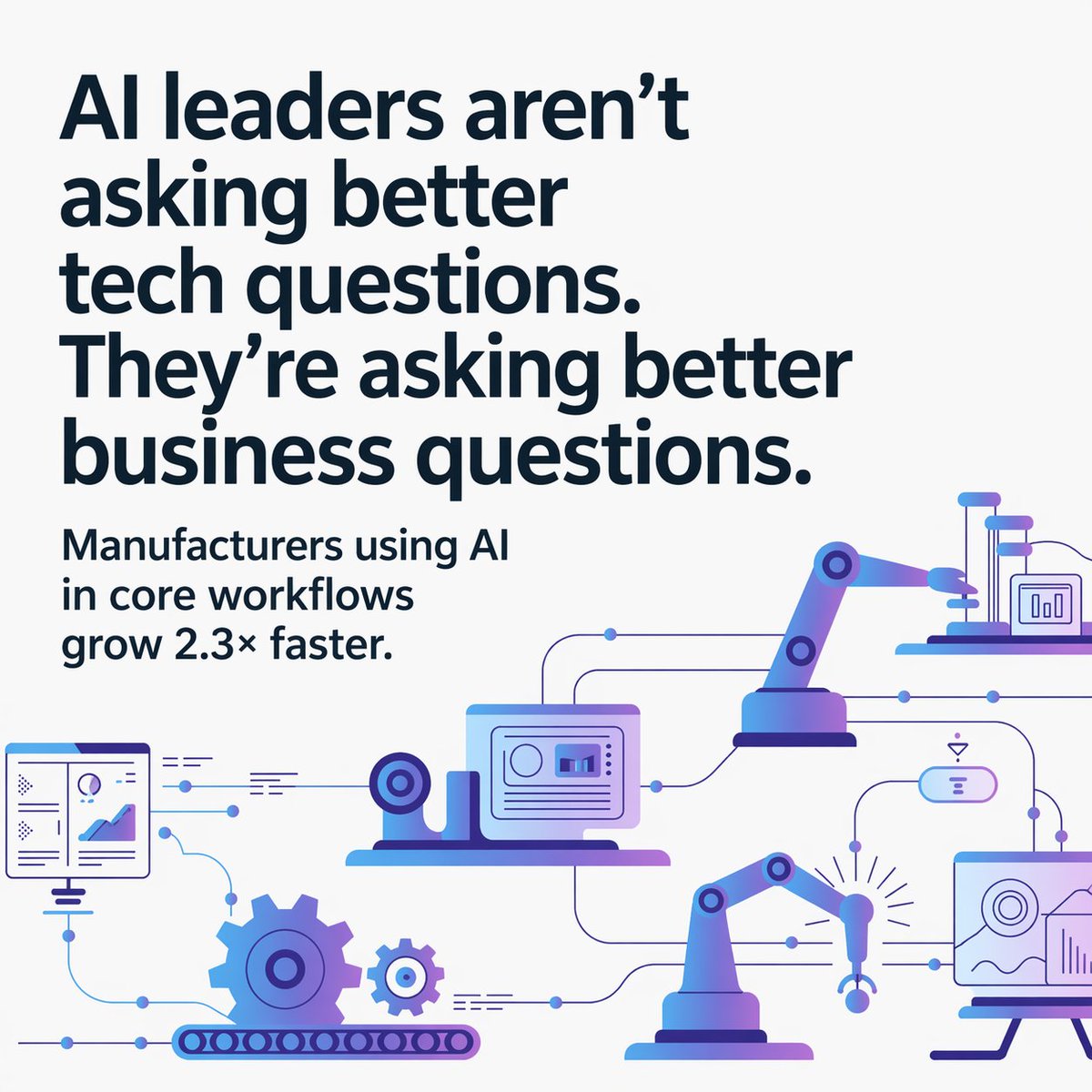
Manufacturers using AI in core workflows are growing 2.3× faster than their peers.
That gap isn't coming from bigger budgets or better tech. 🧵
Most companies ask: "What AI should we use?"
The fastest-moving ones ask something completely different:
"Which workflow, if augmented, creates the most immediate business value?"
One question produces a technology wishlist.
The other produces a business case — with a number attached before a single vendor conversation happens.
The metric you define before deployment is more valuable than the AI you deploy.
Define it first. Everything else follows.
What question is your team starting with? 👇
7
Most ops teams waste hours every week on work that adds almost no value.
The fix isn't a strategy doc. It isn't a vendor eval.
It starts with one question: 👇
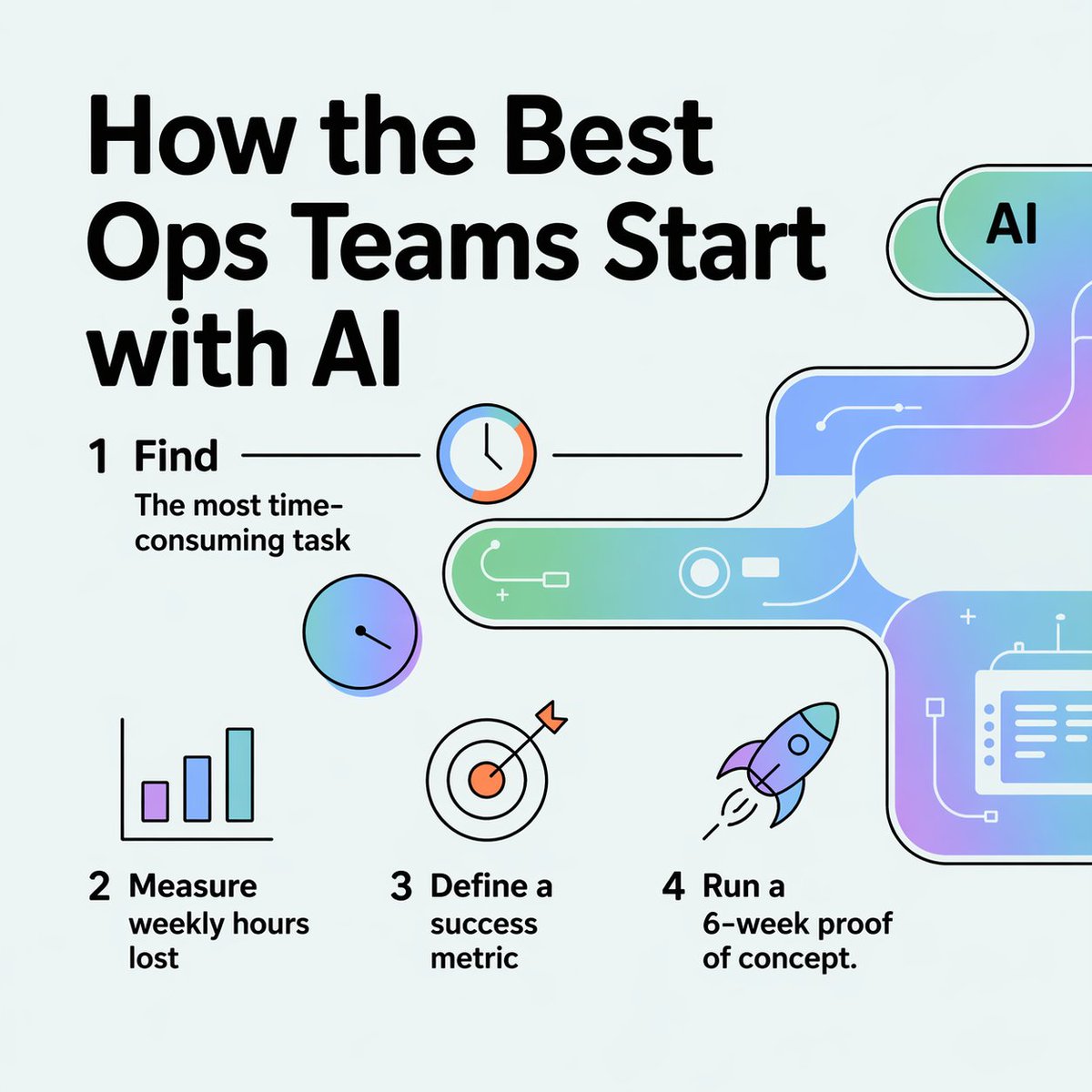
"Which single task costs our team the most hours every week — and adds the least value?"
Once you have that answer, do this:
→ Measure it: time per person × team size × weekly frequency
→ Define what 'better' looks like: a number, not a feeling
→ Run a 6-week proof of concept against that number and nothing else
One workflow. One metric. One win.
The strategy builds itself from there.
We use this exact approach at ShiftAI in every engagement.
What's the one task your team keeps doing that nobody can justify? Drop it below 👇
7
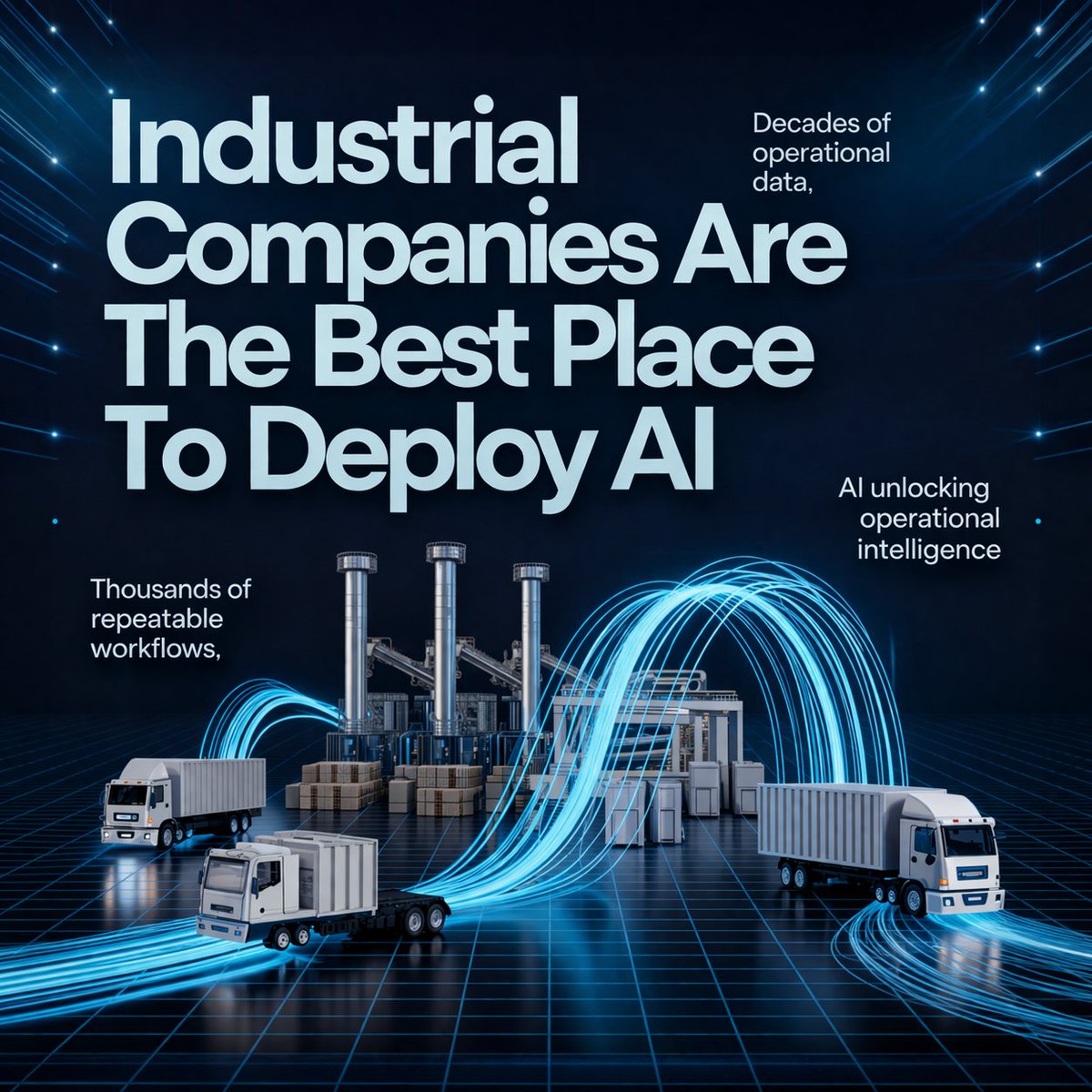
𝗜𝗻𝗱𝘂𝘀𝘁𝗿𝗶𝗮𝗹 𝗰𝗼𝗺𝗽𝗮𝗻𝗶𝗲𝘀 𝗮𝗿𝗲 𝘁𝗵𝗲 𝗺𝗼𝘀𝘁 𝗲𝘅𝗰𝗶𝘁𝗶𝗻𝗴 𝗽𝗹𝗮𝗰𝗲 𝘁𝗼 𝗱𝗲𝗽𝗹𝗼𝘆 𝗔𝗜 𝗿𝗶𝗴𝗵𝘁 𝗻𝗼𝘄.
𝗛𝗲𝗿𝗲'𝘀 𝘄𝗵𝘆:
Manufacturers, logistics operators, and ops-heavy businesses have something most tech companies don't:
Decades of untouched, high-volume, real-world operational data.
AI doesn't need a pristine tech stack to create value.
It needs repetitive, high-frequency processes — and industrial companies have thousands of them.
The opportunity is enormous.
Every workflow your team does manually, every report built from scratch, every exception handled by hand — that's recoverable time waiting to be redirected to higher-value work.
The companies moving now aren't the biggest or the best-resourced.
They're the ones who picked one workflow, defined one metric, and started.
What's the one workflow you'd love to give back to your team? Drop it below 👇
8