
YC Founder • Advisor • Investor • Builder • SMB Owner
Joined July 2025
- Tweets 2,598
- Following 0
- Followers 2,940
- Likes 832
12 Photos and videos



A bit about me: YC Alum. Eng turned CEO.
- I raised $3m in 14 days.
- No decks. No board seats.
- I built to $1m ARR
- Turned it profitable
- Now spinning off more companies
Follow if you want unfiltered founder takes.
The kind of stuff founders can't talk about.
4
2
102
28,862
One of the top AI Native Services at the moment. Great playbook.
AI Native Law firms are crushing too.
What’s the next big AI native service?

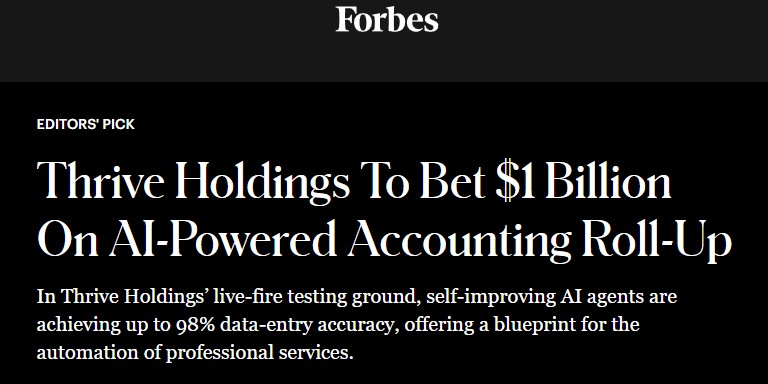
Accounting roll-ups are attracting significant attention right now.
The playbook is the same:
Purchase high-quality local accounting firms, then leverage AI and centralized infrastructure to drive productivity, margins, and growth.
Similar to Berkshire Hathaway and Kelly Partners Group, Thrive Holdings is also leaving meaningful minority stakes with local partners to maintain entrepreneurial incentives and client relationships.
Add long holding periods instead of the traditional PE model of buying and selling, and you have a great compounding machine.
1
2
393
The claim that it's "so good it's unsafe to release" is a beautiful marketing pitch, well done.
Have you used it?
Any good?

Introducing Claude Fable 5: a Mythos-class model that we’ve made safe for general use.
Its capabilities exceed those of any model we’ve ever made generally available.
3
707
Category creation is a dangerous place for startups.
Most category creators fail.
Ironically, many end up retreating back into the established category they came from.
↓
The playbook is usually much simpler:
1. Find a growing market
2. Build the best product in it
You don’t need to create demand, just capture it.
Your odds of success just increased 10x.
1
7
329
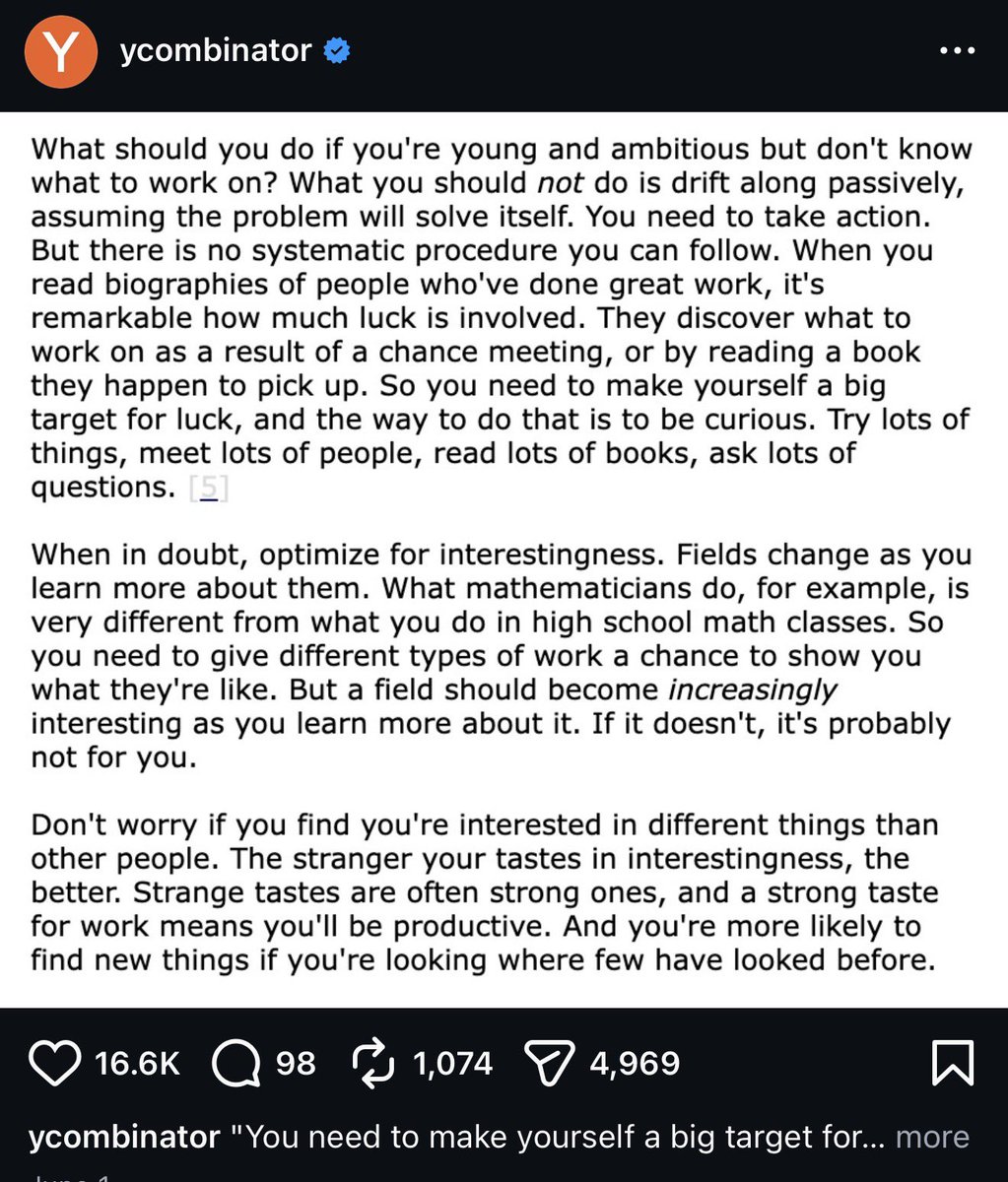
What should you do if you’re young and ambitious but don’t know what to work on?
Meet as many business owners as you can.
Every industry, company type, and business model. Find one that interests you. Find one you can see yourself waking up for. Diving into. Where you’d be so pumped to win that you can’t lose. Where losing would still be a win because you can’t imagine a better way to spend your time.
Expose yourself.
You’ll probably find it.
1
2
19
455
Customers are the only thing that matters.
Period.
With them you’ll succeed.
Without them you won’t.
It’s not easy but it is simple.
Jun 7

You can raise millions and fail.
You can raise almost nothing and win.
Investors are not validation.
They don't know whether your idea will work.
Fundraising is not traction.
The market decides.
Not investors.
Don't confuse it with progress.
1
5
221
Don’t take advice from VCs..
Full thread: x.com/shiftj/status/20350004…
Jun 5

During a pitch a prominent VC once told us the market size for global logistics was only $6B.
My CFO’s response: “So you’re saying it’s smaller than the market for USB cables?”
2
371
The AI-native services I’m seeing crush it right now:
• Law firms
• Bookkeeping/accounting
• Tax preparation
• Insurance back-office operations
• Medical billing
Notice a pattern?
None are sexy.
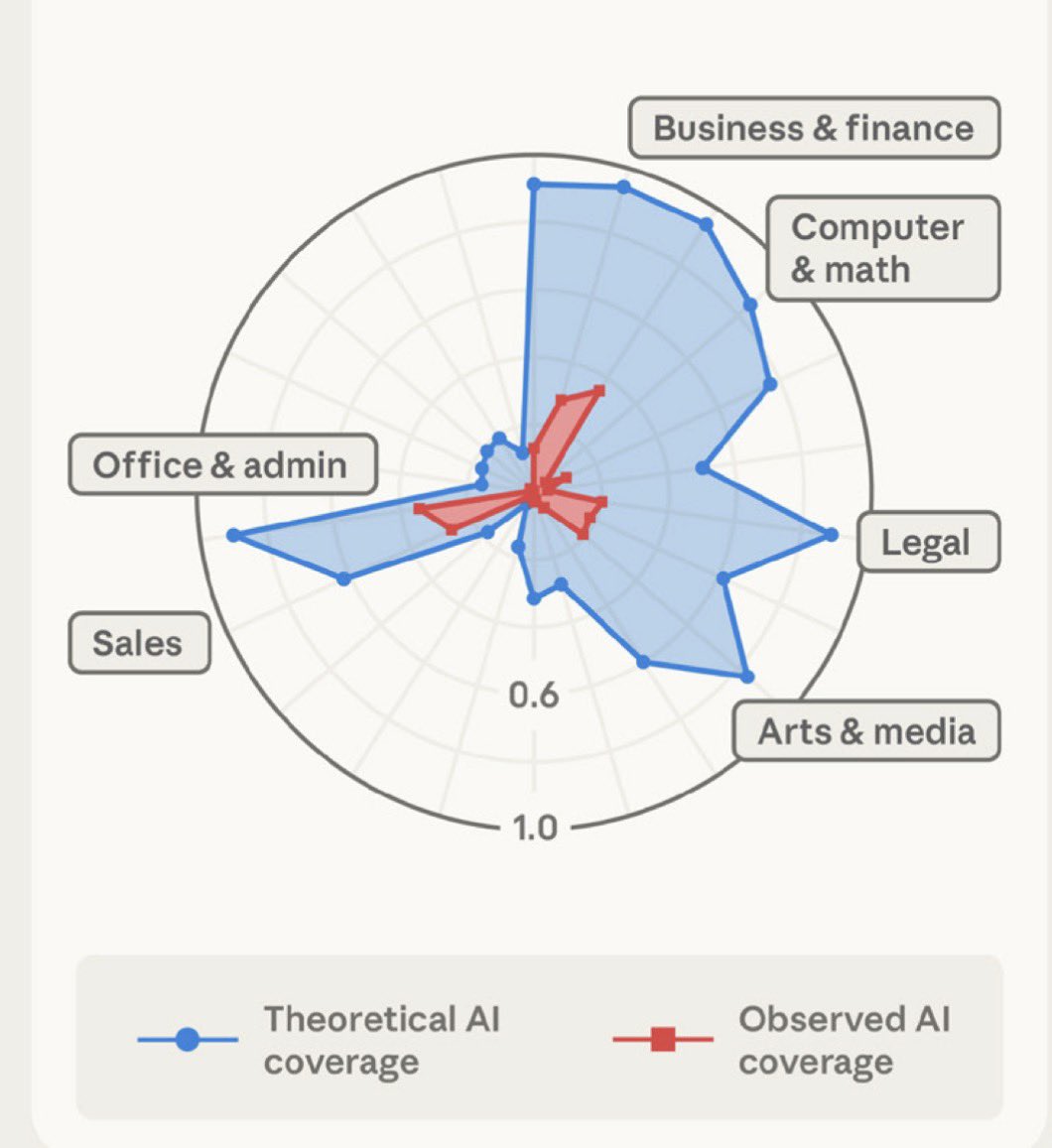
They’re all industries where businesses already spend thousands per month on human labor to move information between systems, review documents, and complete repetitive workflows.
The AI playbook isn’t:
“Build software and hope people buy it.”
It’s:
> Sell a service people already buy.
> Replace labor with AI.
> Improve margins.
> Productize the workflow.
> Slowly become software.
That’s why some of the most interesting AI companies today look more like service businesses than SaaS companies.

If you’re looking to build a startup, build an AI Native Service.
my favorite AI playbook by far.
Instead of selling AI products, use it yourself.
You’ll reap far more benefit that way:
> higher prices
> larger market
> better product
> more defensible
These days it’s hard to tell what companies will stand the test of time.
These companies will.
7
3
63
8,526
If you’re looking to build a startup, build an AI Native Service.
my favorite AI playbook by far.
Instead of selling AI products, use it yourself.
You’ll reap far more benefit that way:
> higher prices
> larger market
> better product
> more defensible
These days it’s hard to tell what companies will stand the test of time.
These companies will.
Jun 3

Some of the biggest companies of the next decade won't be software businesses. They'll be services companies like insurance carriers, law firms, and tax practices rebuilt from scratch with AI doing most of the work.
In this episode of Startup School, YC Visiting Partner @CharlieWarren walks through the playbook for building AI native services companies, covering how to pick a market with the right traits, why variance kills these businesses faster than anything else, and the P&L math that’ll transform your business model.
00:00 — Intro to AI Services Companies
01:01 — Picking the Right Market
02:55 — Markets YC Likes Right Now
03:43 — The Sam Altman Test
04:35 — The Right Founding Team
05:28 — Building the Product
06:19 — Variance Is the Existential Problem
07:08 — The Early Demand Trap
07:53 — How to Price AI Services
08:41 — The P&L Walkthrough
09:33 — AI Operating Leverage
10:27 — Don't Buy Your Way In
6
1
60
17,492
Successful founders are rarely good at just one thing.
When you look at their life you’ll find several areas in which they excel; often being in the top 5% of that field.
It’s never JUST business.
They’re successful in anything they take seriously.
Ex:
> D1 athlete
> world class gamer
> top-tier programmer
> top performing student
> exceptional salesperson
> competitive poker player
> military special operations
> nationally ranked chess player
—
There are exceptions to every rule.
But if you've never been great at anything, it's hard to believe you'll suddenly become great at startups.
7
364
I helped an SMB owner make $1M this weekend.
here’s the story 👇
A small business owner was looking to expand to 4 more locations.
if successful, this would net him $1m/ year.
The problem?
If it fails he’s millions in debt and he was relying on:
> gut feel
> personal experience
> randomly clicking thru google maps
So I helped build an AI agent that scouts locations.
We combined:
> his 10 years of industry knowledge
> data across population, demographic, income, competitor, comparable businesses types
> 30 factors from a decade of experience.
Then ran it across every subdivision in the United States.
The result? We overshot.
By a lot..
We ended up finding 50 exact-match expansion opportunities.
The exact profile he was looking for.
He was stunned.
4x locations makes him one million/yr
this list is closer to $10M.
But here’s my favorite part:
These capabilities used to be reserved for large companies but are now rapidly becoming available to those with less resources.
This kind of sophistication you’d normally expect from a company like Starbucks.
Now available to a small business owner.
Giving opportunities to people who didn’t think they had them.
The type of scale he didn’t think was possible.
Pretty damn cool.
1
1
313
Probably the most common advice I give on slide decks.
That plus: make it simpler.
Jun 1

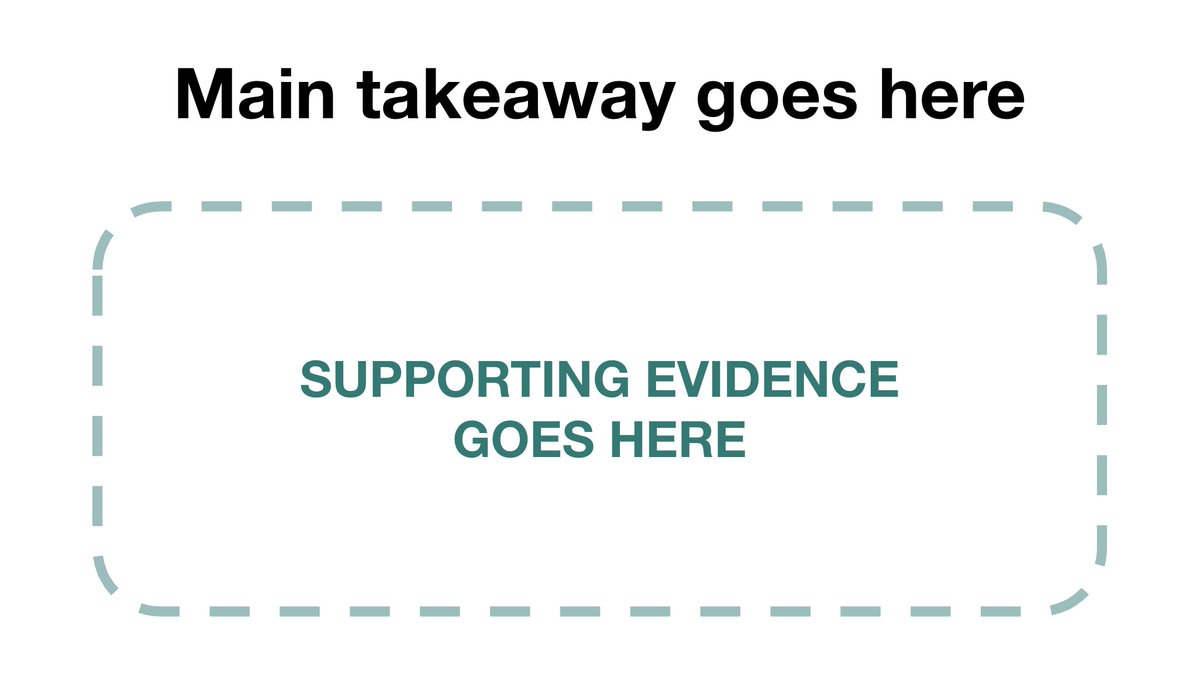
Common fundraising deck mistake: using boring slide titles like "Team" and "The Problem".
Instead, state the conclusion that you want investors to take away from the slide, and use the body as supporting evidence.
If an investor only read the titles on your slides, would they understand your business and want to invest?
1
204
Money doesn’t solve problems, it accelerates what’s working.
Dangerous to think otherwise.

A founder kept saying "if only we had money we'd do X."
Money is not the fire. Money is gasoline you pour on a fire that already exists.
You don't have a funding problem. You have a "people don't want it yet" problem. Go make the first fire.
1
2
149
Don’t be scared of crowded markets.
Empty ones are far worse.
Competition usually means:
• real demand
• real budgets
• an unsolved problem
Empty markets are empty for a reason.
May 29

Sometimes they're a good reason to work on something. When people say a market is "crowded," what that often means is that there's a real problem and none of the solutions are good enough yet.
1
5
438
Seeing this trend in a lot of successful YC companies.
The playbook:
1) approach a traditional business
2) find a repetitive revenue-driving workflow
3) build the solution (often leveraging AI)
4) showcase proof of revenue increases
5) sell solution to to PE companies
Some companies don’t even sell the solution.
They acquire the company, implement the improvements, and capture the full value themselves.
Either way.. lot of opportunity outside of tech.
—
What businesses do you think gain the most from AI?
May 29

We built an AI agent for an HVAC company in the southeast last month.
They were doing around $3M a year and growing fast, but their CSRs couldn't keep up with the lead volume.
Form fills were taking 4-6 hours to respond to. LSA messages and Yelp inquiries went 12 hours sometimes. They were losing jobs to whoever responded first.
Here's exactly what the agent does:
When a homeowner submits a form on their website, sends a message through their LSA listing, fills out a request on Yelp or Angi, or texts their main business line:
> The agent responds within 30 seconds with a personalized message acknowledging the specific issue (no AC, furnace not heating, capacitor replacement, whatever they mentioned)
> Sends it all through blue iMessage texts, so the homeowner thinks they're texting with a real person at the company
> Asks 2-3 qualifying questions: zip code, residential or commercial, what type of system they have, when they need service
> Pulls their calendar in real time and offers 3 actual available appointment slots based on tech routing
> Books the appointment directly into ServiceTitan if they accept
> Texts the customer a confirmation with the tech's name, photo, and ETA window
> Notifies the CSR team only if the lead is high-priority (commercial, multi-system, replacement quote, etc.)
What changed in the first 30 days:
> Average lead response time: 4 hours to under 1 minute
> Booked-to-lead ratio: 22% to 41%
> CSR hours saved per week: about 18
> Owner now actually sleeps because after-hours leads get booked without anyone touching them
Most HVAC companies are spending $30-60 per LSA lead and then losing 30-50% of them to slow follow-up.
AI isn't perfect and it shouldn't fully replace humans in your sales process. But there's no reason not to use the best tech available to make your business more money.
4
2
98
23,342
Tech startups are NOT the only way to build wealth.
In fact, it may be one of the worst ways:
- low success rate
- long time horizon to success
- difficult to exit / capture monetary value
It’s not the most efficient but it is the most popular.
And most folks haven’t seen the alternatives.
Here’s one👇
If your only aim is to make money, a tech startup isn't the most efficient way.
It's high risk, high reward.
Most don't make make.
13
3
234
87,613
7/ Buying a business is not all gravy
There’s risks to this game that don’t exist as deeply as tech startups.
- you need capital to grow
- capital requires loans and debt
- debt often requires personal guarantees
Unlike buying a home where the home is collateral; businesses don’t have many hard assets.
Meaning if you default on the loan banks come after you - not the house.
That’s not a risk to be taken lightly, even if the risks are arguably lower.
1
4
2,396