
571 Photos and videos











сняі ₿ retweeted
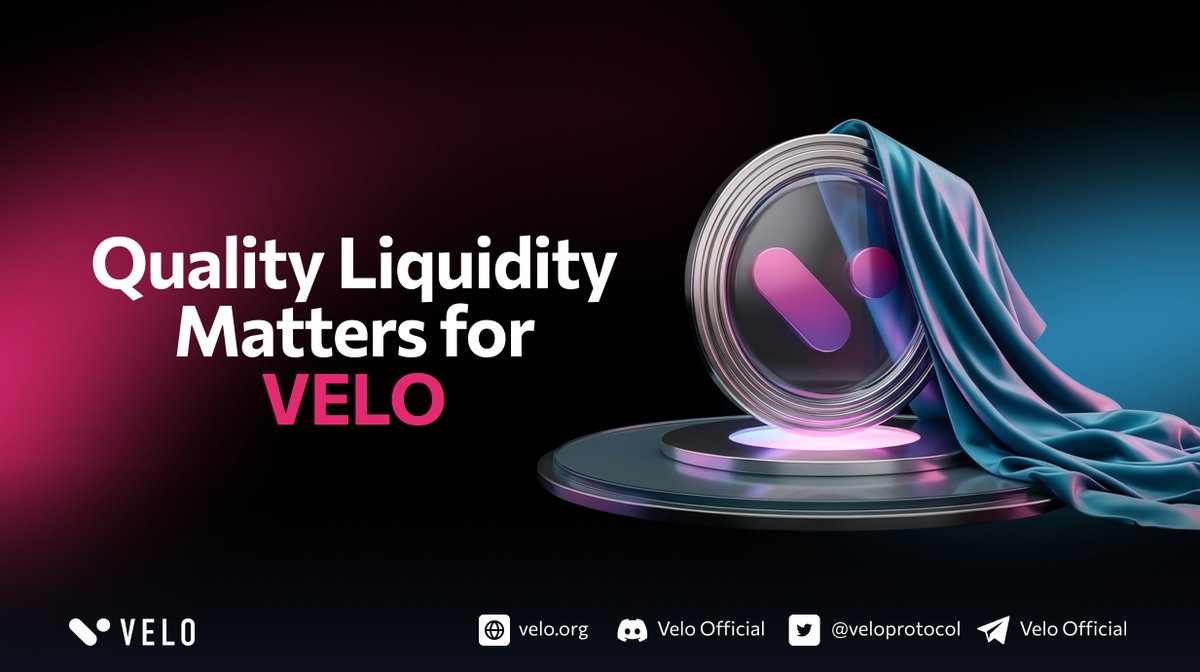
Why does liquidity quality matter?
Bad liquidity = high fees, slow execution, and big price slippage.
VELO’s hybrid liquidity pulls together banks, OTC desks, and DeFi into one smart pool with AI routing.
Result? Cheaper, faster, more reliable payments and better prices for everyone.
No more fragmented markets — just deep, high-quality global liquidity.
VELO is the future PayFi utility token for real-world crypto payments, seamless off-ramps, settlement, rewards & liquidity.
Quality liquidity = real adoption.
23
58
326
12,070
сняі ₿ retweeted
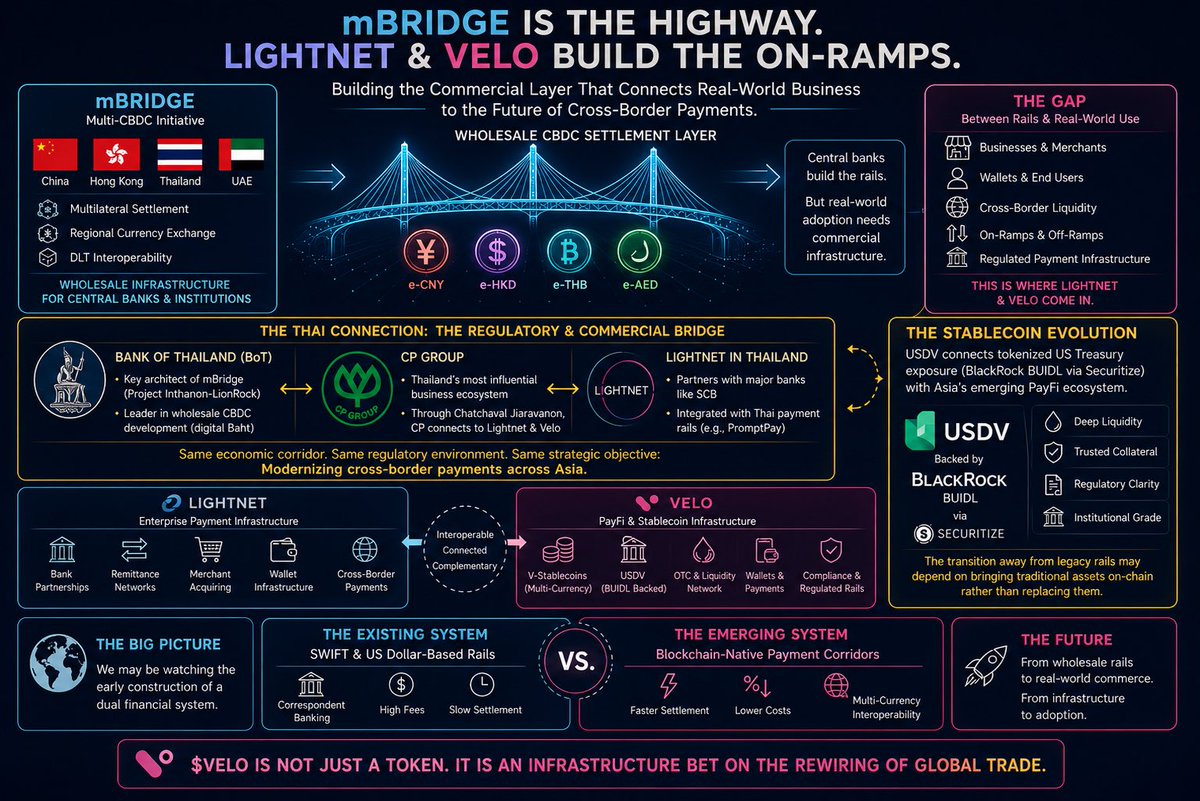
What if mBridge is only half of the story?
Central banks can build the rails.
But someone still needs to connect businesses, merchants, wallets and cross-border liquidity to those rails.
@veloprotocol and @lightnetgroup may be positioning themselves exactly where that gap exists. 👇
mBridge is the multi-CBDC initiative involving the central banks of China, Hong Kong, Thailand and the UAE.
And interestingly, its core focus revolves around the exact same concepts:
multilateral settlement, regional currency exchange and distributed ledger interoperability.
This is where the macro picture connects.
mBridge is a wholesale network built for central banks and large-scale institutional settlement.
But central bank infrastructure alone does not automatically reach merchants, businesses or end users.
It still needs commercial on-ramps, licensed OTC gateways, liquidity providers, wallets and regulated payment infrastructure to connect real-world commerce to these new corridors.
This is where @lightnetgroup and @veloprotocol become interesting.
mBridge’s founding corridors include China, Hong Kong, Thailand and the UAE.
Lightnet’s roots are deeply connected to Thailand through the @CPGroup_Live ecosystem, while its expansion strategy has increasingly focused on Hong Kong and broader Asian payment corridors.
Different networks.
Overlapping geography.
Similar direction.
The Thai connection may be even more important than most people realize.
The Bank of Thailand has been a key architect of mBridge since the early Project Inthanon-LionRock experiments.
At the same time, Thailand’s CP Group sits at the center of one of the country’s most influential business ecosystems.
Through Chatchaval Jiaravanon, the CP ecosystem connects to both Lightnet and Velo.
This does not mean mBridge, the Bank of Thailand, Lightnet and VELO are formally connected.
But they operate within the same economic corridor and pursue a similar objective:
modernizing cross-border payments across Asia.
Central banks can build settlement rails.
Commercial adoption requires banks, payment providers, liquidity operators and merchant infrastructure.
That is where Lightnet becomes particularly interesting.
If regional payment systems want to reduce reliance on unregulated liquidity bridges such as USDT, they will likely need more compliant alternatives.
This is where $USDV becomes relevant.
Through BlackRock’s BUIDL fund and @Securitize, USDV connects tokenized US Treasury exposure with Asia’s emerging PayFi ecosystem.
This creates an interesting contradiction.
Many new payment networks aim to move beyond legacy financial infrastructure.
Yet the transition may depend on bringing traditional financial assets on-chain rather than replacing them altogether.
Ironically, the next generation of payment infrastructure may emerge through tokenization.
mBridge enables direct settlement between local CBDCs without relying on the US dollar as the primary intermediary.
VELO’s V-Stablecoin model points toward a commercial version of a similar idea:
regional fiat-linked digital assets used for cross-border settlement.
The bottom line:
We are not looking at isolated crypto projects.
We may be watching the early construction of a dual financial system.
On one side, the existing SWIFT and US dollar-based rails.
On the other, a new network of blockchain-native payment corridors across ASEAN, Hong Kong, the UAE and BRICS-linked markets.
mBridge may build the highway for central banks.
But ecosystems like Lightnet and VELO could help build the commercial vehicles, ramps and local roads that bring real-world business activity onto those new rails.
$VELO is not just a token.
It is an infrastructure bet on the rewiring of global trade.
Jun 14

🚨NEW: CHINA SET TO LAUNCH SWIFT ALTERNATIVE PAYMENT NETWORK
China is reportedly preparing to launch mBridge, a blockchain-powered payments network backed by five major central banks.
With $69 billion already processed, the platform could become China's biggest step yet toward challenging the dollar in global commerce.

13
32
113
10,244
сняі ₿ retweeted

Jun 9
Most crypto projects were built to pump, $VELO was built to move money across borders.
@veloprotocol started with a problem affecting millions of migrant workers across Southeast Asia - sending money home was often slow, expensive, and dependent on outdated financial infrastructure.
The project was co-founded by Chatchaval Jiaravanon, a member of the family behind CP Group, one of Asia’s largest conglomerates. Instead of launching another trading-focused crypto project, the team focused on cross-border payments.
Their solution was a blockchain-based settlement network designed to make international transfers faster and more accessible.
Over time, Velo expanded beyond remittances. The project partnered with Visa, UOB, and Seven Bank, raised over $60M from investors including DWF Labs, and brought tokenized real-world assets to Southeast Asian markets.
In 2026, Velo pivoted again: from remittance infrastructure to a broader PayFi and RWA ecosystem. The Orbit Plus super app launched across 15 countries, while Treasury-as-a-Service became the next step in its institutional strategy.
While much of crypto competes for attention, Velo has spent years pursuing a simpler goal of making cross-border payments as easy as sending a message.
Swap $VELO on ChangeHero 👇
changehero.io/Exchange_VELO
3
10
48
5,513

Jun 4
Many people will miss the spaceship...
🚀🚀🚀
$VELO
Jun 3

velo:native
This is the definitive on-chain proof that the "shakeout" is complete and the supply is structurally locked.
@wideopentruth did forensic work that most people only talk about. Let's break down what this data actually means for the thesis.
10
400
сняі ₿ retweeted

May 29
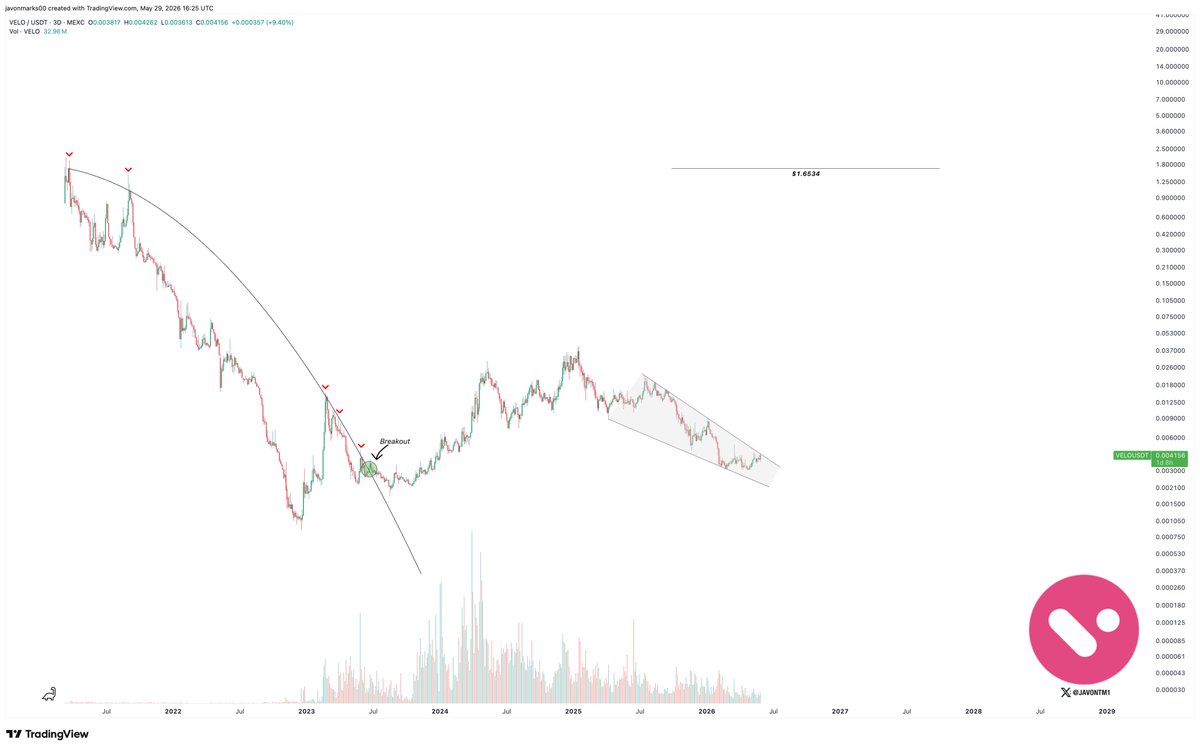
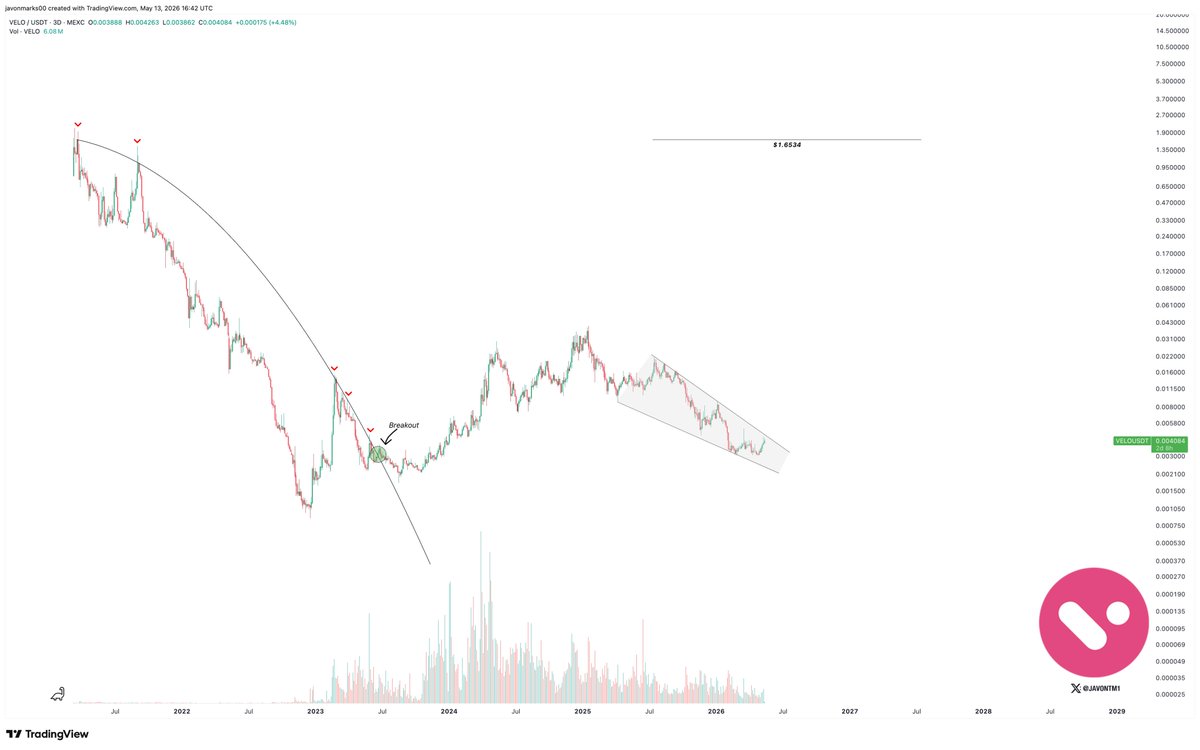
$VELO's breakout target at $1.6534 continues to go unchanged here and prices look to be nearing a smaller breakout which can spark a key move towards!
Technical setup shows >200X potential.

7
14
81
8,058
May 24
Must read! 👇
$VELO @veloprotocol

$VELO may be one of the most misunderstood infrastructure plays in crypto.
Most people still think crypto is about charts, memecoins and speculation.
But behind the scenes, an entirely new payment architecture may already be taking shape.
And surprisingly, many of the puzzle pieces appear to connect around VELO, Lightnet, XRPL, EVOLVE and even projects like mBridge.
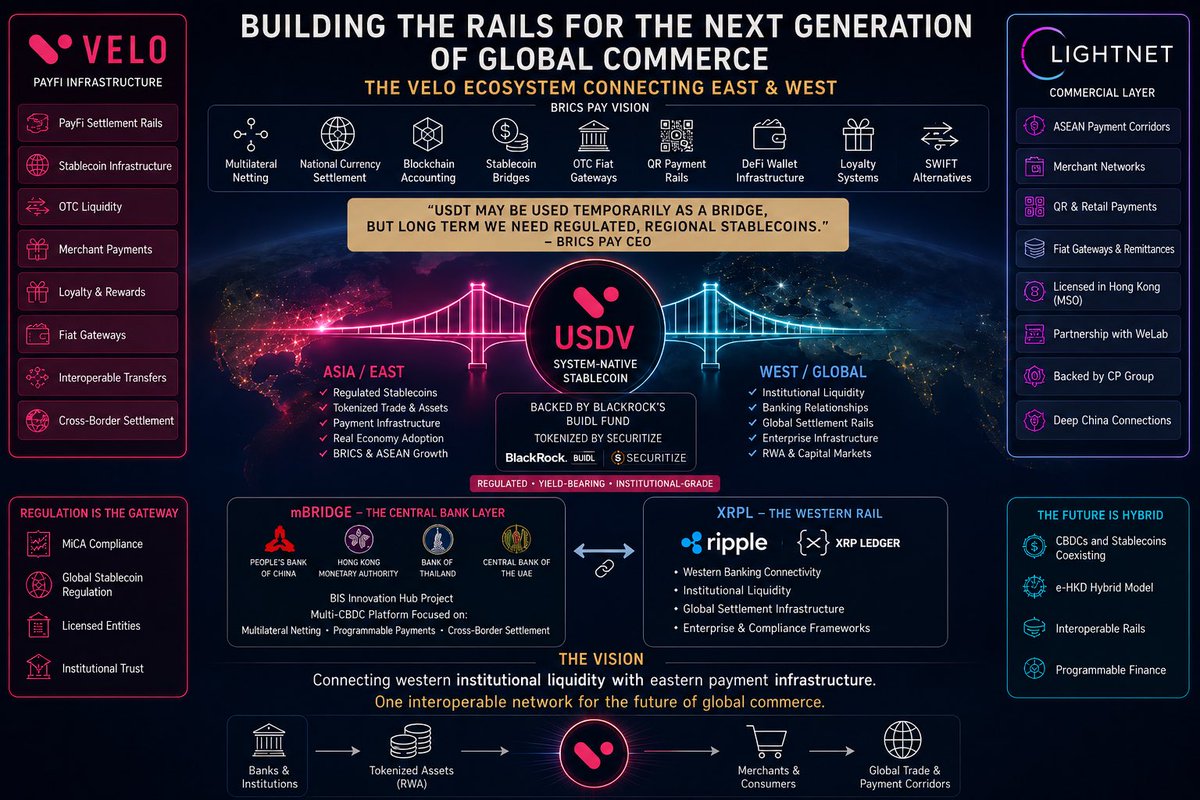
BRICS Pay documents and recent interviews describe a future financial system built around multilateral netting, national currency settlement, blockchain accounting, stablecoin bridges, OTC fiat gateways and interoperable payment rails.
This is not about replacing the dollar with a single coin.
It is about rebuilding the infrastructure of global commerce.
One statement from the BRICS Pay CEO stood out in particular:
USDT may serve as a temporary bridge, but over time the system will likely require regulated regional stablecoins from jurisdictions such as Hong Kong or the UAE, potentially even asset-backed alternatives like tokenized gold.
That distinction matters more than most people realize.
Since the implementation of MiCA in Europe and the tightening of stablecoin regulation globally, the market has increasingly split into two categories:
regulated institutional-grade digital assets and unregulated liquidity bridges.
This is precisely where VELO’s positioning becomes interesting.
For years, @veloprotocol has quietly built infrastructure around PayFi settlement, fiat gateways, OTC liquidity, merchant payment systems, loyalty tools and interoperable cross-border transfers.
The similarities are difficult to ignore.
And this is where $USDV becomes critical.
USDV is not simply another stablecoin. It acts as the system-native settlement asset within the Velo ecosystem and is backed through exposure to BlackRock’s USD Institutional Digital Liquidity Fund, BUIDL, tokenized via @Securitize
That changes the entire conversation.
If USDT is merely a temporary liquidity bridge, the obvious question becomes:
what comes next?
VELO’s answer may already exist in the form of a regulated, yield-bearing stablecoin infrastructure connected to tokenized US Treasury exposure.
And unlike unregulated stablecoin bridges, USDV is backed by an investment in BlackRock’s USD Institutional Digital Liquidity Fund, BUIDL, tokenized via Securitize.
At the same time, Velo has also explored additional V-Stablecoins linked to regional fiat currencies, reinforcing the idea of a multilayered settlement architecture built around interoperable regional liquidity rather than a single dominant asset.
In other words, while USDT solves short-term liquidity, USDV points toward the next phase of institutional PayFi settlement backed by real-world assets and on-chain yield generation.
Then things become even more interesting with Lightnet.
Velo & @lightnetgroup was co-founded by Chatchaval Jiaravanon, a member of the family behind
@CPGroup_Live, one of Asia’s most influential conglomerates with deep historical business ties throughout China.
And this matters because cross-border payment systems are never built on technology alone.
They require regulatory trust, banking relationships, liquidity corridors, licensing frameworks and geopolitical access.
That is precisely why Lightnet’s positioning in Hong Kong is so significant.
Hong Kong is increasingly emerging as the regulated digital asset sandbox for Asia and potentially even a controlled gateway into broader Chinese financial experimentation.
Through partnerships such as WeLab and its pursuit of Money Service Operator licensing, Lightnet has positioned itself near one of the most important future payment corridors connecting ASEAN, Hong Kong and China.
But another critical piece is often overlooked:
mBridge.
mBridge is the BIS-backed multi-CBDC initiative involving the central banks of China, Hong Kong, Thailand and the UAE.
And interestingly, its core focus revolves around the exact same concepts:
1
1
2
350
сняі ₿ retweeted
$VELO may be one of the most misunderstood infrastructure plays in crypto.
Most people still think crypto is about charts, memecoins and speculation.
But behind the scenes, an entirely new payment architecture may already be taking shape.
And surprisingly, many of the puzzle pieces appear to connect around VELO, Lightnet, XRPL, EVOLVE and even projects like mBridge.
BRICS Pay documents and recent interviews describe a future financial system built around multilateral netting, national currency settlement, blockchain accounting, stablecoin bridges, OTC fiat gateways and interoperable payment rails.
This is not about replacing the dollar with a single coin.
It is about rebuilding the infrastructure of global commerce.
One statement from the BRICS Pay CEO stood out in particular:
USDT may serve as a temporary bridge, but over time the system will likely require regulated regional stablecoins from jurisdictions such as Hong Kong or the UAE, potentially even asset-backed alternatives like tokenized gold.
That distinction matters more than most people realize.
Since the implementation of MiCA in Europe and the tightening of stablecoin regulation globally, the market has increasingly split into two categories:
regulated institutional-grade digital assets and unregulated liquidity bridges.
This is precisely where VELO’s positioning becomes interesting.
For years, @veloprotocol has quietly built infrastructure around PayFi settlement, fiat gateways, OTC liquidity, merchant payment systems, loyalty tools and interoperable cross-border transfers.
The similarities are difficult to ignore.
And this is where $USDV becomes critical.
USDV is not simply another stablecoin. It acts as the system-native settlement asset within the Velo ecosystem and is backed through exposure to BlackRock’s USD Institutional Digital Liquidity Fund, BUIDL, tokenized via @Securitize
That changes the entire conversation.
If USDT is merely a temporary liquidity bridge, the obvious question becomes:
what comes next?
VELO’s answer may already exist in the form of a regulated, yield-bearing stablecoin infrastructure connected to tokenized US Treasury exposure.
And unlike unregulated stablecoin bridges, USDV is backed by an investment in BlackRock’s USD Institutional Digital Liquidity Fund, BUIDL, tokenized via Securitize.
At the same time, Velo has also explored additional V-Stablecoins linked to regional fiat currencies, reinforcing the idea of a multilayered settlement architecture built around interoperable regional liquidity rather than a single dominant asset.
In other words, while USDT solves short-term liquidity, USDV points toward the next phase of institutional PayFi settlement backed by real-world assets and on-chain yield generation.
Then things become even more interesting with Lightnet.
Velo & @lightnetgroup was co-founded by Chatchaval Jiaravanon, a member of the family behind
@CPGroup_Live, one of Asia’s most influential conglomerates with deep historical business ties throughout China.
And this matters because cross-border payment systems are never built on technology alone.
They require regulatory trust, banking relationships, liquidity corridors, licensing frameworks and geopolitical access.
That is precisely why Lightnet’s positioning in Hong Kong is so significant.
Hong Kong is increasingly emerging as the regulated digital asset sandbox for Asia and potentially even a controlled gateway into broader Chinese financial experimentation.
Through partnerships such as WeLab and its pursuit of Money Service Operator licensing, Lightnet has positioned itself near one of the most important future payment corridors connecting ASEAN, Hong Kong and China.
But another critical piece is often overlooked:
mBridge.
mBridge is the BIS-backed multi-CBDC initiative involving the central banks of China, Hong Kong, Thailand and the UAE.
And interestingly, its core focus revolves around the exact same concepts:
7
10
51
4,864
сняі ₿ retweeted

May 20
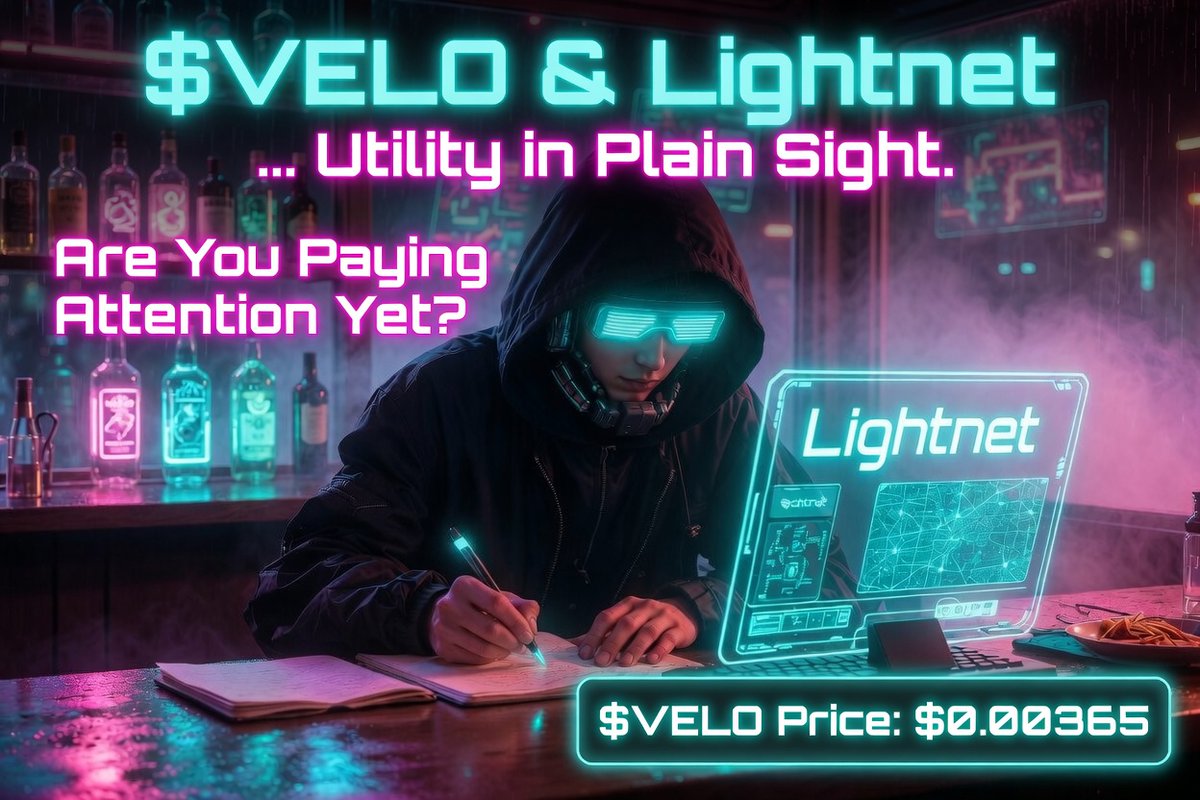
Most people are looking at $VELO all wrong 👀
Everybody watches the chart.
Up = genius 🚀
Down = panic 😨
But what if the real story is what is getting built while nobody is paying attention?
I think the biggest thing people are missing with $VELO is distribution 🌏💳
Not hype.
Real payments.
Cross-border money movement.
Remittance.
Merchant systems.
And here is the part hardly anyone knows when they are purely speculating or trading coins at random...
$VELO may be priced like a memecoin right now but no memecoin I've ever known of has had ties through its ecosystem like Lightnet, a real payments/remittance company connected to Southeast Asia finance networks.
That matters.
Why?
Because if real payment rails grow, utility grows.
A spec market can distract people from what matters.
Price goes down and people get scared.
Price goes sideways and people get bored.
Meanwhile utility can still be growing under the surface 👀 ...these historical bottoms I believe will be generational wealth territory to #DCA into.
Makes me think about Jeff Bezos and Amazon.
Amazon crashed from around $113 to about $6.
Everybody thought it was over.
But Bezos said:
"The stock is not the company. The company is not the stock."
The price got crushed.
The business kept getting stronger.
That stuck with me.
Price is not the full story.
Have a reason for owning something.
Have a thesis.
Watch adoption. Watch partnerships. Watch utility.
And more importantly when the lemming market speculators talk shit... lean in a bit deeper and you'll discovery, like always, the ones who bark the loudest usually know the least.
Most people chase candles... their thesis is simply and only that... 📈
I am watching what gets quietly built.
If you hold $VELO, know WHY you hold it.
#VELO #Crypto #PayFi #RWA #Altcoins #Web3 #NFA
• Lightnet ASEAN settlement network: velo.org/veinspire-announcem…
14
83
1,271
сняі ₿ retweeted

May 14
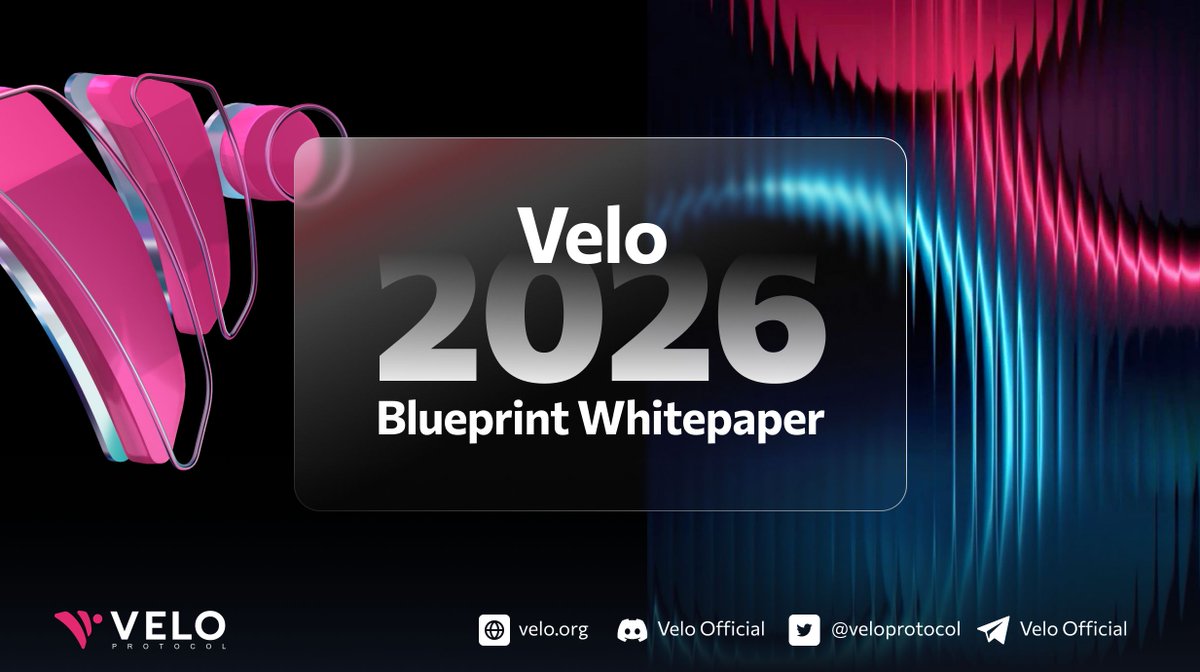
Velo’s new whitepaper is live.
buff.ly/z9jwY8c
This isn’t just an update—it’s a shift in how payments, liquidity, and capital come together.
Introducing a compliant, crypto-native FX liquidity, treasury network for global settlement.
Here’s what’s changed 👇 1/3
19
142
521
73,088

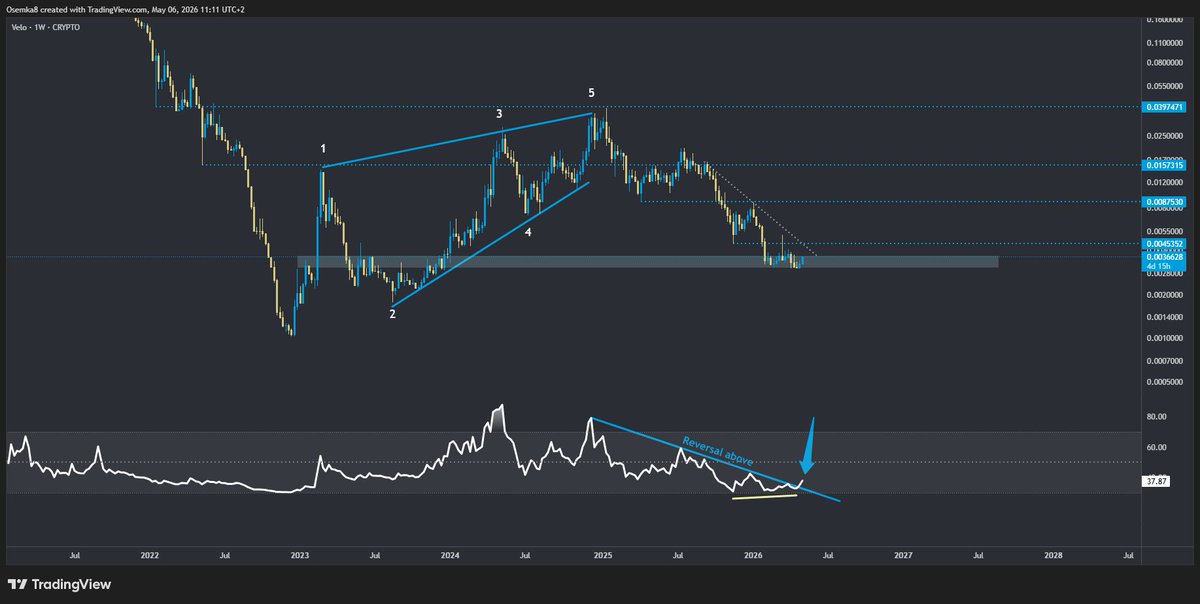
[ $VELO ]
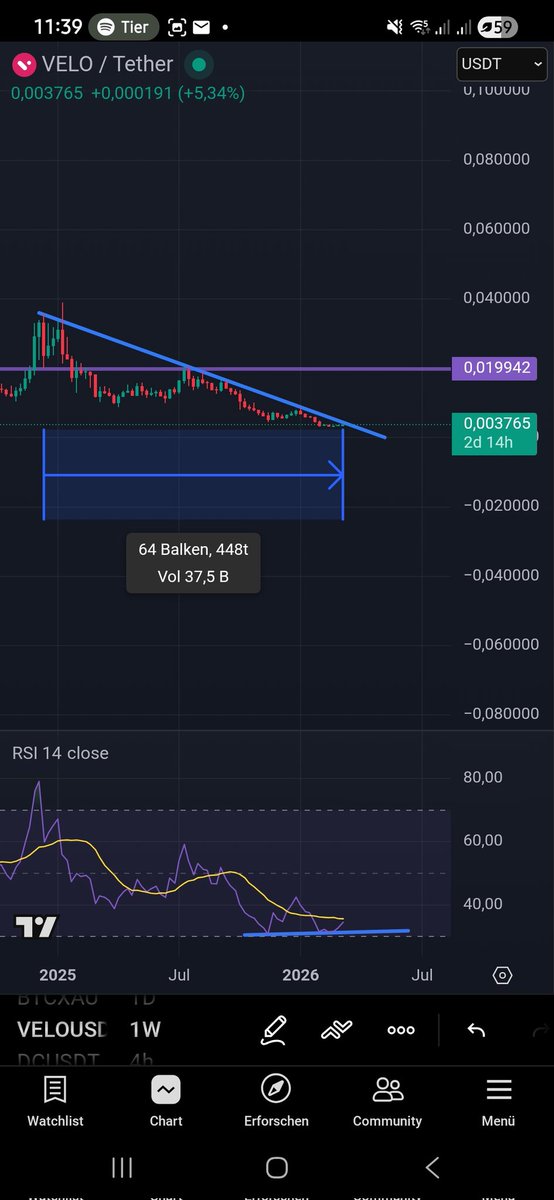
Weeks ago, weekly candle turned out to be a rejection from this macro RSI diagonal and we made a slightly lower low. With great reactions after we've now confirmed:
- a double bullish divergence,
- RSI breakout after 1y of misery.
Welcome to a HTF reversal and a new macro wave in front that should well exceed current local top at $0,039
11
34
168
20,748
сняі ₿ retweeted

Apr 29
$VELO l @veloprotocol
Just saw this post and my gut instantly told me...
This is HUGE! 🚀
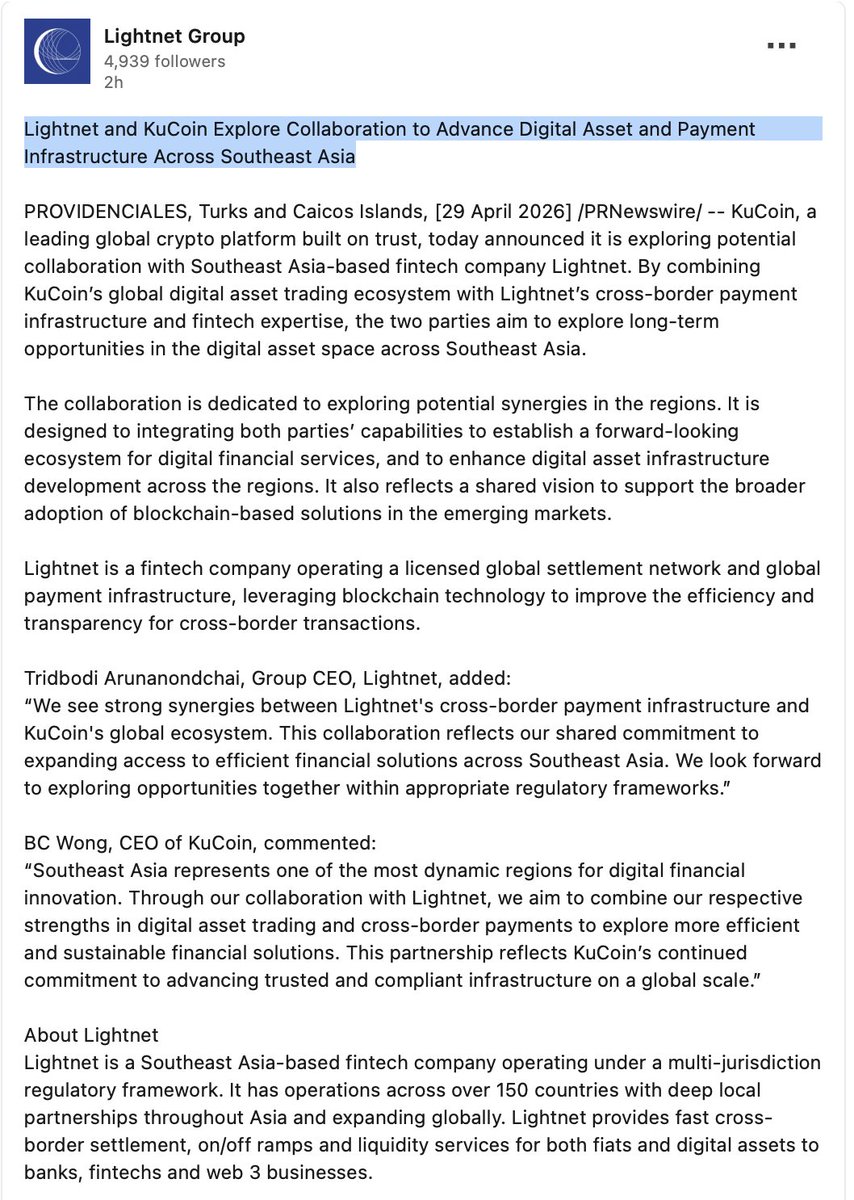
LIGHTNET (Southeast Asia fintech with Licensed Global Payments & Blockchain Rails) is exploring a major collab with @kucoincom (40M user crypto exchange).
They want to connect crypto trading liquidity with real-world cross-border payments across SEA (South East Asia!)
Lightnet Group CEO Tridbodi Arunanondchai (BEAM) said:
“We see strong synergies between Lightnet's cross-border payment infrastructure and KuCoin's global ecosystem. This collaboration reflects our shared commitment to expanding access to efficient financial solutions across Southeast Asia. We look forward to exploring opportunities together within appropriate regulatory frameworks.”
---------------------------------
Why this matters for $VELO ??
---------------------------------
LIGHTNET is powered by $VELO
$VELO is the key collateral & bridge asset behind their settlements & stablecoins.
This = more real transaction volume → higher demand for $VELO → stronger utility, liquidity & adoption in SEA remittances/fintech.
Exactly the real-world use case $VELO was built for!
Long-term bullish for the project, token & holders 🚀🚀
Apr 29

Lightnet and KuCoin are exploring a collaboration to connect digital asset markets with cross-border payment infrastructure across Southeast Asia.
By combining exchange liquidity with real-world payment rails.
Read more: linkedin.com/feed/update/urn…
5
60
246
8,895
сняі ₿ retweeted
Apr 28
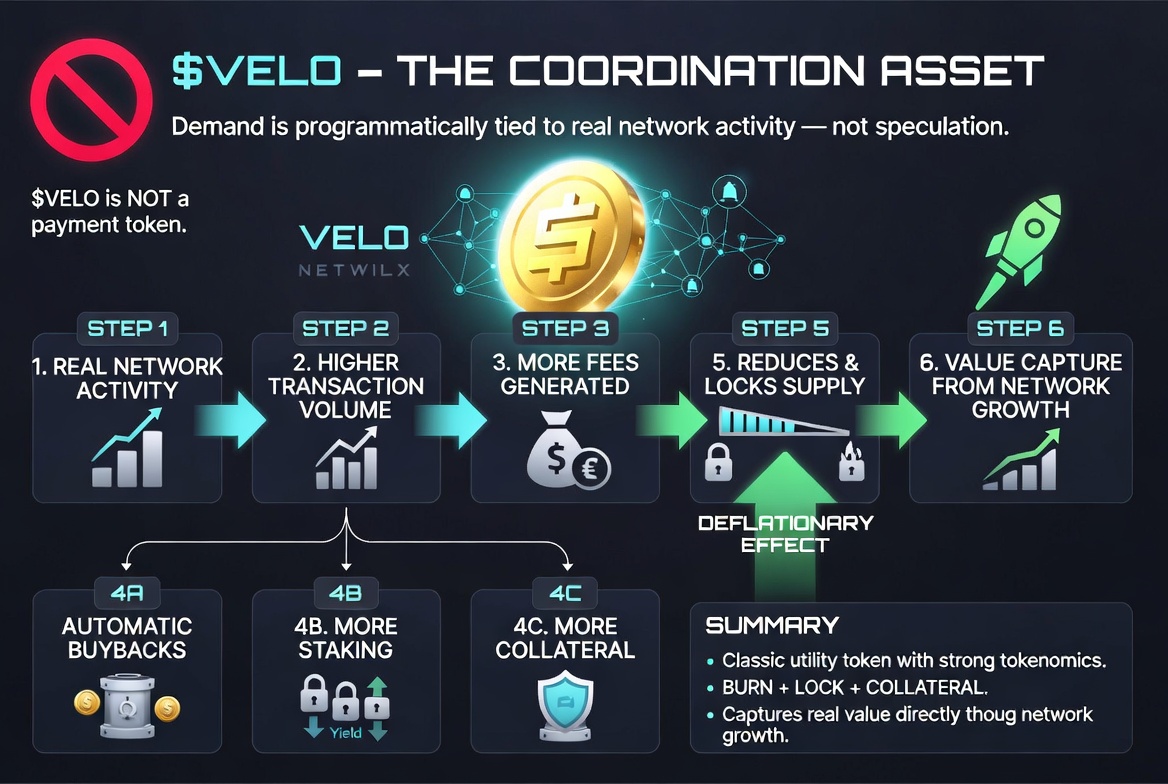
$VELO l @veloprotocol is not a payment token.
$VELO is "A Utility Token" with strong tokenomics (burn lock collateral) designed to capture real value directly from network growth.
It is the coordination asset that holds the entire VELO NETWORK 🪐 together.
Its demand is programmatically tied to real network activity, not speculation.
Higher Transaction Volume ➡️ More Fees ➡️ Automatic Buybacks ⬆️ More Staking ⬆️ More Collateral 📈
This actively reduces and locks supply, creating "A Deflationary Effect" 🔥
Apr 22

$VELO l @veloprotocol
Just read more details on the blog and this part sounds interesting to me..
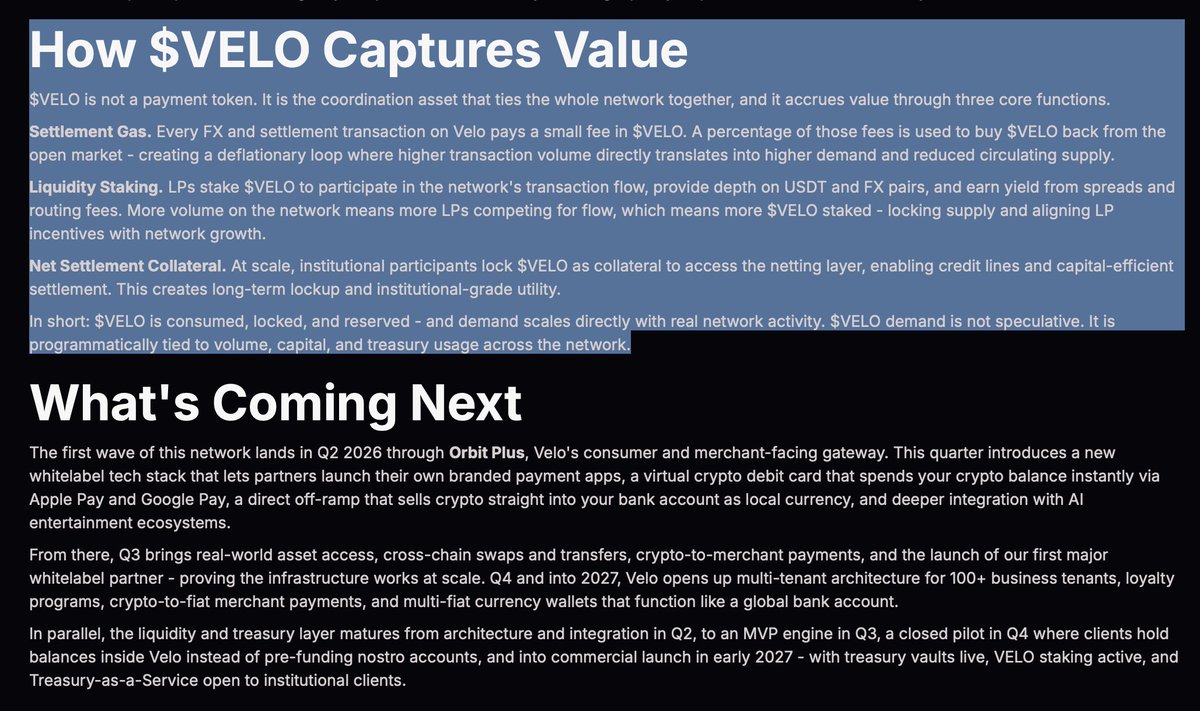
How $VELO Captures Value?
$VELO is not a payment token.
It is the coordination asset that ties the whole network together, and it accrues value through three core functions.
Settlement Gas
============
Every FX and settlement transaction on Velo pays a small fee in $VELO. A percentage of those fees is used to buy $VELO back from the open market - creating a deflationary loop where higher transaction volume directly translates into higher demand and reduced circulating supply.
Liquidity Staking
=============
LPs stake $VELO to participate in the network's transaction flow, provide depth on USDT and FX pairs, and earn yield from spreads and routing fees. More volume on the network means more LPs competing for flow, which means more $VELO staked - locking supply and aligning LP incentives with network growth.
Net Settlement Collateral
====================
At scale, institutional participants lock $VELO as collateral to access the netting layer, enabling credit lines and capital-efficient settlement. This creates long-term lockup and institutional-grade utility.
$VELO is consumed, locked, and reserved - and demand scales directly with real network activity.
$VELO demand is not speculative. It is programmatically tied to volume, capital, and treasury usage across the network.
5
51
208
16,028
сняі ₿ retweeted
Most people still look at $VELO as just another crypto token.
But @veloprotocol is positioning itself as something much bigger:
a full-stack financial infrastructure layer for Asia.
Global payments remain inefficient.
For users, cross-border payments can take 2–5 days, move through several intermediaries and still fail.
For institutions, large amounts of capital remain locked in pre-funded accounts just to enable settlement.
That is exactly the problem Velo is trying to solve.
Velo Protocol and @lightnetgroup are not building a simple payment app.
They are aiming to establish a blockchain-native settlement network for the ASEAN region.
That distinction matters.
ASEAN needs regulated payment rails, fiat access, liquidity, compliance and real-time settlement.
This is where Velo and Lightnet are trying to position themselves.
Lightnet uses Velo as the technical backbone for real-time cross-border payments.
The goal is to create a faster and more efficient alternative to legacy correspondent banking and SWIFT-based settlement flows.
The focus is clear:
Southeast Asia’s remittance market.
A market worth over $150B annually, serving migrant workers, underbanked communities, SMEs and cross-border businesses.
For users, the current system is often slow, expensive and fragmented.
For institutions, settlement still depends on intermediaries, pre-funded accounts and capital sitting idle just to move money across borders.
Velo describes its system across four layers:
Compliance → licensed fiat rails in ASEAN
Infrastructure → chain-agnostic execution
Capital → aggregated CeFi DeFi liquidity
Treasury → yield on idle capital
This is an attempt to build financial rails.
Through Lightnet, Velo has access to licensed payment corridors across ASEAN, bank and merchant integrations, fiat-to-crypto on/off-ramps and built-in compliance.
That matters.
Because the hardest part in payments is not only the blockchain.
It is distribution, licenses, liquidity and real-world access.
This is where Velo becomes interesting.
$VELO is described as the coordination asset of the network.
Demand is driven by transaction fees, liquidity staking and collateral for institutional settlement.
More usage → more volume → tighter token loop.
And now the focus is shifting.
From infrastructure → real usage.
Coming next:
• Orbit Plus is already live in 15 countries worldwide as a gateway into the Velo ecosystem.
Additional features and integrations are still being rolled out, marking the shift from infrastructure to real-world application.
• Crypto debit cards
• Direct off-ramps to bank accounts
• RWA access
• Cross-chain swaps
• Merchant payments
This is where the thesis becomes simple:
If Velo can scale real usage, the token is no longer only a speculative asset.
It becomes part of the payment, credit and settlement engine.
That is why the Velo Lightnet connection matters.
Lightnet brings the licensed fintech and settlement layer.
Velo brings the blockchain-based FX, credit and settlement layer.
Together, they are targeting one of the hardest problems in finance:
moving money across borders faster, cheaper and with compliance built in.
If Velo becomes fully integrated into Lightnet’s licensed B2B settlement system, it could serve as the FX, credit and settlement core behind a new payment layer for Asia.
That is the core thesis.
• Payments.
• Settlement.
• Liquidity.
• Compliance.
• Fiat access.
• Adoption.
Most people are still looking for the next narrative.
But the real value may be in the rails.
That is where infrastructure is being built.
Pay attention to Velo.

Apr 27

Last week, we shared Velo’s next chapter in our Community Townhall with Adrian Wang, Velo's Head of Commercial.
Here are some of the key questions and answers addressed which define where we’re heading 👇
1/6
2
50
221
7,897
сняі ₿ retweeted
Most $VELO price predictions miss the bigger picture.
The real question is not whether a chart can print a pattern.
The real question is whether VELO is building payment and value-transfer infrastructure that the market is still underpricing.
That is why the better VELO discussion is not adoption versus charts.
It is whether adoption is becoming strong enough that charts alone no longer tell the full story.
Velo has been pushing that case with actual ecosystem development.
Its Orbit Plus Super App was launched across 15 countries, with Velo presenting it as a gateway for digital assets, stablecoins, tokenized real-world assets and cross-border value transfer.
That matters because projects like this are not trying to win by memes alone.
They are trying to build rails.
And if those rails attract usage, the market eventually has to decide whether VELO is still being valued like a niche token or something larger.
What also makes this story more interesting is the people behind it.
@lightnetgroup says it was co-founded by Chatchaval Jiaravanon and describes its leadership as coming from the Charoen Pokphand Group world.
That gives the broader VELO narrative a layer of regional business credibility that many smaller crypto projects simply do not have.
And that point matters.
Chatchaval Jiaravanon is not just linked to Lightnet.
Velo itself has publicly referred to him as Co-Chairman, which strengthens the view that VELO is connected to a network with deeper strategic reach than most traders may realize.
There is also a visibility and liquidity angle.
Kraken made VELO trading live on March 17, 2026.
That does not guarantee a repricing, but broader access on a major exchange is still a meaningful step for any ecosystem token.
At the same time, this is where people should stay honest.
Adoption narratives are powerful, but they do not automatically convert into token performance.
A project can ship products, expand distribution and still see the token lag if demand, liquidity and investor attention remain too weak.
So the real takeaway is simple.
If VELO keeps expanding real payment, stablecoin and RWA infrastructure, the market may eventually have to re-evaluate it.
Until then, this remains a high-risk small-cap story where execution matters more than hopium.
VELO is not a coin that should be judged only by candles.
But it is also not a coin where adoption headlines alone are enough.
The opportunity is real.
The uncertainty is too.
That is what makes VELO interesting right now.
Not because a chart whispers magic.
But because the market is still trying to figure out whether this is just another token, or early infrastructure hiding in plain sight.
Apr 9

$Velo Price Prediction: Why Chart-Based Models All Miss cryptonewsnavigator.com/acad…
14
49
228
12,762
сняі ₿ retweeted

Apr 9
$Velo Price Prediction: Why Chart-Based Models All Miss cryptonewsnavigator.com/acad…
1
7
33
14,554
сняі ₿ retweeted

24 Oct 2025
🧵 How Velo, Lightnet, and Asia’s Billionaire Networks Are Quietly Rebuilding the Financial System
👇 Let’s dive in.
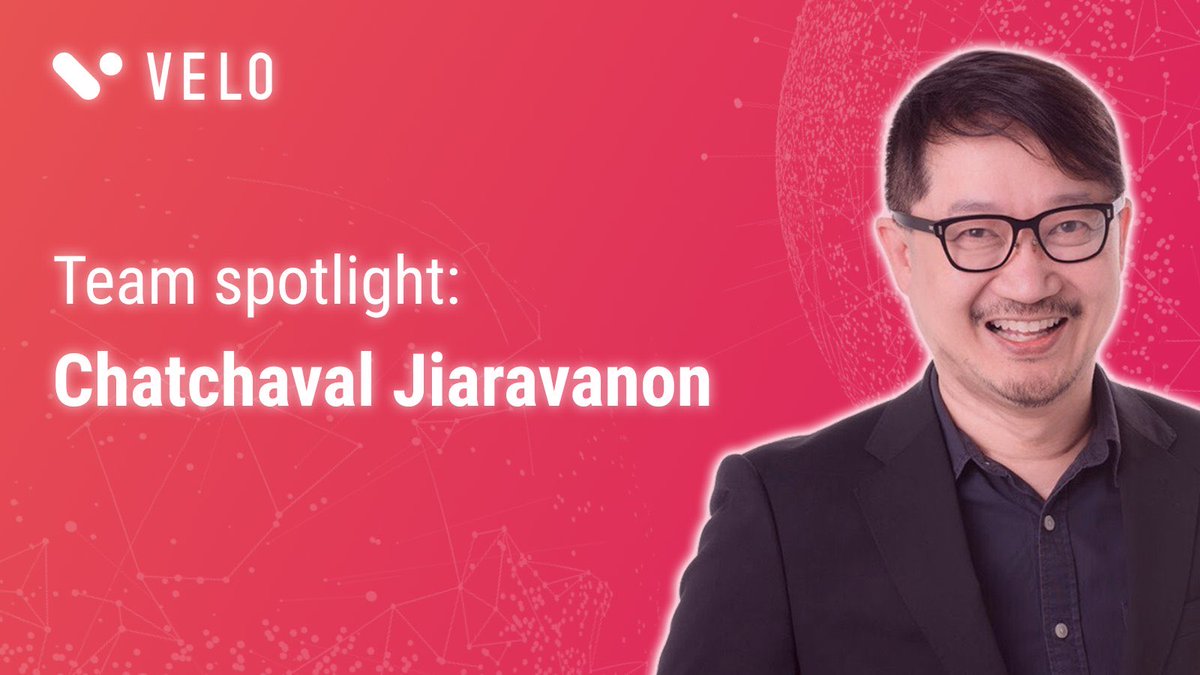
Who is Chatchaval Jiaravanon?
He comes from the CP Group Dynasty (Charoen Pokphand) — one of Asia’s most powerful family conglomerates with investments across telecom, finance, retail, agriculture, and tech.
That gives him access to 1 billion consumers across Asia.
But he’s not just an investor.
He’s building the next generation of financial infrastructure.
Lightnet & Velo — The Ripple-Stellar Connection
Founded in 2018, Lightnet was designed as a blockchain-based remittance network — a direct challenger to SWIFT & Western Union.
It leverages decentralized systems for instant cross-border payments, fully integrated with @StellarOrg (XLM).
Parallel to that, Jiaravanon founded Velo Labs, built on top of Stellar to provide:
• Tokenized assets
• Stablecoin infrastructure
• DeFi payment rails
In 2021, Velo acquired Interstellar, Stellar’s commercial arm founded by
Jed McCaleb (Ripple & Stellar co-founder) —
making Velo effectively the Stellar-based Ripple of Asia.
🤝 Partnerships
• Visa (payments network)
• Paxos (stablecoins & tokenization)
• Chainlink (oracle infrastructure)
• CP Group (massive business network across Asia)
With the Orbit App and Universe DEX (nearly 500k users), Velo already operates a full DeFi payment ecosystem.
Bitcoin Treasury via DV8
In July 2025, Jiaravanon became Chairman of DV8 Public Company Limited (Thailand).
His plan?
Turn DV8 into a Bitcoin Treasury company — like a Southeast Asian version of MicroStrategy. But it goes further:
DV8 will also invest in DeFi banking, tokenized finance, and digital asset infrastructure across Southeast Asia.
The Masterplan
• Velo → Stellar infrastructure (Asia’s Ripple)
• Lightnet → Payment rails / remittances
• DV8 → Treasury & institutional bridge
• Fortune → Narrative control
• Jiaravanon → The connector of TradFi, DeFi & Media Power
Everything points toward a fusion of traditional finance, tokenized assets, and decentralized payment networks —
led by Asian market powerhouses tied to Ripple, Stellar, and Chainlink.
Fundamental Strength
Velo isn’t a random altcoin — it’s a financial infrastructure project.
• Stellar-based settlement layer
• Acquisition of Interstellar
• Partnerships with Visa, Paxos, CP Group & Lightnet
• Real-world use cases: remittances, tokenization, DeFi banking
• Backed by one of Asia’s wealthiest dynasties (CP Group)
Velo’s fundamentals are stronger than 90% of tokens with similar market caps.
Tokenomics — The Sell-Off Was Inevitable
~75% of supply already in circulation.
👉 Token inflation pressure is dropping fast.
Once the last allocations are out, there’s minimal sell pressure left.
Organic price discovery follows.
And major players — CP Group, Lightnet, Velo Labs — aren’t panic-selling.
They’re consolidating and restructuring the ecosystem.
The Current Price (~$0.0082) — Technically Weak, Strategically Golden
Yes, the chart looks ugly
But this is exactly the kind of pre-catalyst accumulation zone you look for in fundamentally strong projects.
• Supply almost distributed → reduced pressure
• Fundamentals improving → asymmetric upside
• Media exposure via Fortune, Lightnet & McCaleb → narrative expansion
Every time Velo traded below $0.01, it marked accumulation before the next expansion.
What Comes Next
• Velo Lightnet expanding across Southeast Asia & MENA
• DV8 Group integrating BTC Treasury DeFi banking
• Ripple & Stellar narratives gaining traction with ISO 20022 regulatory frameworks
It’s a perfect mid-term setup once liquidity returns to the Layer-1 / Payment narrative.
The price isn’t the value — it’s a reflection of market liquidity during transition.
Fundamentally:
✅ Strong network
✅ Real partnerships
✅ Token distribution nearly complete
✅ Institutional narrative formingIf you think long-ter, this is the diamonds in the dust phase for VELO.
7
33
120
7,031
сняі ₿ retweeted

Mar 25
Every thing is red in my port except for one and that is none other than @veloprotocol
And you still betting against them ? DYOR is an art and a skill not everyone has unfortunately but if you can put your ego aside one day you might end up in CP Groups building.
This ride is the biggest of my life. And I am winning this one 💯
Mar 25
I was reading this news and noticed DV8 Thailand name.. then I checked DV8 website and found this…
Chatchaval from $VELO l @veloprotocol and LIGHNET 😳
dv8.co.th/?page_id=8907&lang…

1
5
57
2,927
