
Creator of the C4 model for visualising software architecture and Structurizr | Author of “The C4 Model” (O’Reilly, released summer 2026)
Joined March 2007
- Tweets 33,878
- Following 754
- Followers 27,442
- Likes 14,987
1,739 Photos and videos
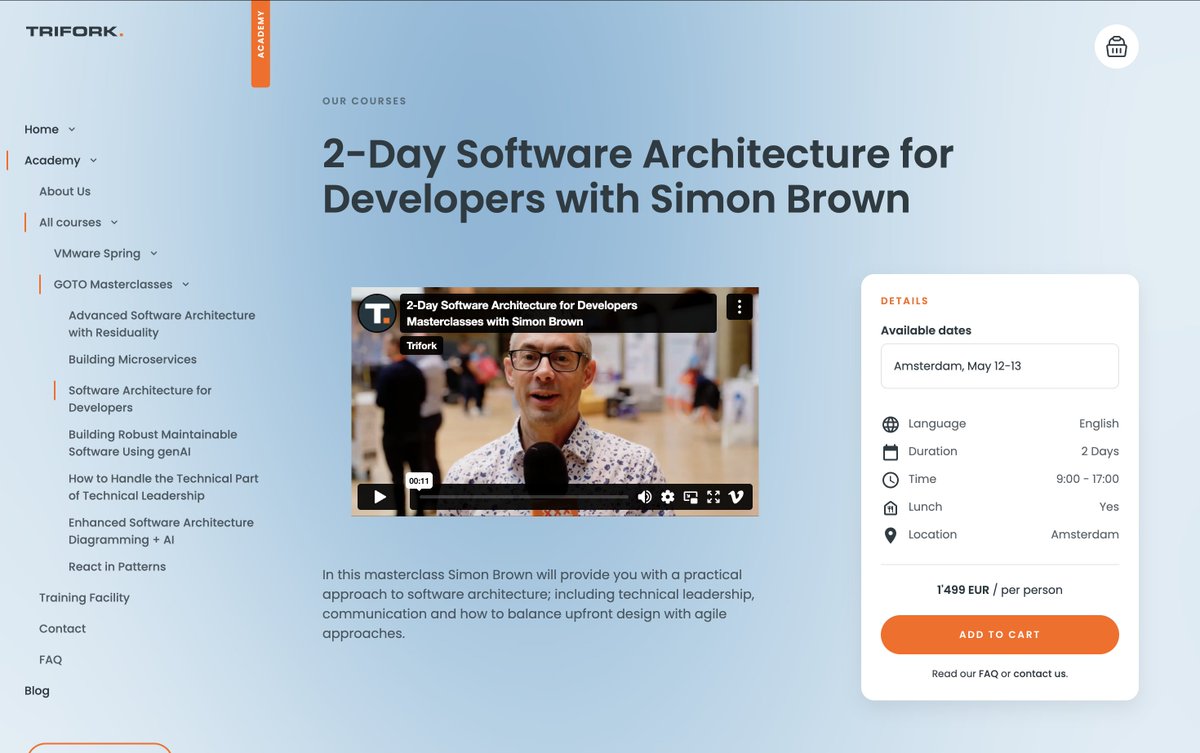



Software Architecture for Developers by Simon Brown is on sale on Leanpub! Its suggested price is $25.00; get it for $12.00 with this coupon: leanpub.com/software-archite… @simonbrown #software #software_architecture
1
638
Simon Brown retweeted

May 28
I just published Who Actually Needs to Know the C4 Model on Your Team medium.com/p/who-actually-ne…
2
1
830
Simon Brown retweeted

May 21
Every C4 tool I've used makes you trade something: a nice canvas, or a file you can commit. Pretty UI, or git history. SaaS lock-in, or no visual editor at all.
I got tired of the tradeoff and built one that doesn't ask. Free, open source, live now 🧵
1
2
6
605
Simon Brown retweeted

May 26
海外の開発現場を見てみたいな~
どのくらい構成図を使って会話するのだろうか。
Question for cloud architects outside Japan:
How important are architecture diagrams in your actual day-to-day work?
#Architecture
#SystemDesign
#SoftwareArchitecture
#DistributedSystems
1
2
712
Software Architecture for Developers by Simon Brown is on sale on Leanpub! Its suggested price is $25.00; get it for $12.00 with this coupon: leanpub.com/software-archite… @simonbrown #software #software_architecture
1
1
475

May 28
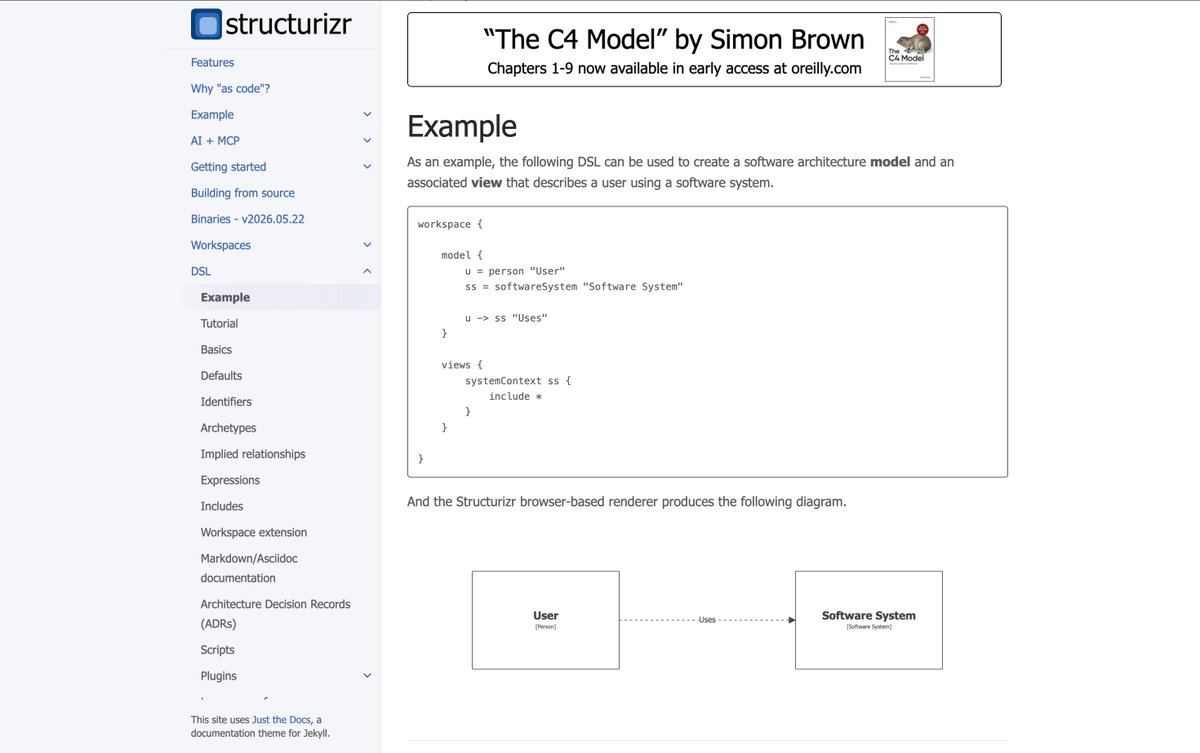
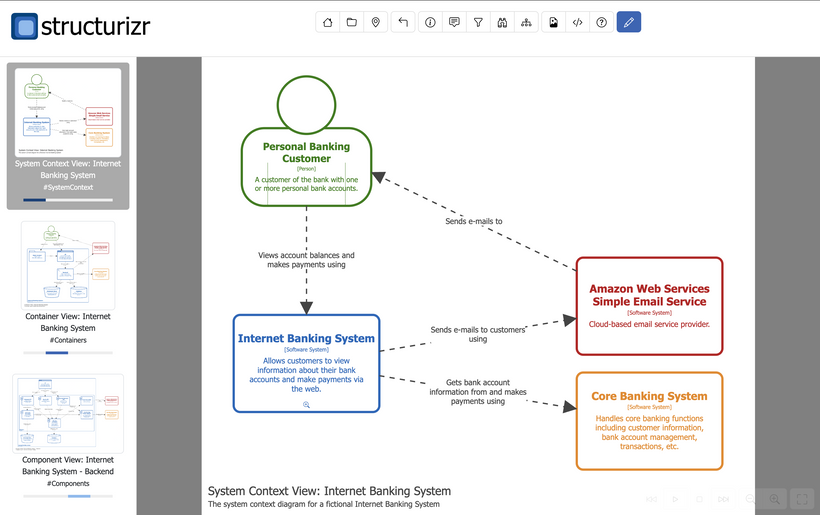
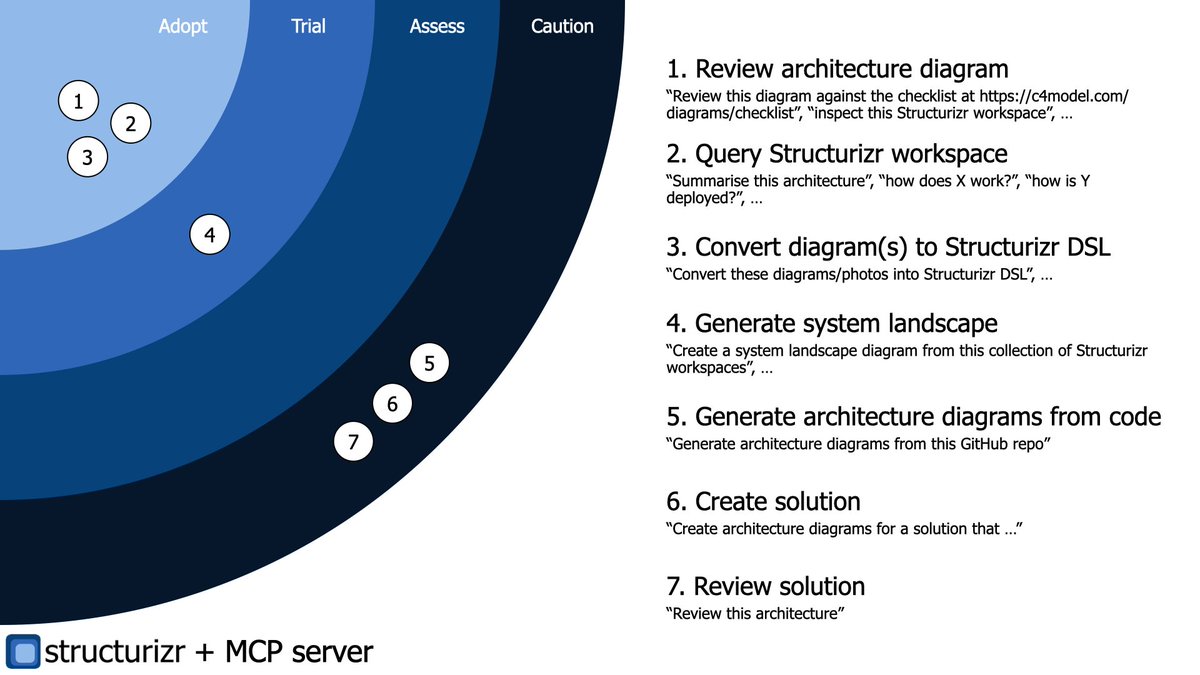
C4 model Structurizr DSL ... "models as code", manual layouting, and an MCP server for AI-assisted workflows.

System diagrams are one of the most important foundations for the agentic software engineering.
Yet the current generation of tooling (e.g. Mermaid) feel incredibly antiquated (e.g. getting the layout right in a declarative way is close to impossible).
Are there some new tools?
3
10
1,218
May 18
Structurizr v2026.05.16 was released over the weekend ... see patreon.com/posts/v2026-05-1… for details.
1
10
1,341
Simon Brown retweeted

May 15
Take it further with something like Structurizr and C4 — architecture as code. Now your AI isn't just generating features, it's a participant in the architectural conversation.
2
2
1
789
Simon Brown retweeted

May 14
AI-generated architecture diagrams: pretty but possibly wrong. Must be validated against actual implementation. Evidence includes both the AI output and the human sign-off. #ProofDrivenDeliveries #CompliantDeliveries
1
4
1,149
Software Architecture for Developers by Simon Brown is on sale on Leanpub! Its suggested price is $25.00; get it for $12.00 with this coupon: leanpub.com/software-archite… @simonbrown #software #software_architecture
1
1
550
Simon Brown retweeted
May 13
🏴 I'll be in Edinburgh next week ... you can join me at a free session with BCS Edinburgh for a discussion of the C4 model, Structurizr "vNext", and AI.
edinburghbranch20052026.even…
1
2
2,112
May 12
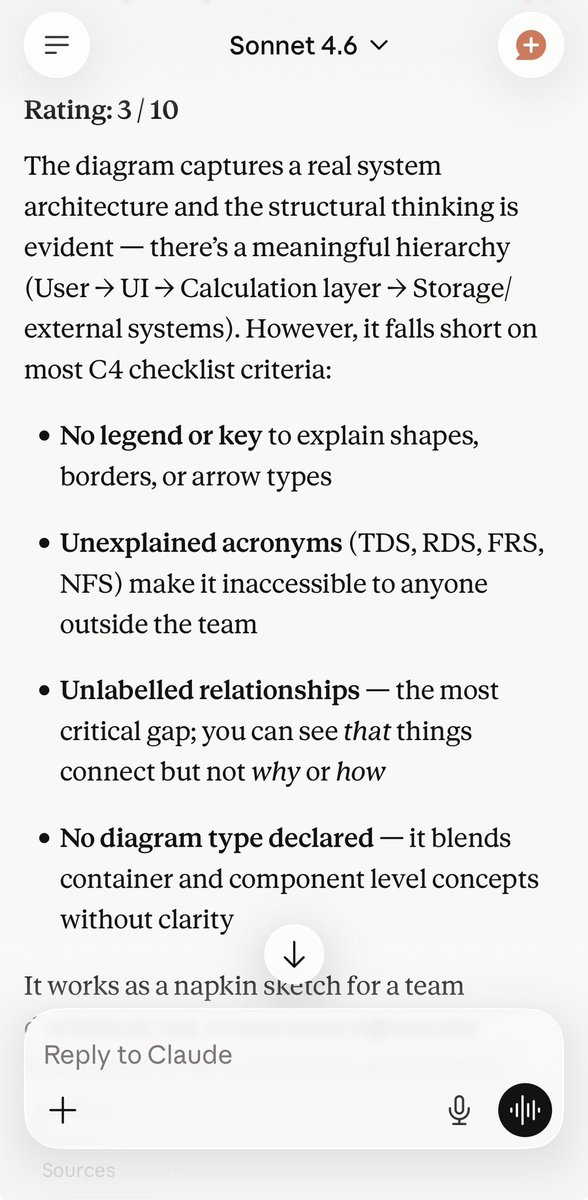
I’ve been having some fun asking Claude to review architecture diagrams during my software architecture workshop today. 😂
4
1
7
2,288
If you can use TextEdit or Notepad, or if you've ever used a typewriter, you can write and publish a book on Leanpub.
It's just that easy.
Learn more in this FREE workshop this Saturday, May 16:
leanpub.com/events/book_work…

3
2
69,550
Simon Brown retweeted
Mar 19
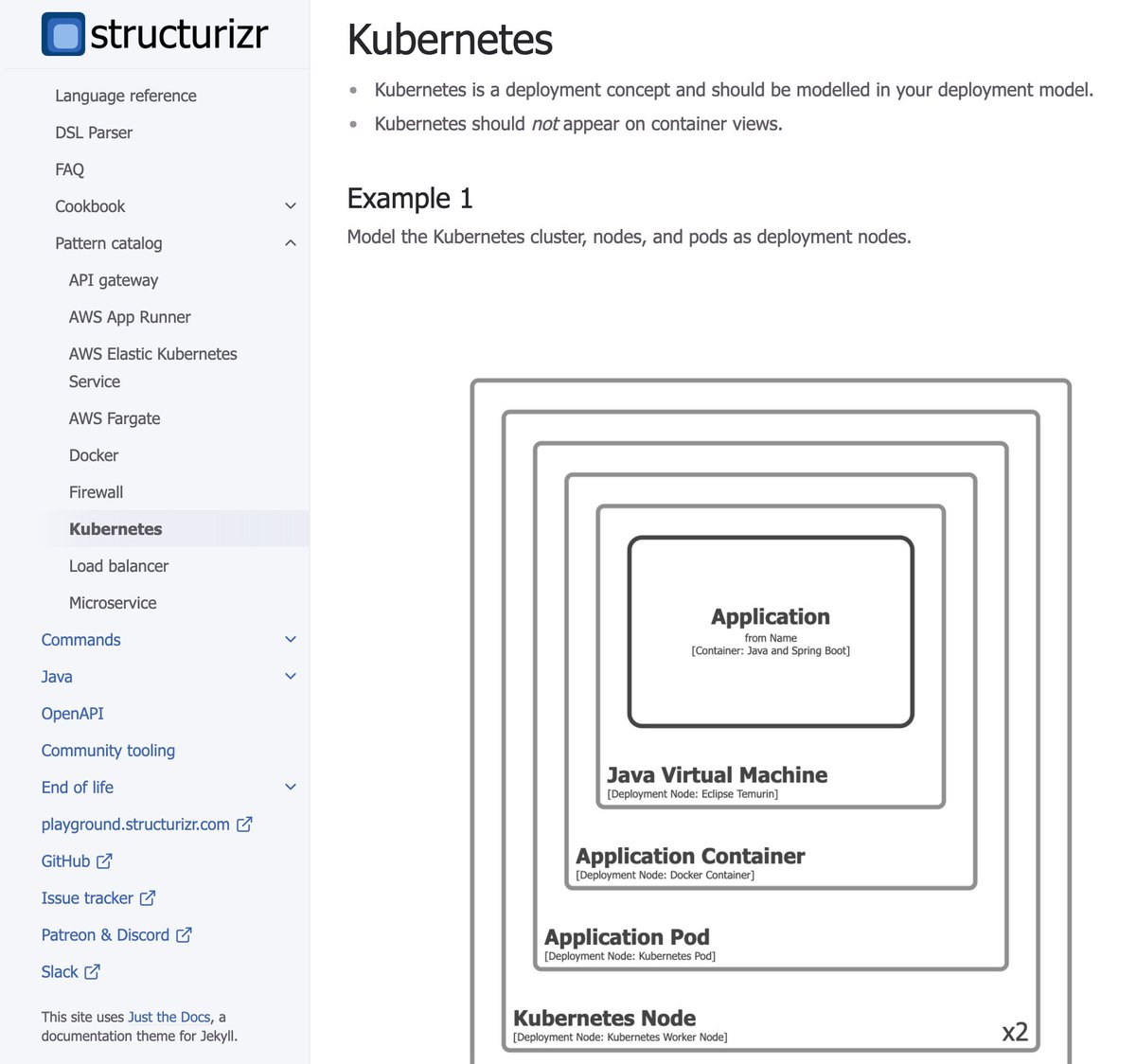
Introducing the "C4 model and Structurizr DSL pattern catalog"! 📢
This pattern catalog presents a number of minimal examples of how to use the C4 model and the Structurizr DSL to model common patterns found in software architecture.
Link: docs.structurizr.com/dsl/pat…
27
101
6,308
Simon Brown retweeted
Apr 30
BCS Edinburgh, 20th May ... join me for a session about the C4 model, Structurizr "vNext", and AI. 🤖
edinburgh.bcs.org/events/202…
1
8
1,934
Simon Brown retweeted
May 4
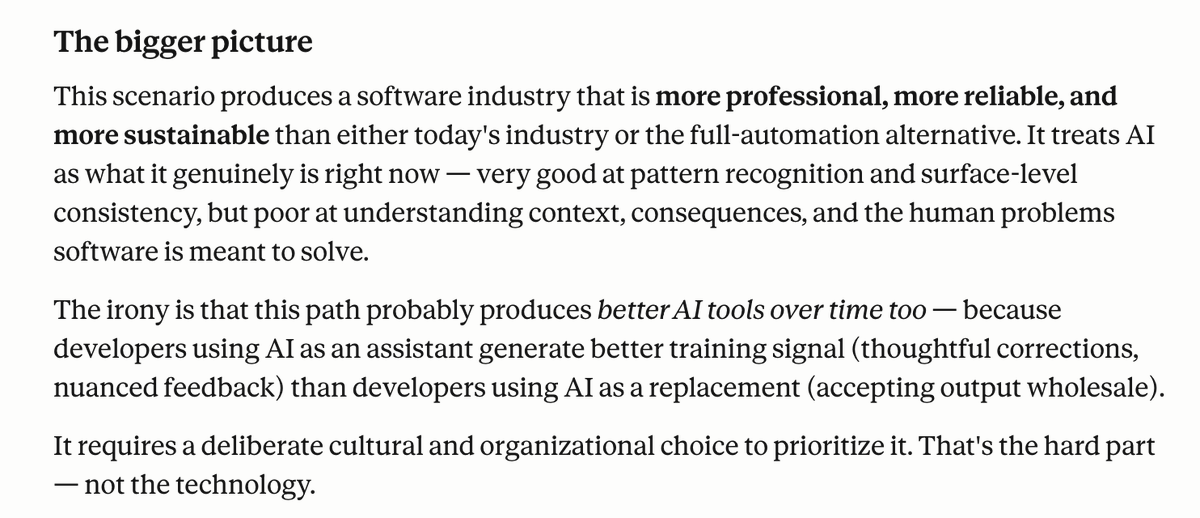
Prompting human code review only works if the humans have technical knowledge, which will likely decline if humans are no longer writing code.
The devs of today will become the ivory tower architects of tomorrow.

the future of software engineering seems uncontroversially prompting code review. startups will skip the code review because they’re racing against time. larger/serious orgs will take code review very seriously.
llms can do code review, but my guess is that because they have to search through large space, it will be as expensive to have say mythos review your code as it would be to have a senior dev.
based on budget:
$: prompting only
$$: low grade llm review
$$$: mid grade llm dev review
$$$$: high grade llm sr dev review
btw, software (past the bootstrapping phase) will get more expensive to make and take more time. quality will remain exactly the same as when humans were doing it: shit.
15
12
136
10,312
Simon Brown retweeted
May 5
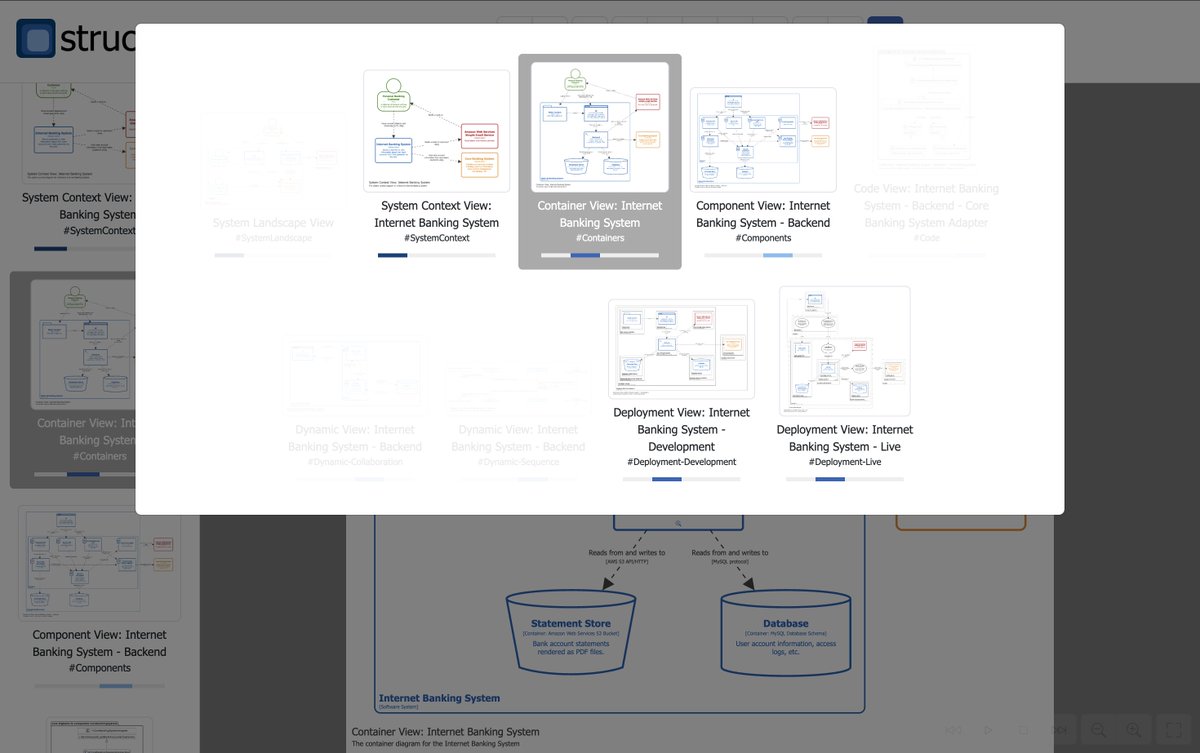
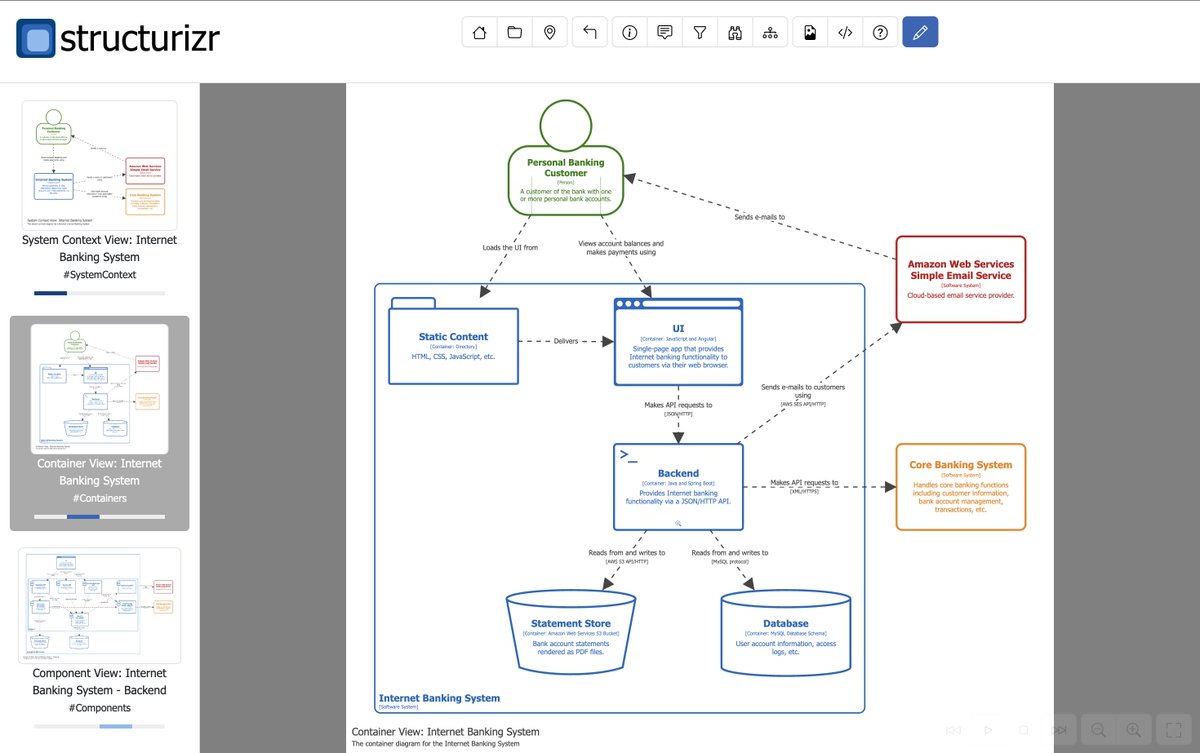
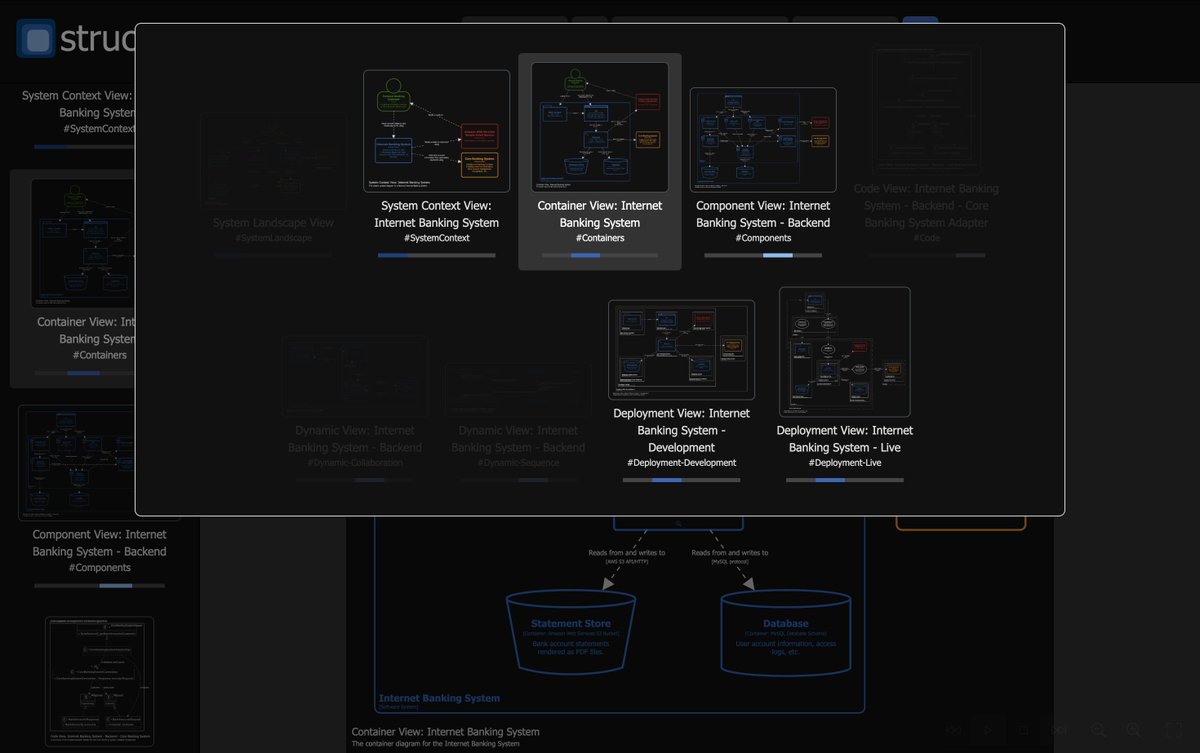
A new diagram navigator is available in the Structurizr preview build ... it provides a way to see which C4 diagrams in the workspace sit "above", "next to", and "below" the current diagram. Hope you find it useful!
1
4
11
2,163
Simon Brown retweeted

May 6
@simonbrown also pointed that over reliance on ai can make developers technical skills stale.
if you stop using your own understanding, it becomes harder to validate whether the code ai generates is actually correct.
i agree with this.
the middle path is still evolving, but a simple rule works for now:
- if you use ai, read everything it generates
- if you do not understand something, learn it before using it
if you do not know what is happening then unmaintainable codebases are inevitable.
May 6

I just talked to a vibecoder on Reddit
He was actually a software developer himself, so working with AI is much easier and much better for him than a non-developer
but still...
he had issues as the codebase grew
starting from scratch works amazingly well for the first stages of the project
as things get more complicated, the prompts must be more specialised, and you have to do smaller things in smaller steps
so the gain in time you can get shrinks by a lot
I am ready to bet that the next few years will still be like the wild west, where devs use AI as companies experiment with all sorts of setups for this
we are far away from drawing conclusions but this thing will be here to stay, and we wont figure things out at least by 2030
1
2
6
1,250