
I am a mother, I am a lover of life, I am a friend with beautiful friends..and I am a child of God.
Joined January 2011
- Tweets 5,261
- Following 931
- Followers 856
- Likes 3,471
177 Photos and videos
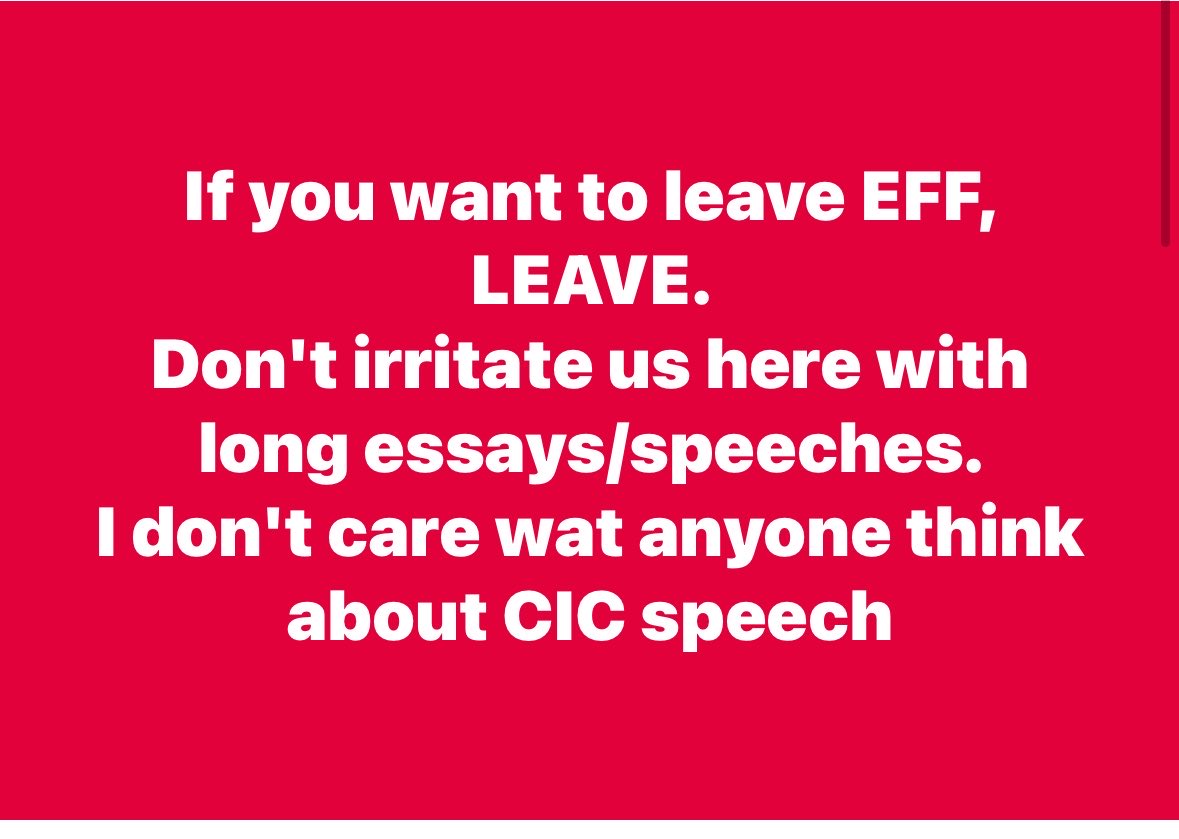



Tumi Sindanke retweeted

So Dereleen expected Julius Malema to police over 85 000 adults but she couldn't police her one son? She must not push us there 🤞🏽
34
143
526
16,192
Tumi Sindanke retweeted

President @Julius_S_Malema EFF members and Tshwane residents, this is the state in which we left the Union Buildings this morning. After a night shift cleaning alongside Tshwane Municipal workers and EFF Student Command volunteers, we can proudly report that the Union Buildings is clean and everything is in order following a very successful EFF June 16 Rally. #EFFInGovernment



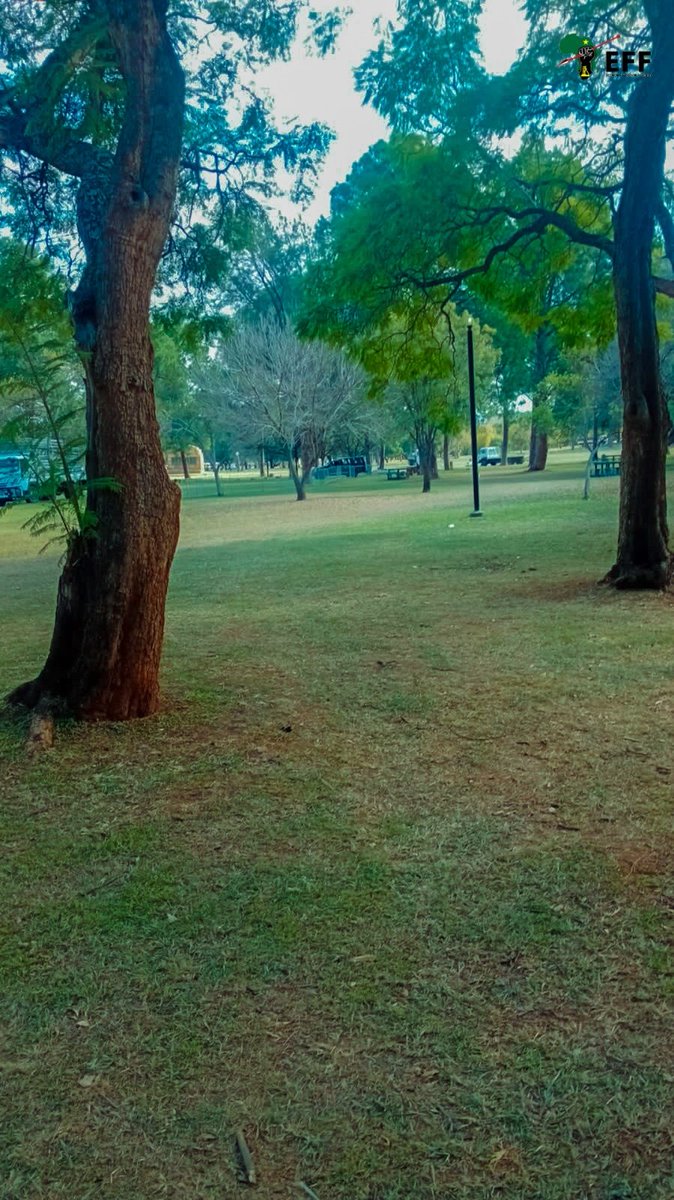
131
834
2,648
61,204
Tumi Sindanke retweeted

♦️Must Watch♦️
The EFF prepared and packaged the food from our farm, for Fighters which will be served at the #EFFJune16Rally.
Come join us at the Union Buildings tomorrow.
#RegisterToVoteEFF In The 2026 Local Government Elections, On The 4th of November 2026
Link: registertovoteeff.org.za
44
252
704
30,233
Tumi Sindanke retweeted

Jun 14
Moshabi lectured MKP in their own Funeral. RIP ntshingila
Very powerful address, not hatred but Redress. Julius is the best among us we all agree on that. EFF we are led
35
395
1,236
28,480
Tumi Sindanke retweeted

Jun 11
The PSL deserves more respect because the weakest players on this pitch are all based in Europe.
55
1,207
8,099
121,210
Tumi Sindanke retweeted

Jun 9
They do not hate Julius Malema because he has failed. They hate him because, despite years of relentless attacks, they have failed to defeat him politically, morally, and ideologically.
Their frustration comes from the fact that they cannot find a fault significant enough to destroy his credibility. They cannot measure their leaders against him because many of those leaders lack the courage, conviction, and influence that Malema commands. It is difficult to defend leaders who inspire little confidence, while Malema continues to inspire loyalty, debate, and admiration across the African continent.
Whether one agrees with him or not, Julius Malema remains one of the most recognised and influential political figures in Africa. His voice resonates from local communities to international platforms. Even global leaders and institutions find themselves responding to his political positions, while many of his critics struggle to make an impact beyond their own local circles.
What pains his opponents most is seeing him remain relevant, loved, and politically resilient despite every campaign launched against him. They celebrate every allegation as if it were a conviction and every investigation as if it were a guilty verdict. Yet if the Madlala Report fails to substantiate the accusations against him, many of the same voices will simply move the goalposts and attack the very process they once celebrated.
History has shown that genuine revolutionaries are often both loved and hated. Julius Malema occupies that space. To his supporters, he represents fearless leadership, economic justice, and African self-determination. To his opponents, he represents a political force they cannot ignore and have not been able to silence.
Love him or hate him, Julius Malema remains standing. And that reality continues to frustrate those who have spent years predicting his political demise.
33
270
741
10,703
Tumi Sindanke retweeted

May 21
Young people in KZN are very sober.
116
234
735
20,176

Tumi Sindanke retweeted

Jun 9
The EFF has secured a meeting with the South African Institute of Chartered Accountants (SAICA) to discuss the Waiver of Professional Fees for Unemployed Graduates/Early Career Professionals.
We call on unemployed graduates, aspiring CAs, trainees, and early career professionals to share their experiences ahead of our meeting with SAICA.
We welcome SAICA’s openness to constructive engagement!


88
706
2,084
49,692
Tumi Sindanke retweeted

Jun 8
🚨BREAKING🚨
Study Suggests EFF Enjoys Strong Support Among Educated Young South Africans
With the 4 November 2026 elections approaching, many young voters are expected to vote for EFF as they support its call for expanded access to free education.

594
584
2,226
152,919
Tumi Sindanke retweeted

Jun 7
President Ramaphosa says we must not be tempted to join the groups that want us to turn against other Africans!!
391
346
1,549
89,250
Tumi Sindanke retweeted

Jun 6
Re-tweet if you are voting the EFF, I want to see something.
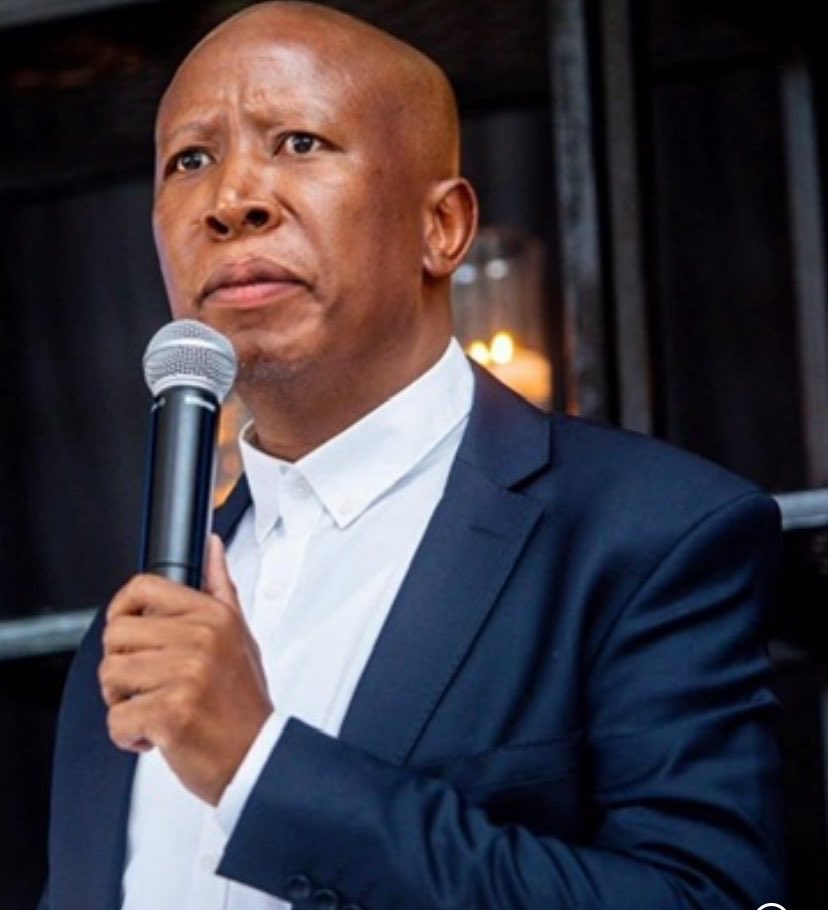
27
1,142
1,424
15,049
Tumi Sindanke retweeted

Jun 6
askies neh, my sweet angel baby pie @Julius_S_Malema
i'm also gonna be voting eff, we can't afford to lose even one vote by shipping my lil broke ass to prison, think ahead, my sweet darling,
oh! how i love you,
xo xo,
gossip girl,
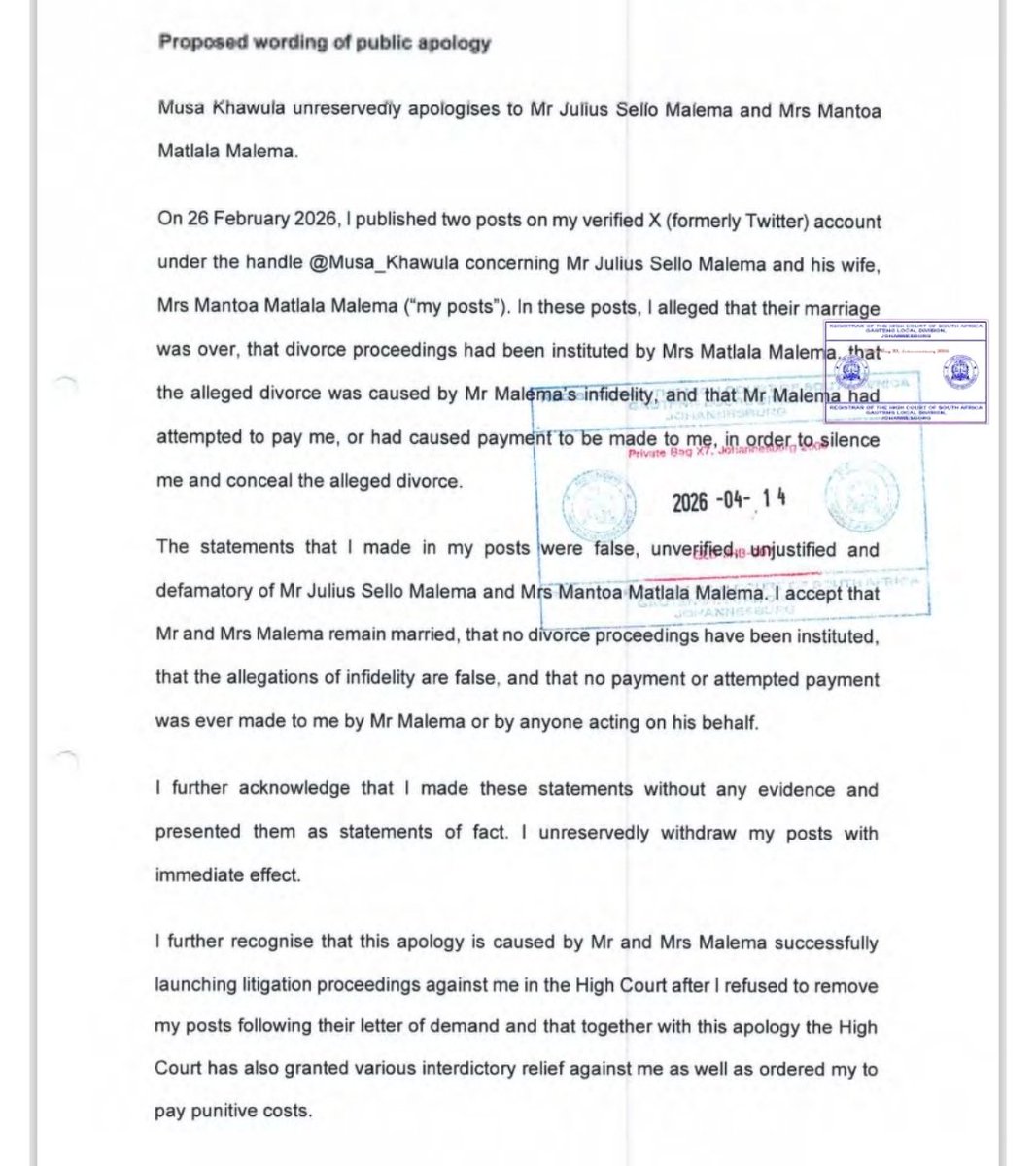
729
1,357
9,548
685,375
Tumi Sindanke retweeted

A young, unemployed and uneducated South African teen, who was brainwashed by the March and March hate group, demonstrates how he would use his weapons to kill and harm Africans living in South Africa, on the 30th June.
93
143
349
69,472
Tumi Sindanke retweeted

Jun 2
Jacinta is good for the streets.
She mustn't start with @NalediChirwa ...one on one she's a non-starter...@JacintaNgobese won't survive an intellectual debate with Naledi!
She can win on Afrophobia & tribalism but not on sound mental prowess!
@EFFSouthAfrica
476
221
1,203
61,922
Tumi Sindanke retweeted

Jun 2
Vote 1: Presidency — EFF debate.
100
344
1,021
33,537
Tumi Sindanke retweeted

May 27
Hi Penuel
For over a decade I have called for stronger borders so that we can know who is coming into the country and I have called for strong enforcement of immigration laws.
I did not stop there, I have spoken about the root causes of immigration in South Africa and how we fix it.
We cannot fix the immigration crisis in South Africa without talking about ZANU PF, FRELIMO and the relationship they have with ANC.
The three largest immigrant populations in South Africa are from Zimbabwe, Mozambique and Lesotho.
The reason why the populations are here is because of the violent, corrupt and dictatorial regimes in Mozambique and Zimbabwe.
To deal with the issues of immigration which cost us as South Africans we must deal with the root causes.
We must call for fair elections in Zimbabwe and Mozambique, we must cut ties with ZANU PF and its crony oligarchs.
If we do that the people of Mozambique and Zimbabwe will be able to choose their leaders and many of them will return to those countries.
I have said this before but maybe you did not take the time to read or listen to understand my position which I have honestly posted several times and written articles about.
Now let’s address vigilante interventions. We have to soberly ask ourselves if the approach of beating people, closing shops and checking for passports and profiling people based on skin complexion and Zulu proficiency works. It does not.
Vigilante action and vigilante violence is itself illegal. You do not solve an unlawful action with another unlawful action. If we hate illegal actions then we have to extend that to vigilantes who are breaking the law too.
It is illegal to beat people, it is illegal to check documents of people if you are not a member of law enforcement, it is illegal to loot businesses. It is illegal to incite imminent violence.
We cannot solve a crime with another crime. The reason for the immigration is not Mmusi Maimane. It is the government of the last 32 years which has caused this crisis by supporting ZANU PF and FRELIMO party.
It is the government of the last 32 years that has not increased the number of police and has not stopped corruption in home affairs and at the borders.
When we talk solutions we must be pragmatic and we must be realistic. Intimidation and harassment will not solve this problem and pose a risk to our international reputation.
Maturity is acknowledging the pain of the people, acknowledging the root causes of the problem and discussing viable solutions. Maturity is also pointing out dangerous solutions and advising against them.
Whatever you are planning to do on 30 June will not solve the real problem and may create many more problems.
May 27

Mmusi, I hope you're well, sir.
Why do most politicians not want to stand with ordinary South Africans who are crying out about illegal foreigners?
Because, it's clear that they are breaking the law by being here illegally.
Are you guys funded to protect undocumented immigrants here, or is there something that ordinary South Africans are missing.
Hopefully you can enlighten us.
Thank you 🙏🏽
466
284
1,135
188,791
Tumi Sindanke retweeted

Pretoria was electrifying this evening. What a day….. what a night!!
We are African Champions @Masandawana ⭐️⭐️

28
273
1,773
20,427
Tumi Sindanke retweeted

May 26
Why CAF should keep the two-legged final and why the real questions asked should be to African governments.
#CafChampionsLeague @Solphendukaa
56
508
1,988
93,732
Tumi Sindanke retweeted

May 25
So all the 24hr news channels already on REPEAT b4 midnight but all have cameras at the airport but no LIVE coverage of the arrival of the AFRICAN CHAMPIONS.....Interesting.
265
1,349
8,185
233,453