
1,314 Photos and videos








Another day, another stablecoin-related company acquired.
May 7

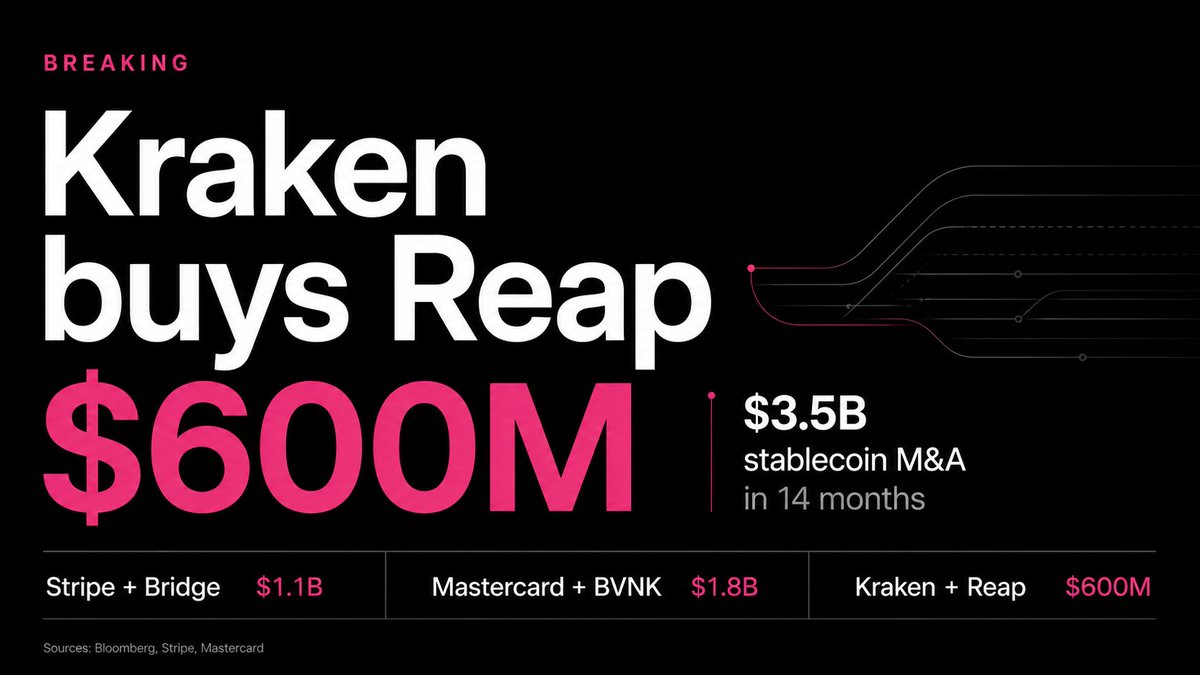
🚨 BREAKING: Kraken acquires Reap for $600M.
Stripe bought Bridge for $1.1B. Mastercard bought BVNK for $1.8B. Now Kraken buys Reap for $600M.
$3.5B in stablecoin infrastructure M&A in 14 months.
Every category of payments company is racing to own stablecoin rails before they become as foundational as card networks.
Reap is Hong Kong-based, founded in 2018, already profitable. They issue Visa corporate cards funded by stablecoins, run cross-border settlement, and serve 22,000 businesses across Asia.
----
To me it looks like Kraken paid for distribution and licenses in Hong Kong, Singapore, and Mexico. Not for technology they could build in-house.
Stablecoins and payments aren't cyclical unlike crypto trading.
In a bear market Spot trading margins are collapsing. Every cycle, the spread gets thinner. Exchanges that thrive need recurring revenue from services, not transaction fees from speculation.
---
Kraken has now spent roughly $2.7B on acquisitions.
- NinjaTrader ($1.5B for derivatives).
- Bitnomial ($550M for options). Backed (tokenized equities).
And now Reap for stablecoin-powered B2B payments.
That looks like a company assembling the pieces of a diversified financial services firm ahead of an IPO.
The stablecoin infrastructure land grab is accelerating because B2B stablecoin payment volumes went from under $100M/month in early 2023 to over $3B/month by 2025.
A 30x increase in two years.
Processors want it (Stripe). Card networks want it (Mastercard). And now exchanges want it too (Kraken).
The acquirers keep paying premium prices for the same thing: multi-jurisdictional licenses and live enterprise clients. The regulated plumbing.
The stablecoin stack is consolidating fast. And the companies buying it are the ones who understand that the money is in moving money, not trading it.
78
Stabolut retweeted

May 7
🚨 BREAKING: Kraken acquires Reap for $600M.
Stripe bought Bridge for $1.1B. Mastercard bought BVNK for $1.8B. Now Kraken buys Reap for $600M.
$3.5B in stablecoin infrastructure M&A in 14 months.
Every category of payments company is racing to own stablecoin rails before they become as foundational as card networks.
Reap is Hong Kong-based, founded in 2018, already profitable. They issue Visa corporate cards funded by stablecoins, run cross-border settlement, and serve 22,000 businesses across Asia.
----
To me it looks like Kraken paid for distribution and licenses in Hong Kong, Singapore, and Mexico. Not for technology they could build in-house.
Stablecoins and payments aren't cyclical unlike crypto trading.
In a bear market Spot trading margins are collapsing. Every cycle, the spread gets thinner. Exchanges that thrive need recurring revenue from services, not transaction fees from speculation.
---
Kraken has now spent roughly $2.7B on acquisitions.
- NinjaTrader ($1.5B for derivatives).
- Bitnomial ($550M for options). Backed (tokenized equities).
And now Reap for stablecoin-powered B2B payments.
That looks like a company assembling the pieces of a diversified financial services firm ahead of an IPO.
The stablecoin infrastructure land grab is accelerating because B2B stablecoin payment volumes went from under $100M/month in early 2023 to over $3B/month by 2025.
A 30x increase in two years.
Processors want it (Stripe). Card networks want it (Mastercard). And now exchanges want it too (Kraken).
The acquirers keep paying premium prices for the same thing: multi-jurisdictional licenses and live enterprise clients. The regulated plumbing.
The stablecoin stack is consolidating fast. And the companies buying it are the ones who understand that the money is in moving money, not trading it.
12
42
306
50,847
2020: Stablecoins are for crypto traders
2025: Stablecoins are entering fintech payments
2035: Stablecoins could power $5T in cross-border B2B payments
Juniper Research says B2B flows could make up 85% of all stablecoin transaction value by 2035, driven by treasury ops, supplier payments, and faster cross-border settlement.
1
70
The shift: from speculation → infrastructure.
Read more: crypto.news/stablecoin-b2b-p…
44
Stabolut, the multi-currency, yield-bearing stablecoin platform 🙌
@InspiraLabsHQ @yellow__capital
Apr 6

Most demo days are a stage. This one is a gauntlet.
Inspira Labs and @yellow__capital are launching the 10X Founders Demo Day — and we are pleased to welcome four formidable industry leaders as our co-hosts: @Chain_GPT, @CointelegraphAc, @LunarStrategy and @cedehub.
A structured virtual pitch session where selected Web3 founders present to a judge panel composed of Inspira Labs, Yellow Capital, and leading VCs, receiving structured feedback, direct introductions, and real capital conversations.
Every project on stage is pre-vetted. Every judge at the table deploys capital or runs infrastructure. This isn't a showcase. It's a stress test.
🔗 Apply now: luma.com/x1uvhjxj

2
80
US Stablecoin Bill Hits Delay ⏸️⚖️
A Senate markup on the proposed stablecoin framework has been pushed to late April, after lawmakers raised concerns over issuer requirements, federal vs. state oversight, and reserve transparency.
Some senators are pushing for clearer rules on who can issue stablecoins (banks vs non-banks) and how strict backing and redemption standards should be.
The delay shows one thing: regulation is getting close, but consensus isn’t there yet.
1
2
59
Source: cointelegraph.com/news/us-se…
2
42
.@Mastercard Pushes Stablecoins 🚀
Mastercard is plugging stablecoins into its settlement layer, bringing onchain liquidity to one of the largest payment networks globally.
This means 24/7 settlement, faster cross-border clearing, and reduced reliance on correspondent banking, all while users keep swiping cards as usual.
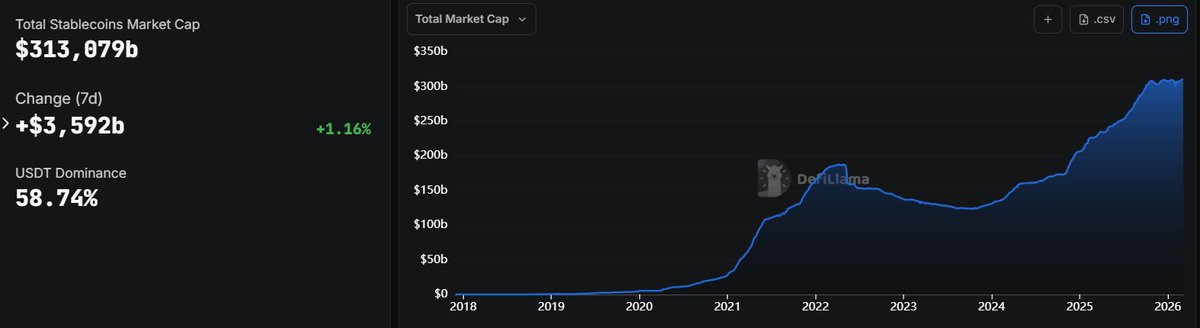
With a ~$300B market and surging volumes, stablecoins are evolving from trading pairs into real settlement assets.
2
59
New DeFi market forecast from @MordorIntel:
$238.54B in 2026 to $770.56B by 2031, implying a 26.43% CAGR.
The report frames the next phase of growth as more regulation-aligned, institutional, and infrastructure-led. ()
1
1
53
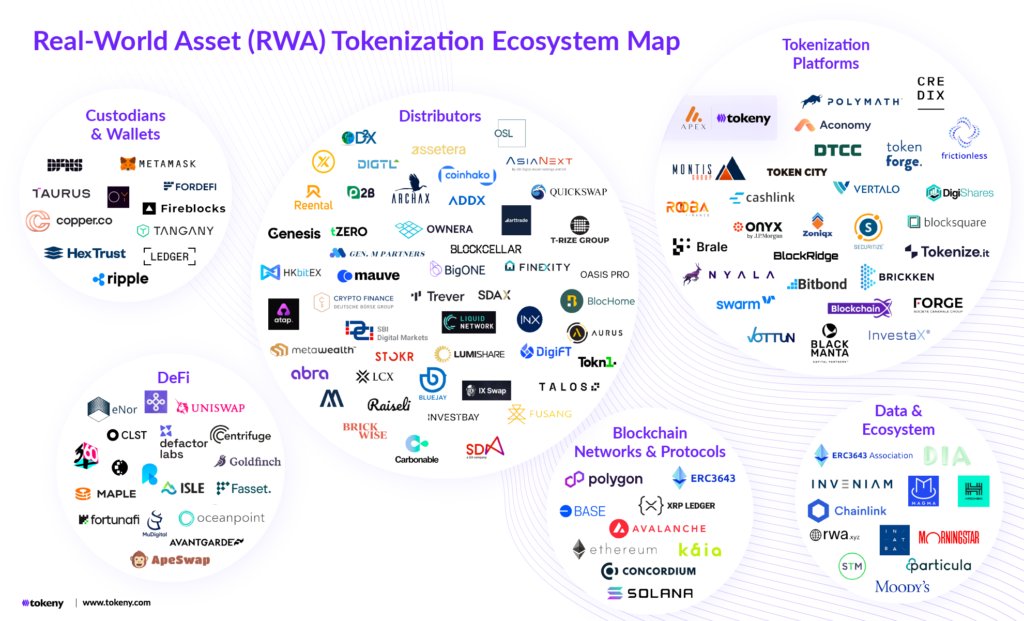
This forecast argues DeFi growth is shifting away from purely speculative usage and toward payments, treasury, tokenization, and institutional rails.
Source: prnewswire.com/news-releases…
29

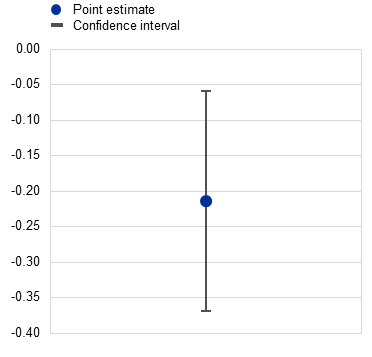
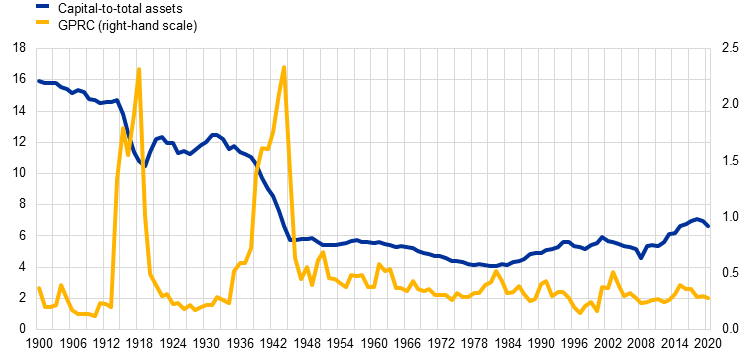
Both systems rely on buffers under stress.
The @ECB frames this through capital adequacy; crypto expresses it through stablecoin liquidity and trust dynamics. Stress periods reveal which structures are truly robust.
Read more: ecb.europa.eu/press/financia…
18
Our CEO was interviewed by RoxomTV 🙌

📺WATCH: @enekoknorr share his insights on @stabolut - a multi-currency yield-bearing stablecoin platform.
@gemgemcrypto_io
54