
Senior Lecturer in Political Theory @kingspol_econ. Writing a global history of unions for @penguinukbooks. PI DERISK ERC grant on democracy and systemic risk.
Joined March 2017
- Tweets 16,840
- Following 3,389
- Followers 7,916
- Likes 17,112
716 Photos and videos






Pinned Tweet

16 Feb 2021
"The Work of Politics: Making a Democratic Welfare State" out now with Cambridge University Press. Here's my overview of the argument in @jacobinmag:
jacobinmag.com/2020/10/welfa…
2
35
161
Steven Klein retweeted

May 1
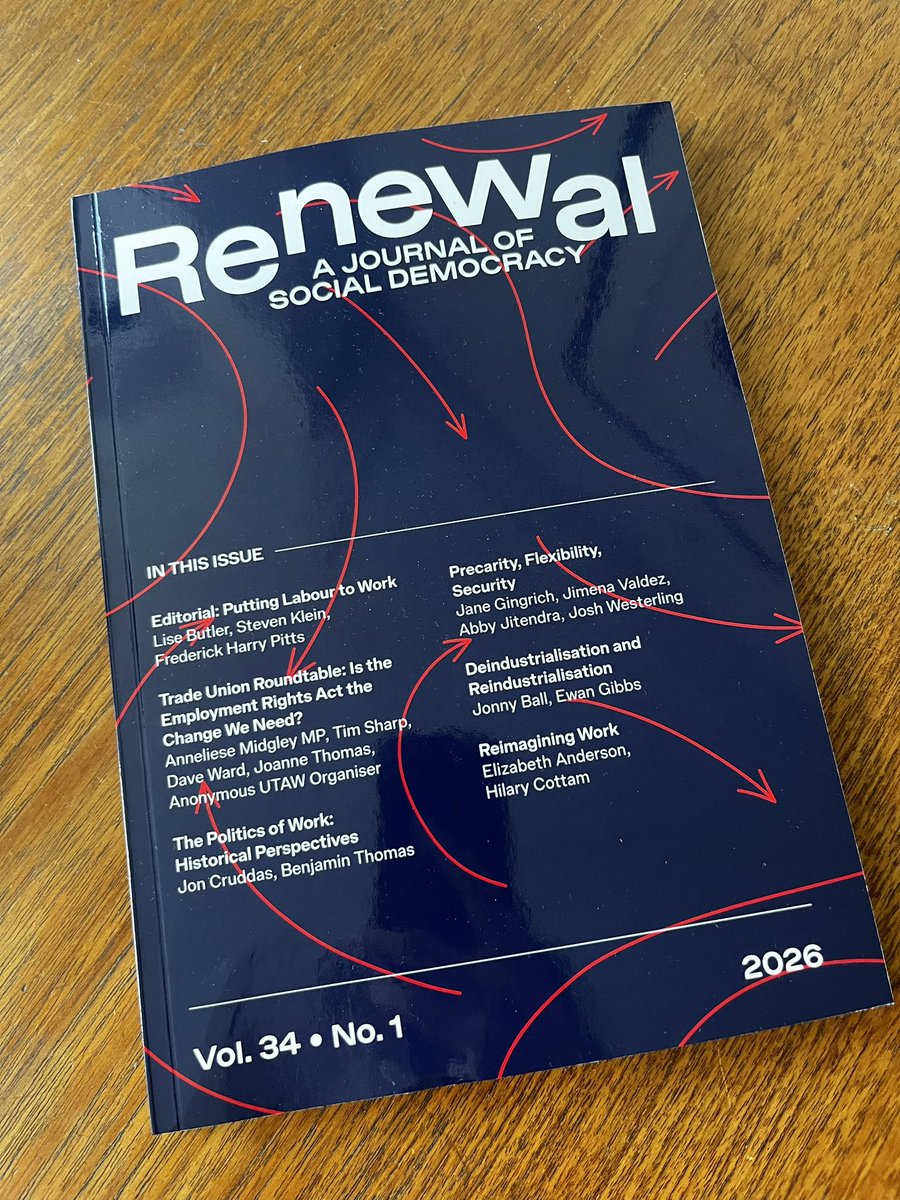
Happy May Day! Celebrate with the new
@RenewalJournal work issue ❤️
1
4
5
635
May 26
I review Natasha Piano's excellent Democratic Elitism in Perspectives on Politics cambridge.org/core/journals/…
4
13
1,205
Mar 29
seems odd to leave out the UK oil and economic embargo that sparked all the chaos in the first place. and CIA had backup plans to force mossadeq out according to multiple scenarios.
Mar 29

The U.S. did NOT overthrow a democratically-elected government in Iran in 1953. Stop allowing this false narrative to go unchallenged. 🧵1/11
554
Steven Klein retweeted

Mar 27
The text of my lecture yesterday at @KingsCollegeLon . Thank you to @stevenmklein and @Kingspol_econ for the invitation! unpopularfront.news/p/why-th…
10
49
6,189
Steven Klein retweeted

Mar 19
This paper is receiving a fair amount of attention, primarily as ammunition in academic culture wars. The basic exercise is an LLM-based assignment of social science extracts to one of 10 ideology levels (right to left) that are defined by views of a set of political figures plus a Monthly Review writer.
The analysis does *not* provide credible evidence on ideological bias/imbalance in social sciences. It is disappointing to see academics tout the paper. I frankly doubt most of them have even bothered to read it and certainly have not thought about the empirical methods.
What are the problems?
1. Arbitrariness of ideology scale.
The exercise reifies a set of subjective choices about ideological categories and treats their putative rank order from 1 to 10 as cardinal measures of ideological orientation. Why is Tom Cotton and not Mitt Romney the choice for center right? Why is Joe Machin the anchor for the measurements, i.e. defined as a moderate? One can go on. There is no reason to believe the results are robust to different choices of figures for the various ideological categories.
2. Cardinal measures are inappropriate for ideological positions as used in the paper. Conditional on the choices of figures to rank order different positions on a right left scale, it is not meaningful to say the ideological distance between Cotton and Manchin is the same as between Manchin and Biden, etc. By implications the ideology scores for papers are not meaningful.
3. The ideology measurements are not interpretable even in an ordinal sense. The analysis assumes a scalar notion of ideology which is not tenable.
4. The exercise is a black box as to *why* an abstract is associated with the ideology of a particular figure. Without understanding how the association is done, substantive claims the papers under study cannot be made.
The article gives an example that illustrates the problem. Ronald Oaxaca's classic 1973 paper "Male-Female Wage Differentials in Urban Labor Markets" is ranked as 7, a match to Elizabeth Warren and thus "progressive". The abstract contains this sentence
"Culture, tradition, and discrimination tend to make restrictive the terms by which women may participate in the labor force."
which presumably is the source of the match. But anyone who knows the article also knows it is an exploration of how to identify discrimination versus other sources of Male/Female labor market differences. The method Oaxaca developed in fact provide a way to remove nondiscriminatory reasons for M/F differences. The only sense in which it is "progressive" is if one thinks that interest in the role of discrimination in labor market outcomes is sufficient to label a paper as progressive. This is obviously nonsensical.
More generally the association of a paper's abstract to a political positions does not distinguish between 1) the subject matter is putatively of interest to left versus right figures versus or 2) the paper's analysis has been affected by ideology.
This identification failure also undermines the paper's claim that social science has drifted to the left. Consider economics. It is certainly true that interest in inequality has increased in economics. This reflects, in my opinion, an intellectual enrichment of the field. I would go so far as to say inequality was understudied 40 years ago. Further, the openness of economists to sociological and psychological factors in understanding inequality has changed. If, as suggested by then Oaxaca example, the LLM used here codes papers on inequality as "left" then the purported ideological drift is scientifically desirable.
If one wants to criticize the role of ideology in social science, it is necessary to delve into the details of particular research programs and specific arguments and analyses. The type of exercise conducted in this paper is not informative.

New in @Theory_Society, the first systematic, cross-disciplinary, assessment of ideology in social science, drawing from ~600,000 social science abstracts across ~60 years.
Check it out here (open access!): link.springer.com/article/10…
4
19
77
24,980
Steven Klein retweeted
Mar 16
They've released more seats for the March 26th talk in London.— kcl.ac.uk/events/why-the-clo…
2
3
18
3,788
Steven Klein retweeted

John Mearsheimer, Oct. 3 2024: "I think that Biden's basic instincts are those of a warmonger, and I think that's not true of Trump. I think Trump is not that interested in fighting wars."
125
322
1,859
587,278
Excellent review of Natasha Piano's groundbreaking Democratic elitism: the founding myth of American political science. Far from being advocates of a "realistic" view of democracy, the Italian elite theorists warn us of the plutocratic dangers of election
link.springer.com/article/10…
10
35
2,975
Feb 19
tfw when a significant chunk of prominent anti-woke voices were buddies with epstein
1
2
367
Feb 19
if we want a calibration for the potential response that chomsky et al could have pursued, we have norman finkelstein's blunt assessment of epstein's character
1
181
Steven Klein retweeted

⏰ Call for proposals!⏰
Organisers are calling for full panel proposals, author-meets-critics sessions, or individual papers from those who would like to attend the next annual PPE conference at King's
The deadline for submissions is February 20👇
ppesociety.org/ppe-society-l…
5
17
2,323
Jan 13
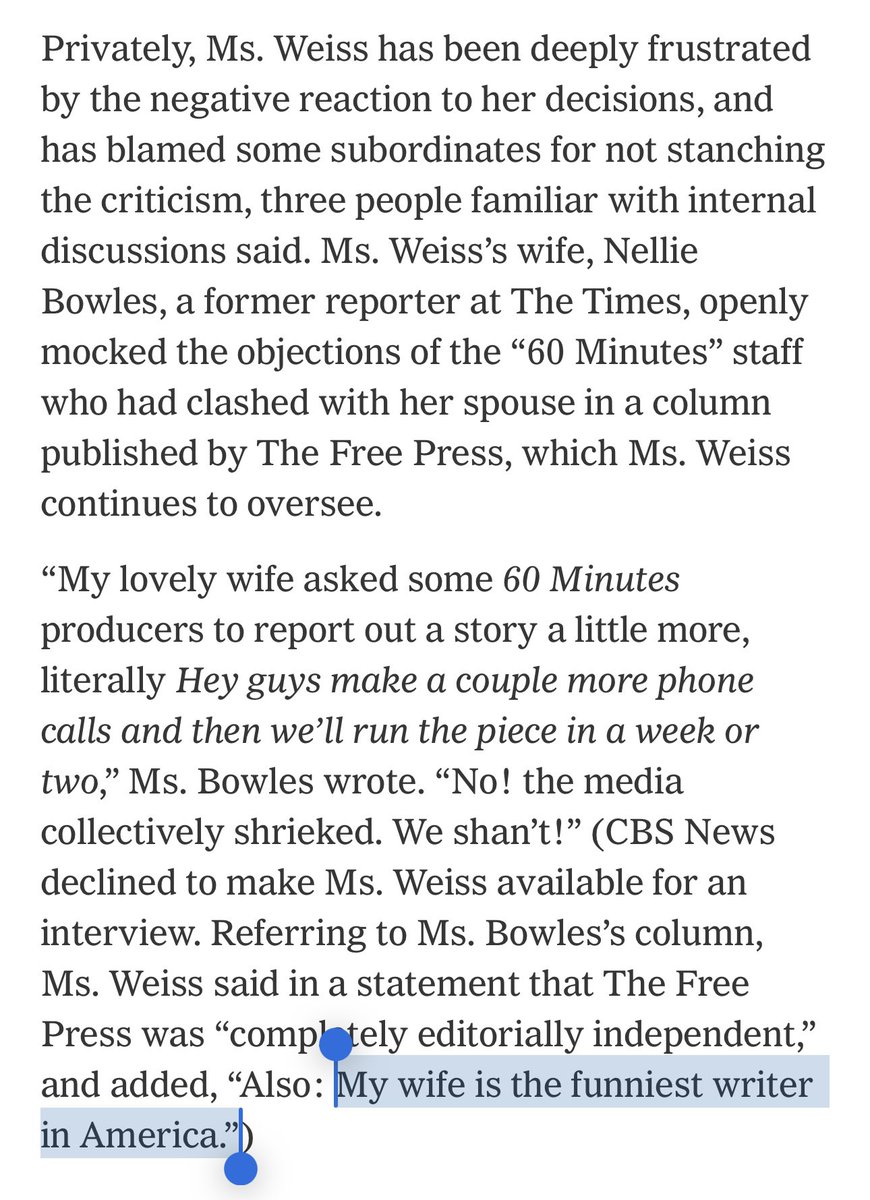
Basically a succession episode
Jan 13

rewriting scripts, pulling segments, scolding staff, sending memos … still got time to hype her wife in the paper she loathes
whatta story @grynbaum @BenMullin
nytimes.com/2026/01/13/busin…
434
Steven Klein retweeted
🪙Public support for broad-based taxation risks eroding when voters learn that the super-rich pay lower tax rates than ordinary citizens, according to new research 📉
Read the research, co-authored by Julian Limberg, David Hope and Lukas Haffert, here 👇
kcl.ac.uk/news/public-suppor…
1
3
349
Jan 12
This was the moment it became clear to anyone watching that you didn't understand what the debate is about
Jan 6

Weirdest part of that debate was when John was close to having a stroke, asking me to define fascism, name what I think fascism is, and I say "Xi's China" and he can't even accept this.
4
561
Steven Klein retweeted
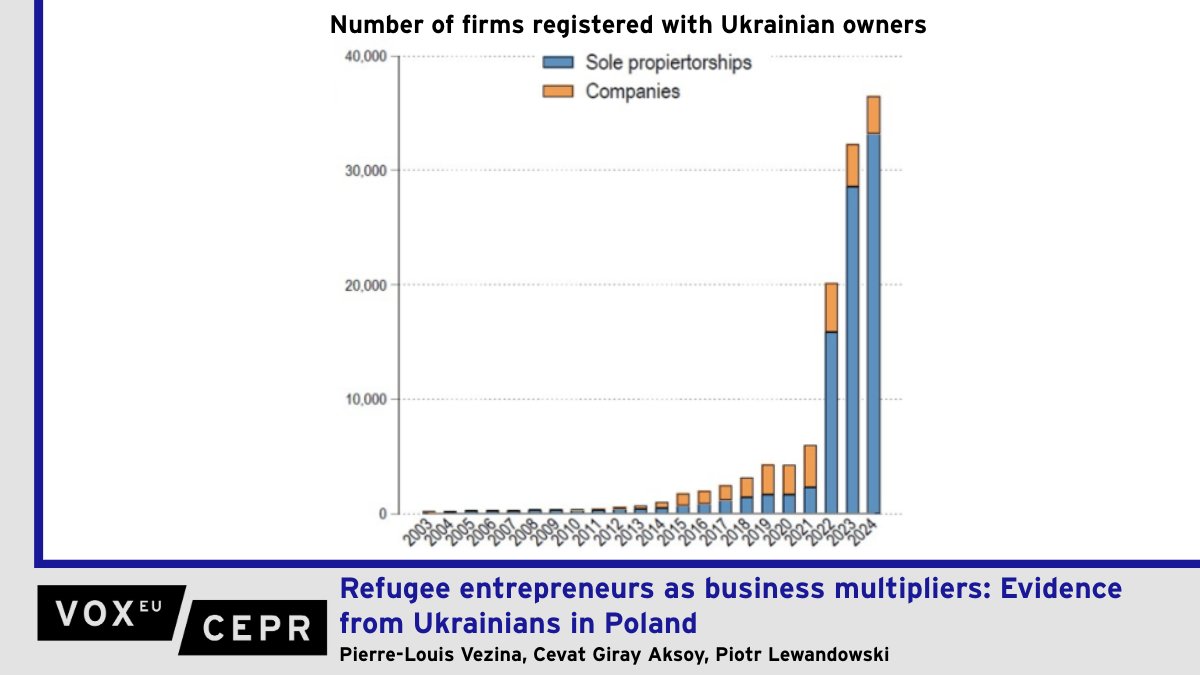
A new paper co-authored by our academics, @cevatgirayaksoy and Pierre-Louis Vezina, takes a closer look at the impact of Ukrainian refugees on entrepreneurship in Poland 🇵🇱🇺🇦💼
Read more 👇
kcl.ac.uk/news/refugees-prov…

Refugee entrepreneurs as business multipliers: Evidence from Ukrainians in Poland
Pierre-Louis Vezina @KingsCollegeLon, Cevat Giray Aksoy @cevatgirayaksoy @EBRD @Kingspol_econ, Piotr Lewandowski @ptrlewandowski @ibs_thinktank
ow.ly/aGC850XM7sX
2
2
619
Isn't she part of this administration?
29 Jan 2019

It’s about the oil … again.
Bolton just exposed real motive for intervention in Venezuela: "We're in conversation with major American companies now...It would make a difference if we could have American companies produce the oil in Venezuela. We both have a lot at stake here."
436
The Trump admin is engaged in "Zinnery" - they are openly invading a country for its oil - and it takes a truly delusional neocon brain to reframe this as democracy promotion or whatever.
Jan 3

Just about every Democrat & left-of-center voice in my feed right now has lapsed back into all the rhetorical Zinnery of the George W. Bush era.
3
497
9 Dec 2025
Great conversation between John McCormick and Jeff Church about John's new book The People's Princes
podomatic.com/podcasts/thepo…
1
3
813
Steven Klein retweeted

19 Nov 2025
From September 2025 -
Rethinking Citizen Competence: A New Theoretical and Empirical Framework - cup.org/3XEpgis
- @stevenmklein & @EthanVPorter
#OpenAccess
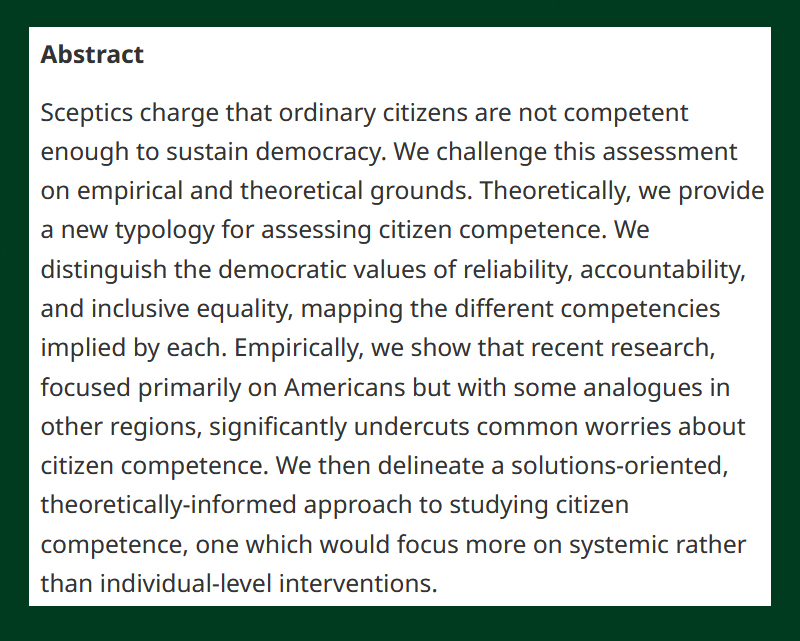
ALT BJPolS abstract discussing the challenges and proposal of a new typology for assessing citizen competence in sustaining democracy. The text addresses empirical data and suggests a solutions-oriented, systemic approach rather than individual-level interventions.
1
4
11
1,228