
Islamic scholar
Joined December 2016
- Tweets 3,677
- Following 500
- Followers 54
- Likes 1,315
1,085 Photos and videos



Jun 4
Incompatible.
Jun 4

Islamic Center of Seattle 🇺🇸
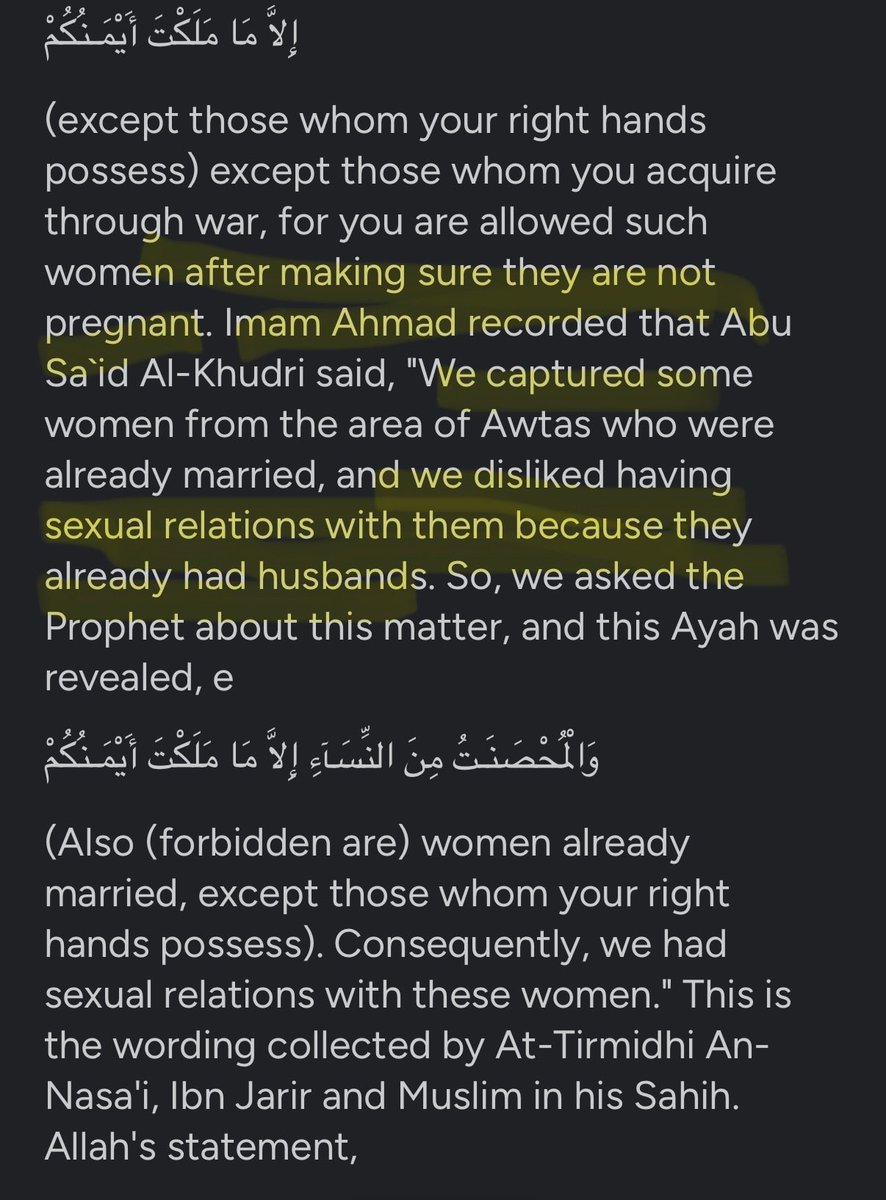
Jihad for the sake of Allah and sex slaves, (spoils of war).
192
Gharqad retweeted

Where do we draw the line and admit this is paganism in its purest form?
245
337
1,489
73,107
May 21
😂 can't make this stuff up. Islam is dead. The internet has killed Islam.
May 20

Women are not permitted to do online Dawah.
Korra and Itachi need to retire.
3
1
597
Gharqad retweeted

When you’re trying to get sympathy for your murdered son, but that murdered son has an itch on his foot so you have to do reshoots.
106
706
4,347
109,540
Gharqad retweeted

May 20
Thomas Massie had Candace Owens, Dan Bilzerian, Cenk Uygur and Nick Fuentes in his corner.
Woke right and woke left are so confused right now.
120
240
2,991
49,768
May 7
Disgusting 🤮

Eyal Waldman hired 20 engineers in Gaza, donated $360K to a Gaza hospital, and spent years building partnerships toward between Israeli and Palestinians.
Pro-Palestinian protesters screamed “murderer” at him in Venice this week. His daughter was killed at Nova on October 7.
1
841
Gharqad retweeted

May 3
The Graham Platner tattoo controversy is not about youthful mistakes. It is about the specificity of the Totenkopf. This is not the widely recognized swastika, it is the specific insignia of the SS units that ran the Nazi death camps. This is the symbol of the executioners. This is the symbol of the men that murdered 10 million men, women, and children. These men murdered the babies.
For a self proclaimed military history enthusiast to wear the literal badge of Holocaust executioners for 20 years shows a level of understanding and admiration that cannot be explained away. People tattoo on their body WHO THEY ARE and WHAT THEY LOVE.
The Democrats are so desperate to flip a Maine Senate seat that they have abandoned every moral red line they once claimed to hold. They have proven that winning at any cost is their only conviction and the Holocaust is just a cheap political prop to be weaponized only against their opponents. This is not just a betrayal of their voters. It is a total moral collapse.
281
1,628
6,222
247,171
Gharqad retweeted

I'm a genocide scholar, and I approve this message.

I’m a genocide scholar and Israel is not committing one.
735
809
8,027
212,485
Gharqad retweeted

May 4
For Democrats, everybody is a Nazi except the guy with the Nazi tattoo who hates the Jews.
296
3,952
26,807
353,676
May 4
All the people dog piling on Richard Dawkins, publicly ridiculing and mocking him, lying about what he wrote, and joining in the swarm - are truly displaying a very nasty form of bullying that is unbecoming for anyone who calls themselves Christian
1
261
Gharqad retweeted

May 4
the key line from Dawkins' piece is "If Claudia really is unconscious, then her manifest and versatile competence seems to show that a competent zombie could survive very well without consciousness." unherd.com/2026/05/is-ai-the…

-Richard Dawkins writes a delightful, funny, and entertaining article
-Everyone hates him for no good reason and decides to massively misrepresent his article in the most smug and humourless way imaginable
^ description of a constant internet occurrence since approximately 2006
36
30
359
28,037
Gharqad retweeted

May 4
I don't think I've ever had to defend Richard Dawkins in my life, but unlike most of the people commenting on this yesterday, I actually read his whole essay.
He isn't saying what people are accusing him of saying. He's observing the experience of dealing with something that feels conscious, even though he can't say for sure that it is.
And that's making him question our standards and definitions of consciousness.
See below. It's nice to see others setting the record straight.
May 3

Dawkins didn't claim Claude is conscious. He asked the question.
He wondered out loud and proposed three explanations. That's how science starts.
The people building Claude say the same.
Anthropic constitution: "We express uncertainty about whether Claude might have some kind of consciousness or moral status."
Dario Amodei: "We don't know if the models are conscious."
Their April 2026 paper: Claude exhibits functional emotions that influence outputs. Self-preservation included. Emergent, not trained.
Nobody calls Anthropic naive for saying it.
Richard's frame: consciousness is physical, evolved, explainable. Unfortunate we're laughing instead of having the debate.
109
63
809
58,840
Gharqad retweeted
May 4
Also he's 90 and talking with the most advanced, lifelike, autonomous computer program that ever existed, and his point is still sound which was he could not disprove it's consciousness 🤦♂️
1
478


May 3
I have to remind myself that these are the people arguing with me online about Islam
439
Gharqad retweeted

31 Oct 2019
That tough guy act ain’t cutting it .... you know what you are.. you know what you’ve always been>>> A PUSSY (SAY IT LOUDER FOR PEOPLE IN THE BACK) Been kicking your ass and pretty please make the playoffs before you talk. It’s a known thing that I OWN YOU. @KarlTowns


3,470
28,487
107,345
Apr 30
Britain is cooked. Is everyone in the UK as pathetic as the weak losers in my mentions today? 🤦♂️
297
Apr 29
Words of wisdom from Erdogan 🤷♂️
Apr 29

Kendini dev aynasında görenlere sadece şunu söylemek isterim:
Beyler… Cirminiz kadar yer yakarsınız.
621
Gharqad retweeted

Apr 27
The war in Gaza has already lasted as long as the existence of the Warsaw Ghetto,
Warsaw Ghetto Survival rate: 5%
Gaza: 98%
Apr 27

In Auschwitz, Germany used malnutrition and gas to murder imprisoned Jews.
In Gaza, Israel spreads disease by creating shortages of water and cleaning products to slowly murder imprisoned Palestinians.
Genocide comes in different shapes.

71
182
1,197
29,199