
@DukeVictorious | Stratospheric Node (StratoMast): the extraterrestrial evolution of the AirNode & future of @AirNodeStrategy | The sky is no longer the limit!
Joined November 2025
- Tweets 10
- Following 12
- Followers 11
- Likes 13
Photos and videos
Pinned Tweet

March is setting up to be a huge month for @WorldMobileTeam, @wmchain, $WMTx and World Mobile Stratospheric!
Feb 20

I'm really looking forward to being part of the team representing World Mobile Stratospheric at #MWC26 in Barcelona from 2nd March.
Come meet us on the GB Stand in Hall 7 . . .

2
23
520
Duke Victorious | stratoNode retweeted

May 20
When markets are bad.. pay attention to the people who still show up every single day building, educating, cooking and providing value even when engagement is low and timelines are quiet. The builders in the trenches during the hard times are usually the same people leading when the market turns around again.
$WMTX is the ticker 💪
5
5
51
746
Duke Victorious | stratoNode retweeted

May 20
Coverage. Privacy. Price.
That is the foundation of the new World Mobile consumer campaigns now rolling out across the U.S.
Better signal where people actually live.
Privacy built into the network itself.
Straightforward pricing without the usual telecom games.
A new generation of acquisition campaigns is now live.
Built for scale.

7
31
135
2,618
👀👇

Just adding yet another UFO video to your timeline 😜
This one:
- stays mid-air for 6 days
- flies at ~60,000 feet
- carries 500 kg payload
- generates 100 kW 24/7
- has a 56m wingspan
- serves 500k concurrent users to traditional handsets
@WorldMobileTeam $WMTx
1
3
29
Duke Victorious | stratoNode retweeted

Yes, many moonshots died but World Mobile Stratospheric has several advantages that directly address those failure points in my view:
1. Past projects struggled to make the economics work at scale. WMS has very strong economics with a 9-18x lower cost per GB than LEOs like @Starlink . One aircraft can replace approx. 500 terrestrial towers. The viability equation is flipped.
2. Connecting unserved and underserved populations is frequently a national priority or regulatory requirement. Governments (especially in large emerging markets) have every incentive to fast-track approvals, spectrum access, and even partnerships. The “handoff” to real-world deployment and adoption has a much clearer path (we also have hints of partnerships with @SKtelecom for example)
3. The drones are not "single-use telecom platforms" in the way all other attempts have been. With a total payload of at least 500kg, we can carry additional payload (our antenna is approx. 140kg) serving different industries with use cases like: agriculture monitoring, disaster response, public safety, environmental sensing, surveying...
Here's a thread with some great details: x.com/WorldMobileTeam/status…
Apr 26

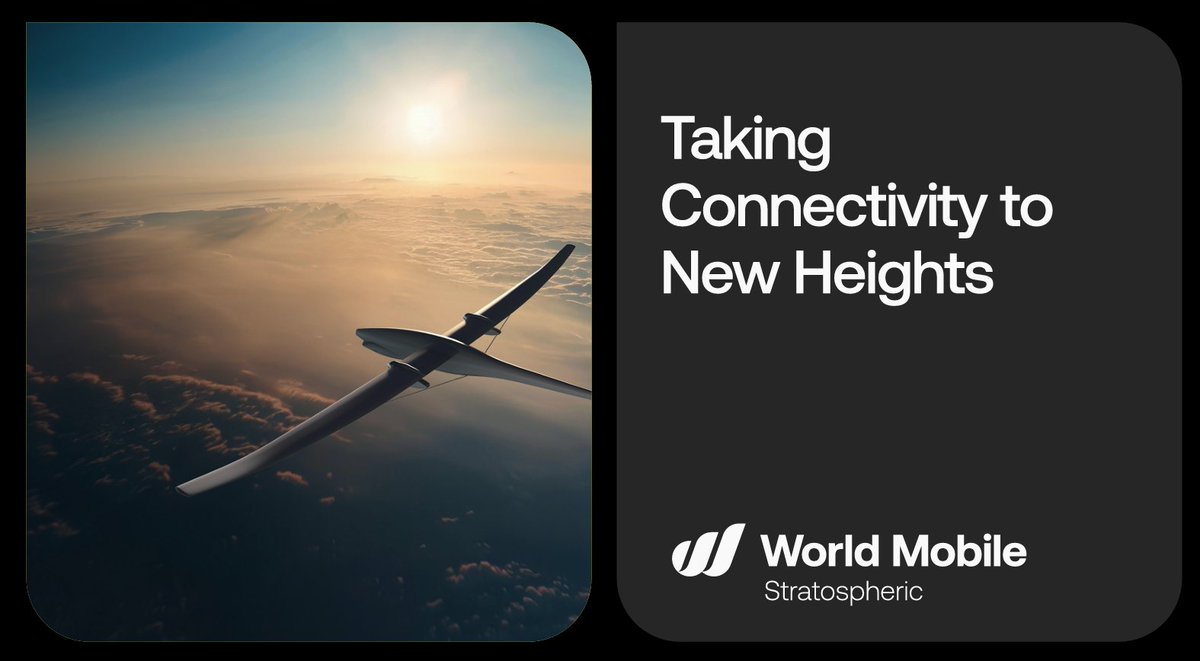
At @TheDCW_X Conv3rgence 2026, @MrTelecoms made one thing clear:
World Mobile is not stopping at ground infrastructure.
We are building the next layer of telecom for the skies.
One that moves coverage higher, wider, and faster than legacy systems were ever designed to.
And it starts now👇
2
12
769
SKYMAST INCOMING👇
Apr 27
Progress you can see.
Our stratospheric platform is advancing, with the Britten-Norman Islander now ready for installation of next-generation airborne connectivity systems.
This is how the future network gets built.
1
6
100
3D Connectivity👇
Apr 26
At @TheDCW_X Conv3rgence 2026, @MrTelecoms made one thing clear:
World Mobile is not stopping at ground infrastructure.
We are building the next layer of telecom for the skies.
One that moves coverage higher, wider, and faster than legacy systems were ever designed to.
And it starts now👇
1
6
79
From EarthNodes to AirNodes to Stratospheric Nodes …
A universe of connectivity!
Mar 4

🚨The @WorldMobileTeam plane was just spotted in the air again
✈️ Plane Activity Detected
2026-03-04 13:20:03 UTC
*Status:* 🟢 Active (In Air)
*Altitude:* 4,175 ft (1,272 m)
*Speed:* 106 knots
*Heading:* 245°
MWC Barcelona currently live. Coincidence? 🤔👀
$WMTx
1
4
86
Duke Victorious | stratoNode retweeted
23 Nov 2025
Connectivity shouldn’t come at the planet’s expense.
Steel towers, diesel generators, and rocket launches extend reach, but raise emissions.
World Mobile Stratospheric introduces another path: wide-scale connectivity powered by hydrogen. 👇🧵
8 Aug 2025
Big Wireless builds towers. We're building a network that flies.
Introducing World Mobile Stratospheric.
Hydrogen-powered stratospheric aircraft. 100Gbps low-latency 5G antenna. 15,000 km² coverage. Zero CO₂.
Decentralized. Blockchain-powered. Community-owned.
This is how we connect everyone, everywhere.
🔗 worldmobile.io/stratospheric
7
26
125
4,724
Duke Victorious | stratoNode retweeted
20 Nov 2025
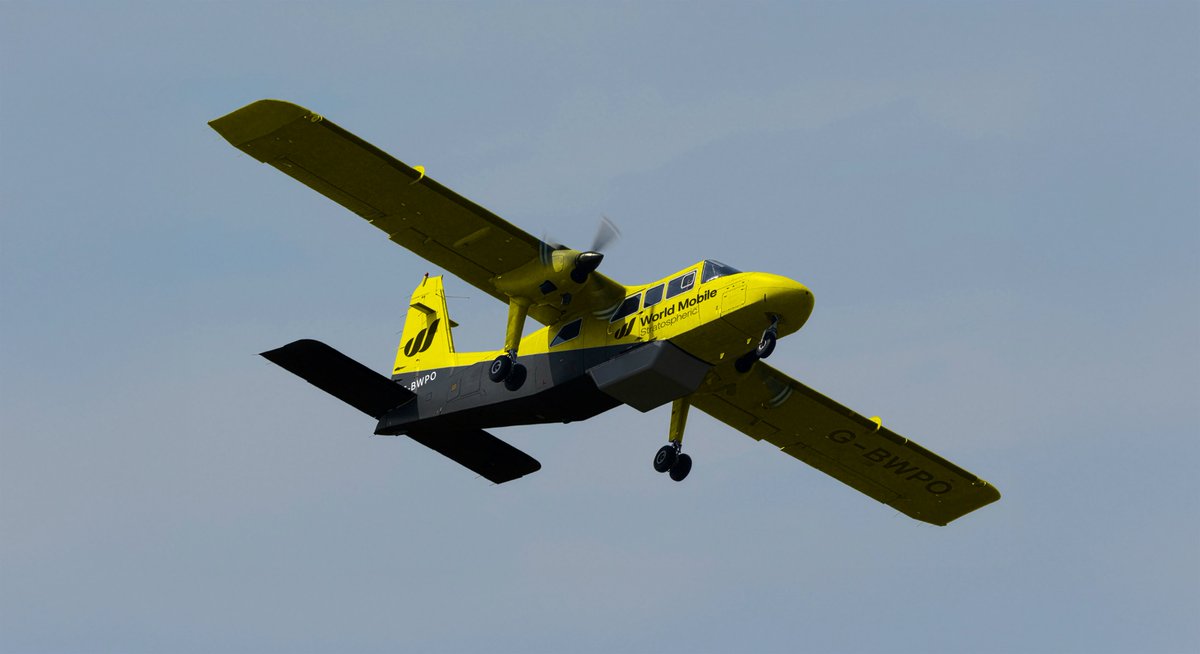
Ready for takeoff. ✈️
World Mobile Stratospheric has acquired a BN2T-4S Islander aircraft to flight-test its proprietary phased-array antenna, in collaboration with @BrittenNorman and @bt_uk.
This is the future of connectivity, built for the people and powered from the sky.
DePIN is entering a new era.
Read the full announcement: worldmobile.io/blog/post/wor…
30
108
293
30,951