CEO Sylvain Faust Inc sold to BMC (NASDAQ:BMC) now owned by KKR, Multi Engine Pilot, HF Radio Morse Code Operator, Diver, Motorcycle, Cooks Fantastic Chili.
Joined May 2013
- Tweets 59,238
- Following 682
- Followers 2,212
- Likes 53,053
5,303 Photos and videos












Pinned Tweet

20 Jul 2024
Salut #Canada #Québec, pourrions-nous le refaire aujourd'hui? En moins de 4 ans, #Montréal a construit l'Expo 67: création d'îles, autoroutes, 82 km de routes, 27 ponts, 847 bâtiments, 600 structures, Habitat 67, le train automatique Expo Express, La Ronde, etc. 50 millions de visiteurs en quelques mois! Mais en 2024, il faut jusqu'à 5 ans pour obtenir un permis de construire et plus de 7 ans pour ajouter quelques stations de métro à Montréal. Qui sont les obstacles? Qui entrave le progrès, augmente vos impôts et taxes et pour quelle idéologie? Pourquoi avons nous reculé? PARTAGEZ et Veuillez RÉPONDRE et nous dire qui sont les empêcheurs, quelles sont les raisons? Vos solutions? (Voyons ce que vos politiciens ont à dire, SI JAMAIS certains osent. 🤔) #Expo67 #Quebec #polcan #cdnpoli #polmtl #assnat #HoC VOIR cette vidéo TRÈS informative... youtube.com/watch?v=HaKb3qVL…
@francoislegault @E_Duhaime @PaulPlamondon @marc_tanguay @DenisCoderre @JeanCharest_ @PKP_Qc @PierrePoilievre @Val_Plante @MaximeBernier @InfluenceComm @renaudbrossard @NantelGuy @elonmusk @GadSaad @jordanbpeterson @kevinolearytv @Guzzo_Vincenzo
5
4
20
6,016

Jun 14

TODAY: Among the crowd, a man wore a jersey bearing Abu Obeida’s name. He is a former Hamas spokesperson.
The pro-terror rally continued in full view of police in Montreal (@SPVM).
Full report with exclusive interviews soon.
56
Sylvain Faust retweeted
Jun 12
Giving “it” money, could this be qualified as a form of Suicidal Empathy? 🤔 @GadSaad
Jun 12

🔥NO JOB IS SAFE FROM HUMANOIDS
AI Robots are already are already hitting the streets in China asking for money
1
2
69
Jun 15
o Canada.... Québec... (Go where you are treated best)... them? you? 🤔 #polcan #cdnpoli #HoC #pq #plq #caq #cpc #pcc #ppc #polmtl #polqc
Jun 14
🚨 CRAZY: A hijab-wearing woman holding the Islamic regime’s flag loses it and tells me, “F*ck Israel.”
She keeps screaming in my face, spit flying, foaming around her mouth, telling me to “F*ck” off for being a Zionist.
Full report soon with more insane footage.
1
81
Sylvain Faust retweeted


3
17
244
Jun 14
No more vacations in the #UK for a while for me… A change of government would be welcomed… 🧐 #Travel #London #tourism #KingCharlesIII
Jun 14

15 year old Brit has to undergo plastic surgery after two police officers smash his face on to spiked railings
UK police have sided with Militant Alien Invaders over Brits.
1
82
Sylvain Faust retweeted
14 Jun 2025
You're right. It's rarely the "best" technology that wins in the market. Success tends to favour those who can translate innovation into clear business value, driven by the right strategy, execution, and leadership.
Historically, wildly few technical founders have succeeded without either adapting quickly to a business mindset or surrounding themselves with commercially minded partners. Exceptions like Bill Gates, Larry Ellison, Mark Zuckerberg, Bill Hewlett and Dave Packard understood this early, or had the proper support structure in place. More often, brilliant technical founders are eventually sidelined or complemented by business-savvy leadership to achieve successful scaling.
A few key observations from experience:
1️⃣ Choose the right “Business” partners early.
A strong tech foundation is only part of the equation. The right co-founder or early executive team, who deeply understands market dynamics, storytelling, and sales, can make all the difference. The partners who will have a direct impact on market penetration, the right VC whose money is worth more than others because of their involvement/interest in the right business places.
2️⃣ Technology alone is rarely enough; timing and education also play a crucial role.
Introducing innovation too early means you’ll need to “educate the market,” a costly extra step. That’s a heavy lift and requires precise strategy, especially targeting decision-makers (often at the executive level) who can champion new paradigms. Convincing developers alone rarely drives adoption at scale.
3️⃣ Clients don’t buy “technology”, they buy outcomes.
The market responds to solutions that ease pain, simplify workflows, and feel intuitive. Technical elegance (even cost) is secondary to practical impact and user experience. If they can't see or feel the value fast, it doesn’t matter how “advanced” the technology is, or what it’s running on.
4️⃣ Brand and narrative drive adoption.
People don’t just buy technology features; they buy trust, vision, and proven success stories tailored to specific industry segments, such as Banking/Financial Services, Telecom, Healthcare, Government, Manufacturing, and Energy. Strategic positioning, compelling storytelling, and effective branding elevate a product above the competition and often outweigh pure technical merit. Clients ultimately buy efficiency, security, or revenue growth, not blockchain or technology for its own sake.
In short, execution, perception, and alignment with business pain points are often more decisive than raw technical merit. The earlier tech founders understand and embrace this, the better their odds of building something that truly scales. Yet too often, companies overly depend on academic or theoretical expertise instead of real entrepreneurial instincts. A highly educated scholar does not necessarily equate to entrepreneurship. Ask any business school or MBA program, and they will tell you that they don’t teach entrepreneurship; you either have it or you don't.
Being an entrepreneur myself, I've witnessed firsthand how crucial it is to align technical brilliance with practical, market-focused leadership. Considering Algorand’s roots in academic excellence, this raises a critical question: Is there sufficient seasoned entrepreneurial experience guiding Algorand’s business strategy and market adoption?
I have a few newbie questions. For Algorand:
🔹 What’s the definition of “client”?
🔹 What do they think they are selling? To who?
🔹 In which industry segment do they believe their product delivers the most significant impact and cost savings?
🔹 What do they consider to be the most effective way to sell a public blockchain to their target markets?
🔹 Who’s the “been there, done that” Business Entrepreneur in charge at Algorand?
🔹 Who’s in charge of the technology/product direction, and what is to be expected? Is it in sync with what they want to sell to potential clients?
🔹 Is the “creator” still involved, and if so, in what capacity? If not, why not?
🔹 How is success measured? After all, "what can’t be measured can’t be managed." What key metrics or KPIs does Algorand use to define and track success?
I will stop here for now. I have to admit, I do own some $algo.
#Algorand #ALGO #Algofam #Blockchain #AlgorandCommunity #Entrepreneurship #Leadership #BusinessStrategy @AlgoFoundation @Algorand
3
6
1,880
Sylvain Faust retweeted
Jun 13
Et à la place, ils avaient investi dans Celsius d’Alex Mashinsky. Pour SpaceX, la gestion du risque, c’était de laisser Teachers’ investir sans suivre au moins un peu... Il me semble que la due diligence de Teachers’ est bonne, normalement. À moins que SpaceX n’ait pas eu de place dans les rondes de financement ultérieures 😇
1
1
62
Sylvain Faust retweeted

Jun 13
I don’t think Billy Woods and I are related, but, dear Lord, I wish we were.
2,145
15,298
91,412
994,403
Sylvain Faust retweeted

Jun 12
In 2022 Jen Psaki was asked about claims that we were operating biolabs in Ukraine. She denied the existence of "bioweapons" programs and then called the whole thing Russian disinformation.
1,558
15,755
50,548
1,559,916
Sylvain Faust retweeted

Jun 12
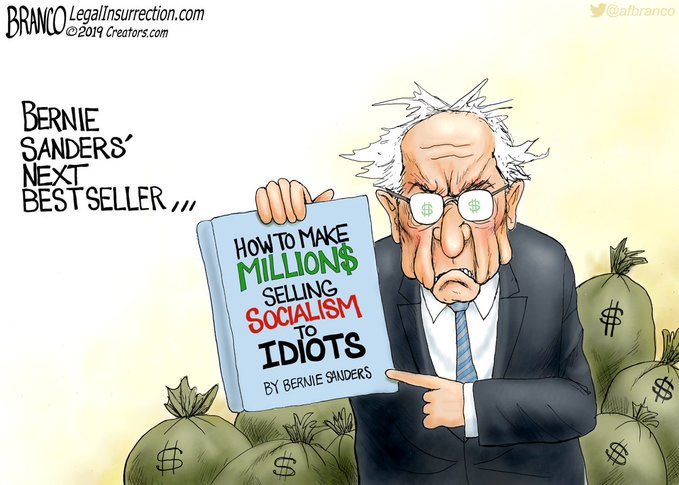
Jealousy is not a good look sir. You create NOTHING, you build NOTHING and you employ NO ONE!!! Sit down comrade. You must be a Democrat.
4
69
727
12,232
Jun 13
No pain.. (risk) = no gain…

Interview with Elon Musk from 2012: " My proceeds from PayPal after tax were about $180M, $100M of that went into SpaceX, $70M into Tesla, and $10M into SolarCity and I literally had to borrow money for rent."
1
1
105
Jun 13
Québec Oops… 🙊 @lacaisse_
Ti-Québec, c’est pas juste un fromage #polqc
Jun 13

Elon Musk just created a windfall of $12 billion USD for the Ontario Teachers’ Pension Plan, thanks to their investment in SpaceX.
That’s nearly $17,000,000,000 CDN.
The communists who run the union will still complain about him.
1
1
5
557
Jun 13
RT @liz_churchill10: The thing they say never happens…keeps on happening…
A 17-year old has been randomly stabbed in Britain…If you share…
25,758
Sylvain Faust retweeted

Jun 12
Congratulations @ElonMusk.
Thanks to SpaceX's IPO, he's the first Trillionaire.
He didn't TAKE money from anyone. He CREATED wealth.
He launched satellites that connect even the poorest, most remote parts of the world.
Our world needs more MAKERS like Musk; fewer TAKERS like:
1,431
9,481
60,916
1,106,272
Sylvain Faust retweeted

Jun 13
As a result of a US government directive, we are suspending access to Claude Fable 5 for all users. You can continue to use all other Claude models.
Here’s what this means for you:
Across Claude products, new sessions will run on your selected default model or Opus 4.8, and existing Fable 5 sessions will end with an error.
On the Claude Platform, requests to Fable 5 will also return an error. Please update your integrations to other Claude models.
We know this is a disruption to your workflows; we appreciate your patience and support.
Jun 13

The US government, citing national security authorities, has issued an export control directive to suspend all access to Fable 5 and Mythos 5 by any foreign national, whether inside or outside the United States, including foreign national Anthropic employees.
The net effect of this order is that we must abruptly disable Fable 5 and Mythos 5 for all our customers to ensure compliance.
Access to all other Claude models is not affected.
We apologize for this disruption to our customers. We believe this is a misunderstanding and are working to restore access as soon as possible.
Read our full statement: anthropic.com/news/fable-myt…
3,654
7,269
44,623
12,851,790
Sylvain Faust retweeted

Jun 12
Prepare for takeoff. ✈️ Flight simulator is now available globally on web to all users. goo.gle/4fBYnWO
We've recently added many our most powerful professional desktop features to web. Elevation profiles, new import types, but there's always been one other feature you've been asking us to add to the web version of Google Earth, just for fun...
Where will you fly? Share your best maneuvers, views, and flyovers with us!
462
4,245
31,806
9,509,710
Sylvain Faust retweeted
Jun 12
She should move where she would be treated best… 👍
1
2
57
Sylvain Faust retweeted

🚨🇪🇸 | LA ESPAÑA DE PEDRO SÁNCHEZ: Una pareja de ancianos de Valencia fue brutalmente atacada a golpes por tres inmigrantes magrebíes que invadieron su casa solo para robarles.
"Se llevaron todo lo que pudieron, me pegaron una paliza que me partieron las costillas".
636
9,674
20,071
385,904
Jun 12
It works both ways 👍 Go where you’re treated best… 👌
Jun 11

‼️JUST IN - Record number of people leaving Canada
120,640 people emigrated from Canada in 2025, the highest number ever recorded.
1
43