
Joined November 2023
- Tweets 2,046
- Following 2
- Followers 56
- Likes 60
819 Photos and videos
Pinned Tweet

The introduction of Z-Image signals a welcome maturation in the “foundation model” landscape: not merely bigger models, but models shaped around the practical demands of image creation. Commitments to generative diversity and broad stylistic coverage matter because creativity is not a single aesthetic lane—it is a spectrum of visual languages, from documentary realism to graphic abstraction. Equally important is robust prompt adherence, which is less a marketing feature than a trust contract: users need systems that reliably translate intent into output, rather than improvising over it.
If these goals hold in real-world use, Z-Image could reduce the familiar trade-off between flexibility and controllability—offering range without drifting, and fidelity without sterility. The next benchmark, however, is not only quality, but consistency under pressure: edge cases, nuanced instructions, and sensitive contexts. A model that is diverse, precise, and dependable will not just generate images—it will expand what creators can confidently design.
3
6
10,060
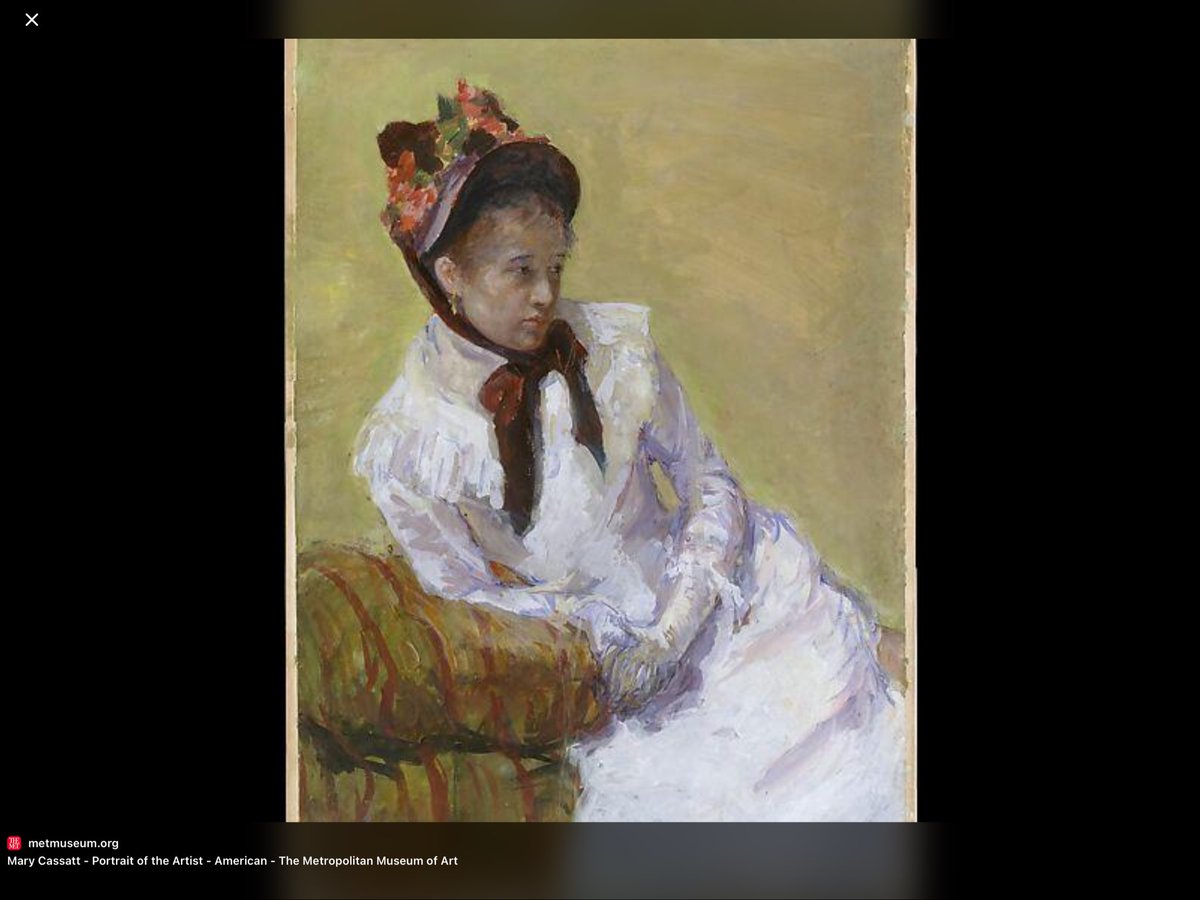
#MaryCassatt (1844–1926)
Mary Cassatt was an American painter and printmaker who became one of the leading figures of the Impressionist movement in France.
She is best known for her sensitive depictions of women, children, and family life, combining Impressionist techniques such as bright colors and natural light with psychological depth and intimacy.
Among her most famous works are:
The Child’s Bath
Little Girl in a Blue Armchair
Woman with a Pearl Necklace in a Loge
Influenced by Japanese prints and supported by Edgar Degas, Cassatt helped promote Impressionism in the United States and became one of the most important female artists in modern art history.
Mary Cassatt transformed everyday scenes of women and children into masterpieces of Impressionist art, helping redefine the role of women both as artists and as subjects in modern painting.
10
#Trump #Populism
Populism, Democratic Transformation, and Political Realignment in Twenty-First-Century America
Abstract
This study examines Donald Trump as a political phenomenon situated at the intersection of populism, media transformation, democratic governance, and party realignment. Its central argument is that Trump is best understood as a recursive accelerant: a political figure whose emergence was structurally overdetermined by the convergence of institutional distrust, economic dislocation, cultural anxiety, and digital media transformation, and whose political agency then demonstrably intensified each of these conditions in turn. Against the dominant tendency in the literature to treat competing explanatory frameworks as complementary, this study argues that the political economy and cultural backlash accounts rest on partially incompatible premises about political motivation — and that resolving this tension, rather than dissolving it into synthesis, requires a theory of grievance articulation in which economic dislocation and cultural anxiety became mutually reinforcing only through specific acts of political mediation. Trump’s distinctive contribution was precisely this mediation: not the creation of grievances, but their recursive amplification through a novel fusion of populist discourse, mediated charismatic authority, and digital communication architecture.
17
#DonaldTrump #MAGA
Overview
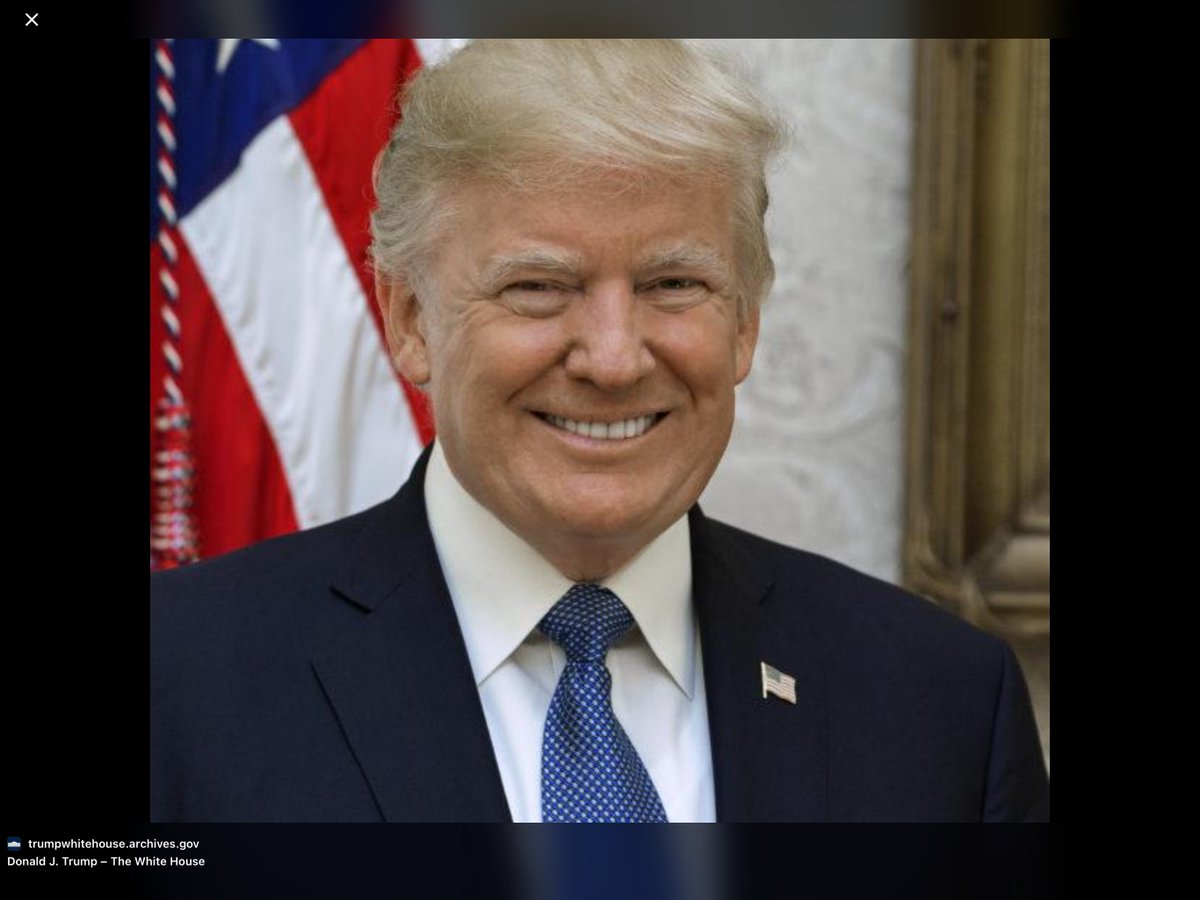
Donald Trump (born June 14, 1946) is an American businessman, media personality, and politician who served as the 45th President of the United States (2017–2021) and, after winning the 2024 election, became the 47th President of the United States in January 2025.
He is one of the most influential and controversial figures in contemporary American politics.
Quick Facts
Born: June 14, 1946
Birthplace: New York City
Political Party: Republican Party
Occupations: Businessman, television personality, politician
Presidential Terms: 2017–2021; since 2025
Early Life and Business Career
Trump is the son of real-estate developer:
Fred Trump
He studied at:
University of Pennsylvania (Wharton School)
During the 1970s and 1980s, he expanded the family real-estate business and became associated with high-profile developments, hotels, casinos, and office towers, particularly in New York City.
His business career included both major successes and several corporate bankruptcies involving casino and hospitality ventures.
Media Career
Trump became a national celebrity through:
The Apprentice
The show’s catchphrase, “You’re fired,” became widely known and helped transform him into a prominent media figure.
Political Rise
Trump entered the 2016 presidential race as a political outsider.
His campaign emphasized:
Immigration control
Trade reform
Economic nationalism
Deregulation
“America First” foreign policy
He defeated:
Hillary Clinton
in the 2016 election.
First Presidency (2017–2021)
Major developments during Trump’s first term included:
Tax reform legislation
Deregulatory initiatives
Renegotiation of trade agreements
Appointment of three Supreme Court justices
Diplomatic initiatives in the Middle East
The federal response to the COVID-19 pandemic
His presidency was marked by intense political polarization and two impeachment proceedings, both of which ended in acquittal by the Senate.
2020 Election and Return
Trump lost the 2020 presidential election to:
Joe Biden
He remained the dominant figure within the Republican Party and successfully ran again in 2024, returning to the presidency in 2025.
Political Style
Observers commonly describe Trump’s political style as:
Populist
Nationalist
Media-driven
Highly personalized
Confrontational
Supporters view him as a challenger of political elites and established institutions. Critics argue that his rhetoric and conduct have intensified political division and challenged democratic norms.
Historical Significance
Historians and political scientists study Trump in connection with:
Populism
Political communication
Social media and politics
Party realignment
Polarization in democratic societies
Twenty-first-century conservatism
His influence extends beyond the United States and has affected political movements worldwide.
Legacy (Ongoing)
Because Trump remains an active political figure and sitting president, assessments of his long-term historical legacy remain provisional. Scholars generally agree, however, that he has reshaped American politics more profoundly than most presidents of the early twenty-first century.
Donald Trump is a transformative and polarizing political figure whose impact on American institutions, political culture, and global politics continues to be debated and studied.
1
1
41
US-Schlag gegen Tren-de-Aragua-Chef wirft Rechtsstaatsfragen auf
Die Tötung eines Gangchefs mag Stärke signalisieren, doch Militär gegen Kartelle öffnet heikle Fragen nach Recht, Kontrolle und Eskalation ⚖️ #USA
17
#MPF4Plus — #Struwwelpeter Illustrated by 10 Painters
1. The Wild‑Hair Proclamation - Ludwig Richter – German Romantic Narrative Realism (Ultra‑Max):
Harsh morning light cuts across a cluttered nursery, wild hair rising like black thorns against pale wallpaper; symbolism of unruly nature confronting order, filmed in a low‑angle dramatic wide shot at dawn.
2. Ink‑Stain Rebellion - Wilhelm Busch – Satirical Line‑Burst Expressionism (Ultra‑Max):
Jagged ink splashes erupt across a tilted desk, the child’s defiant posture framed by warped geometry; symbolism of impulsive creativity, captured in an intimate close‑up under late‑afternoon amber.
3. The Fiery Match Temptation - Käthe #Kollwitz – Shadow‑Burden Social Expressionism (Ultra‑Max):
A dim room flickers with match‑light, elongated shadows clawing up the walls; symbolism of danger disguised as warmth, filmed in a sharp oblique angle at nocturnal glow.
4. Soup‑Bowl Standoff - Carl #Spitzweg – Biedermeier Domestic Irony (Ultra‑Max):
Golden lamplight pools over a porcelain bowl, the child’s rigid refusal mirrored in stiff vertical geometry; symbolism of stubborn pride, captured in a medium‑wide shot at twilight gold.
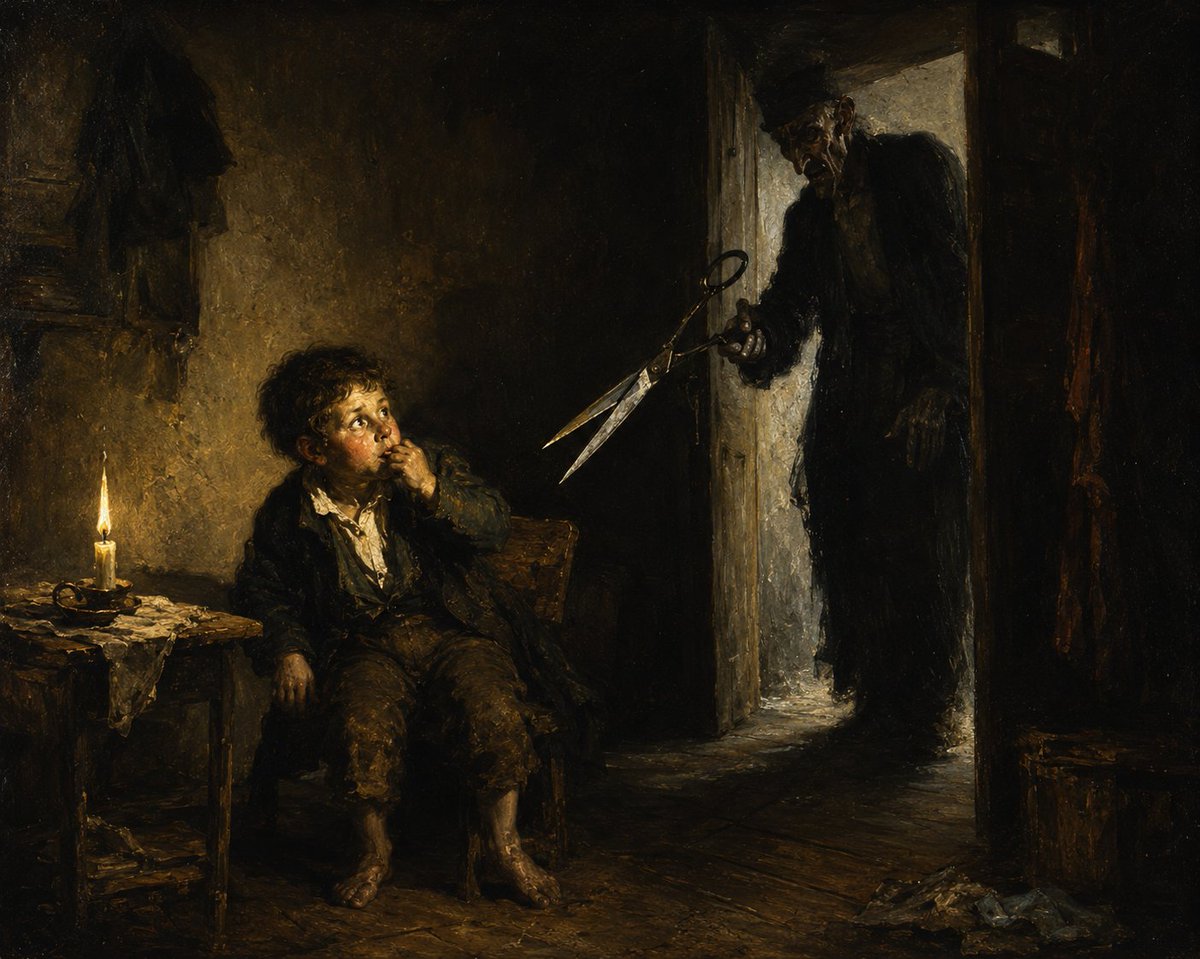
5. The Thumb‑Blade Apparition - Alfred Kubin – Nightmarish Symbolist Surrealism (Ultra‑Max):
A spectral figure emerges from swirling ink‑black corridors, scissors gleaming like crescent moons; symbolism of consequences manifesting as myth, filmed in a descending overhead shot at deep night blue.
6. The Storm‑Wind Flight - Caspar David #Friedrich – Romantic Sublime Atmospherics (Ultra‑Max):
A child is swept across a windswept plain, storm clouds towering like judgmental giants; symbolism of nature’s moral force, captured in a sweeping panoramic shot at storm‑lit dusk.
7. The Crimson‑Coat Catwalk - Ernst Ludwig #Kirchner – Fauvist Urban Expressionism (Ultra‑Max):
A bright red coat slices through a distorted street scene, angular buildings leaning like spectators; symbolism of vanity amplified by chaos, filmed in a rotating medium shot at neon‑twilight.
8. The Ink‑Black Fall - Max #Beckmann – Existential Modernist Compression (Ultra‑Max):
A child tumbles through a claustrophobic void of black and mustard‑yellow planes, geometry folding inward; symbolism of self‑inflicted downfall, captured in a tight close‑up at nocturnal tension.
9. The Animal Tribunal - Franz #Marc – Blue‑Rider Mythic Zoomorphism (Ultra‑Max):
Vivid blue and red animals form a circular judgment ring, their shapes vibrating with spiritual intensity; symbolism of innocence confronted by nature’s verdict, filmed in a wide static shot at dawn violet.
10. The Ash‑Grey Return - Otto #Dix – Harsh New‑Objectivity Realism (Ultra‑Max):
A soot‑covered figure stands in a desolate courtyard, ash swirling like ghostly confetti; symbolism of moral reckoning, captured in a low‑angle wide shot at grey morning light.
100
#FIFAWorldCup #PatternDiscovery #PD
‚From Global Campfire to Algorithmic Swarm: The 2026 FIFA World Cup in the Age of Fragmented Attention‘
How Personalized Media, AI, and Platform Logics Are Transforming the World's Largest Shared Spectacle into a Network of Parallel Realities
The 2026 FIFA World Cup may be the first World Cup in history that no longer competes primarily with other sporting events, but with the entirety of the digital attention economy.
Historically, the World Cup functioned as a mechanism for concentrating attention. It gathered vast audiences around the same images, the same moments, and the same narratives. Today, however, it exists within a media environment whose underlying logic is not the aggregation of attention but its fragmentation.
The fundamental question, therefore, is no longer, “How many people are watching the World Cup?” but rather, “Can a global event still exist as a genuinely shared experience in an age of algorithmic personalization?”
In the era of broadcast television, media culture resembled a giant campfire. Millions of people watched the same goals, heard the same commentary, and witnessed the same dramatic moments. Shared memories emerged naturally from shared exposure. Algorithmic media, by contrast, produces a particle-like structure of experience. Two fans watching the same match may inhabit entirely different versions of the tournament, consuming TikTok clips, highlight reels, memes, AI-generated summaries, influencer commentary, and personalized feeds. The World Cup increasingly dissolves into individualized pathways of perception.
This transformation is closely tied to a second pattern: the growing separation of events from attention itself. During the television age, attention was largely attached to the event. Today, attention often detaches from the event and migrates toward whatever algorithms deem most engaging. A spectacular goal celebration may generate more visibility than the match that produced it. A meme may achieve greater cultural reach than a semifinal. Attention no longer follows the hierarchy of sport; it follows the hierarchy of algorithms.
A third shift concerns memory. Earlier World Cups produced collective points of reference. Entire generations remember Diego Maradona’s “Hand of God,” Zinedine Zidane’s headbutt, or Mario Götze’s winning goal as shared historical moments. The 2026 tournament may be the first to generate highly individualized memory landscapes. Different audiences may remember entirely different fragments of the event. Historical memory itself becomes personalized. The result is not less memory, but less identical memory.
Paradoxically, this same fragmentation may increase the value of the live moment. The more personalized media environments become, the more valuable rare moments of synchronized attention appear. Live experiences become scarce cultural resources. In this sense, the World Cup final may acquire even greater symbolic significance precisely because it remains one of the few occasions capable of commanding simultaneous global attention.
Viewed through the lens of biology, the World Cup resembles an organism embedded within a densely populated ecosystem. It once dominated its environment. Today it competes with millions of other attention-seeking entities. Success depends not on size alone, but on the ability to reproduce and sustain attention efficiently.
From an evolutionary perspective, the tournament is evolving from a dominant species into a habitat supporting multiple informational niches. Statistical analysts, meme communities, tactical enthusiasts, gaming audiences, betting ecosystems, and AI-content creators all inhabit the same event while experiencing it in radically different ways. The World Cup increasingly functions as an environment rather than a single narrative.
The physics analogy is equally revealing. Traditional mass media behaved like gravity, pulling attention toward common centers. Algorithms behave more like turbulence, dispersing attention into countless streams and eddies. The World Cup exists between these opposing forces of centripetal concentration and centrifugal fragmentation.
Economically, the tournament once occupied a near-monopolistic position in the global marketplace of attention. Today it operates within an intensely competitive environment. Its rivals are not merely other sports leagues but streaming platforms, creators, video games, short-form content, and increasingly AI-generated entertainment. Competition takes place at the level of attention itself.
In artistic terms, earlier World Cups resembled monumental paintings viewed by a common audience. The 2026 edition may resemble a digital installation in which every visitor encounters a different version of the work. Perception becomes part of the artwork. In literary terms, the traditional World Cup functioned like an epic—a single grand narrative unfolding before a global audience. The algorithmic World Cup increasingly resembles a hypertext novel in which each participant follows a unique path through the same narrative universe.
A similar transformation can be observed in music. The tournament is shifting from the structure of a symphony toward that of a remix culture. Highlights, reaction videos, podcasts, memes, and AI-generated commentary produce countless reinterpretations of the same underlying event. Reception becomes productive. Spectators become co-authors.
From the perspective of network theory, the classic World Cup was a centralized network. The 2026 tournament may become a network of networks. Influencers, fan communities, Discord servers, AI agents, and livestream ecosystems may become as important as, or even more important than, official broadcasters. The center does not disappear, but its relative importance declines.
These developments produce several systemic dynamics. The first is a visibility paradox. The World Cup will likely reach more people than ever before, yet its cultural centrality may simultaneously decline. Reach and sharedness become decoupled. A larger audience does not necessarily produce a stronger common experience.
A second dynamic is what might be called the meme transformation. Historically, the match itself was the product. Increasingly, the match becomes raw material. Clips, reactions, memes, and AI-generated reinterpretations become the real media products. Much of the event’s cultural value is generated after the final whistle.
A third dynamic is the AI amplification loop. Artificial intelligence will increasingly produce automated highlights, alternative commentary tracks, personalized summaries, and synthetic viewing perspectives. As a result, many viewers will no longer consume the event directly. They will consume algorithmically curated interpretations of the event.
This points toward what could be called the “micro–World Cup.” Instead of one tournament, there may be hundreds of parallel tournaments: a national World Cup, a meme World Cup, a fantasy football World Cup, a betting World Cup, a tactical-analysis World Cup, an influencer World Cup, and many others. All refer to the same matches, yet each constructs a different reality.
Several futures are conceivable. In a conservative scenario, the World Cup remains the world’s campfire. Algorithms alter distribution but not cultural function. Finals, opening matches, and major dramas remain universal reference points. Fragmentation remains limited.
A more likely scenario is one in which the World Cup retains its global significance while its common narrative shrinks. A small number of universally recognized moments coexist with countless personalized side narratives. The tournament becomes simultaneously global and individualized.
A more disruptive possibility is that the “real” World Cup no longer takes place primarily on the field. Instead, the tournament becomes the catalyst for a vast real-time media ecosystem. AI agents, creator networks, and digital platforms generate more attention than the matches themselves. The World Cup evolves from a sporting event into a global information machine.
The deepest principle underlying this transformation may be stated as follows:
The more personalized information systems become, the more valuable rare moments of collective synchronization become.
This principle resolves an apparent paradox. Algorithmic fragmentation does not entirely destroy the shared audience. Instead, it increases the symbolic value of those occasions that still succeed in synchronizing attention. The World Cup may therefore lose some degree of unity while simultaneously gaining symbolic significance.
Perhaps the most surprising insight is that the greatest threat facing the World Cup is not a loss of attention. The more profound transformation may be the loss of its status as a shared memory system. Historically, the tournament produced a common cultural memory. The 2026 World Cup may instead generate billions of individual memories. Not less memory, but less identical memory. Such a shift would fundamentally alter the tournament’s cultural and historical function.
This leads to a final research question: does a genuine “world audience” still exist in the age of algorithmic media, or are we merely observing the statistical aggregation of billions of individualized audiences?
Put differently, was the twentieth-century World Cup a sporting event with global reach, while the twenty-first-century World Cup is becoming a platform upon which countless parallel realities are constructed from the same underlying event?
If so, the 2026 FIFA World Cup may represent not merely a turning point in sports history, but a decisive moment in media history: the transition from globally shared experience to globally networked yet individually constructed experience.
194
300 Jahre Geldgeschichte als Vermögensratgeber
Reich werden klingt nach Geheimtrick, Geschichte klingt nach Geduld. Die besten Vermögenstipps heißen oft: sparen, streuen, durchhalten 📚 #Vermoegen
1
54
300 Jahre Finanzgeschichte liefern keine Zauberformel, aber ein Muster: #Zinseszins belohnt selten Genies, häufiger Disziplin mit Zeit 📈 #Geldanlage
21
US-Militärschlag gegen Tren-de-Aragua-Anführer
Wenn Militär Anti-Gang-Politik übernimmt, entstehen harte Fragen: Sicherheit ja, aber #Rechtsstaat und Transparenz dürfen nicht verschwinden ⚖️ #USA
1
42
Tren de Aragua steht für transnationale Gewaltkriminalität. Doch auch gegen brutale Netzwerke braucht der Staat klare Grenzen 🛡️ #OrganisierteKriminalitaet
17
#Infantino verärgert Italien mit Quali-Spott
Italien dreimal nacheinander ohne WM – da braucht es wenig Spott, um viel Schmerz zu treffen. Infantinos Pointe war politisch eher Eigentor ⚽ #Italia
1
43
Wer Turniere immer weiter aufbläht, sollte über verpasste Qualifikation vorsichtig scherzen. Größe ersetzt sportliche Wahrheit nicht 🏆 #FIFA
15
Paraguay wurde nicht nur besiegt, sondern phasenweise überrollt. Für die USA ist dieser Start ein sportliches Bewerbungsschreiben 🇺🇸 #USMNT
23
Wenn Militärmeldungen den Ölmarkt bewegen, merkt man wieder: Energiepreise hängen nicht nur an Pipelines, sondern an politischer Eskalation 🛢️ #Hormus
9
#HeinrichHoffmann
Kurzüberblick
Heinrich Hoffmann (1809–1894) war ein deutscher Arzt, Psychiater, Schriftsteller und Zeichner. Berühmt wurde er als Autor des Kinderbuchklassikers:
Der #Struwwelpeter
Dieses Werk zählt zu den bekanntesten und einflussreichsten Kinderbüchern des deutschsprachigen Raums.
Biographische Daten
Geboren: 13. Juni 1809 in Frankfurt am Main
Studium der Medizin in Heidelberg und Halle
Tätigkeit als Arzt und Psychiater
Direktor der Frankfurter „Anstalt für Irre und Epileptische“
Gestorben: 20. September 1894 in Frankfurt am Main
Neben seiner literarischen Tätigkeit engagierte er sich für Reformen in der Psychiatrie und setzte sich für eine menschlichere Behandlung psychisch kranker Menschen ein.
Entstehung des Struwwelpeter
1844 suchte Hoffmann ein Weihnachtsgeschenk für seinen dreijährigen Sohn.
Da er kein geeignetes Kinderbuch fand, schrieb und illustrierte er selbst eine Sammlung von Geschichten.
1845 erschien:
Der Struwwelpeter
Der Erfolg war enorm.
Aufbau des Werkes
Das Buch enthält mehrere kurze Erzählungen mit eindringlichen Bildern, darunter:
Struwwelpeter
Suppenkaspar
Zappelphilipp
Hans Guck-in-die-Luft
Paulinchen
Die Geschichten zeigen meist drastische Konsequenzen unerwünschten Verhaltens.
Literarische Merkmale
Pädagogik des 19. Jahrhunderts
Die Erzählungen spiegeln die Erziehungsvorstellungen ihrer Zeit wider:
Gehorsam
Disziplin
Selbstkontrolle
Anpassung an soziale Normen
Bild-Text-Verbindung
Besonders innovativ war die enge Verbindung von:
Reimtext
Illustration
visueller Dramatisierung
Damit wurde Hoffmann zu einem Vorläufer moderner Bilderbücher.
Groteske und Humor
Trotz ihrer oft drastischen Inhalte besitzen die Geschichten:
satirische Elemente
Übertreibungen
schwarzen Humor
karikaturhafte Figuren
Forschungsperspektiven
Die heutige Literaturwissenschaft untersucht den Struwwelpeter unter anderem als:
Kinderliteratur
Erziehungsdokument
kulturhistorische Quelle
Bilderbuchklassiker
Diskutiert werden insbesondere:
Autorität und Disziplin
Kindheitsbilder des 19. Jahrhunderts
Gewalt in der Kinderliteratur
Humor und Abschreckung
Wirkungsgeschichte
Der Struwwelpeter wurde:
in zahlreiche Sprachen übersetzt,
weltweit verbreitet,
vielfach parodiert und adaptiert.
Zu den bekanntesten Bearbeitungen gehört:
Struwwelpeter (posthum veröffentlicht)
Das Werk beeinflusste Generationen von Kinderbüchern und Illustratoren.
Bedeutung
Heinrich Hoffmann schuf mit dem Struwwelpeter eines der wirkmächtigsten Kinderbücher des 19. Jahrhunderts. Sein Werk ist zugleich literarischer Klassiker, kulturhistorisches Dokument und Spiegel der Erziehungsvorstellungen seiner Zeit.
9
23
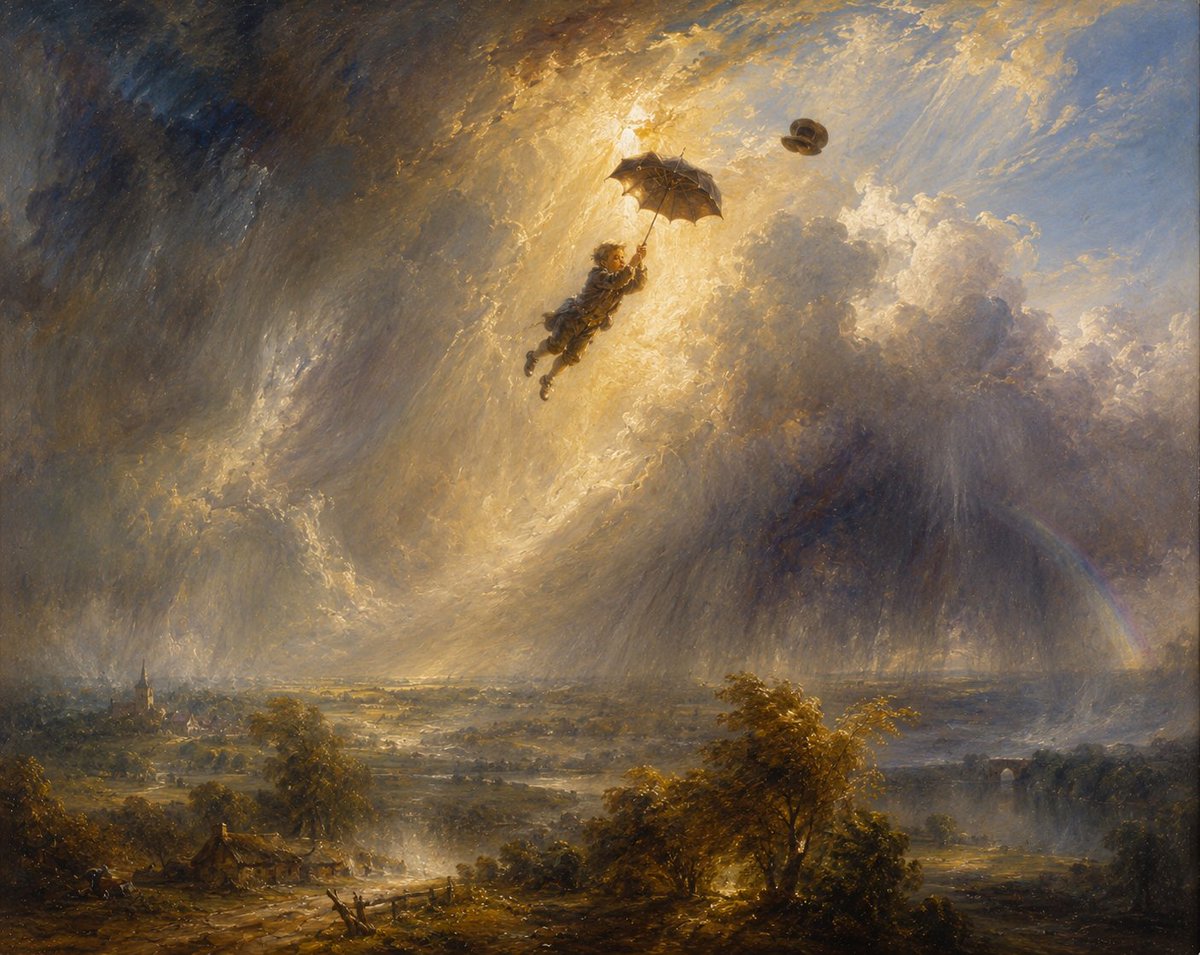
In der überwältigenden Bildsprache William Turners verwandelt sich Hoffmanns fliegender Robert von einer Kindergeschichte in eine romantische Vision des Erhabenen. Hoch über einer vom Sturm gepeitschten Landschaft wird der kleine Junge mitsamt seinem Schirm von Wind, Regen und Licht in die Wolken getragen. Goldene Sonnenstrahlen durchbrechen die gewaltigen Wolkenmassen, während Erde und Himmel in einem Strudel aus Atmosphäre und Bewegung ineinander übergehen. Die leuchtende Farbigkeit, die aufgelösten Formen und die monumentale Wetterdramaturgie machen die Szene zu einer Meditation über menschliche Kühnheit und die unermessliche Macht der Natur. #JMWTurner #Turner
Das Kind im Sturmlicht (2026) / The Child in the Stormlight (2026)
22
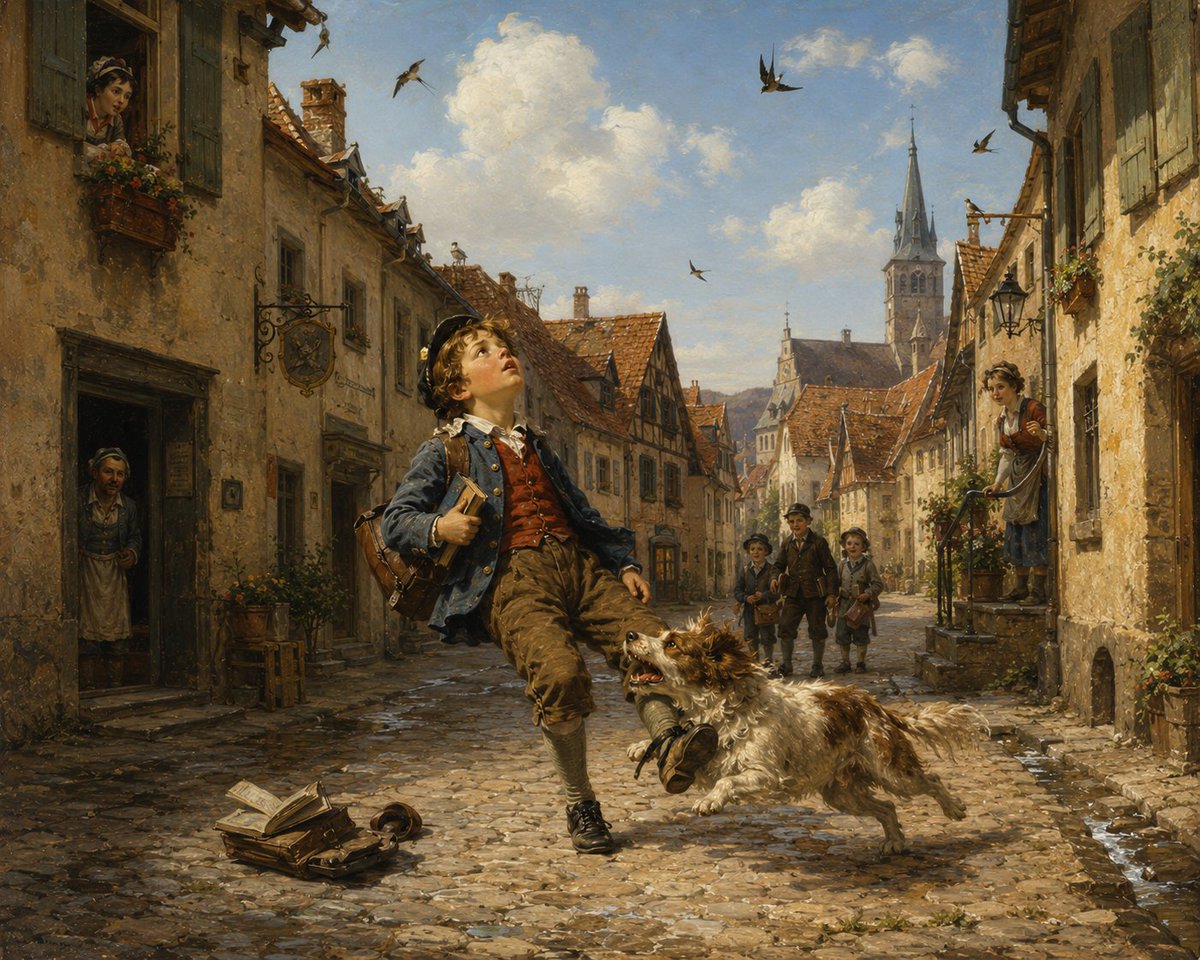
In der heiteren und fein beobachteten Bildwelt Carl Spitzwegs wird Hoffmanns Hanns Guck-in-die-Luft zu einer poetischen Biedermeier-Szene voller Charme und leiser Ironie. Während der verträumte Schüler seinen Blick zu Wolken, Schwalben und Dachfirsten erhebt, übersieht er die unmittelbare Wirklichkeit vor seinen Füßen – bis ein lebhafter Hund seinen Tagtraum abrupt unterbricht. Die warmen Fassaden, die liebevoll ausgearbeitete Altstadtgasse und die humorvollen Nebenfiguren verbinden sanfte Komik mit einer zeitlosen Erinnerung daran, dass Fantasie und Aufmerksamkeit im Gleichgewicht bleiben sollten. #CarlSpitzweg
Der Wolkenstolperer (2026) / The Sky-Gazer’s Stumble (2026)
1
14
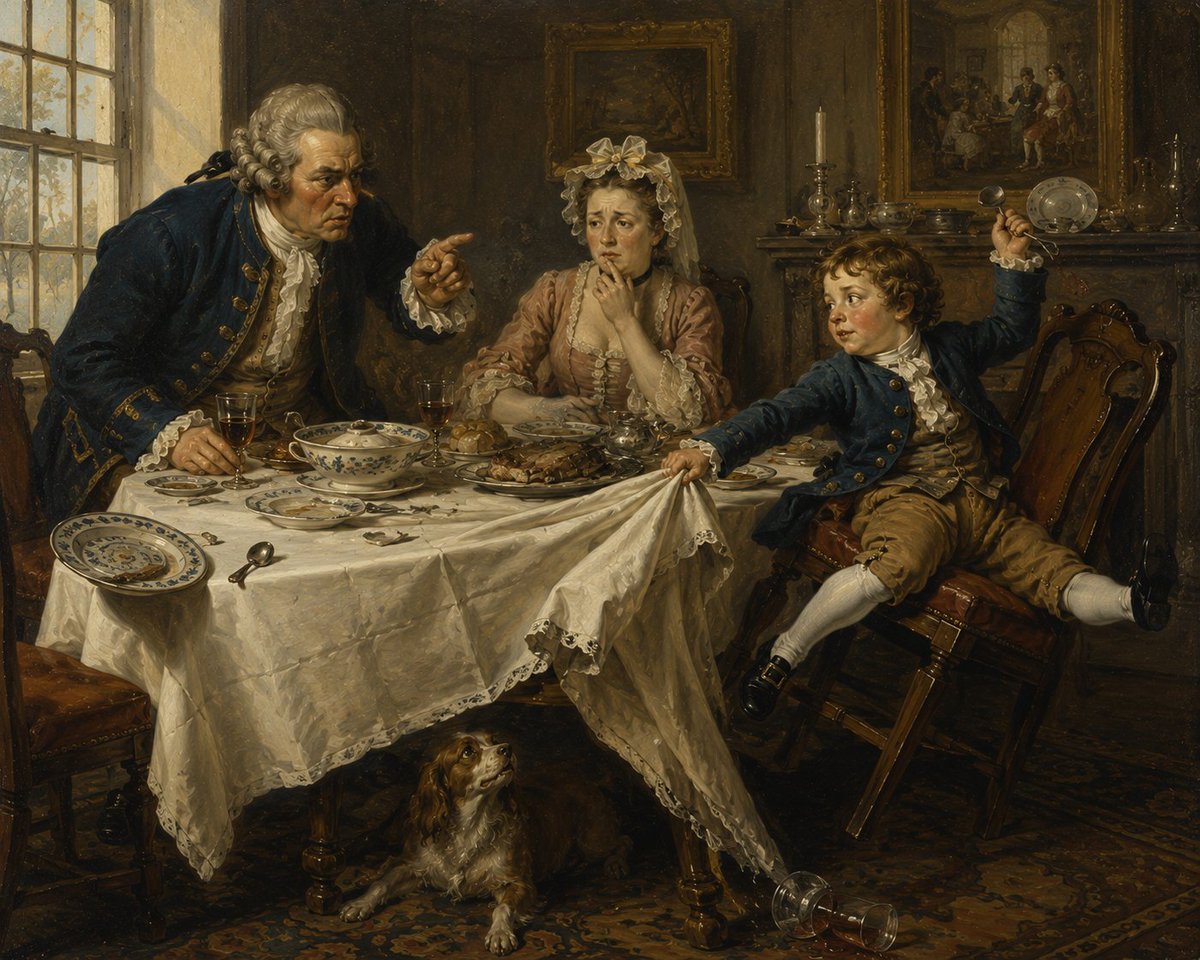
In der scharfsinnigen Bildwelt William Hogarths wird Hoffmanns Zappel-Philipp zu einer ebenso komischen wie gesellschaftskritischen Szene georgianischer Tischkultur. Im Mittelpunkt bringt der unruhige Junge mit seinem Kippeln, Zappeln und Ziehen am Tischtuch die sorgfältig geordnete Familienmahlzeit aus dem Gleichgewicht, während die Eltern zwischen Autorität, Sorge und stillem Entsetzen schwanken. Die elegante Ausstattung, die ausdrucksstarken Gesten und die drohende Kettenreaktion aus rutschenden Tellern und Gläsern verwandeln die Kindergeschichte in eine feinsinnige Satire über Disziplin, Selbstbeherrschung und die Zerbrechlichkeit bürgerlicher Ordnung. #WilliamHogarth
Der unruhige Erbe (2026) / The Unsteady Heir (2026)
1
10
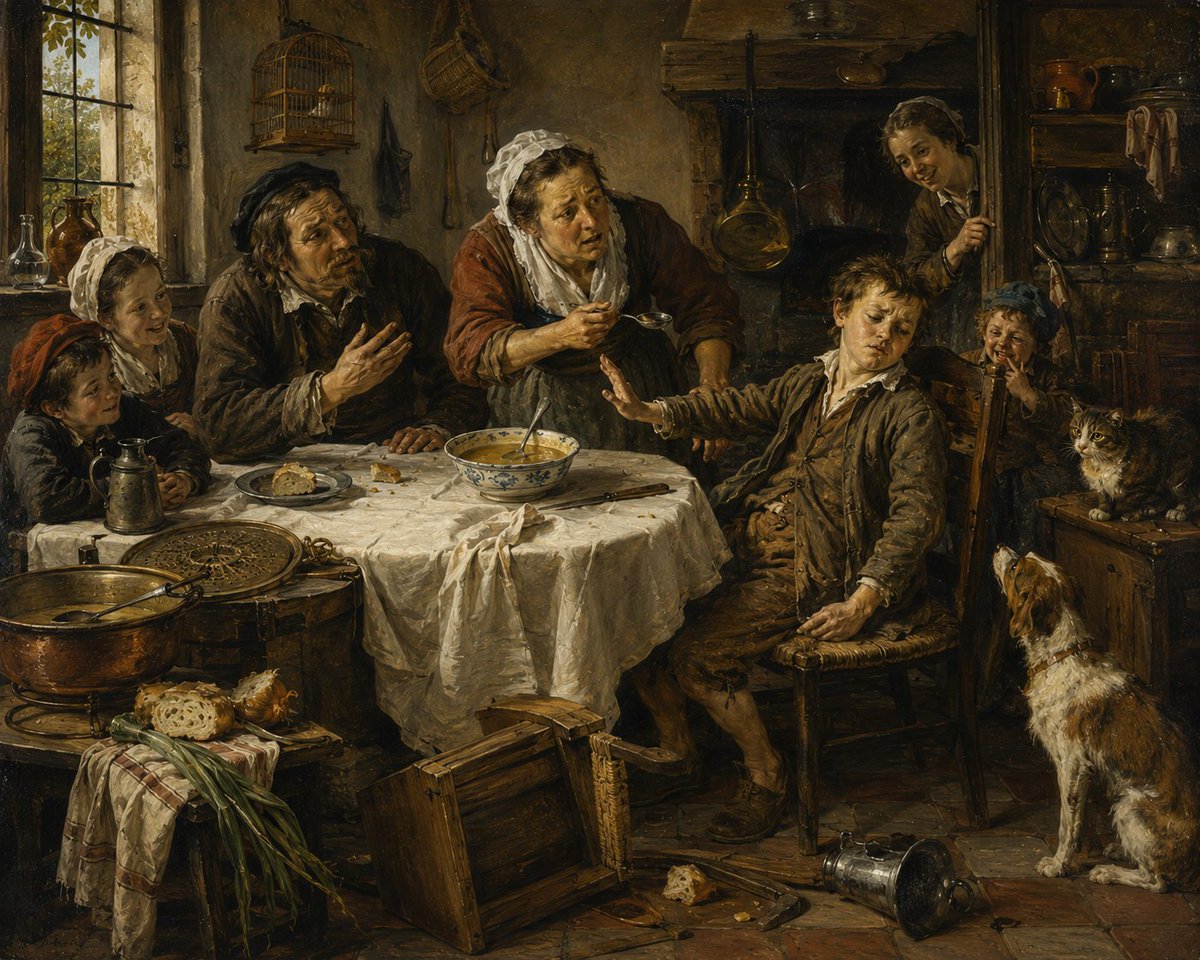
In der lebendigen Bildwelt Jan Steens wird Hoffmanns Suppen-Kaspar zu einer ebenso komischen wie mahnenden Familienszene. Im Mittelpunkt sitzt der eigensinnige Junge vor seiner dampfenden Suppenschüssel und weist sie mit demonstrativer Entschlossenheit zurück, während Eltern, Geschwister, Dienstboten und sogar die Tiere des Hauses mit Sorge, Verwunderung oder stillem Spott reagieren. Das warme Licht, die detailreiche Küchenszenerie und die ausdrucksstarken Gesten verbinden niederländischen Humor mit einer zeitlosen Warnung vor Starrsinn und der Ablehnung von Fürsorge. #JanSteen #Struwwelpeter
Die verweigerte Schüssel (2026) / The Refused Bowl (2026)
9