
#FIFAWorldCup #PatternDiscovery #PD
‚From Global Campfire to Algorithmic Swarm: The 2026 FIFA World Cup in the Age of Fragmented Attention‘
How Personalized Media, AI, and Platform Logics Are Transforming the World's Largest Shared Spectacle into a Network of Parallel Realities
The 2026 FIFA World Cup may be the first World Cup in history that no longer competes primarily with other sporting events, but with the entirety of the digital attention economy.
Historically, the World Cup functioned as a mechanism for concentrating attention. It gathered vast audiences around the same images, the same moments, and the same narratives. Today, however, it exists within a media environment whose underlying logic is not the aggregation of attention but its fragmentation.
The fundamental question, therefore, is no longer, “How many people are watching the World Cup?” but rather, “Can a global event still exist as a genuinely shared experience in an age of algorithmic personalization?”
In the era of broadcast television, media culture resembled a giant campfire. Millions of people watched the same goals, heard the same commentary, and witnessed the same dramatic moments. Shared memories emerged naturally from shared exposure. Algorithmic media, by contrast, produces a particle-like structure of experience. Two fans watching the same match may inhabit entirely different versions of the tournament, consuming TikTok clips, highlight reels, memes, AI-generated summaries, influencer commentary, and personalized feeds. The World Cup increasingly dissolves into individualized pathways of perception.
This transformation is closely tied to a second pattern: the growing separation of events from attention itself. During the television age, attention was largely attached to the event. Today, attention often detaches from the event and migrates toward whatever algorithms deem most engaging. A spectacular goal celebration may generate more visibility than the match that produced it. A meme may achieve greater cultural reach than a semifinal. Attention no longer follows the hierarchy of sport; it follows the hierarchy of algorithms.
A third shift concerns memory. Earlier World Cups produced collective points of reference. Entire generations remember Diego Maradona’s “Hand of God,” Zinedine Zidane’s headbutt, or Mario Götze’s winning goal as shared historical moments. The 2026 tournament may be the first to generate highly individualized memory landscapes. Different audiences may remember entirely different fragments of the event. Historical memory itself becomes personalized. The result is not less memory, but less identical memory.
Paradoxically, this same fragmentation may increase the value of the live moment. The more personalized media environments become, the more valuable rare moments of synchronized attention appear. Live experiences become scarce cultural resources. In this sense, the World Cup final may acquire even greater symbolic significance precisely because it remains one of the few occasions capable of commanding simultaneous global attention.
Viewed through the lens of biology, the World Cup resembles an organism embedded within a densely populated ecosystem. It once dominated its environment. Today it competes with millions of other attention-seeking entities. Success depends not on size alone, but on the ability to reproduce and sustain attention efficiently.
From an evolutionary perspective, the tournament is evolving from a dominant species into a habitat supporting multiple informational niches. Statistical analysts, meme communities, tactical enthusiasts, gaming audiences, betting ecosystems, and AI-content creators all inhabit the same event while experiencing it in radically different ways. The World Cup increasingly functions as an environment rather than a single narrative.
The physics analogy is equally revealing. Traditional mass media behaved like gravity, pulling attention toward common centers. Algorithms behave more like turbulence, dispersing attention into countless streams and eddies. The World Cup exists between these opposing forces of centripetal concentration and centrifugal fragmentation.
Economically, the tournament once occupied a near-monopolistic position in the global marketplace of attention. Today it operates within an intensely competitive environment. Its rivals are not merely other sports leagues but streaming platforms, creators, video games, short-form content, and increasingly AI-generated entertainment. Competition takes place at the level of attention itself.
In artistic terms, earlier World Cups resembled monumental paintings viewed by a common audience. The 2026 edition may resemble a digital installation in which every visitor encounters a different version of the work. Perception becomes part of the artwork. In literary terms, the traditional World Cup functioned like an epic—a single grand narrative unfolding before a global audience. The algorithmic World Cup increasingly resembles a hypertext novel in which each participant follows a unique path through the same narrative universe.
A similar transformation can be observed in music. The tournament is shifting from the structure of a symphony toward that of a remix culture. Highlights, reaction videos, podcasts, memes, and AI-generated commentary produce countless reinterpretations of the same underlying event. Reception becomes productive. Spectators become co-authors.
From the perspective of network theory, the classic World Cup was a centralized network. The 2026 tournament may become a network of networks. Influencers, fan communities, Discord servers, AI agents, and livestream ecosystems may become as important as, or even more important than, official broadcasters. The center does not disappear, but its relative importance declines.
These developments produce several systemic dynamics. The first is a visibility paradox. The World Cup will likely reach more people than ever before, yet its cultural centrality may simultaneously decline. Reach and sharedness become decoupled. A larger audience does not necessarily produce a stronger common experience.
A second dynamic is what might be called the meme transformation. Historically, the match itself was the product. Increasingly, the match becomes raw material. Clips, reactions, memes, and AI-generated reinterpretations become the real media products. Much of the event’s cultural value is generated after the final whistle.
A third dynamic is the AI amplification loop. Artificial intelligence will increasingly produce automated highlights, alternative commentary tracks, personalized summaries, and synthetic viewing perspectives. As a result, many viewers will no longer consume the event directly. They will consume algorithmically curated interpretations of the event.
This points toward what could be called the “micro–World Cup.” Instead of one tournament, there may be hundreds of parallel tournaments: a national World Cup, a meme World Cup, a fantasy football World Cup, a betting World Cup, a tactical-analysis World Cup, an influencer World Cup, and many others. All refer to the same matches, yet each constructs a different reality.
Several futures are conceivable. In a conservative scenario, the World Cup remains the world’s campfire. Algorithms alter distribution but not cultural function. Finals, opening matches, and major dramas remain universal reference points. Fragmentation remains limited.
A more likely scenario is one in which the World Cup retains its global significance while its common narrative shrinks. A small number of universally recognized moments coexist with countless personalized side narratives. The tournament becomes simultaneously global and individualized.
A more disruptive possibility is that the “real” World Cup no longer takes place primarily on the field. Instead, the tournament becomes the catalyst for a vast real-time media ecosystem. AI agents, creator networks, and digital platforms generate more attention than the matches themselves. The World Cup evolves from a sporting event into a global information machine.
The deepest principle underlying this transformation may be stated as follows:
The more personalized information systems become, the more valuable rare moments of collective synchronization become.
This principle resolves an apparent paradox. Algorithmic fragmentation does not entirely destroy the shared audience. Instead, it increases the symbolic value of those occasions that still succeed in synchronizing attention. The World Cup may therefore lose some degree of unity while simultaneously gaining symbolic significance.
Perhaps the most surprising insight is that the greatest threat facing the World Cup is not a loss of attention. The more profound transformation may be the loss of its status as a shared memory system. Historically, the tournament produced a common cultural memory. The 2026 World Cup may instead generate billions of individual memories. Not less memory, but less identical memory. Such a shift would fundamentally alter the tournament’s cultural and historical function.
This leads to a final research question: does a genuine “world audience” still exist in the age of algorithmic media, or are we merely observing the statistical aggregation of billions of individualized audiences?
Put differently, was the twentieth-century World Cup a sporting event with global reach, while the twenty-first-century World Cup is becoming a platform upon which countless parallel realities are constructed from the same underlying event?
If so, the 2026 FIFA World Cup may represent not merely a turning point in sports history, but a decisive moment in media history: the transition from globally shared experience to globally networked yet individually constructed experience.
193


3 Oct 2023
We’ve gone mobile! 🛸
Be sure to ask our resident LLM, COAI, any questions that you have about our company or enterprise solutions. 📈🤖📊
#patterndiscovery #ai #dataanalysis
Https://Coeus.institute
1
4
531

27 Aug 2023
6/ 💡 Enrich with Data Mining: Learn the art of discovering patterns and insights. @WekaMOOC and @RapidMiner are your guides to unraveling hidden gems in data! 💎🔍
#DataMining #PatternDiscovery
1
2
143

7 Jul 2023
Our patent pending system of algorithms and AI collects, curates, codes, and generates understandings from global events as they occur. GERA automatically locates hidden correlations between any data-over-time dataset and the dynamic world.
That said, at @CoeusInstitute we are proud to be one of the first companies to openly embrace the subject of the Phenomena and are willing to assist any individual or organization who studies it!
And based on informal preliminary analysis, we feel very confident that there are in fact opaque, and statistically significant, relationships between world events and phenomena originated observational data...
Stay tuned to keep updated on GERA's development or head over to our site and ask our resident LLM "COAI" about how GERA can help you!
coeus.institute/
#DataAnalytics #AI #ageofautomation #disruptivetechnology #patterndiscovery
7 Jul 2023

Thanks @OpenAI!
Hold our beer...
#dataanalytics #ai #ageofautomation #patterndiscovery ... #GERA @TheProjectUnity @Merged_Podcast @QuantumGenMat @MindBankAi @DoD_AARO
2
4
12
9,172
7 Jul 2023
Thanks @OpenAI!
Hold our beer...
#dataanalytics #ai #ageofautomation #patterndiscovery ... #GERA @TheProjectUnity @Merged_Podcast @QuantumGenMat @MindBankAi @DoD_AARO
3
8
9,357

6 Sep 2021
#KeiretsuBacked @PatternComputer isn’t a simple AI company. They have developed a system that generates new hypotheses and insights from data that help businesses improve their research and make the best decisions.
#beyondai #patterndiscovery #innovation #technology
3
2

3 Sep 2021
"Lets make people believe in and excited about patterns and predictions."
In case you missed it: the extraordinary Mark Anderson, Pattern Computer was interviewed by Ragnar Kruse last week during the #fAIstivalhamburg
Watch it here: bit.ly/3h2hYAf
#patterndiscovery
2

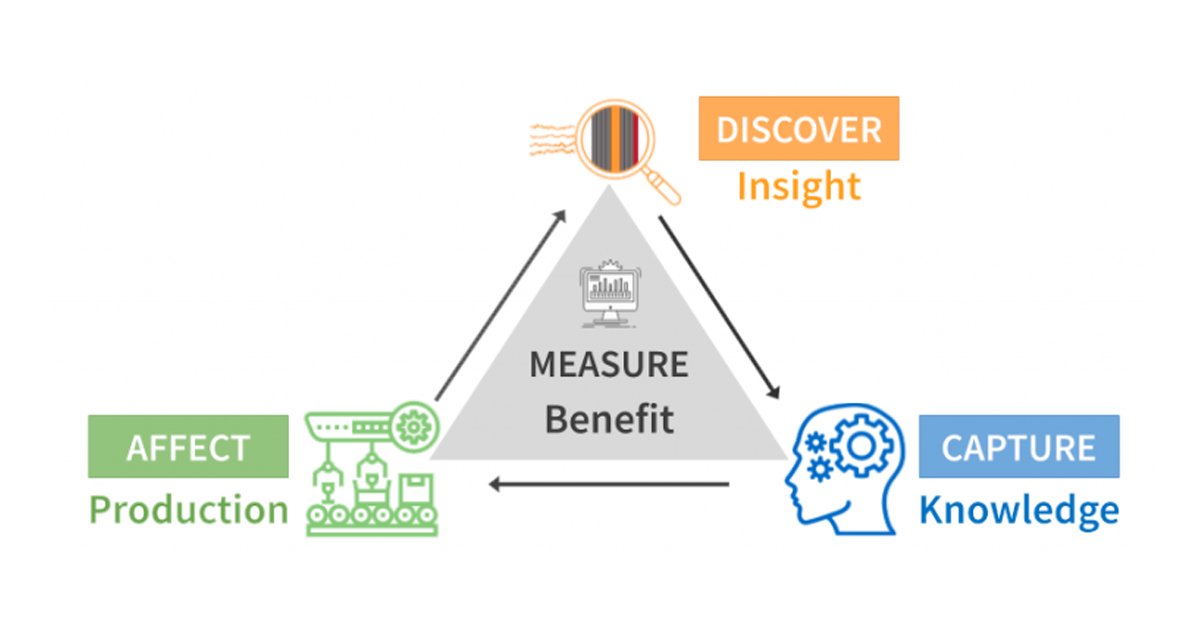
Learn how #patterns provide a scalable foundation for predictive production operations. - falkonry.com/how-do-patterns…
#operationalexcellence #ppo #predictiveanalytics #predictiveoperations #continuousimprovement #operationalAI #patterndiscovery
1
2
Read more about #Falkonry’s approach to predictive operational excellence and how it is applicable across industry segments and problem areas
falkonry.com/predictive-oper…
#predictiveanalytics #patterndiscovery #operationalAi #operationalexcellence #predictiiveoperations #aisolutions

1
2
Learn how operational AI increases the time between potential failure detection and actual, functional failure - vimeo.com/418823984/3537a969…
#predictiveanalytics #patterndiscovery #operationalAi #operationalexcellence #manufacturing #predictiveanalytics
#maintenance
1
2
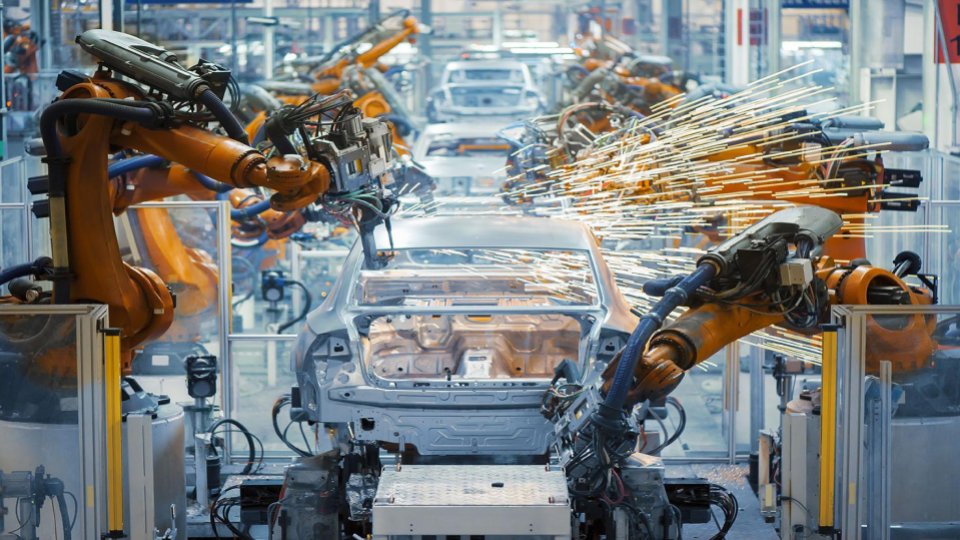
Learn how a major #automotive manufacturer was able to identify bad welds and reduce by 96% the number of welds sent for visual inspection
info.falkonry.com/automotive…
#predictiveoperations #falkonry #predictiveanalytics #patterndiscovery #machinelearning #operationalai #Ai
1
4
Learn how Falkonry is Rethinking Operational AI and applying to production operations, lowering time-to-first-value from months to days
falkonry.com/rethinking-oper…
#predictiveoperations #falkonry #predictiveanalytics #patterndiscovery #machinelearning #predictivemaintenance #AI
2
This article provides information on how #COVID19 would bring a fundamental shift in #manufacturing operations. bit.ly/2VUC3P3
#predictiveoperations #falkonry #predictiveanalytics #patterndiscovery #operationalai #predictivemaintenance #digitalmanufacturing
2
4
This article provides information on how #falkonry is Rethinking #operationalai and applying to production operations, lowering time-to-first-value from months to days bit.ly/2S2KV2H
#predictiveoperations #predictiveanalytics #patterndiscovery #machinelearning #Ai
2

19 Nov 2019
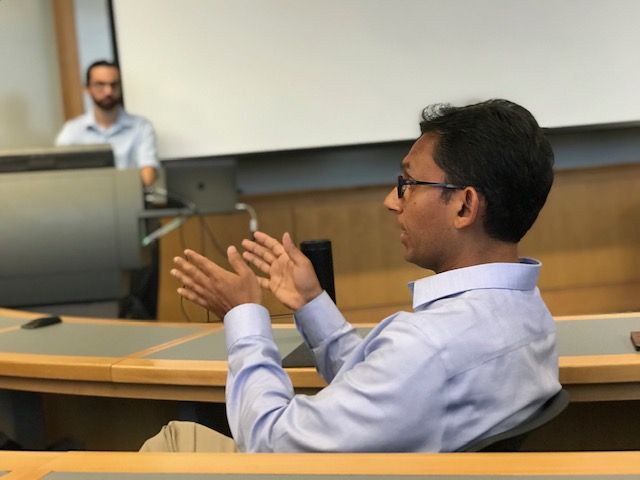
This week #MSAnalytics students focused on #TextMining with Professor Mittal for discovering meaningful patterns and relationships from text collections. #PatternDiscovery #PredictiveModeling #BigData #MachineLearning #ThisIsUNH
3

30 Jun 2019
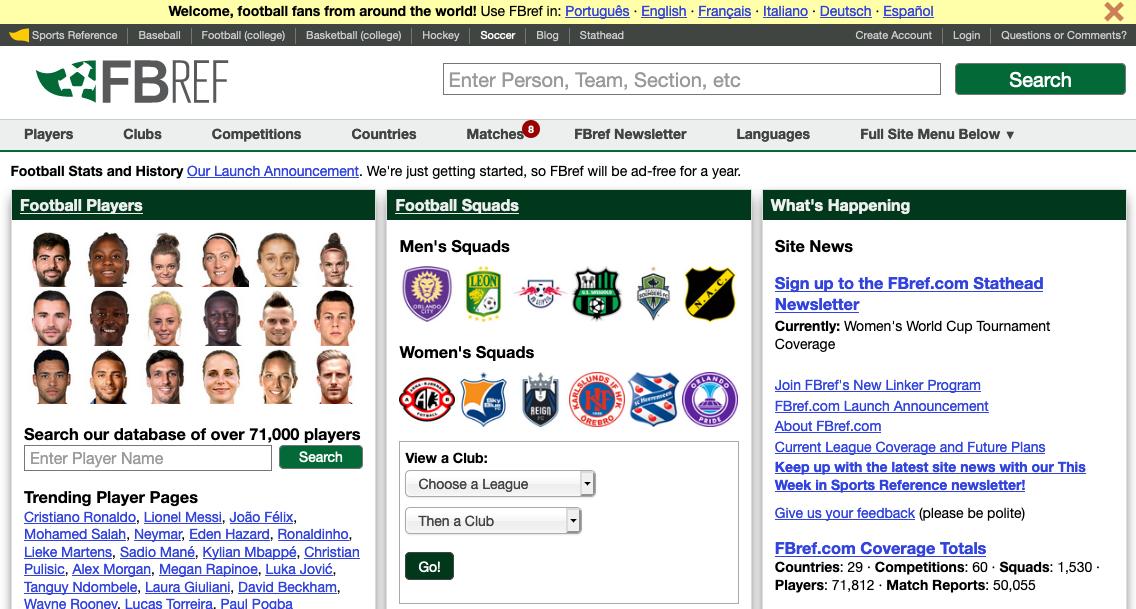
Atención a los fanáticos de #FootballAnalytics porque tienen una página con datos de performance de equipos y jugadores totalmente gratis y a su disposición. happy #patterndiscovery. @italoelola, tenés más trabajo!

We're a group of soccer fans who realized we couldn't find an easy, intuitive site to use to find world football statistics.
So we made one! Check out FBref for coverage of 60 men's and women's competitions, including the Women's World Cup and much more fbref.com/
1
3

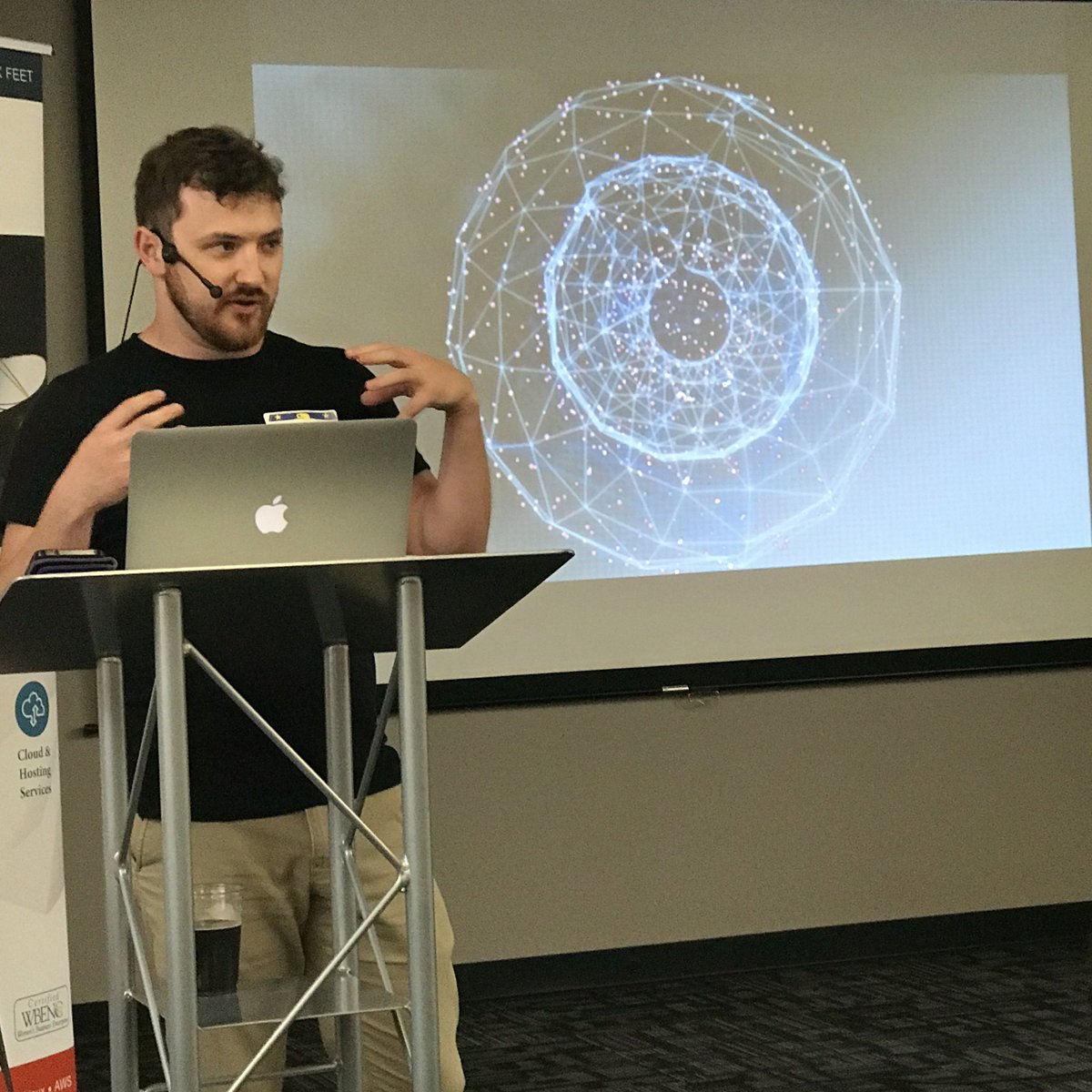
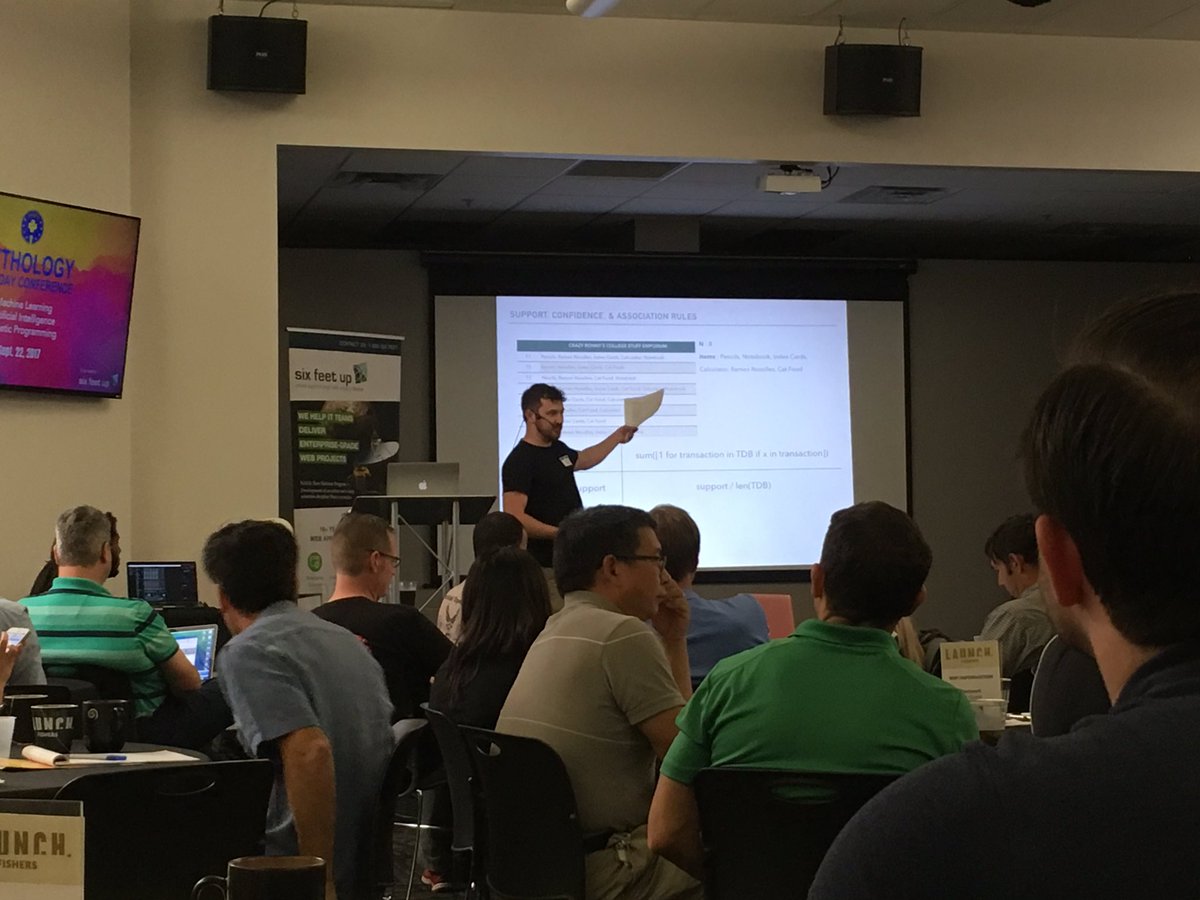
Using #patterndiscovery to extract frequent datasets wrt the purchase of cat food, calculators and ramen by @DataMayCare #Pythology #Python
1

22 Sep 2017
1

9 Sep 2017
Spending the day writing code for @indypy. I'm starting to see a pattern. #pythology #patterndiscovery
1
3