
Joined January 2015
- Tweets 57,365
- Following 856
- Followers 406
- Likes 23,695
9 Photos and videos







clare griffiths retweeted

Jun 13
God told her to stop praying for the dying man.
"Do not intercede for him," He said. "He merits death a thousand times."
She refused.
His name was Andrea. Forty years old, rich, and rotten — a compulsive gambler who blasphemed constantly and hadn't darkened a church door in years.
Then disease struck him down. The doctors gave up.
The priest came to hear his confession. Andrea drove him out. His wife and children brought in holy men to beg him. He refused them all.
He had even thrown an image of Jesus and the Blessed Mother into the fire.
This was a man already halfway into hell.
Then St. Catherine of Siena began to pray for him.
That's when God said something almost no saint has ever heard:
"This man's iniquities have mounted to heaven… Do not intercede for him… he merits death a thousand times."
Stop and let that land. The Lord Himself told her to quit.
Most of us would have closed our eyes and whispered, "Thy will be done."
Catherine threw herself at His feet and prayed harder.
"Am I here to dispute thy justice, or to invoke thy mercy?" she begged. "Repel me not, O most clement Jesus… restore to me my brother."
For hours she wept. God held up the man's crimes. Catherine held up the Cross.
And mercy won.
"My beloved daughter," the Lord finally said, "I suffer myself to be softened by thy tears; I am going to convert him."
At that exact moment — across the city, on his deathbed — Andrea looked up and saw Jesus standing over him.
"Friend, why will you not confess the sins that thou hast committed against me? Confess them, and I am ready to pardon all thy faults."
This blasphemer who had burned His image broke.
"Send quickly for a priest, because I wish to confess," he cried. "I see my Lord and Saviour who is inviting me to do so."
He confessed everything. He died in tears.
Here's what you can't miss.
God never intended to let Andrea die in his sins. From all eternity, He had already decided to save him.
But He decided to save him through and only through the persistent prayers of St. Catherine.
The "no" was never a refusal. It was an invitation.
God did not show mercy immediately, so that Catherine would beg for it, because He had willed from the start that this man's salvation would come through and only through her prayers.
Her persistence didn't change God's mind.
Her persistence was the very means He had chosen to accomplish what He intended all along.
That's how God works. He doesn't usually save souls instead of us. He saves them through us.
There's someone everyone has written off. Their family. Their friends. Maybe even you.
Your prayers may be the one thing God is waiting to use. So don't stop.
Source: Bl. Raymond of Capua, The Life of St. Catherine of Siena (written by her own confessor), from his account of her extraordinary miracles. The events took place in Siena in 1370.

20
187
847
20,941
clare griffiths retweeted

19h
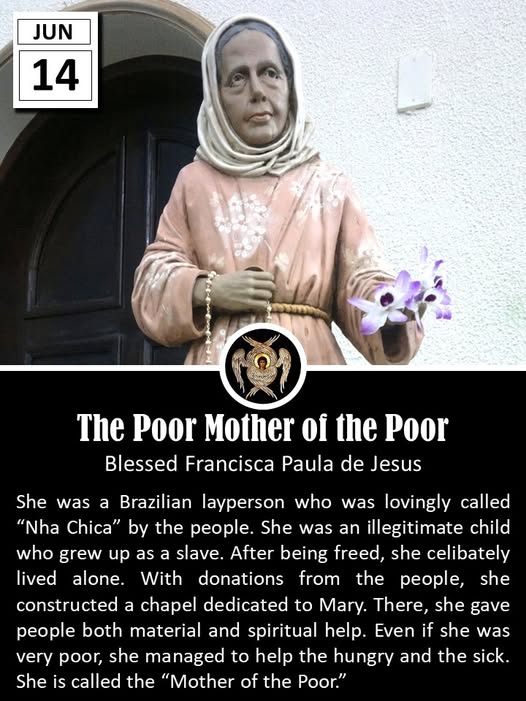
Blessed Francisca Paula de Jesus, affectionately known as Nhá Chica, was a Brazilian laywoman whose life of quiet faith and service left a profound mark on her community and the wider Church. Born around 1810 in São João del-Rei, Minas Gerais, to an enslaved mother named Isabel and an unknown father, she entered the world as an illegitimate child under the harsh realities of slavery in nineteenth-century Brazil. Orphaned young after her mother's death, she remained illiterate yet deeply pious, shaped by the simple Catholic devotion passed down in her family.
Freed from bondage while still a girl, Nhá Chica chose a path of celibacy and humility rather than marriage or worldly pursuits. She settled in the small town of Baependi, where she dedicated herself to prayer, charity, and the construction of a modest chapel honoring the Immaculate Conception. Using what little she had, often aided by donations from locals, she created a space for worship that became a gathering point for the faithful. Rich and poor alike sought her counsel and prayers, drawn to her gentle wisdom and generous spirit. She earned the enduring title Mother of the Poor for her tireless care of the needy, offering food, comfort, and spiritual guidance without regard for social station.
Her existence embodied the Gospel values of poverty and love in action. Despite facing prejudice as a Black woman of humble origins in a stratified society, she lived with unwavering trust in God and devotion to the Virgin Mary. Nhá Chica died on June 14, 1895, in Baependi, where her memory endured as a beacon of holiness among ordinary people. In 2013, she was beatified in a grand ceremony in her hometown, recognized by the Catholic Church as the first Afro-Brazilian laywoman to receive this honor. Her feast day is observed on the anniversary of her death, and her shrine continues to draw pilgrims seeking intercession.
3
25
128
1,979
clare griffiths retweeted

So then, the treasury offered £10bn for extra defence spending but military chiefs wanted £28bn, an £18bn difference. The money was there but Starmer chose to give £21bn to Ukraine instead. That alone should be enough to force his resignation. bbc.co.uk/news/articles/ce8j…
116
1,968
5,730
46,760
clare griffiths retweeted

A man from Bradford dressing like he’s found a female Tory MPs 1990s cast offs in a charity shop and a student to politics Strathbungo homeowner ensuring 3,500 kids live in precarious temporary accommodation so Just Eat has staff housing.
Lovely.

10
88
417
11,695
clare griffiths retweeted

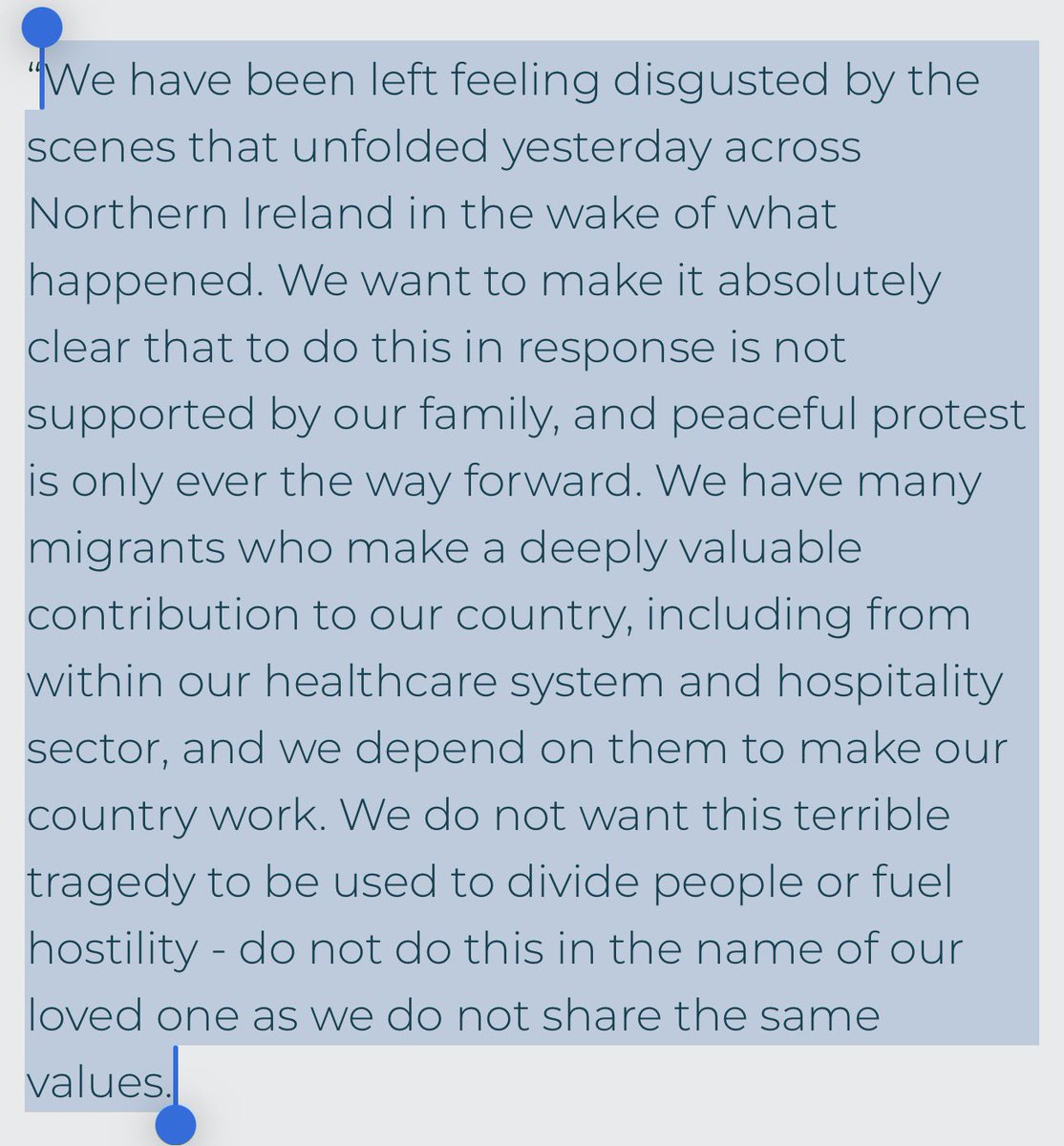
No shit Sherlock.
As if a family in deep shock would write this shite

247
2,203
10,940
129,246
clare griffiths retweeted

Jun 13
The people circled in blue will advocate for unvetted third world males to move into the same street as your family to be in constant close proximity to your young daughter.
The people circled in red will put themselves in harm's way to protect you and your daughter.
Jun 13

The people circled in blue will all be cheering on Scotland tonight 🏴
The dregs of society circled in red will be cheering on Haiti because they hate their country and they’re brain dead fucking simpletons.

51
207
3,407
99,929
clare griffiths retweeted

Jun 14
Here’s how the SNP voted : the inconvertible truth that you lot don’t give a flying fig about the North Sea oil industry. You’ve done everything you can to destroy it.

1
85
182
1,642
clare griffiths retweeted

"A nation is not obligated to commit suicide in the name of tolerance." Emma Trimble (@Emma_A_Webb) delivers a powerful critique of modern migration arguments that twist religious principles to push open borders.
3
21
55
890
clare griffiths retweeted

Jun 14
🚨NEWS: It has been revealed that thousands of Migrants have left the UK without paying their student loans - the total from EU countries alone amounts to £893 million
621
2,678
16,265
668,138
clare griffiths retweeted

Jun 13
A man pretending to be a woman, suspected of murdering a little boy, publicly assaulted female journalists.
Naturally Australian media referred to him as "she".
Jun 13

A cross-dressing Australian man who's suspected of murdering a child behaves erratically and aggressively outside court, where he was found guilty of a separate firearms charge.
Australian media calls him a woman and only mentions he's "trans" towards the end of the broadcast.
226
2,021
6,479
191,008
clare griffiths retweeted

Jun 14
Your large intestine is a polite, tidy, undersized thing, and that fact alone rules you out as a plant specialist.
The animals that make a living from plants are defined by what they keep at the back end. A horse has an enormous hindgut. A gorilla's colon and fermenting chamber fill most of its torso. A cow runs four stomachs and a microbial factory the size of a dustbin. All of it exists to do one slow, demanding job. Turn cellulose, the tough fibre of plants, into something the animal can absorb. It takes vast internal volume and many patient hours.
Now look at yours. The human colon is small and unassuming, a fraction of the proportional size of a true herbivore's. We have nowhere to run that great fermentation. Eat a large amount of plant fibre and your gut cannot wring a living from it the way a cow can. It mostly bulks up, ferments a little, makes gas, and moves on.
That missing fermentation chamber is the most damning piece of anatomy in the whole argument. You cannot be an animal built to live on plants while lacking the one organ that living on plants absolutely requires.
What you have instead is a short, efficient tube for absorbing rich, concentrated, already-broken-down food. Meat. Fat. The output of a kill, not the contents of a meadow.
24
264
1,108
18,620
clare griffiths retweeted

Jun 13
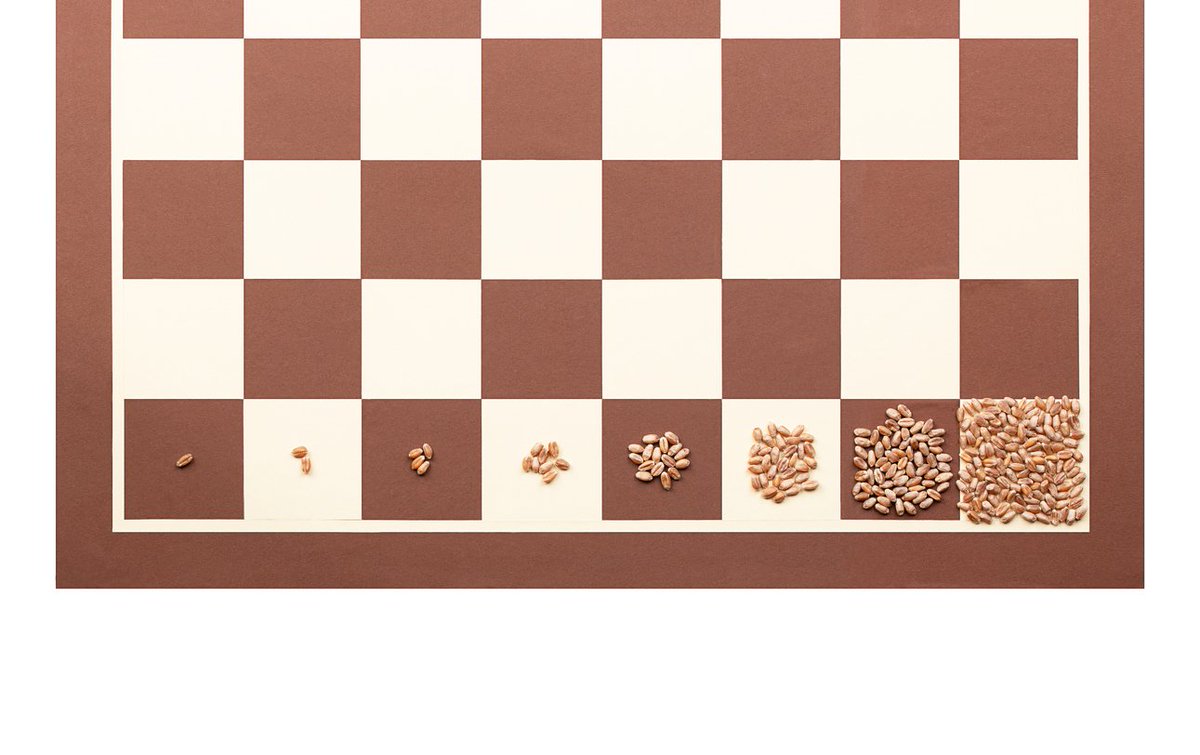
When industry managed to find a seat in the room where the recommended daily allowance for folates was decided - they got them to agree to an unachievable and clearly incorrect number.
hartgroup.org/what-you-need-…
Please sign the petition to stop folic acid:
petition.parliament.uk/petit…
1
102
171
10,487
clare griffiths retweeted

Jun 11
I’ve seen many Scottish Nationalists question why people in London are making decisions for us.
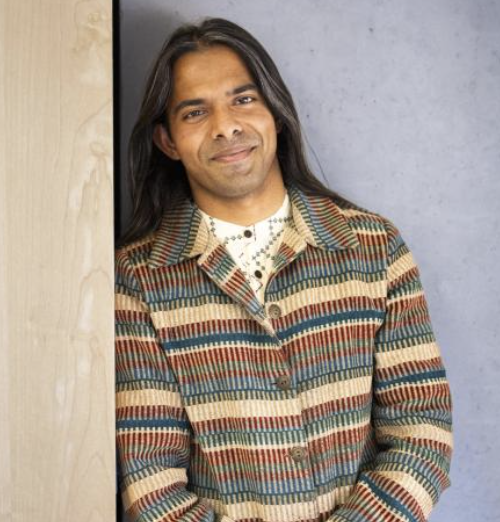
I’ve yet to see one of them question why unqualified Tamil transvestites, here on student visas will be making legislation for us.
Jun 11

'When it comes to the idea of trans women using women's bathrooms, absolutely they should'
Scottish Greens MSP Q Manivannanan has urged the Scottish Parliament to lift its ban on trans people using toilets in their lived gender in the building 👇
56
262
1,186
23,186
clare griffiths retweeted

This purposefully misses the crucial detail of what I said at FMQs, which is that the statutory duties for councils to provide TEMPORARY accommodation mean that illegal immigrants must be housed ahead of locals waiting on the list for PERMANENT accommodation.
Jun 12

Scotland’s Housing Secretary has condemned what she called 'misinformation' on refugees as she hit back at claims 'strangers' were being put before Scots thenational.scot/news/261905…
46
128
585
17,389
clare griffiths retweeted

Jun 12
So in theory Scotland could be ruled entirely by non binary transgender Indian nationals who will make it law men can use women’s toilets anywhere in Scotland 🏴
There will be absolutely nothing anyone in Scotland can do about it because Scotlands Government the SNP in Holyrood changed the law in 2025 to enable people who don’t have British citizenship or permanent residency to stand to be elected to the Scottish Government in Holyrood.
What an absolute cluster fuck Scotland has become under the SNP and Greens.
Anyway I’m not going to keep banging on about it because I’m sure people are just as bemused as me.
I just hope at the next elections national or local the SNP and Greens get a good thrashing.
51
192
888
16,214
clare griffiths retweeted

Jun 12
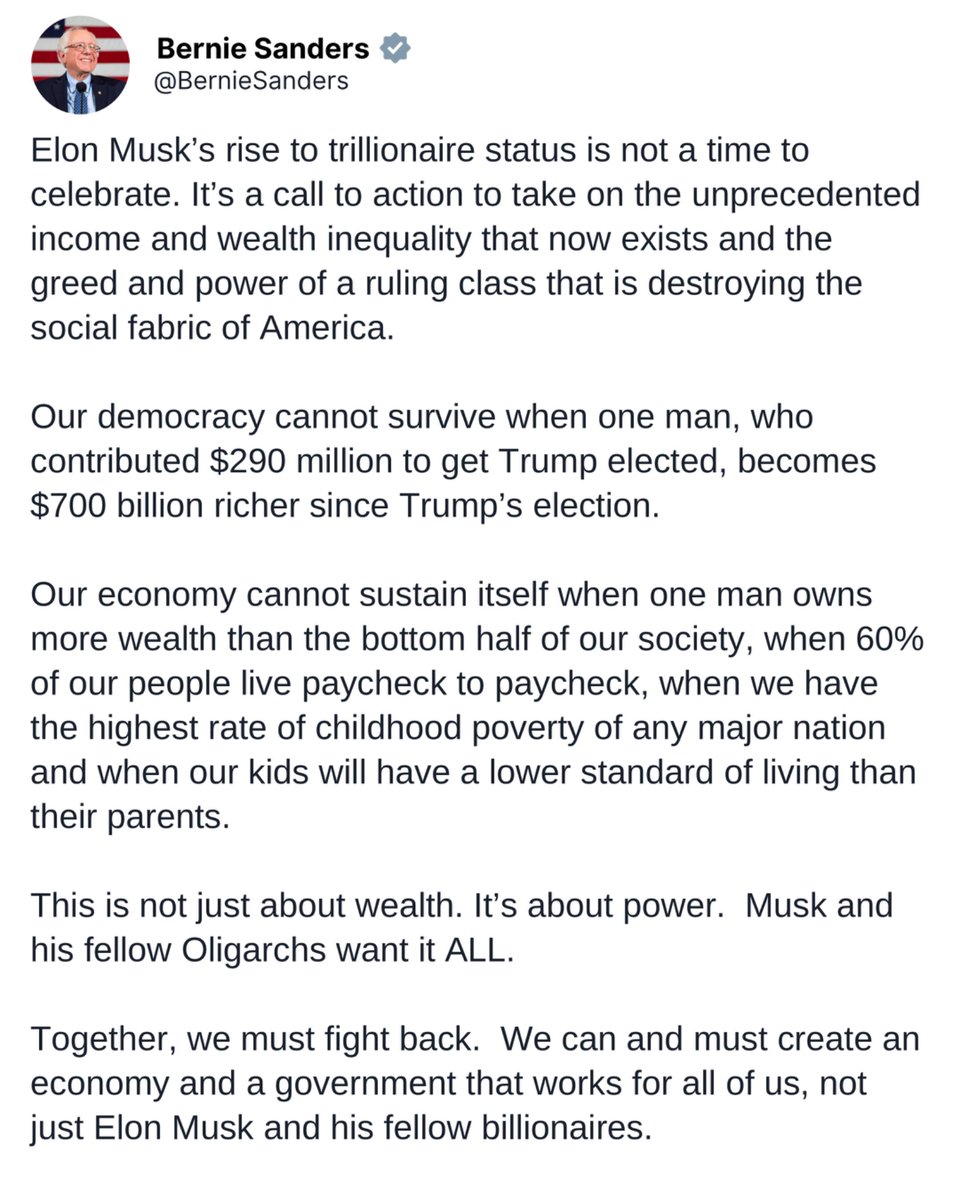
“If Elon Musk wasn’t a trillionaire, we could all afford healthcare.”
They fail to understand that Musk didn’t take his wealth from anyone.
It didn’t exist before he created it.
392
1,436
17,095
181,831

History's first trillionaire is a guy who catches rockets out of the sky with chopsticks and beams internet to every dead zone on the planet.
Same guy ships cars that drive themselves, humanoid robots for the factory floor, brain chips that let paralyzed people move a cursor with pure thought, and an AI running on a supercomputer his team stood up in months instead of years.
And the people crashing out about his net worth are doing it on the app he owns. The same app governments spent years trying to censor.
You cannot legislate a rocket into orbit.
Jun 12

1,879
11,557
70,775
2,350,335
clare griffiths retweeted

‼️Wow - Perrie Edwards & Jamie Laing discuss their “serious abandonment issues” following parent divorces in their childhood.
If you think marriage doesn’t matter to kids, think again 👇
8
21
3,557
clare griffiths retweeted
Jun 13
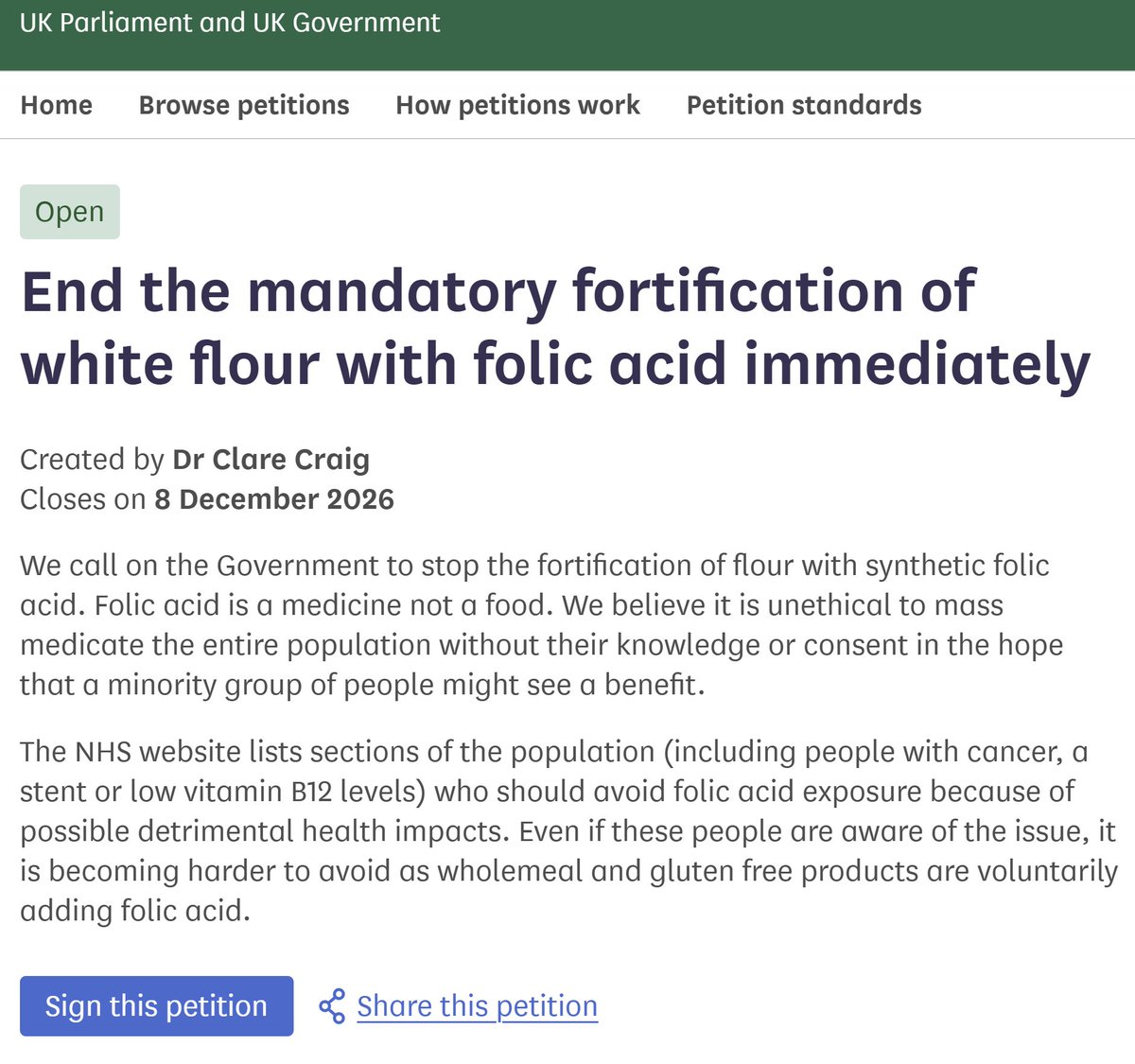
The decision to add folic acid to UK white flour has not been debated in parliament!
Sign the petition for a debate.
petition.parliament.uk/petit…
28
865
1,380
17,422