
Joined June 2023
- Tweets 6,048
- Following 1,401
- Followers 956
- Likes 4,255
2,668 Photos and videos






Jun 7
We may be seeing a broader rise in democratic socialist-style candidates like Zohran Mamdani (NYC) and Nithya Raman (LA). Both have strong DSA ties, heavy support from younger voters (under 40), and focus on housing, renters, and progressive critiques of incumbents.
Mamdani won big with youth turnout; Raman is surging in late LA mail ballots that skew younger. This reflects real demographic shifts in deep-blue cities under the open primary mail voting system. Worth watching how it plays out long-term.
2
117
Jun 5
One of the biggest problems I see in CRMs:
duplicate and outdated records.
When sales teams don’t trust the data:
reports become useless
follow-ups get missed
automation breaks
marketing costs increase
Good CRM data = better decisions.
Sometimes a simple cleanup automation strategy can completely change how a business operates.
#SalesforceAdmin #CRM #BusinessGrowth #Salesforce
1
33
Jun 3
The Salesforce UI era is quietly ending.
With Salesforce doubling down on APIs, Agentforce, Data Cloud, composable architecture, and headless experiences, the interface matters far less than the intelligence layer sitting on top.
This changes everything.
The old way of building on Salesforce:
Visualforce pages
Lightning components
Complex packaging
AppExchange distribution headaches
Heavy frontend development inside the platform
The new way:
Build beautiful, modern React apps
Create intelligent AI copilots
Launch sleek admin dashboards
Deliver external customer portals
Build powerful automation assistants
…using Cursor Next.js Supabase OpenAI Salesforce APIs.
Salesforce is no longer fighting to be the frontend. It’s becoming what it was always meant to be: the ultimate backend business engine.
This is one of the biggest platform shifts in enterprise software right now.
The developers who understand this transition will have a massive advantage in the next 3–5 years.
Who else is seeing this shift? Are you still building everything inside Salesforce, or are you embracing the headless AI-first approach?
Drop your thoughts below 👇
#Salesforce #Agentforce #DataCloud #React #AI #Headless #EnterpriseTech #Developer
47
Jun 3
Too Many Manual Tasks
Most small businesses don’t realize how much time gets wasted on repetitive Salesforce tasks.
Things like:
manually creating follow-ups
copying customer notes
assigning leads
updating statuses
sending reminder emails
These should be automated.
Even saving 10 minutes per employee per day adds up fast over a year.
A simple Salesforce Flow can eliminate hours of repetitive admin work every week.
#Salesforce #SmallBusiness #CRM #Automation #AI
3
1
2
123
May 17
Stopped by In-N-Out Burger on the way back from Dollywood. It tasted like every other burger place.
1
42
May 17
In Tennessee, self-defense kicks in against a punch, but deadly force (like drawing or firing a gun) usually does not for a single punch alone. It depends on the full circumstances, reasonableness, proportionality, and whether you escalated first. Here’s the breakdown based on Tennessee Code § 39-11-611.
Non-Deadly Force (Pushing, Hitting Back, etc.)
• You can use reasonable force (up to but not exceeding what’s needed) if you reasonably believe it’s immediately necessary to protect against the other person’s unlawful force (like a punch).
• No duty to retreat if you’re lawfully present and not committing a felony/Class A misdemeanor.
• A punch is unlawful force, so you can defend with comparable force (e.g., fight back to stop the assault).
Deadly Force (Gun, Knife, etc.)
Deadly force is justified only if all these are met:
• You have a reasonable belief of imminent danger of death or serious bodily injury (not just pain or a minor fight).
• That belief is honest and founded on reasonable grounds.
• The force is necessary and proportional — you can’t escalate to lethal unless the threat does.
A single punch rarely meets the “serious bodily injury” threshold by itself. Examples where it might:
• The puncher is much larger/stronger and continuing to beat you (e.g., stomping, head strikes while you’re down, multiple attackers).
• You have a known vulnerability (e.g., prior injuries, disability) that makes even one punch life-threatening.
• The punch escalates into something clearly deadly (e.g., they grab a weapon, choke you unconscious, etc.).
Courts/juries look at the totality: video, witnesses, your actions before/after, disparity of force, and whether you were the initial aggressor or escalator.
Key Limits in Tennessee
• You can’t be the aggressor/escalator: If you reach for a gun during words/taunts (even if they punch after), prosecutors can argue you introduced deadly force first — weakening or killing your self-defense claim. The other person’s punch could then be seen as a response to your threat.
• Proportionality matters: “He hit me first” doesn’t automatically green-light shooting. Many fistfights don’t justify guns.
• Stand Your Ground helps, but only if the above elements are satisfied. It removes any duty to run away — it doesn’t expand when deadly force is allowed.
In the Eatherly (“Chud”) Context
The arrest warrant says Eatherly bladed up and reached for his gun during the verbal argument, then the physical fight/punch happened. That’s why authorities charged him with attempted homicide etc. and treated Fox as the victim so far — they view Eatherly as escalating a non-deadly situation into a lethal one. If full video shows a sustained beating after a punch (with Eatherly reasonably fearing serious harm without having reached first), self-defense could still work at trial. But the timeline hurts him. Preliminary hearing is May 26 — more details expected then.
Practical takeaway: A punch gives you the right to defend yourself physically and disengage. Pulling a gun (or firing) is a high bar — juries and DAs scrutinize it heavily in public fistfight-turned-shooting cases. Always best to avoid/de-escalate if possible, and consult a lawyer for specifics. Laws vary by exact facts; this isn’t legal advice.
24
Mark M retweeted

May 14
Jensen Huang, NVIDIA CEO: "It even runs large language models" — a $249 AI computer that fits on your desk.
177
856
9,210
1,206,067
May 13
Salesforce Headless 360: The Future of CRM is API-First & Agent-First
Salesforce just dropped one of its biggest platform shifts in years.
Announced at TrailblazerDX in April 2026, Headless 360 turns the entire Salesforce ecosystem into a fully programmable, headless platform. Translation? You no longer need the traditional Salesforce Lightning UI to get work done.
What “Headless” Actually Means Here
It separates the backend (data, logic, workflows, Agentforce AI agents, Customer 360) from the frontend. Everything becomes accessible via:
•Powerful APIs
•MCP Tools (Model Context Protocol for AI agents)
•The sf CLI
Developers, AI coding agents, and runtime agents can now build, deploy, automate, and interact with your Salesforce org from anywhere — terminals, IDEs, Slack, WhatsApp, custom apps, voice interfaces, you name it.
The 3 Big Pillars of Headless 360
1Developer Superpowers
Over 60 new MCP tools and 30 coding skills let AI agents (Claude, Cursor, etc.) fully manage your org without ever logging into Salesforce.
2Any Experience, Anywhere
Deliver rich Salesforce-powered experiences on any surface your customers and employees actually use — no forcing them into Lightning.
3Enterprise-Grade Governance
Built-in testing, observability, guardrails, and controls so agents operate safely at scale.
Why This Matters
We’re moving from “log into Salesforce” to “Salesforce works invisibly in the background.”
This is a massive step toward the agentic enterprise — where AI handles the heavy lifting while humans engage through their preferred channels.
For developers and architects: faster builds, less UI friction, more innovation.
For businesses: embed intelligent CRM capabilities anywhere your ecosystem lives.
Headless 360 positions Salesforce as true infrastructure rather than just another app you open in a browser.
#Salesforce #Headless360 #Agentforce #CRM #SalesforceDevelopers #AI #FutureOfWork
64
May 13
Big move: U.S. Air Force & Space Force just inked a $72M Enterprise License Agreement with Salesforce to consolidate fragmented systems onto one interoperable platform.
Part of the DoD’s massive $5.6B contract (now under the rebranded Department of War), the deal brings Missionforce tech to modernize personnel management, boost situational awareness, streamline logistics, and accelerate AI deployment—including Agentforce for agentic AI.
From recruitment to real-time decision-making at the edge, this gives Airmen & Guardians a unified mission view and next-gen capabilities.
“Digital foundation for an agentic enterprise.” - Salesforce
23
May 13
A Record Snapshot Merge Field can be added to a prompt template to ground it with data available on the running user's page layout for an object. It is an efficient method of grounding a template with relevant data visible to the running user.
Retrieval Augmented Generation (RAG) is used to ground prompt templates with unstructured text sources organized in a vector database, such as knowledge articles, emails, and chat transcripts. Retrievers are created and activated in Einstein Studio.
An Apex merge field is used to add an Apex class to a prompt template for a complex use case that requires a programmatic approach, such as returning data from a SOQL query or external API, generating well-formatted JSON, or programmatic data filtering.
72
May 13
The Flex prompt template is designed for complex use cases that require data from multiple unrelated standard and custom objects. It provides flexibility in generating content based on diverse data sources, making it suitable for drafting comprehensive sales proposals that draw on various information sources.
The Sales Email prompt template is specifically designed for generating email content related to sales interactions rather than drafting complex proposals that require pulling data from multiple unrelated objects. It cannot handle the level of customization needed for the given use case.
The Record Summary prompt template is used to summarize the records of a particular object. It is unsuitable for proposals that integrate data from multiple standard and custom objects that may not be directly related.
37
May 12
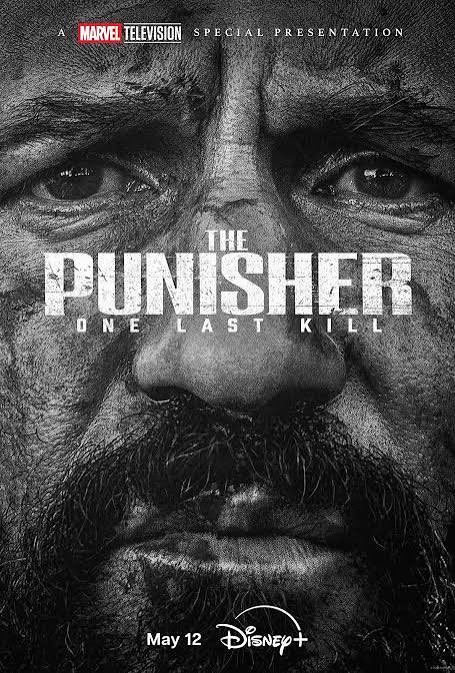
So is it after tonight the punisher won’t kill anymore and we get a more friendly version
58
May 12
Salesforce is hiring 1,000 AI-native grads & interns to build their Agentforce AI platform.
These "AI-native" graduates aren't scared of AI—they're mastering it daily (4x more likely to use it, delivering results 3x faster).
Quote from Chief People Officer Nathalie Scardino: “The AI-native generation entering the workforce today isn’t threatened by AI. They’re the ones building it.”
Smart move as entry-level hiring drops and AI reshapes jobs. Small businesses, take note.
154
May 12
Why are there so many Upper Level Workers who can't even use a computer
10
May 8
When did job questionnaires start asking What is your sexual orientation? and Do you identify by your legal gender?
1
29