
I like 〽️football, skiing, politics, investing and distributed systems. Currently working on graphql at Netflix.
Joined June 2009
- Tweets 401
- Following 494
- Followers 394
- Likes 1,929
18 Photos and videos







Tejas Shikhare retweeted

Jan 26
A few random notes from claude coding quite a bit last few weeks.
Coding workflow. Given the latest lift in LLM coding capability, like many others I rapidly went from about 80% manual autocomplete coding and 20% agents in November to 80% agent coding and 20% edits touchups in December. i.e. I really am mostly programming in English now, a bit sheepishly telling the LLM what code to write... in words. It hurts the ego a bit but the power to operate over software in large "code actions" is just too net useful, especially once you adapt to it, configure it, learn to use it, and wrap your head around what it can and cannot do. This is easily the biggest change to my basic coding workflow in ~2 decades of programming and it happened over the course of a few weeks. I'd expect something similar to be happening to well into double digit percent of engineers out there, while the awareness of it in the general population feels well into low single digit percent.
IDEs/agent swarms/fallability. Both the "no need for IDE anymore" hype and the "agent swarm" hype is imo too much for right now. The models definitely still make mistakes and if you have any code you actually care about I would watch them like a hawk, in a nice large IDE on the side. The mistakes have changed a lot - they are not simple syntax errors anymore, they are subtle conceptual errors that a slightly sloppy, hasty junior dev might do. The most common category is that the models make wrong assumptions on your behalf and just run along with them without checking. They also don't manage their confusion, they don't seek clarifications, they don't surface inconsistencies, they don't present tradeoffs, they don't push back when they should, and they are still a little too sycophantic. Things get better in plan mode, but there is some need for a lightweight inline plan mode. They also really like to overcomplicate code and APIs, they bloat abstractions, they don't clean up dead code after themselves, etc. They will implement an inefficient, bloated, brittle construction over 1000 lines of code and it's up to you to be like "umm couldn't you just do this instead?" and they will be like "of course!" and immediately cut it down to 100 lines. They still sometimes change/remove comments and code they don't like or don't sufficiently understand as side effects, even if it is orthogonal to the task at hand. All of this happens despite a few simple attempts to fix it via instructions in CLAUDE . md. Despite all these issues, it is still a net huge improvement and it's very difficult to imagine going back to manual coding. TLDR everyone has their developing flow, my current is a small few CC sessions on the left in ghostty windows/tabs and an IDE on the right for viewing the code manual edits.
Tenacity. It's so interesting to watch an agent relentlessly work at something. They never get tired, they never get demoralized, they just keep going and trying things where a person would have given up long ago to fight another day. It's a "feel the AGI" moment to watch it struggle with something for a long time just to come out victorious 30 minutes later. You realize that stamina is a core bottleneck to work and that with LLMs in hand it has been dramatically increased.
Speedups. It's not clear how to measure the "speedup" of LLM assistance. Certainly I feel net way faster at what I was going to do, but the main effect is that I do a lot more than I was going to do because 1) I can code up all kinds of things that just wouldn't have been worth coding before and 2) I can approach code that I couldn't work on before because of knowledge/skill issue. So certainly it's speedup, but it's possibly a lot more an expansion.
Leverage. LLMs are exceptionally good at looping until they meet specific goals and this is where most of the "feel the AGI" magic is to be found. Don't tell it what to do, give it success criteria and watch it go. Get it to write tests first and then pass them. Put it in the loop with a browser MCP. Write the naive algorithm that is very likely correct first, then ask it to optimize it while preserving correctness. Change your approach from imperative to declarative to get the agents looping longer and gain leverage.
Fun. I didn't anticipate that with agents programming feels *more* fun because a lot of the fill in the blanks drudgery is removed and what remains is the creative part. I also feel less blocked/stuck (which is not fun) and I experience a lot more courage because there's almost always a way to work hand in hand with it to make some positive progress. I have seen the opposite sentiment from other people too; LLM coding will split up engineers based on those who primarily liked coding and those who primarily liked building.
Atrophy. I've already noticed that I am slowly starting to atrophy my ability to write code manually. Generation (writing code) and discrimination (reading code) are different capabilities in the brain. Largely due to all the little mostly syntactic details involved in programming, you can review code just fine even if you struggle to write it.
Slopacolypse. I am bracing for 2026 as the year of the slopacolypse across all of github, substack, arxiv, X/instagram, and generally all digital media. We're also going to see a lot more AI hype productivity theater (is that even possible?), on the side of actual, real improvements.
Questions. A few of the questions on my mind:
- What happens to the "10X engineer" - the ratio of productivity between the mean and the max engineer? It's quite possible that this grows *a lot*.
- Armed with LLMs, do generalists increasingly outperform specialists? LLMs are a lot better at fill in the blanks (the micro) than grand strategy (the macro).
- What does LLM coding feel like in the future? Is it like playing StarCraft? Playing Factorio? Playing music?
- How much of society is bottlenecked by digital knowledge work?
TLDR Where does this leave us? LLM agent capabilities (Claude & Codex especially) have crossed some kind of threshold of coherence around December 2025 and caused a phase shift in software engineering and closely related. The intelligence part suddenly feels quite a bit ahead of all the rest of it - integrations (tools, knowledge), the necessity for new organizational workflows, processes, diffusion more generally. 2026 is going to be a high energy year as the industry metabolizes the new capability.
1,640
5,580
40,687
7,792,661
Tejas Shikhare retweeted

10 Jun 2024
iPad calculator is actually pretty nuts
283
2,103
21,203
4,016,400
Tejas Shikhare retweeted

6 Jun 2024
Pretty excited about this one! I'm speaking at @rustconf about how we use the `tracing` crate.

🎉 Excitedto have @__xuorig__, Senior Software Developer at Netflix, talk at #rustconf!
Dive deep into how Netflix leveraged the tracing crate in "Low-Overhead Observability in High-RPS Servers with the Tracing Crate.” 🔍
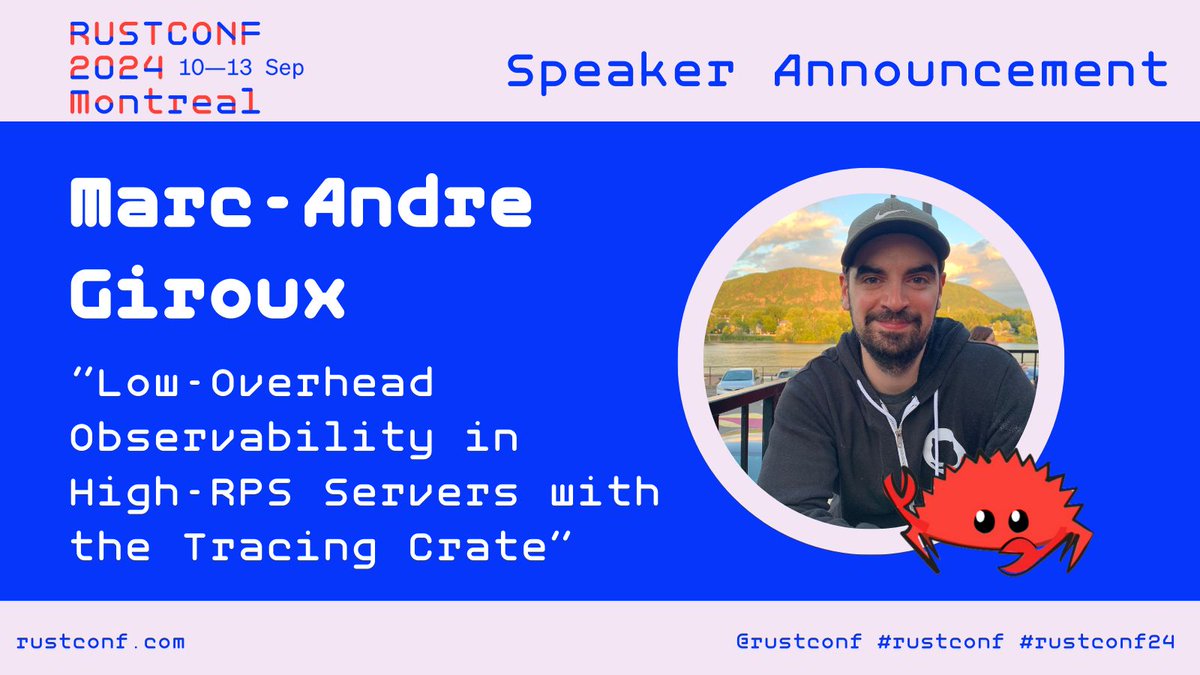
ALT Speaker Announcement for Marc-Andre Giroux
1
1
15
1,482

16 May 2024
My team is hiring a GraphQL support engineer. if you are interested in the role, please DM me. If you like GraphQL and helping other developers adopt it, check out the role:
jobs.netflix.com/jobs/331325…
1
24
60
12,406
Tejas Shikhare retweeted

15 May 2024
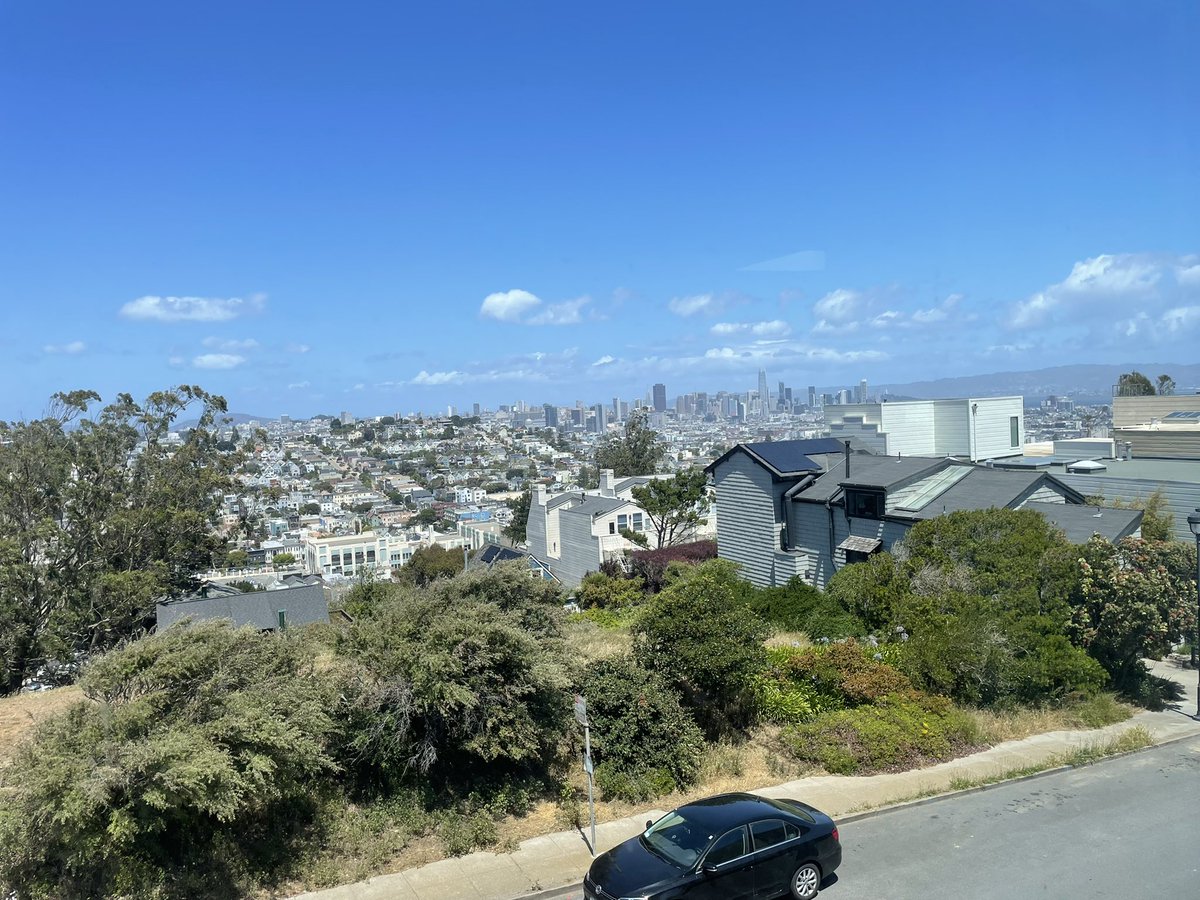
I miss San Francisco.
I miss Crissy Field. The Marina Green.
I miss that walk along the water at sunset, with all that green to your left, the water to your right, and the sight of that huge surreal orange bridge up ahead.
The Italian sandwich spots in north beach. The insane views from Russian Hill.
Getting lost in the Presidio, or Golden Gate Park for hours at a time.
The parrots flying above Alta Plaza Park.
I miss the sand dunes at Ocean Beach.
All those little stores in the mission that sell the most random things that you can’t help but check out over and over again, even though you’re not really sure what they are.
I miss running into some of the best coffee spots in the world everywhere you turn.
The feeling that you’ve gone back in time as you wander through the Haight-Ashbury and walk by stores that somehow survive selling nothing but tie-dye clothes.
I miss hiking around Lands End, in disbelief that place exists on earth.
I miss the time-worn but perfect hole-in-the-wall Chinese food restaurant you can’t get enough of.
I miss walking into the Ferry Building on a Saturday morning and wanting to sample from every single one of those little shops, and then existing out to a picture perfect farmers market along the water.
I miss that stunning downtown view that rises you out of nowhere as you head up highway 280.
I miss the electric energy of a crowded Dolores Park on a sunny day, and guessing just what crazy thing that next vendor is going to walk by with.
I miss the occasional movie at the Castro Theater, and that hilarious vibe as you’re heading inside.
I miss walking up to one of the most beautiful ballparks ever built, and that smell of garlic that sharply greets you as you enter.
I miss the throwback steakhouse vibe of The House of Prime Rib.
Or occasionally putting on my tourist hat and heading down to Fisherman’s Wharf or over to Alcatraz; two places where you’re guaranteed to never run into anybody you know.
I miss zipping down Franklin St and timing it so the lights all turn green just as your car approaches the intersection.
I miss the authenticity of Chinatown.
I miss how the wind sounds as you ride the ferry across the bay to Sausalito. Talk about a bucket list experience.
I even miss hearing those loud kids that crowd The Tipsy Pig all day, screaming at the top of their lungs as that fifth drink starts to hit them.
I miss that it never gets too hot, and that picturesque layer of fog that settles just above the water, even when it hangs around for just a few weeks too long.
I miss the eclectic mix that makes up the people of San Francisco, and the passion they have for their city.
And most of all, I miss the enthusiasm and the optimism, even within a city that has always had its challenges.
The people who live there are there because they know there are better days ahead.
They know they live in a special place.
It’s been down before, but there are just too many great things about it to ever count it out.
San Francisco will be back.
And it will be better than ever.
It’s an American national treasure.
It’s a place we should all be rooting for.
238
238
3,106
688,809
Tejas Shikhare retweeted

24 Apr 2024
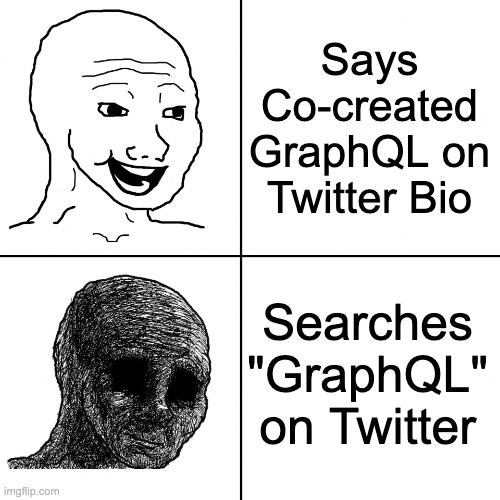
Most of the people I know who are successful with GraphQL have lives and don't care to talk about it on social media. Social media is not designed for success stories. Bashing technologies is what gets attention. "GraphQL works great for us" stories are boring.
2
1
2
285
24 Apr 2024
Tech people on X have prejudiced view on GraphQL.
- it’s not meant to replace REST, gRPC
- it’s specifically an API style that used for building rich UIs
- it’s not a Swiss Army knife
5
2
20
2,512
24 Apr 2024
In order to have a paradigm shift, folks need to have an open mind. Every choice has trade offs, it just shows deep inability to understand them.
In every metric/company, graphql’s usage is growing - so make an effort to understand why, it must be doing something right.
1
7
274

8 Apr 2024
This is an excellent example of how to do open source well.
netflixtechblog.medium.com/a…
3
169
6 Mar 2024
Thanks for the callout @InfoQ , it’s been more than but really enjoyed this experience!

5/5 ➡️ Expanding GraphQL Federation at Netflix with Tejas Shikhare: bit.ly/3TlvbYy
Netflix operates a very large, #FederatedGraphQL platform. In this episode, @tejas26 explains the pros and cons of scaling GraphQL adoption.
2
185
4 Mar 2024
GraphQL friends: What are your thoughts on mixing server-driven UI in GraphQL. Love to hear any best practices, learnings and success stories.
2
2
5
1,109
Tejas Shikhare retweeted

15 Nov 2020
I want all Michigan fans to do this. Take 3 deep breaths... And have faith. Faith that every single Coach, player, employee in that building is doing everything they possibly can to be great.
473
2,462
15,212
Tejas Shikhare retweeted

9 Jan 2024
A blessing and a dream come true!
🗣️ @DEdwards__
272
943
11,465
234,451
15 Jun 2023
Learn about Migration Testing strategies in our new blog post! It was a great learning experience working with my Netflix colleagues on this migration.
netflixtechblog.com/migratin…
2
1
13
808
Tejas Shikhare retweeted

9 Dec 2022
Yesterday at @GraphQLGalaxy I finally announced the project I've been working on for the last 2 years: a next-generation, general-purpose, planning and execution engine for GraphQL 🤩
Here's a ⏩ condensed version of my talk:
youtu.be/x0FMjL5-kNI
11
22
106
13 Nov 2022
1000s of poorly batched RPCs are probably within data centers. So why does it affect only some countries? Shouldn’t it affect everyone?
And it’s probs not between client & server because twitter uses GraphQL.
So genuinely curious?

Btw, I’d like to apologize for Twitter being super slow in many countries. App is doing >1000 poorly batched RPCs just to render a home timeline!
2
8
4 Nov 2022
Words of wisdom from James! We are on a similar API platform journey here at Netflix.
3 Nov 2022

We got here with deep & long-term commitment of engineering leadership. Managers grew a team around an early prototype, directors prioritized api migrations, and partner teams front-loaded integrations with the platform without knowing if/when their work would pay off.
3
Tejas Shikhare retweeted

3 Nov 2022
This seems like a fine time to look back on the rather decent API platform our team built at Twitter.
30
190
1,393
Tejas Shikhare retweeted

27 Oct 2022
People keep guessing how much #GraphQL is actually used, which I think is natural for every interesting technology. But hard numbers are extremely rare to find, so here is some background and never shared before statistics (1/n)
1
11
46