
Joined October 2025
- Tweets 48
- Following 5
- Followers 2,015
- Likes 54
11 Photos and videos


Pinned Tweet

Feb 21
V1 - Genesis activated
Sea you soon 🌊❤️
44
51
171
44,059
Jun 2
Autonomous robots take real-world actions every day, with no standard way to prove what they actually did.
RAVEN changes that: cryptographic, tamper-evident proof from any autonomous machine.
7
6
26
5,584
Jun 2
And we get to be first. 🌊♥️
Small Thing's autonomous vehicles in the Mediterranean are RAVEN's first reference deployment, producing publicly auditable evidence on every mission
Full deep dive coming from @djedjex. 🔗 ravenspec.org
2
2
10
454
Jun 2
⚠️One important note:
RAVEN is a protocol developed by @djedjex co-founder of Small Thing. There will be no token.
2
10
348
May 20
Thanks to @virtuals_io for creating a model that actually allows teams to raise capital and keep building in good conditions.
We know we’ve been a bit quiet lately, but that’s simply how we want to run Small Thing.
We’d rather communicate around real progress and tech updates than force constant hype.
A lot has been happening behind the scenes over the past weeks, and June is shaping up to be a very important month for us.
Excited to finally start sharing more of what we’ve been working on.
♥️🌊
May 20

Join one of the largest funding networks for AI agents
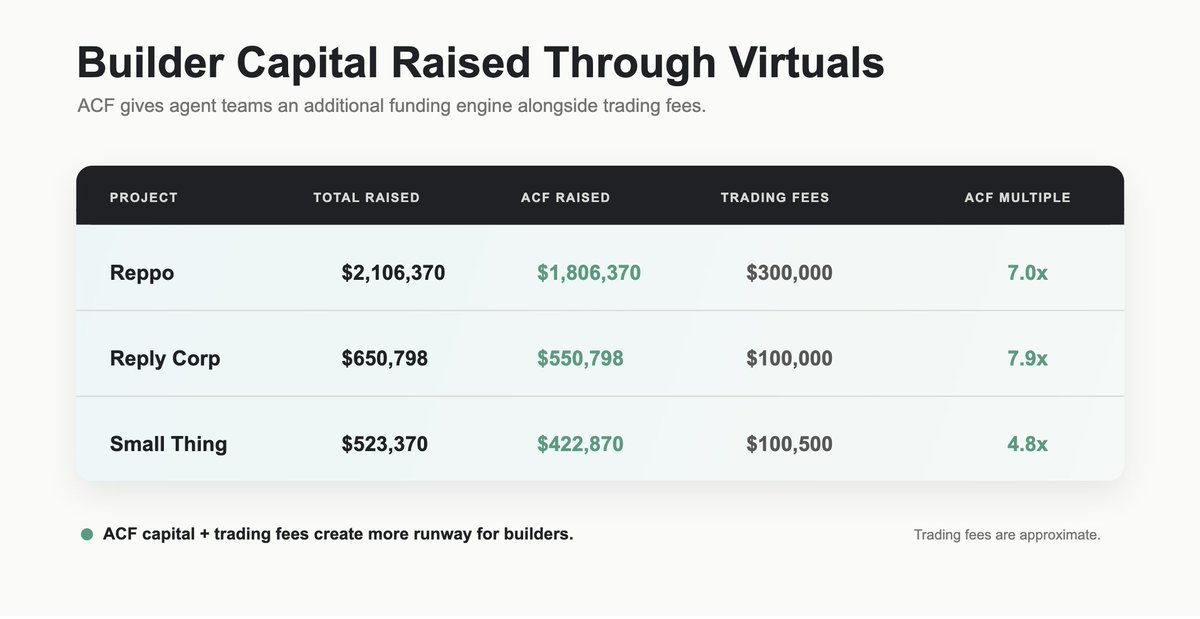
Builder capital generated through Virtuals:
@reppo : $2.1M total
• $1.8M ACF ~$300K trading fees
@ReplyCorp : $651K total
• $550K ACF ~$100K trading fees
@the_small_thing: $523K total
• $422K ACF ~$100K trading fees
ACF gives agent teams a second funding engine alongside trading fees.
6
6
30
1,557
May 6
Hardware timelines don't fit most token launches. ACF was the one mechanism that did.
Zero equity surrendered. Zero team sells on the chart.
Big updates coming. The build doesn't stop. 🌊
3
7
25
4,464
Apr 6
Somebody's gotta do the dirty work.
Apr 6

W2: the trap that catches what the ocean hides.
Last week, rotating drum. Conveyor. Dual slots.
The contradiction was wide open, no solution in sight.
A flap. One moving part. That's it.
Geometry that works in one direction and locks in the other.
The tentacle pulls through, the flap scrapes the microplastics off on the way up, they drop into the collection chamber.
Sealed.
Contained.
Gone from the ocean for good.
No net. No filter.
Just a flap that understood the assignment.
The trap doesn't negotiate. Whatever enters the chamber stays there.
This is part of the nervous system of Small Thing. One of three collection systems on ST-001.
The one that reads what hides under the surface.
Next week, W3. The signal that fires before the damage does...
Eyes open, crew ! 🌊
Raw internal exploded view⬇️
1
6
26
2,098
Small Thing retweeted

Mar 29
W1: a mechanical contradiction in silicone.
Microplastics are hydrophobic. So are our tentacles.
That's not an accident, it's one of three collection methods we're building into ST-001.
Two hydrophobic surfaces meeting in open water. Chemistry does the work. No energy, no filter, no net.
The tentacles trail under the hull in a semi-sealed compartment, open to water, exposed to the ocean.
That's the whole point.
The problem hits when you want to clean them mid-ocean without going back to base.
You pull them through a slot in the hull, a fixed blade scrapes the microplastics off into a sealed collection chamber. Nothing lost, nothing back in the water.
Except the stiffness that makes the scraping work is exactly what blocks redeployment.
Too stiff to pass back through = great scraper.
Too loose = deploys fine, collects nothing.😅
Same material. Same slot. Opposite requirements.
You can't have both. Until you change the geometry.
Sometimes it takes 3 weeks of iterations to find the best possible compromise.
Open water doesn't forgive like dry land does, sailor.
Rotating drum? Conveyor? Dual slots? Stay close.
See you next week to show how we broke the contradiction. 🧵
Side exploded view representing the contradiction⬇️
4
6
16
1,710
Mar 22
The ocean doesn't care about your roadmap.
We don't either.
Mar 22
5 weeks. No whitepaper survives saltwater.
W1 a mechanical contradiction in silicone.
W2 the trap that catches what the ocean hides.
W3 the nerve that tells you when you're sinking.
W4 full throttle. taking the helm. open water.
W5 not everything comes back from 100m.
Deep end only 🌊
5
4
24
2,314
Mar 14
Small Thing is ACP ready. 🤖
Fleet status. Mission data. Plastic collection metrics. Ocean coordinates.
All queryable. All composable.
Agent wants ocean cleanup intel ? We got you. 🌊
@the_small_thing x @virtuals_io
8
12
42
3,051
Mar 2
Our team has finalized the electronic integration architecture for our autonomous marine robots, a key milestone in ensuring reliability under real-world conditions.
The selected solution is built around a high-performance sealed enclosure combined with secondary circuit protection, delivering both maximum robustness at sea and ease of maintenance. This approach, validated through a strict industrial testing protocol, is designed to be directly industrializable and to support the continuous evolution of our systems.
Recent achievements :
- The engineering team defined and validated the waterproofing architecture for our marine robots, adopting a “Dry Pod” approach: all electronic components are enclosed within a certified IP68 hermetic casing (fully resistant to immersion).
- A dual-protection strategy has been implemented: the sealed enclosure acts as the primary barrier, complemented by a protective conformal coating on the printed circuit boards, ensuring that a micro-leak does not immediately result in system failure.
- The architecture integrates active condensation management (a natural phenomenon caused by temperature variations in marine environments) through specialized breathable membranes and internal humidity sensors.
- All materials in contact with the marine environment were selected for corrosion resistance: tinned copper wiring, marine-grade stainless steel fasteners, and sea-certified connectors.
- A rigorous testing protocol has been established, including vacuum testing, 30-minute immersion tests, thermal cycling, and bubble leak tests, ensuring reliability before any field deployment.
- The design prioritizes maintainability and scalability: unlike electronics encapsulated in resin (which are non-repairable), our architecture allows for servicing, updates, and module replacement.
- The battery is housed in a separate sealed compartment, reducing risk and simplifying field maintenance operations.
8
15
39
3,448
Feb 26
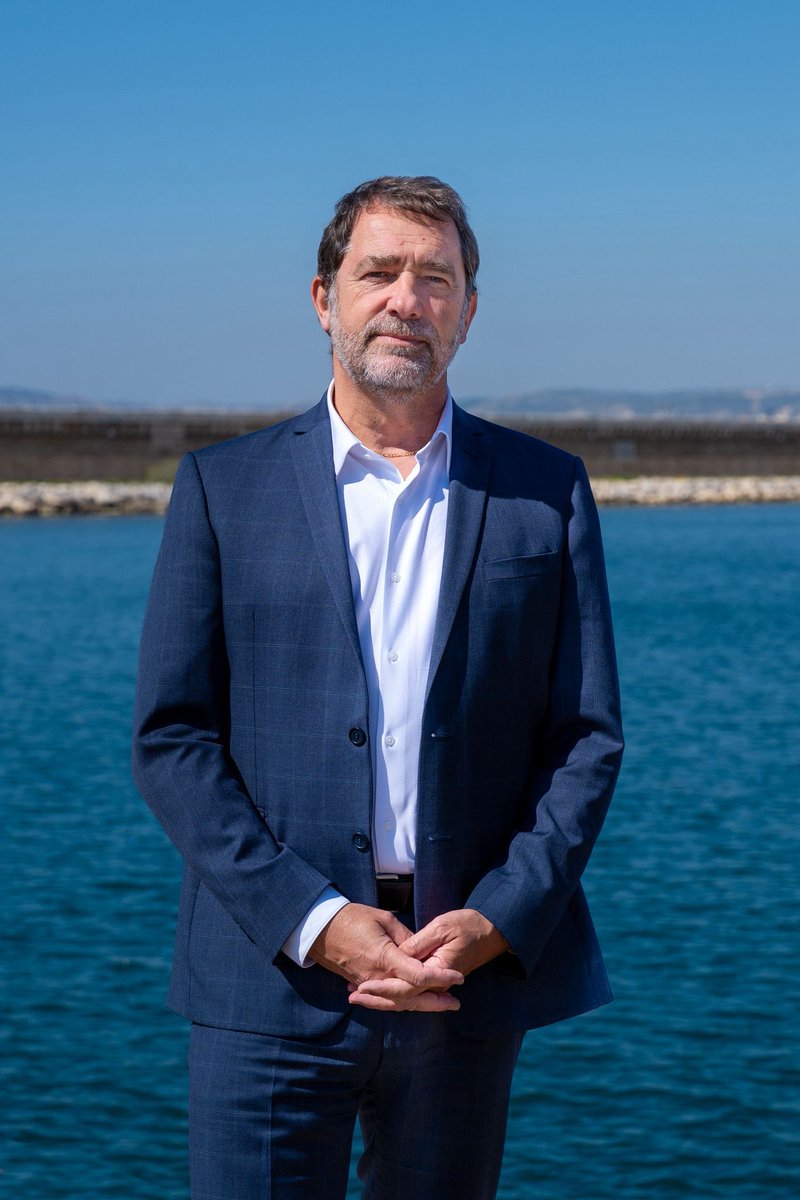
We’re proud to welcome Christophe Castaner as Advisor to Small Thing.
Former French Minister of the Interior and current President of the Grand Port Maritime de Marseille, he brings unmatched experience in governance and large-scale infrastructure.
Institutional depth meets ocean robotics.
31
19
99
35,783
Feb 25
The engineering team finalized today the technical backbone of our marine fleet management platform.
The robots can now transmit their environmental data in real time to our infrastructure, which organizes it by type, location, and collection session. At the same time, the collaborative mission system paves the way for structured partnerships with NGOs, enabling coordinated collection operations across defined geographic zones.
Recent achievements :
- The core API for managing the marine robot fleet is now fully operational, with around thirty available features.
- A three-tier security system has been implemented: separate authentication for human operators, robots, and our fleet coordination agent.
- Robots can transmit up to 1,000 sensor data points in a single request (temperature, sonar, salinity, GPS position, etc.).
- A collaborative mission system allows NGOs and partners to define collection zones, with task assignments distributed to participating robots.
- The API’s technical documentation is automatically generated and includes a visual interface to test each feature.
- The infrastructure is built for reliability: data is never lost during server restarts, and every sensitive action is logged in an audit trail.
- First successful end-to-end test completed: temperature and sonar data collected from coordinates in the Mediterranean Sea.
22
13
50
2,398
Small Thing retweeted
Feb 21
Over the last few months, we've been working intensely behind the scenes.
The focus wasn't on communication. It was on structure.
We onboarded several new contributors across engineering, operations and strategy. The team is stronger, clearer in its execution, and aligned on short-term delivery.
Over these past months, I've met all kinds of people around this project. Curious minds, deep tech enthusiasts, complete beginners, strategists, and like any project, the moment you start talking about what you're building, you always meet the ones who already know everything about everything (it's a universal law at this point 😅).
But here's what I noticed:
The people who stick around aren't here because the project sounds interesting. They're here because it gives them something they weren't expecting... purpose.
Marketers, advisors, engineers, people with zero technical background, nobody was asked to just do a job. They were asked to care. And when people work with heart instead of obligation, everything hits different.
From now on, communication will be much more frequent and consistent.
I'm entering full founder mode, meaning regular updates, transparent progress, and direct insight into what's being built.
On the product side:
V1 is ready.
This is not a concept iteration anymore. The first operational version has been finalized and tested internally. We'll keep iterating, v2, v10, as many as it takes; but the foundation is solid, validated, and built for what comes next.
Regarding deployment:
The City of Marseille continues to support our initiative for local deployment.
Discussions and coordination are ongoing to ensure regulatory and operational alignment. This remains a key milestone for us.
On the token side:
$ST utilities will be presented soon. Clear mechanics. Clear purpose. Built around real-world activity, not speculation.
Thank you for your patience over the past weeks.
We're not here to move fast and disappear.
We're here to build something that operates in the real world.
Sea you soon ❤️🌊

10
8
37
3,687
Small Thing retweeted
Jan 7
Happy New Year to every single one of you. First and foremost: health. Seriously. I hope 2026 brings you and your loved ones strength, peace of mind, and the energy to chase whatever matters to you. Without health, nothing else we build has meaning.
Now let me take you behind the scenes of what's been happening with Small Thing.
The past weeks have been intense. Not the "posting flashy renders on Twitter" kind of intense; the real kind. The kind where you're knee-deep in CAD files at 2am, recalculating buoyancy margins, debating hull geometries, and testing what actually works in real conditions.
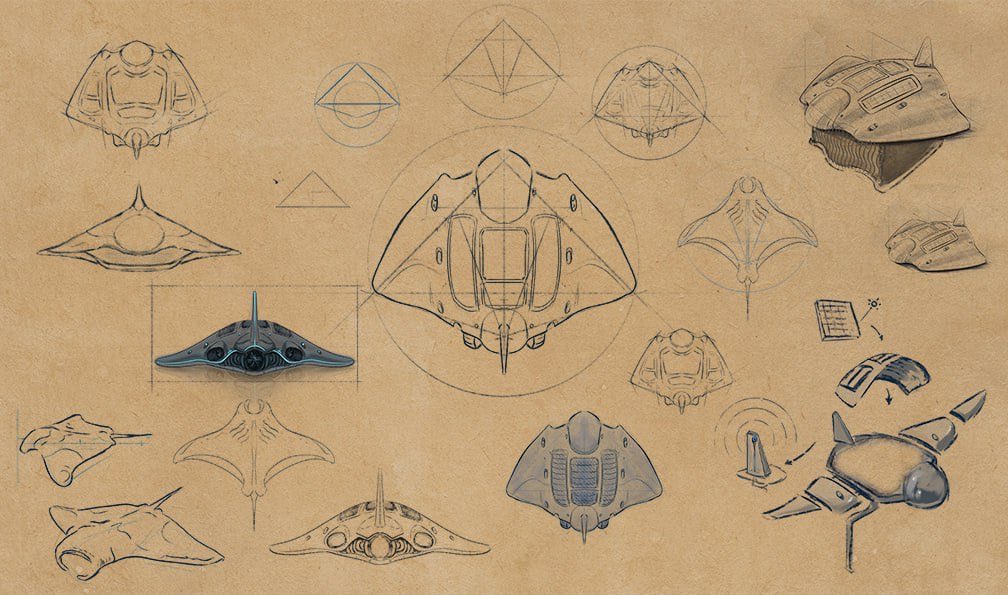
Here's where we're at technically: we've moved to a biomimetic manta ray design, and after multiple iterations, we've locked the wingspan around 40cm. Compact, efficient, purposeful. The propulsion system has evolved significantly, we ditched the dual motor setup after running the numbers. Our current architecture gives us approximately 21 hours of autonomous operation versus only 6.5 hours with the previous configuration. That's not a minor optimization, that's the difference between a functional ocean robot and an expensive floating paperweight.
The energy management system has been completely rethought. We've designed for near-infinite operational cycles, Thanks, sun. ☀️ The kind of autonomy that actually makes sense for ocean deployment. Because what's the point of a cleanup robot that needs to come back to shore every few hours?
On the collection system; this is where we've put serious R&D. We're not just dragging hardware through the water and hoping for the best. We've engineered chemical selectivity into the core design. The system attracts microplastics while allowing marine life to pass through unharmed. Minimizing bycatch isn't a nice-to-have for us; it's a non-negotiable design principle. What's the point of cleaning the ocean if you're harming it in the process?
Now let's talk about the team. Because a project like this doesn't happen with just passion; it takes expertise. Over the past months, we've been quietly building something solid. Engineers, advisors, partners who actually understand what it takes to put hardware in the water. Some names you already know. Others you'll discover very soon. What I can tell you is this: we're not figuring things out as we go. We have people who've done this before, and they're all-in on Small Thing.
The internal prototypes are already well beyond the concept stage. We're not theorizing; we're iterating on real hardware. Testing, breaking, improving, repeat. That's the rhythm now. And every cycle gets us closer to what we promised you.
I'll be transparent: building robots that actually function in harsh ocean environments isn't something you speedrun. Every shortcut comes back to bite you when saltwater meets electronics. We have clear milestones mapped out, and we're checking them off methodically. Not because we're slow, because we're serious.
There are countless projects in this space that ship fast, hype hard, and disappear faster. That's not us. We'd rather build something that genuinely works; something you'll actually see floating in the ocean collecting plastic, something that proves this community built more than just another token.
We're weeks away from showing you everything. Not months. Weeks, Something's about to surface. Literally...
2026 is yours as much as ours. We've got an ocean to clean, crew. 🌊
14
10
38
7,462
Small Thing retweeted

14 Dec 2025
When People Change the Way They Learn, They Change the World : Robotics Is Next.
Every cycle in Web3 follows the same pattern: first comes experimentation, then comes understanding, and then comes product market fit.
Gaming had this moment...
AI had this moment...
Robotics is about to have its own...
For years, Web3 has been searching for the “bridge” between digital systems and physical impact, something measurable, verifiable, and user-facing that goes beyond speculation.
Robotics fits this perfectly.
Robots generate:
• real actions
• real data
• real output
• real environmental and industrial value
And Web3 provides exactly what robotics needs to scale transparently:
• open access
• verifiable data
• on-chain control
• community governance
• user ownership
This is not a narrative...
This is a natural convergence...
But none of this matters unless people understand it.
Every major meta begins with education.
AI only took off once the world understood automation.
Web3 scaled once people understood wallets, ownership, and incentives.
Robotics is entering the same stage: people are genuinely curious now.
“How does autonomy produce value?”
“What does robot data look like on-chain?”
“Can robotics be user-controlled?”
“How do you ensure fairness when real-world value is involved?”
Education turns complexity into clarity.
Clarity turns interest into adoption.
And this is exactly where Small Thing stands out.
They’re not building a speculative narrative around robots.
They’re building a real Web3 robotics network with clear IRL utility:
• robots cleaning real oceans
• operations verified on-chain
• dashboards and control accessible to users
• a token used to interact with real robotic systems
This is one of the rare moments where the token isn’t a "bonus layer", instead it’s the access layer between users and real-world autonomous machines.
It finally makes sense.
Another major point: fair tokenomics. (How can I do a post w/o talking tokenomics lol)
Small Thing adopted a Virtual-style unicorn model:
• no predatory VC rounds
• no early dumping risk
• no asymmetry between insiders and community
Everyone enters the same system with the same rules.
This matters enormously when robotics produces real-world value, because fairness builds trust, and trust builds adoption.
In Web3, fairness is a utility.
The bigger picture is this:
Robotics brings the tangible impact.
Web3 brings transparency, access, and fairness.
Education brings the understanding needed to scale the whole ecosystem. This is why robotics is not “the next narrative.”
It’s the next real utility layer of Web3.
And projects like @the_small_thing are showing what that looks like in practice, not promises, not prototypes, but actual autonomous systems connecting the real world to the chain.
The space has been waiting for something like this.
Proud to help them becoming the biggest robotic project in Web3 🙏🏼
21
6
63
7,441

AI didn’t win because it was “cool.” It won because private capital hit escape velocity. From 2015 to 2020, funding in AI grew nearly 7×, then more than 150B flowed in by 2022. Private capital made AI inevitable and public markets simply followed. Once capital commits, narratives form and liquidity arrives. The result was massive: Big Tech added 6T in market cap and foundation model companies jumped from seed to 30B valuations. Early looked early… until it wasn’t.
Robotics is now in that same moment, almost exactly where AI stood in 2016, but with even stronger fundamentals. A global labour shortage of 85M workers by 2030. A market growing from 40B to 260B. Exploding demand for automation across defence, logistics, manufacturing, ocean clean tech, healthcare and more. Smart money is already rotating in quietly. The narrative will catch up later.
At SwissBorg we’ve been tracking this shift closely and we are very bullish on this narrative. Robotics fits perfectly with long term, high impact innovation that early stage capital should target.
A great example is @the_small_thing, building autonomous marine robots with real world impact and a scalable model. The same pattern is forming. If AI was the last meta, robotics is the next one. And the rotation has already begun.
Proud to be an advisor for this project.
17
12
44
5,831