
✞ • perpetual compute learner, zk maxi • prev @okx @presto_labs • devoted to the art of living beautifully • tweets my own • 24
Joined May 2020
- Tweets 6,597
- Following 3,252
- Followers 6,131
- Likes 12,997
318 Photos and videos









Еlena 🦋 retweeted
$HYPE team is beyond impressive. Running at $100M revenue per employee on 11 total employees. This is why small but highly effective teams work, and you can still deliver world class product.
Based on my experience, small teams move and ship faster. At Heim, we run on four core team members split across technical and commercial, including co-founders. In my other growth business, it's just two of us, me and my ops partner. We automated the rest.
This automation on workflow saves me around 5 hours/ day, which I can allocate it towards my personal growth/ fitness or more creative, health, feminine related activities including rest.
What a time to be alive. Happy $HYPE day!
2
2
195
$HYPE team is beyond impressive. Running at $100M revenue per employee on 11 total employees. This is why small but highly effective teams work, and you can still deliver world class product.
Based on my experience, small teams move and ship faster. At Heim, we run on four core team members split across technical and commercial, including co-founders. In my other growth business, it's just two of us, me and my ops partner. We automated the rest.
This automation on workflow saves me around 5 hours/ day, which I can allocate it towards my personal growth/ fitness or more creative, health, feminine related activities including rest.
What a time to be alive. Happy $HYPE day!
2
2
195
FYI, I hold a bunch of $HYPE and this is non financial advice.
I’m not as lucky as the ones who were airdropped a bunch, but I remember STRONGLY when I start accumulating, it’s after a taxi ride in Token 2049 Dubai week when @andreasrtobing_ explaining about Hyperliquid, and it’s with @otreylio as well 😂😂😂
118

Jun 15
She looked great then and now.
People underestimate the pressure to want to look a certain way. You need to start applying discernment whenever you come online and take things with a grain of salt. You cannot let any influencer have that much power over your life-changing decision making.
What I've observed from this phenomenon is that it never stops. Once you fix something, your brain seeks something else to fix. Revise, repeat. Girls on Instagram start with 0.5cc lip and chin filler, then facial rebalancing, then rhinoplasty, then two or three revisions using their own rib bone, and so on. I spent so much time consuming how they look online until it started to become boring, and mind you, I'm 24.
I'm not against facelifts or plastic surgery at the right age or for recovery purposes, but it's sad that it's way too normalized to do it at such a young age purely for aesthetics. I think what's harmful is when someone younger does the exact procedure and then does even more before they turn 30.
A few acquaintances did it in their mid 20s, and it's like an addiction I can't explain. It's scary. :(

Plastic surgery arc.
I never wanted to be anything other than completely transparent with u guys.
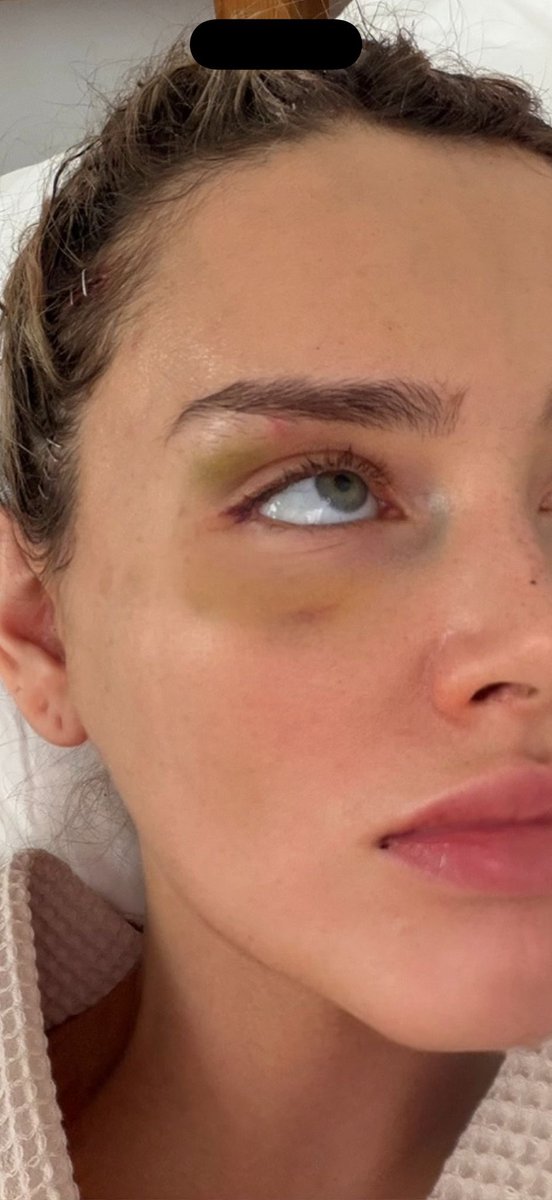
Did I look good before? Yes. Did I also gain and lose 40kg over and over again during my ED years to the point it sagged my tissues? Also yes.
My surgeon is extremely conservative. He basically said: “you’ll just look like yourself had that constant weight fluctuation never happened. We’re simply putting the tissue back where it biologically would have been.”
Worth it? 100% yes. Easy? Absolutely not.
I’m still recovering. Still swollen like crazy most days. Necessary? Probably not. I was just deeply curious what I would have looked like had I not put my body through hell for a decade.
But that’s also why I started this account in the first place.
Ageing NEVER is metabolism first. Bioenergetics first. Foundation first.
Smart tweakments only if you feel like it once the foundation is there. Otherwise none of it works properly anyway.

3
5
580
Jun 13
So we’re now gatekeeping intelligence?
If the model is that “powerful” it can’t be tricked into stealing any classified information by other nationals, no?
If it’s that powerful, any restricted question about cybersecurity, bioweapon, etc would be downgraded to Opus?
I need enlightenment as to why every foreign nationals are blocked, instead of targeting specific block on few countries with major hacking capabilities/ groups.
Btw during my short term relationship with Fable, I still prefer Opus anytime.
Jun 13

The US government, citing national security authorities, has issued an export control directive to suspend all access to Fable 5 and Mythos 5 by any foreign national, whether inside or outside the United States, including foreign national Anthropic employees.
The net effect of this order is that we must abruptly disable Fable 5 and Mythos 5 for all our customers to ensure compliance.
Access to all other Claude models is not affected.
We apologize for this disruption to our customers. We believe this is a misunderstanding and are working to restore access as soon as possible.
Read our full statement: anthropic.com/news/fable-myt…
2
5
367

I think we’ve reached the point where normal people can’t really determine whether new models are better than previous ones. Like Fable doesn’t seem that much better to me, but every 150 IQ person I know is like “wow the singularity came sooner than I thought”.
272
222
5,603
513,303
Jun 5
Can zcash:native actually verify it's own money as privacy coin?
We are so far along to the ultimate privacy protocol, but zcash gave it's decent start.
But why privacy coin hunters are dumping zcash:native beyond the claude opus 4.8 critical vulnerability expose?
1. The anonymity set is small, which directly weakens the protocol
People assume strong proofs equal strong privacy. They do not. Privacy is a function of the math AND the crowd size. zk-SNARKs give you perfect unlinkability inside the shielded pool, but unlinkability only means "you cannot be distinguished from the other people in the pool." If the pool is small or low-activity, the set you are hiding in is small.
Concretely: roughly 30% of ZEC supply was shielded as of 2025. But supply shielded is not the relevant number. What matters for privacy is transaction activity, how many shielded-to-shielded transactions are happening in the same time window as yours. A large dormant shielded balance gives you almost no cover, because cover comes from concurrent activity, not stored value. If only a handful of shielded transactions clear in the window around yours, an analyst is correlating across a tiny set. The math says you are anonymous. The usage says you are one of five. ZEC cannot fix the anonymity set by improving the cryptography, because the cryptography is already excellent. It can only fix it by driving real shielded usage up, and it has failed to do that for nearly a decade. The potential weakness is on demand side.
2. Optional privacy poisons as the default
When privacy is opt-in, using it becomes a signal. On Monero, everyone is private, so being private tells an observer nothing. On Zcash, choosing to shield marks you as someone who wanted to hide something, within a minority of users who do. The act of opting in is itself information.
This produces a perverse dynamic. The more sensitive your reason for wanting privacy, the more your use of the rare feature stands out against the transparent majority. Optional privacy means the privacy-seekers self-select into a smaller, more conspicuous group. Monero's mandatory model dissolves that signal entirely. Zcash's optional model concentrates it. The feature that is supposed to protect you also flags you, because most people around you are not using it.
3. The shielded boundary leaks by design
Most ZEC value needs to touch the transparent world. Exchanges deposit and withdraw transparent. Most wallets, most liquidity, most on-ramps are transparent. So value flows in a pattern: transparent, shield, do something private, unshield, transparent again.
Every shield and unshield event is visible on-chain with an amount and a timestamp. The shielded middle is private. The two ends are not. This creates correlation attacks. Shield 12.7 ZEC at 14:02, and an unshield of 12.7 ZEC appears at 14:40, a chain analyst has a linkage hypothesis. With low pool activity (see point 1) these hypotheses get strong fast, because there are few other transactions to create ambiguity.
This is structural because the protocol cannot close it without forcing all activity shielded, and it deliberately refuses to do that, because mandatory privacy is exactly what triggers delistings. So ZEC keeps the leaky boundary on purpose. The leak is the price of regulatory survival. It is not a bug they will patch. It is a design they chose.
4. The shielded pool sacrifices supply verifiability
This is the deepest one and the one this week made it concrete. A transparent chain lets anyone verify total supply matches protocol rules. A shielded pool gives that up. You cannot see the amounts, so you cannot confirm the amounts sum correctly.
For years this was a theoretical tradeoff. The Orchard bug converted it into a live liability. A soundness flaw let counterfeit ZEC be minted inside the pool with no on-chain trace, and because the pool hides amounts, there is no cryptographic way to prove after the patch whether it happened. The privacy did not just fail to help here. It is the specific reason the question is unanswerable. On Bitcoin, a counterfeit bug would leave a supply discrepancy anyone could check. On ZEC, the privacy guarantee erases exactly the evidence you would need.
So the structural compromise is this: privacy and provable integrity are the same axis pointing opposite directions. You cannot maximize both. Every unit of privacy ZEC provides is a unit of supply-verifiability it gives up. Most of the time nobody notices. When a soundness bug appears, that abandoned verifiability is precisely what you cannot get back.
If the team executes on the NU7 roadmap, faster blocks (75 seconds down to 25), and the Zashi and NEAR Intents UX improvements that are already moving real cross-chain volume into shielded ZEC, the set can grow.
At this moment, adoption is the only variable that matters, and it is the one thing within their control. They have not cleared it yet, but it is clearable, and unlike the regulatory and verifiability tensions, it does not require them to abandon what makes ZEC, ZEC.
1
2
12
3,010
Jun 4
this summer I give myself entirely to radiance. to ripe and jewelled fruits that stain my lips, to evenings dissolving into amber and rose, to choosing what is delicious; in food, in feeling, in everything that makes the body remember it is alive. to dressing in vibrant colour and silk that moves against my skin, stacking gold at my wrists and throat, weaving flowers through my hair and my days, looking closely at the beauty in every face I love, being pulled toward clear water that catches light like a living thing, slipping between mermaid and forest fairy as the mood takes me, emerging from the water with salt on my skin and sun in my hair, pouring flower tea and watching the honey sink slow and golden, lifting my eyes to skies drenched in pink and purple, turning my face toward the sun until my skin holds its warmth like it was made to, letting myself be looked at, letting myself be soft, photographing, writing, noticing, savouring every sensation that this season pours into open hands while living a life with “norman fucking rockwell” lore of lana del rey. this summer is an offering to venus, goddess of all that is beautiful and deeply felt, of ripe desire and tender power, born not of storm or thunder but of gentle, sun-warmed sea foam and the quiet knowing that a woman in full bloom is the most sacred thing the earth has ever made
and perhaps at the same time building a safe future of agentic commerce, whatever, don’t put yourself in a box 🦋
3
38
1,299
Еlena 🦋 retweeted
May 24
unpopular opinion, but emotionally intelligent kids will be the next status symbol in the next 20 years.
we have direct, accessible kinds of intelligence today whose sole purpose is to make better decisions and produce good output without emotion getting in the way.
parents will be EQ-maxxing their kids: sending them to public speaking courses, teaching them how to be charming and convincing, and basically everything you'd need to do to be socially liked through your behavior.
good EQ women will be sought out heavily by high IQ men, simply because they want to create a primary environment with a good EQ woman to raise good EQ kids.
3
3
12
3,867
May 27
few things left in crypto i'm still mega bullish about
- trustless/ non third party security with ZK (will be prominent for tokenization) -> check @heimworksio
- on-chain vaults (retail inflow)
- stablecoins/ payment
- tokenized equities and commodities
- commercial real estate tokenization
- insurance product for all of above
1
8
652
May 27
i'm gonna be so close to turn 25 and i can't help but having so much gratitude because God has been so good throughout my failures
overwhelming grace covers all my days
5
476
May 25
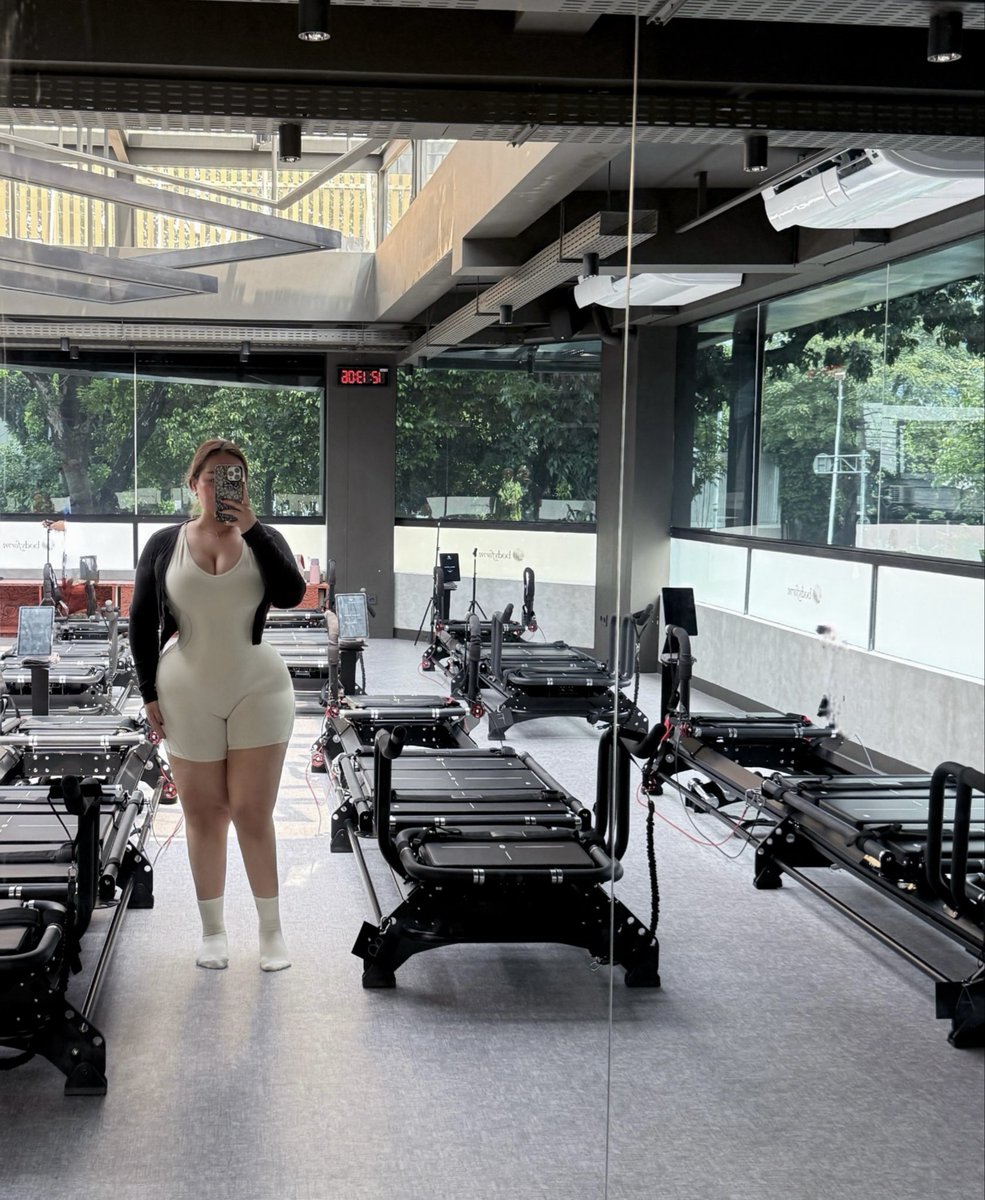
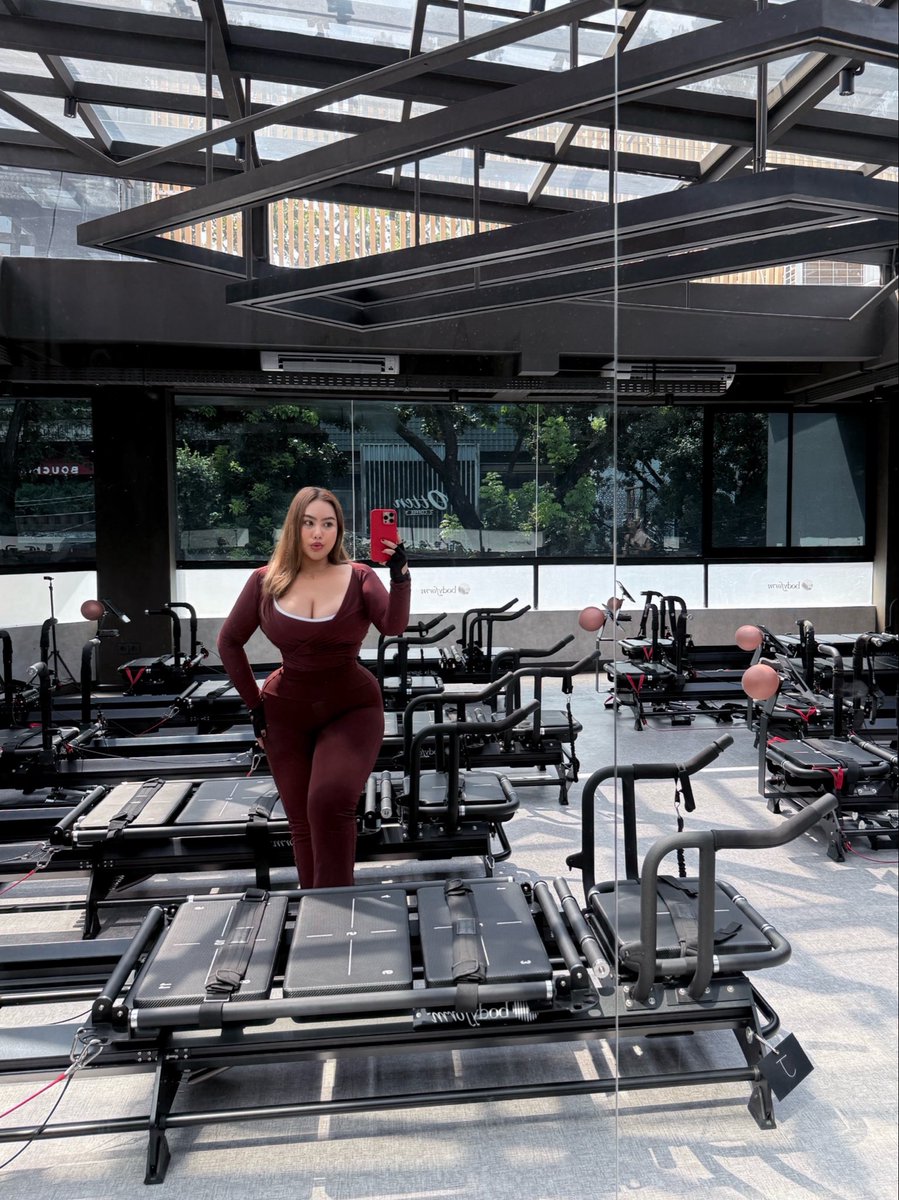
Genuinely curious to girls who go to Lagree 4-5 times/ week
It’s a military training framed as demure training. But nothing demure about time under tension and feeling both of your arms were about to fall off from holding pike to plank for a minute straight.
Been going consistently to Lagree for 2 months now because I wanted an “upgrade” from reformer but it’s crazy challenging
Can’t wait to crush more sessions.
2
11
848
May 20
this is a very Korean phenomenon ever
reminds me of crypto rally time when they hypergamble everything to buy ETH
May 18

Koreans are surrendering life insurance policies to buy SK hynix, Insurance surrenders at the top 3 life insurers jumped 16% last quarter.
Savings bank deposits fell below 100 trillion won for the first time in 4 years. Commercial bank time deposits dropped 12 trillion won since February.
The entire financial system is being rerouted into 2 semiconductor stocks. When new money into a rally comes not from income but from liquidating safety nets, that is how the end of every cycle looks man, this is crazy .....
Investors over 50 now hold 62% of margin loans at Korea top 10 brokerages. Among those in their 60s, margin debt doubled from 3.9 to 8 trillion won in one year.
These are people who spent decades in fixed deposits and real estate, now entering a semiconductor rally on borrowed money at record highs.
When the KOSPI dropped 19% in March, leveraged investors in their 60s lost 20% on average. The rally recovered.
same thing in smaller model happening in India - MTF, i feel this so stupid

2
4
637
May 20
Told ya
May 20

Korean funeral company "Parents' Love" lost ₩49,800,000,000 of their clients' money on a 2x $BMNR long trade.
Insane.

1
2
377
May 17
your mind is programmable. if you're not the one programming it, then someone else will program it for you.
1
6
301
May 14
If you know what your heart truly longs for, don’t ignore it, keep praying about it.
5
532