
Joined July 2018
- Tweets 3,896
- Following 1,636
- Followers 1,427
- Likes 22,177
600 Photos and videos



Pinned Tweet

5 Jan 2024
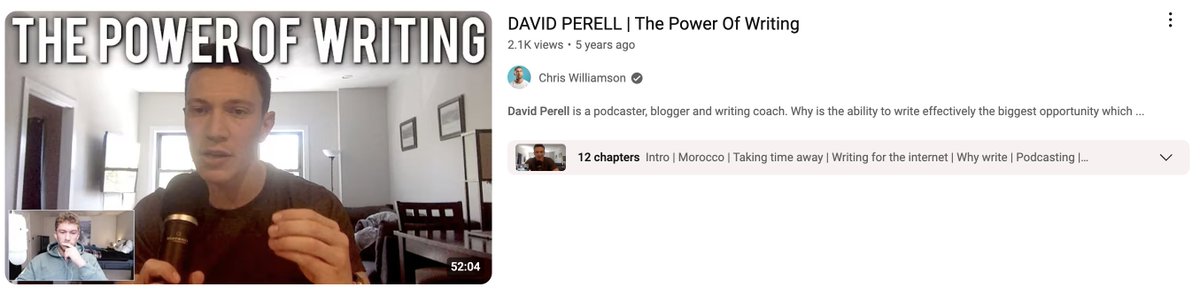
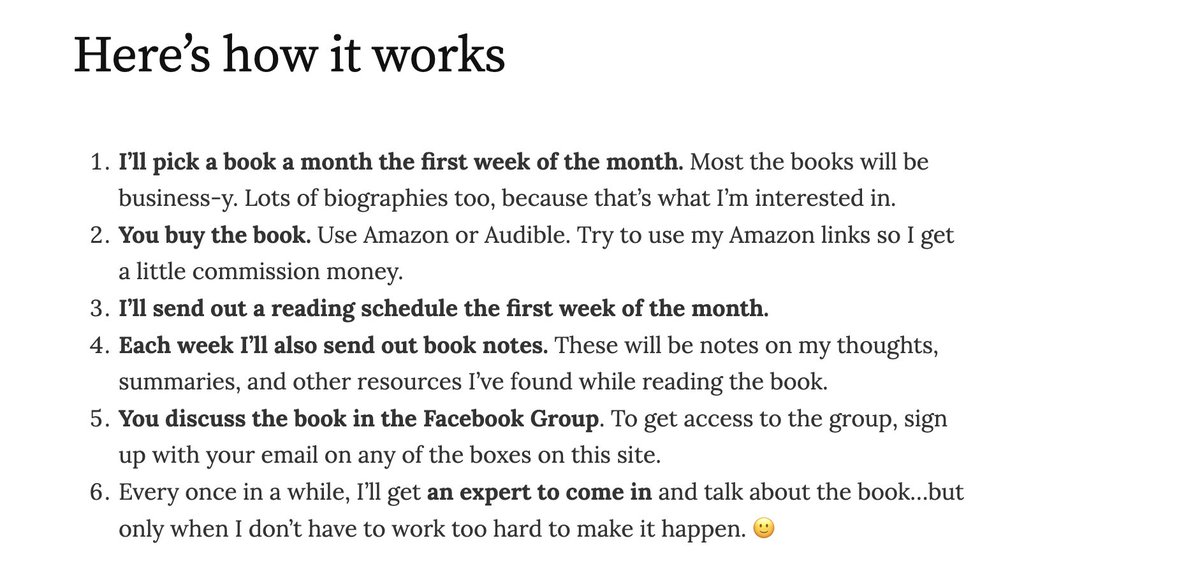
Starting a book club in Toronto.
Inspiration from @thesamparr Anti-MBA club.
Bi-weekly meet-ups at Ace Hotel.
Who's in?
60
1
145
35,598
Matt Ross retweeted

Apr 8
the single greatest thing you can do for your sanity is to take life seriously. we live in a profoundly irony-poisoned society and you cut off 1/100th of what life can offer you by being a goofball. the jester may be near the king but he does not sit at the hand of the father
71
180
3,116
323,130
14 Dec 2025
Really enjoyed this piece on the history and evolution of ivy fashion by @thesamparr. 'Dressing well' should be a high priority for men and women.
It goes along with @jordanbpeterson's concept of "make your bed". You dress well -> you get compliments -> you realize you can change your life by doing things -> you do more of those things (going to the gym, getting a job, working harder) -> your life changes
Most often when I lack consideration for what I wear or don't have my living/work environments in order, things around me seep into chaos.
Not to mention, fashion is a creative pursuit and is a way for anyone to express themselves at any point in time. Most people don't have a creative outlet and fashion could be one of them.
3
4
196
6 Nov 2025
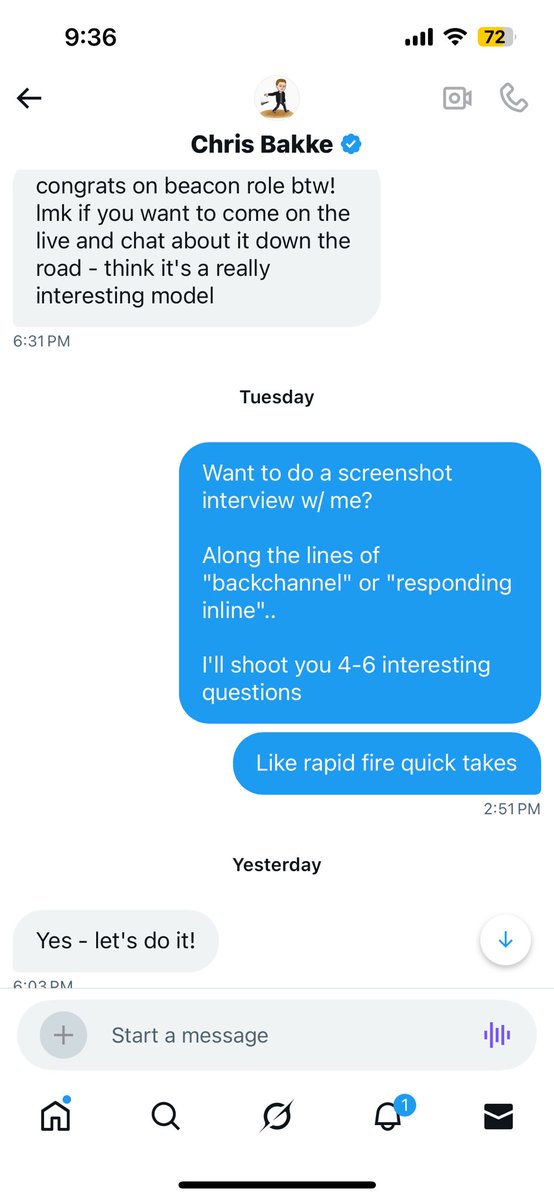
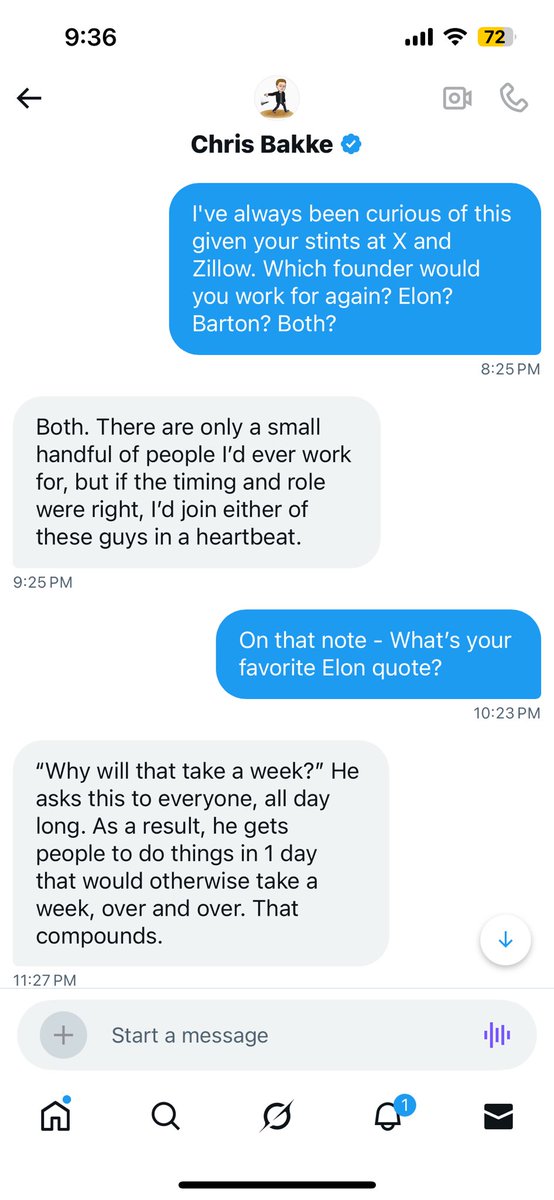
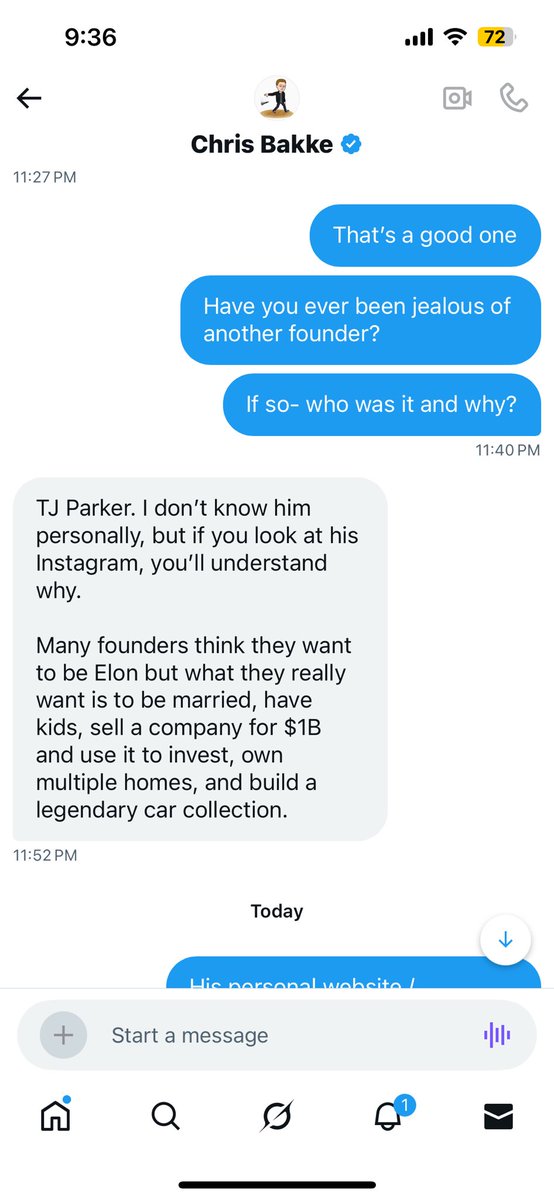
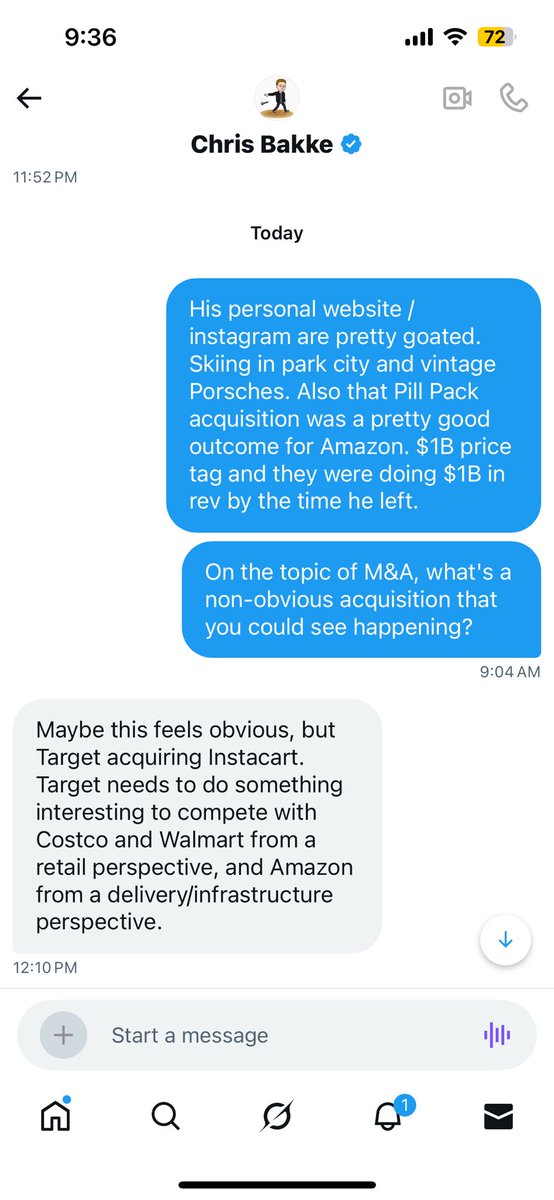
Inline interview w/ the “meandering” @ChrisJBakke
Who doesn’t love a good “see response inline below”
Other than when it’s from a lawyer or boss
1
3
396
4 Nov 2025
Congrats to the entire Beacon team on the Series B!
If you are interested in GM opportunities at Beacon Software, don't hesitate to reach out.
4 Nov 2025

Introducing Beacon: the AI holding company for Main Street.
Today, we're announcing a $250M Series B led by @generalcatalyst, @lightspeedvp & D1 Capital to give mission-critical software & services businesses a permanent home that preserves their legacy & scales their ambition.
businesswire.com/news/home/2…
2
281
30 Oct 2025
Hits mic*
“Anyone here?”
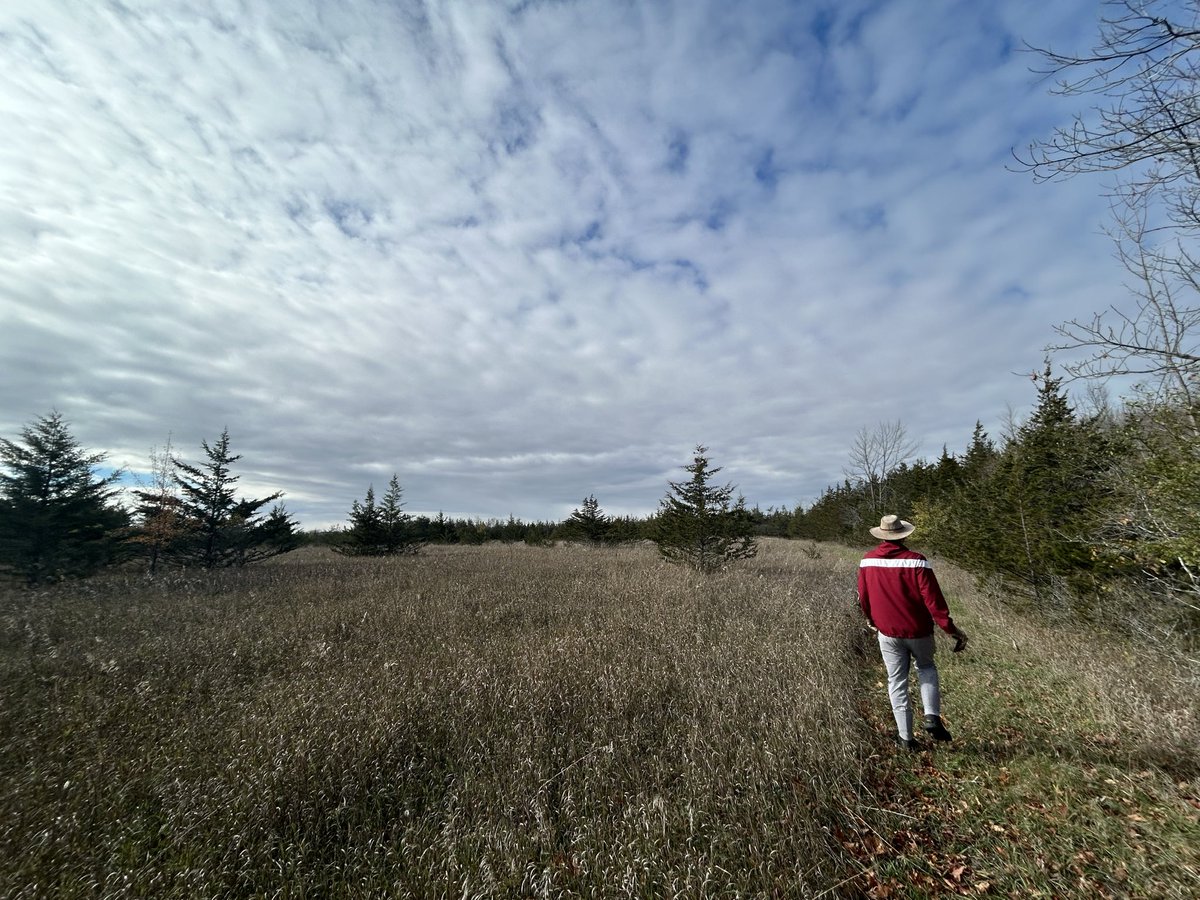
Spent the past weekend with some fascinating humans @preshdkumar / @kerooke
Saturday: visited the 100 acre August farm
Sunday: Chatting Tempo launch, volumeOne and all things in between w/ @preshdkumar
1
1
200
30 Oct 2025
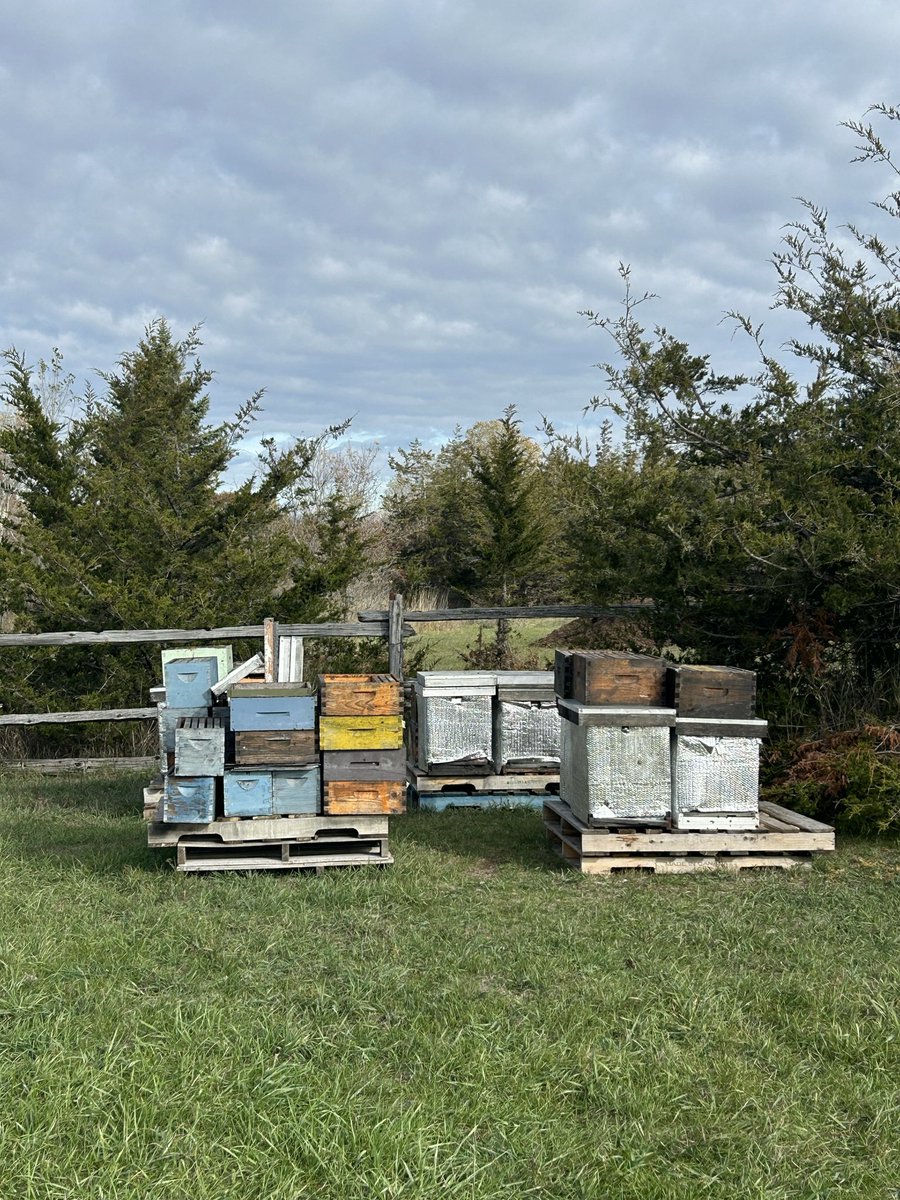
Love how maniacally obsessed Kevin is with building his vision.
“Focus on the things you think should exist in the world but most others don’t care about”


1
136
30 Oct 2025
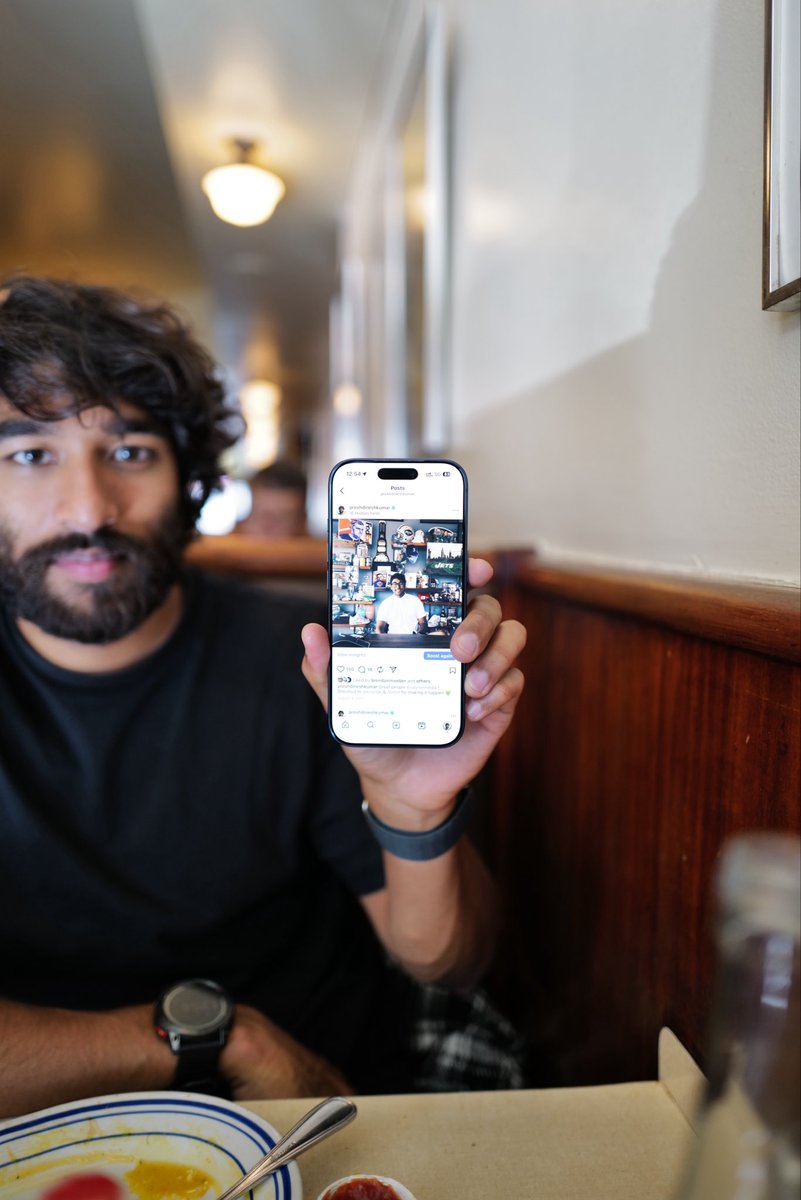
I’ve never heard an excuse come out of @preshdkumar. He just builds.
Taste for design is next to none

115
2 Jun 2025
My good friend @GinsburgRandy, just made the move from NYC to SD.
If you're in SD and looking to hang with a 10/10 human, shoot him a dm
2 Jun 2025

Some big personal news:
Moved to San Diego from NYC yesterday. Barely know anyone.
If you live in SD and you're building something cool or just looking for a new friend, shoot me a DM.
Any & all intros appreciated 🫡
(very grateful for all my NY friends, dw I'll be back often!)

3
9
907
Matt Ross retweeted

31 May 2025
The topic of organization design in an AI world seems to be a recurring theme not only with startup peers but also with CEOs of mature scaled businesses.
In a quest for feedback/pushback and also to try to be helpful I wanted to share how I am thinking about org design in the age of AI:
Design Principles:
a) Speed of decision making and execution: As AI reduces barriers to competitive entry and increases customer expectations, survival will require ‘big’ decisions to be made quickly, and changes to be shipped immediately. In a world where agents can coordinate tasks amongst themselves instantly and 24/7, the market will expect an instant problem → response loop. Organizations need to be designed to allow for that to happen.
b) Minimize layers: So much of traditional org design has been about balancing between spans-of-control, and the number of layers between executives and the lowest org levels. Spans become irrelevant in a world where executive bandwidth grows exponentially. Middle layers that exist to gate, summarize or cascade information will be irrelevant as every environmental input is converted into a piece of data, which is subsequently synthesized and acted on by PhD level AI agents.
Implications:
1) End of the ‘Coach’ Only Role: Every leader will have to be a player first and coach second. When the content and nature of work are changing so quickly, the only way to be an effective coach of others is to know the work yourself.
2) The Death of Functions: In an environment where any question, regardless of how complex, is answerable with a $10/month subscription humans will no longer be defined by technical specialization. When knowledge is commoditized, roles built solely on specialization become irrelevant.
3) Impermanence: I am convinced no one really knows what the next five years will look like as AI invades our lives. As a result, org structures will be built and destroyed quarter-over-quarter if not month-over-month.
4) CEO of Control Center: The modern CEO will be less of a strategist or cheerleader, and more of an F1 driver. They will spend their days interpreting real-time telemetry, responding instantly, and orchestrating both humans and machines. It is a shift from planning to navigating.
If you are building or retooling your organization in this environment:
A) Treat your structure as temporary
B) Redesign roles around outcomes not functions
C) Hire leaders who do work, not just manage or inspire
D) Decide if you want to be in the cockpit of your race car
I shared these thoughts on “Org Design In An AI World” in a recent blog post.
The link is shared below
3
2
15
1,339
7 May 2025
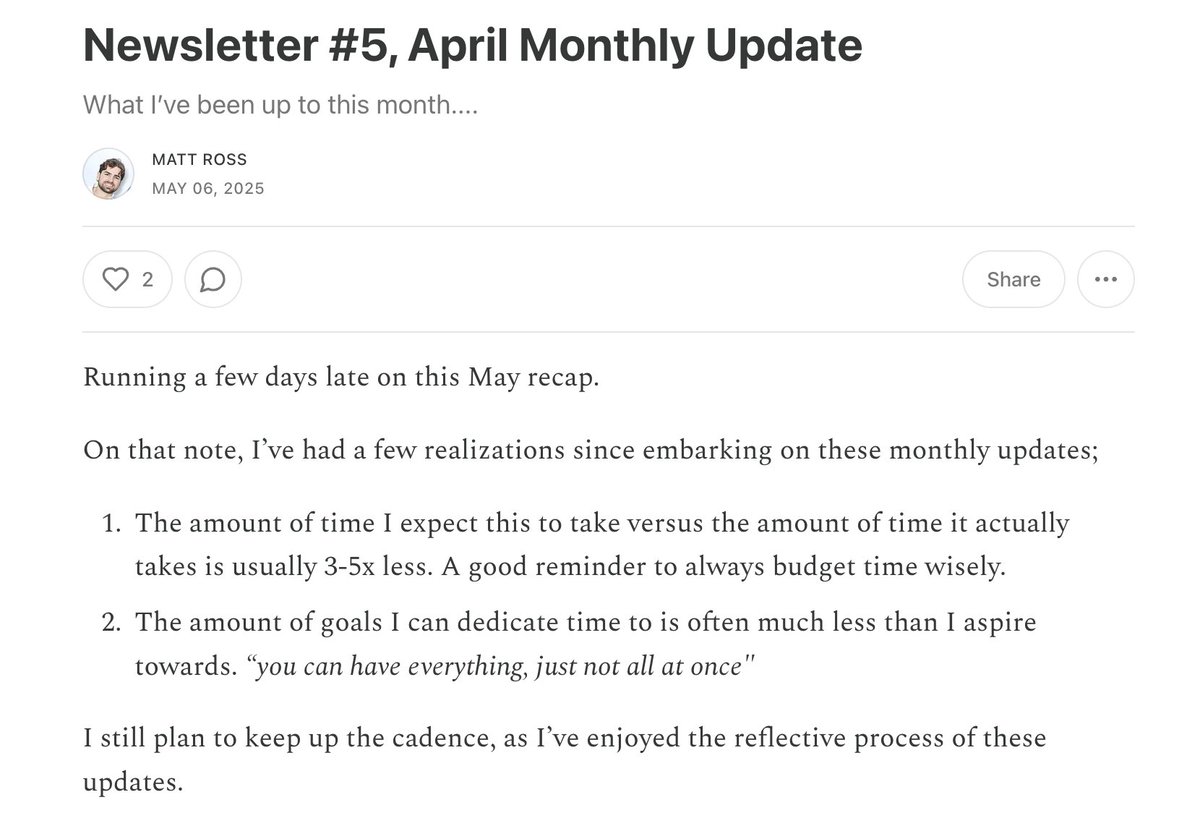
Writing monthly / quarterly / yearly updates to friends, family, old bosses, and coworkers (whoever you want) is an incredibly valuable activity
Some thoughts from 5 months of them:
2
7
338
7 May 2025
Why do it?
(1) It's a forcing function to reflect on the time that has past, and pushes you to live a more interesting life
(2) Helps stay in touch (top of mind) w/ people en-masse
(2) allows you to be a facilitator for people and ideas (connect dots, facilitate intros)
1
155
6 May 2025
Love this line by @GrahamDuncanNYC, on hiring:
"One of the greatest gifts we have for each other, for our children and spouses, for our teammates, is the positive feedback loop we can put someone into purely by believing in them, by seeing their genius and their dysfunction clearly and then helping them construct conditions for the former to flourish."
1
190
1 May 2025
I was listening to @tyger_cho’s podcast with @EricJorgenson (big fan of his work)
During the podcast, Erik brought up the notion of ‘lost years’
“The more peoples stories you study the more you see there is always a period of time unless you dig, it’s not obvious that the person was working on their craft, but if you know the story well anything that looks like an overnight success was not.”
I loved hearing his story of working at a startup for almost 10 years before writing The Almanack of Naval.
He talked about starting a project called Evergreen and how instrumental it was to honing his craft as a writer and meeting people that played an instrumental role in his books success.
It made me reflect on my own projects like Deal Bridge, 535 or my monthly newsletters
Each one has been a meaningful step in sharpening my craft
2
1
19
653
30 Apr 2025
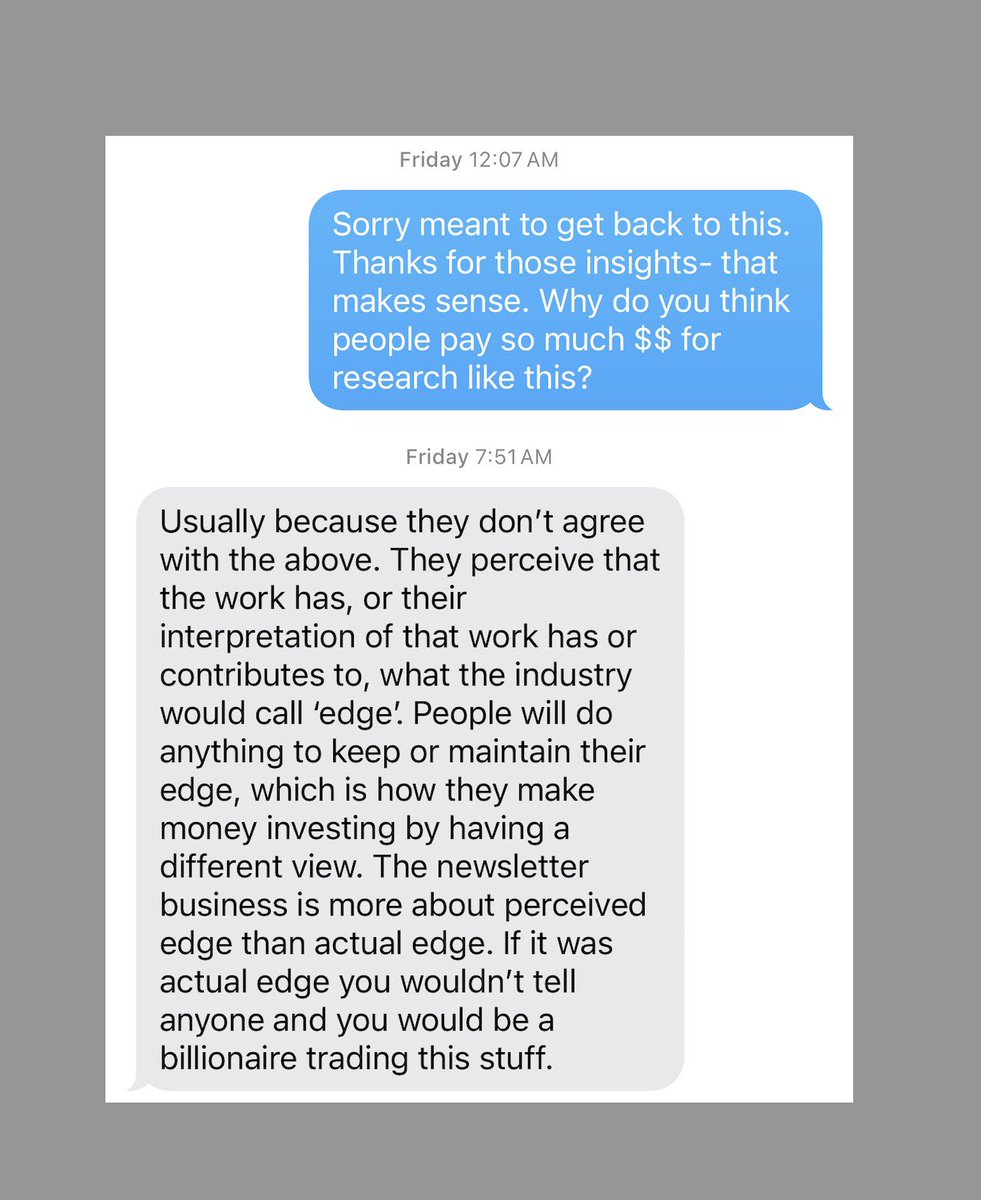
I’ve recently gotten access to a very ‘well-respected’ research publication.
After trying to pitch an investor friend on one of the investment theses, I received some valuable feedback from him. He’s an incredibly smart investor.
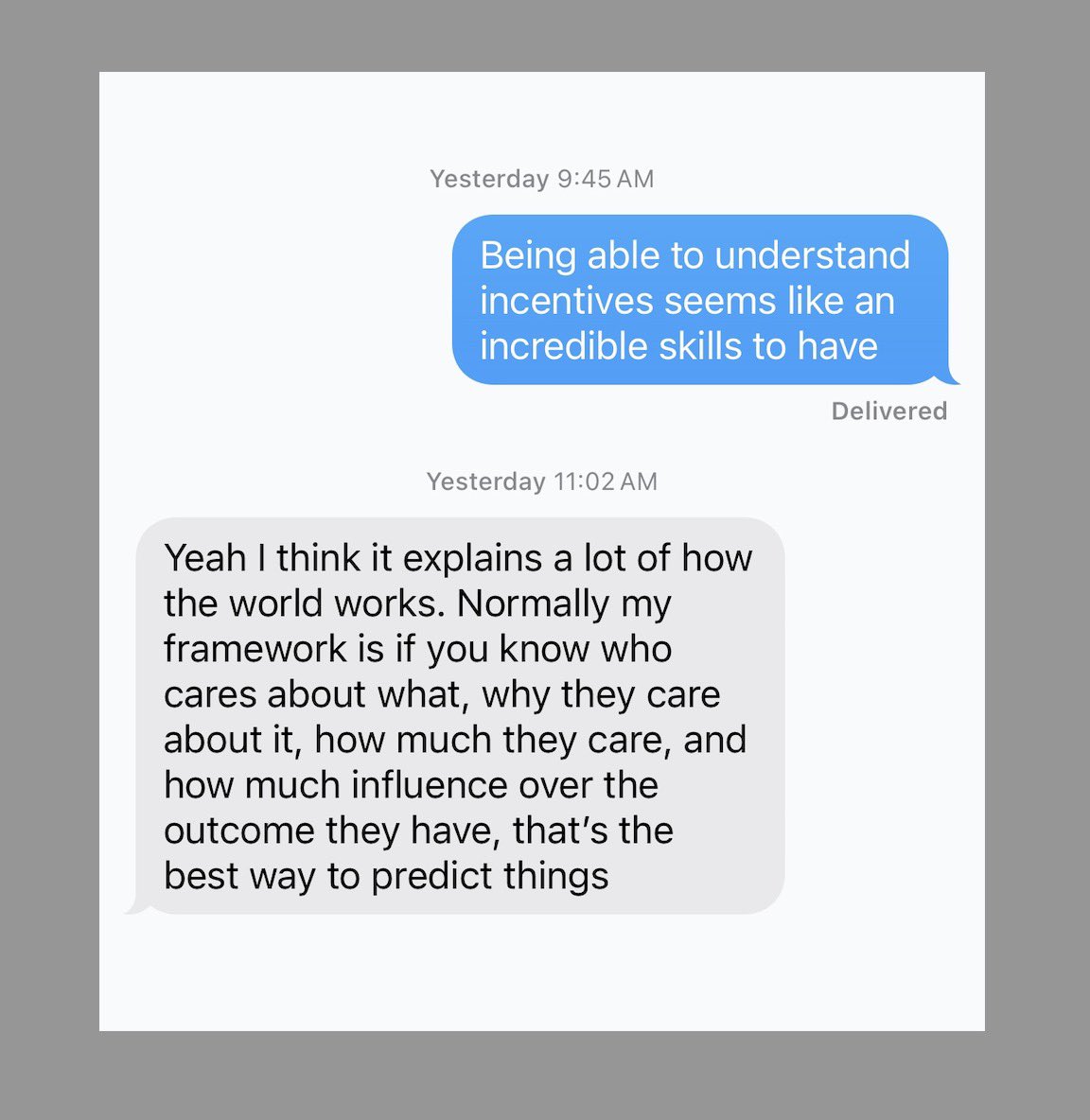
The below speaks to the value of skepticism and the importance of understanding incentives:
2
249
30 Apr 2025
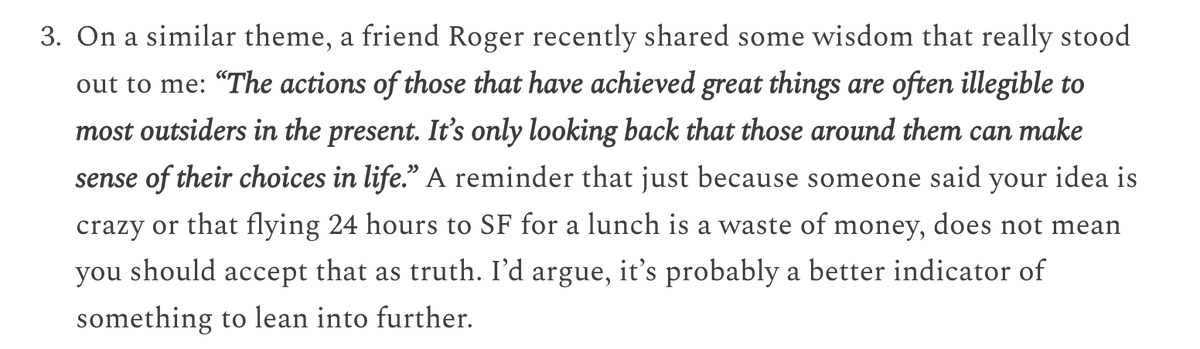
“The actions of those that have achieved great things are often illegible to most outsiders in the present. It’s only looking back that those around them can make sense of their choices in life"
1
169