
||Tech L♥️|| Software engineer||Research♥️||TTenis P||Music L🖤||Tourist 🚗||Barber🤍
Joined January 2022
- Tweets 12,106
- Following 778
- Followers 914
- Likes 13,019
49 Photos and videos











Joe retweeted

Nigerian tech job posting be like:
– Entry level role
– 3–5 years experience required
– BSc in CS (Masters preferred)
– Must know React, Node, Python, Django, AWS, and Docker
– Salary: competitive
"Competitive" = ₦80k.
The recruiter that wrote this has never written a single line of code.
Stop waiting for their validation.
Build the portfolio. Let your GitHub do the negotiating.
Repost if you've seen this exact job post before.
6
7
72
2,516



Joe retweeted

Mar 5
Communication and marketing skills are the two most important skills for a programmer nowadays.
11
5
22
386


Feb 26
I ❤️ Jos Afizere Ancestral Settlement.. etched in stone, it becomes a landmark 👍😊🤗
2
38
Joe retweeted

Jan 27
Who you marry is the biggest financial decision you will make.
41
128
916
27,028
Joe retweeted
Jan 24
Many broke young people today have zero skills, zero savings, but expensive phones. They take nice pics & make videos at shopping malls, in front of hotel mirrors or beaches, post online, & return to the trenches.
Thier plan: "I will win a bet or marry a rich person & blow."
56
155
693
31,094
Jan 12
PERN Stack
PostgreSQL • Express • React • Node
Built for scalable, data-heavy apps.
React handles UI, Node Express power APIs, PostgreSQL stores structured data.
Best for SaaS, fintech & enterprise apps 🚀
Jan 12

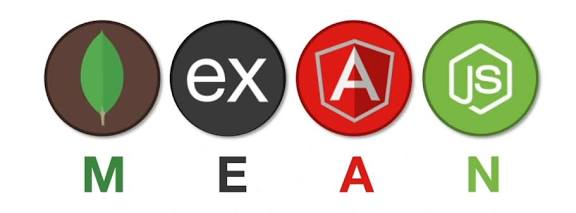
The MEAN Stack Detailed Explanation.
If you’ve ever wondered how scalable web apps are built from scratch, this thread is for you.
Let’s break down MEAN - the stack that powers enterprise-level SPAs, dashboards, and management systems.
1. What is the MEAN Stack?
MEAN stands for:
M - MongoDB (Database)
E - Express.js (Backend Framework)
A - Angular (Frontend Framework)
N - Node.js (Runtime Environment)
Like MERN, it’s JavaScript-based, so you use one language across the stack frontend to backend.
2. Why MEAN?
Uses a single language (JavaScript)
Strong structure which is perfect for large apps
Excellent performance for SPAs
✅ Backed by Google (Angular)
✅ Ideal for enterprise-scale projects
3. MongoDB (Database)
Just like in MERN, MongoDB stores your data in a NoSQL, document-based format (JSON-like).
It’s fast, flexible, and works seamlessly with JavaScript objects.
4. Express.js (Backend Framework)
Handles your app’s server-side logic.
It manages routes, APIs, and communication between Angular (frontend) and MongoDB (database).
Think of Express as the “bridge” connecting everything together.
5. Angular (Frontend Framework)
This is where MEAN shines.
Angular is a full-featured frontend framework and not just a library.
It offers built-in routing, form handling, and dependency injection.
Perfect for Single Page Applications (SPAs) with dynamic content and smooth navigation.
6. Node.js (Runtime Environment)
Node lets JavaScript run on the server.
It powers Express, handles requests, and ensures your backend is fast and non-blocking.
Basically, Node keeps your app alive and efficient.
7. How MEAN Works Together
Angular handles the frontend (UI & user interaction).
Express Node handle the backend (logic & routing).
MongoDB stores and retrieves the data.
They communicate using JSON so data flows smoothly through the entire stack.
8. Example App Flow
User logs in Angular sends requests and Express processes it to MongoDB and validates the user while Node returns a response to Angular to update the screen.
Everything happens in one language: JavaScript.
9. Real-World Projects to Try
Task management system
Admin dashboard
Online learning platform
Real-time analytics app
Company intranet or HR system
Build one and host with Render, Vercel, or AWS and welcome to enterprise development.
10. Learning Path
1️⃣ Learn HTML, CSS, and JavaScript
2️⃣ Learn Angular
3️⃣ Learn Node & Express
4️⃣ Learn MongoDB
5️⃣ Combine all to build a full project
That’s your complete MEAN roadmap.
11. Final Words
The MEAN Stack isn’t just for learning it’s built for large, production-grade apps.
If MERN is for startups,
MEAN is for stability and scale.
Start building.
Deploy your first app.
1
4
253
12 Dec 2025
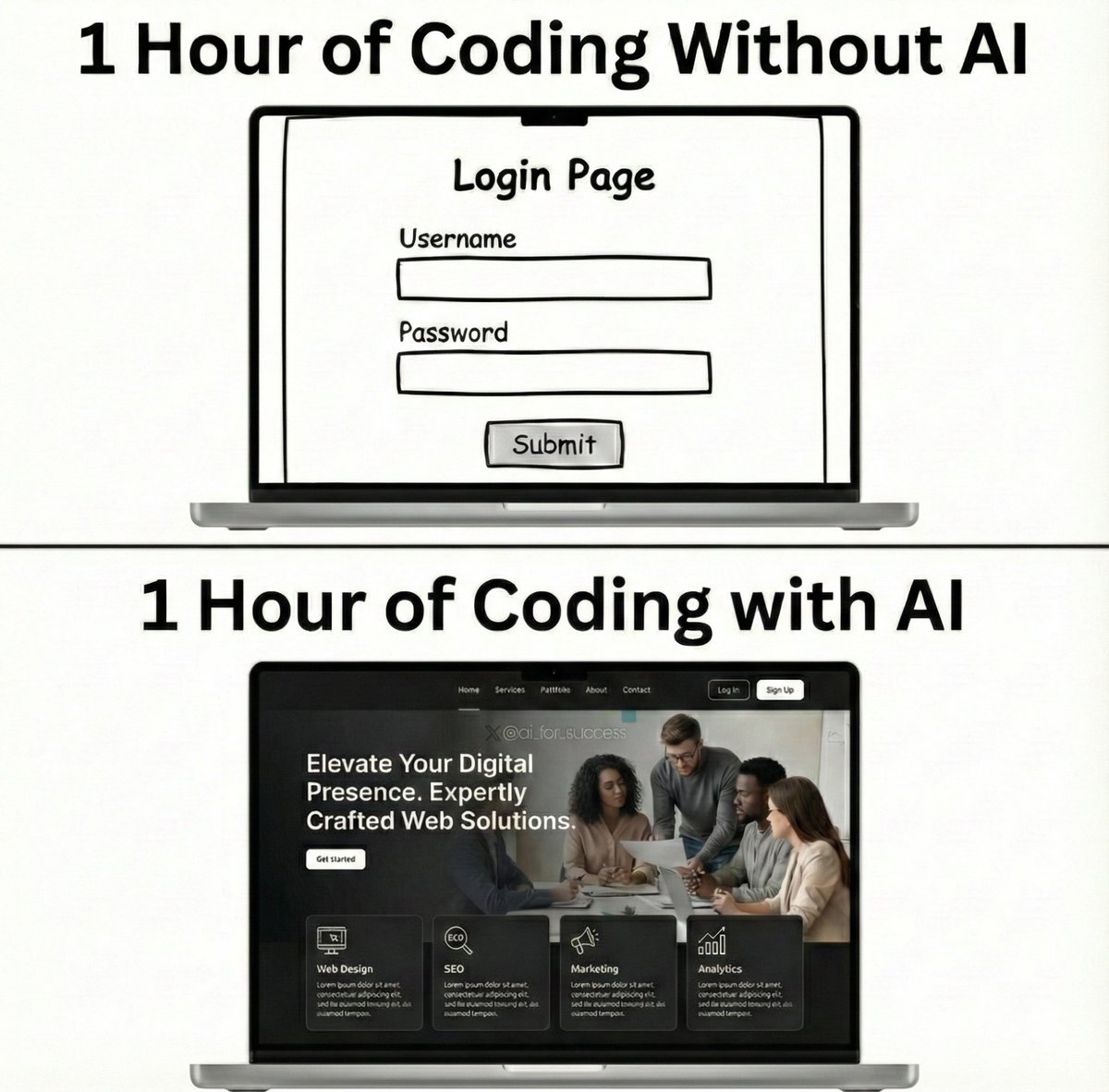
“Vibecoding:
AI writes the boilerplate,
You write the direction,
Together you ship faster.
That’s the new workflow.”
1
1
1
83
Joe retweeted

29 Oct 2025
JavaScript Project Ideas For Beginners:
➡️ Color Flipper
➡️ Modal Window
➡️ Random Quote Generator
➡️ Color Palette Generator
➡️ Image Slider
➡️ New Year Counter
➡️ Calculator
➡️ Todo List
➡️ Guess My Number
➡️ Tictactoe
➡️ BMI Calculator
➡️ Personal Portfolio Website
Anything else you wanna add?
27
24
265
13,782
25 Oct 2025
Jonas is definitely one of the best but it’s not about who’s better, it’s about who helps you understand. For some it’s Jonas, others learn faster with Traversy Media or Web Dev Simplified

is there anyone that teaches JavaScript and React better than Jonas schmedtmann?

1
3
107
25 Oct 2025
Everyone’s always talking about MERN stack… but why does PERN stack barely get any attention? Isn’t PostgreSQL just as powerful (if not better) than MongoDB? 🤷🏽♂️
3
72
Joe retweeted

25 Oct 2025
LINKEDIN IS THE BEST APP TO GET A JOB
LINKEDIN IS THE BEST APP TO GET A JOB
LINKEDIN IS THE BEST APP TO GET A JOB
LINKEDIN IS THE BEST APP TO GET A JOB
LINKEDIN IS THE BEST APP TO GET A JOB
LINKEDIN IS THE BEST APP TO GET A JOB
LINKEDIN IS THE BEST APP TO GET A JOB
270
24
881
64,284
3 Sep 2025
20DayswithWDN
🌍 Joining the #20DaysTechWorkshop with WDN because I believe consistent learning and collaboration are the keys to building a solid tech career.
Looking forward to this journey! 💡
#20DayswithWDN
30 Aug 2025

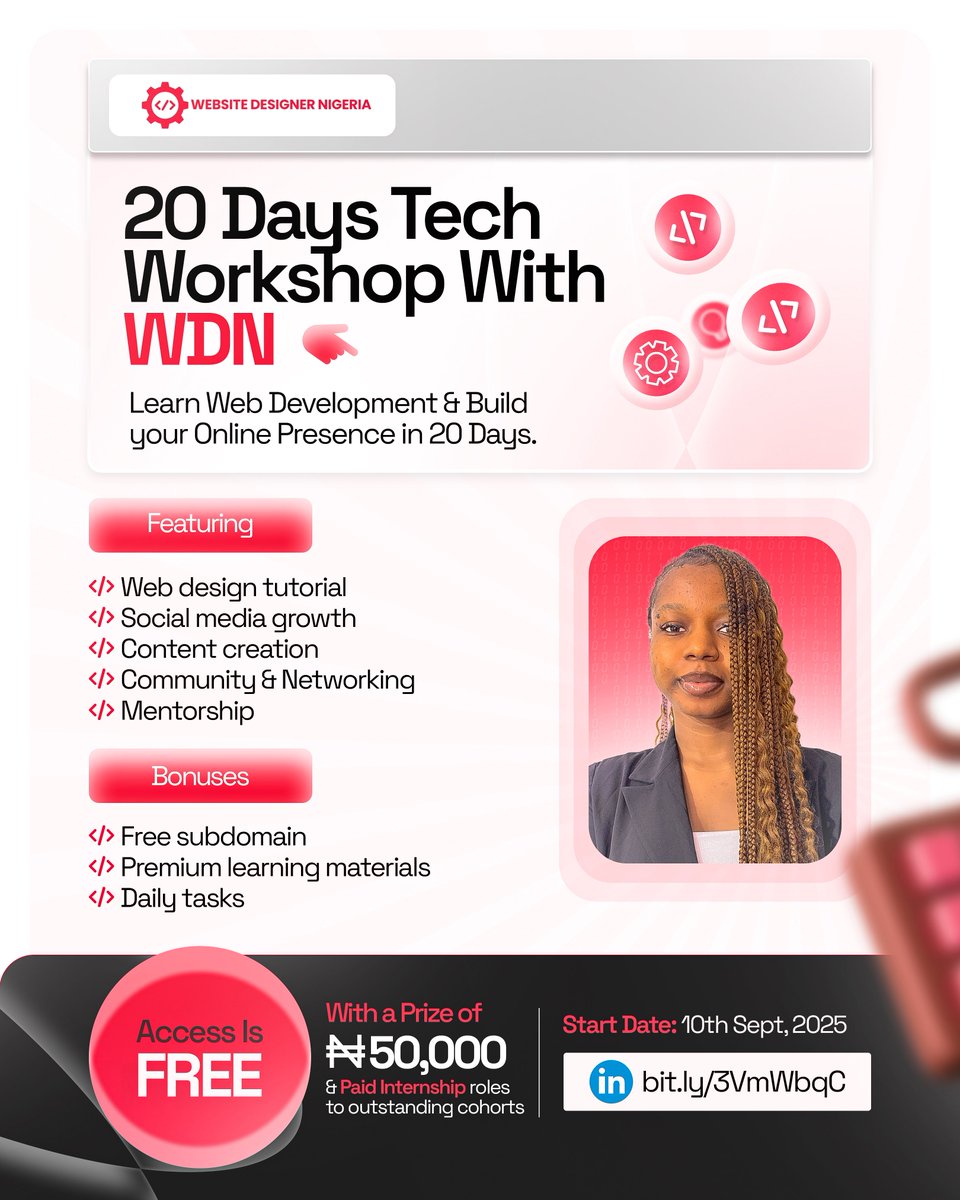
We’re kicking off the #20DaysTechWorkshop with WDN
How to Join:
1️⃣ Join our LinkedIn community
2️⃣ Quote this with a post about why you’re joining
3️⃣ Tag us use the hashtag #20DayswithWDN
🏆💰₦50,000 & a paid internship role for the best cohorts at the end of the workshop
1
1
3
466