
Senior Fellow @BrookingsFP. contributing writer @TheAtlantic, Formerly Biden NSC, Author of All Measures Short of War, co-author of Aftershocks. Views my own.
Joined June 2008
- Tweets 23,203
- Following 1,838
- Followers 35,004
- Likes 12,708
607 Photos and videos



Pinned Tweet

Apr 20
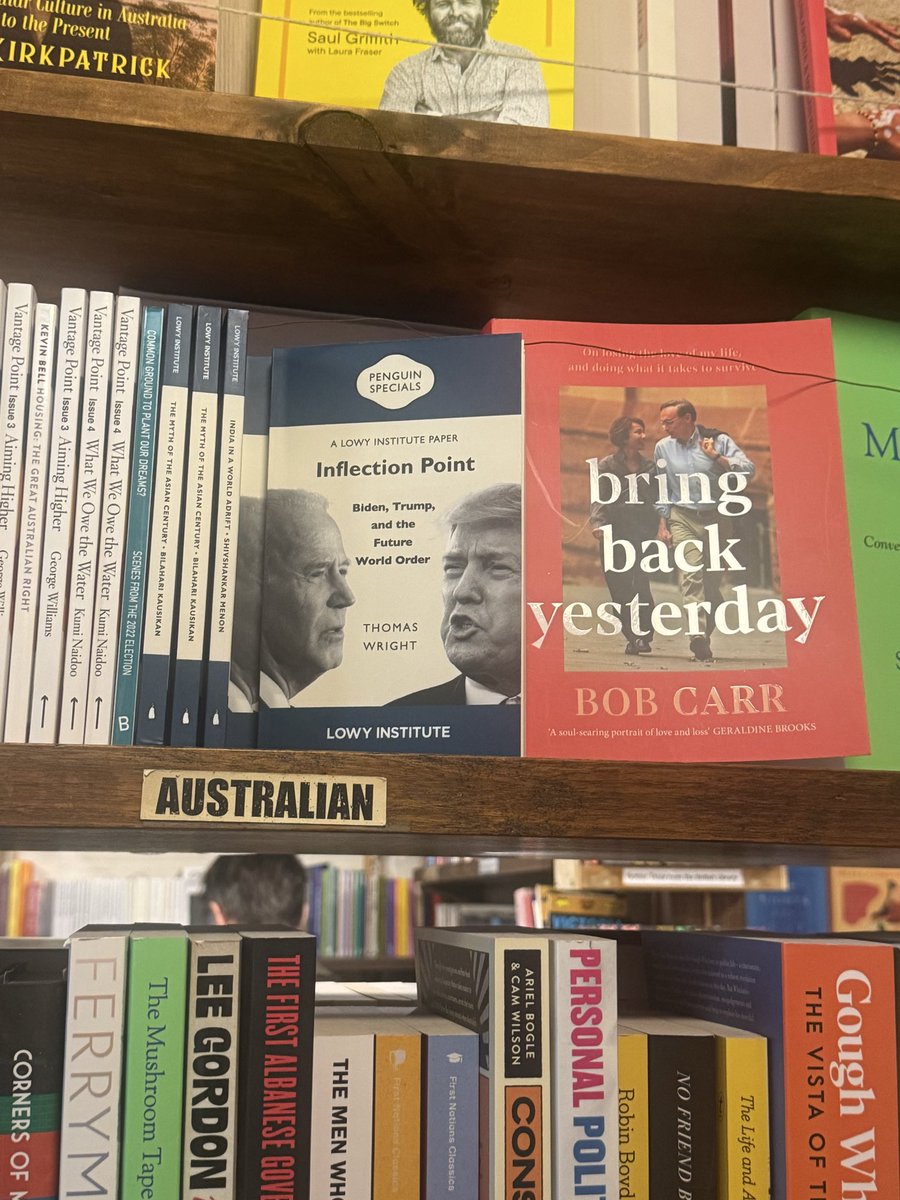
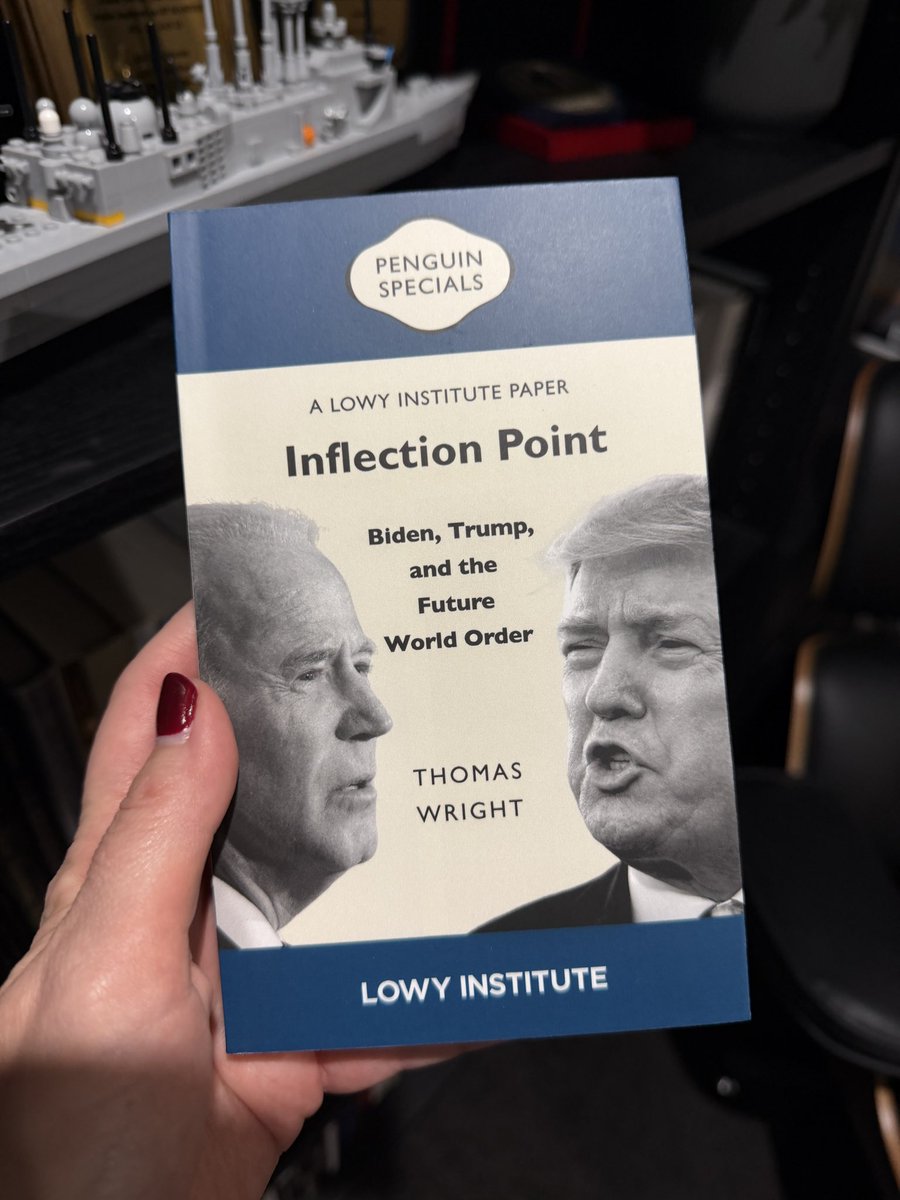
Some news. I have a short Penguin special (just 25,000 words) coming out as part of a @LowyInstitute paper series on April 28. It's called Inflection Point: Biden, Trump, and the Future World Order.
It's partly a memoir with reflections on my time in the Biden administration and partly an analysis of Trump's second term.
The key argument is that there are now two America's: 1) an internationalism that focuses on a post-neoliberal global economy, strategic competition and tech, and 2) an America First movement that builds on Trump's second term.
These two Americas will compete for the foreseeable future but never destroy the other. The world will need to hedge against this volatile fluctuation.
Pre-order here. Just $6.99 for the Kindle version and $10 for the paperback.
penguin.com.au/books/inflect…
4
18
59
26,086
Jun 13
Shocking. Trump admin is now using export controls against allies and U.S. green card holders more than against China.
Jun 13

The US government, citing national security authorities, has issued an export control directive to suspend all access to Fable 5 and Mythos 5 by any foreign national, whether inside or outside the United States, including foreign national Anthropic employees.
The net effect of this order is that we must abruptly disable Fable 5 and Mythos 5 for all our customers to ensure compliance.
Access to all other Claude models is not affected.
We apologize for this disruption to our customers. We believe this is a misunderstanding and are working to restore access as soon as possible.
Read our full statement: anthropic.com/news/fable-myt…
1
7
2,081
Jun 12
Publish the exact wording of the deal and clear things up.
Surely that’s something everyone can agree on.

I'm seeing a lot of fake information about a potential deal to reopen the Strait and end Iran's nuclear weapons program. First, the Iranians are not receiving any cash, and no funds are being released for simply signing a deal or attending a meeting. The deal is structured to ensure that the US and its allies concerns are prioritized, and that if the Islamic Republic of Iran meets its obligations, then economic benefits will flow to them and to the entire region. This deal has the potential to remake the region and lead to lasting peace.
I've noticed a couple of bizarre things in the reporting over the last few hours. First, people who (rightly) said Donald Trump was a historic president a month ago now criticizing a deal based on unconfirmed media reports. Second, people who say you can't trust a word said by the IRGC who apparently believe anonymously sourced social media posts.
The president is going to get us a good outcome, one way or the other.
2
3
11
1,845
Jun 12
Trump should release the exact wording of the deal so people can judge for themselves, especially if it’s supposed be signed this weekend. Loosely worded background briefings are not enough.
Jun 12

Trump on Truth Social: "The terms that Iran leaked out...have NOTHING to do with the terms that were agreed to, in writing. What they said, including their weak and pathetic statement on having a deal, bears no relation to the truth. Very dishonorable people to deal with. With them, there is no such thing as dealing in good faith. AMAZING! Also, their totally rebuffed Drone attack last night against Indian Ships leaving the Hormuz Strait is TOTALLY UNACCEPTABLE. They better get their act together, and FAST!"
2
3
981
Jun 12
Will the signing venue be in Versailles?
Jun 12

Iran’s Mehr news agency publishes the purported text of the draft agreement with Trump. It will keep the Strait of Hormuz under Iranian control, will promise Iran $300 billion in reconstruction money in addition to an immediate cash transfer of $24 billion, a suspension of sanctions and the withdrawal of U.S. forces from the Middle East. Also, a commitment not to bother Iran again about its missiles and proxies, and restraining Israel in Lebanon.
The U.S. gets in exchange a pinky promise to respect the NPT.
Let’s see what happens in coming days.
Link: mehrnews.com/news/6857718
Full text:
A permanent and immediate cessation of war on all fronts, including Lebanon.
A U.S. commitment not to interfere in Iran’s internal affairs and to respect the sovereignty of the Islamic Republic of Iran.
Full lifting of the naval blockade within 30 days.
A U.S. commitment to withdraw its forces from areas surrounding Iran.
Reopening of the Strait of Hormuz within 30 days under arrangements determined by Iran.
Suspension of sanctions on the sale of oil, petrochemical products, and related derivatives, along with full Iranian access to the resulting financial revenues.
The United States and its allies would be required to present reconstruction plans for Iran worth at least $300 billion.
A 60-day negotiation period aimed at reaching a final agreement covering nuclear issues and the complete removal of U.S. primary and secondary sanctions, as well as the repeal of relevant resolutions of the UN Security Council and the IAEA Board of Governors.
Reaffirmation by Iran of its commitment under the Nuclear Non-Proliferation Treaty (NPT) not to produce nuclear weapons.
During the negotiation period, the United States would commit not to deploy additional forces to the region and not to impose any new sanctions.
The release of $24 billion in frozen Iranian assets during the 60-day final negotiation period. Half of this amount must be made available to Iran before negotiations begin.
Establishment of a monitoring mechanism to oversee implementation of the agreement.
The final agreement would be approved through a UN Security Council resolution.
Final negotiations would not begin before the release of half of Iran’s frozen assets, the suspension of oil sanctions, and the lifting of the naval blockade. The final agreement would focus exclusively on the future of enriched nuclear material and uranium enrichment, sanctions relief, and a program for rebuilding Iran’s economy. Discussion of Iran’s missile program and its support for resistance groups would be definitively excluded from the agenda.
As stated by the Foreign Ministry spokesperson, this text still requires review and final approval by the relevant authorities in Iran.
1
780
Jun 8
So what’s the base case here? War resumes without the US but Iran strikes any country that facilitates Israeli operations w/ overflight, etc?
Jun 8
🚨🚨🚨IDF spokesman: The Air Force attacked military targets in Western and Central Iran a short time ago
1
1
2
2,142
Jun 7
The one year mark of the Iran war is on Saturday, June 13. June 21 if you’re just looking at direct U.S. involvement.
Jun 7

Trump: "I didn't promise anything. I don't like these endless wars. This is not an endless war. We've been doing this for three months."
1
1
1,084
Tom Wright retweeted
Jun 4
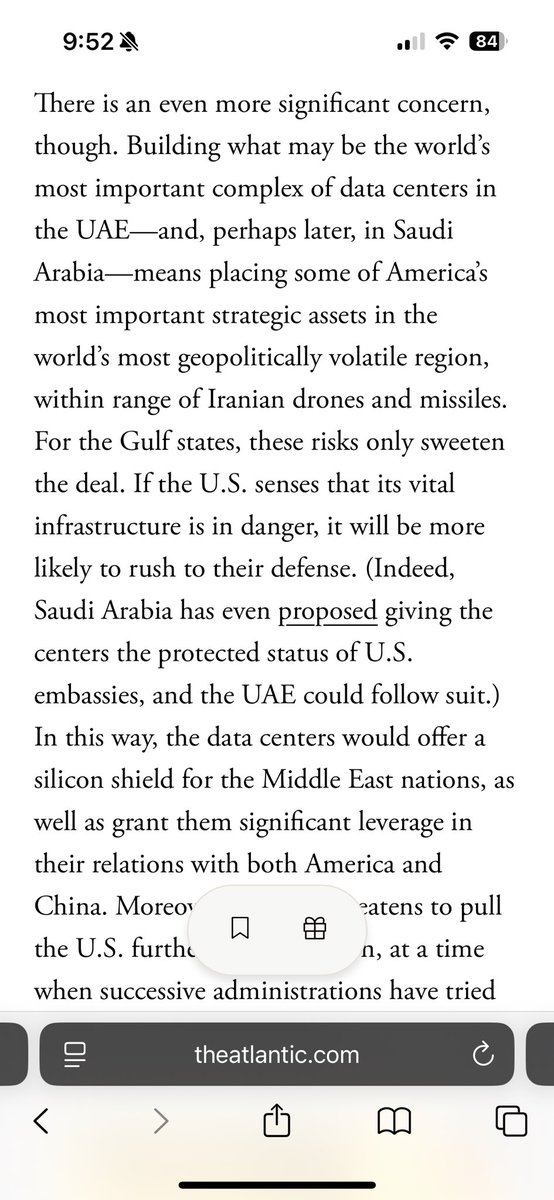
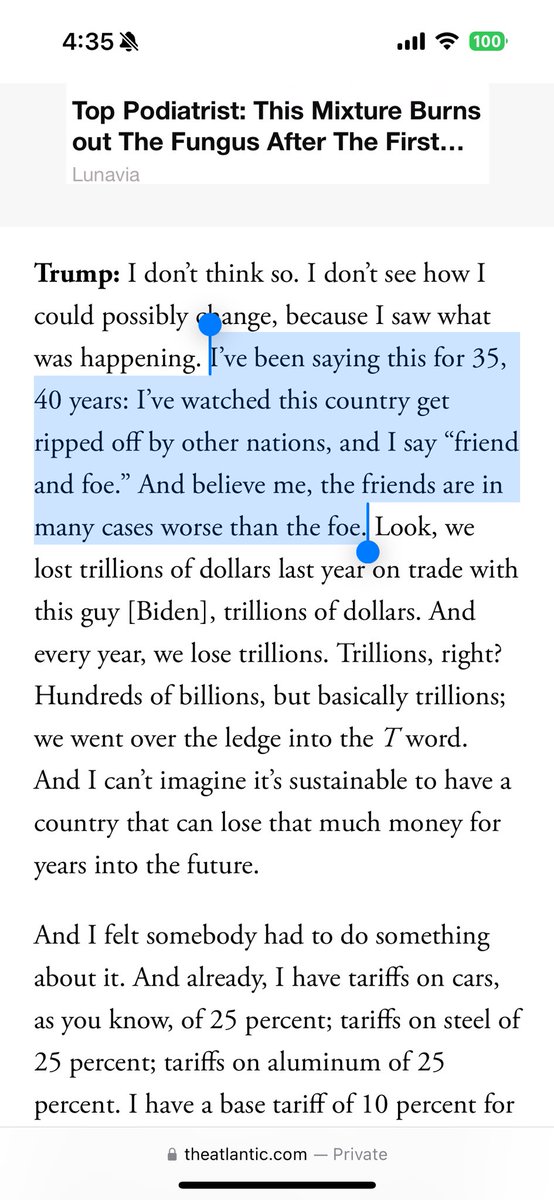
My latest on Iran for @TheAtlantic.
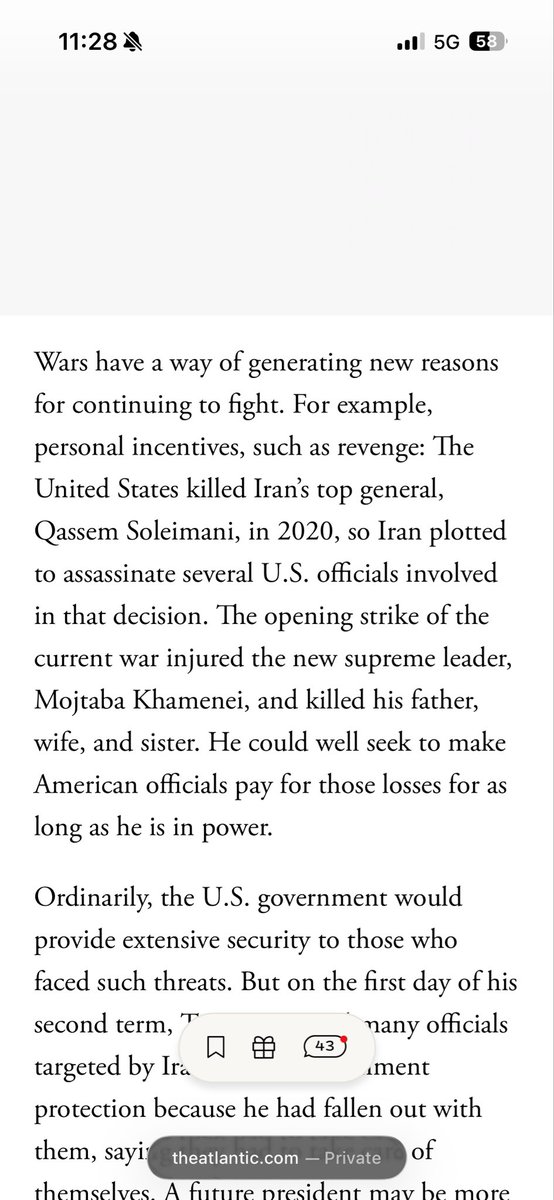
The effort to permanently solve the Iran problem has made it less solvable. When Trump took office, Iran was at its weakest point since the 1980s. Now even though its military assets have been degraded, it is emboldened with new leverage.
Trump may want to move on but Israel won't accept the Iranian regime's re-militarization and Tehran will escalate in response to any strikes. So we are headed toward years of confrontation, crisis, and conflict.
Gift link: theatlantic.com/internationa…
3
5
9
1,691
Jun 4
My latest
Jun 4

Donald Trump seems content to defer the problems he faces with the Iran-war negotiations instead of squaring up to them—but what happens next is not entirely up to him, @thomaswright08 argues: theatlantic.com/internationa…
2
750
May 26
I often think about this— how what would have been significant events a decade ago hardly register now, not because they’re not important but because so many bigger and worse things are happening.
May 26

There was once a time when such an event would drive the news cycle
1
11
6,713
May 24
Maybe but what will Netanyahu say when Trump asks him for a nomination for the Nobel peace prize for this deal?

It’s hard to overstate how deeply Netanyahu views this moment as a possible personal and political defeat. A U.S.–Iran agreement under Trump would be a major blow to him mainly diplomatically, but above all politically.
For years, Netanyahu built his political identity around being “Mr. Iran,” the leader who insisted that only pressure, deterrence, and force could stop the Iranian regime. And now, after multiple rounds of operational successes but one resounding strategic failure, and after finally succeeding in drawing the United States into direct confrontation with Iran, he may be forced to accept an agreement that not only legitimizes the very regime he sought to weaken, but also exposes the collapse of his long-standing Iran doctrine.
His approach was based on the belief that more pressure, more military power, and tighter coordination between Israel and the United States would eventually either force Iran into submission or destabilize the regime itself. Instead, the result has been a more radicalized, more resilient, and more dangerous Iran, one that even Washington now hesitates to confront militarily again.
If this confrontation ends with an agreement, an even bigger strategic question emerges: what future American president would be willing to commit U.S. forces to another major Middle Eastern conflict after seeing the political and military costs of this one?
Netanyahu had what may have been his greatest opportunity to prove his central strategic theory: that a close Israeli-American military partnership could fundamentally reshape Iran and perhaps even threaten the regime’s survival. By every indication, that assumption failed.
Against this backdrop, reports of a tense conversation between Trump and Netanyahu become much easier to understand. They also help explain the extraordinary level of pressure now coming from Jerusalem, and the extent to which Netanyahu is trying to persuade, or pressure, the administration not to move toward a deal with Tehran.
The bottom line is that a U.S.–Iran agreement would not only signal the failure of the military confrontation Netanyahu pushed for, but also the collapse of the broader strategic doctrine he has championed since entering Israeli politics, all on the eve of what could be the most critical election of his career.
In that sense, the next Israel’s leadership need to learn the fundamental lessons of this war. More than ever, this conflict demonstrates the urgent need for Israel to develop a different long-term strategy for dealing with Iran and especially to understand the following:
Israel’s confrontation with Iran will not bring normalization with the Arab world, nor will it resolve Israel’s most fundamental security challenges, first and foremost, the Palestinian issue.
The belief that regime change in Iran would transform Israel’s position in the Middle East was always detached from reality. In fact, the consistent opposition of Gulf leaders and major Arab states to further escalation against Iran has demonstrated this repeatedly throughout the conflict.
Israel will not be able to use the “Iran card” as a substitute for addressing the core political issues shaping the region. Anyone arguing that military confrontation with Iran alone can unlock normalization is mistaken and, more importantly, misleading others about the strategic reality of the Middle East.
Because despite the undeniable tactical and operational achievements of the campaign, this failure may ultimately leave Israel facing a more dangerous strategic reality, one that has not fundamentally improved its position in the Middle East.
#IranWar
3
2,039
May 24
Basically an agreement to open the strait with partial sanctions relief in exchange for no transit fees. All other issues unresolved. Most observers will see this as a win for Iran.
May 24

🚨 Breaking: Details of the agreed MOU, based on my sources:
- Formal end of the war on all fronts (Lebanon included)
- The Strait of Hormuz will fully reopen
- Iran will not charge transit fees
- The US will not pay any money to Iran
- Partial sanctions relief on Iranian oil
- 60 days to negotiate nuclear issues and sanctions relief (the two are tied together: more sanctions relief for more nuclear concessions)
- Iran declares it will not develop nuclear weapons
- Both sides acknowledge understanding the other's demands on nuclear issues
Trump's rationale is that if an agreement on nuclear issues is not reached, all options will be on the table, and Iran will be significantly weaker economically and militarily than before the war.
6
20
6,660
Tom Wright retweeted

May 23
A lot of AI/tech execs have been vocal about the importance of competing with China recently.
Seeing who speaks out about this new green card policy will tell us a lot about who *actually* cares about US competitiveness, and who just uses China as a pretext to oppose regulation
May 22

The new White House policy requiring green card applicants to apply from outside the US is a capricious attack on legal immigration. It will hurt families, leave us with fewer doctors, teachers and scientists, and hurt American competitiveness in AI.
22
77
649
110,912
Tom Wright retweeted

May 21
Our world is fundamentally changing. What will the new order look like?
Looking forward to reading @thomaswright08’s new book for the @LowyInstitute on route to #IODS26
Thomas recently spoke at the @LowyInstitute & you can watch him discuss this & more with @mfullilove here 🔗youtube.com/live/F9zGoQutYTk…
1
7
12
1,308
May 22
More evidence that DoD is running its own foreign policy, often directly contradicting what Trump wants. This is not the first time it has happened.
May 22
NEW: Trump asked Hegseth in a recent phone call why the troop deployment to Poland was canceled. Trump told Hegseth that the U.S. shouldn’t treat Poland poorly, given it is an American ally with close ties to the White House. wsj.com/politics/national-se…
6
30
120
25,103
Tom Wright retweeted

May 20
Highly recommend this essay. Entire world has stake in which of these two competing visions for U.S. foreign policy will prevail.
Apr 30

My new Penguin e-book, Inflection Point: Biden, Trump, and the Future World Order, is now available to buy (for $6). This is a part of @LowyInstitute's wonderful Penguin paper series. Many thanks to @mfullilove and @SamRoggeveen.
The overall argument of the book is that there are now two Americas—an internationalist America that will likely focus on strategic competition and deepening alliances and an America First movement that will be much more skeptical of allies, favorable to punitive tariffs and predatory.
Unlike strategies of containment in the Cold War, these are largely antithetical.
Each will compete with, but will never fully vanquish, the other—at least not for some time. If you look at all US presidential elections since 1944, Republicans are currently in their 42nd year and Dems have had 40. So it splits 50:50.
The challenge for the world is to hedge against this dramatic fluctuation.
Two of the chapters are on my time in the Biden administration. Two are on Trump’s second term. And one looks at where we go from here.
The two Biden chapters offer my reflections on our Ukraine and Indo-Pacific policies in particular. Some specifics that you all might find interesting:
My account of the risk of Russian nuclear use in October 2022.
How we actually thought about escalation and military assistance to Ukraine.
What we thought of the Global South’s peace efforts (some were legitimate and sincere, some were not).
How we thought about the diplomatic endgame in Ukraine.
My account of the balloon incident of 2023 and the trajectory of our China policy.
How AUKUS came to be—why it might not have happened if the president knew how France would react but why it was still the right thing to do.
The lessons Democrats are learning from Biden’s foreign policy and where it is likely to go from here. And what America First may look like after Trump.
I hope you all get a chance to read Inflection Point. I will be in Australia next week for a series of events to launch it.
amazon.com/Inflection-Point-…
1
5
21
13,033
May 19
Important observation on the likely US-China AI dialogue.
May 19

The Chinese government is asserting that the US and China agreed to a dialogue on AI. The Chinese MFA statement about its preferred content of the dialogue are revealing: it stated that the US and China "should work together to promote the development and governance of AI."
China made no mention of "safety" or "security," and instead emphasized "development." This shows that China's top priority in any AI dialogue with the United States will not be AI safety and risk reduction, which would likely place some constraints on China's AI development for the sake of safety, but rather removing U.S. export controls that are limiting China's AI capabilities.
China's primary interest isn't AI safety, it's catching up to the US in AI. China views an AI dialogue as a means to close the gap with the US. No amount of dialogue will change this. If the US is going to engage in an AI dialogue with China, it must ensure it is narrowly focused on US interests (safety) and the Chinese understand it will not touch on the areas that are critical to maintaining US leadership over China (export controls).
1
1,224
May 19
Those who argued that there was scope for cooperation with China on international law if only the US pulled back on its competitive actions must be happy.
May 19

The Financial Times reports that during his talks with Xi Jinping Donald Trump floated the idea that the US, China and Russia should co-operate against the International Criminal Court.
3
5
1,821
May 19
My latest for @TheAtlantic
May 19

“Trump abandoned the strategy of managed competition and replace it with a leader-to-leader bond. His posture is one that strengthens America’s top rival, leaves its vulnerabilities unaddressed, and makes a U.S.-China crisis more likely rather than less” theatlantic.com/internationa…
11
3,406