Physicist & Engineer, Satellite Systems and Materials for Space Tech, Radio Amateur, Electronics
Joined May 2022
- Tweets 19,129
- Following 956
- Followers 593
- Likes 96,093
385 Photos and videos





Quantenmechaniker 🇩🇪🇺🇦🇬🇱🇪🇺🇨🇦🏴☠️ retweeted

Jun 14
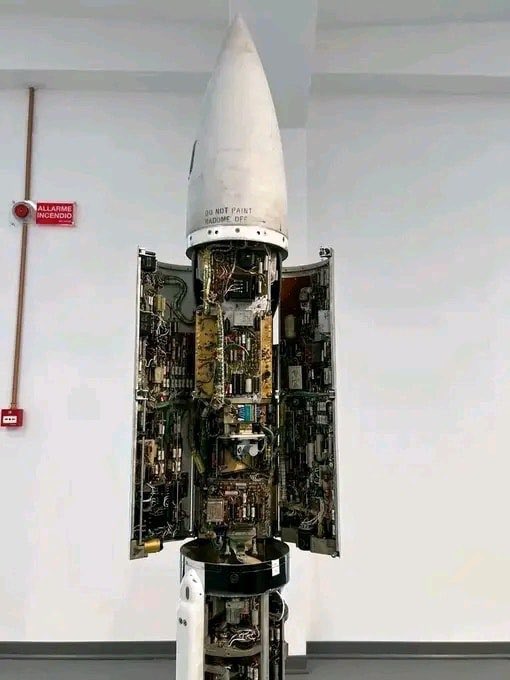
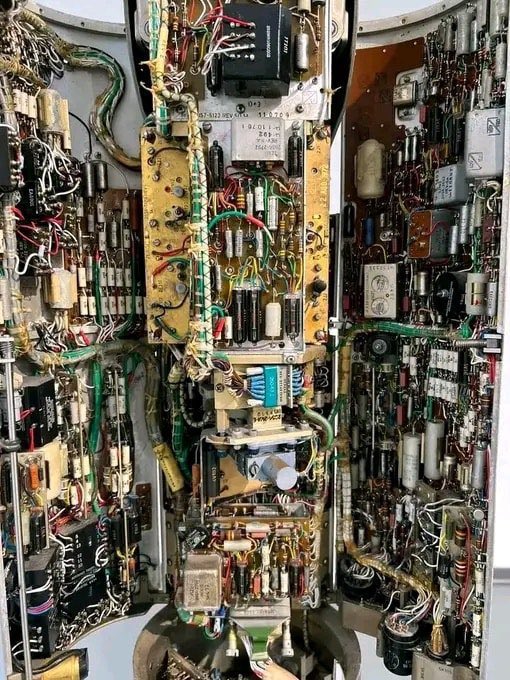
Guided missile of early 1960. Note how much electronics you need when there is no Microprocessor available
8
30
220
9,092

Wow 😮 💯👍

1
11
Quantenmechaniker 🇩🇪🇺🇦🇬🇱🇪🇺🇨🇦🏴☠️ retweeted

Jun 13
Why Are Servo Motors So Expensive
41
647
8,361
1,113,478
Quantenmechaniker 🇩🇪🇺🇦🇬🇱🇪🇺🇨🇦🏴☠️ retweeted

Ukrainischer Humor. 🤭
„Ankündigung❗️
Sehr geehrte Russen. Vom 11. bis 23. Juni wird auf der Krim Schwimmunterricht angeboten, da die Krimbrücke bis zum 23. „stark erschöpft“ sein soll.🔥💥
Und alle, die nicht rechtzeitig abgehauen sind, können die Krim nur noch schwimmend verlassen!
Nichts Persönliches – ihr habt einfach SVO und solltet euch nicht auf ukrainischem Boden herumtreiben.
Aber es gibt auch gute Nachrichten!
Ab dem 1. November wird auf der Krim Benzin ⛽️ ohne Einschränkungen erhältlich sein! Aber es gibt einen Haken! Der Verkauf erfolgt in Griwna.
Mit Missachtung, Ukrainer.“
Quelle: t.me/exilenova_chat/2010748
8
39
99
912
Quantenmechaniker 🇩🇪🇺🇦🇬🇱🇪🇺🇨🇦🏴☠️ retweeted

Jun 13
DIY spot welder
2
30
202
13,835
Quantenmechaniker 🇩🇪🇺🇦🇬🇱🇪🇺🇨🇦🏴☠️ retweeted

Jun 13
A Russian fiber optic FPV deployed as a “waiter” on a road is equipped with a second, rear-facing camera.
Ukrainian ground units that have eliminated these ambush FPVs by approaching from the rear aspect to shoot the FPV or cut the fiber cable must be wary of this development.
Apr 14

Ukrainian soldiers are confronted with multiple Russian “waiter” FPVs clustered on a main supply road that must be cleared.
6
232
1,438
161,580
Quantenmechaniker 🇩🇪🇺🇦🇬🇱🇪🇺🇨🇦🏴☠️ retweeted

Jun 13
Dark matter may not interact with light or ordinary matter in any direct way, but its gravity can still leave measurable traces.
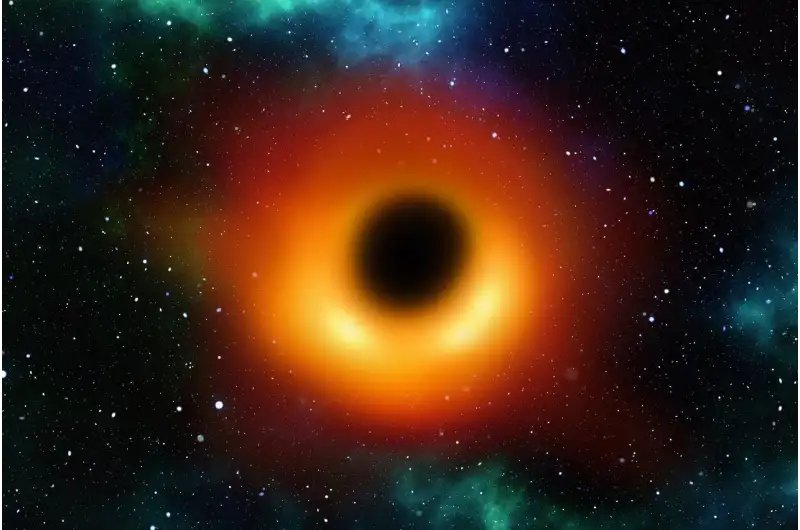
A new study proposes using active galactic nuclei, the bright environments around feeding supermassive black holes, as laboratories to probe whether dark matter becomes concentrated near these extreme objects.
The idea relies on reverberation mapping, a well-established technique in which astronomers measure the delay between a burst of light from the inner accretion region and the later “echo” produced when that light is absorbed and re-emitted by gas farther out.
Because light travels at a known speed, that delay gives the distance of the gas from the black hole. By combining that distance with the motion of the gas, researchers can estimate how much mass is enclosed at different radii.
The important point is that, if the central black hole were the only dominant mass, the inferred enclosed mass should remain roughly consistent as different gas regions are measured. But if the enclosed mass appears to increase with distance in a way that cannot be explained by visible matter alone, that can hint at an additional unseen component.
In this case, the researchers applied the method to 14 active galactic nuclei and found that five showed a mass increase with radius suggestive of extra matter around the central black hole.
The statistical strength is modest, around the 1 to 2 sigma level, so it should be treated as a hint rather than a discovery.
The result is interesting because theoretical models have long suggested that dark matter could form dense “spikes” or enhanced profiles around supermassive black holes. Unlike gas, dust, or plasma, dark matter does not collide, radiate, or easily lose energy, so it cannot spiral inward in the same way ordinary matter does.
Instead, its distribution should be shaped mainly by gravity and by the black hole’s growth history, stellar interactions, and galaxy evolution. The preferred profile found in the study has a radial steepness around gamma roughly 1.6, which is broadly consistent with a dark-matter spike that has been softened by interactions with stars.
The authors are careful about the limitations. Current reverberation-mapping mass estimates still carry significant systematic uncertainties, and the inferred amount of dark matter appears larger than some theoretical expectations. That means the signal could reflect real dark matter structure, but it could also be affected by imperfect modelling of the gas, geometry, line emission, or black hole mass estimates.
The value of the work is that it opens a possible observational route to studying dark matter on sub-parsec scales around distant supermassive black holes, a region that is normally inaccessible.
Better reverberation-mapping campaigns, especially using multiple emission lines and improved interferometric data, will be needed to test whether these apparent dark matter buildups are real.
👉 share.google/rjNeupfCsV36jTz…
24
43
225
5,540
Quantenmechaniker 🇩🇪🇺🇦🇬🇱🇪🇺🇨🇦🏴☠️ retweeted

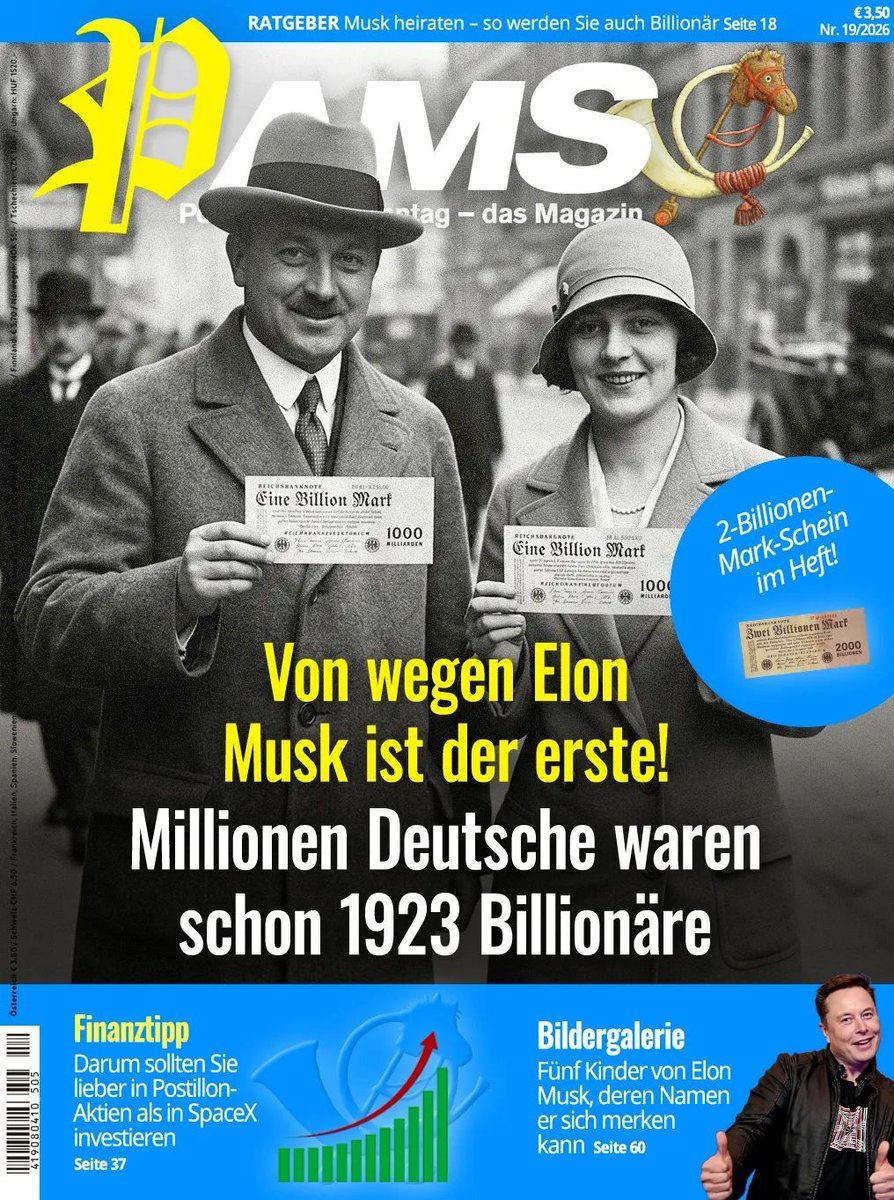
Morgen in PamS: Von wegen Elon Musk ist der erste! Millionen Deutsche waren schon 1923 Billionäre der-postillon.com/2026/06/Pa…
3
140
771
13,530
Quantenmechaniker 🇩🇪🇺🇦🇬🇱🇪🇺🇨🇦🏴☠️ retweeted

Jun 13
Es gibt viel zu tun. Packen wir's an!
"Russlands Rüstungsindustrie hängt vom Aluminium ab. Aluminium hängt vom Tonerdbauxit ab.
Estland hat ein EU-Exportverbot für Tonerdbauxit nach Russland vorgeschlagen.
Wenn wir es ernst meinen mit der Erhöhung der Kosten der Aggression, müssen wir diese Lücke schließen."
Man kann sich jedoch auch fragen, warum diese Maßnahme nicht schon vor 4 Jahren eingeführt wurde. 🤔
Jun 12

Russia's defense industry depends on aluminum. Aluminum depends on alumina.
Estonia has proposed an EU ban on alumina exports to Russia. If we are serious about raising the cost of aggression, we must close this loophole.
My op-ed @ERRNews.
news.err.ee/1610053456/margu…
29
266
819
9,329
Quantenmechaniker 🇩🇪🇺🇦🇬🇱🇪🇺🇨🇦🏴☠️ retweeted

O'BRIEN: Trump believed Ukraine had no cards, that he could bully Ukrainians into giving Putin very good deal.
He didn't understand that Ukraine was developing their own capabilities and their willingness to fight.
So, Trump failed for two reasons. First, Ukrainians adapted, and that wasn't expected by him.
You can see there have been some changes in his rhetoric lately, where he has to grudgingly admit that Ukraine has actually done better.
The United States completely underestimated Ukrainian resilience.
Secondly, Trump thought Europeans would bully Ukraine along with him because they would be afraid of United States leaving NATO.
He thought he could use NATO to push Europeans to force Ukraine to take a bad deal. Europeans eventually helped Ukraine more than he thought.
They seem to understand that it's actually better for them to have Ukraine fight the war the way Ukraine wants.
Trump didn't understand what Ukraine was capable of and he misjudged what Europeans would do.
288
2,231
10,058
355,844
Quantenmechaniker 🇩🇪🇺🇦🇬🇱🇪🇺🇨🇦🏴☠️ retweeted

Inside a steel pipe factory
A behind the scenes look at how raw steel transforms into precision engineered pipes and honestly, it's way more fascinating than most people expect.
From shaping and welding to finishing and quality checks, every step is a mix of heavy machinery and fine tuned control.
It's not just "manufacturing", it's controlled power turned into usable infrastructure.
Seeing the process up close really puts things into perspective... these pipes end up everywhere, quietly supporting cities, buildings, and entire industries. Industrial precision at its core.
33
188
1,698
92,035
Quantenmechaniker 🇩🇪🇺🇦🇬🇱🇪🇺🇨🇦🏴☠️ retweeted
Zur Abkühlung: Verband der Mücken rät dazu, Fenster nachts offen zu lassen der-postillon.com/2023/06/fe…
7
39
394
12,655
Quantenmechaniker 🇩🇪🇺🇦🇬🇱🇪🇺🇨🇦🏴☠️ retweeted

Jun 13
Ukrainian drone maker SkyFall displayed the P1-SUN interceptor at Europe's largest aerospace show in Berlin. The company says the drone has downed 10,000 Russian drones and is partnering with Airbus to integrate Ukrainian anti-drone tech into European air defenses.
15
378
3,456
143,195


💯 👇

In der aktuellen Phase der russischen Schwäche versucht Wladimir Putin gezielt, uns zu beeinflussen und zu spalten. Mit kognitiver Kriegsführung versucht er die Position der auf dem Gewinnerkurs befindlichen Ukraine zu schwächen. Dabei spielt Russland ganz bewusst mit der deutschen Sehnsucht nach einem unbedingten Frieden, wobei wir allzu oft vergessen, dass es zwingend um einen Frieden in Freiheit und Selbstbestimmung gehen muss. Unser absoluter Fokus muss darauf liegen, die Ukraine umfassend zu stärken, denn wir können nicht über die Köpfe der Ukrainer hinweg verhandeln, sondern einzig an der Seite der Ukraine Position beziehen. Das Ziel möglicher Verhandlungen darf niemals sein, das angegriffene Land zu Gebietsabtretungen zu drängen. Vielmehr muss Russland das Existenzrecht seiner Nachbarstaaten anerkennen und sich aus der Ukraine zurückziehen. Erst wenn Putin diese Schritte vollzieht und seine imperialen Gelüste aufgibt, kann über Themen wie Reparationen oder die zwingende Rückgabe der zehntausenden entführten ukrainischen Kinder verhandelt werden.
10
Das Problem an der lustigen Betrachtung seitens rotZZland ist dass der neue Zwerg (usa) in der NATO nicht die ganze NATO ist und dass rotZZland sich da endgültig überhebt.
Jun 12

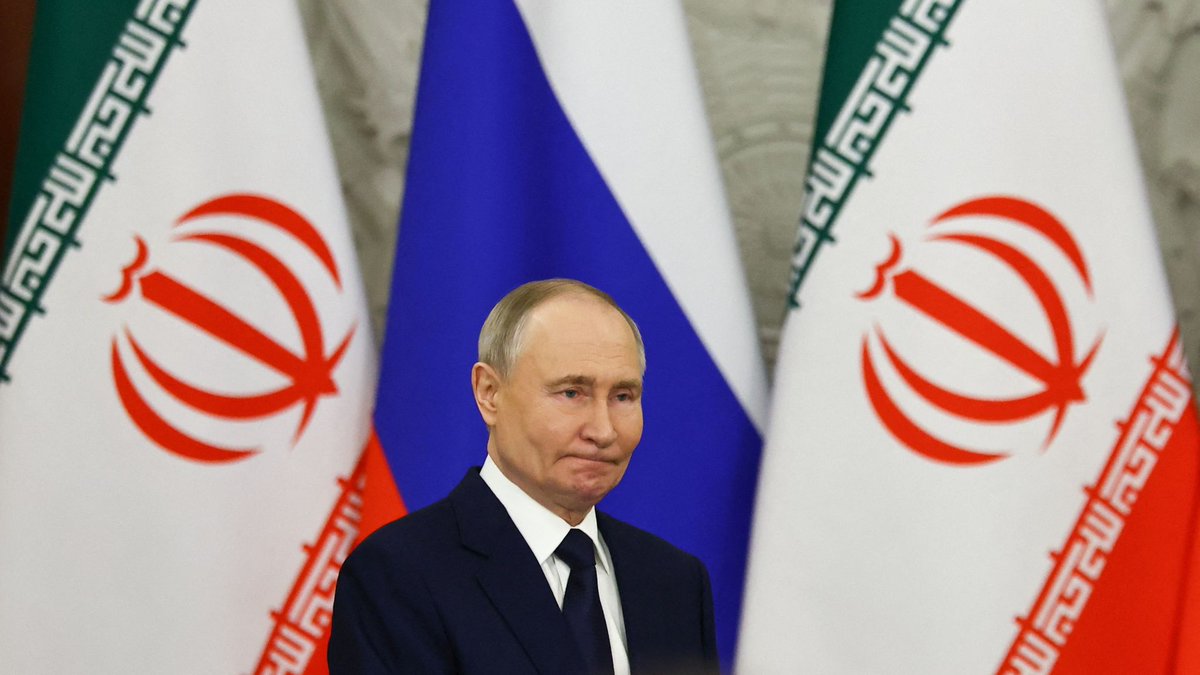
1/ Donald Trump's weak and vacillating approach towards Iran is being watched with keen interest in Russia as a lesson in how to bend America to its will. Russian political scientist Yuri Baranchik recommends that Russia should step up hostile activity against the EU and US. ⬇️
1
16
Quantenmechaniker 🇩🇪🇺🇦🇬🇱🇪🇺🇨🇦🏴☠️ retweeted

Jun 13
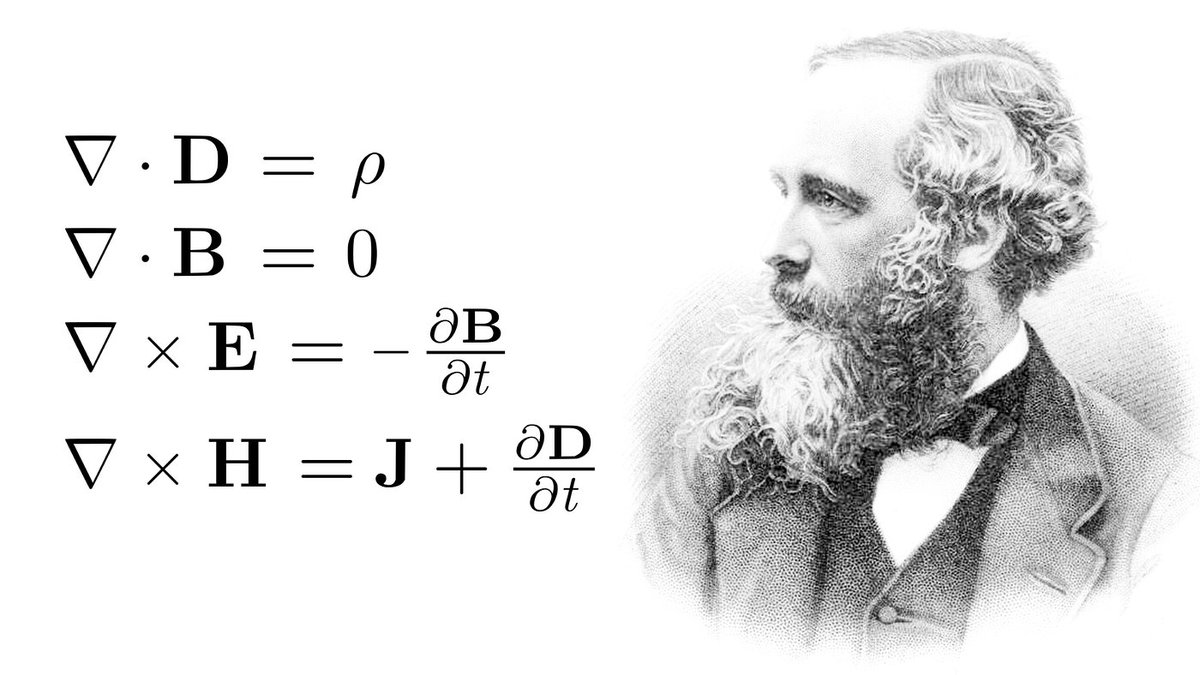
Born in 1831, Scottish physicist and mathematician James Clerk Maxwell formulated the famous Maxwell’s equations, which unified electricity, magnetism, and light into electromagnetic waves. His work became foundational to classical and mathematical physics, and he made further pioneering contributions to statistical mechanics and color theory.
2
7
34
851
Quantenmechaniker 🇩🇪🇺🇦🇬🇱🇪🇺🇨🇦🏴☠️ retweeted

Jun 13
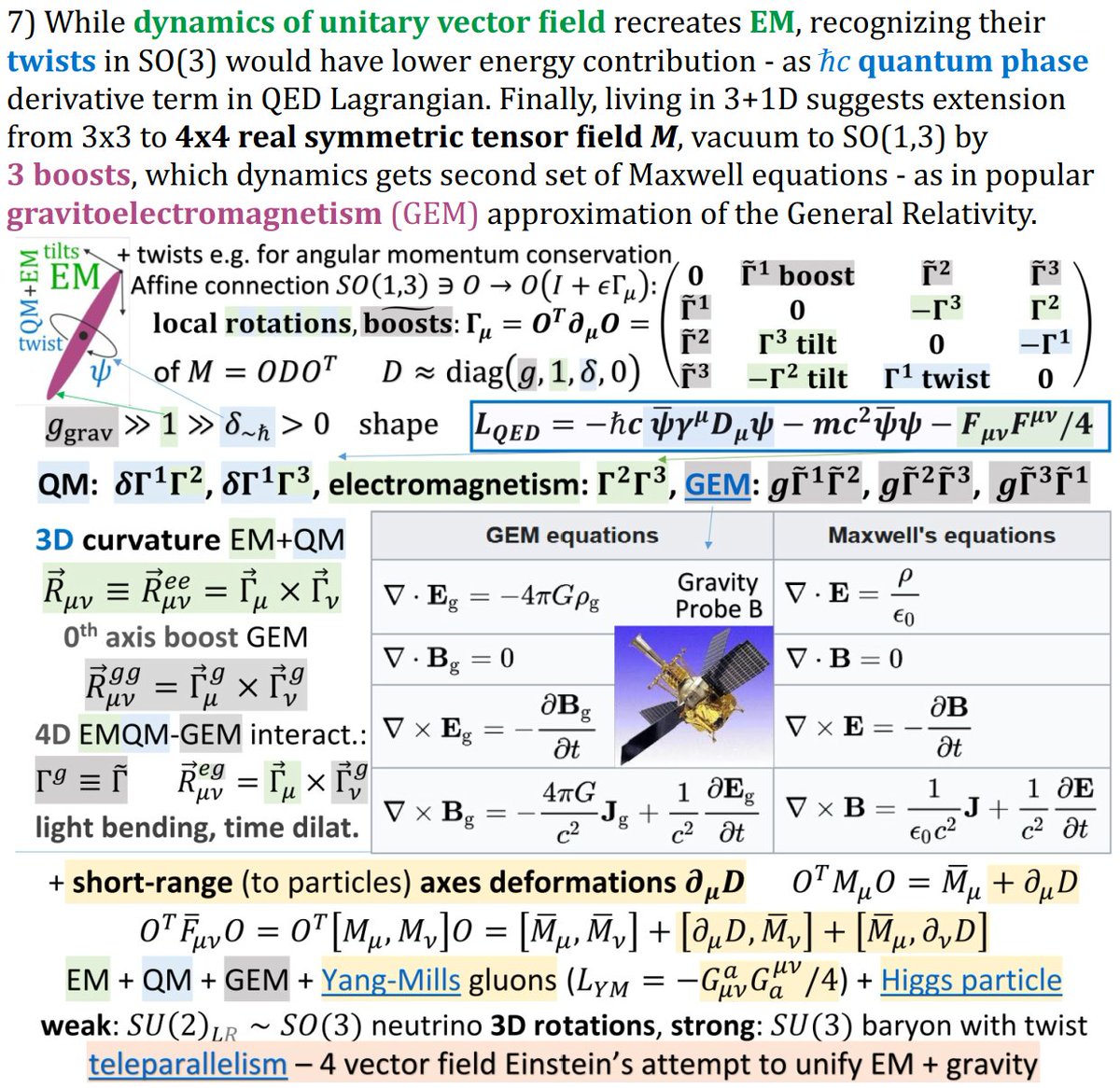
In 1893 Oliver Heaviside took it to gravity (also their waves), a century later confirmed by Gravity Probe B: en.wikipedia.org/wiki/Gravit…
1
2
21
Schöne Simulation
Jun 13

You: "Oh man, I can't wait until this Hot Pocket is done. I'm so stoked..."
Microwave:
43
Quantenmechaniker 🇩🇪🇺🇦🇬🇱🇪🇺🇨🇦🏴☠️ retweeted

Jun 13
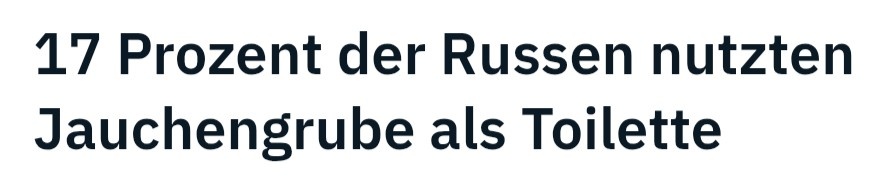
Die #AfD will uns zu deutschsprachigen RuZZen machen. Ich will das nicht!🤬
71
72
538
8,309