
Nonprofit lead for @BetterDotGiving. Edtech/AI enthusiast and Edtech/AI sceptic! Love cycling. Creator of timbles.com Avid user of qama.world
Joined March 2009
- Tweets 13,413
- Following 4,477
- Followers 3,555
- Likes 3,625
697 Photos and videos


Pinned Tweet

Mar 31
If you are serious about better mathematics education - be it in a traditional classroom or supported by tech, then ignoring the QAMA really means you are just happy with mediocrity. Sorry. Take a look and if you think they are not worth the time or effort - PLEASE say why. This is one of those times when silence means complicity with the poor substitute for thought that calculators have generally become.
Mar 31

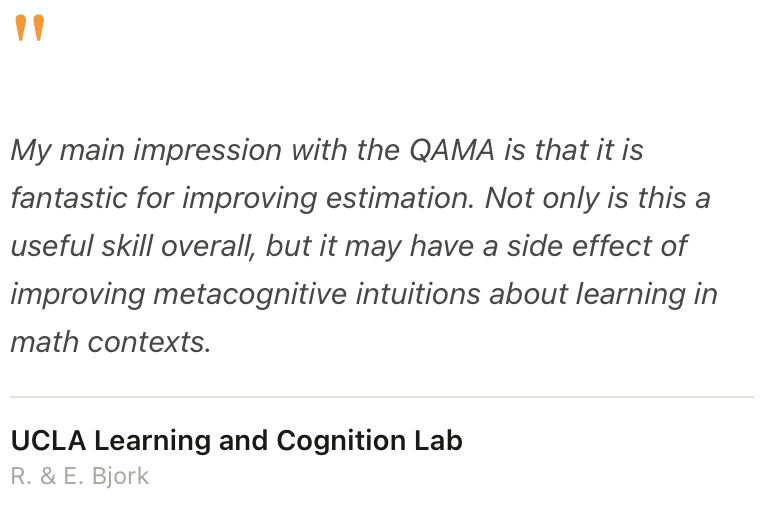
Desirable Difficulties - as discussed by UCLA - Hear from the Bjorks on @mrbartonmaths podcast at 1:06 how the QAMA contributes to thinking. podcast.mrbartonmaths.com/ro… The result of their thinking? See more recommendations at qama.world
1
1
2
715
Jun 13
IMO a lot of AI supported ‘personalised learning’ is the logical, tech-enabled extension of Engelmann’s explicit Direct Instruction. He also said there were alternatives that produced results as good, and were actually more enjoyable, so shouldn’t we be looking as to how AI can replicate/improve THOSE models as well? Otherwise we are only replicating models built to support ‘average’ teaching.
52
Tim Stirrup retweeted

Jun 13
There is a lot of excitement at the moment about using AI to personalise learning resources, but I am not convinced.
Yes, it is true many students are interested in Taylor Swift & Lionel Messi more than electricity, algebra or verbs.
That does not mean we can teach electricity, algebra and verbs through the medium of Swift & Messi.
substack.nomoremarking.com/p…
10
29
95
32,258
Jun 13
Handwriting recognition and step by step guidance. It’s been around a while actually! I still have some of the stylus (styluseseses!!😅 stylii?) we used to distribute. Here’s proof from 2015. medium.com/@timstirrup/imita…
Great to see the AI schools and apps catching up in 2026.
1
83
Tim Stirrup retweeted

Jun 11
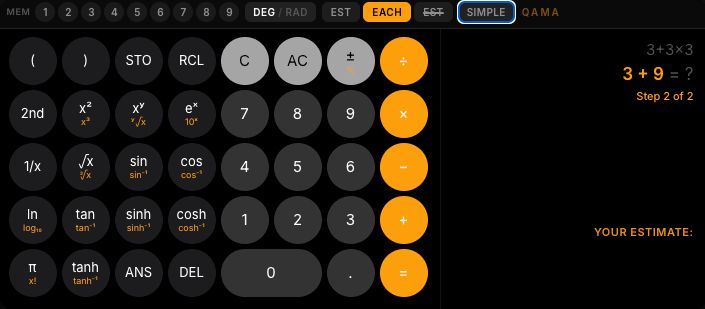
"The calculator that thinks only if you think too."
Unlike standard calculators, QAMA.world is designed specifically for math pedagogy. By forcing a mental estimate before revealing the precise answer, it transforms an unthinking reflex into a daily math workout.
1
1
26
Tim Stirrup retweeted
Jun 11
We’ve all seen it: a high schooler reaches for a calculator to solve 100 – 98, or blindly accepts an answer that is off by a factor of thousands because of a typo.
When students pick up an ordinary calculator, their brains often shut down. Cognitive Surrender it has been called!
1
1
1
60
Jun 11
Q1: with the rise of AI driven schools, although caveat that with the actual numbers and where the schools are situated and how much they cost, are we seeing the ideas in Chubb and Moe's book "Liberating Learning', which did influence education in the UK during the Gove and Gibb years, coming to fruition?
Q2: In 'liberated education', free from the constraints of Government, who controls the content of the curriculum? Could there be the potential for delivery of content/ideas/views that are skewed even more than in say, a 'book based' curriculum.
23
Jun 11
"Other daily challenges are also available"! 😀
Jun 11

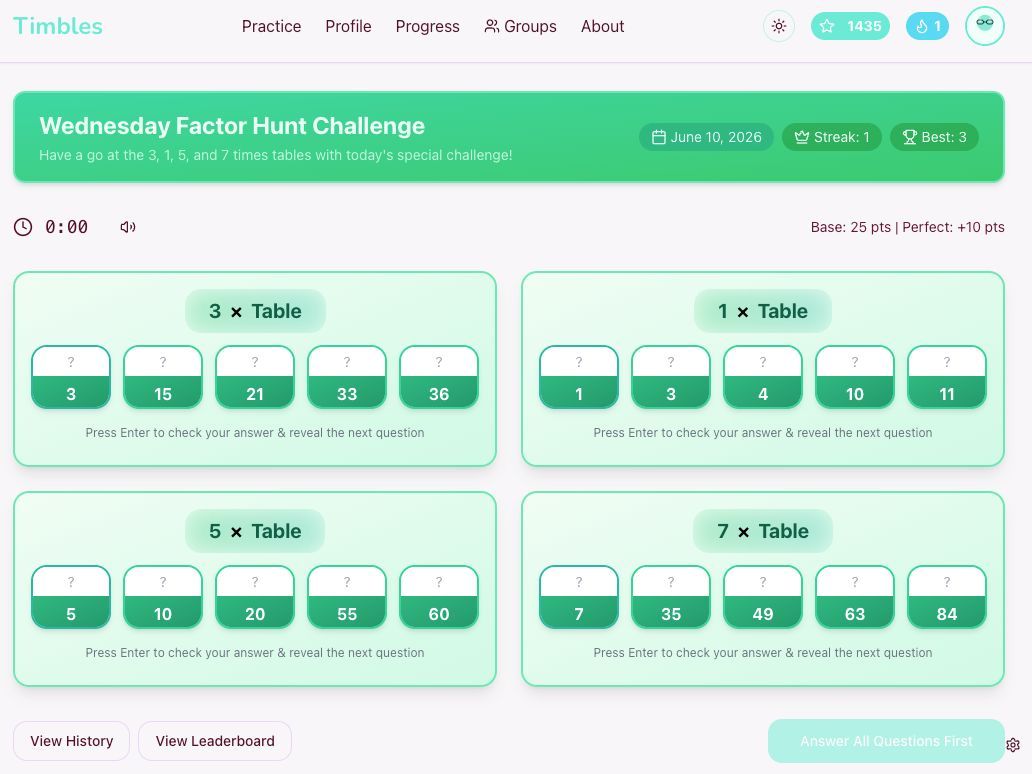
Fluency shouldn't stop at knowing what the product is. It’s time to flip the question.
We’ve launched Factor Hunt - a new classroom practice extension that provides the product and asks students to find the missing factors. This minor shift deepens their understanding of inverse operations and acts as the perfect bridge to division and fractions.
Ready to try it with your class? Log in to your Teacher Dashboard today. timbles.com/blog/factor-hunt…
#PrimaryMaths #MathsLeaders #TeachingResources #EdTech #TeachMath #MathEd
35
Jun 10
What could you expect if you make the 2 minute change to a QAMA calculator on your whiteboard?
1) More thinking mathematically
2) Better number sense
3) Better working memory
4) Better understanding
Use it with students in the room as well and they’ll get that too!
Here's the QAMA.world calc in action on a desktop in 'Each' mode as well as normal.
1
65
Tim Stirrup retweeted

Jun 10
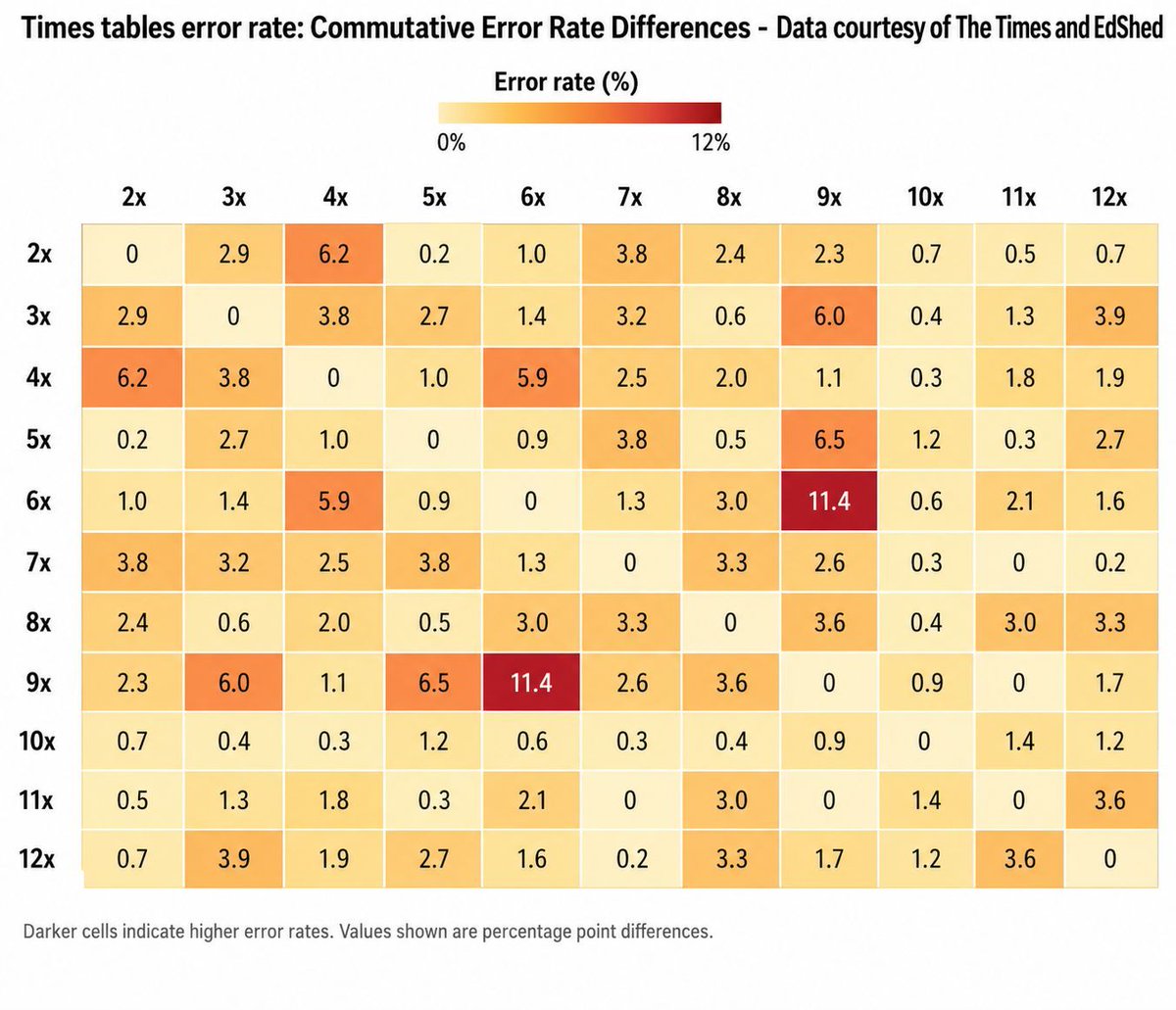
The recent analysis of 250 million multiplication answers reveals a stark truth: the real problem with times tables isn’t just 9×6. It's that we’ve been teaching tables through rigid sequences of sums for decades (3×4=12, 4×4=16...). When children only practice in order, they rely on a serial search of sums.
Timbles fixes this by breaking the sequences to build true multiplicative reasoning.
Read our full teardown of the data at timbles.com/blog/the-real-pr…
2
3
245
Jun 8
Remember when you could do ‘mathy’ things for fun?
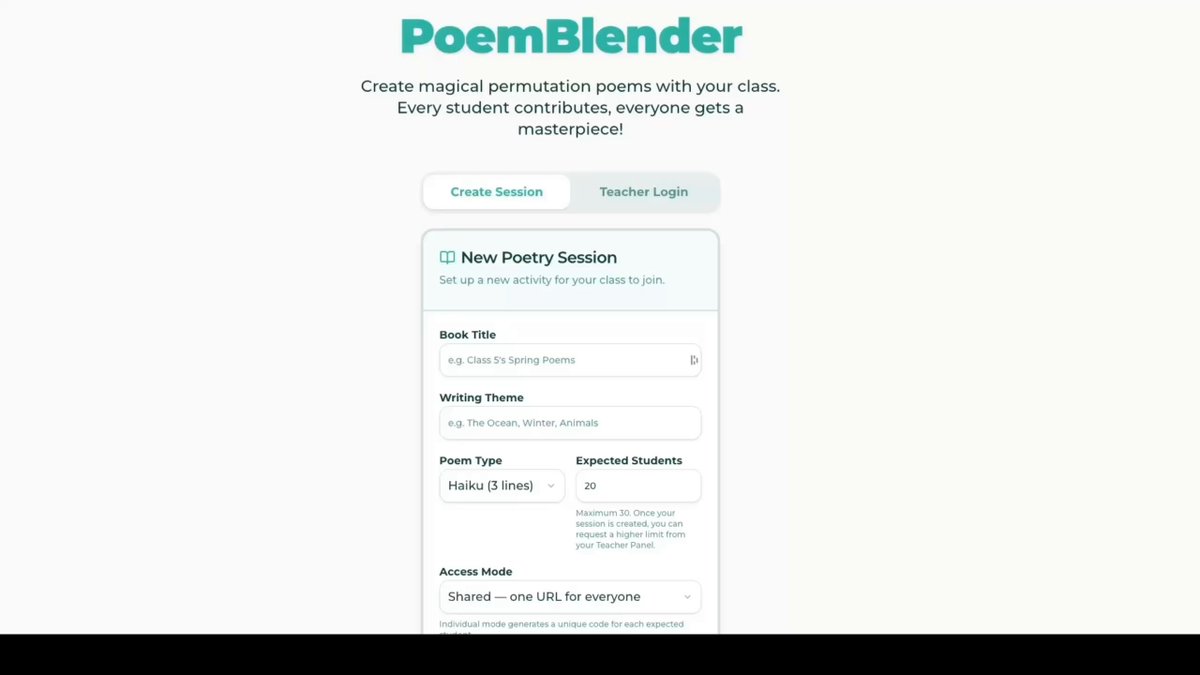
This is free and available to use as you wish. Poemblender.com and let your imagination and that of your pupils soar! Working with colleagues in the English dept advised! Share your results? youtu.be/E8_T6nHm_ZE?si=FXSv…
52
Jun 2
I really love reading. Always have. Always will. Daily visits to the library when young. Paper or electronic now. Finding new works and revisiting old friends. Why is reading seen as being something that needs AI ‘tailored to my interests’ slop? I have themes I like and what do you know, there are books already written. And I try books I know nothing about. Some I like, some I don’t. Surely that’s all part of being a reader. Not whether you can do some comprehension tests to ‘move you along a path’. Educational proponents of this should be embarrassed.
68
May 31
Scenes as fans riot after win- I don’t understand this. I understand riots after a bad loss! m.youtube.com/watch?v=QjMoYb…
59
Tim Stirrup retweeted
14 Oct 2016
Ok, here's a suggestion. Ban the use of the 'times' sign & only use brackets/parenthesis. #mathschat #mathchat
1
1
May 21
WRT multiplication facts. I think automaticity is good - and better than rote memory. But mathematical fluency is better. So you know that 6x8 and 8x6 are mathematically the same and not just parts of different sequences in a set of similar looking sums! And other such aspects. E.g That if you want 15x7 you can add the results of 10x7 and 5x7. But (IMO) if your knowledge of 5x7 consists of their place in a list that stops at 10 or 12, then you’re probably stuck. And need the calculator… wonder what we can do about that?! 😉
4
3
5
268
May 20
Here are a couple of #nationalNumeracyDay freebies - to take you through the year!
1) a free download of the QAMA calculator at qama.world/national-numeracy… that asks the user to make a reasonable estimate before they get the exact answer. Only free today. So fill your boots before the clock strikes twelve! For anyone who uses maths, not just maths teachers.
2) Poemblender.com - Numeracy in English classes? English in Maths classes? Surely not! Surely Yes! How many poems will YOUR class make. Here's an example poemblender.com/view/springd…
Q: How many pupils submitted a poem to get this many possible poems?
p.s. this is free forever. 😅
104
Tim Stirrup retweeted

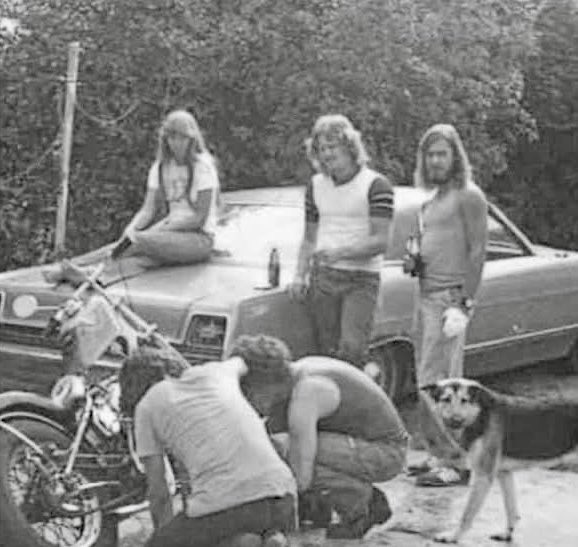
There’s a generation a lot of people forget exists. We were born at the tail end of the Boomers, but we are not culturally the same as people born in the 40s and early 50s. We are Generation Jones.
And honestly, it explains a lot.
We grew up in a world that still felt fundamentally analog, but we were young enough to be dragged headfirst into the digital revolution. We are the bridge generation between rotary phones and smartphones, between slide rules and AI, between Walter Cronkite and algorithm driven media.
We remember when there were only a few television channels and the entire country watched the same thing at the same time. We also adapted to the internet, email, forums, social media, streaming and now artificial intelligence. We lived before and after the technological singularity hit everyday life.
That is not a small thing.
People born in the 40s came of age in a post World War II America that was still industrial, deeply hierarchical and institutionally stable. Their formative years were shaped by the Cold War, Vietnam, the civil rights era and a society where information moved slowly.
Generation Jones came later. We inherited the aftermath of all of that.
We were the kids who watched Watergate destroy blind trust in government. We watched manufacturing begin to collapse. We saw divorce rates explode. We were the first truly latchkey generation in massive numbers. We learned independence early because many of us had to.
We grew up with one foot in old America and one foot in whatever this new thing was becoming.
We played outside until the streetlights came on but we also learned DOS commands. We learned cursive and keyboarding. We had card catalogs and Google searches. We went from vinyl records to cassette tapes to CDs to MP3s to streaming in one lifetime.
We remember maps. We remember memorizing phone numbers. We remember life before GPS and before every human interaction became filtered through a screen.
And because of that, I think Generation Jones developed a very unique perspective. We are adaptable because we had no choice but to adapt. We learned technology as adults instead of being born into it. We remember a slower world but were forced to survive in a rapidly accelerating one.
That creates a very different mindset than either older Boomers or younger Gen X and Millennials.
A lot of us also reject the caricature people now associate with “Boomers.” We were not buying houses for the cost of a sandwich in 1965. The interest rate on my first house was over 14% and that was after buying down a point. Many of us got hit by recessions, outsourcing, pension collapses and economic instability just like younger generations did. We watched promises evaporate in real time.
We understand older generations because we were raised by them. We understand younger generations because we had to evolve alongside them.
That’s why the Jones generation often feels culturally homeless. We are rarely discussed, rarely defined and usually lumped into categories that don’t actually fit us.
But we exist.
We are the human transition point between the industrial age and the digital age.
And frankly, there will probably never be another generation quite like us again.
3,253
4,988
20,422
978,633
May 20
It's #NationalNumeracyDay as celebrated in English classes and lessons around the country... or maybe not!
But it 'could' be! Try poemblender.com to create more poems than you may ever have thought possible! Here's a small example.
Q: how many children wrote a Haiku to create this number of possible poems? poemblender.com/view/springd…
57
Tim Stirrup retweeted

Why 9 x 6 sums up our trouble with times tables
thetimes.com/article/e69b5ec…
2
2
2
870