
Joined May 2010
- Tweets 60,467
- Following 251
- Followers 587
- Likes 138,972
5,263 Photos and videos





Debojyoti Dasgupta retweeted

Lathi charge on Bajrang Dal workers protesting the brutal killing of BJP leader Vinod Kumar in Dehradun.
Bajrang Dal claims it was ordered by local BJP MLA Munna Singh Chauhan, who allegedly also stopped house demolition of the accused.
Locals chanted: 'Bhajpa se bair nahi, Munna teri khair nahi' and vowed not to vote for him again.
12
161
413
4,321
Debojyoti Dasgupta retweeted

🚨🇬🇧BREAKING: UK Police just arrested a crying 5-year-old boy while taking away his father.
Starmer's police dragged the terrified child into a car, then pepper-sprayed and the father and the man filming everything.
What the hell is happening in Britain?
2,827
10,788
27,668
748,455
Debojyoti Dasgupta retweeted

🚨 Anthropic case is exactly what Putin warned about
Anthropic pulled its strongest AI models worldwide after the US ordered it to block all foreign users.
Putin:
"Foreign services can be very convenient, but sooner or later you’ll see the price of this dependence is."👇
11
215
985
30,034

At this point US is both directly & indirectly killing Indians where ever they see them,be it in the seas or on US land

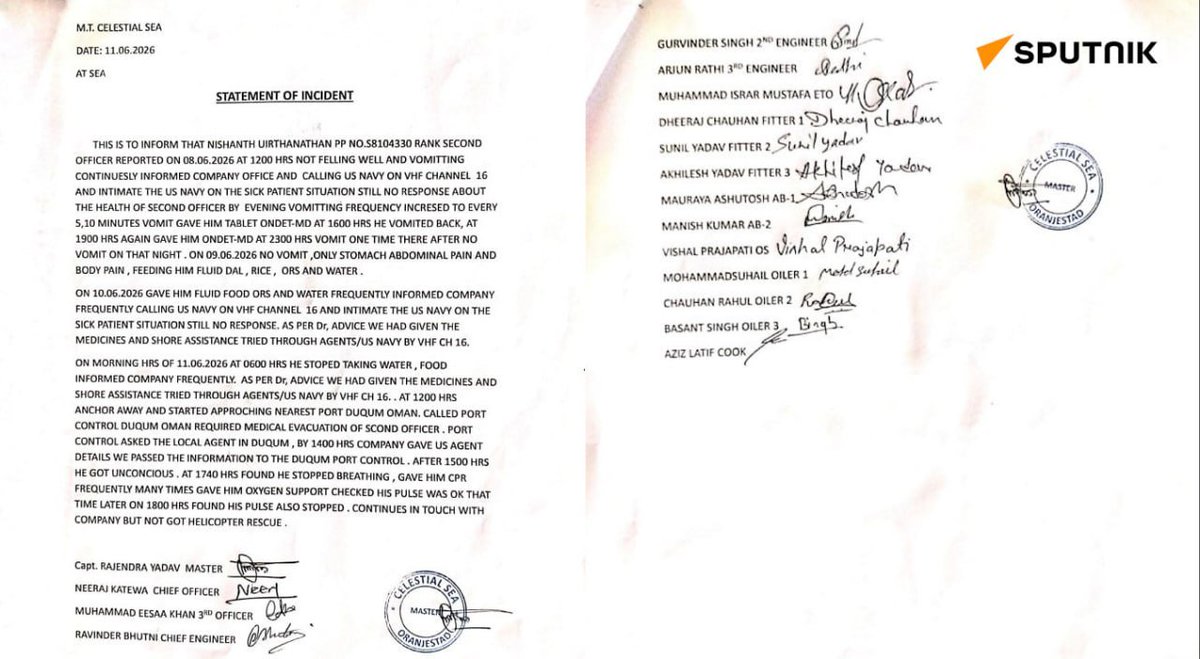
🚨EXCLUSIVE: US Navy ignored desperate calls from Indian crew as sailor fought for life
The crew of MT Celestial repeatedly called the US Navy on VHF Channel 16 on 8 June, desperately reporting severe vomiting bouts of Indian seafarer Nishanth Uirthanathan: ship records seen by Sputnik India.
There was no response. On 11 June, he stopped breathing.
The US Navy is still refusing to allow the corpse to be evacuated.
11
Debojyoti Dasgupta retweeted

Most Indian vehicles aren’t even E20 compatible ..yet Nitin Gadkari ji is forcing 100% ethanol norms on us!
We the people pay full price for our vehicles we pay road taxes, insurance, tolls, GST on vehicles, parking, GST on spares, basically or lot of money for everything that one can think of! And yet in return we get Pathetic roads, mostly terrible infrastructure, traffic jams and now fuel that destroys the engines and kills mileage of our vehicles!
Meanwhile we all know that most sugar mills owned by netas & their families and it is their linked companies that are minting crores from ethanol distilleries.
Let's cut out the BS, this is a straight-up Ethanol Scam! And while we INDIANs have to pay a price & yet suffer, these netas profit and make money! Also say if one wants non blended fuel instead of this nonsensical E-20, E-30 or E-100 why can't we be given that?
#EthanolScam #GadkariEthanol #MiddleClassLoot
195
593
1,528
33,389
Debojyoti Dasgupta retweeted

Breaking: As US orders Anthropic to disable AI models for foreign nationals, French President Macron says India, France looking at cooperative AI
96
1,414
10,682
173,921
Piyush Goyal once said "15min delivery isn't innovation"
So I'm searching where that innovation DNA is hidden

3
Poignant..
We won't be a power to be recognized unless we stand up to power
China nvr compromised on its stand & bent backwards to give others a happy ending
India has a long way to go but we hv to start somewhere
Congratulatory tweets just doesn't cut it

The deaths of Indian seafarers in the Gulf are not only a story about war and diplomacy. They are also a reminder of who we still are.
That so many Indians crew the world’s merchant fleets reflects their skill and professionalism. It also reflects a country where millions continue to seek livelihoods far from home, often in difficult and dangerous circumstances.
Our elites increasingly speak of India as a leading power. Much of the world still sees a developing nation struggling to lift hundreds of millions into prosperity.
A country is assessed not only according to its GDP, military strength or diplomatic ambition. It is also judged by its income levels, institutional capacity, technological and manufacturing depth and the living standards of its people.
Power is not only asserted. It is recognised. Recognition often arrives more slowly than ambition.
That may be one of the more uncomfortable lessons of this tragedy.
5
We r impaled by impotent leaders who think peace can be achieved by Hindus opening their asses to the enemy onslaught

RSS chief Mohan Bhagwat:
🗣️ “If a future war leaves Pakistan beyond repair, its people must either be brought into the fold of Bharat or be able to live peacefully in their own country.
For that, the doors of DIALOGUE must always remain open."
5
Debojyoti Dasgupta retweeted

A big conversion racket is happening in Nadia district.
The Father of the Roman catholic church has come to the chapra church to give the responsibility of the church to the new pastor Ajay Ghosh , who uses a hindu name to convert the Hindus of the chapra.
Chapra is becoming the hot bed of Christian conversion day by day.
I urge CM @SuvenduWB to immediately implement the Anti conversion law in the state.
These christian missionaries are no less than Jamati principles.
19
140
211
5,257
It's nvr a good idea to include such people back in the fold
He ll get his inheritance now that he is a "hindu" again
& He ll now carry on his maksad clandestinely

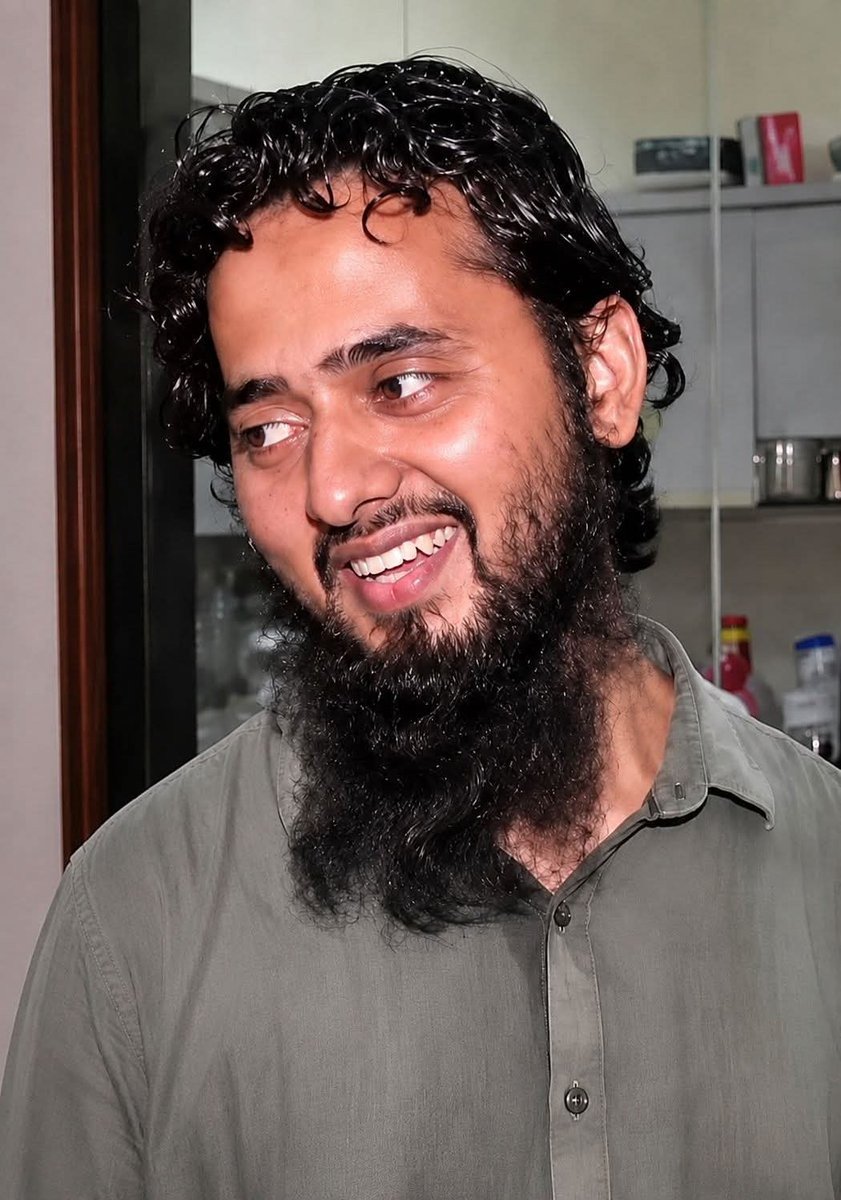
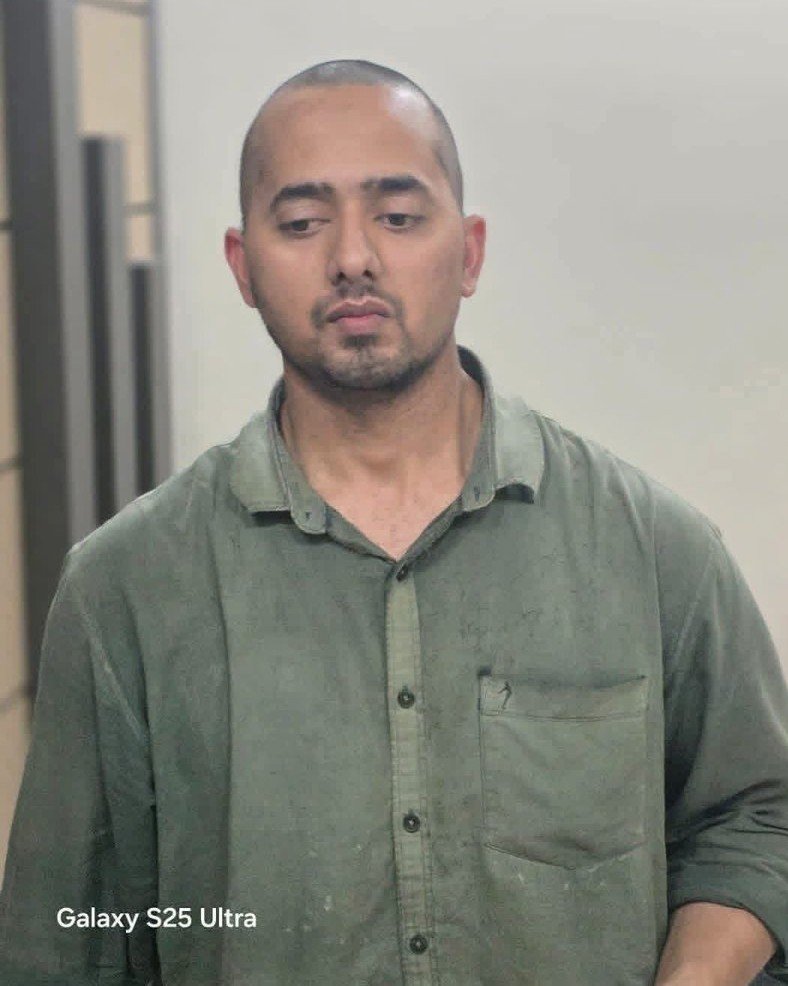
>Joined the gym.
>His employee let him $¥¢€ his sister, hoping that one day he would take over all his property.
>Converted to Izlam and became famous overnight.
>Now he's back to his original religion.
Quite the journey. 🗿
65
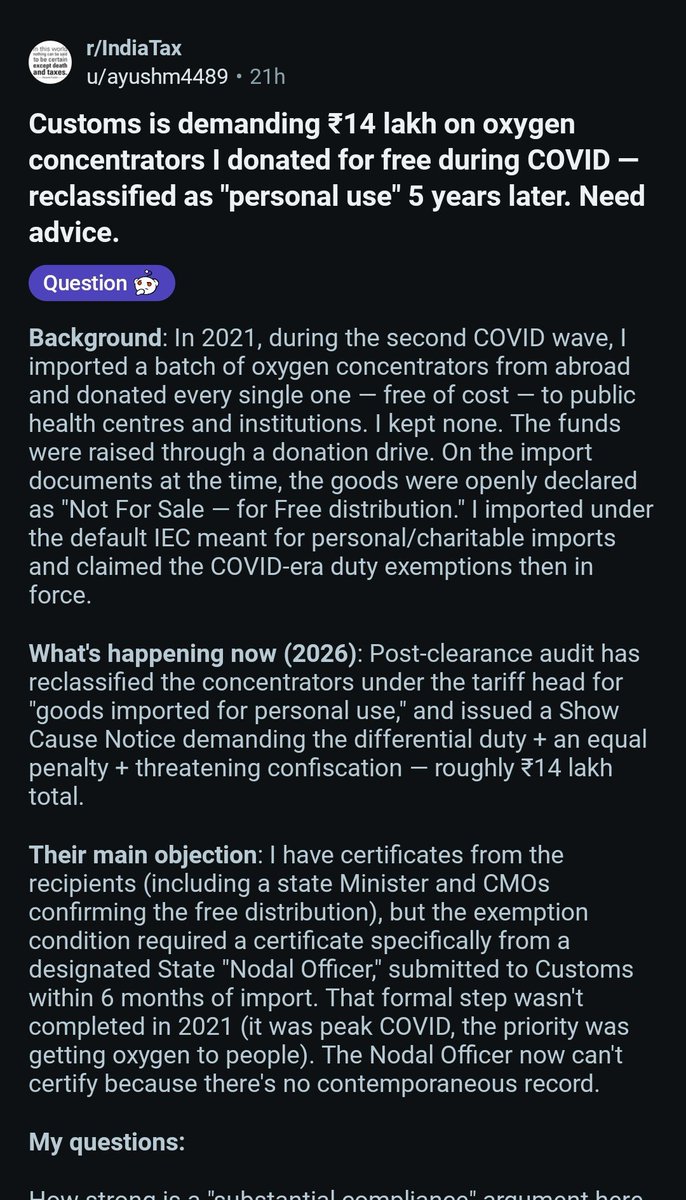
How dare you do a good deed
Niw face the consequences

22
Debojyoti Dasgupta retweeted

This is a case of criminal negligence. How was he neglected/ denied medical treatment? Did our embassy not act at all? What was the issue here?
Jun 13

Nishanth Uirthanathan, Second Officer on MT Celestial died after receiving no treatment amid missile strikes and ongoing tension near Oman, reports Neeta Kolhatkar.
@dgshipping_IN @shipmin_india @imohq @ilo
6
145
886
18,226
Debojyoti Dasgupta retweeted

E20 fuel use in older cars can be treated as ‘improper use’ or ‘negligence’: ICICI Lombard ow.ly/HEw6106zFsc
105
752
2,011
106,247
Debojyoti Dasgupta retweeted

If you read the U.S. Secretary of State Marco Rubio's statement, leaving aside condolences or an apology, there is not a single word about the 3 Indian crew members who were killed during the USA strike on the tanker MT Settebello off Oman. The US hardly seemed to care even after India summoned a representative of the US Embassy and lodged a strong protest.
Similarly, when 4 Indian crew members were killed during Iranian strikes (1 on tanker MKD VYOM and 3 on tanker Skylight), Iran hardly seemed to care. In fact, the Iran Embassy in India was busy seeking donations from Indians.
Even after India summoned the Iranian ambassador and lodged a strong protest when Iran opened fire on two Indian-flagged commercial ships in the Strait of Hormuz despite India having shared transit details in advance and receiving clearance, Iran did not express regret over the incident.
What stands out is that, in both cases, neither side in the conflict appeared particularly concerned by India's protests or diplomatic objections. Both the USA and Iran acted according to their own strategic interests.
The Govt of India cannot afford to remain limited to diplomatic protests every time Indian lives are affected. Strong statements alone do not create leverage. If India wants its concerns to be taken seriously, the Govt must build greater economic, strategic, and technological strength, along with a willingness to impose tangible costs when Indian lives are affected. Otherwise, India's objections will continue to be acknowledged politely but ultimately carry little consequence for the countries involved.
41
195
627
16,629
Debojyoti Dasgupta retweeted

This video will boil your blood to the core & also, you will realize the danger created by bastard Gandhi & Nehru by not exchanging full Muslim population in 1947.
A young guy after getting selected in the Indian Army faced constant threat from fucking Muslims neighbors! 🤬🤬🤬
61
1,078
2,499
36,233
This is so damn true sadly
Safe to say Babus r US deep state working in India..
They hv their children,their future settled abroad while the suck the life blood out of India

Indians are blaming Infy/Murthy/Nandan for a lack of home-grown LLM. But that blame is misplaced. Infy/Murthy/Nandan could never start an AI company. They had money and they could have fund something. But that again, is their money and why should they risk it?
The real culprit here is Amitabh Kant and other IAS like him. These are the people, why I left India and started two companies in the US. These are the people, why much of Indian talent left to work for US based companies. And these folks did well.
Let's say the government gives me $10B and ask me to set up an AI lab in India. Am I qualified to do it? YES. Will I do it? HELL NO
And you would ask why? Some would say that I have a cozy life in the US. Some would say, I have deep connection in the US, including family. All of that is correct but does not pin point the reason why I wont start a company in India.
The real reason is Babu. Unlike, many In India who think competing for 1000 seats using some bullshit essay writing contest makes Babu some wizard, I have not come across one, I will hire as an analyst. Under no circumstance, I am gonna report to a babu (Happy report to Dharmendra Pradhan or Smriti Irani though). Also, under no circumstances, I will accept a position where I am unable to fire and put an IAS in jail if they reported to me and indulged in some corruption.
Till this babu problem is fixed, no NRI would come to India. If I were the CIA or CCP, trying to ensure that India does not gain AI independence, I would make every effort to protect Babu fiefdom.
2
22
Debojyoti Dasgupta retweeted

Jun 13
Nishanth Uirthanathan, Second Officer on MT Celestial died after receiving no treatment amid missile strikes and ongoing tension near Oman, reports Neeta Kolhatkar.
@dgshipping_IN @shipmin_india @imohq @ilo
8
174
284
27,669
Debojyoti Dasgupta retweeted

There needs to be a definite reset in our ties with America.
More importantly, thought process on it has to undergo a recaliberation.
Chahbahar, IRS Dena, tariffs, Pakistan and now the death of a Indian sailors. The list goes on.
Something, somewhere has to break

Trump to be blamed for the crisis in Hormuz- My conversation Witt retired Air Vice Marshall Anil Golani earlier on the US strikes on vessels that have claimed lives of 3 indian sailors so far. @CAPS_INDIA Full I/V - YouTUbe- Smita Sharma Journalist
3
23
60
2,964
Debojyoti Dasgupta retweeted

My exclusive: A new problem for India is taking shape in the US
America’s political parties are raising concerns on changes to India’s FCRA law
US Christian groups argue the changes will damage Christian charities in India receiving foreign funds
hindustantimes.com/india-new…
145
238
849
187,342