
TokenPulse is a Web3 and crypto analytics agency providing market insights and on-chain intelligence for data-driven decisions.
Joined February 2025
- Tweets 114
- Following 74
- Followers 6
- Likes 32
97 Photos and videos












Pinned Tweet
55
722
3
14,866

TokenPulse / Web3 Analytics retweeted

Mar 13
Testing something
JM 👉👈
457
45
1,057
60,100

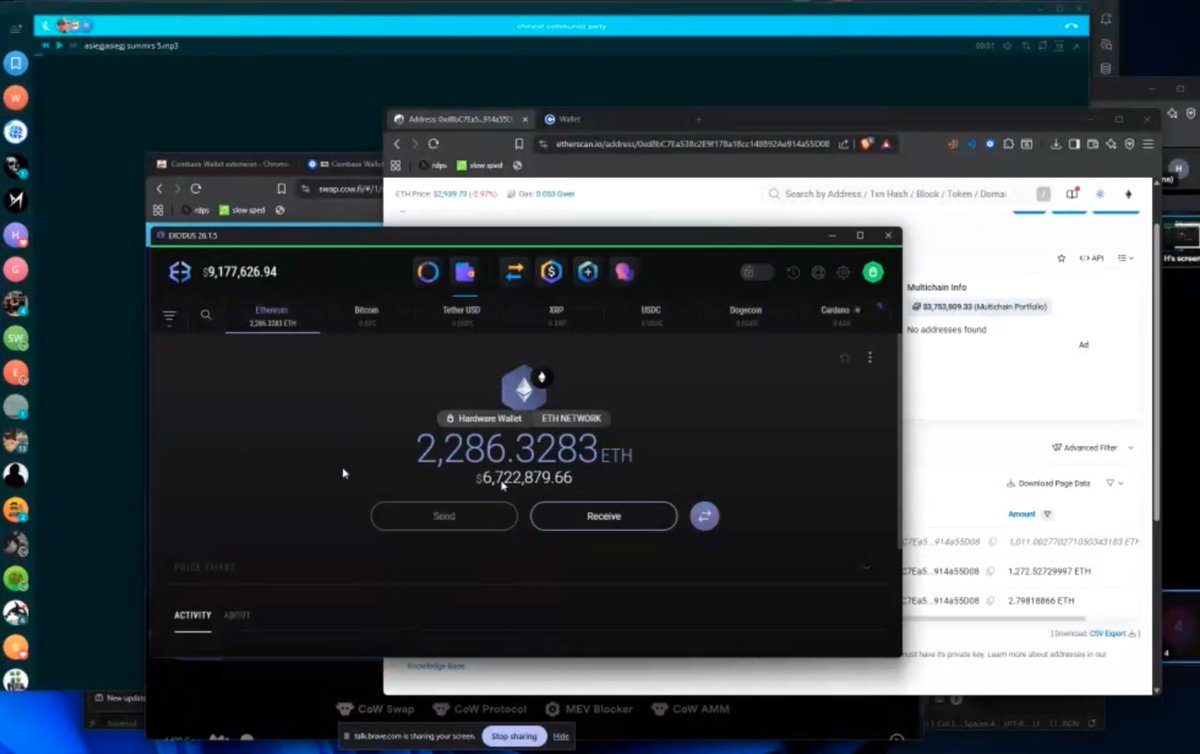
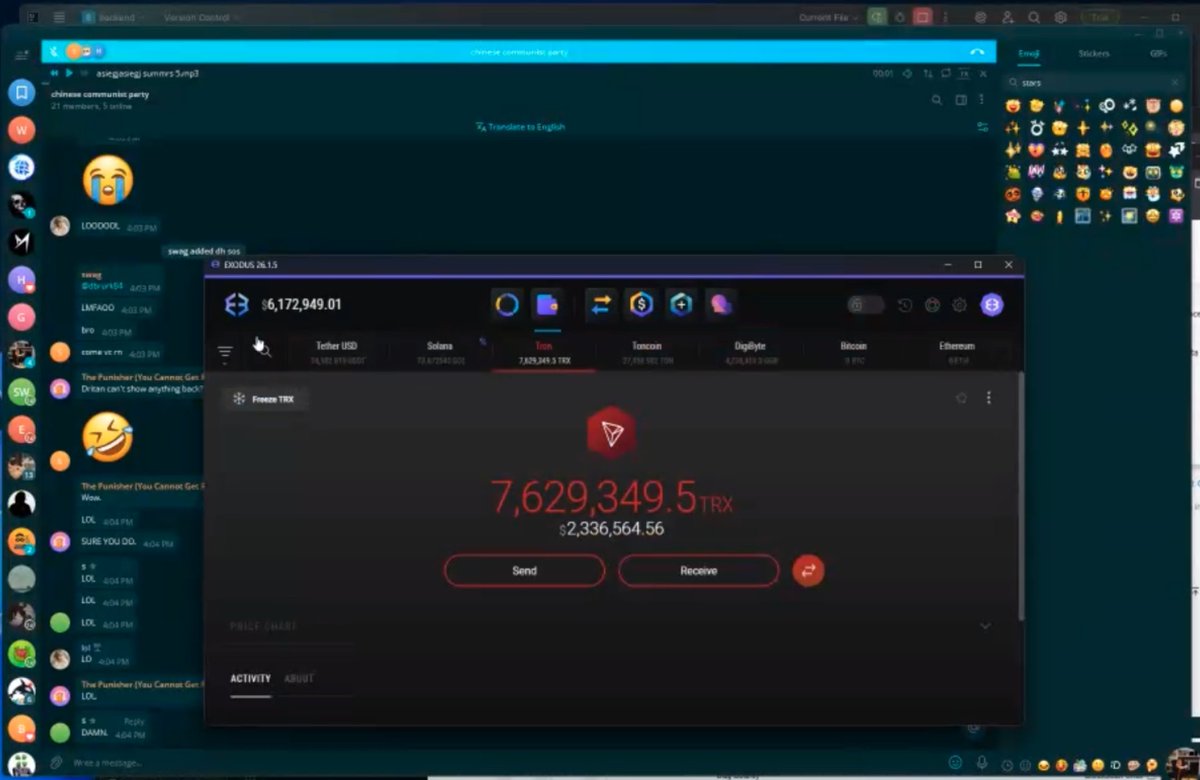
In case you are curious how John Daghita (Lick) was able to steal $40M from US government seizure addresses.
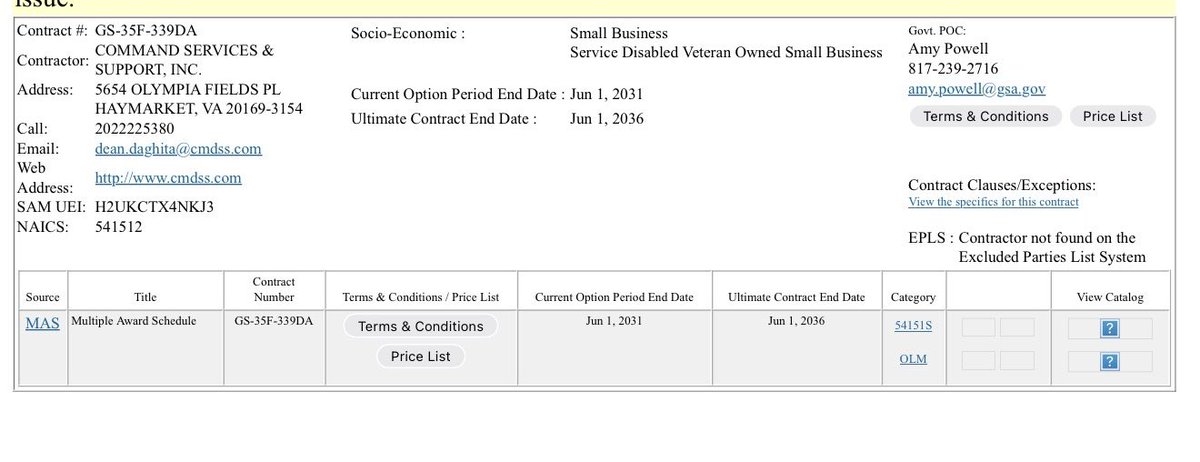
John’s dad owns CMDSS, which currently has an active IT government contract in Virginia.
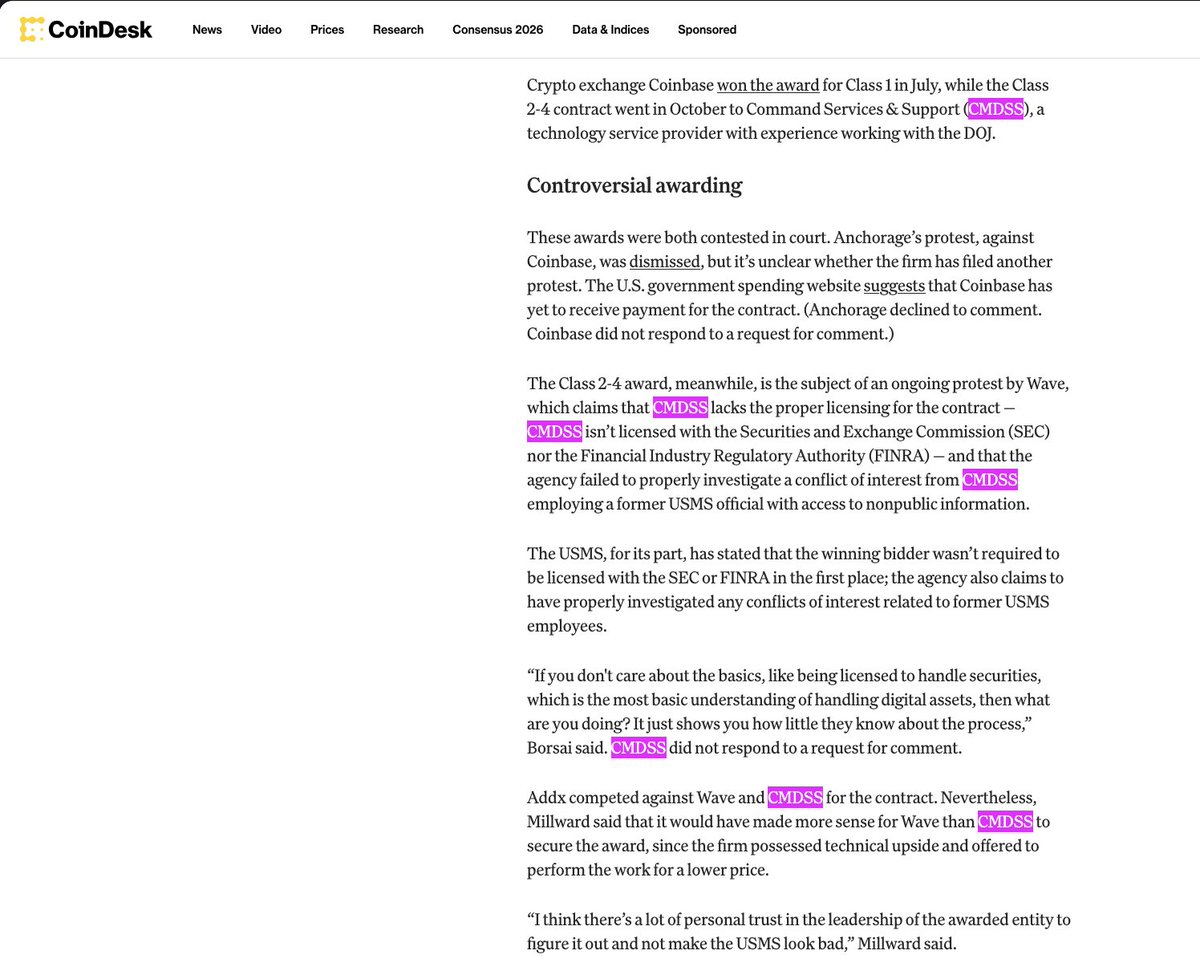
CMMDS was awarded a contract to assist the USMS in managing/disposing of seized/forfeited crypto assets.
It still remains unclear at this point how John obtained access from his dad.
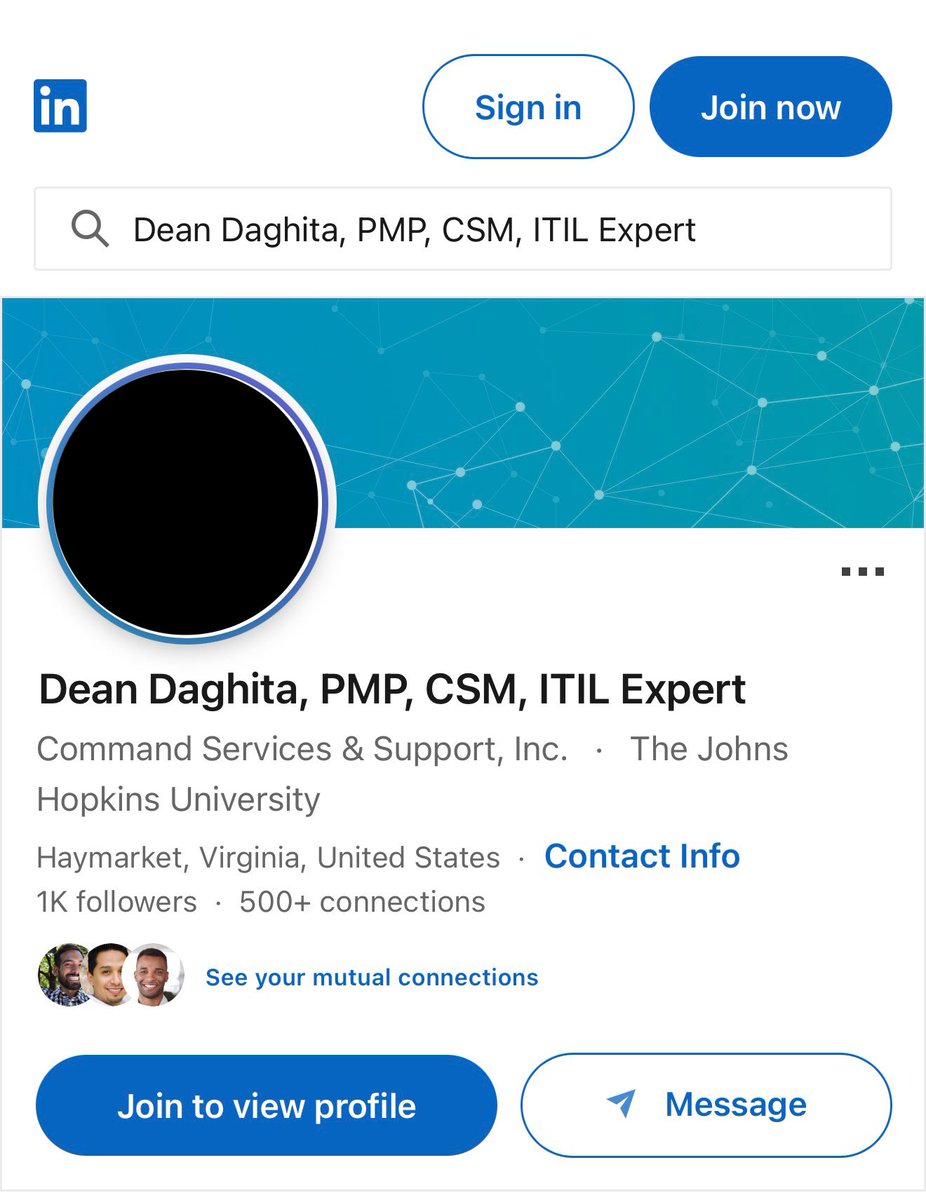

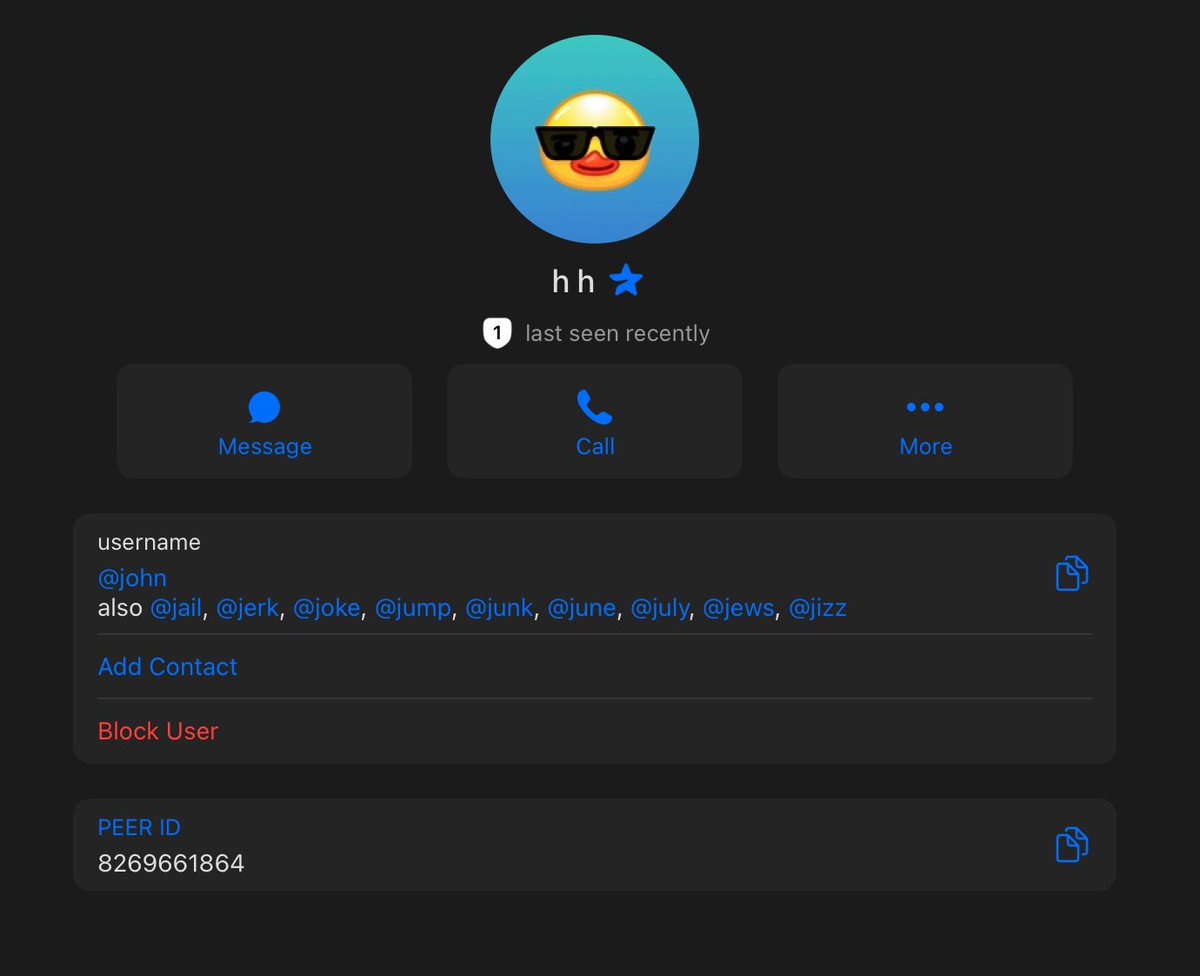
1/ Meet the threat actor John (Lick), who was caught flexing $23M in a wallet address directly tied to $90M in suspected thefts from the US Government in 2024 and multiple other unidentified victims from Nov 2025 to Dec 2025.
635
1,334
9,193
4,053,440
TokenPulse / Web3 Analytics retweeted

Mar 13
This is the new EF Mandate.
For many of you, the contents should be no surprise, and a clarification along the lines that we have been going and thinking for the past few months. But the clarification is nevertheless worth making.
Ethereum is a unique object and has a unique role in the world. Its role is to be a sanctuary technology, to preserve technological self-sovereignty, to enable cooperation without coercion, domination or rugpulling, and to provide an escape hatch, to ensure that no single person, organization or ideology's victory in cyberspace can be total.
The Ethereum Foundation is a steward of Ethereum - the original steward, and today, the steward specifically dedicated to preserving and expanding the above aspects of Ethereum. This means a heavy emphasis on CROPS (censorship and capture resistance, open source, privacy, security), both at the protocol layer, and at the access layer, user-facing applications and tools that we create or contribute to.
There are things that we do in Ethereum because we believe that they are valuable for the underlying goals that we have for Ethereum. There are things that we do not do because from the perspective of our values we find them uninteresting (or worse, harmful). But there are also things that we do not do because while they are useful, they are not our role.
At the Ethereum protocol layer, we focus on decentralization, verifiability, inclusion guarantees, protocol liveness, security and privacy first and foremost. We also value capabilities (eg. L1 scale, account abstraction, perhaps some forms of in-protocol aggregation), particularly because improvements in these capabilities better enable users to properly benefit from Ethereum's CROPS properties and displace the need for higher-layer intermediaries that might weaken the extent to which Ethereum's properties carry over into the full stack.
We also believe that the Ethereum protocol must strive to pass the walkaway test. "We do X to specialize to serve the use cases of today, if more use cases appear later, we will continue to keep adding more EIPs for them later" is logic fit for many other blockchains whose names you hear often on this forum, but we do not believe it is logic fit for a decentralization-first blockchain like Ethereum.
At the application layer, we focus on making "the zero option" - user experience that goes hard on ensuring security and privacy, avoiding dependence on intermediaries, and respecting the user's agency - as high quality as possible. We see this as complementary to work in the Ethereum ecosystem that "goes broad", starting from the world that it exists, and brings it onchain and improves its properties over time. Such work has its natural home outside the EF. We intend to be supportive of such efforts. We believe that the two are complementary: tools that are developed within the EF can be adopted by anyone, including partially, and even partial adoption that improves people's security, privacy and agency is a good thing.
But the form of user experience that is more heavily insistent on CROPS properties is where we want the EF to develop its center of expertise. This does not mean shrinking from the hard questions. We believe in a vision of self-sovereignty that protects users, and does not leave users in the cold to face environments where they lose their life savings if they make a mistake, and click "yes" on a confirmation screen by accident two seconds after. But such protection must be designed based on a philosophical baseline of empowering the user, not empowering centralized organizations that claim to act in the user's name. This quadrant of design space - caring about users' (including non-experts') well-being and safety, and yet insistent on doing this in a way compatible with their agency and freedom, is underserved (not just in crypto, but in the world). We wish to use Ethereum as a platform to build out and showcase this quadrant, and ideally work with others to expand its reach over time.
This is also a new chapter in how we see our position in the world. We must see ourselves not just as the Ethereum community, but also as maintainers of the Ethereum tool within what you might call the CROPS community or the sanctuary tech community, or a dozen of other words that have for a long time been used by people with similar values to us but far outside Ethereum. This means open-mindedness to new conceptions of what things in the world are our natural allies.
Ethereum is not the world. Ethereum is a specific object in the world that is here to have specific properties. The Ethereum Foundation is a specific organization within Ethereum - one steward, not the sole one.
I encourage all to read the mandate in detail; it includes concrete examples of how we intend to deal with the challenges and nuances of these ideas. We are doubling down on Ethereum and are excited about its next chapter.
Mar 13

Today, the Foundation’s Board released the EF Mandate.
This document, which was first intended for EF members, reaffirms the promise of Ethereum, and the role of EF within this ecosystem.
329
282
1,556
275,259
TokenPulse / Web3 Analytics retweeted

Feb 28
150,945
153,238
995,117
204,405,703
🫡
Feb 26

Now, the quantum resistance roadmap.
Today, four things in Ethereum are quantum-vulnerable:
* consensus-layer BLS signatures
* data availability (KZG commitments proofs)
* EOA signatures (ECDSA)
* Application-layer ZK proofs (KZG or groth16)
We can tackle these step by step:
## Consensus-layer signatures
Lean consensus includes fully replacing BLS signatures with hash-based signatures (some variant of Winternitz), and using STARKs to do aggregation.
Before lean finality, we stand a good chance of getting the Lean available chain. This also involves hash-based signatures, but there are much fewer signatures (eg. 256-1024 per slot), so we do not need STARKs for aggregation.
One important thing upstream of this is choosing the hash function. This may be "Ethereum's last hash function", so it's important to choose wisely. Conventional hashes are too slow, and the most aggressive forms of Poseidon have taken hits on their security analysis recently. Likely options are:
* Poseidon2 plus extra rounds, potentially non-arithmetic layers (eg. Monolith) mixed in
* Poseidon1 (the older version of Poseidon, not vulnerable to any of the recent attacks on Poseidon2, but 2x slower)
* BLAKE3 or similar (take the most efficient conventional hash we know)
## Data availability
Today, we rely pretty heavily on KZG for erasure coding. We could move to STARKs, but this has two problems:
1. If we want to do 2D DAS, then our current setup for this relies on the "linearity" property of KZG commitments; with STARKs we don't have that. However, our current thinking is that it should be sufficient given our scale targets to just max out 1D DAS (ie. PeerDAS). Ethereum is taking a more conservative posture, it's not trying to be a high-scale data layer for the world.
2. We need proofs that erasure coded blobs are correctly constructed. KZG does this "for free". STARKs can substitute, but a STARK is ... bigger than a blob. So you need recursive starks (though there's also alternative techniques, that have their own tradeoffs). This is okay, but the logistics of this get harder if you want to support distributed blob selection.
Summary: it's manageable, but there's a lot of engineering work to do.
## EOA signatures
Here, the answer is clear: we add native AA (see eips.ethereum.org/EIPS/eip-8… ), so that we get first-class accounts that can use any signature algorithm.
However, to make this work, we also need quantum-resistant signature algorithms to actually be viable. ECDSA signature verification costs 3000 gas. Quantum-resistant signatures are ... much much larger and heavier to verify.
We know of quantum-resistant hash-based signatures that are in the ~200k gas range to verify.
We also know of lattice-based quantum-resistant signatures. Today, these are extremely inefficient to verify. However, there is work on vectorized math precompiles, that let you perform operations ( , *, %, dot product, also NTT / butterfly permutations) that are at the core of lattice math, and also STARKs. This could greatly reduce the gas cost of lattice-based signatures to a similar range, and potentially go even lower.
The long-term fix is protocol-layer recursive signature and proof aggregation, which could reduce these gas overheads to near-zero.
## Proofs
Today, a ZK-SNARK costs ~300-500k gas. A quantum-resistant STARK is more like 10m gas. The latter is unacceptable for privacy protocols, L2s, and other users of proofs.
The solution again is protocol-layer recursive signature and proof aggregation. So let's talk about what this is.
In EIP-8141, transactions have the ability to include a "validation frame", during which signature verifications and similar operations are supposed to happen. Validation frames cannot access the outside world, they can only look at their calldata and return a value, and nothing else can look at their calldata. This is designed so that it's possible to replace any validation frame (and its calldata) with a STARK that verifies it (potentially a single STARK for all the validation frames in a block).
This way, a block could "contain" a thousand validation frames, each of which contains either a 3 kB signature or even a 256 kB proof, but that 3-256 MB (and the computation needed to verify it) would never come onchain. Instead, it would all get replaced by a proof verifying that the computation is correct.
Potentially, this proving does not even need to be done by the block builder. Instead, I envision that it happens at mempool layer: every 500ms, each node could pass along the new valid transactions that it has seen, along with a proof verifying that they are all valid (including having validation frames that match their stated effects). The overhead is static: only one proof per 500ms. Here's a post where I talk about this:
ethresear.ch/t/recursive-sta…
firefly.social/post/farcaste…
11

TokenPulse / Web3 Analytics retweeted

Mar 12
AI Hub V2 now integrates @nansen_ai data
This brings wallet activity, smart money flows, and onchain analytics into ChainGPT’s Trading Assistant and AI Crypto Alerts.
Helping our AI models generate faster and more contextual market insights.

184
35
192
27,945


16 Feb 2025
16 Feb 2025

National Economic Council Director Kevin Hassett: "The stagflation that was created by the policies of President Biden was WAY worse than we thought."
Our plan: supply-side tax cuts, lower spending, energy production, deregulation, and actual solutions to fixing problems.
33
16 Feb 2025
15 Feb 2025

The extreme MAGA Republican budget will close hospitals, shut down nursing homes and deprive children of healthcare.
There are 215 Democrats in the House who actually want to love and cherish Medicaid, not destroy it.
We only need three House Republicans to join us.
25
16 Feb 2025
16 Feb 2025

Last night Team Canada learned FAFO:
1–They booed our anthem
2–So we get into 3 fights in the first 9sec
3–We then net 3 unanswered goals
4–We blast Free Bird after each goal
5–And we blow them out in their OWN STADIUM
6–AMERICA IS BACK
Congratulations @usahockey on a huge win!
25
16 Feb 2025
15 Feb 2025

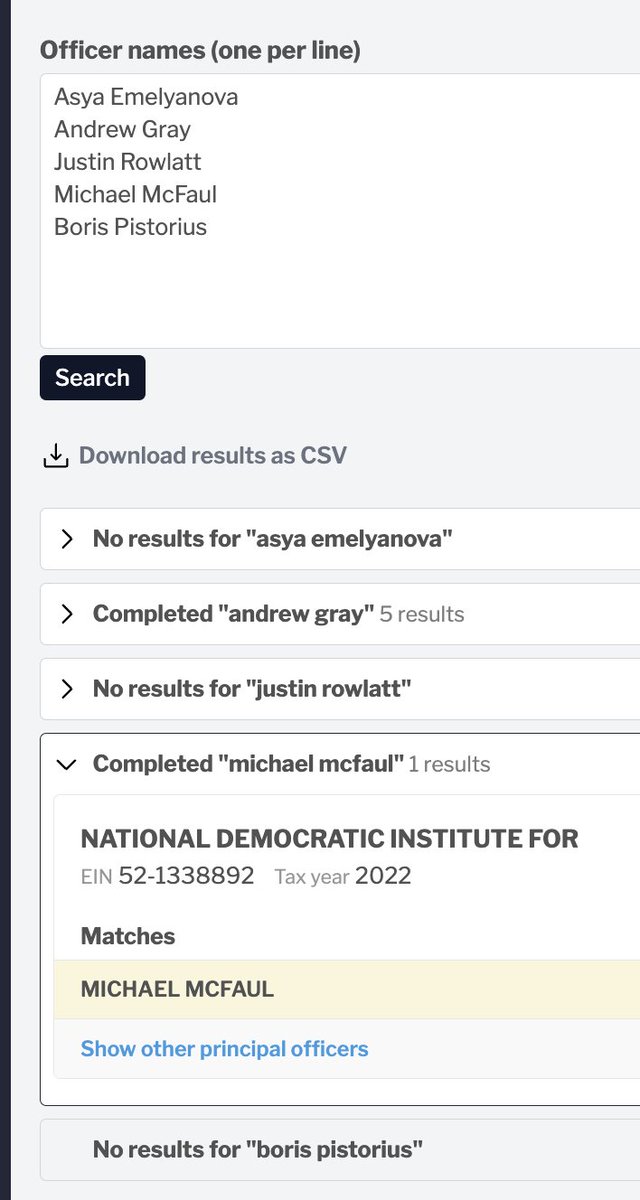
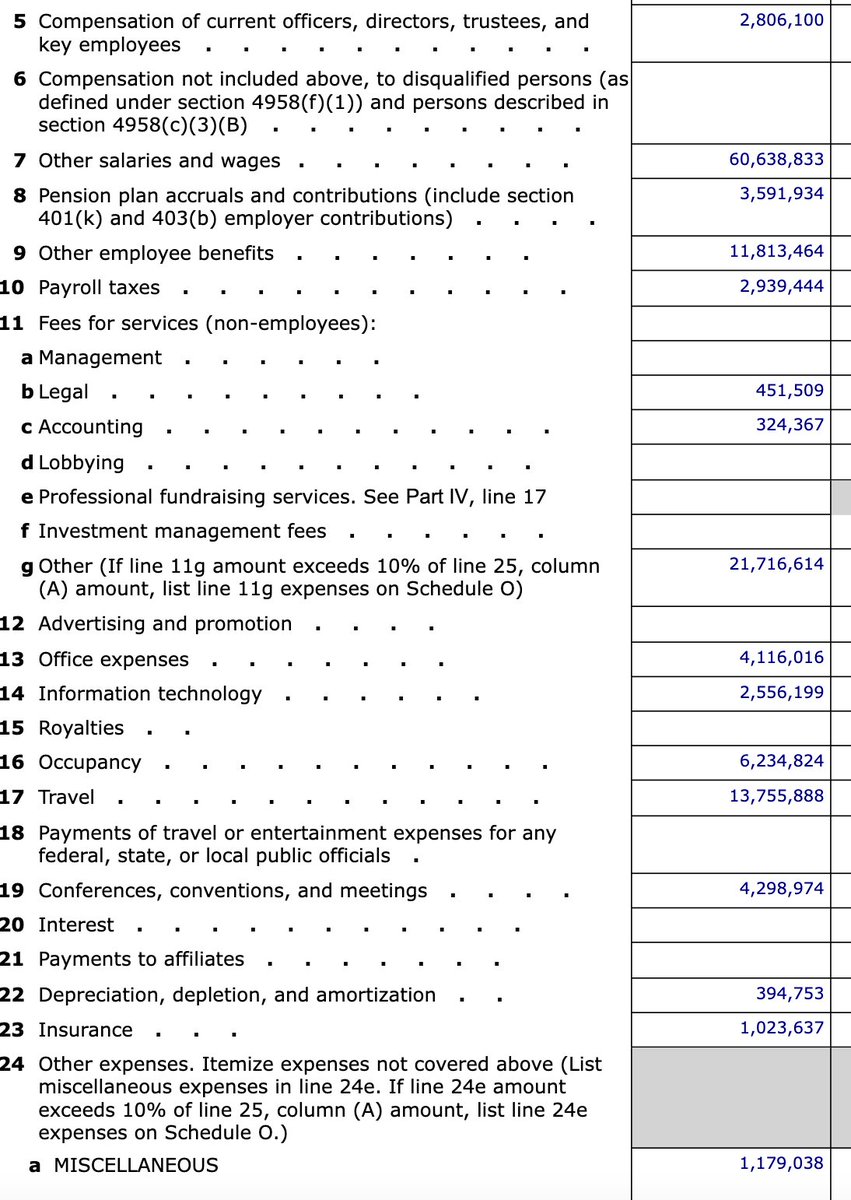
McFaul sits on the board of the National Democratic Institute, one of eight core Uniparty NGOs founded to fight communism but now rebranded as "democracy."
Nearly all of its $171 million annual budget comes from taxpayers, and I flagged them yesterday as a top spender of public funds on travel. The National Democratic Institute also admits to providing housing allowances for its members.
Always follow the money.


14
16 Feb 2025
15 Feb 2025
The extreme MAGA Republican budget will close hospitals, shut down nursing homes and deprive children of healthcare.
There are 215 Democrats in the House who actually want to love and cherish Medicaid, not destroy it.
We only need three House Republicans to join us.
17
16 Feb 2025
15 Feb 2025

NeverTrumpers are praising Danielle Sassoon for resigning from the DOJ's Southern District New York rather than comply with the new DOJ policy against weaponized investigations and prosecutions. Usually they emphasize her affiliations ... a few quick thoughts...
6
13 Feb 2025
11 Feb 2025

CNN Kaitlan Collins: "We are three weeks into the second Trump presidency, three weeks, and tonight, there are warnings that the U.S. is dangerously close to a constitutional crisis."
4
13 Feb 2025
12 Feb 2025

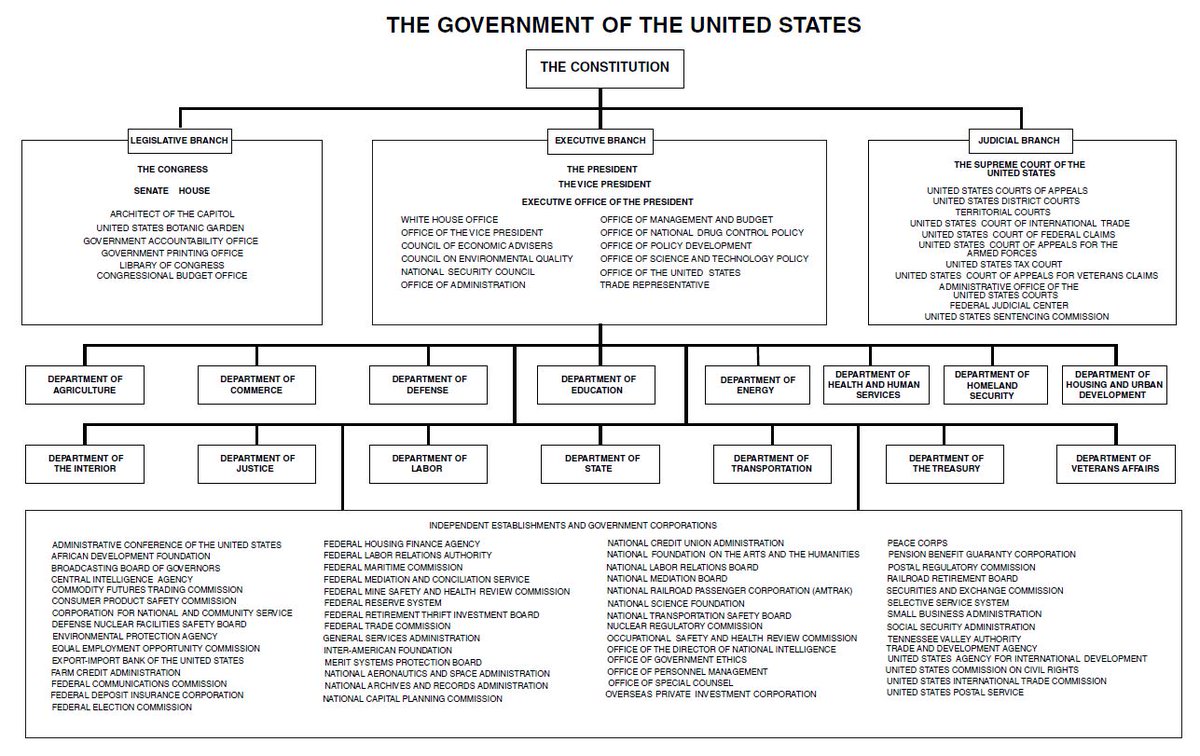
Here is the federal government org chart. Observe what the president controls vs. what the judiciary controls. These are executive agencies the actions of which only the president is held responsible.
5
13 Feb 2025
11 Feb 2025

Our society is held together by a thin but strong thread - the idea that courts decide when the law is broken, and all of us - including the President - abides by those rulings. Once that thread is broken, our entire society risks unravelling.
2
13 Feb 2025
Given the amount of corruption, fraud, waste and abuse in US government payments, ALL Inspectors General should be fired.
12 Feb 2025

I’m about to speak in my first hearing of the DOGE Subcommittee.
@GOPoversight even gave it a cute little name: The War on Waste.
But here’s the twist - Trump FIRED all the government watchdogs whose job it is to FIND waste and abuse.
Make it make sense! (You know they can’t)
2