Resident fly pusher @PMB_Berkeley | Evolutionary geneticist, interested in toxins, insects, microbes | she/her | Midwesterner | Black Lives Matter

Joined August 2019
129 Photos and videos
Pinned Tweet
Final version out today in @CurrentBiology! Thanks to our excellent reviewers for their helpful suggestions that improved our manuscript: sciencedirect.com/science/ar…

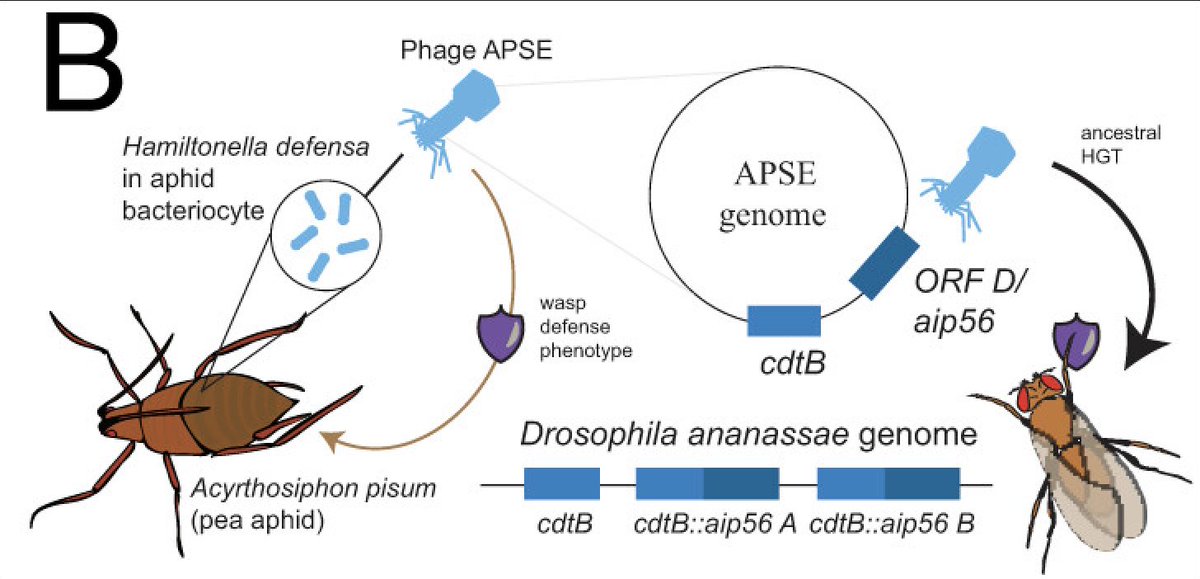
🧵Excited to share my first author preprint detailing much of my dissertation work! Here we used gene editing to retrace the horizontal transfer of a bacterial gene that now encodes an anti-parasitoid toxin in Drosophila: biorxiv.org/content/10.1101/… /1
6
3
20
1,357
Final version out today in @CurrentBiology! Thanks to our excellent reviewers for their helpful suggestions that improved our manuscript: sciencedirect.com/science/ar…

🧵Excited to share my first author preprint detailing much of my dissertation work! Here we used gene editing to retrace the horizontal transfer of a bacterial gene that now encodes an anti-parasitoid toxin in Drosophila: biorxiv.org/content/10.1101/… /1
6
3
20
1,357
You can also find me on the other place now — handle is tarnopol[at]bsky[dot]social !
1
137
Rebecca Tarnopol retweeted
In 5 of 5 battles, the Velvet Ant survived the attack and we could see its stinger clearly deployed in every case. Everything happens pretty quickly but we actually see that the Mantis releases its grip at the precise moment when the stinger penetrates the forelimb. Nature is 🤯
2
3
20
2,913
Rebecca Tarnopol retweeted
Brat summer is never ending! I’m proud to announce the release of my thesis project on BioRxiv: biorxiv.org/content/10.1101/… In this paper, we unravel the mysterious roles of RickA and Sca2 in cell-to-cell spread and pathogensis during infection with R. parkeri.
4
7
23
2,133
Rebecca Tarnopol retweeted
My very first first-author research article is officially available @ISMEJournal! See what it’s like for a bacterium to live off Chlamy’s photosynthesis under continuous &diurnal light. doi.org/10.1093/ismejo/wrae1…
5
9
58
1,922
Rebecca Tarnopol retweeted
My first, first author paper is out in @ISMEJournal ! Over the past few years in the @UCBTagaLab we have been learning about how soil bacteria share corrinoids, largely thanks to funding from @DOEScience. Here, we got some answers by studying isolates.🧵 doi.org/10.1093/ismejo/wrae0…
8
8
30
3,413
Rebecca Tarnopol retweeted
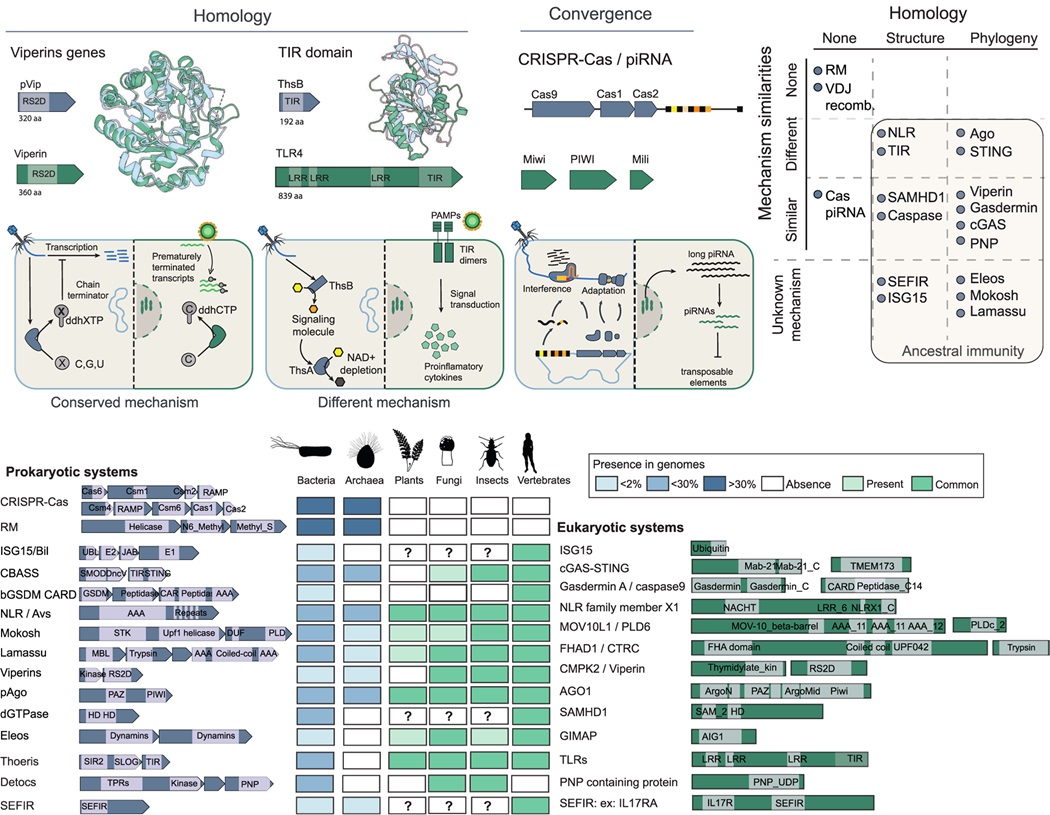
Ancestral immunity: @EnzoZ_P @AudeBer &co explore the concept of ancestral #immunity - the set of immune modules (domains & proteins) conserved between #prokaryotes & #eukaryotes - including a putative evolutionary scenario for its existence #PLOSBiology plos.io/4cJNLRm
2
73
195
59,306
It’s been super fun to see out this project that started from initial ideas I had when I first met with @NKWhiteman in February 2020 to discuss the possibility of joining his lab. I think this study has a little something for everyone, and I've learned a lot in the process! /16
1
4
671
This work would not have been possible without our wonderful collaborators in the @LipinszkiLab and Ando Lab and two wonderful undergraduate mentees Jossie Tamsil and Ji Heon (Jaden) Ha! /17
2
1
4
690
I’m excited to follow up on some of these findings in my last year of my PhD. I’m also looking for postdoc positions in functional evolutionary genetics to start next summer — if you’re hiring, I’d love to chat! 18/18
1
7
2,982
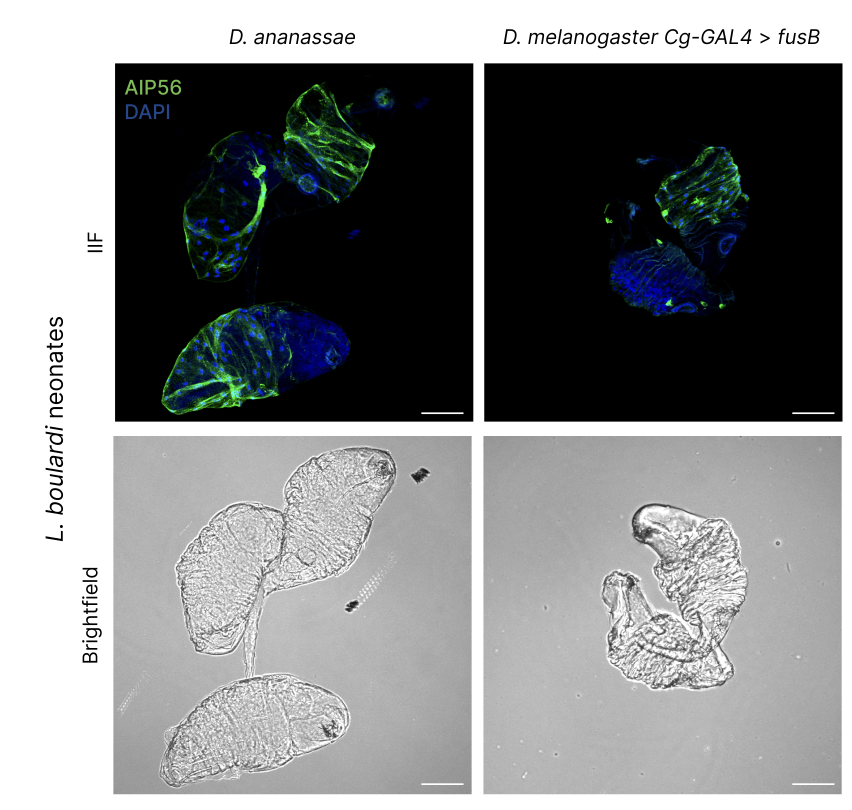
FusionB, a functional nuclease, was secreted into host hemolymph, where it targeted the serosal tissue of developing wasps in both D. ananassae and our D. melanogaster system. This tissue normally helps the wasp gain nutrients from the host and manipulate host physiology. /12
1
4
493
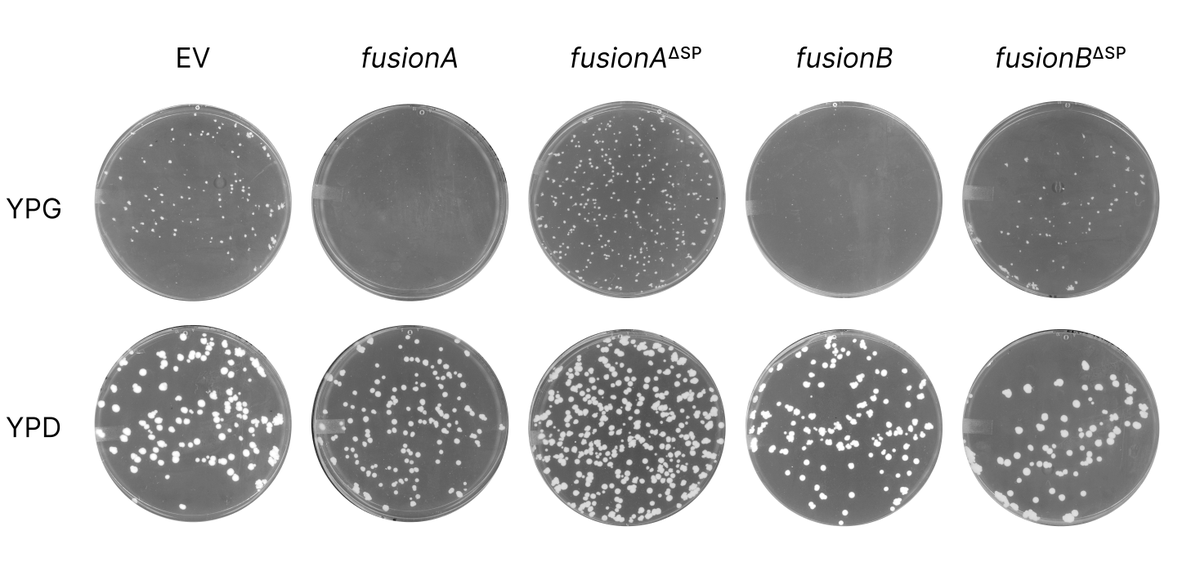
Finally, we turned to yeast to dissect which domains were required for Fusion toxicity. We found that both Fusion paralogs induced potent growth defects in yeast through their CdtB domains, but toxicity was contingent on their secretion. /15
1
4
466
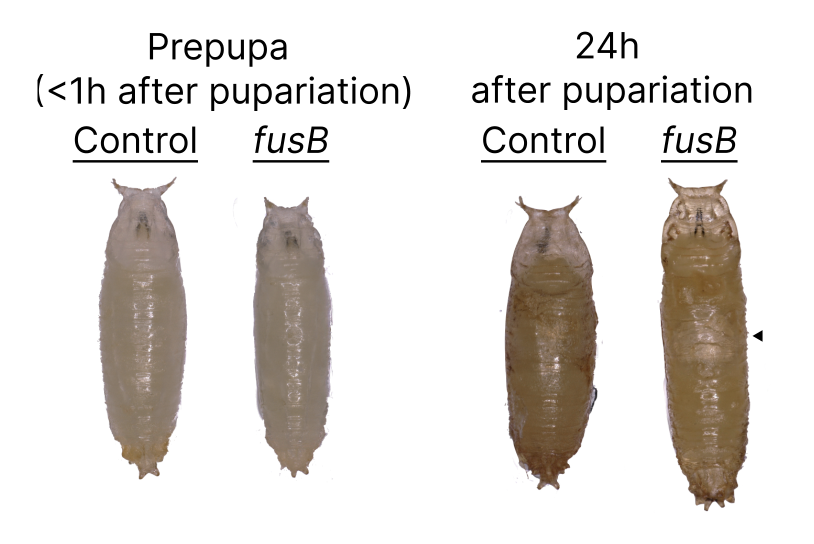
Regulatory constraint seems to be key. We found constitutive fusionB expression resulted in delayed pupariation followed by death at early pupal stages, providing experimental evidence for hypotheses on the role of gene regulation in promoting prokaryote-to-animal HGT. /14
1
6
470
To our knowledge this is the first toxic humoral anti-parasitoid factor in Drosophila, where known parasitoid immune defenses are largely cell-mediated. But what prevents this secreted toxin from harming the host? /13
1
3
483
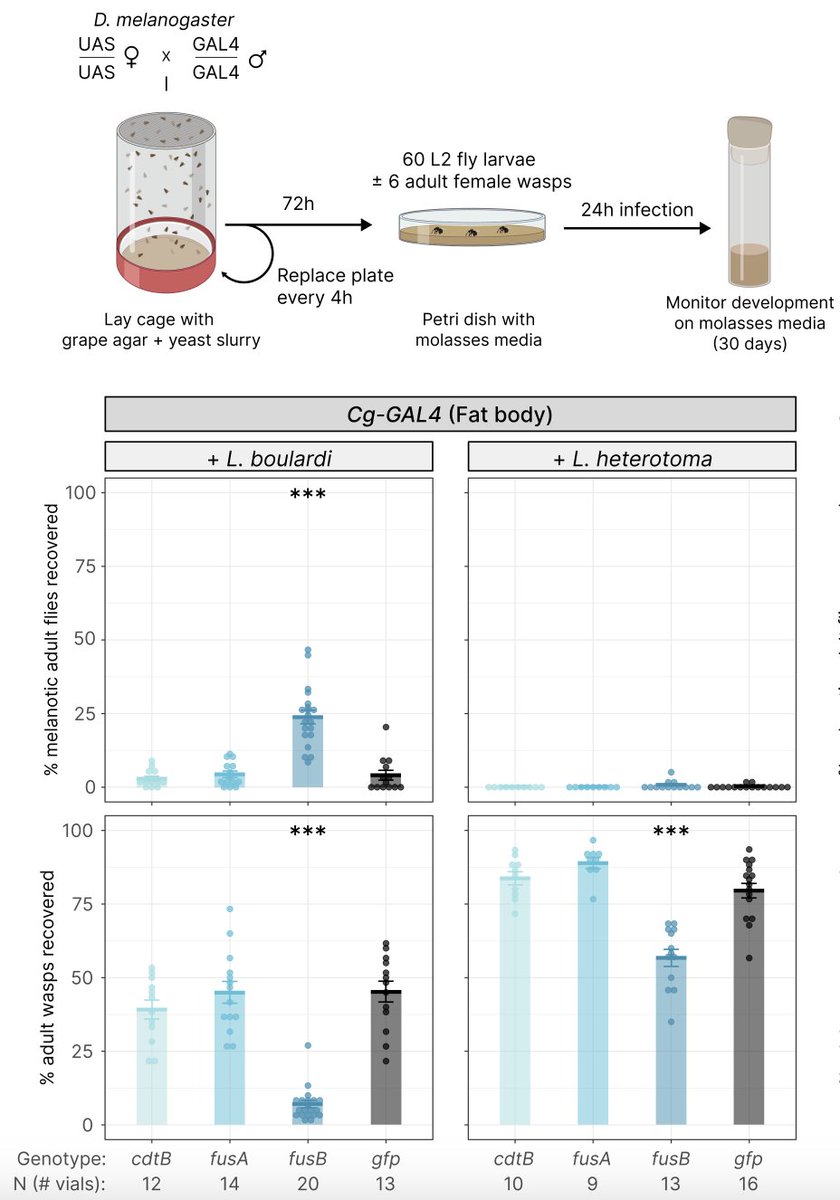
In an experiment I was convinced would not work (!), we found that one of the fusion genes — fusionB — conferred a strong anti-parasitoid phenotype when it was expressed in the same immune tissues where it is expressed in D. ananassae (fat body and hemocytes)! /11
1
5
506
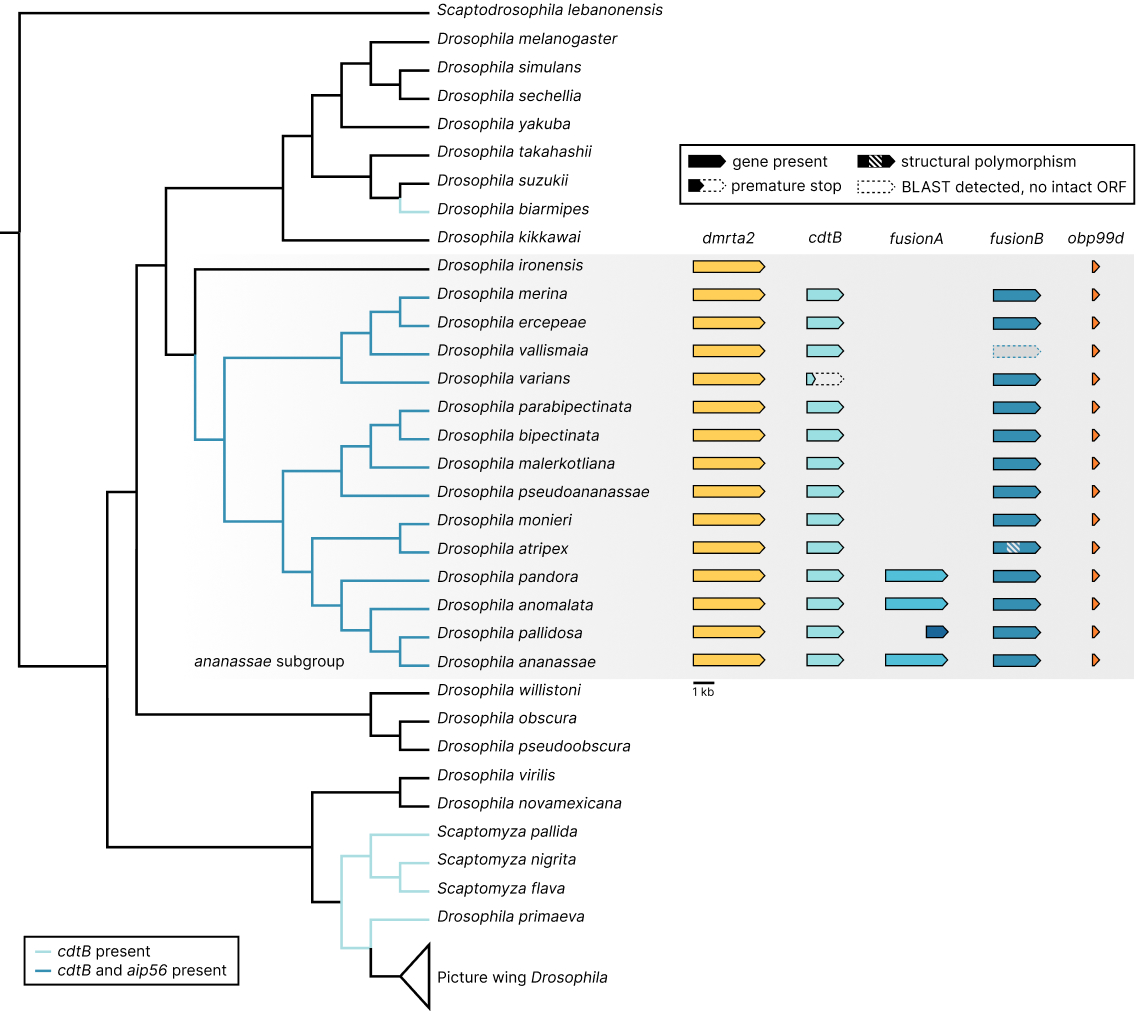
We focused on Drosophila ananassae, which encodes a standalone full length cdtB homolog and two cdtB::aip56 “fusion” genes. With help from @Bernard_Y_Kim, we found these genes are conserved across almost all sequenced ananassae subgroup species. /7
2
4
453
To address these questions, we engineered D. melanogaster to express each of the three D. ananassae toxins. Because D. melanogaster does not natively encode these toxins, we could recapitulate the HGT event in a naive drosophilid background. /10
1
4
535
But there were still many questions! Were these toxins directly involved in parasitoid resistance? And if so, how do insects use these toxins to neutralize insect predators without harming themselves? /9
1
3
504
Kirsten (@kirvers) and our fantastic collaborators in the @LipinszkiLab and Ando Lab demonstrated that these genes were expressed in immune tissues and were necessary for D. ananassae to mount its full immune response to parasitoids: pnas.org/doi/full/10.1073/pn… /8
1
3
436