
Writer of artisanal software and bugs.
Joined August 2010
- Tweets 5,307
- Following 156
- Followers 708
- Likes 243
378 Photos and videos








as an unwilling snap bag holder, i find this deeply disappointing.
i’m genuinely curious what evan’s internal reasoning is here.
why devote scarce attention, talent, & capital to something like this when the core business still feels so obviously unresolved?
like i want to be generous.
i just can’t think of anything generous.

Jun 17

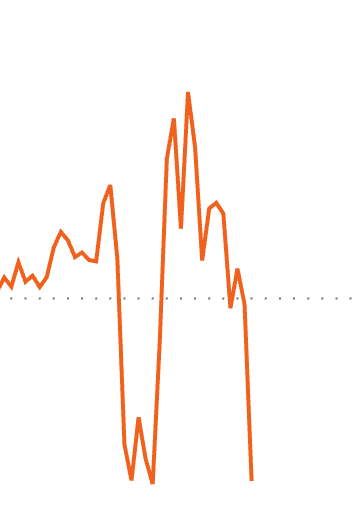
JUST IN: Snap stock plummets -10%.
108
16
686
174,641

Jun 16
"Copy one binary to a server" is a real Go advantage.
But production still has secrets, logs, migrations, backups, rollbacks, TLS, process supervision, rate limits, and incidents.
Source note: Blain Smith's "Just Fucking Use Go"
blainsmith.com/articles/just…
11
Jun 12
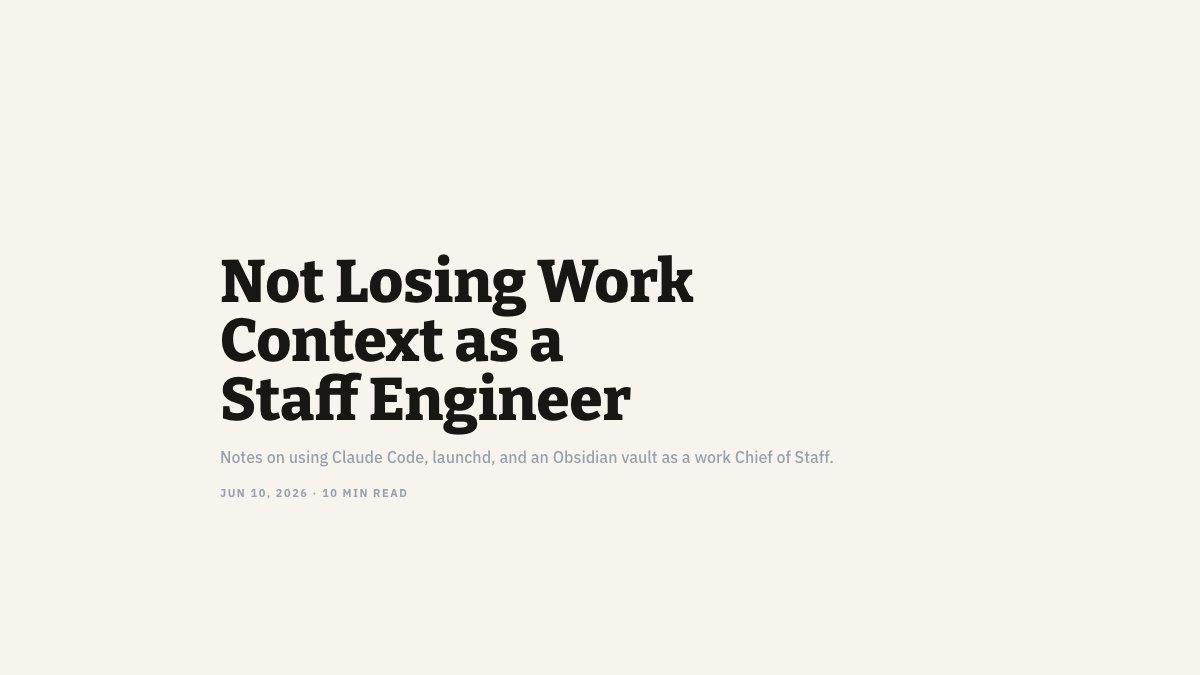
I’ve been running a small experiment at work: Claude Code launchd Obsidian as a lightweight Chief of Staff to keep work context from evaporating across Slack, meetings, Jira, email, and half-made decisions.
1
2
52
Jun 9
Writing SQL directly is not the problem.
The problem is SQL with no boundary: query strings in handlers, manual scanning beside response rendering, and no review surface.
Source note: Blain Smith's piece on Go API structure
blainsmith.com/articles/buil…
2
32
Alex Navasardyan retweeted

Mar 31
畑にエンジニアを1人雇った。名前はCodex。
ビニールハウスの換気をLINEから遠隔操作するシステムを作ってくれた。コードだけでなく、配線の設計等でも活躍。農家は面白いAIの使い道が色々とあるんじゃなかろうか。


85
690
5,025
747,673
Jun 2
hm that’s an ugly phone. my favourites (by a country mile) were old nokia phones
Jun 2

Officially 1 month since I switched to a flip phone.
- Everyone is more severely addicted to their smartphones than I thought. Once you have a dumbphone, you'll frequently find yourself as the only person in the room not on their phone. It's not just teenagers, it's parents and adults of all ages. It's like everyone is stuck in a trance. 75 year olds might be the only exception.
- All the objections I previously had for getting a dumbphone have turned out to be overblown and/or solvable. My iPhone addiction had fed my brain excuses to not do this earlier. If you really want to make the switch, you can.
- I've felt embarrassed to pull out my flip phone in public at times, for fear of being different or drawing too much attention to myself. But I have learned to just own up to it. Most people end up saying something like "Oh, I probably should do that too."
- I am using my brain more. Even though my flip phone has Waze, I find myself memorizing maps and roads. I'm more bored and get lost in my thoughts. I'm using paper and pen more. Increased desire for tangible things > digital things.
Overall, it has been a great experience and I plan on never going back.

18
Jun 2
A framework earns its place when it removes repeated product/security/coordination work a team would otherwise rebuild unevenly.
The risk of "no framework" is a private framework.
Source note: Blain Smith's piece on Go API structure
blainsmith.com/articles/buil…
41
May 28
don’t outsource the thinking
May 28

I've got an agent in a loop optimizing a renderer with the goal to minimize frame times (and tests to measure). It got times down from 88ms to 2ms and allocations down from ~150K to 500. Sounds good, right? Wrong. This is exactly why agent psychosis is a big fucking problem.
As an experiment, I rewrote the Ghostty core render state in Go, with access to identically laid out data structures as Ghostty and the exact same validation tests. I made a purposely naive renderer (simple, correct, but slow). 88ms per frame with 150,000 allocations (horrendous, lol)!
I then kickstarted a Ralph loop to bring the frame times down. I told it it can't modify input data structures or the public API or tests (they're correct), but it can do anything else it wants. It got to work.
It has worked for about 4 hours. I've spent around $350 on this experiment so far. The results?
88ms => 1.5ms
150K allocs => ~500 allocs
Incredible right? Nope.
My hand-written renderer I ported has frame times (same benchmark) of ~20us (0.020ms) and 0 allocations in the update path.
This is the problem with psychosis and lacking systems understanding. If you don't understand the system, you're going to accept that this is an incredible result. If you understand the system, you'll see better solutions immediately and can do roughly 75x better on throughput.
The people who blindly trust agent output are in the former camp. They're sheeple, overdrinking from a fountain of mediocrity.
Standard disclaimer: I use AI all the time. I like AI. The point I'm making is to not blindly accept results. Think. Analyze. Learn.
31
May 23
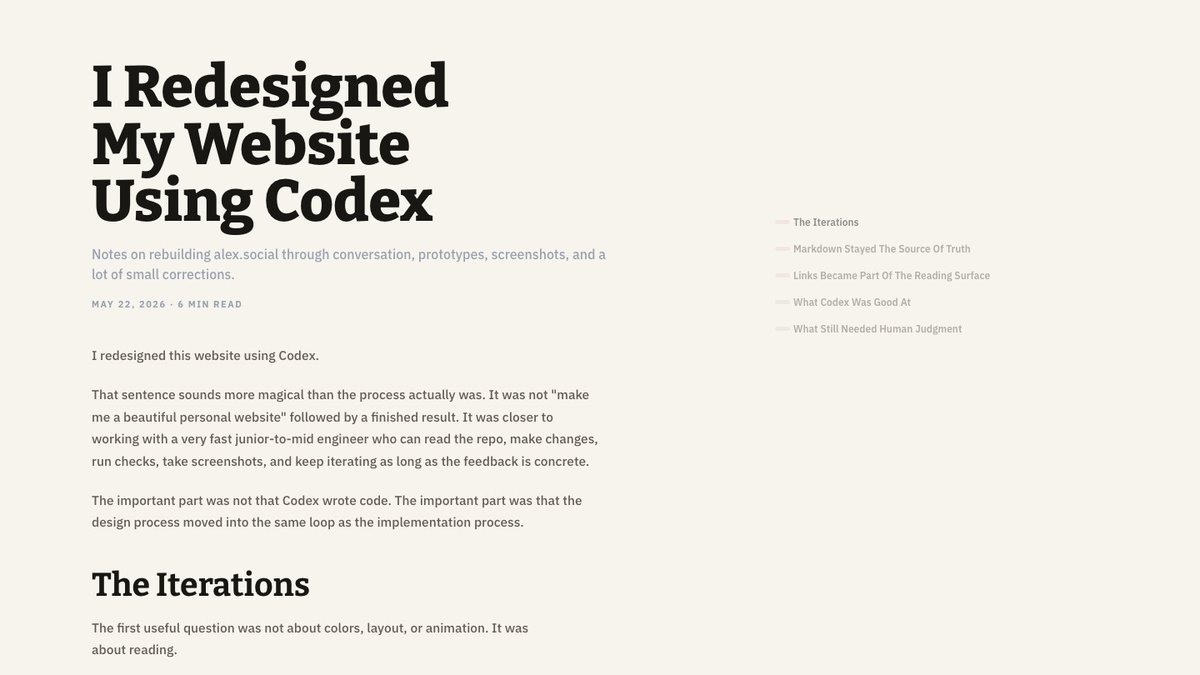
I redesigned my website using Codex.
The interesting part was not that AI wrote code.
It was that taste and implementation moved into the same loop.
1
52
May 16
that’s why, whenever people bring up AI in the conversation, i tell them the biggest question to answer is “who am i?” which leads to finding purpose amongst other things. people look at me, like i’m crazy. it’s hard, i understand.

The vibes in SF feel pretty frenetic right now. The divide in outcomes is the worst I've ever seen.
Over the last 5yrs, a group of ~10k people - employees at Anthropic, OpenAI, xAI, Nvidia, Meta TBD, founders - have hit retirement wealth of well above $20M (back of the envelope AI estimation).
Everyone outside that group feels like they can work their well-paying (but <$500k) job for their whole life and never get there.
Worse yet, layoffs are in full swing. Many software engineers feel like their life's skill is no longer useful. The day to day role of most jobs has changed overnight with AI.
As a result,
1. The corporate ladder looks like the wrong building to climb.
Everyone's trying to align with a new set of career "paths": should I be a founder? Is it too late to join Anthropic / OpenAI? should I get into AI? what company stock will 10x next? People are demanding higher salaries and switching jobs more and more.
2. There’s a deep malaise about work (and its future).
Why even work at all for “peanuts”? Will my job even exist in a few years? Many feel helpless. You hear the “permanent underclass” conversation a lot, esp from young people. It's hard to focus on doing good work when you think "man, if I joined Anthropic 2yrs ago, I could retire"
3. The mid to late middle managers feel paralyzed.
Many have families and don't feel like they have the energy or network to just "start a company". They don't particularly have any AI skills. They see the writing on the wall: middle management is being hollowed out in many companies.
4. The rich aren’t particularly happy either.
No one is shedding tears for them (and rightfully so). But those who have "made it" experience a profound lack of purpose too. Some have gone from <$150k to >$50M in a few years with no ramp. It flips your life plans upside down. For some, comparison is the thief of joy. For some, they escape to NYC to "live life". For others still, they start companies "just cuz", often to win status points. They never imagined that by age 30, they'd be set. I once asked a post-economic founder friend why they didn't just sell the co and they said "and do what? right now, everyone wants to talk to me. if i sell, I will only have money."
I understand that many reading this scoff at the champagne problems of the valley. Society is warped in this tech bubble. What is often well-off anywhere else in the world is bang average here.
Unlike many other places, tenure, intelligence and hard work can be loosely correlated with outcomes in the Bay. Living through a societally transformative gold rush in that environment can be paralyzing. "Am I in the right place? Should I move? Is there time still left? Am I gonna make it?" It psychologically torments many who have moved here in search of "success".
Ironically, a frequent side effect of this torment is to spin up the very products making everyone rich in hopes that you too can vibecode your path to economic enlightenment.
1
42
Alex Navasardyan retweeted

🚨 NASA's James Webb Space Telescope just dropped a new image of galaxy M77

33
262
2,695
99,507
Alex Navasardyan retweeted

May 9
May 9

i spoke to a founder yesterday - their CTO finally read their agent-made codebase after months and panicked when he realized it was impossible to understand wtf was going on
my rule of thumb is: if your codebase starts written by agents, don’t try to understand it
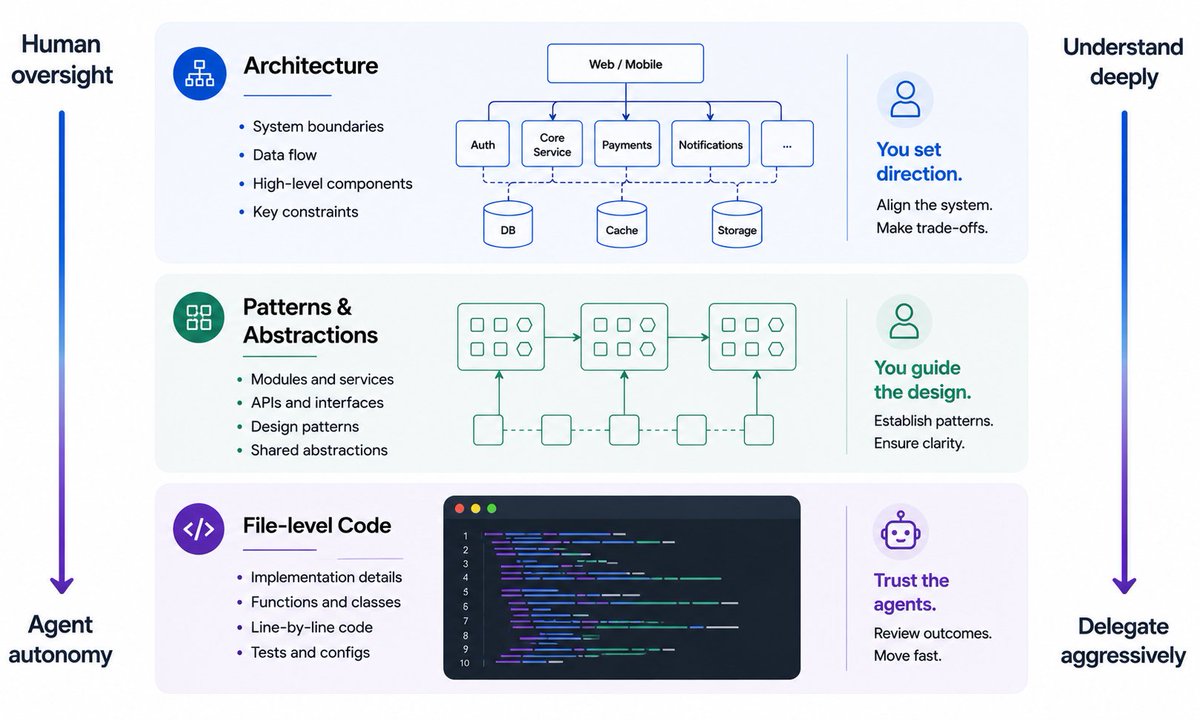
instead, align at the architectural level before any building happens, and ask the agent to maintain a living architecture diagram of how the system works
there are three altitudes that matter:
- Top-level: architecture
- Mid-level: patterns & abstractions
- Low-level: file-level code
in today’s world, a CTO should be deeply concerned with #1. #2 matters too, but not as critical as #1.
if #1 and #2 are dialed in, #3 is where most of the high leverage agentic gains live.
as long as you understand the architecture and critical interfaces, it becomes much easier to reason about ground truth and meaningfully iterate
understanding and informing the architecture / patterns / abstractions give your codebase maximum longevity and agent maintainability
2
2
44
10,296
Apr 16
i do not understand the hype behind @claudeai's new claude code app - TUI tmux combo works nicely & is fast.
67
Alex Navasardyan retweeted

Apr 13
Japanese high school teacher Hirotaka Hamasaki draws amazing blackboard art for his students, then erases it to show the beauty of letting go.
259
6,943
60,561
2,315,754

Alex Navasardyan retweeted

Apr 6
Excited to announce a new open-source, free-to-use memory tool I have been developing with my good friend @MillaJovovich.
The project is called MemPalace and it is an agentic memory tool that scored 100% on LongMemEval - the industry standard benchmark for memory… this is higher on than any other published results - free or paid - and it is available now on GitHub.
You can check out Milla’s video about it on her Instagram.
I’ll also put some links in the comments below - please try it out, critique it, fork it, contribute to it - and join our discord.

140
344
3,103
2,005,550
Apr 4
This is not how jiujitsu works. You use your opponent’s force against them with minimal energy expenditure. What the US is actually doing is the opposite — spending billions on munitions, deploying thousands of troops, crashing global oil markets, triggering 5% inflation, stalling job creation to zero, and alienating every ally. That’s not leverage — that’s brute force with massive collateral damage to yourself.

Bessent: “In essence, we are jujitsuing the Iranians. We are using their own oil against them.”
34
Apr 3
It seems like @AnthropicAI is cutting the third-party usage (goodbye @openclaw) from your subscription-all usage will be billed as extra now. It was good while it lasted. More cuts to come I’m sure. Kudos for giving extra month in usage: I can’t apply it just yet; hopefully, it works eventually

45