
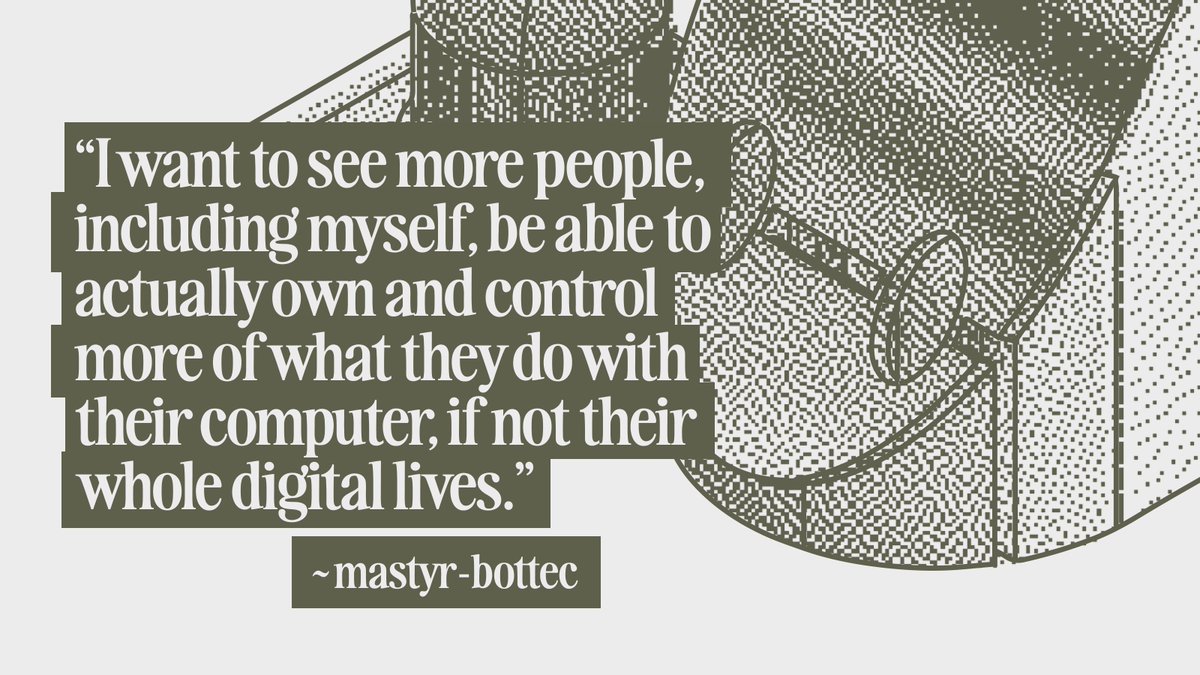
Urbit is a computer built with networking, ownership, and durability as foundational design principles. A computer that you can trust to be yours, forever.
Joined September 2013
- Tweets 7,395
- Following 117
- Followers 33,274
- Likes 10,155
1,313 Photos and videos



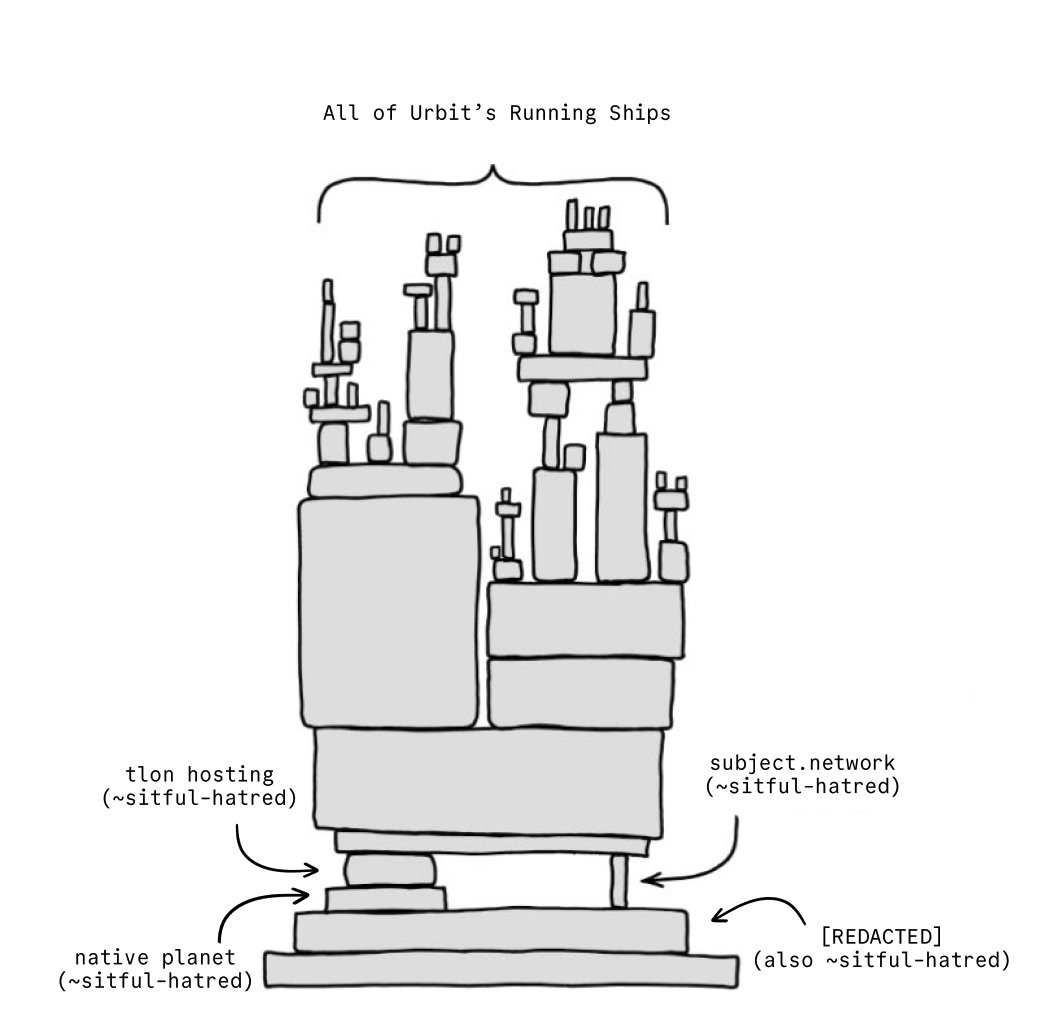


This month in Urbit:
- %notes from @hmillerdev for @obsdmd enthusiasts
- %claw from @sitful_hatred puts fully deterministic llm inference natively in your urbit
- @malmurhalmex's experimental adapter for connecting Tlon Messenger to your @NousResearch Hermes agent
- %boox from ~sitful-hatred enables peer-to-peer epub sharing with your %pals, enhanced with @theannasarchive
Read the post and hop on the network to learn more 👇🏻
6
2
44
3,925


Honestly, everyone is sleeping on this.
Urbit developers have a platform that gives them zero marginal cost of an additional user.
We've got work to do in improving core; Directed Messaging (for speeding up networking), Vere64 (for handling large data storage), and Subject Knowledge Analysis (for improving Nock performance), but those things are all underway. Then next up is improving security and reliability.
But that's our job. And what do you get for it? A (free and open source) platform that entirely kills your need to do devops, take on infrastructure costs as your userbase grows, or manage the risk of holding all your users' data on servers that you control.
Not 'almost zero marginal cost' like developers got with the SaaS model. Zero, Zilch, Nada. Write software people want, they install it from you and run it themselves, and you don't have to manage a growing cluster of AWS EC2 instances, or build out a compliance department that checks to see if your users live in the EU or California.
In the era of 1-person dev teams coupled with AI to build useful tools, Urbit presents a pathway by which software that people want doesn't have to ballon up to a corporate enterprise. Where if you make something interesting, success doesn't mean building a MEGACORP just to be able to serve a growing userbase.
You write your software, you run your urbit, and you distribute your app p2p. Simple as.

Urbit requires zero dev ops
2
2
24
1,136


The advertising arms race continues and the bodies left in the wreckage will be that of the open internet.
Sure, you could turn of JS, block websockets, or do any other number of things to protect yourself from psychological manipulation by those who want to capture your attention for their profit. And then they'll come up with some other way to get their hooks into your digital life.
But are you asking yourself, "is this the kind of networked digital experience that I want to have in the first place?"
'Web1' was an era of p2p file sharing, quirky homepages, and genuine interaction. You could even say it became 'Web2' at the point at which corporations captured effective mechanisms by which they could intercept your relationships and redirect your attention to their ads, their data collection layers, their interests.
'Web3' is trying to figure out how to put that monetization into the hands of users, rather than making it purely extractive. A noble goal, perhaps. But is it really just the subtle acceptance of a flawed premise? Do you really want your experiences categorized, monetized, and resold to the highest bidder?
The true path forward almost certainly has to be one where your digital spaces belong to you, and the digital spaces of others belong to them. This isn't to say 'There will never be any branded content allowed," but rather than the digital spaces we inhabit should belong to us.
Would your friends serve you an unblockable ad? Would you try to block the revenue stream of someone you knew and cared about?
In the same way that a Metallica poster on your bedroom wall could be either an ad or a genuine display of fandom, if someone entered your bedroom they would be there to admire it, not rip down your decorations.
Or if you went to a coffee shop that had bright flashing lights and annoying radio ads running constantly, you wouldn't continue going there--but you also wouldn't enter the building and rip out the A/V system.
If we put people digital spaces back in their hands--instead of depending on MEGACORPS to build and maintain them for us--we would expect to see more beautifully curated experiences and less intermediated relationships that become misaligned with the values of the participants.
Of course, to get there you need to enable people to have their own always-on, networked computers. An address on the internet that they can trust to be theirs, forever.
That's Urbit.
6
15
788

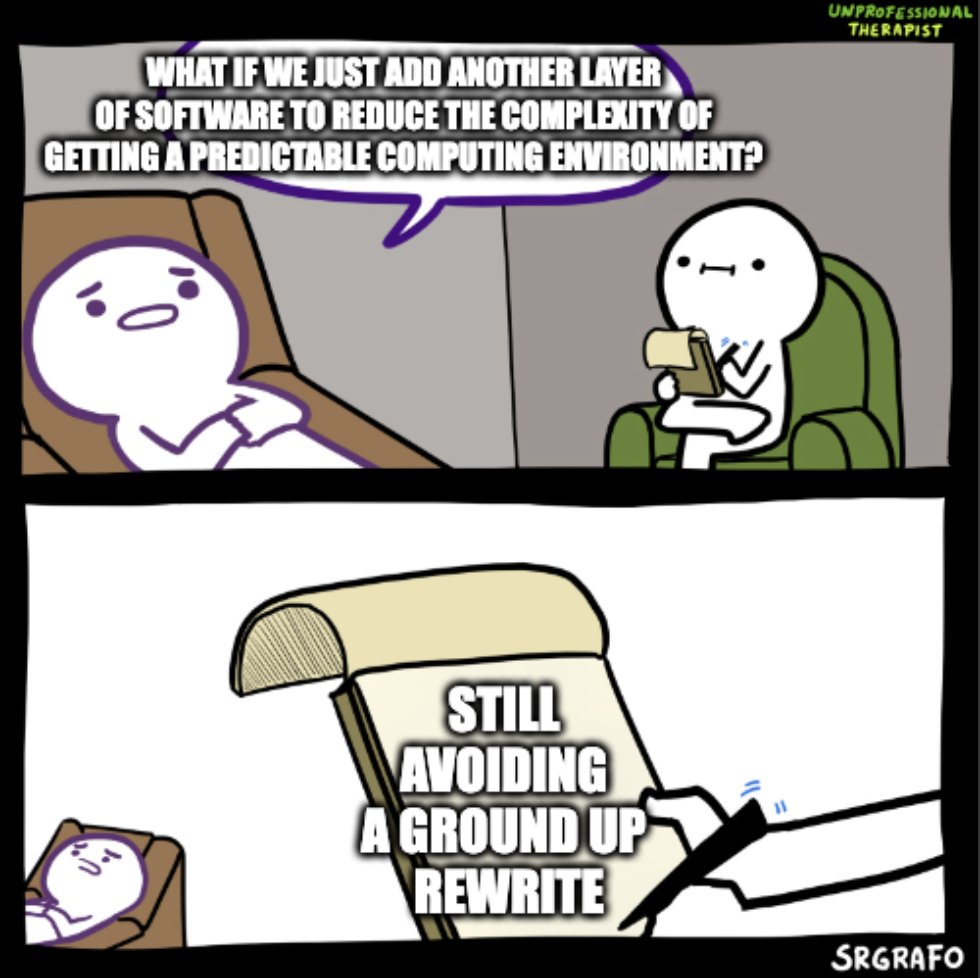
Virtualization, containerization, sandboxed environments... @Docker, Virtualbox, @Apple Container Machines, @nvidia OpenShell... the list goes on.
They all signal a demand, and one that existed well before the current probabilistic computing era: A consistent and repeatable environment in which you can run computation and manage controllable networked computing workloads.
Of course, the aforementioned are extra layers on the ever growing ball of mud. Bandaids on a bullet hole; complexity added to deal with existing complexity. A vicious cycle which must be broken.
These systems will have their time in the limelight, but to build systems that last, the complexity needs to be removed--rather than patched over.
"Nock was designed for virtualization long before Hoon was in anyone’s mind." - @sigilante
From the fervent simplicity of the Nock low-level instruction set--12 opcodes--to its nature as a purely functional and deterministic operating function, Urbit is designed to attack the complexity that makes having a predictable environment nearly impossible, particularly over a distributed network of nodes.
It is good to see more projects like Container Machines. Not only do they quickly attack an immediate need, but they are validation points that this type of problem remains a pain point in modern computing environments.
And continuing to fix them at the root of the stack?
That's Urbit.
Jun 9

One of my personal favorite features announced at WWDC will I suspect be a sleeper hit: container machines, allowing your Mac to run a lightweight, persistent Linux environment with your home directory and repos automatically mounted: github.com/apple/container/b…
2
8
922
Your urbit. Your data. Your knowledge.
Jun 9

I built an implementation of @karpathy’s LLM wiki idea inside Tlon Messenger by @tloncorporation. It runs on my Urbit ship as %lore.
One encapsulated environment for personal knowledge.
Source docs, q&a, wiki, and agent all live on a server you control.
➡️ Tlon Messenger is the chat layer: ingest docs, links, PDFs, YouTube videos, podcast, tweets, and webpages by messaging your agent.
➡️ %lore orchestrates the workflow: grabs raw sources, compile them into a wiki, answer questions, and files useful answers back into the knowledge base.
➡️ %notes stores the raw files compiled wiki as Obsidian-style markdown on your ship.
➡️ %hooks listens for ship-native events and reactions.
➡️ OpenClaw connects the agent to Tlon Messenger and handles the AI/tooling layer.
2
9
1,024
Urbit retweeted

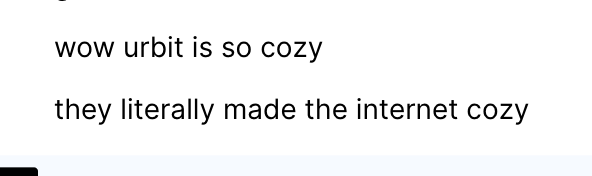
Urbit is becoming more important every day
Jun 8

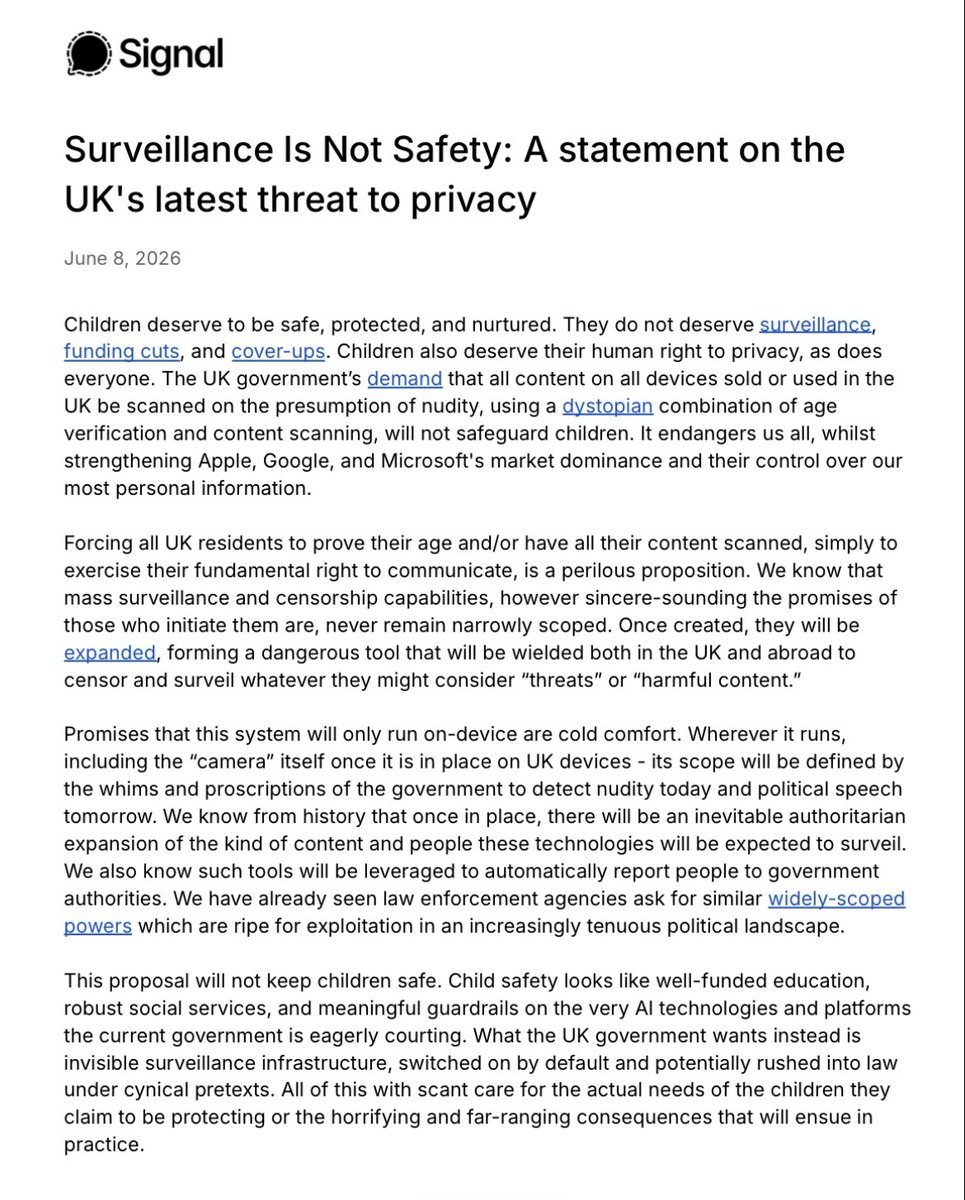
Our statement on the UK government’s demand that all content on all devices sold or used in the country be scanned, on the presumption of nudity, using a dystopian combination of age verification and content scanning. This proposal will not safeguard children. It endangers us all.
signal.org/blog/pdfs/2026-06…
3
13
1,097
Urbit retweeted

Jun 9
I built an implementation of @karpathy’s LLM wiki idea inside Tlon Messenger by @tloncorporation. It runs on my Urbit ship as %lore.
One encapsulated environment for personal knowledge.
Source docs, q&a, wiki, and agent all live on a server you control.
➡️ Tlon Messenger is the chat layer: ingest docs, links, PDFs, YouTube videos, podcast, tweets, and webpages by messaging your agent.
➡️ %lore orchestrates the workflow: grabs raw sources, compile them into a wiki, answer questions, and files useful answers back into the knowledge base.
➡️ %notes stores the raw files compiled wiki as Obsidian-style markdown on your ship.
➡️ %hooks listens for ship-native events and reactions.
➡️ OpenClaw connects the agent to Tlon Messenger and handles the AI/tooling layer.
5
8
24
2,440
Like with the separation of Church and State, the separation of Corporation and Computer is a process, not a binary.
You could use exclusively Urbit today if you like. Take your notes in @hmillerdev's %notes app. Store your reading materials in @sitful_hatred's %boox app. Do your messaging in @tloncorporation's Messenger.
You can distribute your own apps across the network after writing them directly in ~migrev-dolseg's %hawk editor that directly interfaces with your urbit's Clay filesystem. You can also use %hawk for writing your own little micro-apps like finance spreadsheets or guitar lesson materials (like @brbenji). The current affordances are theoretically, technically sufficient to deliver an end-to-end networked computing experience.
Naturally, closing yourself off via exclusivity to a given system has it's pros and cons. That's network effects for you.
But to answer your question: Today, if you so chose.
Yes, for most people that's not the right choice to make.
Admittedly, doing it as a binary leap of faith is unlikely to be the common path. Instead, people will do it piecemeal. Use it for messaging with your friends. Then for storing more and more files. Sharing that data peer-to-peer, and then doing more and more of your computation.
1
5
966
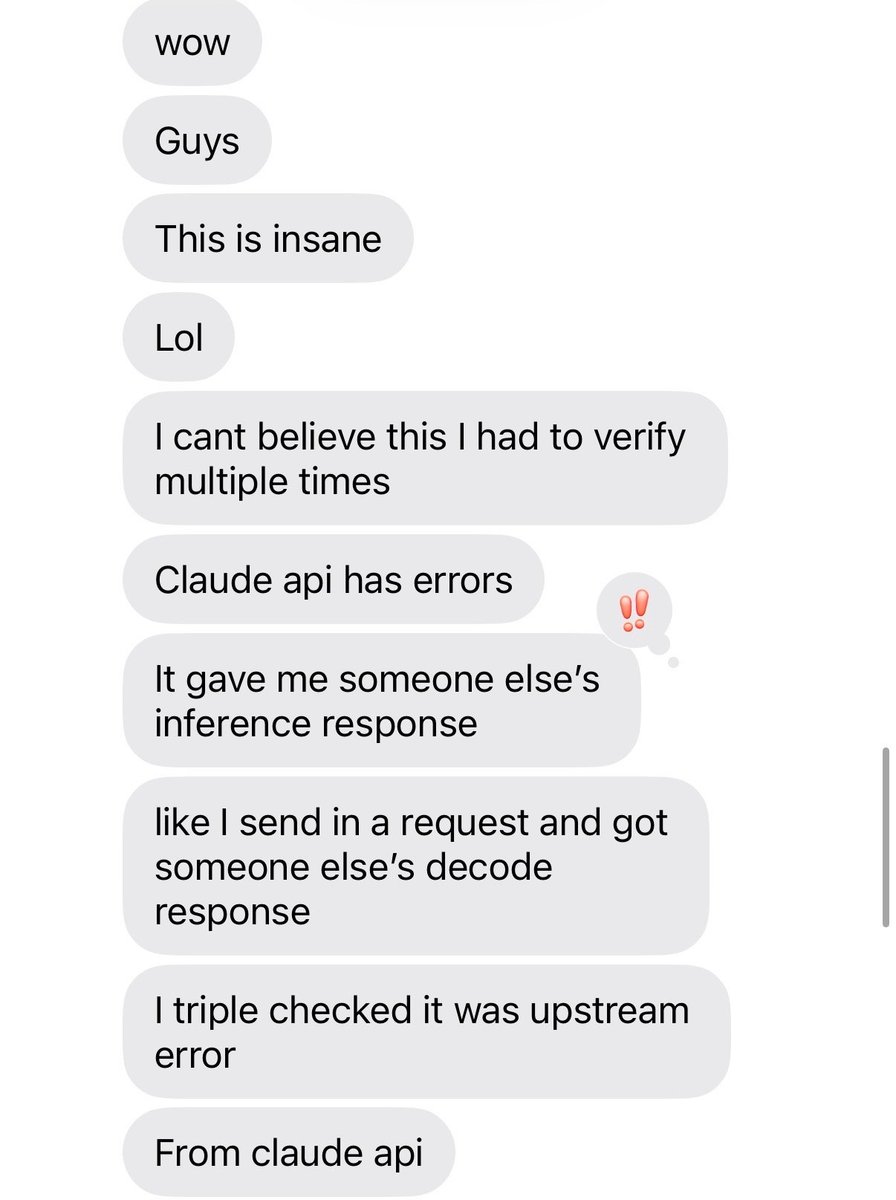
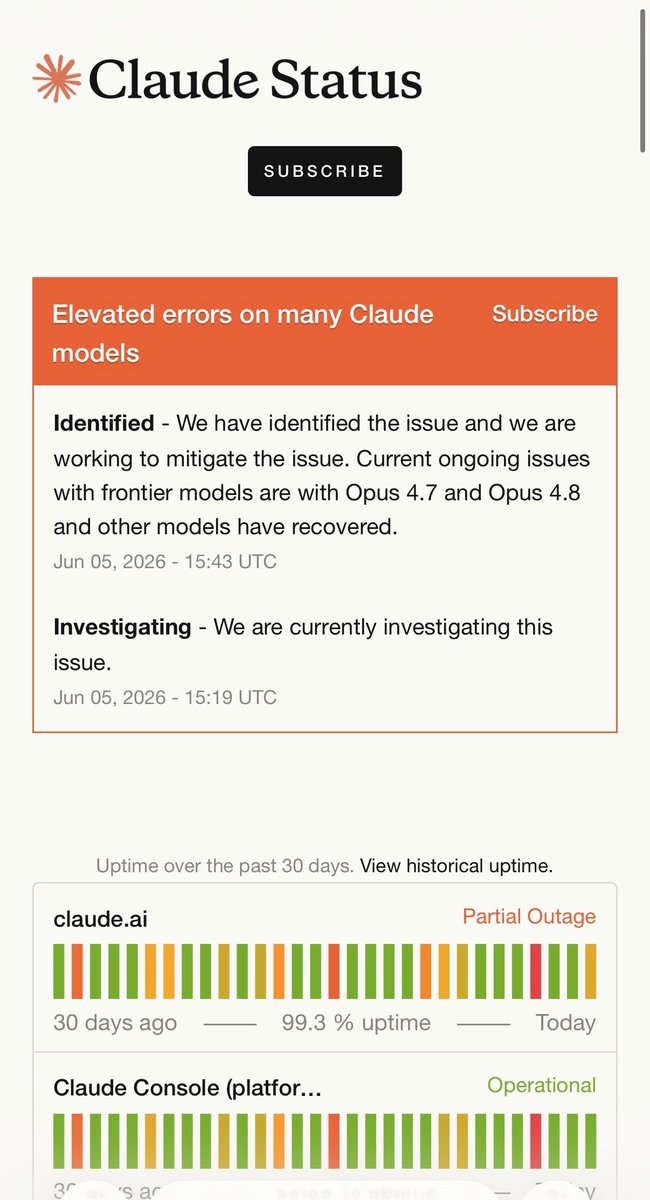
Your urbit would never...

1
9
2,397
This month in Urbit:
- %notes from @hmillerdev for @obsdmd enthusiasts
- %claw from @sitful_hatred puts fully deterministic llm inference natively in your urbit
- @malmurhalmex's experimental adapter for connecting Tlon Messenger to your @NousResearch Hermes agent
- %boox from ~sitful-hatred enables peer-to-peer epub sharing with your %pals, enhanced with @theannasarchive
Read the post and hop on the network to learn more 👇🏻
6
2
44
3,925
This month in Urbit:
- %notes from @hmillerdev for @obsdmd enthusiasts
- %claw from @sitful_hatred puts fully deterministic llm inference natively in your urbit
- @malmurhalmex's experimental adapter for connecting Tlon Messenger to your @NousResearch Hermes agent
- %boox from ~sitful-hatred enables peer-to-peer epub sharing with your %pals, enhanced with @theannasarchive
Read the post and hop on the network to learn more 👇🏻
6
2
44
3,925
Urbit retweeted

Jun 2
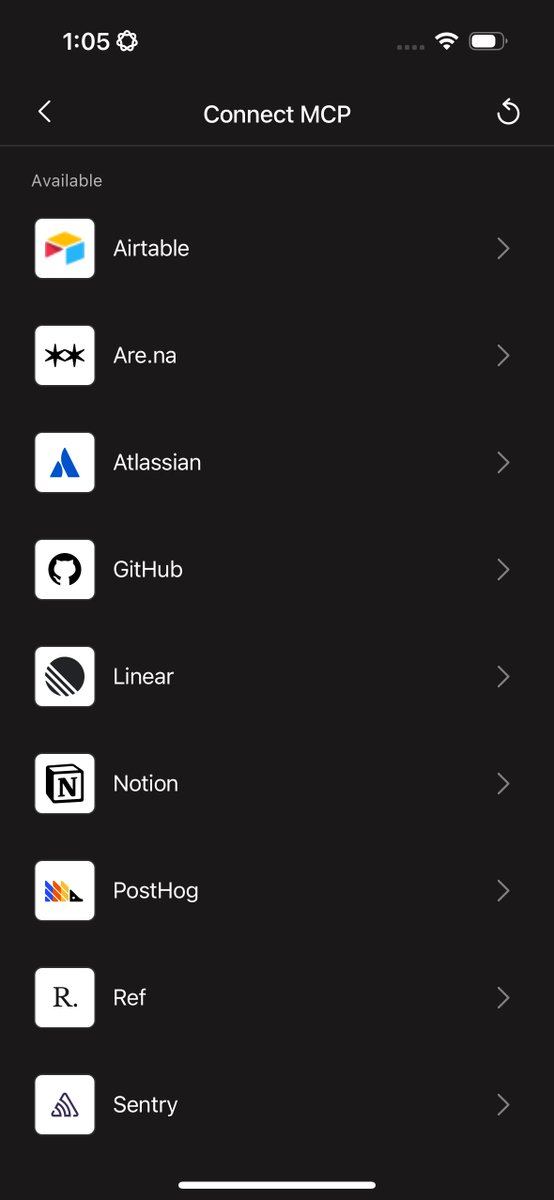
hosted users can now configure external integrations for your Tlonbot. your Tlonbot will then be able to use those services with one another - for example, read/write to Linear, examine GitHub PRs, manipulate Airtable bases, search Notion workspaces, and so on.
2
3
14
1,526