
theory of machine learning and inference on random graphs - PhD candidate @KCLDisorder 🌻
Joined March 2018
- Tweets 30
- Following 265
- Followers 127
- Likes 164
11 Photos and videos

12 Dec 2023
Heading to #NeurIPS23! Come say hi:
- at poster session 5 on Thu, presenting "Classification of Heavy-tailed Features in High Dimensions: a Superstatistical Approach" arxiv.org/abs/2304.02912v3, work with supervisors @gabrielescr @PierpaoloVivo at @KCLDisorder
1
4
12
792
12 Dec 2023
- at the Maths for Modern ML (M3L) workshop, presenting arxiv.org/abs/2306.07104, spearheaded by @maha81193, F. Behrens, @MolecularRobot
1
3
243
12 Dec 2023
or dm me: happy to discuss, especially on exact asymptotics in ML and robust statistics!
169
5 Dec 2023
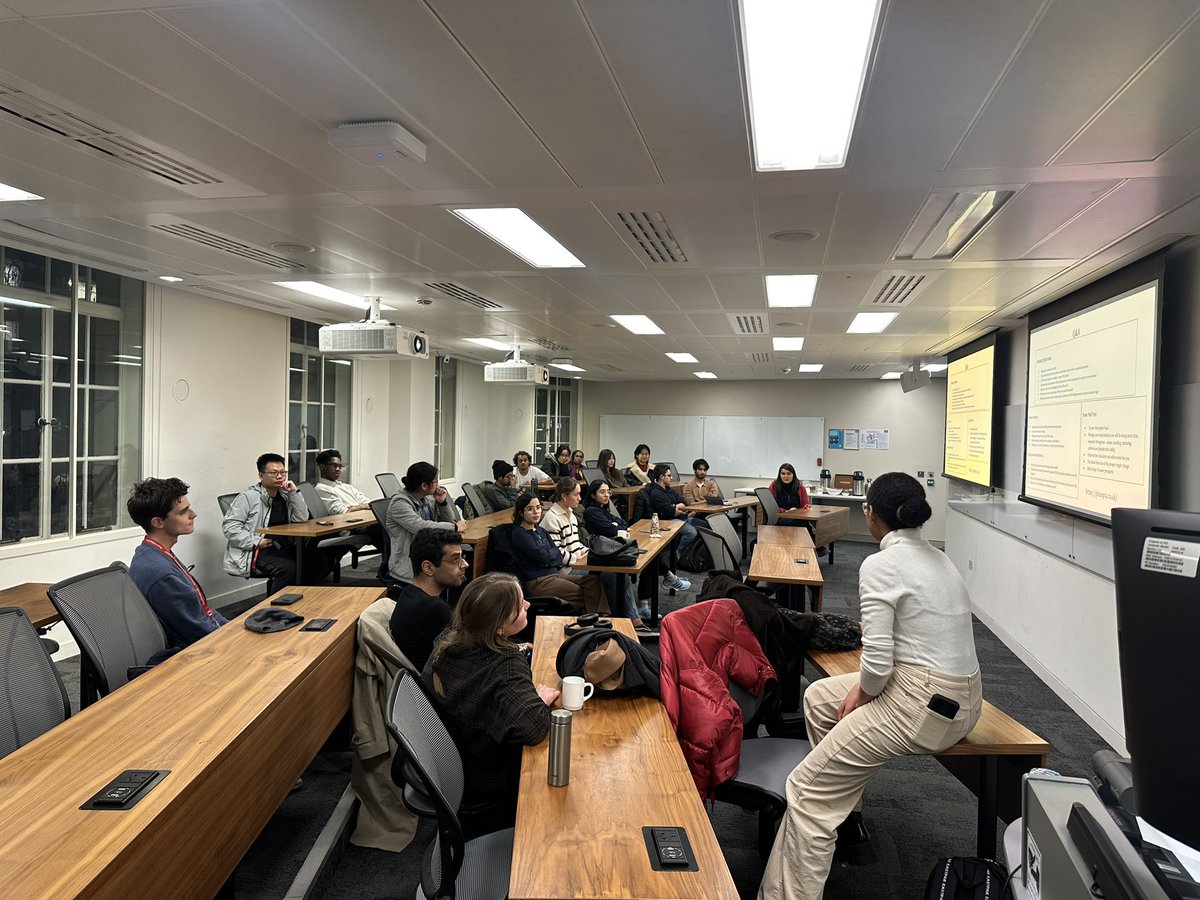
Another succesful PhD information event for our UG and MSc students at @kclmathematics under the umbrella of the @_Piscopia initiative 💅🏻 Big thanks to fellow PhD students L. Servius, A. Borkowski and @ShahpoOmar for their time!
6
18
586
Urte Adomaityte retweeted

23 Nov 2023
🚨POSTDOCTORAL POSITION AVAILABLE🚨 in Complex Systems Modelling, Quantitative Modelling of Legal Complexity and Infonomics under my supervision in the [quantlaw.co.uk/] Lab at @KCLDisorder @kclmathematics. Competitive salary, fixed term (27 months). Deadline 10th Jan 👇
1
15
29
7,455
22 Sep 2023
my first submission to #NeurIPS2023 was accepted !! additional results on Bayes-optimal performance and a separability threshold formula
big thanks to @gabrielescr and @PierpaoloVivo !
@KCLDisorder @kclmathematics
19 May 2023

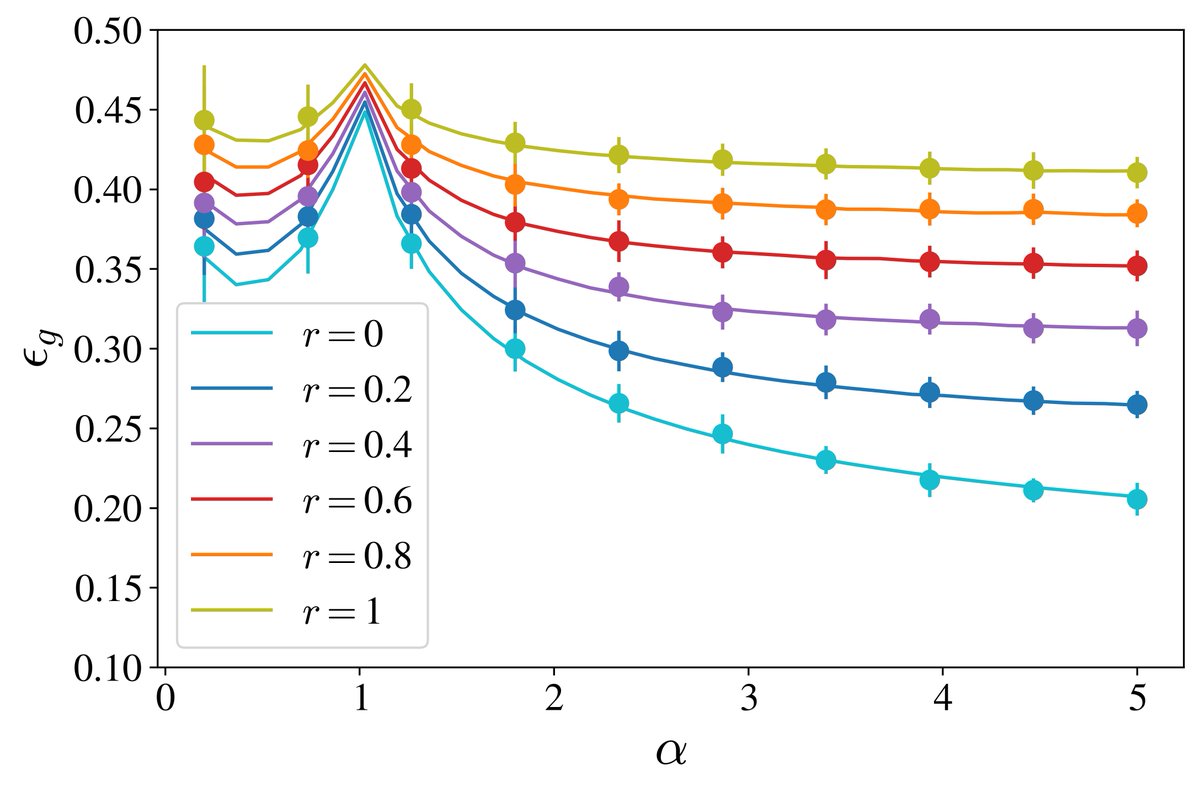
fat tails alert!!! latest preprint on theory of machine leaning with @gabrielescr and @PierpaoloVivo at @KCLDisSyst : arxiv.org/abs/2304.02912 1/
2
26
1,664
Urte Adomaityte retweeted

10 Aug 2023
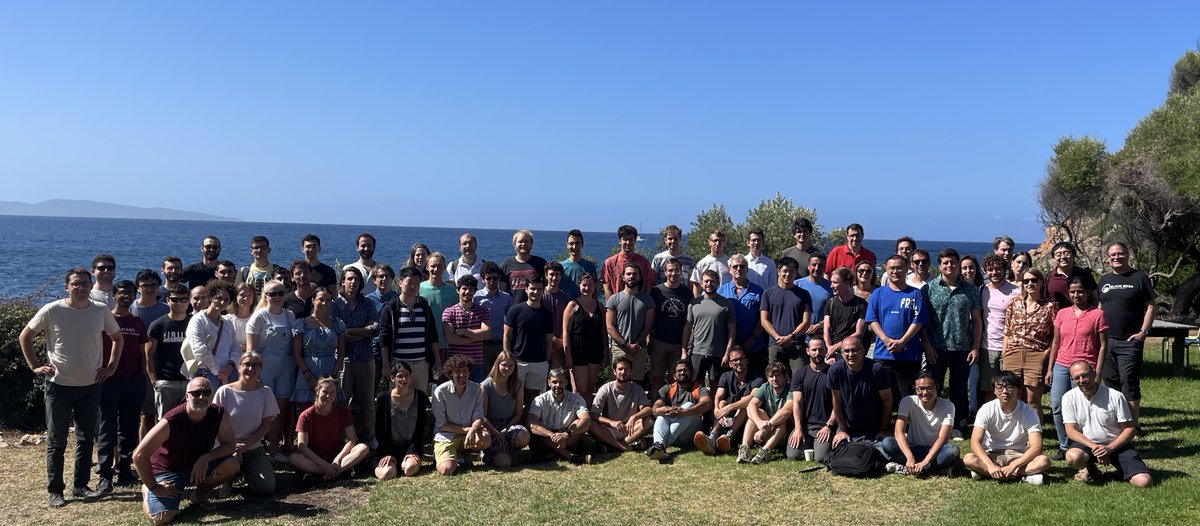
The past two weeks were a blast in Cargèse at "Statistical Physics & Machine Learning Back Together Again" cargese2023.github.io/. Around 100 of the top people in the field, including the next generation, discussed a lot of great science. I will miss you guys. We will be back!
1
8
116
15,576
19 May 2023
fat tails alert!!! latest preprint on theory of machine leaning with @gabrielescr and @PierpaoloVivo at @KCLDisSyst : arxiv.org/abs/2304.02912 1/
2
4
26
4,921
19 May 2023
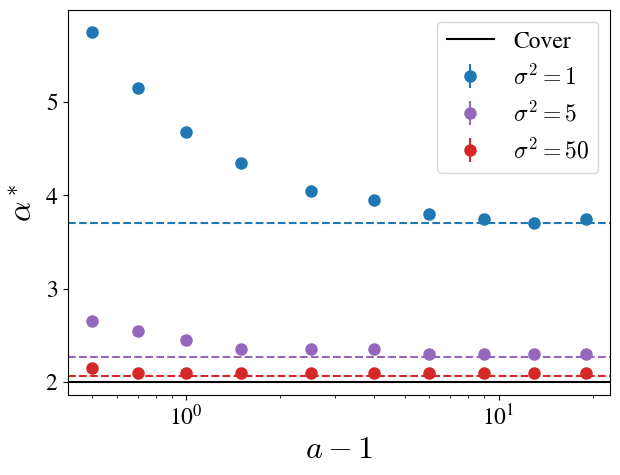
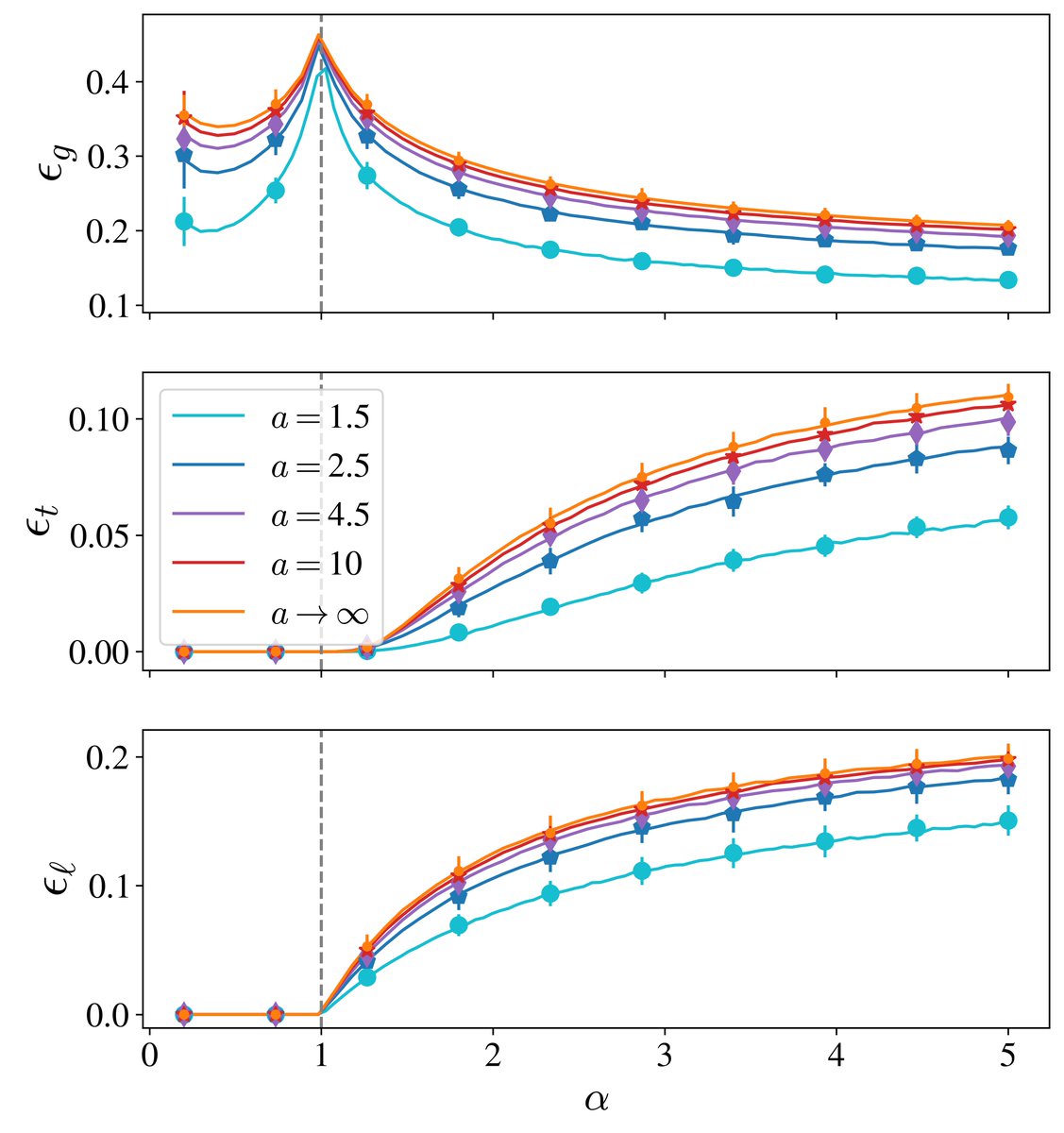
Data separability/MLE-existence threshold? Computationally extracting with logistic loss: fatter tails -> more samples one can correctly classify; the threshold approaches known Gaussian data formula as a->inf. Infinite variance: Cover's result n_samples=2*dim is recovered 8/
1
322
19 May 2023
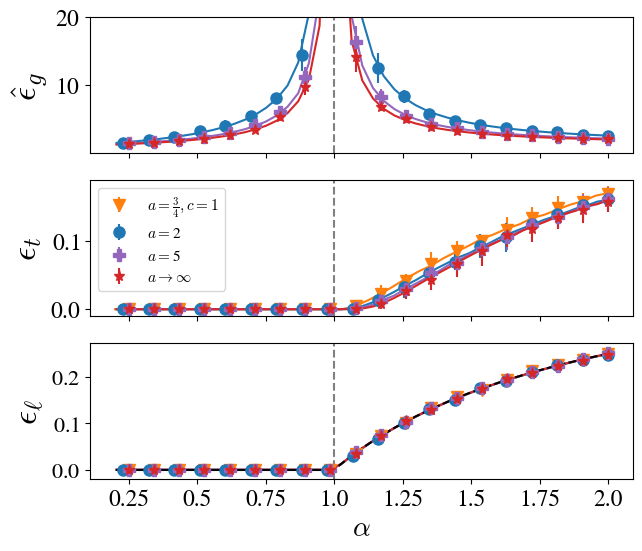
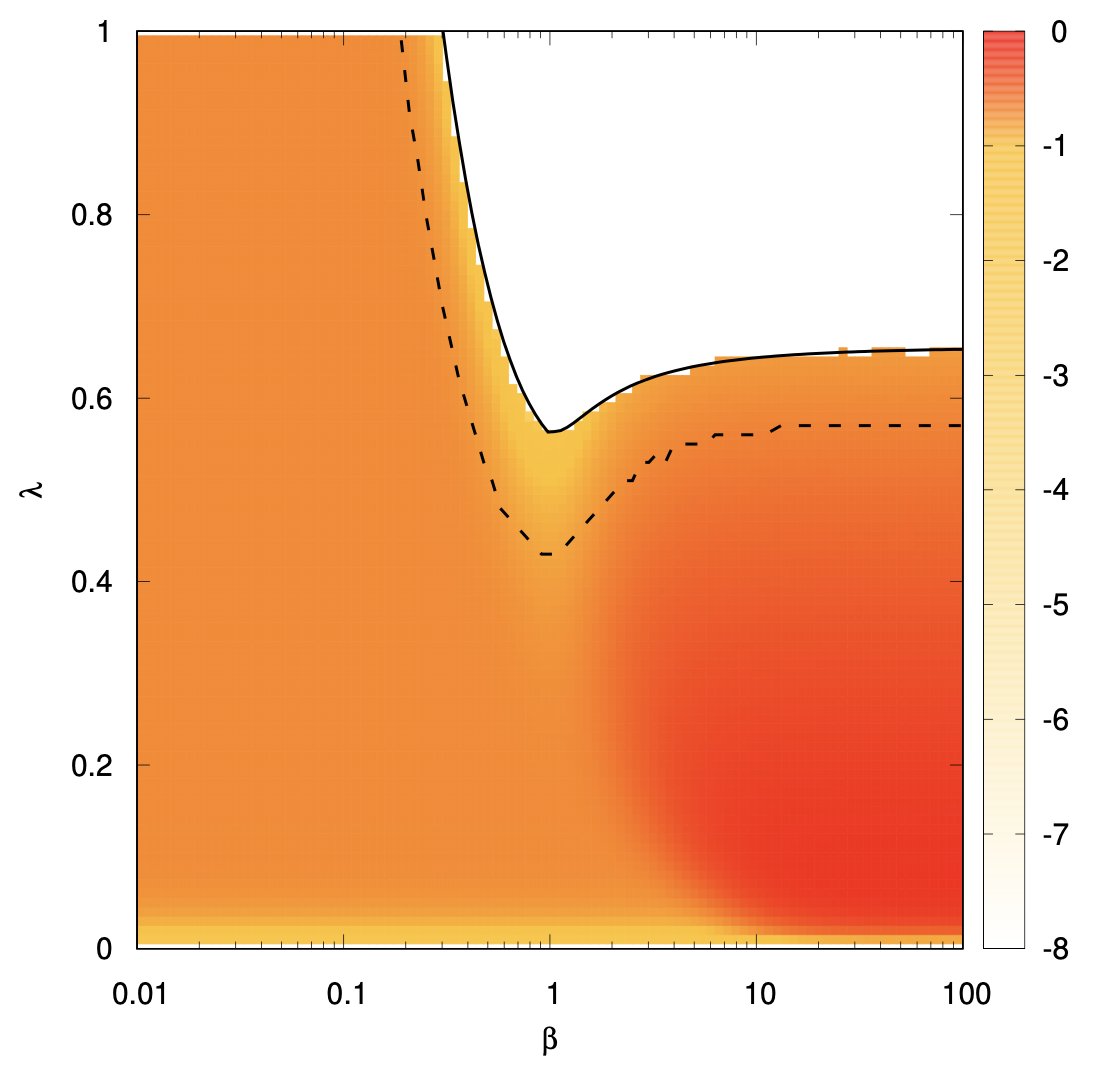
What if labels are random? The training loss (bottom) is independent from the variance distribution, thus universal even for infinite variance (yellow)! No universality for test and train errors though. Thanks for reading! 9/9
2
255
Urte Adomaityte retweeted

9 Nov 2022
And now published on @PhysRevE!
journals.aps.org/pre/abstrac…
9 Sep 2022
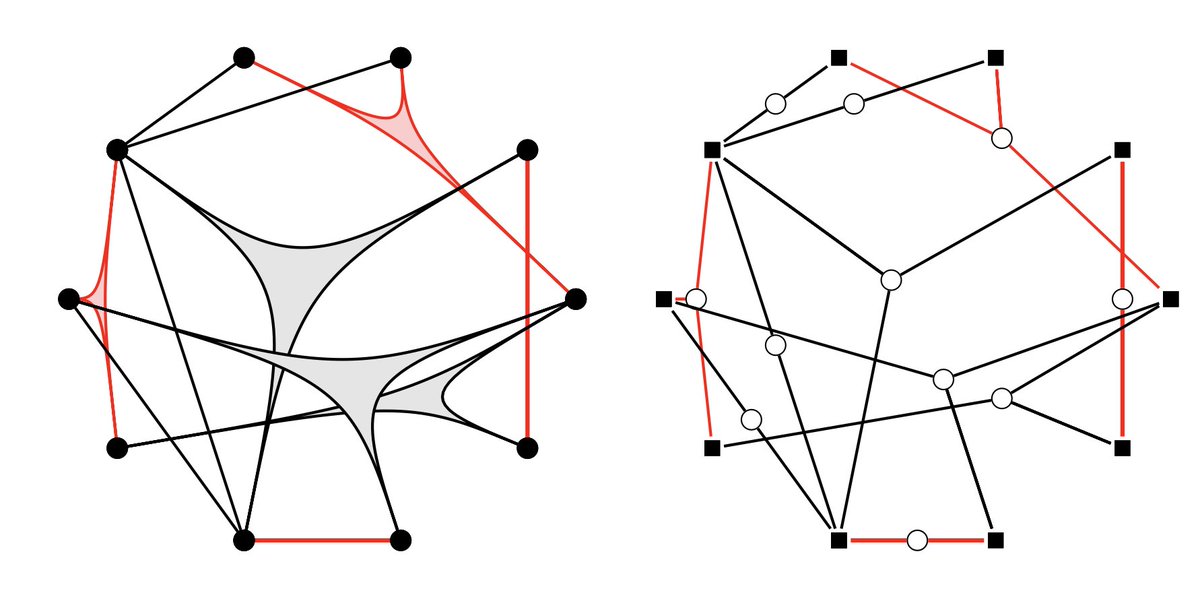
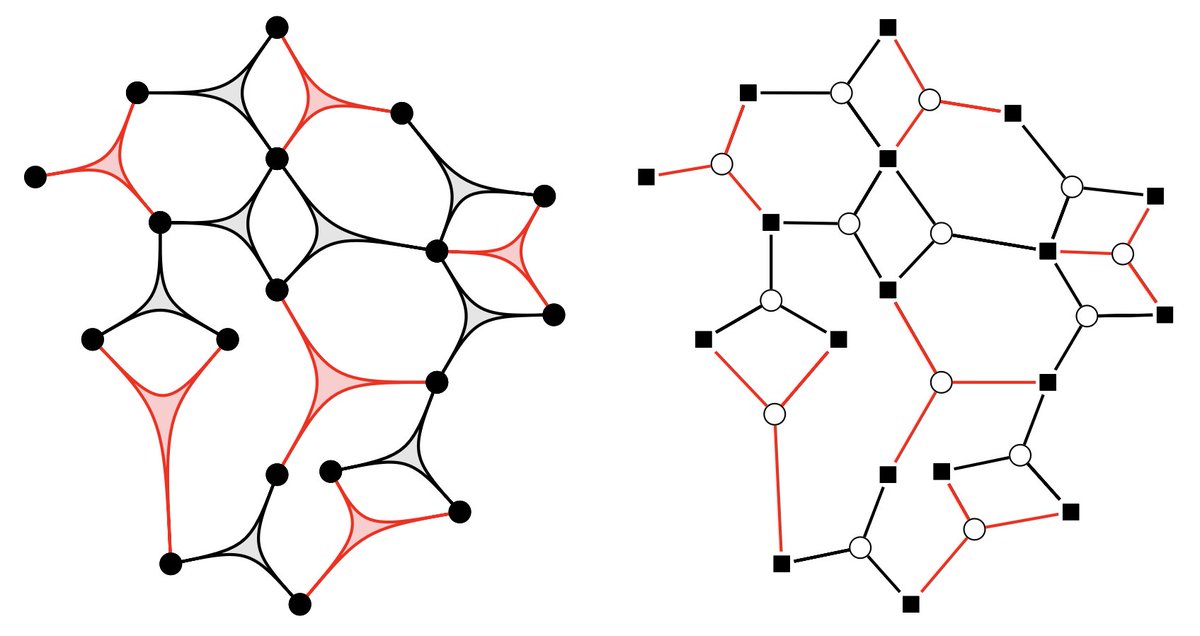
(1/N) First preprint alert! Here is a hyper-twist on planted matching problems for anyone interested in statistical physics methods for inference 🧵
In collaboration with @gabrielescr @zdeborova @toshniwal8
Link: arxiv.org/abs/2209.03423
@KCLDisSyst
3
6
9 Sep 2022
(1/N) First preprint alert! Here is a hyper-twist on planted matching problems for anyone interested in statistical physics methods for inference 🧵
In collaboration with @gabrielescr @zdeborova @toshniwal8
Link: arxiv.org/abs/2209.03423
@KCLDisSyst
1
12
55
9 Sep 2022
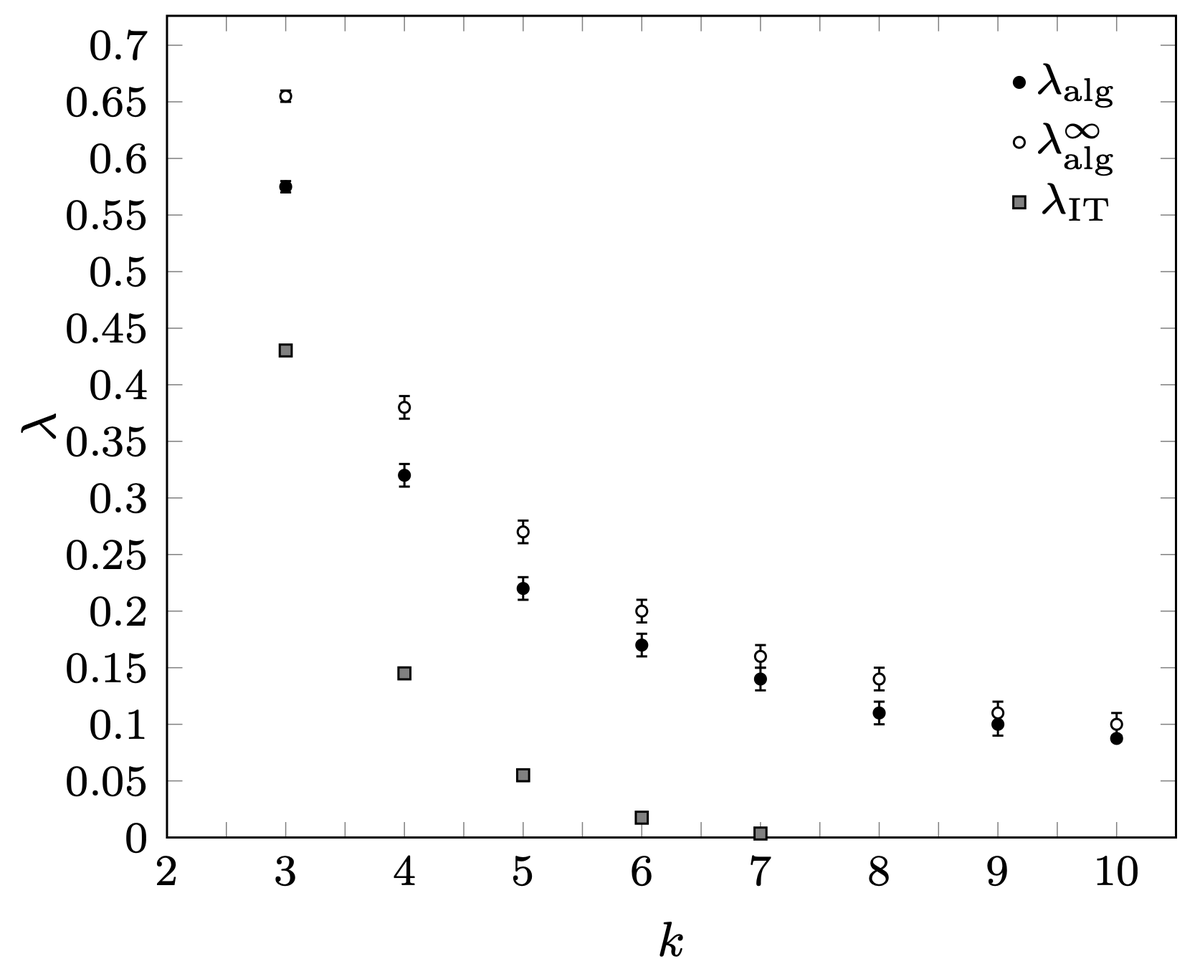
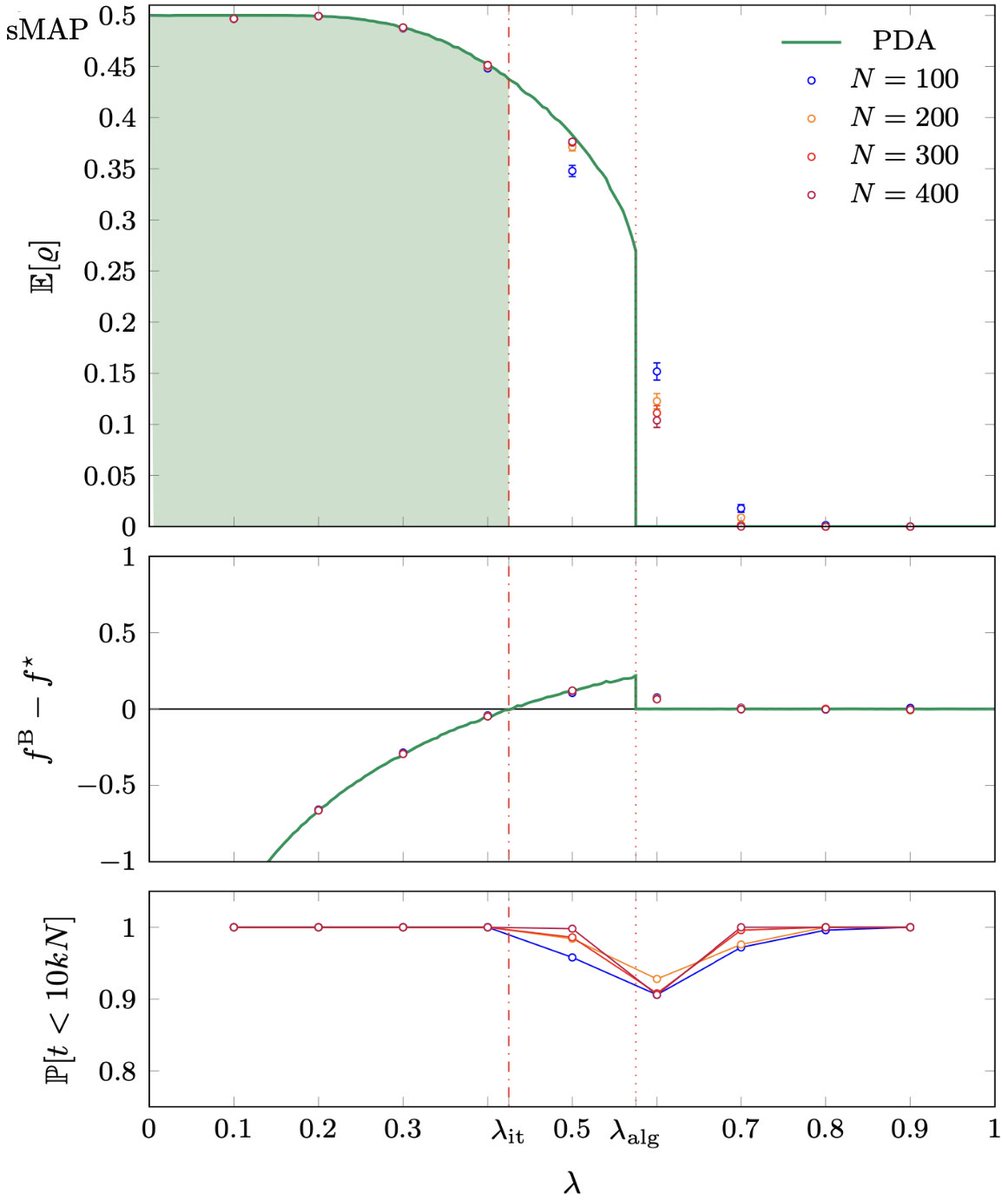
(8/N) As coordination k of the hyperedges grows, we have easier recovery — the partial recovery phase shrinks. Also, the region in which it is information-theoretically impossible to fully reconstruct the signal (hard phase) rapidly shrinks to zero.
1
9 Sep 2022
(N/N) Bonus: mixed case of edges and 3-hyperedges — first-order phase transition persists but presence of a finite fraction of edges in the hypergraph makes the transition of second order. Thanks for reading!
1