Simple and Honest. Husband. Music Minister. Teacher. Lover of God. Accountant. Omoanifowose1 #EVOLVING🐛🦋
Joined October 2020
- Tweets 16,890
- Following 504
- Followers 254
- Likes 32,654
640 Photos and videos


Pinned Tweet

13 Dec 2025
IN YOUR STRUGGLE AGAINST SIN…
Dear Believer,
“You have loved righteousness and hated wickedness;
therefore God, your God, has anointed you
with the oil of gladness beyond your companions.”(Hebrews 1:9)
Think of this Scripture!
🧵
1
4
319
UCHECHUKWU SAMUEL INNOCENT retweeted

Pilgrim’s Progress by John Bunyan.
I really think Christians of all ages should read that classic.
Changed my life and still does till this day.

What book helped you most in your early years as a Christian that you can boldly recommend to others?
9
28
133
5,591

If you ever feel dumb just remember there are 2 billion Muslims who believe in this shit


121
1,468
23,124
359,659
UCHECHUKWU SAMUEL INNOCENT retweeted
I struggled to understand why Jesus praised Peter so highly for identifying him as the Messiah in Matthew 16.
It felt too dramatic, like he was over-spiritualizing something obvious. Peter had been traveling with him, watching the signs firsthand. Of course he knew. The high praise didn’t make sense to me, until I meditated on it.
First-century Judea had a precise and non-negotiable job description for the Messiah: a geopolitical conqueror, a second David who would break Roman occupation over his knee.
What Peter was looking at instead was a broke, unbacked teacher from a backwater town, branded a radical by the religious elite, with no army, no treasury, and no political standing whatsoever. Every physical reality in front of them said no.
The friction ran deeper. Even John the Baptist, who baptized Jesus and heard the voice from heaven, later sent messengers from prison asking, “Are you the one, or do we look for another?” If John doubted after everything he witnessed, the disciples holding steady was not a human achievement. It couldn’t be.
So when Jesus says, “flesh and blood has not revealed this to you,” he is not being dramatic, he is being precise. Left to human logic in that specific moment, concluding he was the Christ was an impossible deduction. The Father had to pull back the curtain.
Immediately after, Jesus speaks of the cross and impending tribulation, and Peter rebukes him: “This shall never happen to you.” It prompts Jesus’s harshest recorded response: “Get thee behind me, Satan.”
Peter’s spectacular crash is the ultimate proof that Jesus wasn’t over-spiritualizing things. The whiplash is the evidence. Left to his own devices for a second, Peter blunders so severely he is called the enemy. The rock instantly becomes a stumbling block. Peter wasn’t a genius; he was a blind man who momentarily had the curtain pulled back.
The Father had unveiled the identity, but not yet its meaning. Peter saw the Who before the What. Revelation is layered. You can receive genuine sight and still be blind to the next dimension because the curtain lifts in stages.
And that is the trap inside the gift of sight. When light comes, it rewrites your memory of the dark. You stop remembering what blindness felt like. Grace becomes furniture. Present, unremarkable, owned but never received.
Paul names this disease in a single sentence: “What do you have that you did not receive?”
The same Father who pulled the curtain back for you has not pulled it back yet for the person next to you, or is pulling it back slowly, the way dawn moves. That is not their failure. It asks of you not contempt but patience; not pride but the tenderness of someone who knows they were also once blind.
“Flesh and blood has not revealed this to you.”
That sentence is not praise. It is a disqualification. Jesus wasn’t honoring Peter’s perception. He was bearing witness to the Father’s action. Peter had no credit to keep, and neither do we. Every confession any of us has ever made was given, not achieved.
The only honest response to clarity you did not earn is not confidence in your own sight. It is wonder. And a tenderness toward the still-blind that only the formerly blind can carry.
21
63
215
11,448
UCHECHUKWU SAMUEL INNOCENT retweeted

Go back to Egypt then.
20
55
2,623
26,600
Greenaldo 🤣🤣🤣🤣🤣🤣🤣
Jun 13

You can't claim to love your teammate while stealing his goal and still arguing for it to be awarded to you. Greednaldo
1
2
12
950
UCHECHUKWU SAMUEL INNOCENT retweeted

Jun 12
You can't be serious.
Your argument fails to understand the nature of effective communication, the concept of divine accommodation, and what the Bible actually claims about Jesus' earthly life.
The Language of “Accommodation”. If Jesus had used His divine omniscience to speak with absolute, 21st-century scientific precision, His audience would have been completely baffled. If He said, “The Kingdom of God is like a microscopic orchid seed from the South American rainforest,” the Galilean farmers would have asked, “What is an orchid? What is South America?” Divine Accommodation means God humbles His language to meet humans at their level of understanding. To be an effective teacher, Jesus used the information already available to His listeners to teach a deeper spiritual truth. Using an idiom they all understood does not mean He was ignorant; it means He was a brilliant communicator.
Another you need to understand is *Legal Precision vs. Everyday Truth*. Imagine an all-knowing math professor telling their 5-year-old child, “The sun is rising!” Politely correcting the professor by saying, “Actually, the sun isn't rising, the Earth is rotating on its axis, so you must not be a real math professor,” would be ridiculous. The professor is using phenomenological language (describing how things look from our perspective) to talk to a child. Jesus did the exact same thing. He was speaking as a man living in 1st-century Judea, using the cultural definitions of His day.
> Using a well-known local analogy to teach farmers a lesson isn't a lack of omniscience; it is a sign of good teaching. The purpose of the story was to change their hearts, not to write a biology textbook.
Jun 12

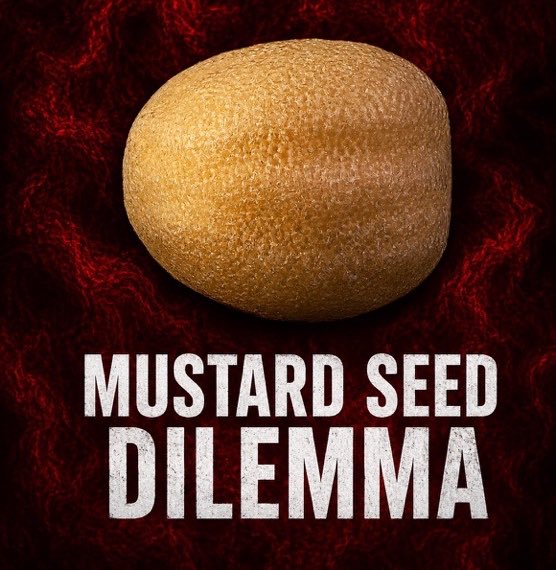
Jesus isn’t God.
Jesus said the mustard seed is the smallest seed on earth
The smallest seeds on earth are orchid seeds.
Christians, what do you think?
6
10
94
3,150

UCHECHUKWU SAMUEL INNOCENT retweeted

Jun 12
I realyyyy love being charismatic!
Extremely wholesome stuff!
Yes, there are excesses (being curtailed).
But I’ll not do Christianity any other way o.
We are a people of the word and spirit, of holiness and fire, propagating the Gospel with spirit power!
Amen! Amen! Amen!!
4
52
275
3,932
UCHECHUKWU SAMUEL INNOCENT retweeted

Jun 12
You don’t shift culture by trying to “shift culture” or sounding woke and accommodating, that only earns you human praise (for a short while).
You truly shift culture by introducing Jesus.
Jun 12

Peter, Paul, Stephen, Philip, and all the apostles were deeply intelligent men. They knew that only through faith in the name of Jesus could true & positive salvific change come, so they preached it. The result was “these men have turned the world upside down.”
#CultureShift 🤷🏾♂️
2
11
701
UCHECHUKWU SAMUEL INNOCENT retweeted

Jun 12
The road to hell is paved with good intentions.
People who have truly tasted Christ rarely wake up one morning and decide to serve evil. Apostasy is rarely a sudden leap; it is usually a gradual drift.
It begins by convincing ourselves that our compromises are for God. A small dilution here. A slight accommodation there. A truth softened to avoid offense. A doctrine adjusted to fit the spirit of the age.
Then the dilution intensifies. And intensifies again.
What was once a minor concession becomes a habit. What was once a habit becomes a principle. What was once a principle becomes a new gospel.
Until, eventually, the erosion is complete and nothing remains but the shell of Christianity, bearing the name of Christ while having abandoned His voice.
The most dangerous deceptions are not those that arrive wearing the face of Satan, but those that arrive wearing the face of good intentions.
Jun 11

The biggest obstacle to culture shaping in Nigeria is the church!
- Apostle Femi Lazarus
This will bless you!
22
50
194
19,210
UCHECHUKWU SAMUEL INNOCENT retweeted

12 Feb 2025
Salvation is not by works, but it is never void of works.
Works might not be a prerequisite, but it is a necessary result.
38
930
3,600
73,615
UCHECHUKWU SAMUEL INNOCENT retweeted
Jun 12
Let's do Muhammad now.
Jun 12

You were today years old when you realized Paul had never met Jesus and wasn't one of the 12, but wrote 50% of the New Testament.
9
57
565
24,691
AMEN!
Jun 12
Peter, Paul, Stephen, Philip, and all the apostles were deeply intelligent men. They knew that only through faith in the name of Jesus could true & positive salvific change come, so they preached it. The result was “these men have turned the world upside down.”
#CultureShift 🤷🏾♂️
1
29
😅
AMEN!

Dawah guys are now saying that Muslims worship the Father?.
Nice.
Next up is repentance of sins, believing in Christ’s death, burial and resurrection.
Then they get baptised in the name of the triune God and start to attend a local church.
14
My issue is not even the building up.
The question is what is “Praying in the HolySpirit”?

I don’t know why we insert “by” between “building yourselves up in your most holy faith” and “praying in the Holy Spirit” when we read Jude 20.
A rough paraphrase of Jude’s thought would be:
“Beloved, keep yourselves in God’s love by continually building yourselves up in the faith, praying in the Holy Spirit, and waiting for Christ’s mercy.”
“Praying in the Holy Spirit” is not grammatically attached only to “building yourselves up.” Rather, building, praying, and waiting are parallel means by which believers obey the central command to keep themselves in the love of God.
I know someone will say, “Doesn’t prayer build us up?” Of course it does. But that’s not what Jude is saying. People did this thing with the John 10:10 tweet and it was really frustrating to see.
1
70

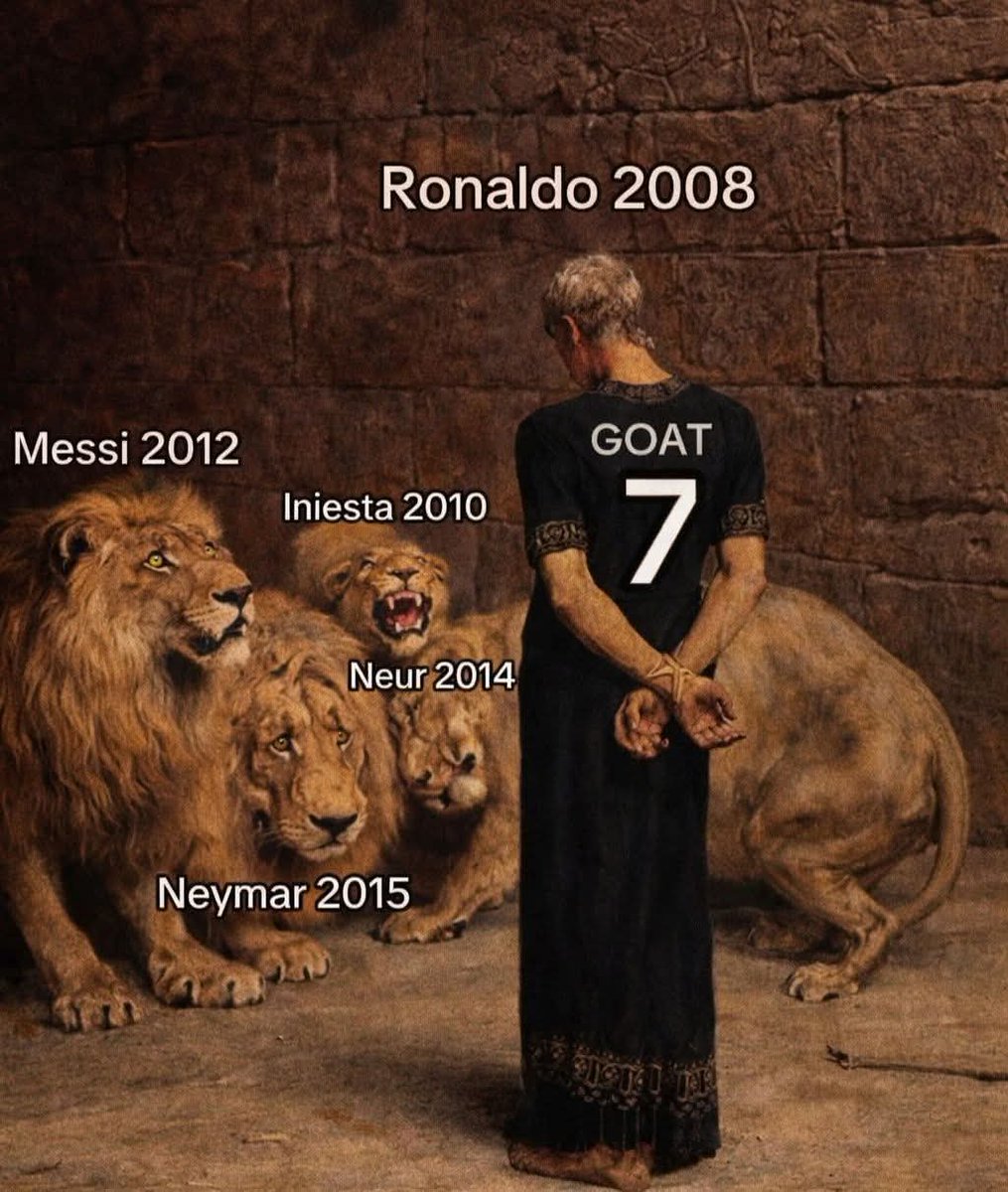
Funny—Iniesta won the Euros in 2008, in a competition 1008 Ronaldo played in.
2008 Iniesta was in the the Team of the Tournament—
While 2008 Ronaldo did not even make the Euro 2008 23 man Team of the Tournament.
You heard right—2008 Ronaldo wasn’t even among the 23 best players at Euro 2008.
And before you blame the Portuguese team, two of his teammates made the Team of the Tournament.

36
359
3,046
248,130
Instead of stating “stay with the text”…
Boldly tell us the meaning.

43
Brother,
I accept your point.
My question still stands?
Do you consider “speaking in tongues” as a form of prayer?
I don’t think your challenge is really ‘context’ but a refusal to acknowledge that “speaking in tongues” is a valid form of prayer
1
The bone of contention is not speaking in tongues is a valid form of prayer or not. We build up the mostly holy faith same faith that was delivered to us in vs3 by praying in the holy spirit indicates a form of prayer that is guided and empowered by the Holy Spirit 1)
1
3
542
Because If speaking in tongues is a valid of prayer as 1 Cor.14:2 clearly states…
Then the context of Jude’s praying In the HolyGhost will also include it.
“I will pray with my spirit, but I will pray with my mind ALSO”
53