
19 Photos and videos

May 15
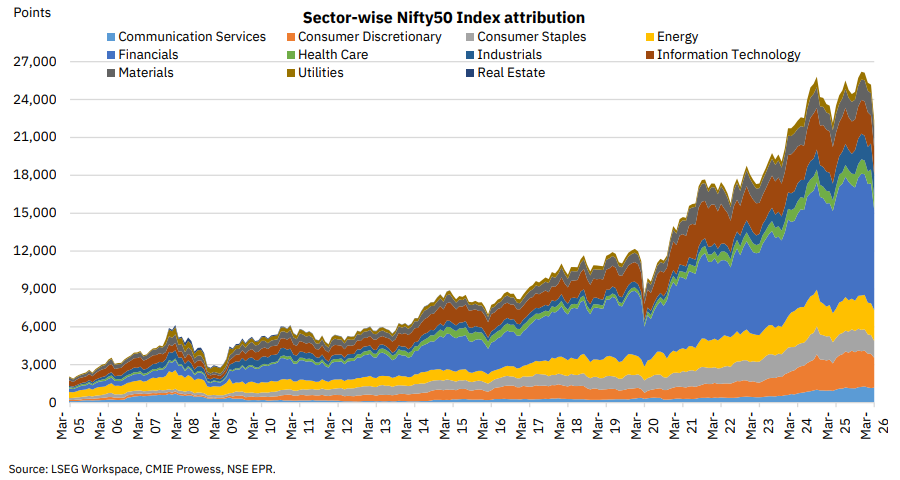
Since 2005, the IT sector has been a massive pillar of the Nifty 50’s growth. Looking at the data, its contribution to the index has expanded significantly over the last two decades.
However, we are now at a crossroads. With the rapid rise of LLMs and Generative AI, the narrative is shifting.
Will the Indian IT sector adapt and thrive in the AI era, or is this the beginning of a structural decline?
IT firms successfully pivot to AI-led services, maintaining their dominance.
AI automation disrupts the traditional service model, challenging India's "IT Hub" status.
Will the IT sector keep up, or is this the end of an era?
Only time will tell.
#Firstock #Nifty50 #StockMarket #IndianEconomy #AI #GenerativeAI #ITServices #Investing
1
1
4
197
Apr 28
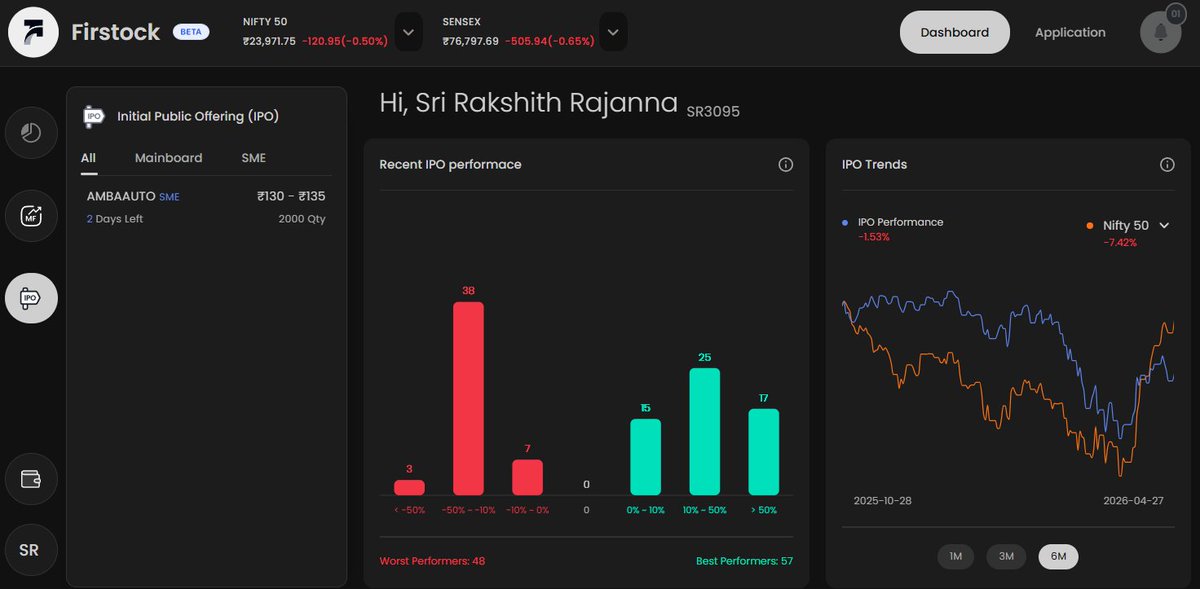
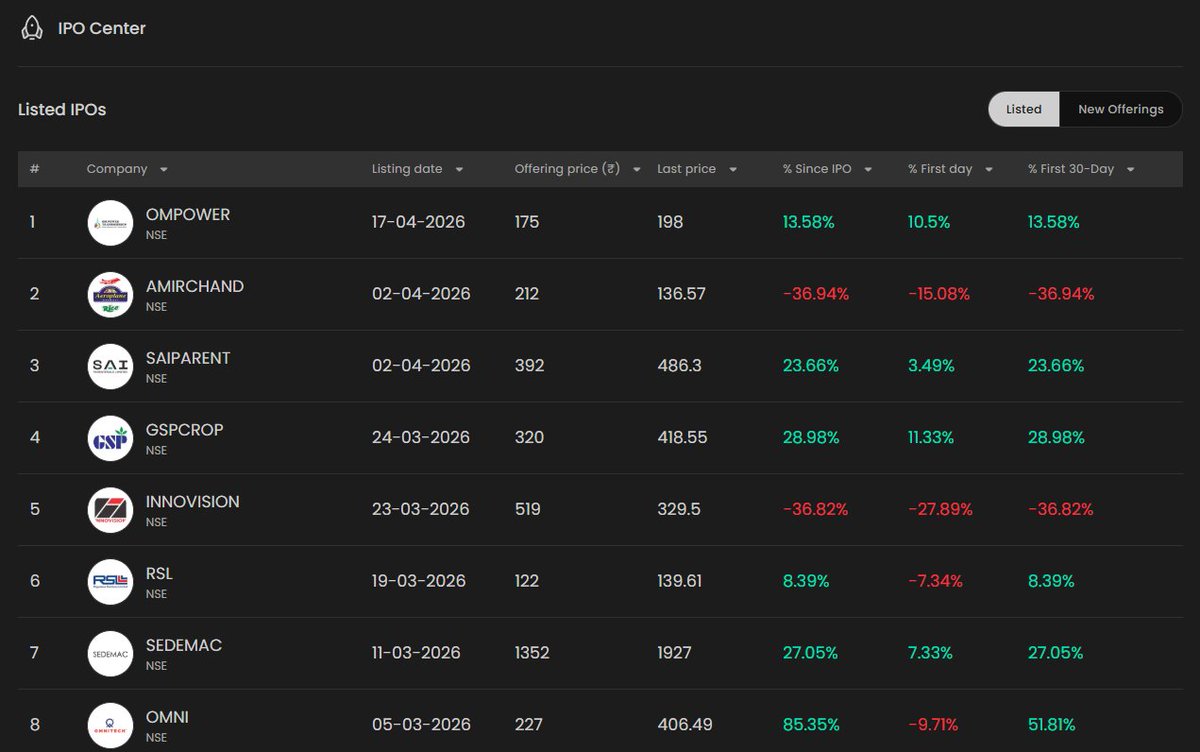
At Firstock, we’ve designed the IPO Dashboard to give you clarity at a glance.
We track the recent 50 IPOs (categorized by Best vs. Worst performers), so you can instantly see the success rate of recent market entries.
We’ve mapped IPO Performance against the Nifty 50. Now, you can see if IPOs are actually outperforming the broader market or just riding a temporary wave.
Our IPO Center provides a granular look at every company post-debut:
Performance tracked from the Listing Date.
Specific data points for First Day and First 30-Day returns.
Check out the new IPO Dashboard today!
#IPO #Investing #StockMarket #Firstock #Fintech #Nifty50 #TradingInsights
1
4
316
Apr 23
Between 2022 and 2026, many regular investors have treated IPOs like lottery tickets, but this excitement often hides a truth: the "hype"
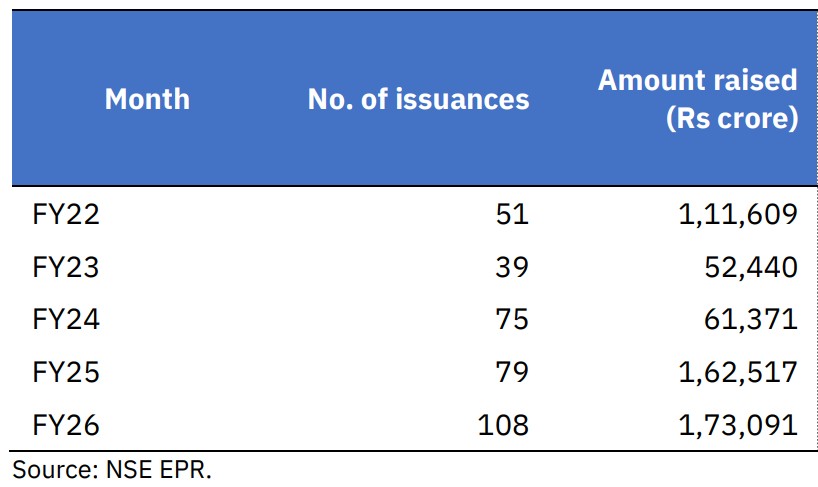
Just between FY25 and FY26, there were 187 companies listed, raising around ₹3.35 lakh crore
Over the last four years, people have focused too much on making a quick profit on the very first day of trading rather than looking at whether a company is actually worth owning.
True wealth is built by doing your homework and understanding a business, not just by hoping a stock price will go up.
4
285
Apr 15
One of the biggest pain points for active traders is handling large order quantities.
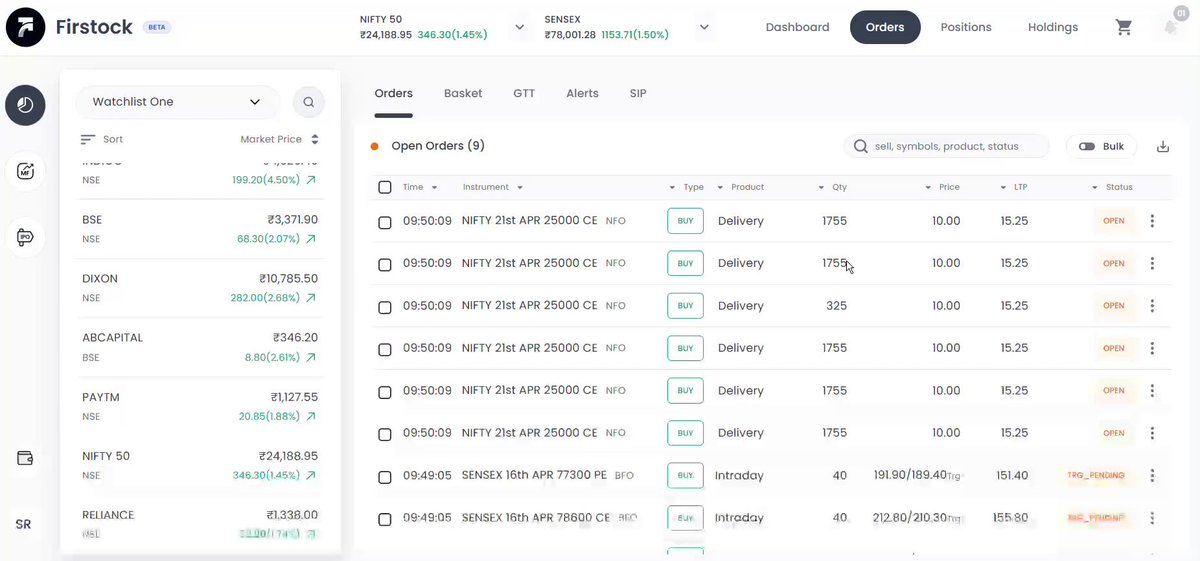
When you place a large trade, such as 17,550 quantity, it gets split into multiple smaller orders due to freeze limits. The problem comes when you try to manage it. To set or change a stop loss, you have to update each order one by one; sometimes 10 or more entries. In a fast-moving market, this isn’t just tedious: it increases the risk of mistakes and delayed execution.
That’s exactly the problem we set out to solve at @firstockbroking .
We introduced Bulk Orders, a feature designed to simplify order management at scale. With Bulk enabled, all sliced orders originating from a single large trade are intelligently grouped together. This means you no longer have to modify each leg manually. A single action lets you update stop loss, target, or any parameter across all associated orders instantly.
For traders operating with large quantities, this is a meaningful upgrade, reducing friction, saving time, and ensuring faster, more reliable execution when it matters most.
13
9
136
28,280
Apr 10
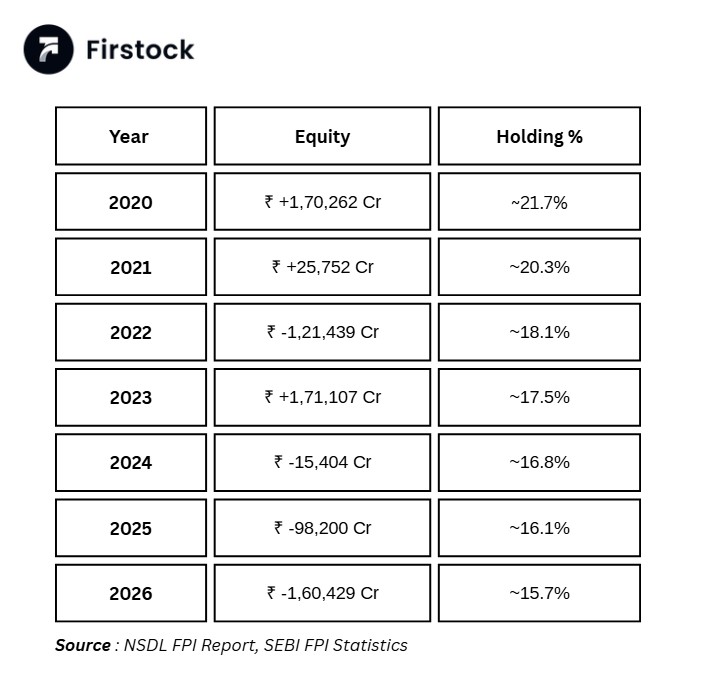
We’ve watched Foreign Institutional Investors (FIIs) pull capital out of the Indian market. On paper, it looks like a contradiction: Why leave the world’s fastest-growing major economy?
FIIs are aggressively moving into a "Risk-Off" posture. They are reclassifying their portfolios, treating India not as an indispensable powerhouse, but as a high-exposure "Emerging Market" variable.
This isn't a vote of no confidence in India’s long-term mission; it’s a tactical retreat toward capital preservation. When the global macro environment gets shaky, even the most visionary investors stop looking at the "ceiling" of potential returns and start looking at the "floor" of stability. They are trading the high-velocity growth of India for the predictable, lower-risk environments of developed markets.
In my experience, capital isn't just looking for the biggest number, it’s looking for the most sustainable path to that number.
1
353
Apr 8
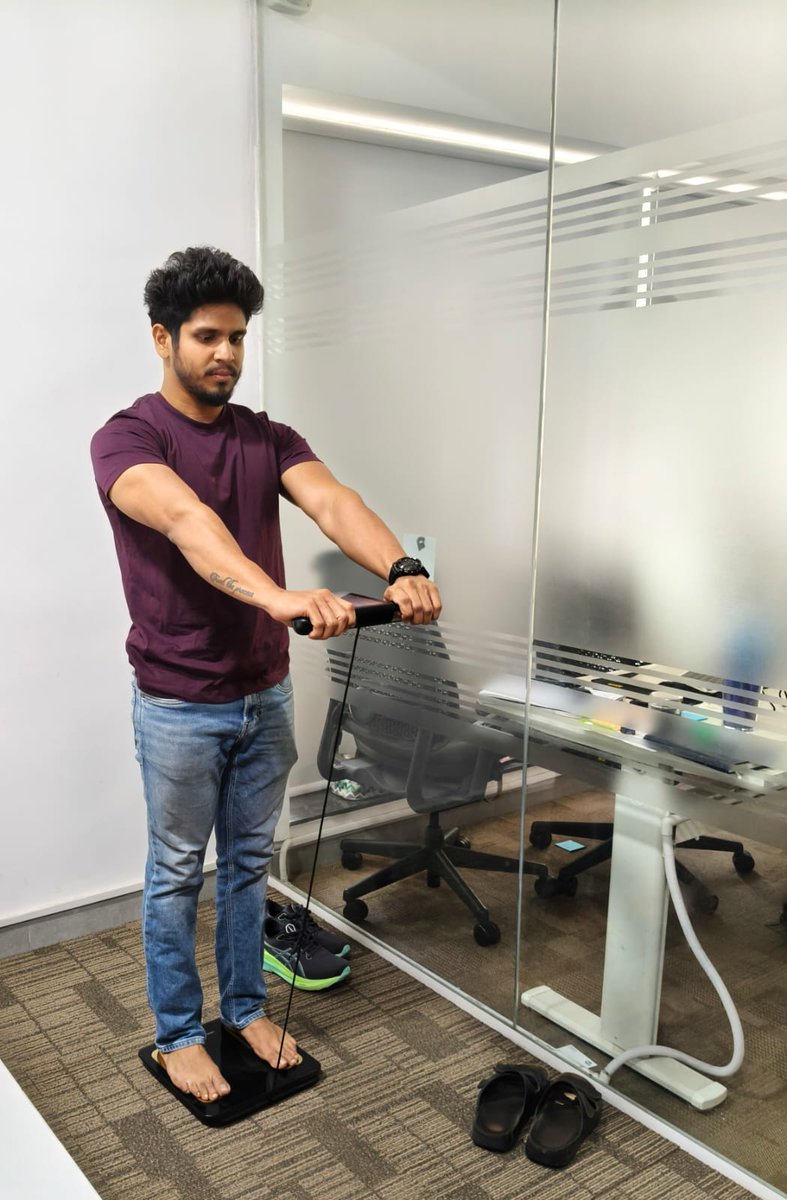
Today we a team of more than 50 members. Competitive people don’t just want to win at work, they want to win everywhere.
We’re lean, we’re fast, and now we’re getting fitter.
Starting today, Firstock launches its 100-Day Fitness Challenge.
Simple rules
Track your health. Measure your Overall Scores. Hit your targets, And if you do, get big rewards.
An energetic team doesn’t happen by chance, it’s built. We’re bringing healthy competition from the gym into the workplace.
Feel better → think clearer → execute faster.
We’re investing in people who can transform themselves. May the fittest win.
1
13
650
Apr 2
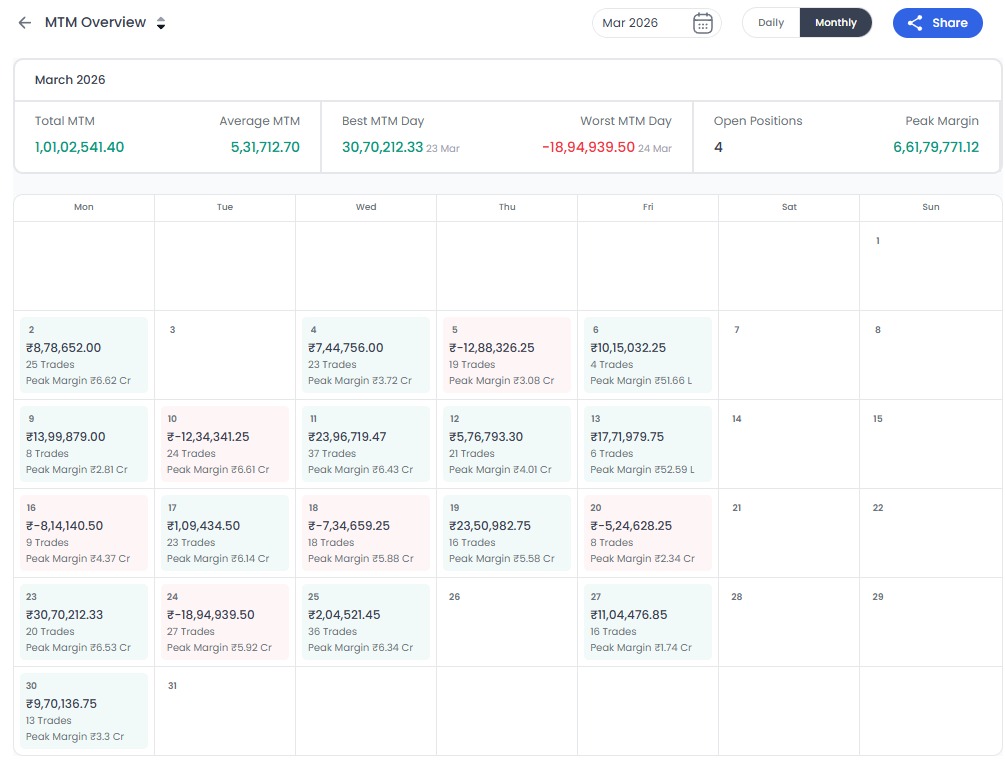
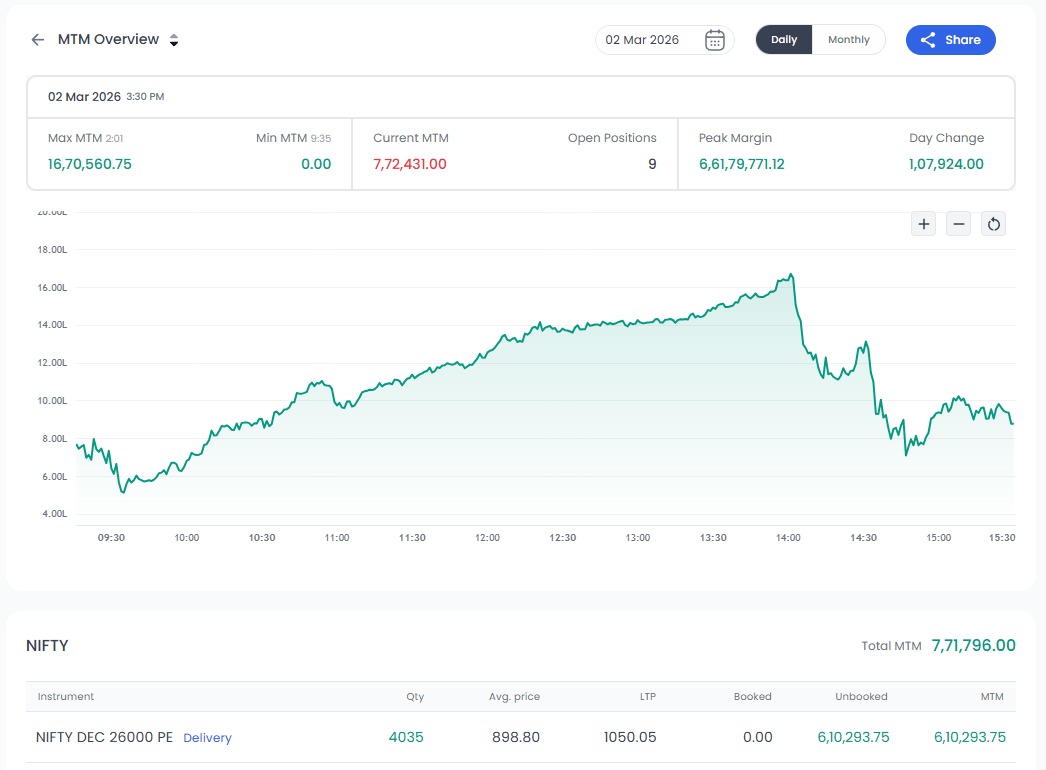
At Firstock, we believe revisiting your P&L should provide clarity, not confusion.
That’s why we built our new calendar-based P&L overview.
Get a high-level view of every day:
What your M2M was.
How many orders you placed.
How much peak margin you utilized.
Total context, at a glance.
Need more detail? Click any day to analyze the specifics:
The curve of your M2M throughout the session.
Every position held.
How each trade moved the needle.
We want you to know exactly what you did and what worked, so you can refine your edge.
The new beta platform is ready. If you’re a Firstock user, dive in and let us know your thoughts.
5
3
32
2,846
Mar 21
There is a lot of talk around broker margin lately. Here’s what you actually need to know.
Before Sep 2021, 50:50 cash and collateral margin was managed at broker level. Now it’s strictly at the client level.
Reason is simple: one client’s cash cannot be used to support another client’s collateral.
As per regulation, minimum 50% margin has to be in cash or cash equivalents. This applies to both intraday and carry forward positions.
If you’re taking positions only using stock collateral, the cash portion is effectively being funded by the broker.
Example:
Assume Nifty futures margin is ₹1.75L
Required cash = ₹87.5K
If you have ₹60K, there is a shortfall of ₹27.5K
That gap is funded by the broker, by blocking their own capital
If this is not maintained, RRM will step in and positions can be cut.
Important point:
Some brokers were already strict about this. Others, especially cash-rich brokers, allowed intraday trades without enforcing the 50% cash at client level and charged interest only for carry forward position.
But in both the cases, the cash portion was effectively being funded by the broker at the clearing corporation level using his money
Clients can also track their collateral (cash and non-cash) through the portals provided by NSE and BSE Clearing Limited.
4
6
39
31,097
Vikram A V retweeted

Mar 19
Copper just broke out of a 14-year range.
India's per capita consumption is still one-fifth of the global average.
India consumes 0.6 kg of copper per person per year. The global average is 3.2 kg.
An EV needs 3–4× more copper than a petrol car.
One PSU holds 45% of India's copper reserves and just got its key clearances after years of waiting.
Full deep dive 👇
youtu.be/aOf9AGfXwNY
1
2
985
Mar 15
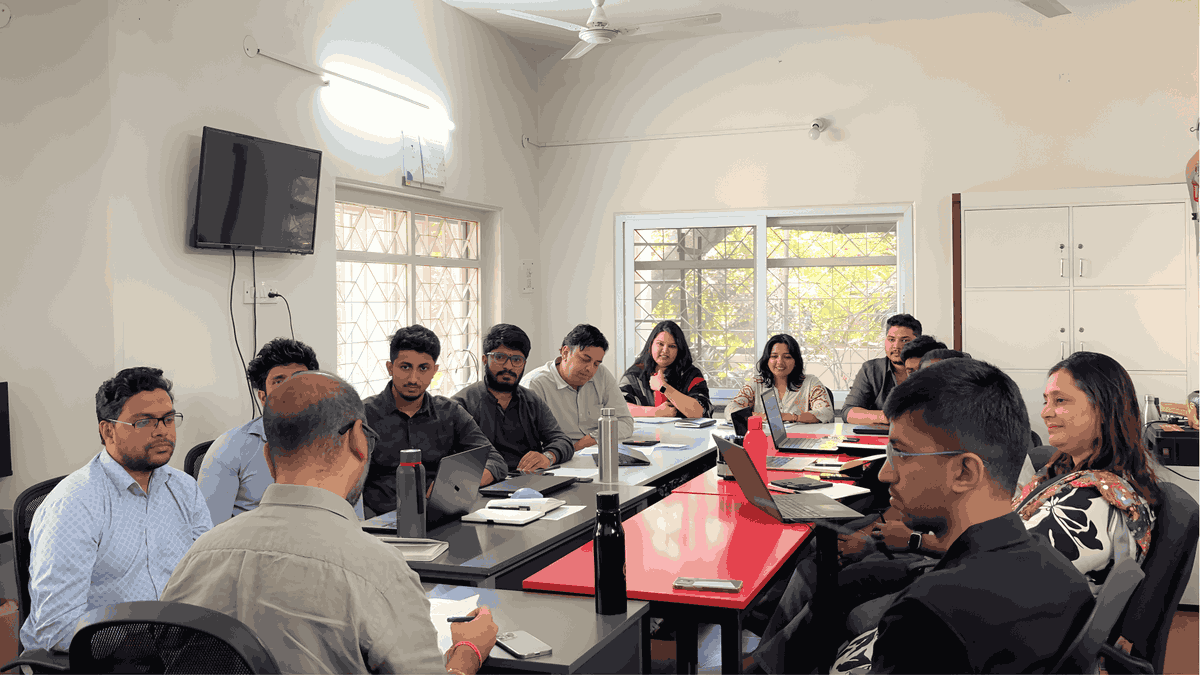
Yesterday we hosted a focus group with 12 traders to understand their trading workflows and what they actually need from a trading app without unnecessary clutter.
The conversation was extremely insightful. We received several practical inputs and many of these ideas will start reflecting in our upcoming releases.
We plan to make these focus groups a regular exercise. Our goal is simple to build platforms that genuinely make a difference for traders.
And there’s really no better way to improve a trading platform than hearing directly from the traders who use it every single day.
3
2
17
2,625
Vikram A V retweeted
Mar 12
The future of AI won’t just be written in code.
It will be built with steel, silicon, and megawatts.
That means gigawatt-scale AI infrastructure, massive GPU clusters, and billions in investment.
And one unexpected company is right at the center of it:
Larsen & Toubro
Here’s what’s really happening 👇
▶️ youtu.be/hSFqx88Cjvs
1
2
784
Mar 12
We’re hosting a focus group with Firstock customers in Bangalore.
The idea is simple understand how you actually use the app, what slows you down, and what can be simplified.
We’ll also show you some new developments we’re building around trading platforms and how broking apps may evolve to serve everything in one place.
Transport will be sponsored, followed by snacks and tea.
If you’d like to be part of shaping the product, register below:
forms.gle/jTqWpk66UMfPAbD98
1
7
565
Vikram A V retweeted

Mar 7
Today we had a one day workshop conducted by @firstockbroking We had a wonderful session with 150 traders joining us.
The response was truly overwhelming. The event was originally planned for around 100 participants with invitation, but seeing the interest, we had to increase the seating capacity at the last moment. Thank you all for showing up and making the session so lively.
I hope I was able to add some value to your trading journey. Grateful for the enthusiasm and engagement from everyone who attended.
We’ll be planning similar sessions in more cities soon, and I look forward to meeting many more of you there.
Mar 2

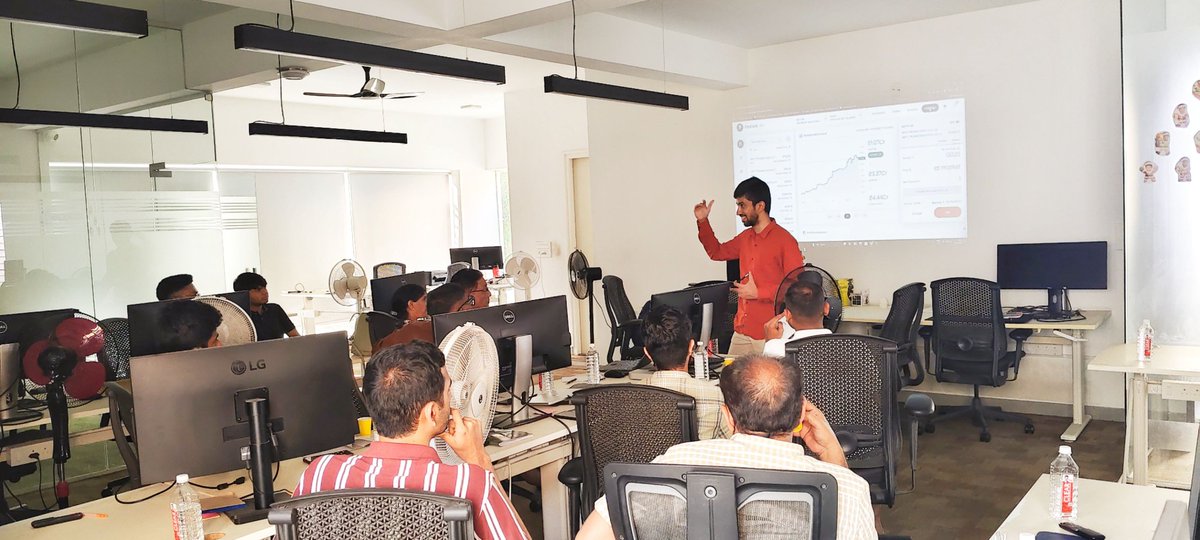
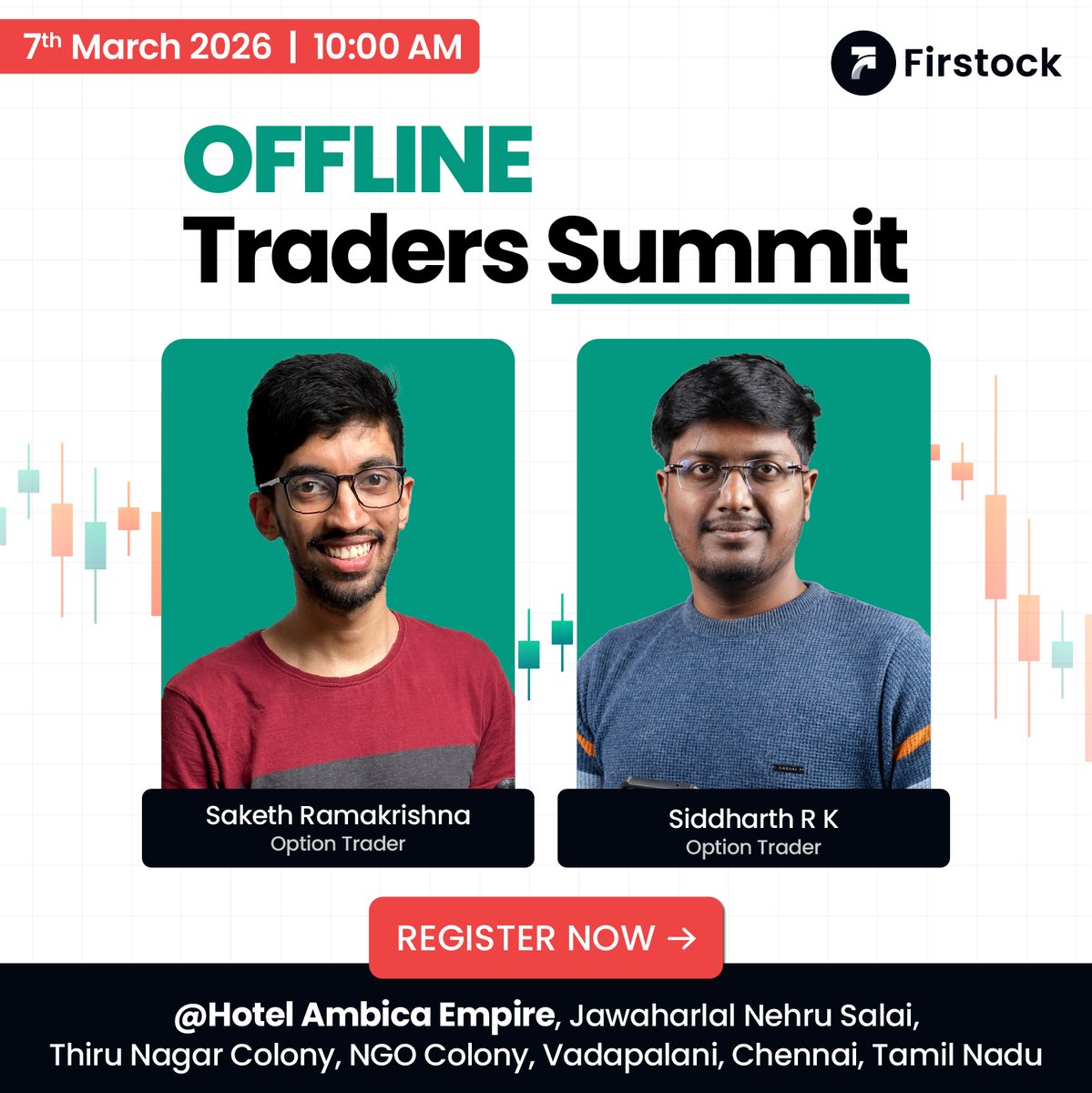
We are conducting a 1-Day Offline Seminar in Chennai this weekend.
In this session, we will be covering in detail how we are trading equities and options for 2026. the exact approach, structure, and thought process we are using in the current market environment.
This is a completely free event, as part of the educational initiative from Firstock.
However, to truly benefit from what we are sharing, I would strongly recommend attending only if you have a trading capital of ₹10 Lakhs or above. The frameworks discussed will be most relevant for traders operating at that scale.
This is a fully structured learning program no random topics, no generic theory. Everything is organized step-by-step with practical implementation.
If you are interested, please sign up using the link below.
exly.live/o0OPad
Seats are limited.
Venue: Hotel Ambica Empire, Chennai
Date: 07-March-2026
Cost: Free
10
5
57
19,957
Vikram A V retweeted
Mar 2
We are conducting a 1-Day Offline Seminar in Chennai this weekend.
In this session, we will be covering in detail how we are trading equities and options for 2026. the exact approach, structure, and thought process we are using in the current market environment.
This is a completely free event, as part of the educational initiative from Firstock.
However, to truly benefit from what we are sharing, I would strongly recommend attending only if you have a trading capital of ₹10 Lakhs or above. The frameworks discussed will be most relevant for traders operating at that scale.
This is a fully structured learning program no random topics, no generic theory. Everything is organized step-by-step with practical implementation.
If you are interested, please sign up using the link below.
exly.live/o0OPad
Seats are limited.
Venue: Hotel Ambica Empire, Chennai
Date: 07-March-2026
Cost: Free
11
5
45
31,313
Feb 28
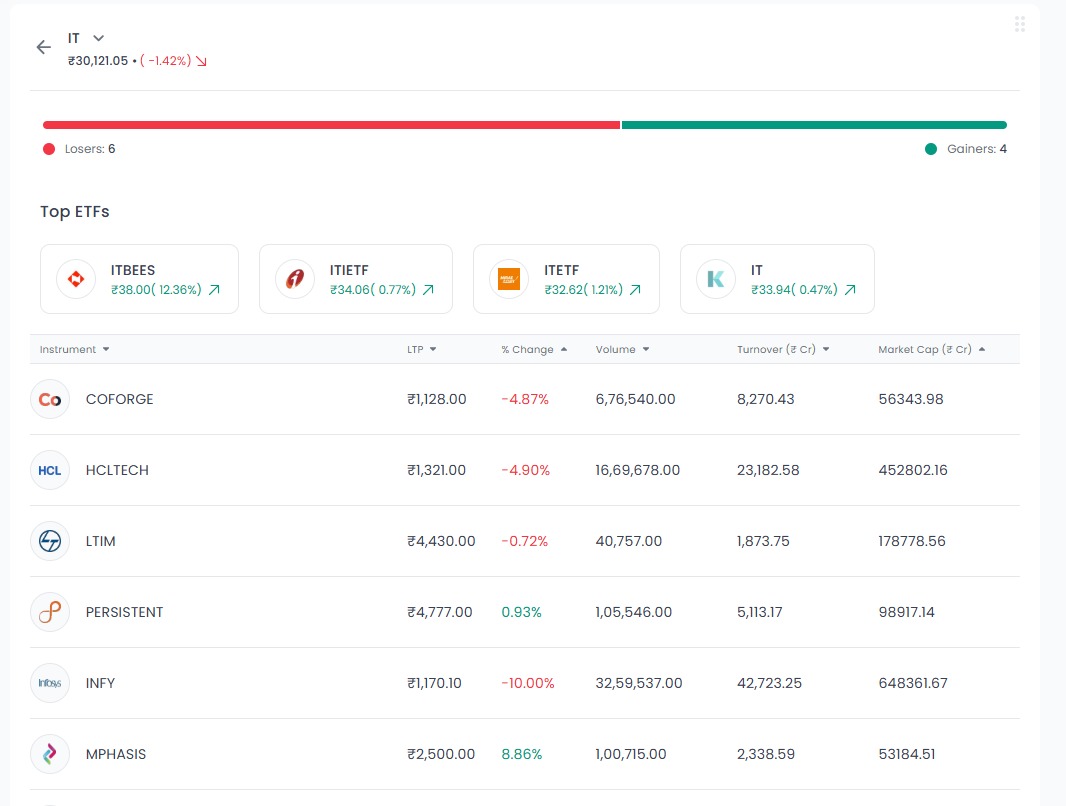
We’ve been getting repeated requests to make market tracking simpler and more practical for equity investors.
So we’ve added two powerful new features inside the app:
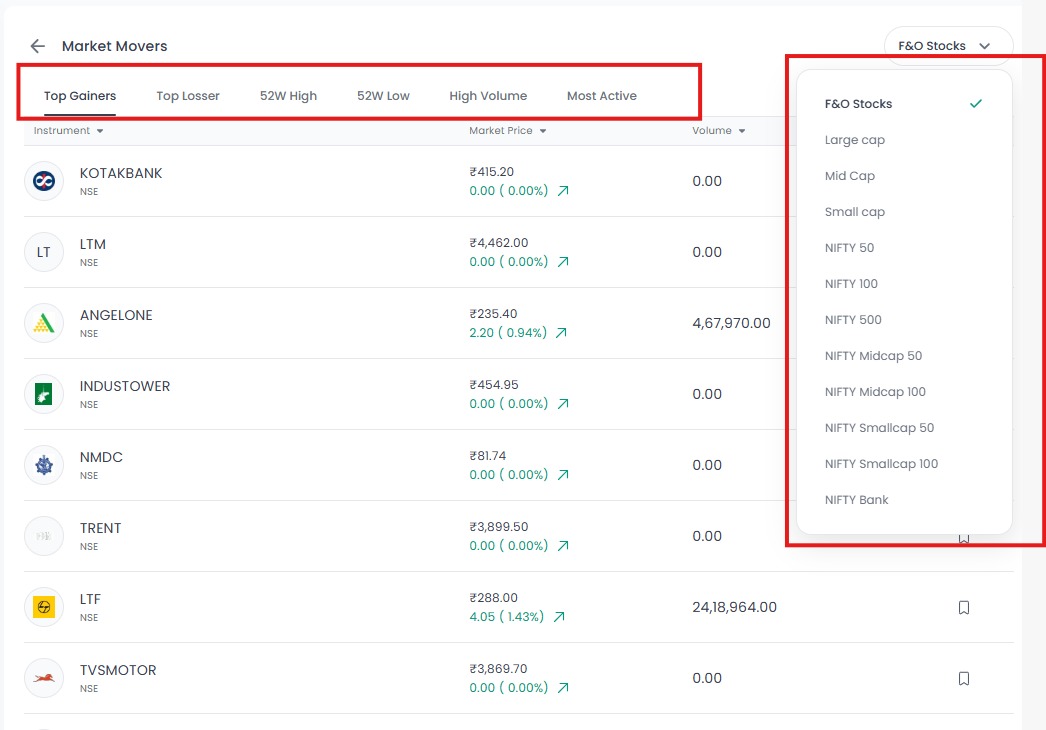
1. You can now track Top Gainers, Top Losers, 52 Week High, 52 Week Low, and Most Active stocks all filtered index-wise, so you see what’s moving where, instantly.
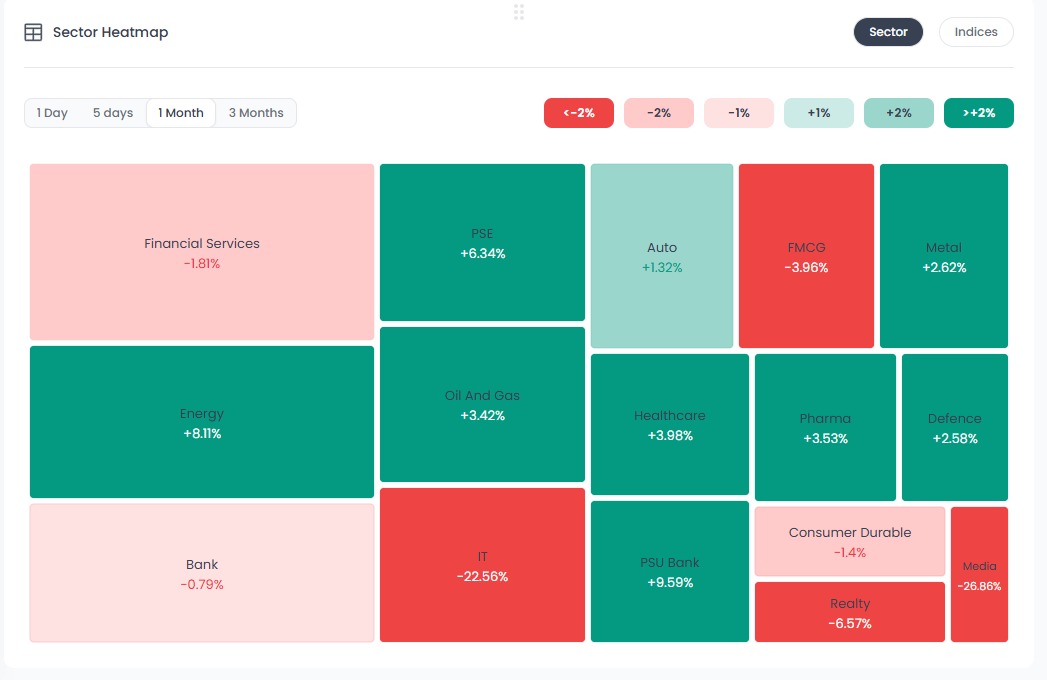
2. We’ve also introduced a Market Heatmap for Sectors and Indices. It shows real-time market movement over your selected time period, highlights the Advance-Decline ratio and list, and even displays the top ETFs under each index and sector— making stock and ETF picking much easier.
You can start using it live on Firstock today.
1
5
37
9,558
Feb 26
Today, the broking industry has become completely commoditised.
You can’t win on pricing alone as the brokerage is already pushed to near to floor.
You can’t win on tech either, almost every broker now offers similar features with solid platforms. And even if someone builds a differentiator, it gets copied or matched within weeks.
So in this environment, what truly adds value to the customer now?
11
1
24
7,122
Feb 16
Broking business in India has been on a structural uptrend for the last decade, market size growing from ~20,000 Cr in 2019 to ~55,000 in 2025
2020 was a turning point. The lockdown phase brought in a massive wave of first-time traders. Retail participation exploded, and the real fuel behind this boom was F&O trading. High volumes in derivatives directly translated into strong revenue growth for discount brokers.
Then came 2024.
With multiple regulatory changes, F&O activity started stagnating and eventually saw a dip. Volumes cooled off. For a while, it looked like the growth engine had slowed down.
But the industry found another lever: MTF.
The Margin Trading Facility book today stands at nearly ₹1.2 lakh crore. At 12-15% annual interest, that alone adds roughly ₹15,000 crore in revenue to brokers. What looked like a slowdown in derivatives was partially offset by the expansion of funded positions.
Overall, the industry has compounded at 15% CAGR over the last few years. And the runway still looks long.
If F&O activity revives, MTF books continue to scale, and segments like MCX see higher participation, the next growth rate for brokers might continue for the next few years
2
3
26
7,871
Feb 11
Traders don't blow up because they don't know trading. They blew up because of negative skewness.
When strategies give small, consistent profits, high win rate, smooth equity curve, it feels safe. To boost these small gains, when we use leverage, one "Black Swan" event can wipe out decades of profit
Here are two unknown examples:
1. Bill Hwang (Archegos Capital)
Bill Hwang turned $200 million into a $20 billion fortune over nearly a decade. He was known for having an incredibly high tolerance for risk and picking massive winning tech stocks like Netflix and Amazon early.
Hwang used a financial instrument called Total Return Swaps to take on roughly 5x leverage without publicly disclosing his holdings.
In March 2021, a minor decline in Viacom CBS stock triggered a margin call. Because he was so leveraged he couldn't put up the cash. Hwang lost the entire $20 billion in 2 days.
2. Brian Hunter (Amaranth Advisors)
Brian Hunter was a star energy trader who had generated billions in profits. He turned Amaranth Advisors into a $9 billion hedge fund. He was viewed as a math wizard who understood natural gas weather patterns better than anyone.
Hunter placed a massive bet that natural gas prices would rise in the winter, entered a spread trade. The trade itself wasn't illogical, but his position size was the mistake. NG prices started to drop. Because Hunter held such a massive percentage of the open interest in natural gas futures, he couldn't sell his position without crashing the price further.
Amaranth lost $6.6 billion in a matter of weeks, destroying the entire firm.
1
10
710
Feb 9
A major tech disruption happened at the beginning of the 21st century.
There was a lot of chatter that technology would completely disrupt the job market and wipe out employment.
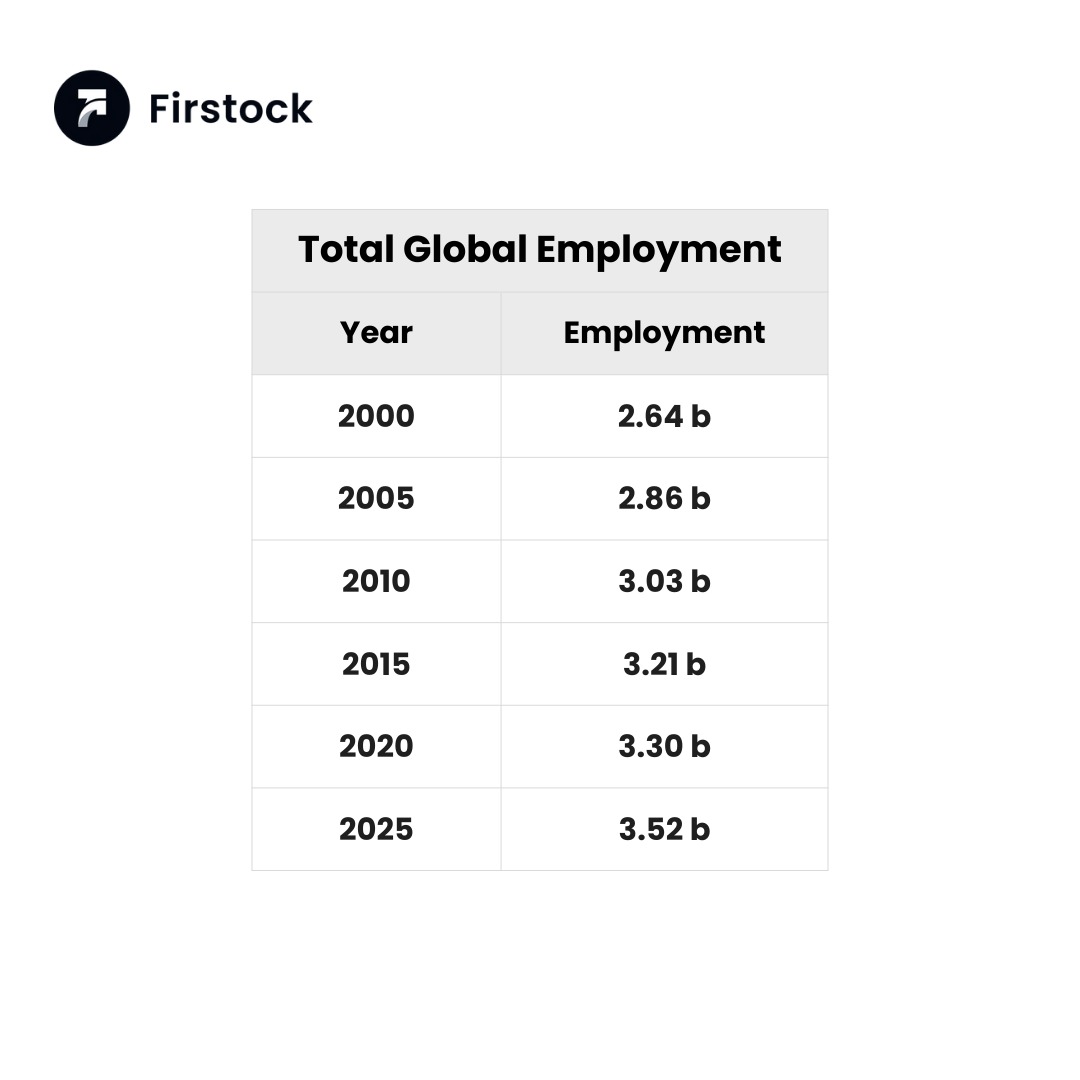
It did impact certain areas, especially manufacturing jobs. But overall, innovation ended up creating more jobs, not fewer.
If you look at the data year on year, and even across every 5-year period, the total number of jobs has only increased. Jobs were added, not cut down.
The same logic applies today with AI. AI will expand the use of technology into industries that never used tech before. Yes, it may disrupt old roles and create new ones.
The people who resist change or refuse to adapt are the ones who will be left behind.
3
6
22
5,822
Feb 7
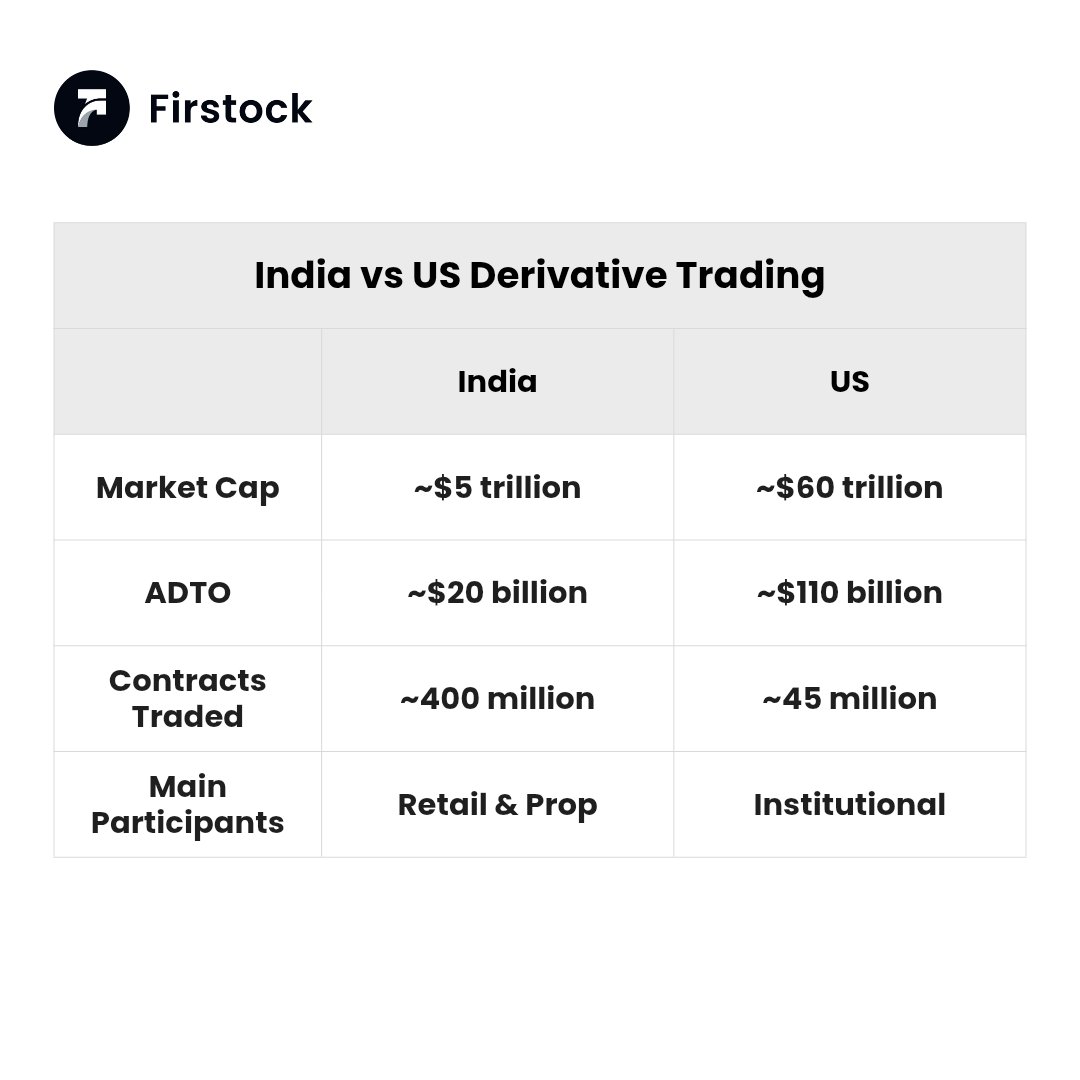
Saying India is the largest derivatives market is like saying a kirana store is bigger than a luxury mall because it prints more bills.
India and the US derivatives markets look similar, but the reality is very different. India trades a huge number of derivative contracts because contract sizes are small and retail participation is very high. Activity looks massive, but the actual money involved per trade is limited.
The US trades fewer contracts, but each one carries much higher value because institutions dominate the market. So even with lower volumes, the total value and risk are far bigger in the US.
Lots of small tickets versus fewer big ones. India leads in volume, the US leads in value and value is what really matters.
14
35
291
34,019